Abel
185 slides · Genesis · ⬇ Original PDF (1.6 MB)
Main themes: CainAbelEvesacrificeetGodfirstbornblood
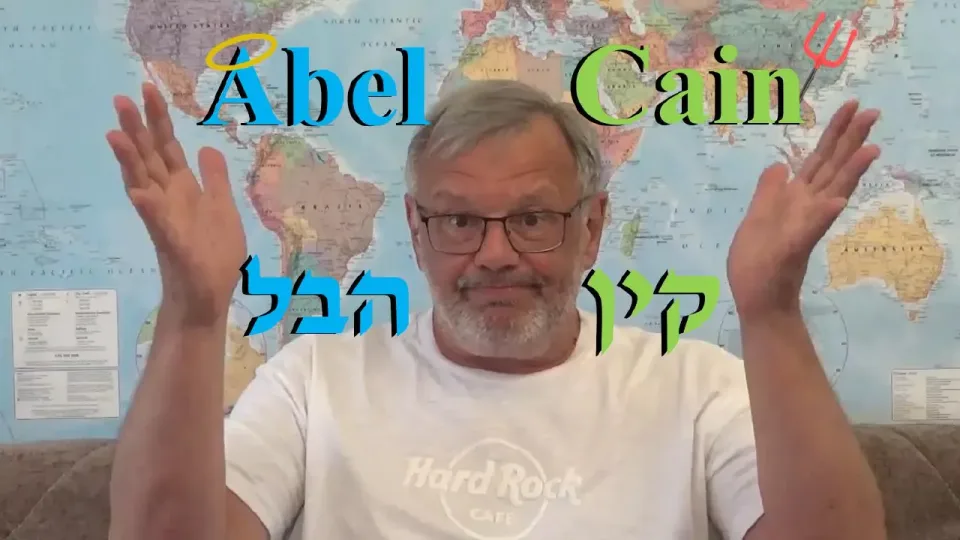 Title: Abel and Cain (הבל and קין)Slide 1
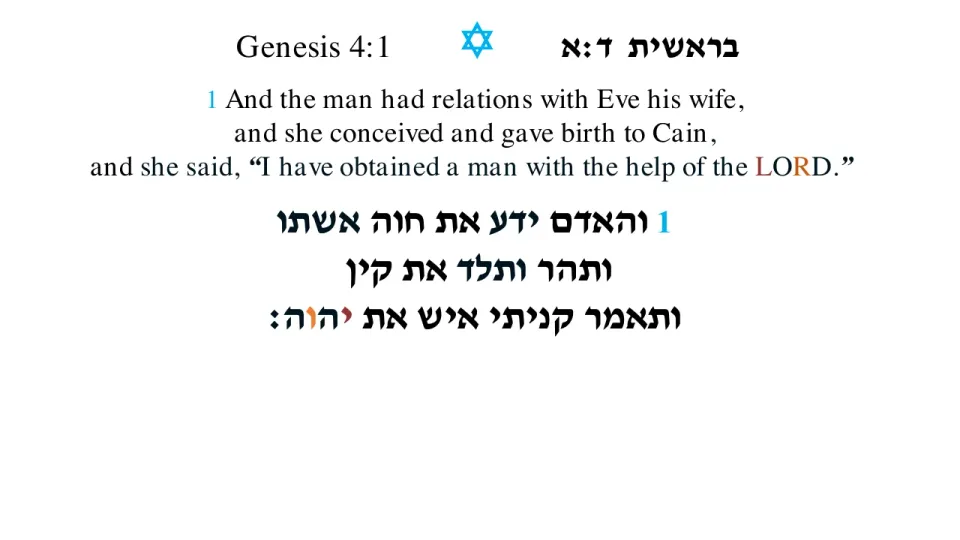 Genesis 4:1 — Eve gives birth to CainSlide 2 · step 1 of 5
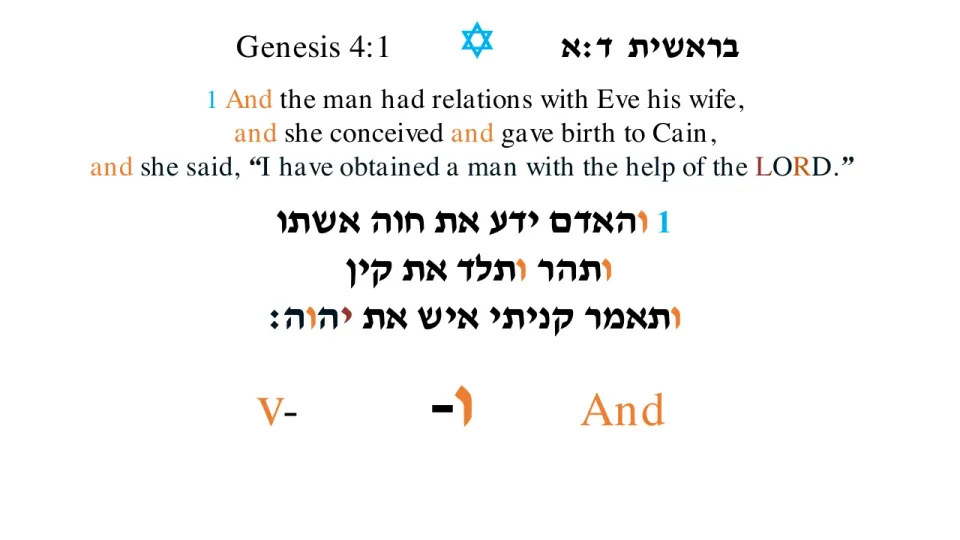 Genesis 4:1 — the Hebrew prefix vav (ו) means “and”Slide 3 · step 2 of 5
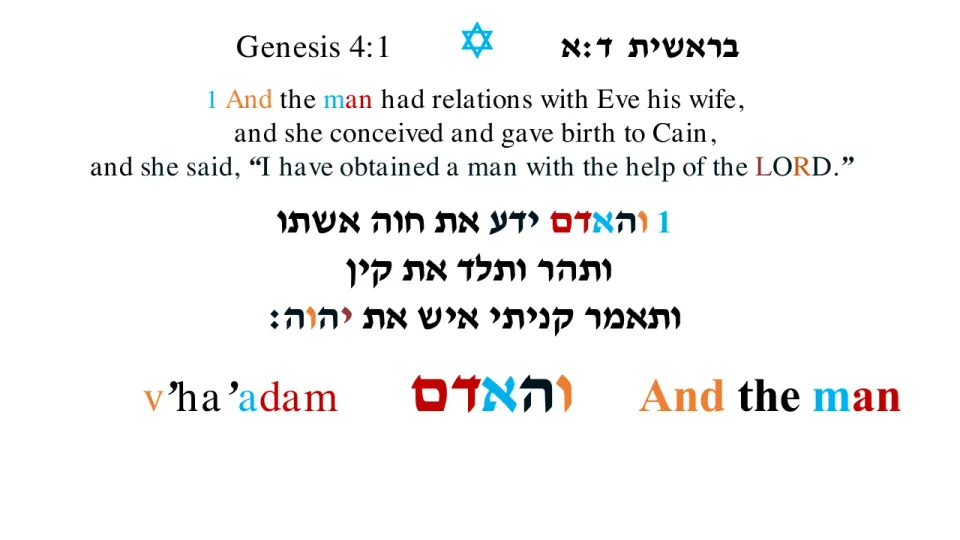 Genesis 4:1 — v'ha'adam, “and the man”Slide 4 · step 3 of 5
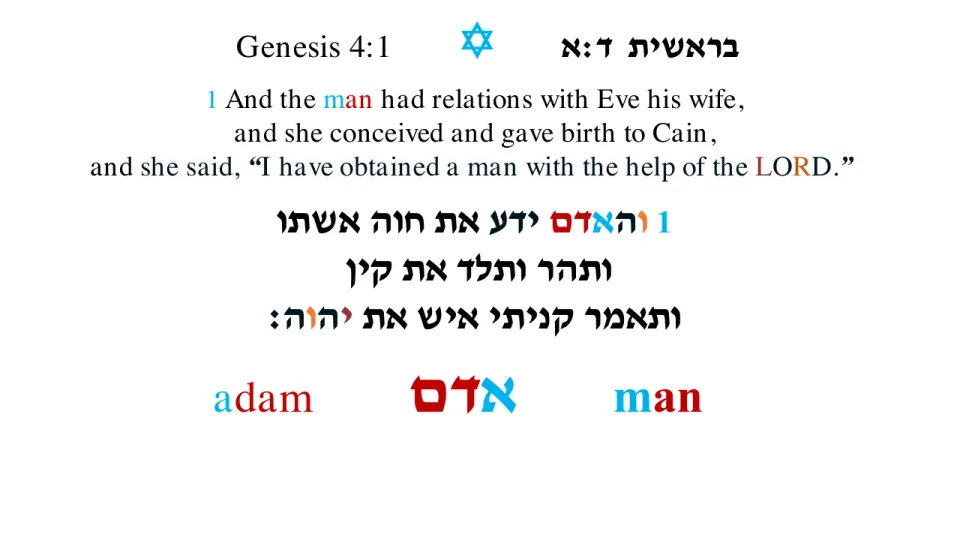 Genesis 4:1 — adam (אדם), “man”Slide 5 · step 4 of 5
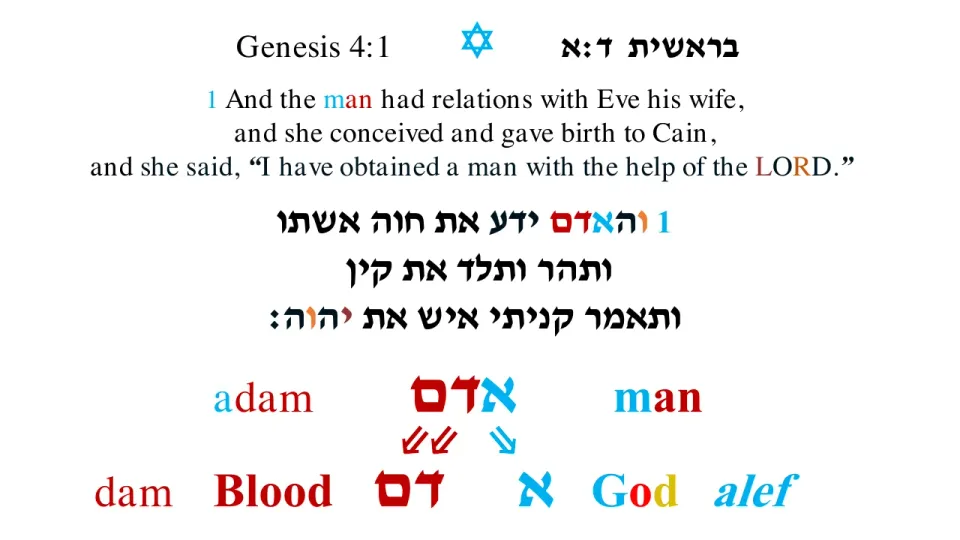 Adam (אדם) = alef (God) + dam (blood)Slide 6 · step 5 of 5
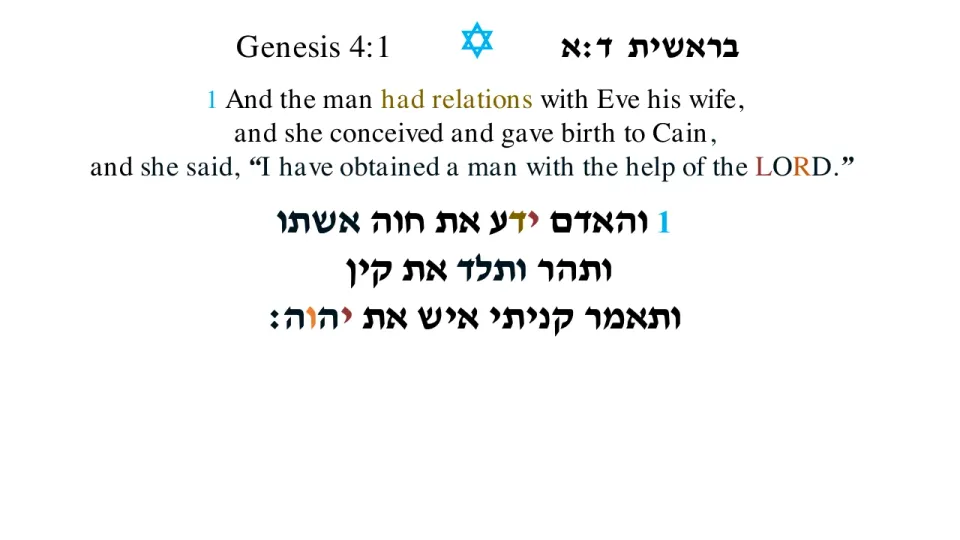 Genesis 4:1 — “had relations” is the Hebrew word ידעSlide 7 · step 1 of 6
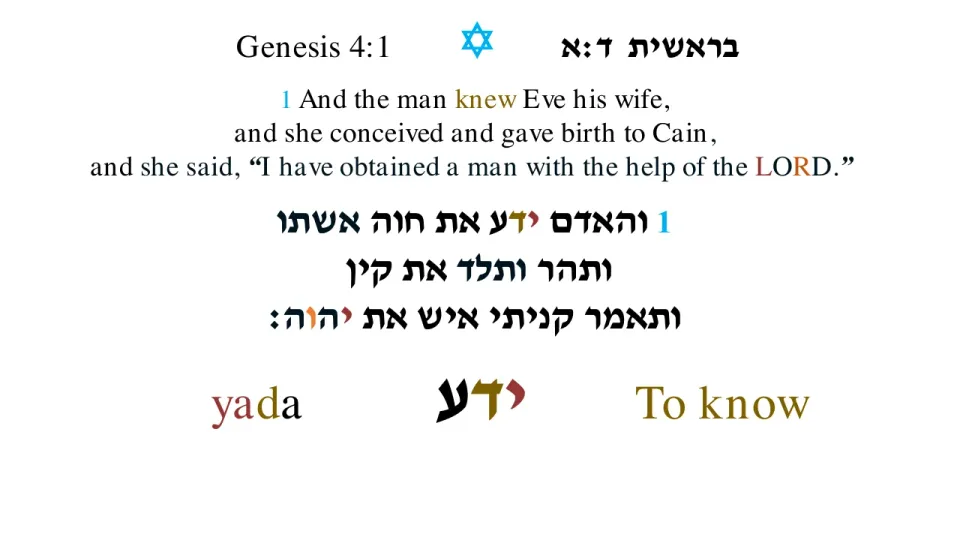 Genesis 4:1 — yada (ידע), “to know”Slide 8 · step 2 of 6
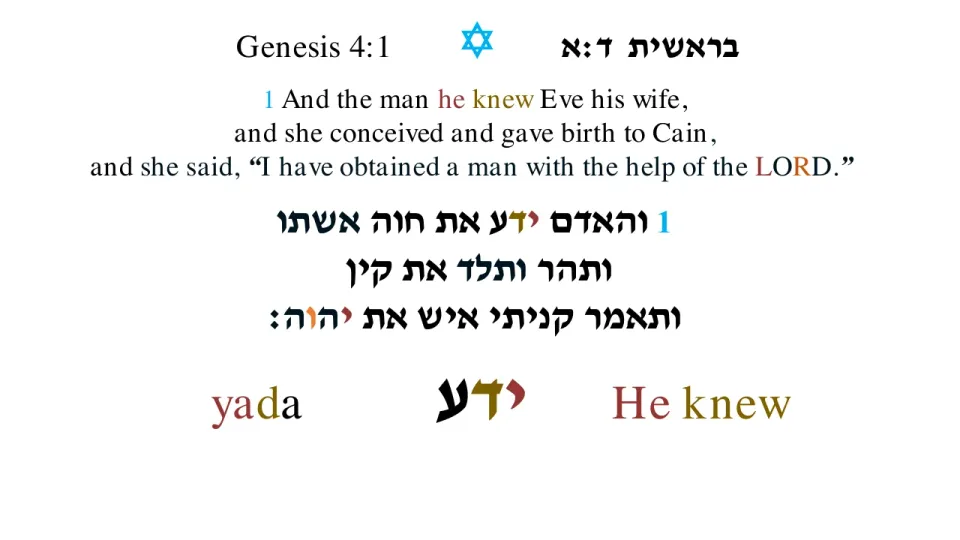 Genesis 4:1 — yada (ידע), “he knew”Slide 9 · step 3 of 6
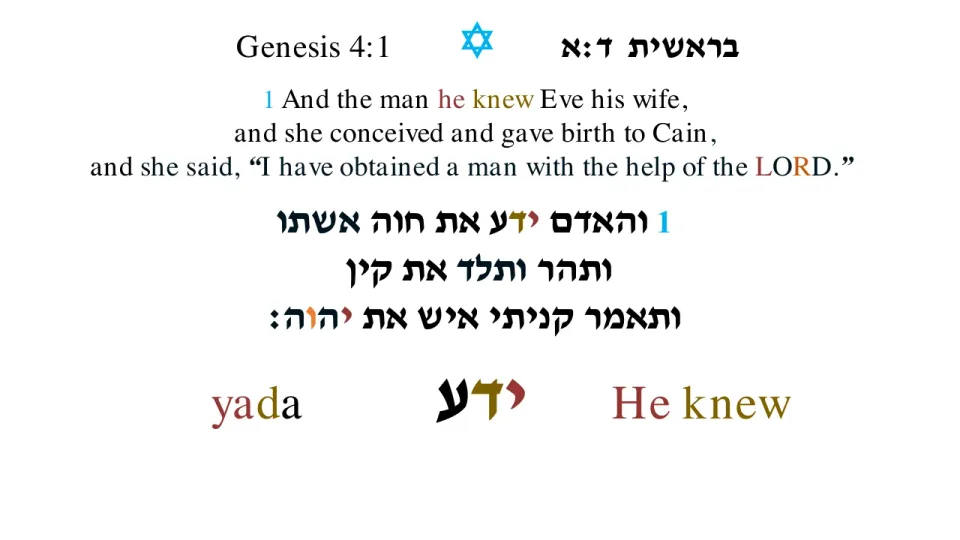 Genesis 4:1 — yada (ידע), “he knew” (repeat)Slide 10 · step 4 of 6
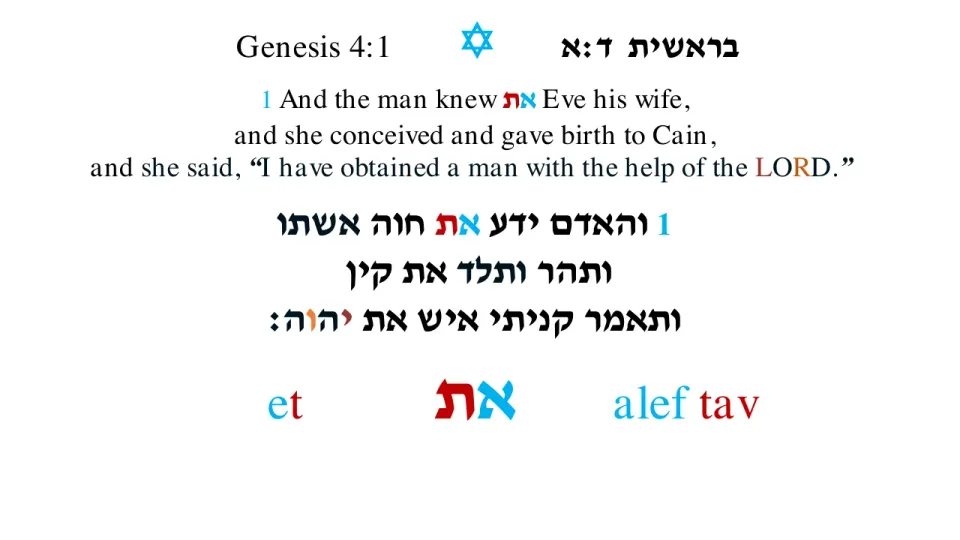 Genesis 4:1 — the untranslated word et (את), alef-tavSlide 11 · step 5 of 6
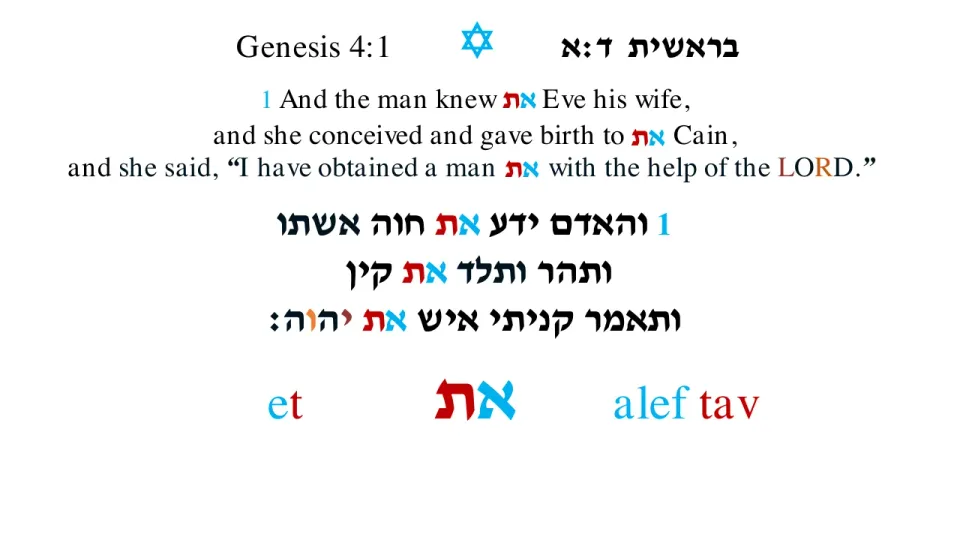 Genesis 4:1 — alef-tav (את) appears three timesSlide 12 · step 6 of 6
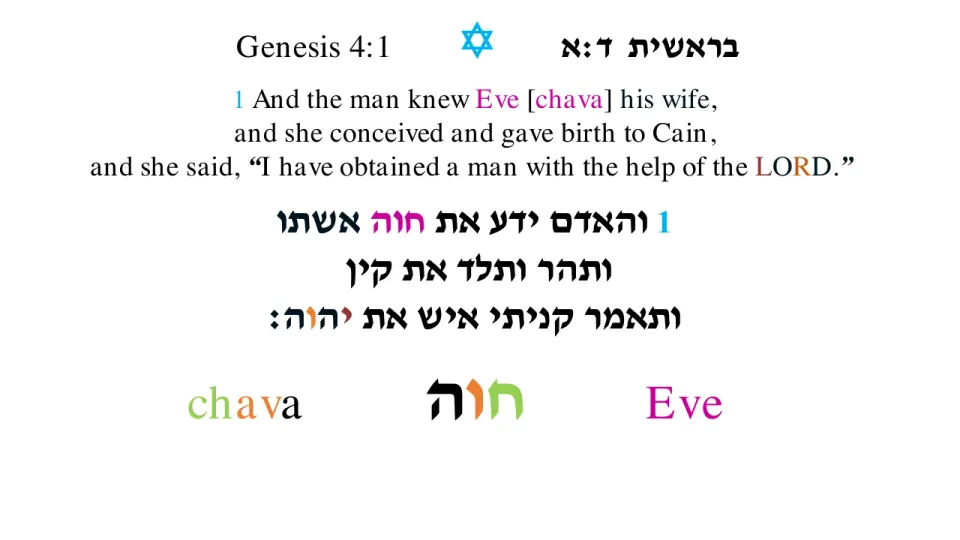 Genesis 4:1 — Eve is chava (חוה) in HebrewSlide 13 · step 1 of 3
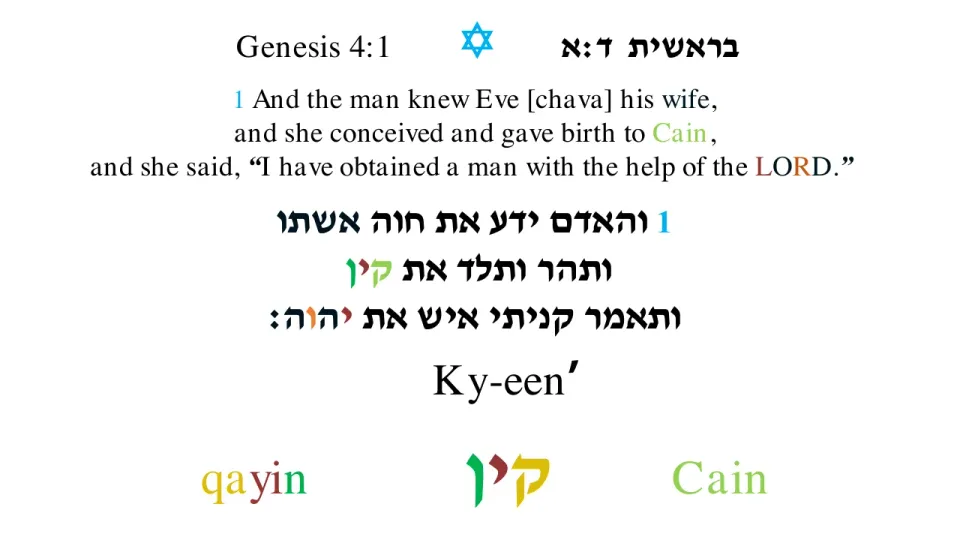 Genesis 4:1 — Cain is qayin (קין), pronounced “Ky-een”Slide 14 · step 2 of 3
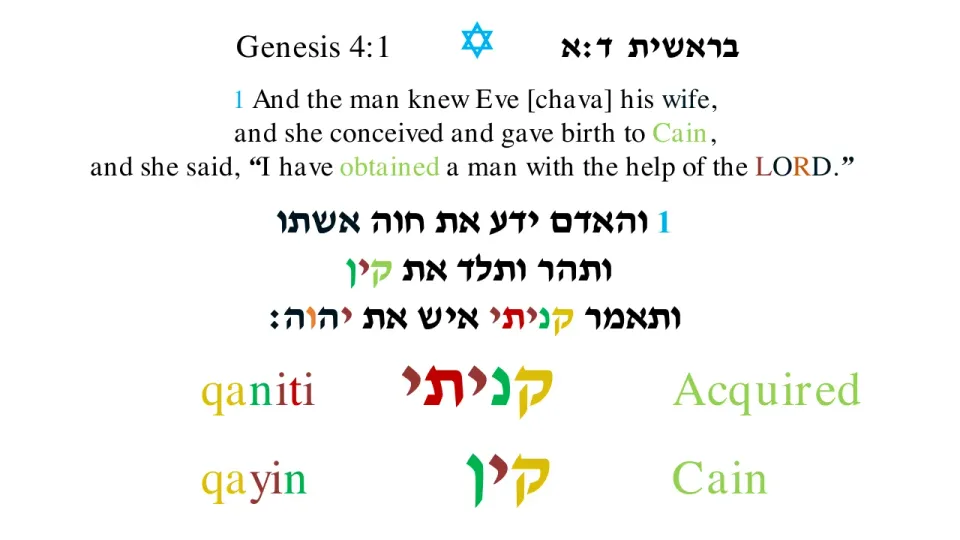 Genesis 4:1 — qaniti (קניתי) “acquired” and qayin (Cain)Slide 15 · step 3 of 3
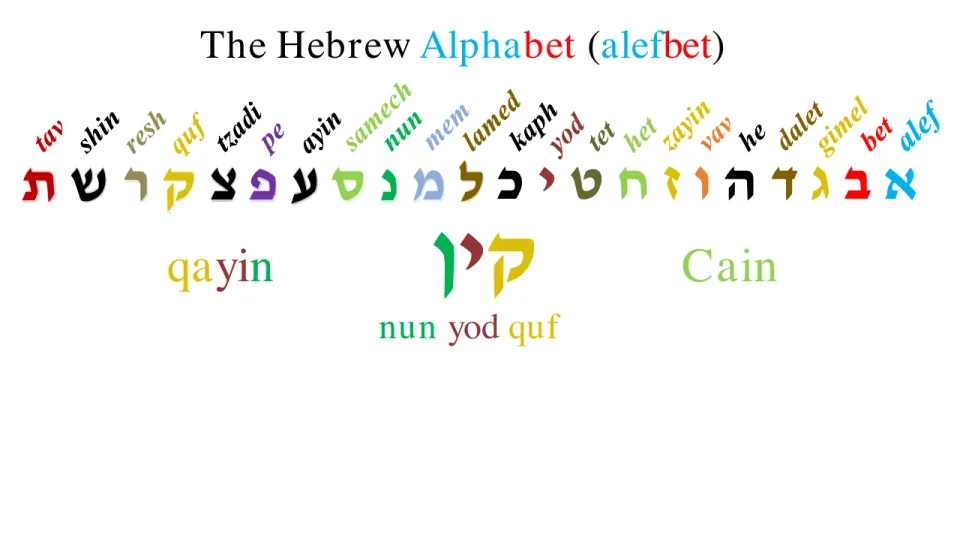 The Hebrew alphabet and the letters of Cain (קין)Slide 16 · step 1 of 4
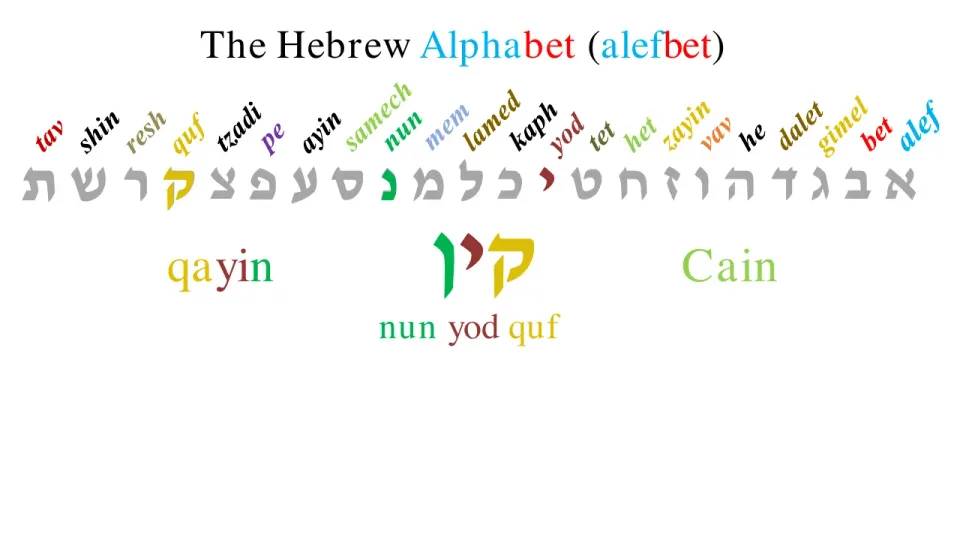 The letters of Cain (קין) highlighted in the Hebrew alphabetSlide 17 · step 2 of 4
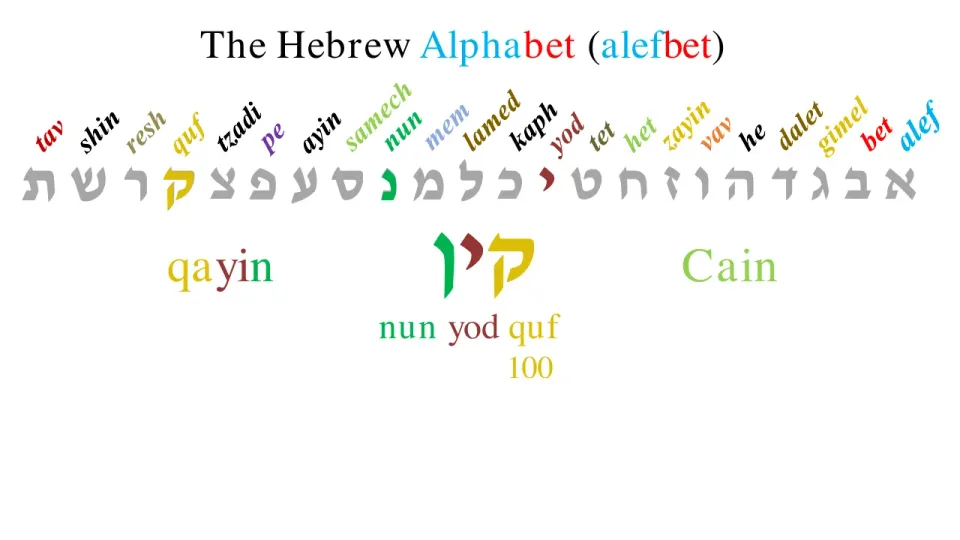 Cain (קין): quf has the value 100Slide 18 · step 3 of 4
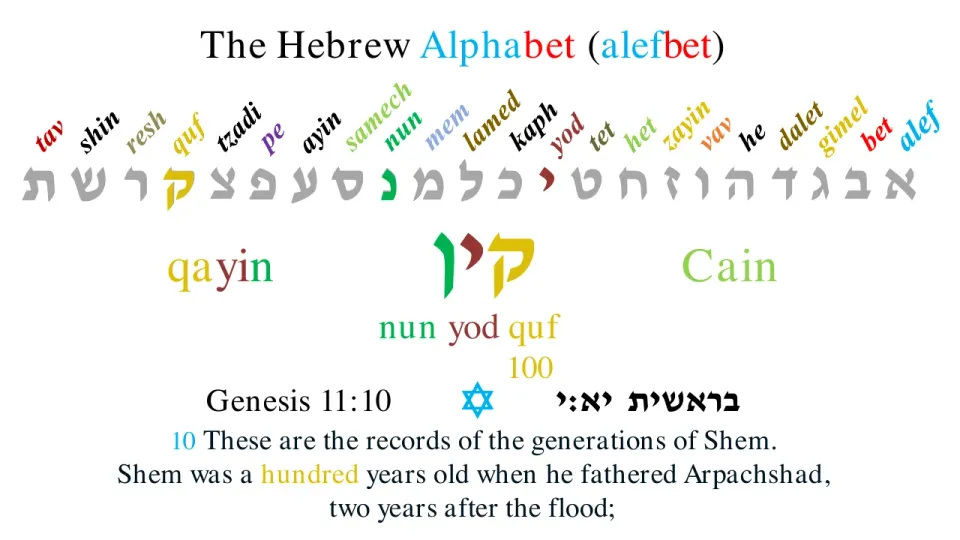 Cain (קין): quf = 100, with Genesis 11:10 (Shem a hundred years old)Slide 19 · step 4 of 4
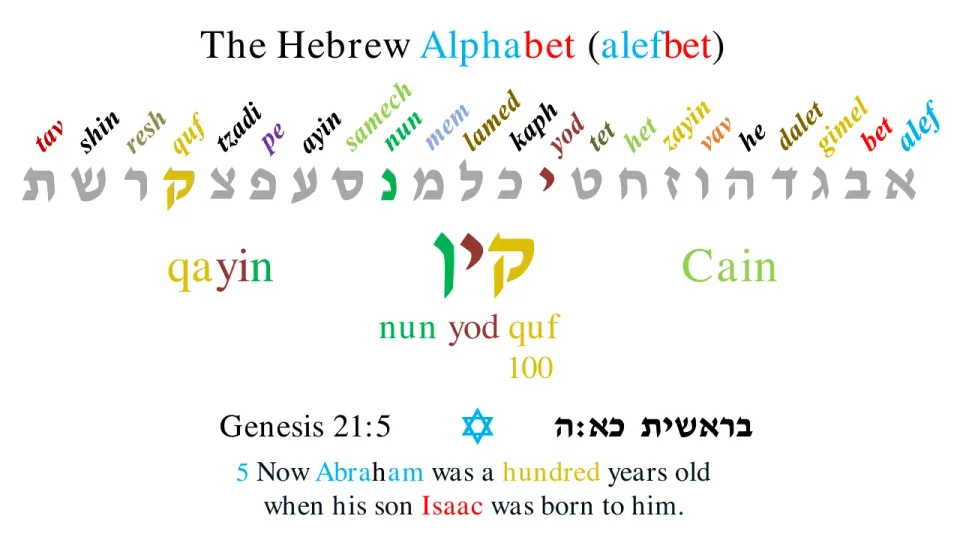 Cain (קין): quf = 100, with Genesis 21:5 (Abraham a hundred years old)Slide 20
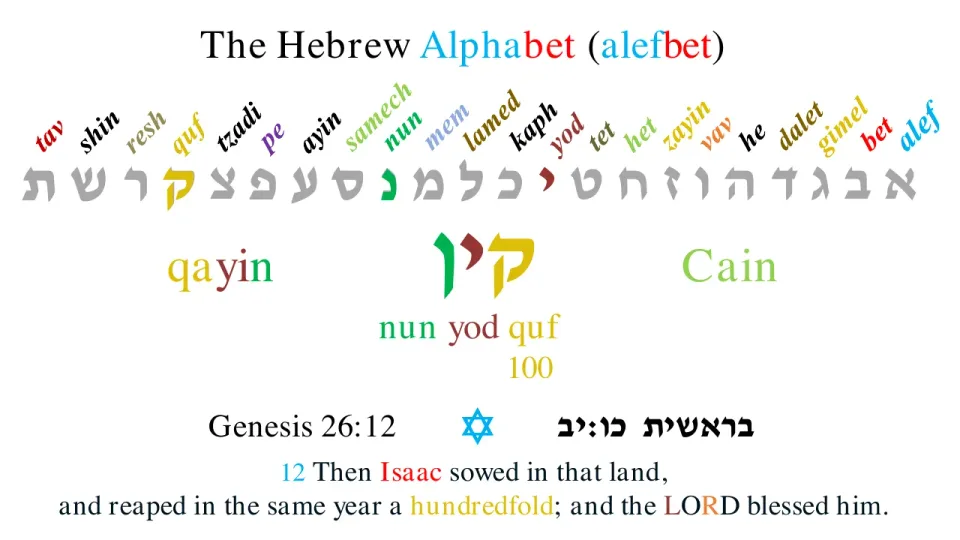 Cain (קין): quf = 100, with Genesis 26:12 (Isaac reaps a hundredfold)Slide 21
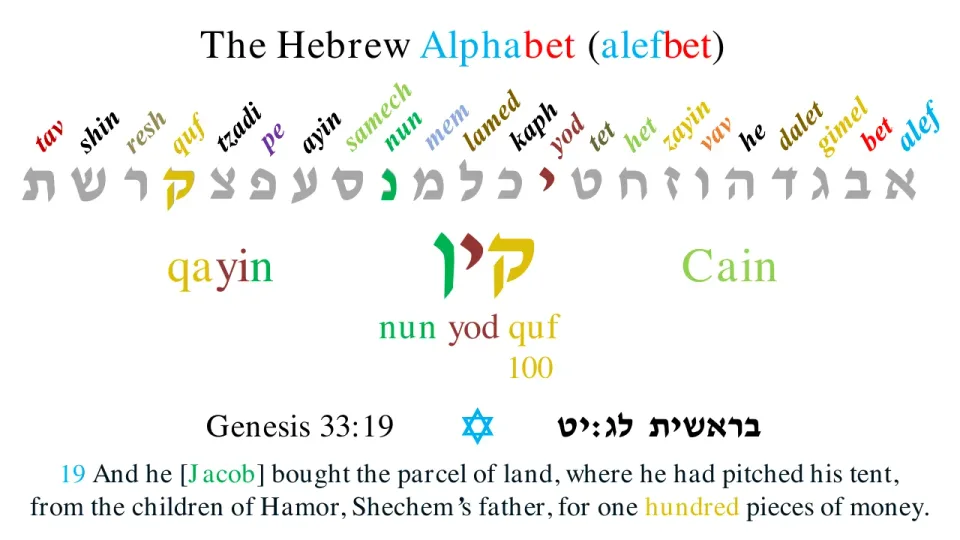 Cain (קין): quf = 100, with Genesis 33:19 (Jacob buys land for 100 pieces)Slide 22
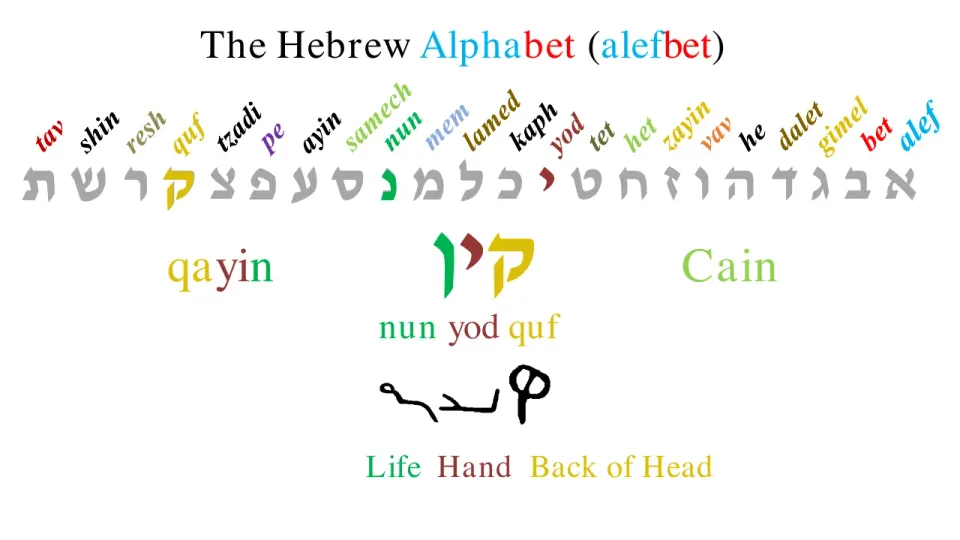 Cain (קין) in ancient pictographs: Life, Hand, Back of HeadSlide 23
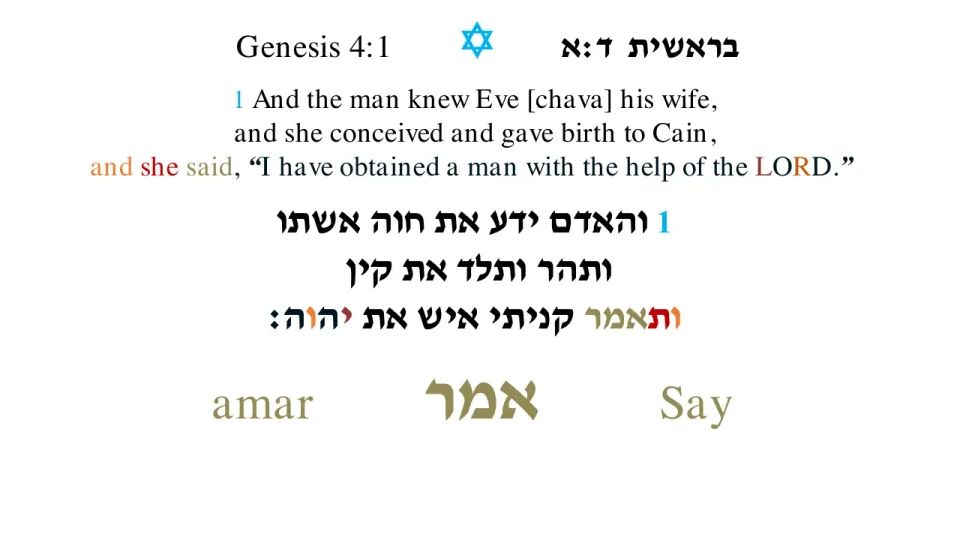 Genesis 4:1 — Eve says: “I have obtained a man”; amar = saySlide 24 · step 1 of 2
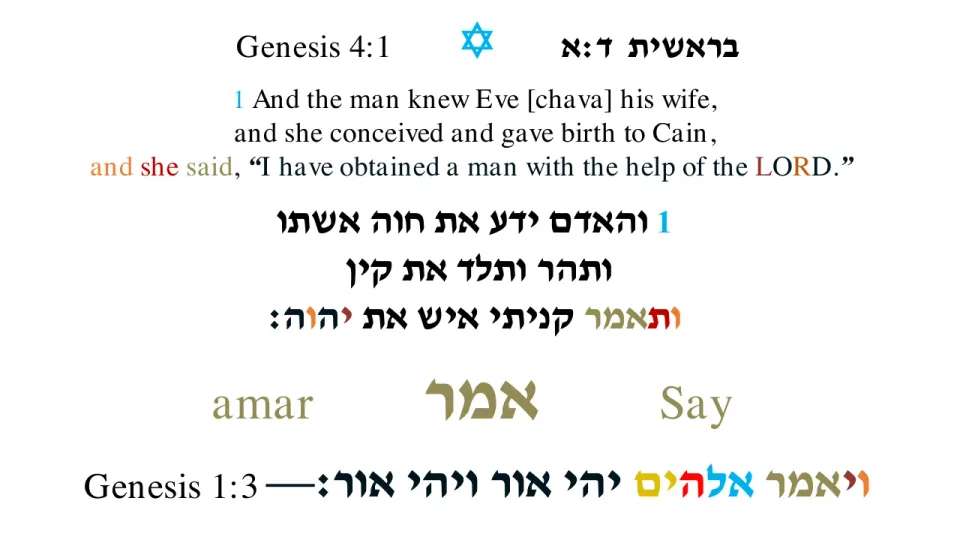 Genesis 4:1 and Genesis 1:3 — amar (say) in “and God said”Slide 25 · step 2 of 2
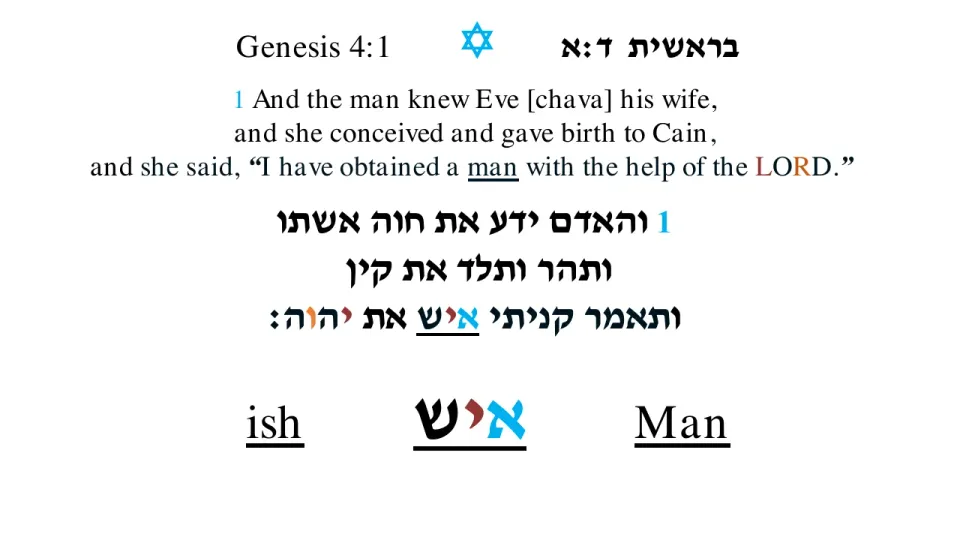 Genesis 4:1 — ish (איש) = manSlide 26
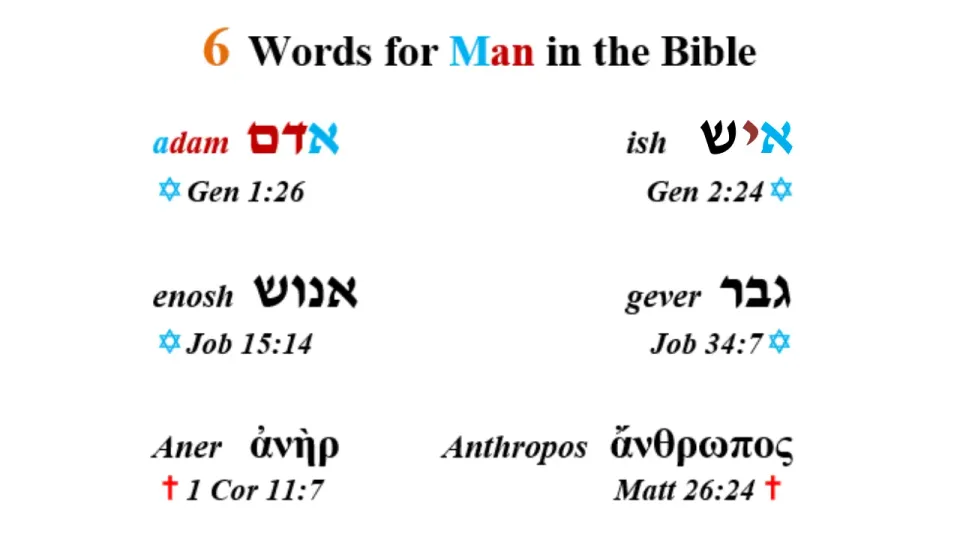 6 Words for Man in the Bible: adam, ish, enosh, gever, aner, anthroposSlide 27
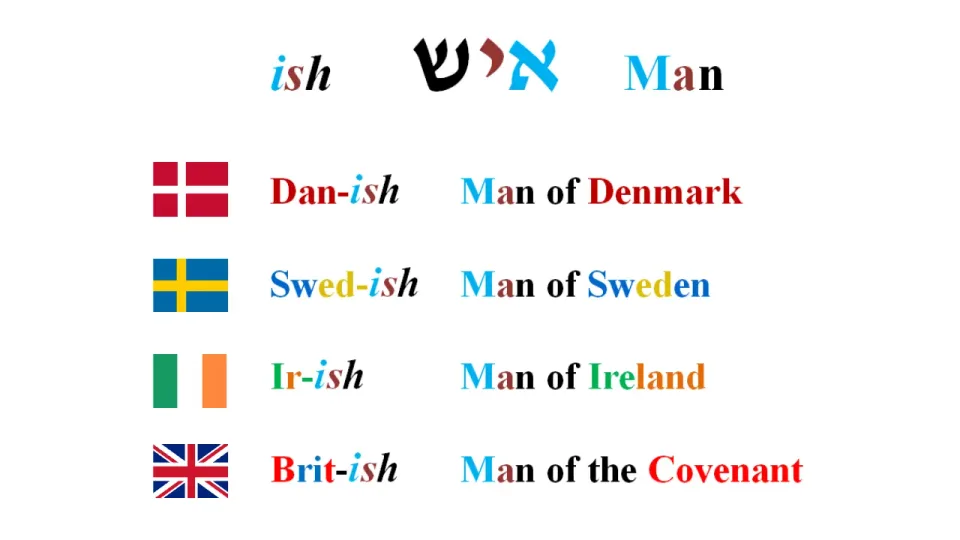 ish (איש) = man: Danish, Swedish, Irish, BritishSlide 28
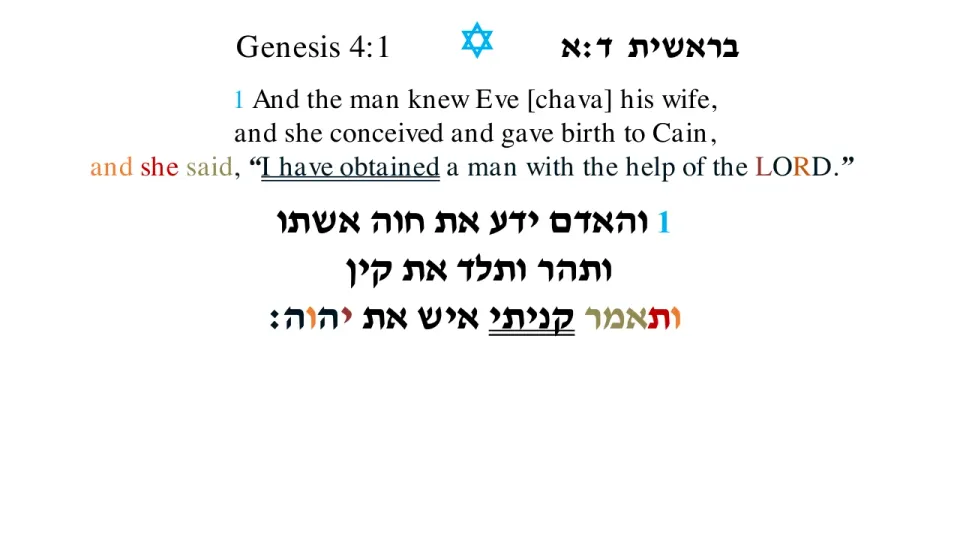 Genesis 4:1 — “I have obtained” = קניתי (qaniti)Slide 29 · step 1 of 5
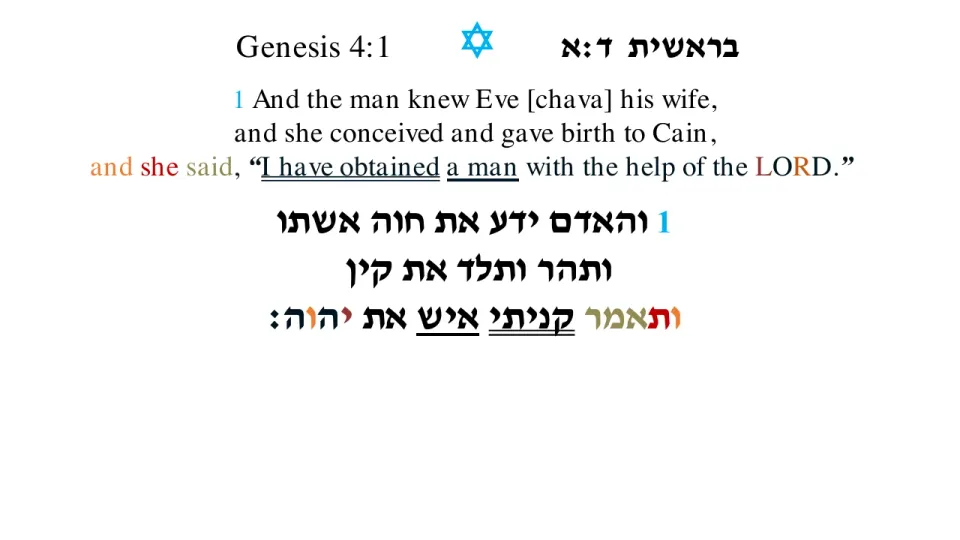 Genesis 4:1 — “a man” = איש (ish)Slide 30 · step 2 of 5
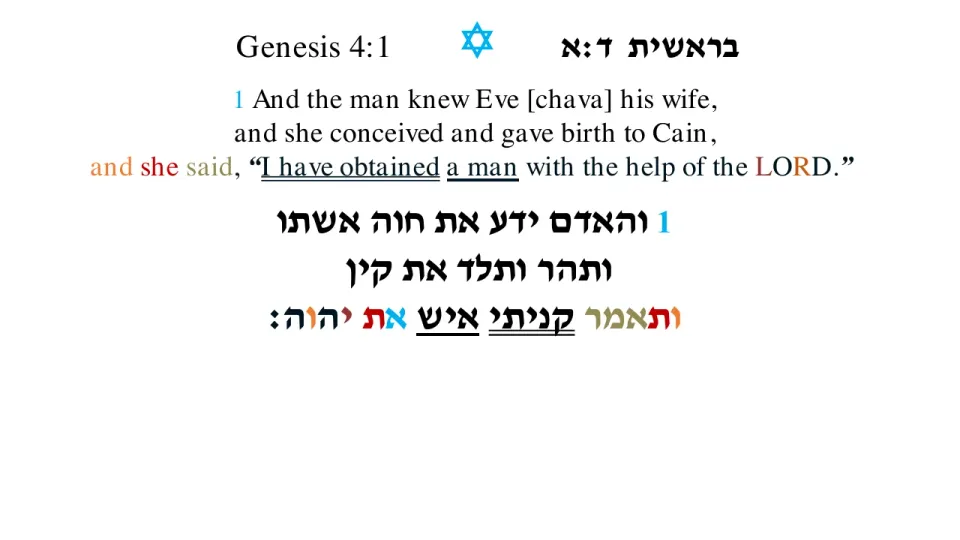 Genesis 4:1 — the untranslated word את (alef tav) before the LORDSlide 31 · step 3 of 5
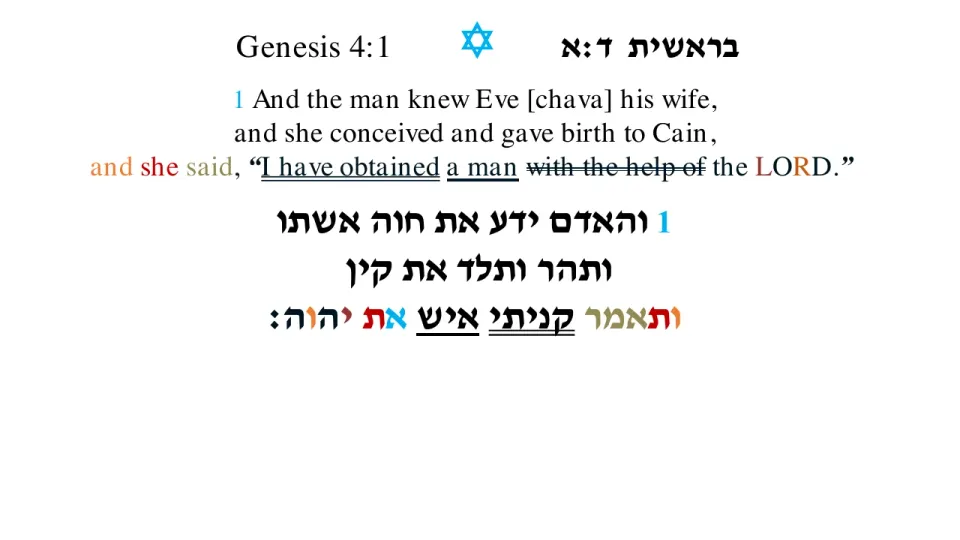 Genesis 4:1 — “with the help of” struck out; את stands before the LORDSlide 32 · step 4 of 5
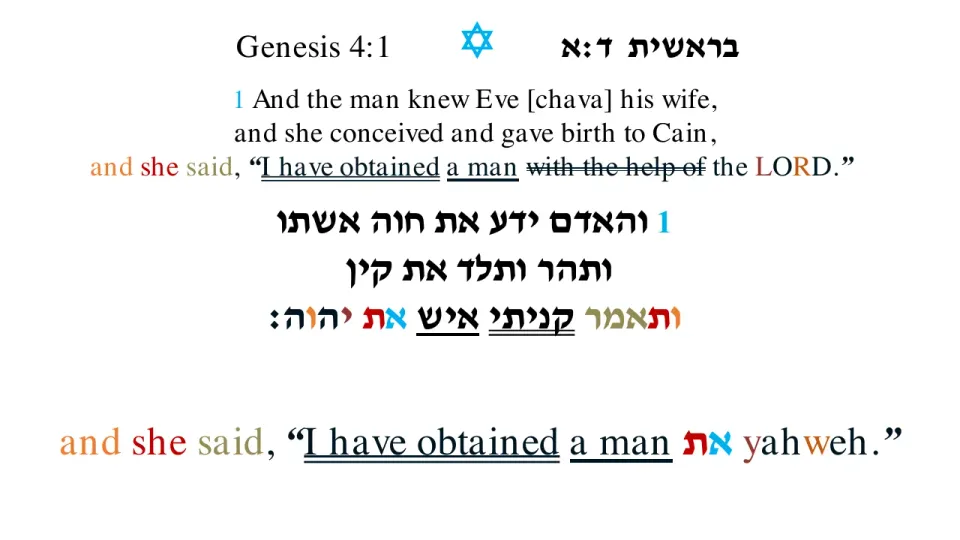 Genesis 4:1 — “I have obtained a man את yahweh”Slide 33 · step 5 of 5
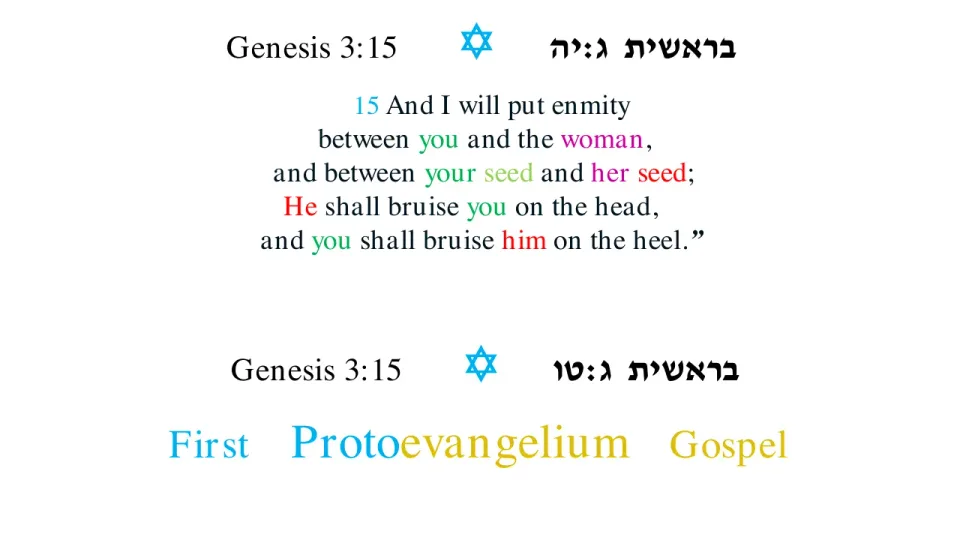 Genesis 3:15 — enmity between the seeds; the Protoevangelium (First Gospel)Slide 34
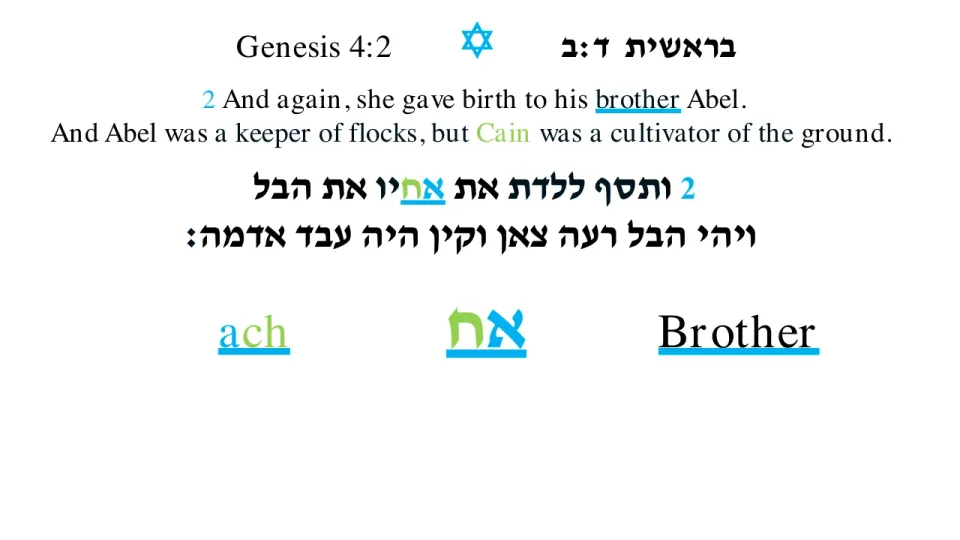 Genesis 4:2 — ach (אח) = brotherSlide 35 · step 1 of 2
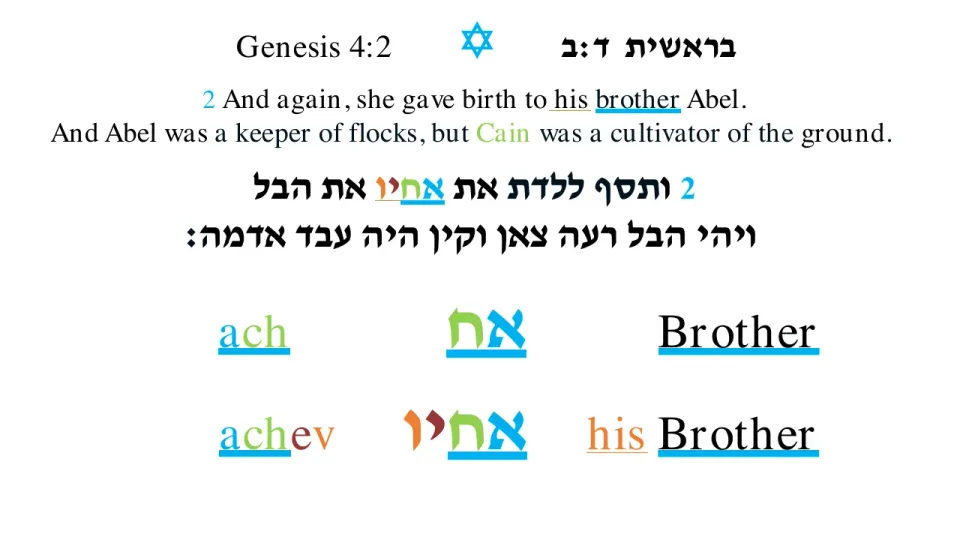 Genesis 4:2 — ach (brother) and achev (אחיו) = his brotherSlide 36 · step 2 of 2
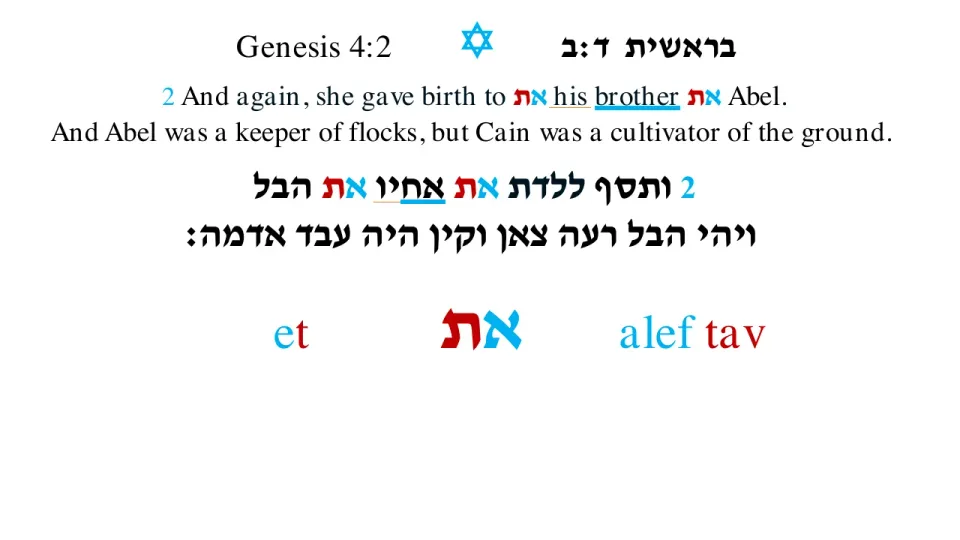 Genesis 4:2 — et (את), alef tav, before “his brother” and before AbelSlide 37
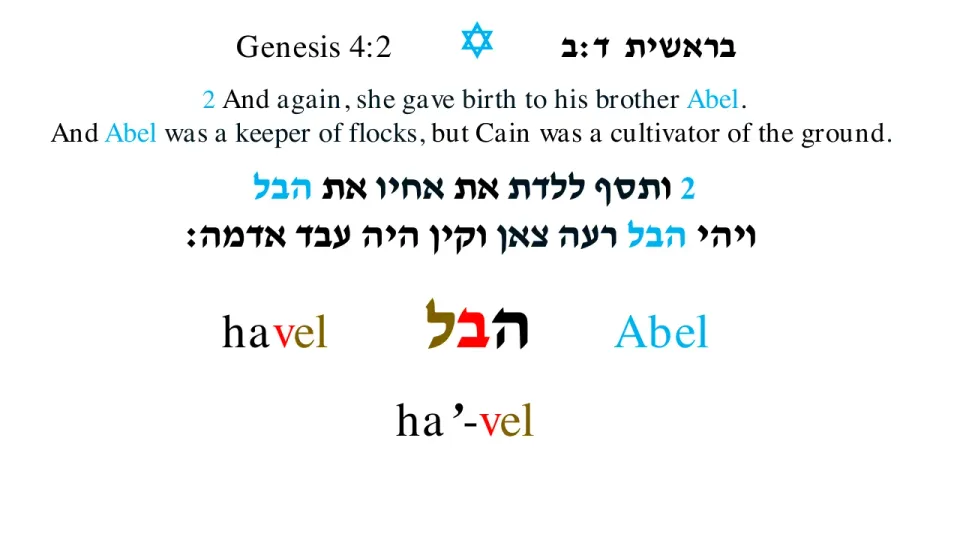 Genesis 4:2 — havel (הבל) = AbelSlide 38 · step 1 of 3
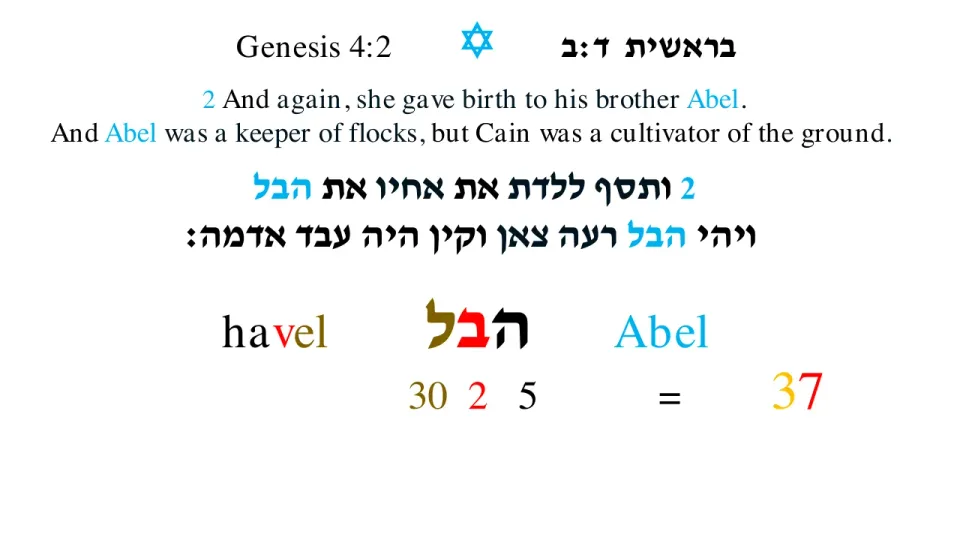 Genesis 4:2 — Abel (הבל): 30 + 2 + 5 = 37Slide 39 · step 2 of 3
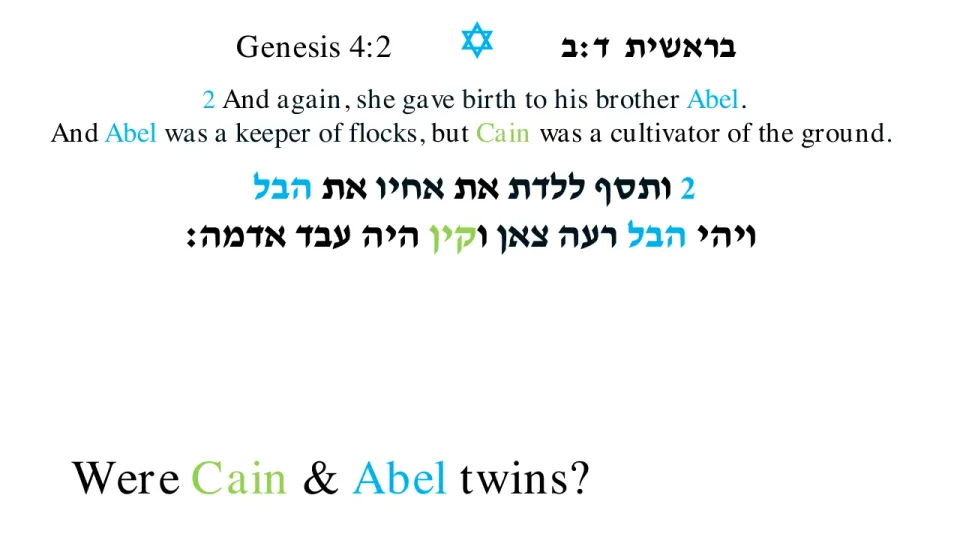 Were Cain and Abel twins? (Genesis 4:2)Slide 40 · step 3 of 3
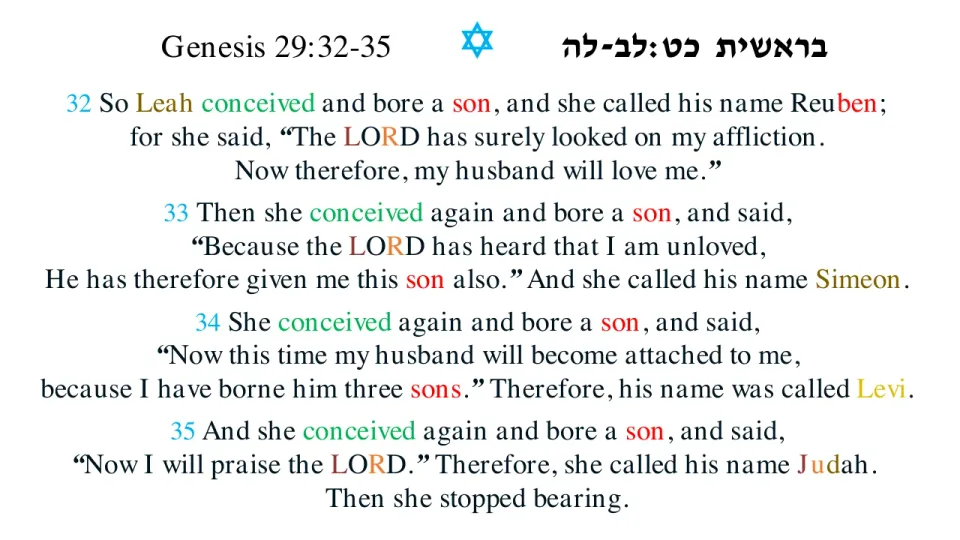 Genesis 29:32-35 — Leah conceives and bears Reuben, Simeon, Levi, JudahSlide 41
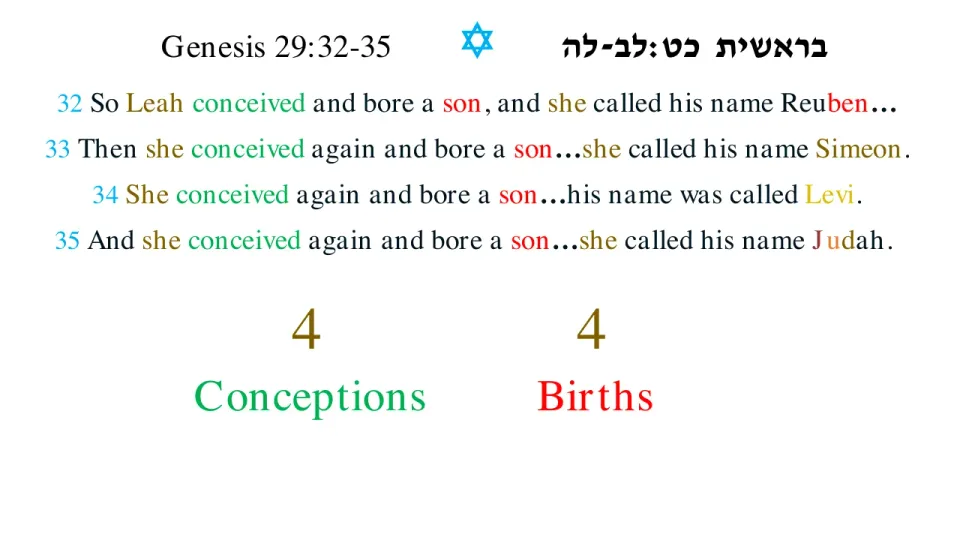 Leah: 4 conceptions and 4 births (Genesis 29:32-35)Slide 42
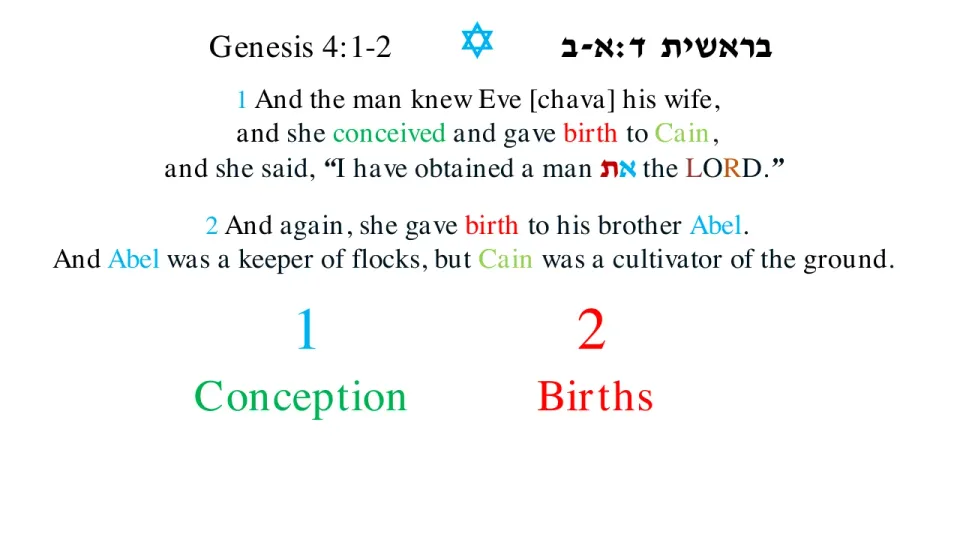 Genesis 4:1-2: 1 conception, 2 births (Cain and Abel)Slide 43 · step 1 of 2
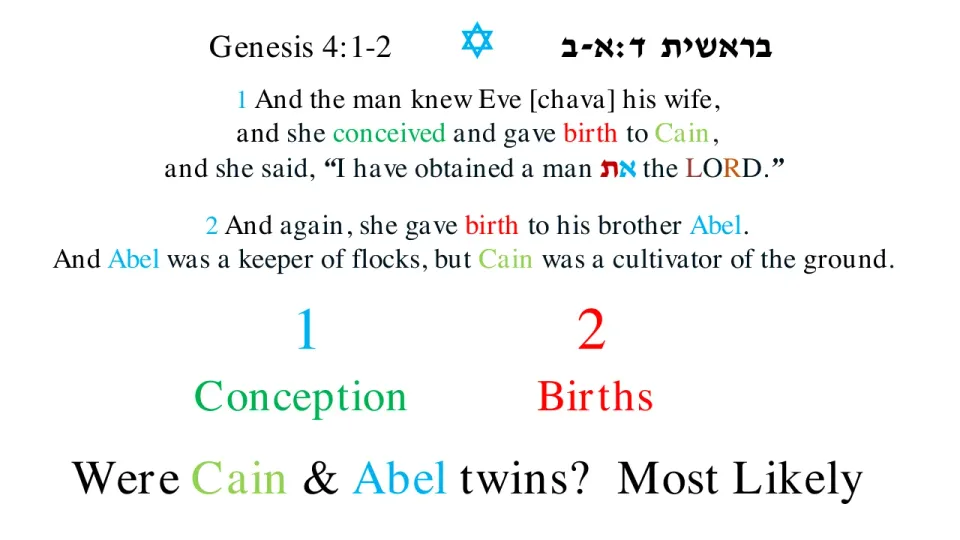 Genesis 4:1-2 — Were Cain and Abel twins? Most likelySlide 44 · step 2 of 2
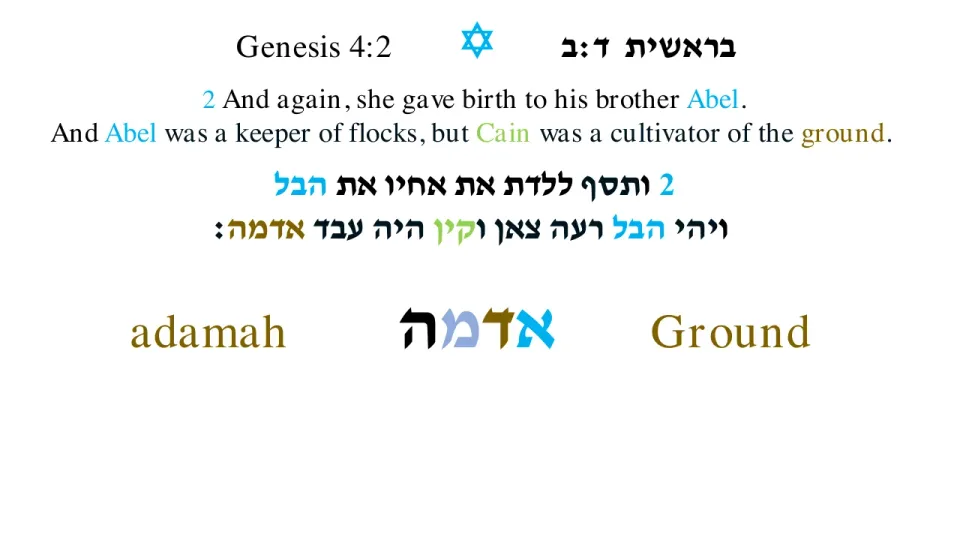 Genesis 4:2 — Abel the shepherd, Cain the ground-worker (adamah)Slide 45 · step 1 of 2
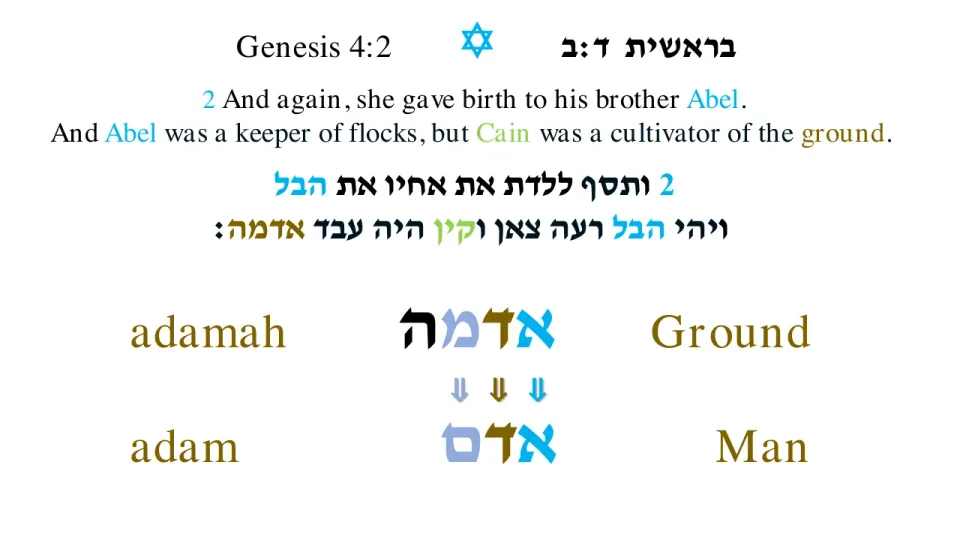 Genesis 4:2 — adamah (ground) is adam (man) plus הSlide 46 · step 2 of 2
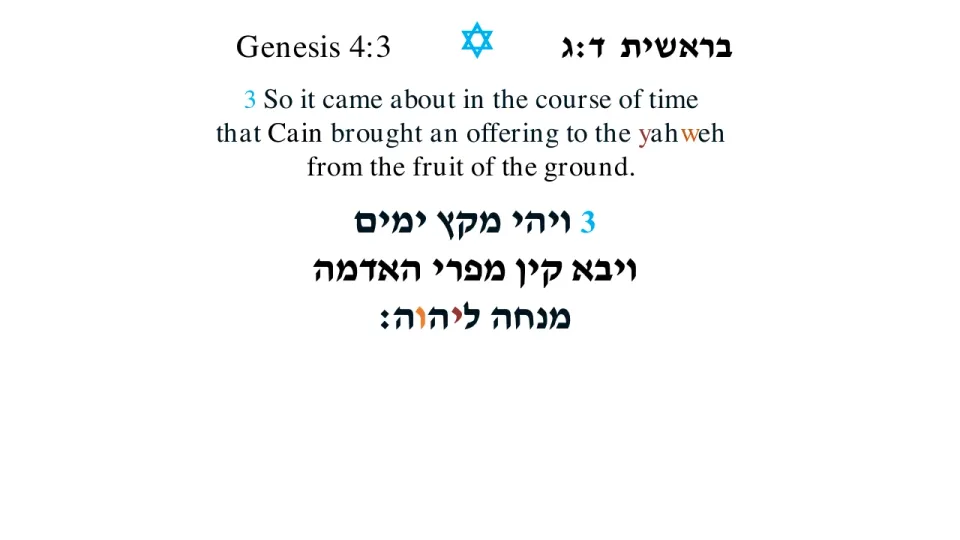 Genesis 4:3 — Cain brought an offering to the LORD (yahweh)Slide 47 · step 1 of 4
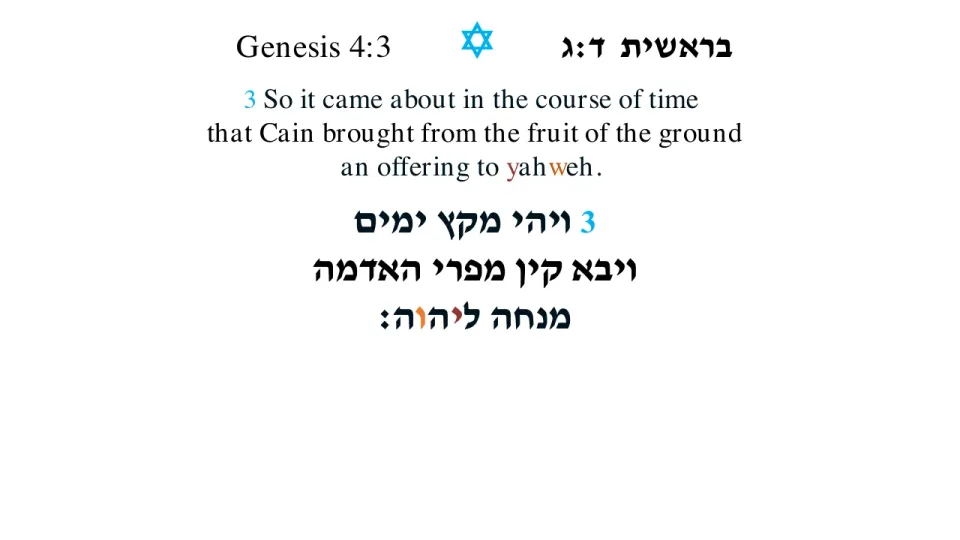 Genesis 4:3 — Cain brought from the fruit of the ground an offeringSlide 48 · step 2 of 4
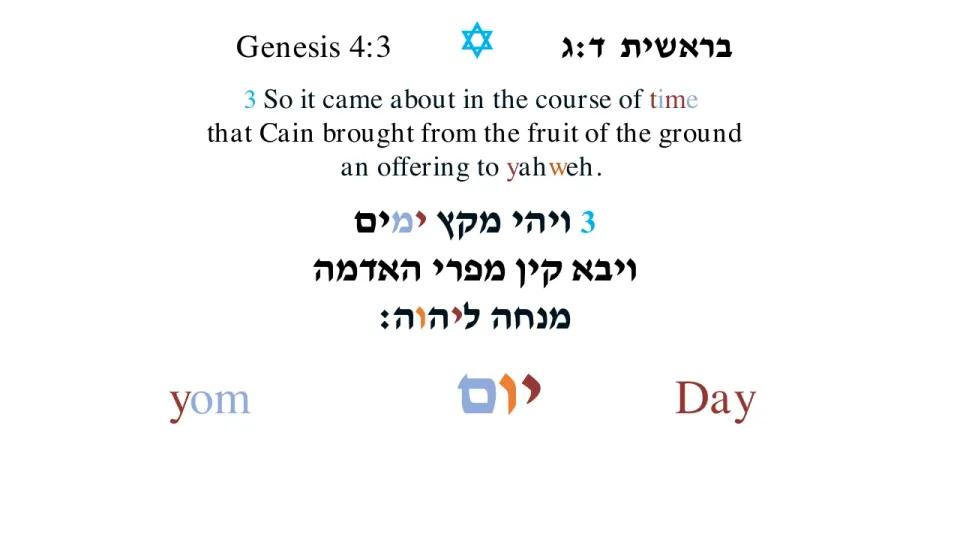 Genesis 4:3 — yom (יום), the Hebrew word for daySlide 49 · step 3 of 4
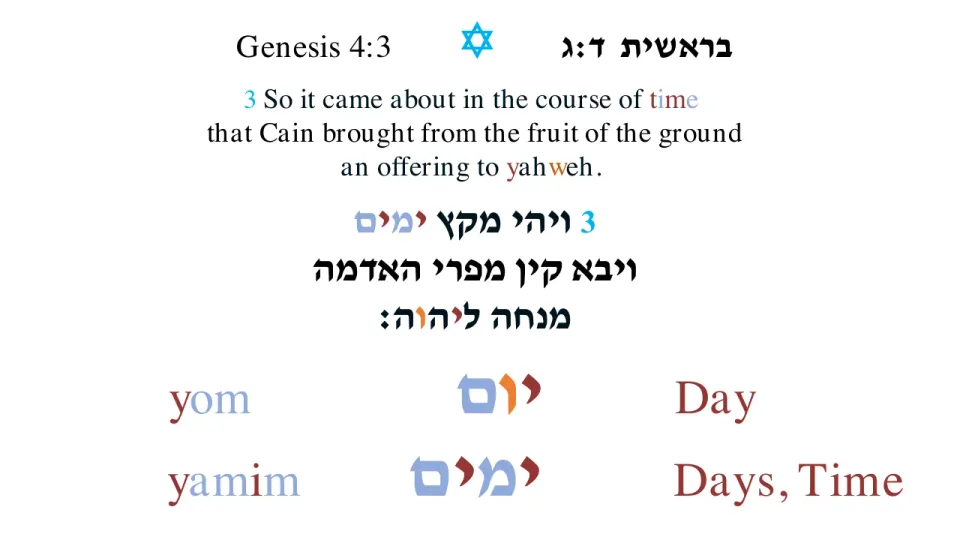 Genesis 4:3 — yom (day) and yamim (days, time)Slide 50 · step 4 of 4
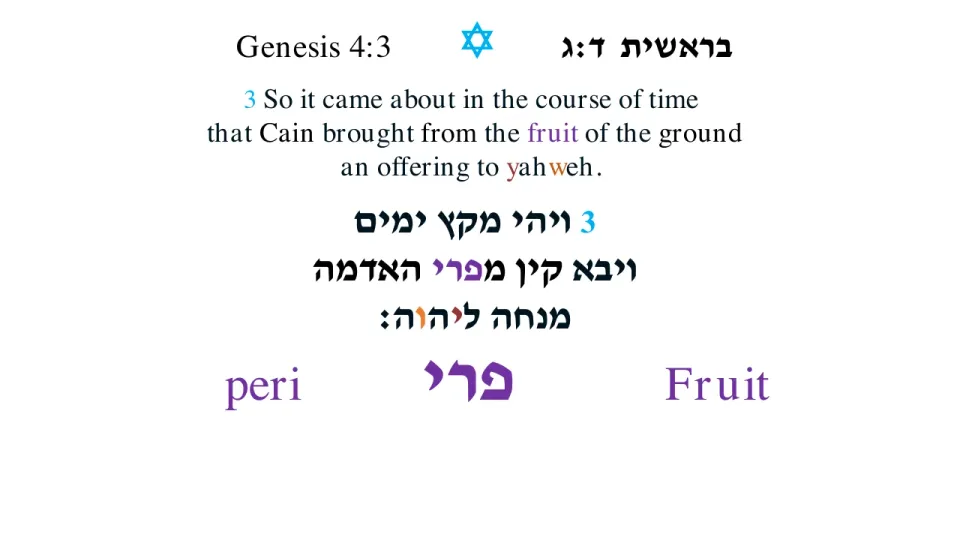 Genesis 4:3 — peri (פרי), fruitSlide 51 · step 1 of 5
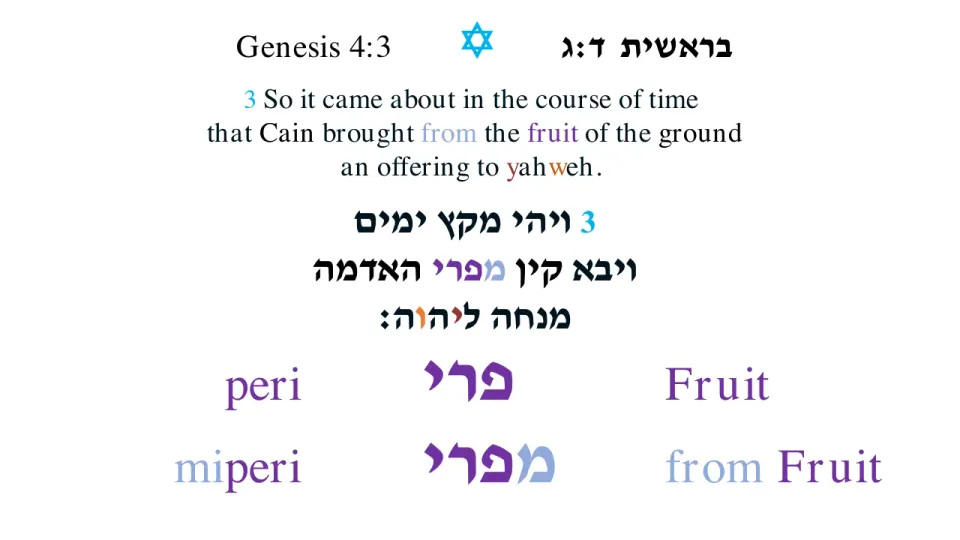 Genesis 4:3 — peri (fruit) and miperi (from fruit)Slide 52 · step 2 of 5
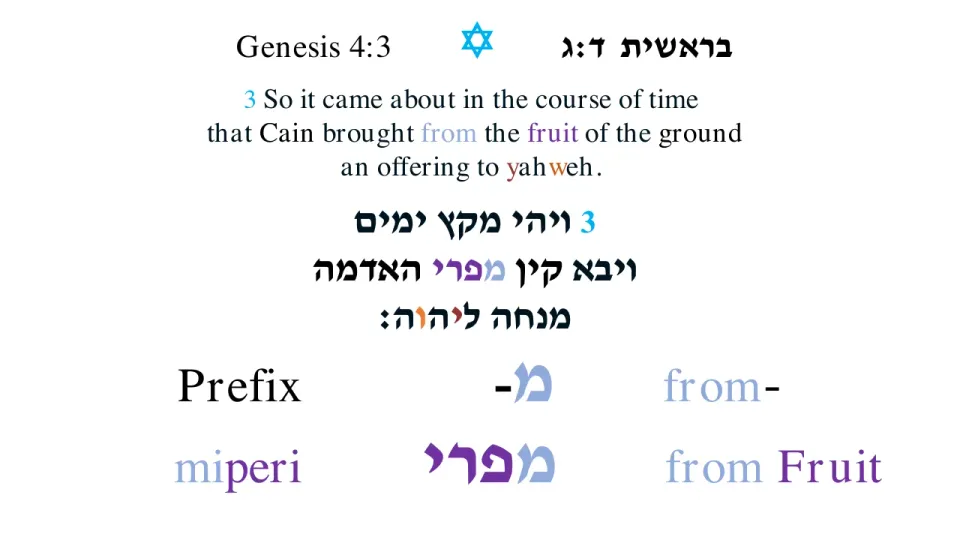 Genesis 4:3 — the Hebrew prefix mem (מ-) meaning “from”Slide 53 · step 3 of 5
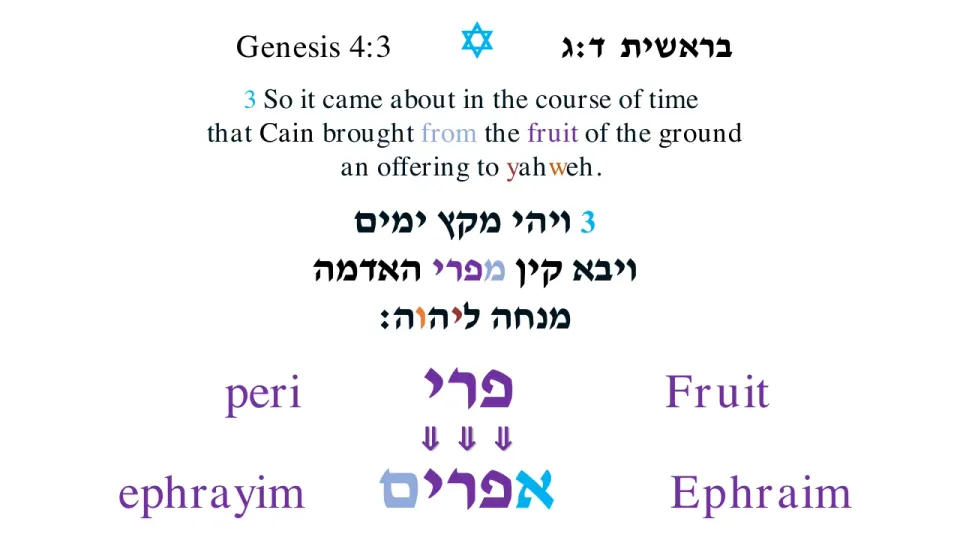 Peri (fruit) inside the name Ephraim (אפרים)Slide 54 · step 4 of 5
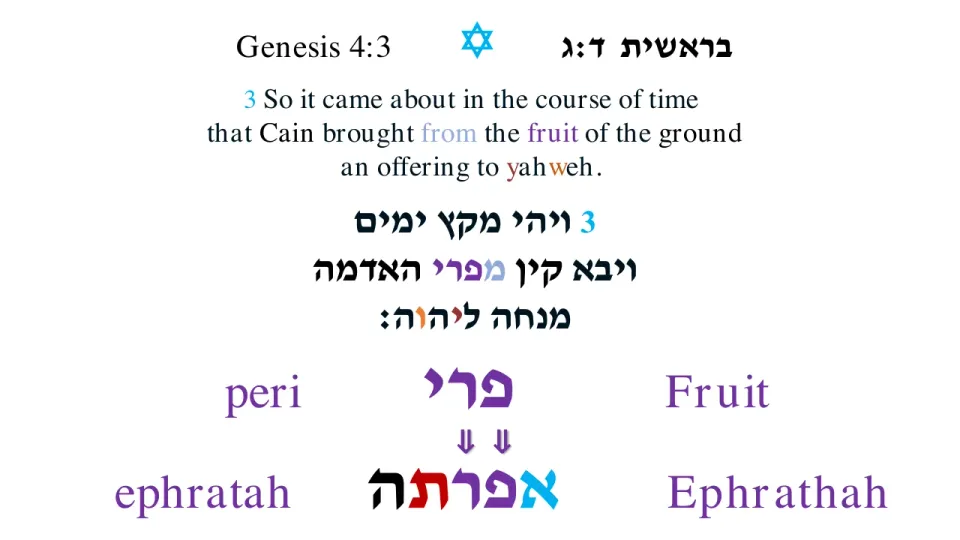 Peri (fruit) inside the name Ephrathah (אפרתה)Slide 55 · step 5 of 5
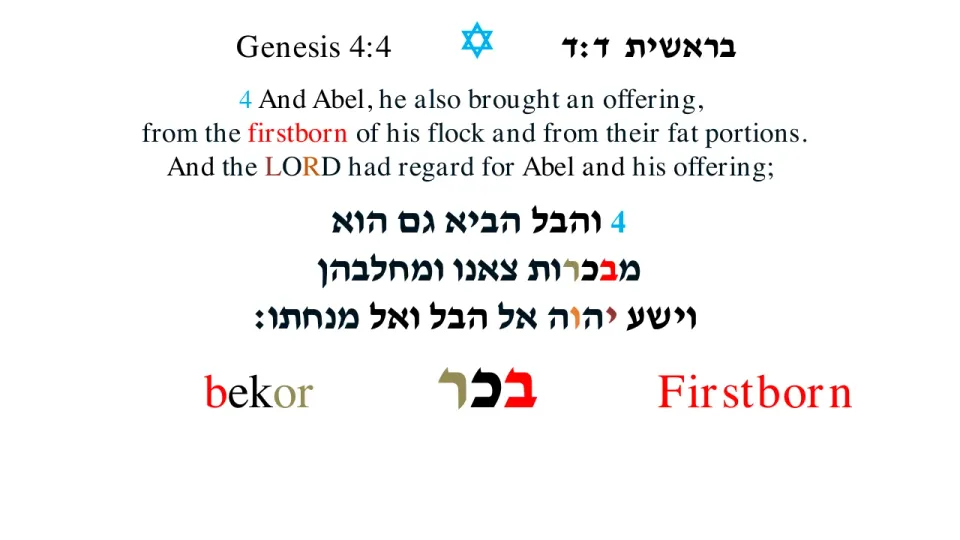 Genesis 4:4 — Abel brought the firstborn (bekor, בכר) of his flockSlide 56 · step 1 of 2
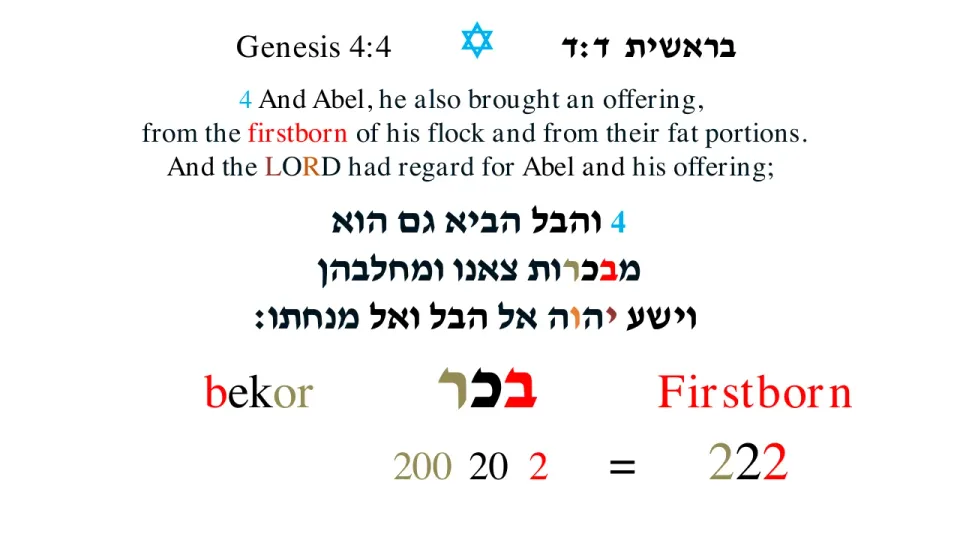 Genesis 4:4 — bekor (בכר, firstborn) has gematria 222Slide 57 · step 2 of 2
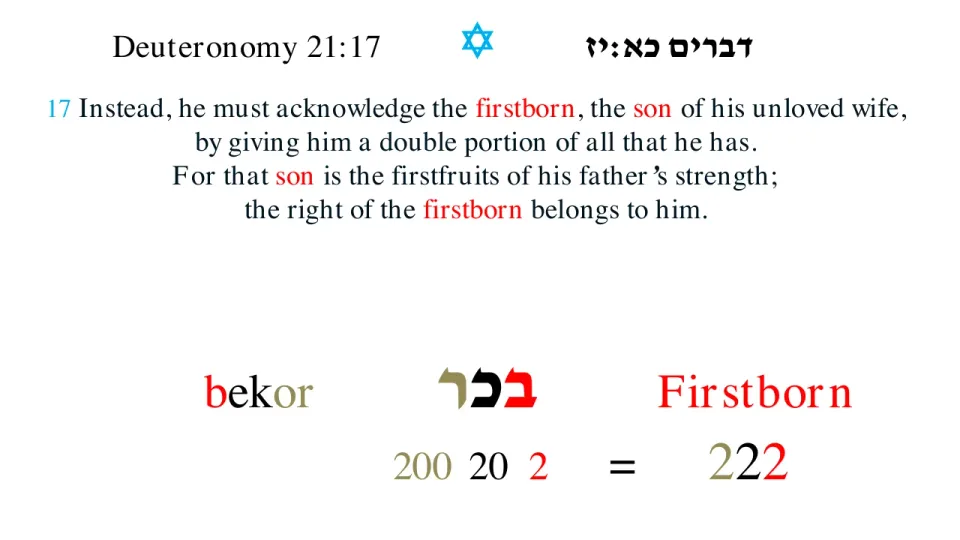 Deuteronomy 21:17 — the right of the firstborn (bekor = 222)Slide 58
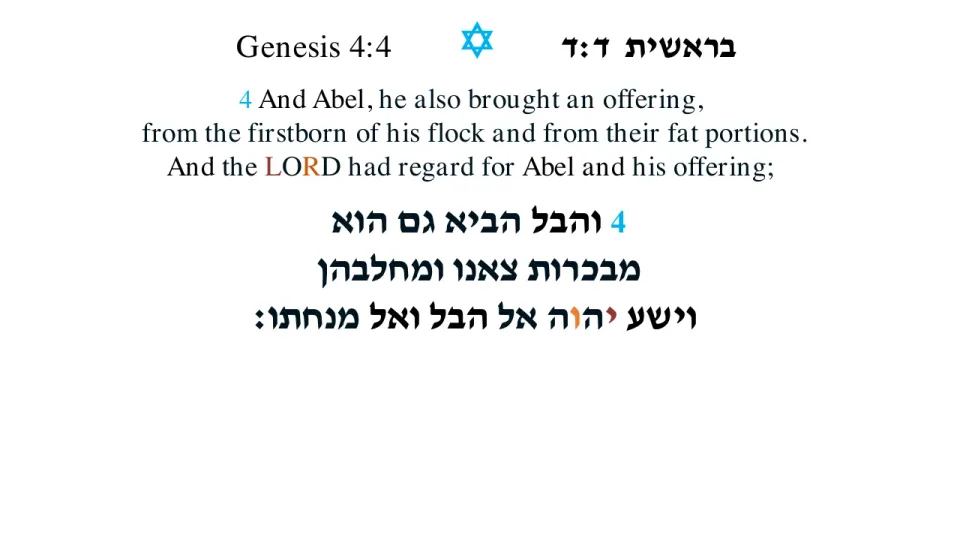 Genesis 4:4 — Abel brings the firstborn of his flock; the LORD has regard for AbelSlide 59 · step 1 of 2
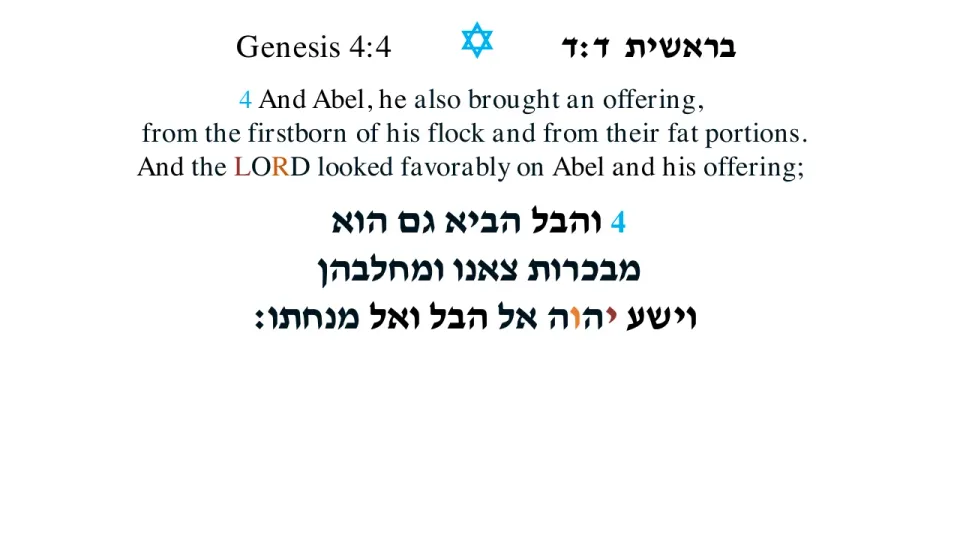 Genesis 4:4 — Abel brings the firstborn of his flock; the LORD has regard for AbelSlide 60 · step 2 of 2
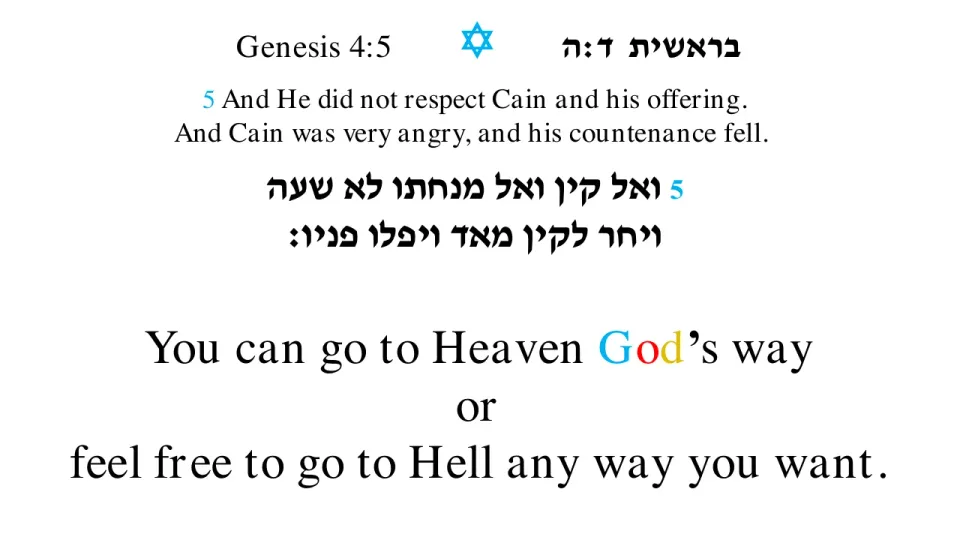 Genesis 4:5 — God did not respect Cain's offering; Heaven God's way or Hell your waySlide 61
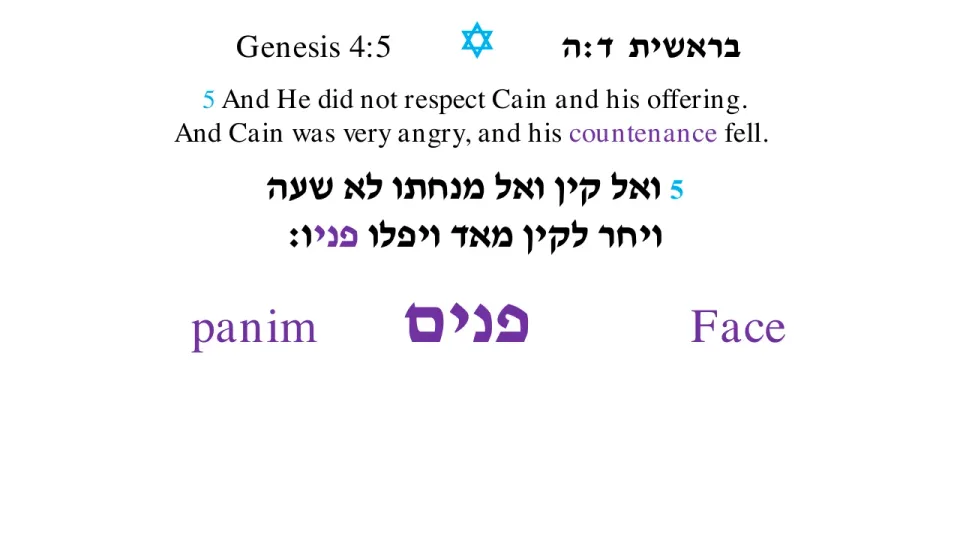 Genesis 4:5 — countenance = panim (face)Slide 62 · step 1 of 2
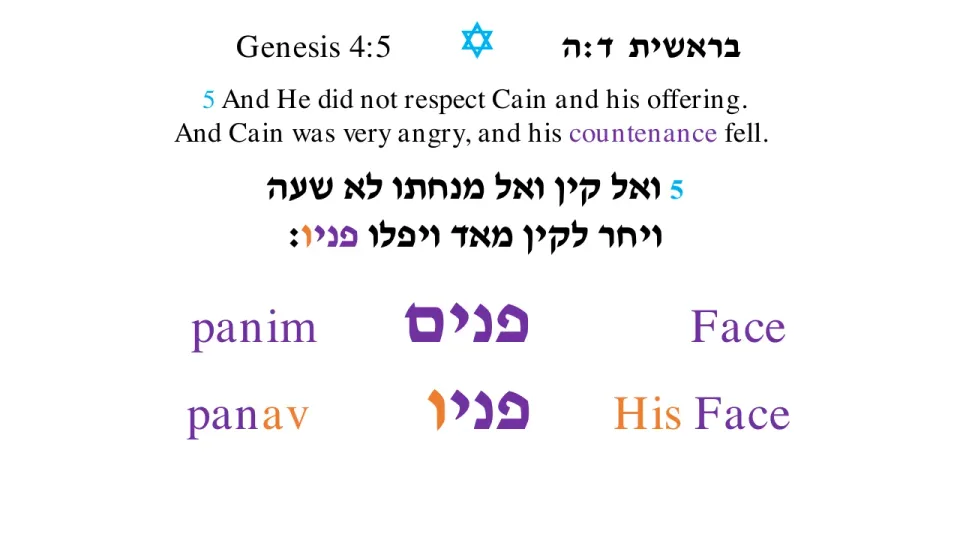 Genesis 4:5 — panim (face) becomes panav (his face)Slide 63 · step 2 of 2
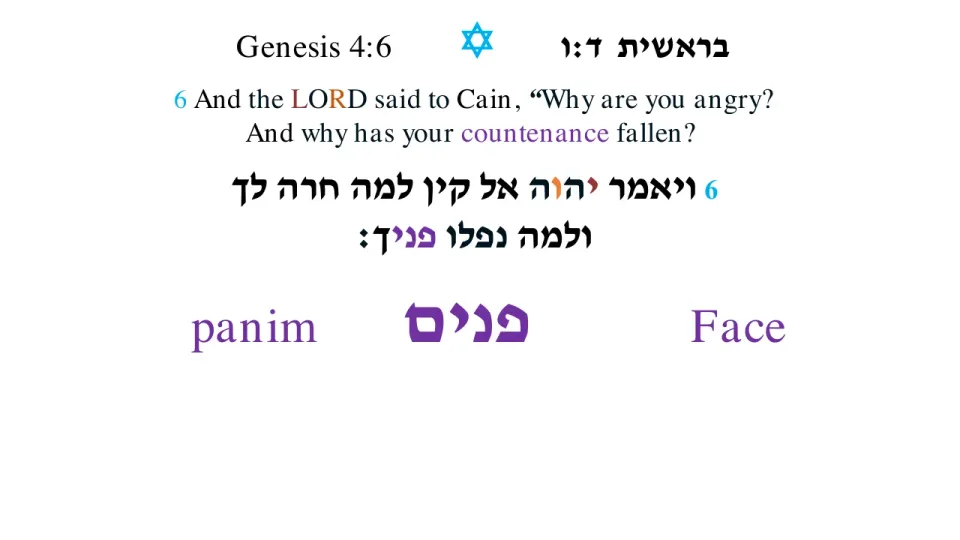 Genesis 4:6 — the LORD asks Cain why his face has fallen (panim)Slide 64 · step 1 of 4
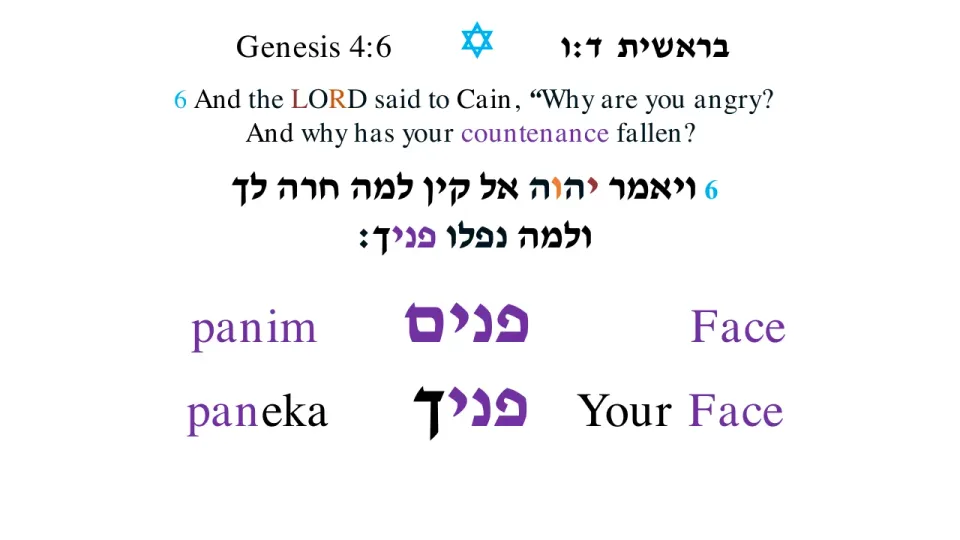 Genesis 4:6 — panim (face) becomes paneka (your face)Slide 65 · step 2 of 4
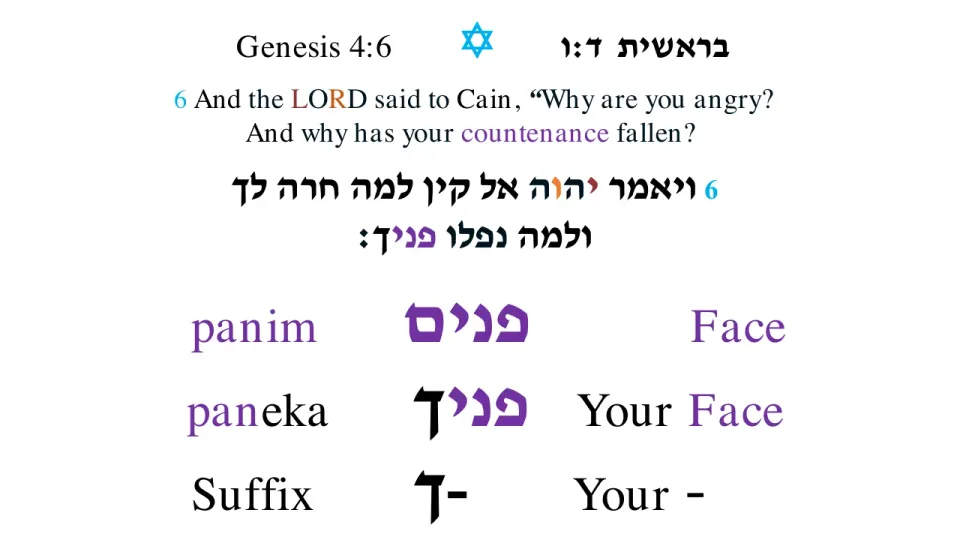 Genesis 4:6 — the suffix ך (-ka) means “your”Slide 66 · step 3 of 4
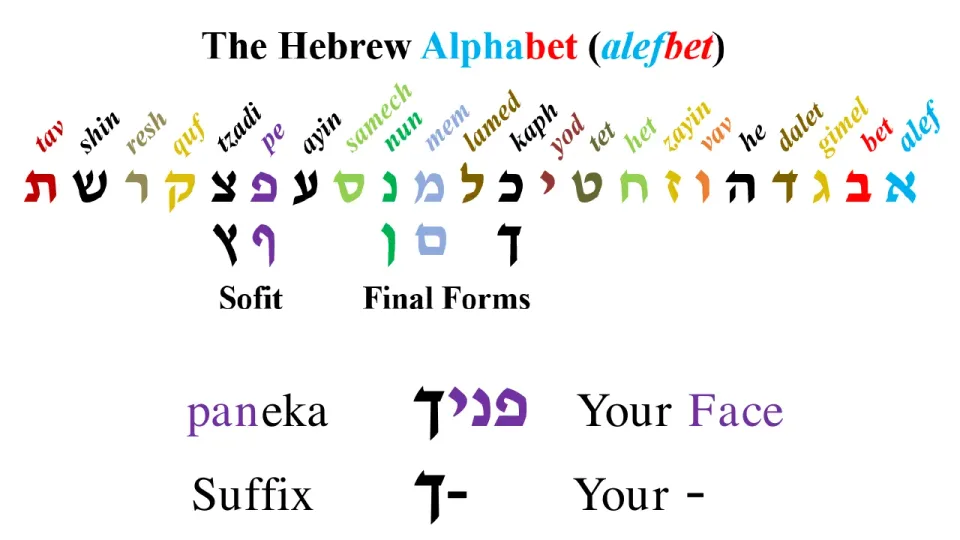 The Hebrew alphabet (alefbet) with final forms; paneka and the suffix ךSlide 67 · step 4 of 4
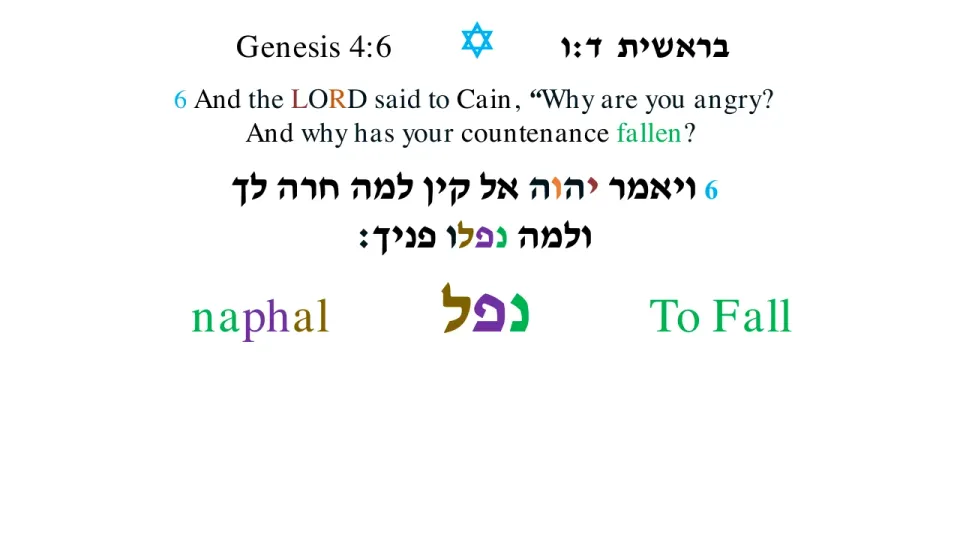 Genesis 4:6 — naphal (to fall)Slide 68 · step 1 of 2
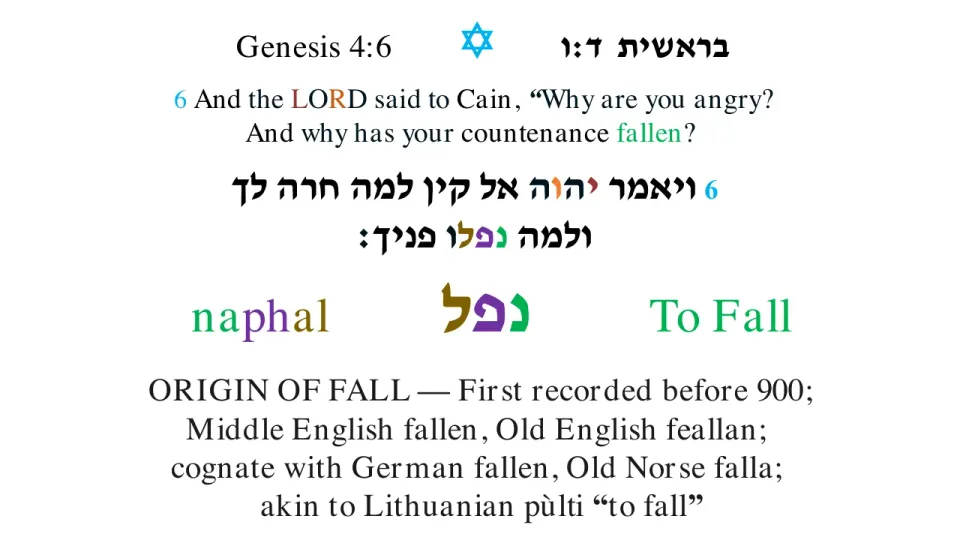 Genesis 4:6 — naphal (to fall) and the English origin of “fall”Slide 69 · step 2 of 2
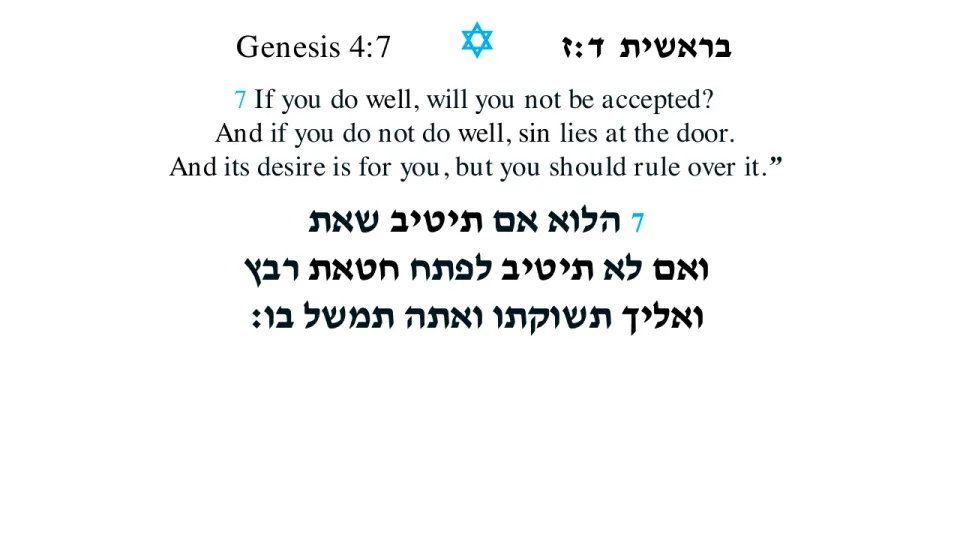 Genesis 4:7 — if you do well, will you not be accepted? Sin lies at the doorSlide 70 · step 1 of 3
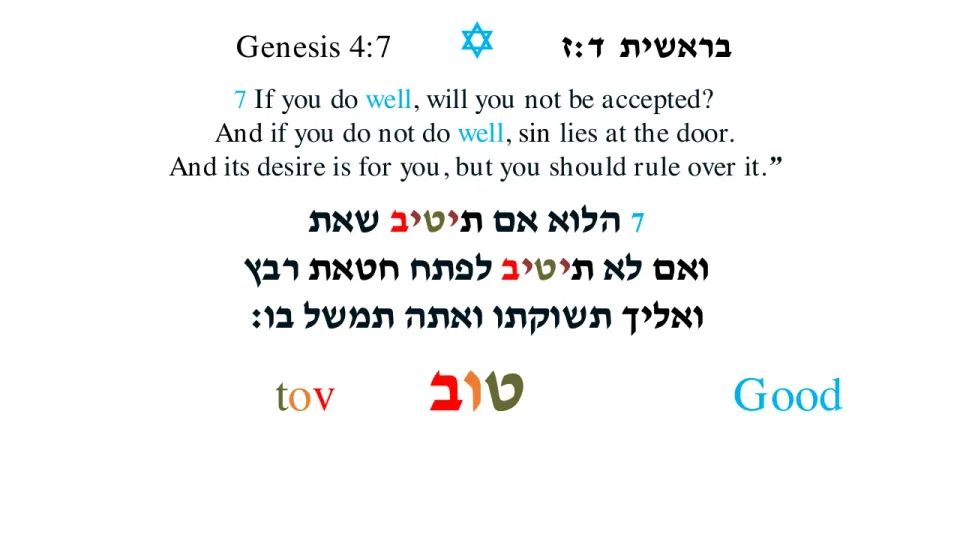 Genesis 4:7 — tov (good): “do well” comes from the root of goodSlide 71 · step 2 of 3
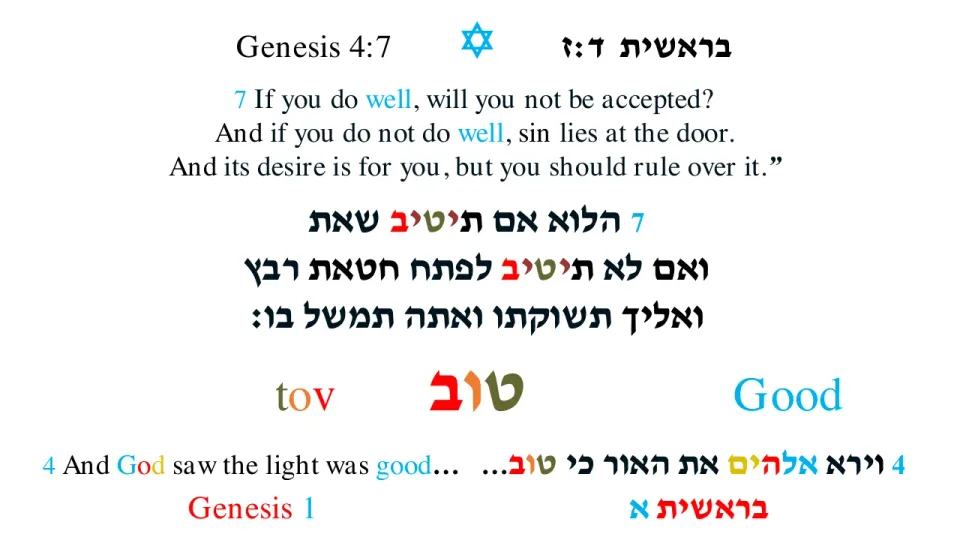 Genesis 4:7 — tov (good), compared with Genesis 1:4 “God saw the light was good”Slide 72 · step 3 of 3
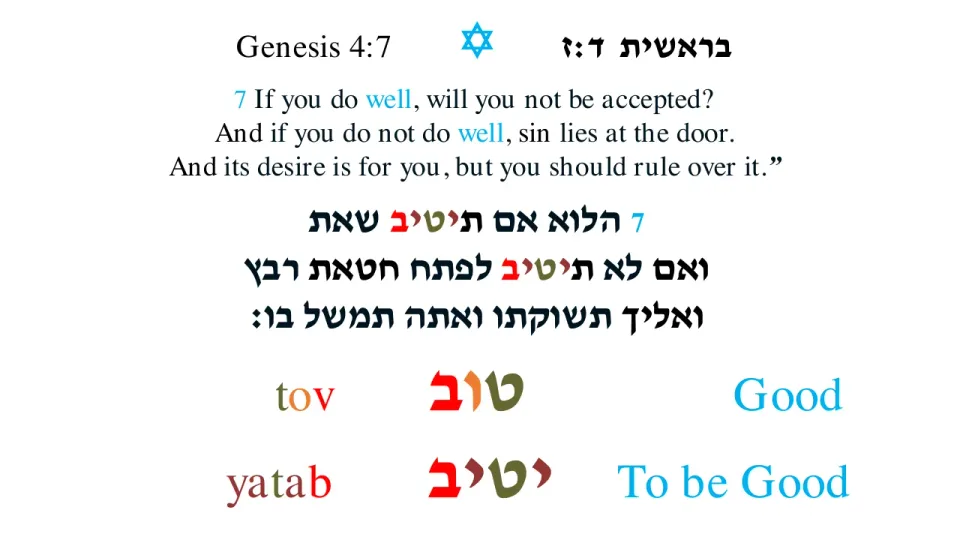 Genesis 4:7 — yatab (to be good) alongside tov (good)Slide 73
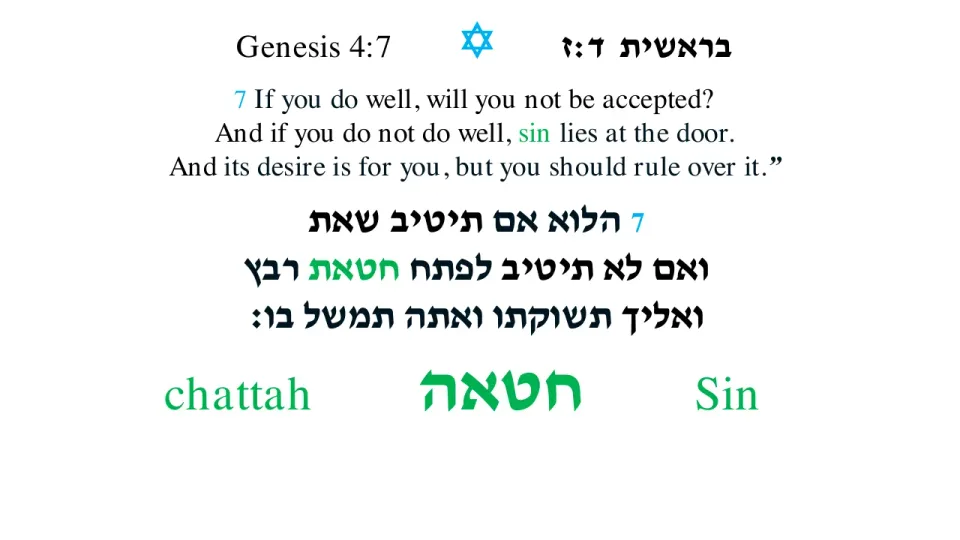 Genesis 4:7 — chattah (sin) lies at the doorSlide 74 · step 1 of 2
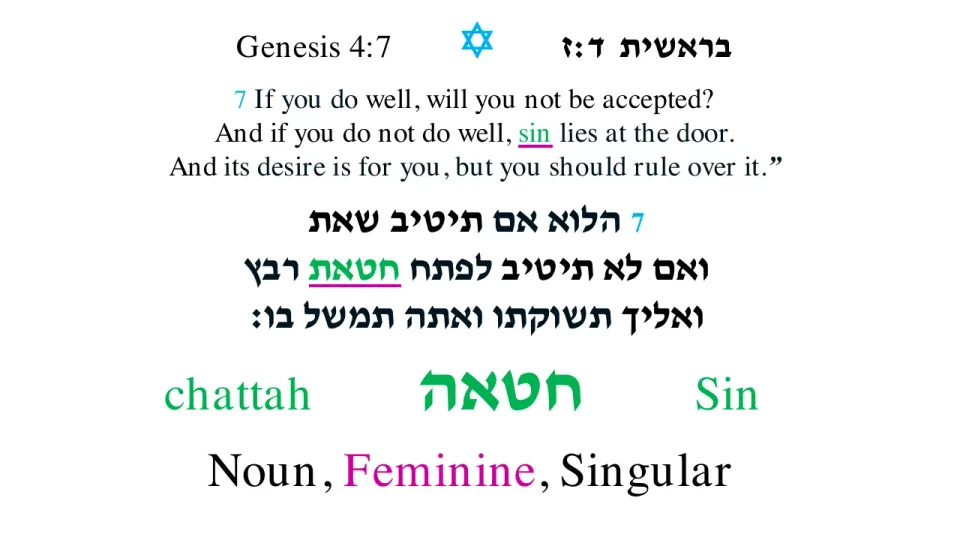 Genesis 4:7 — chattah (sin) is a feminine singular nounSlide 75 · step 2 of 2
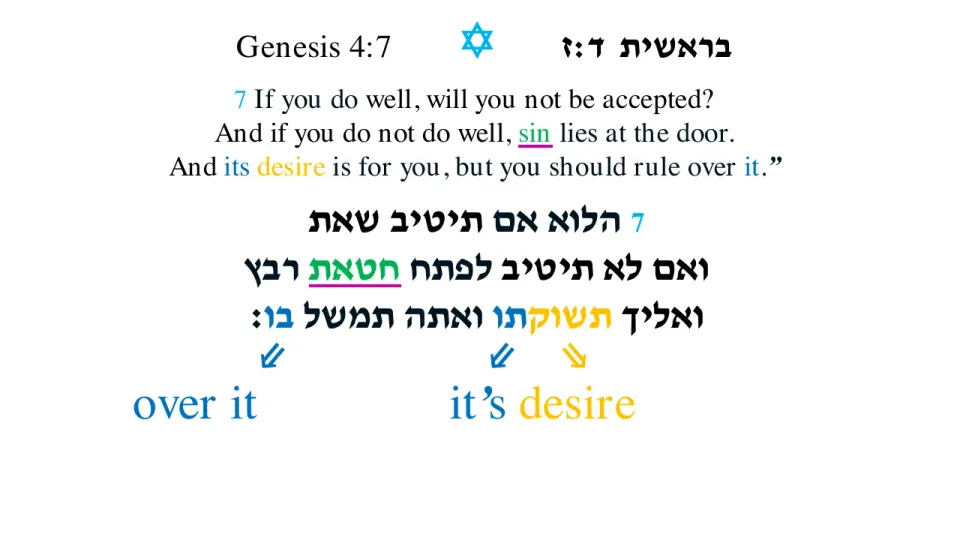 Genesis 4:7 — “its desire” and “over it” traced to the Hebrew endings -וSlide 76 · step 1 of 4
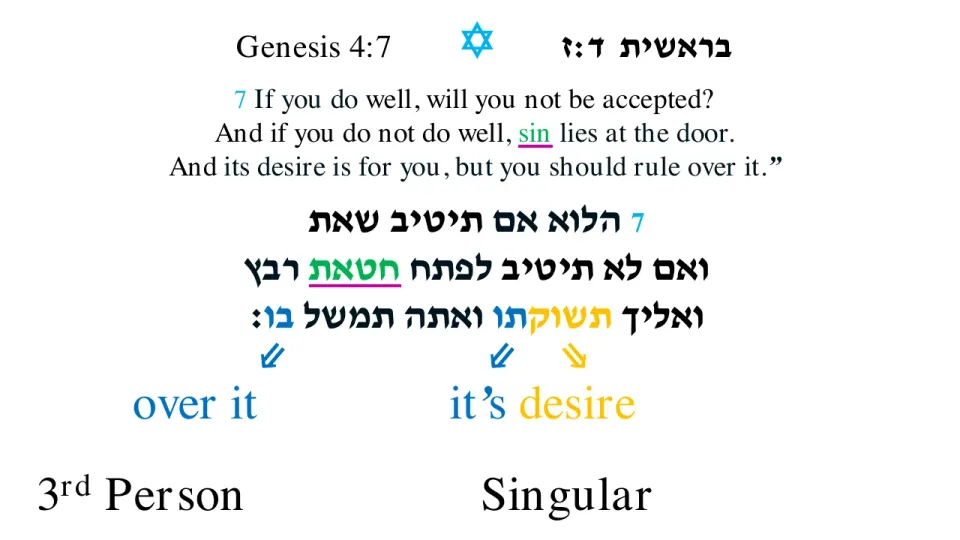 Genesis 4:7 — the suffixes are 3rd person singularSlide 77 · step 2 of 4
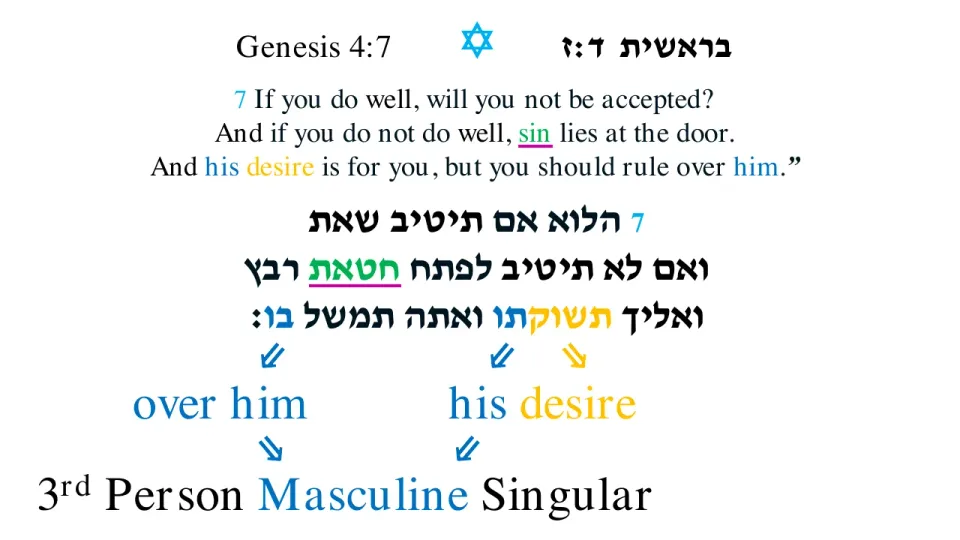 Genesis 4:7 — “his desire … rule over him”: 3rd person masculine singularSlide 78 · step 3 of 4
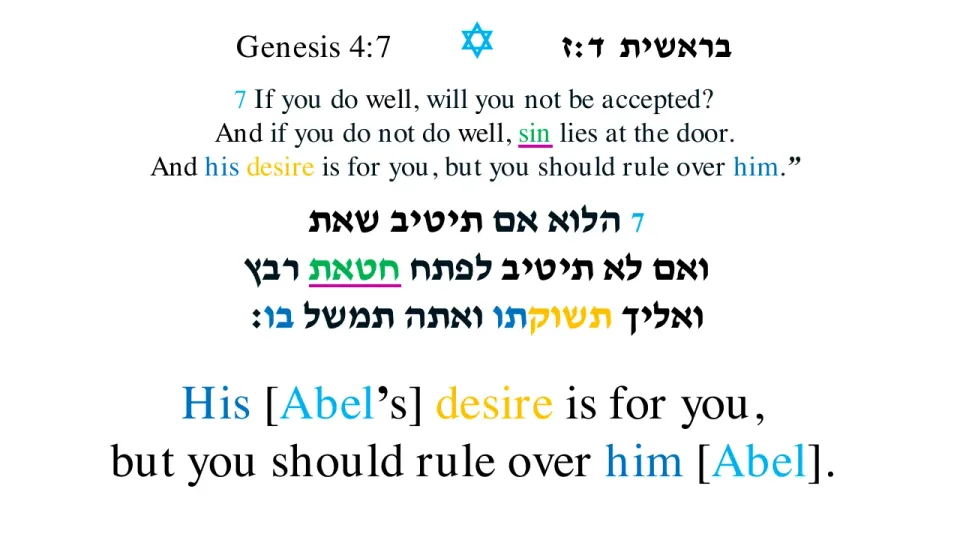 Genesis 4:7 — “His [Abel’s] desire is for you, but you should rule over him [Abel]”Slide 79 · step 4 of 4
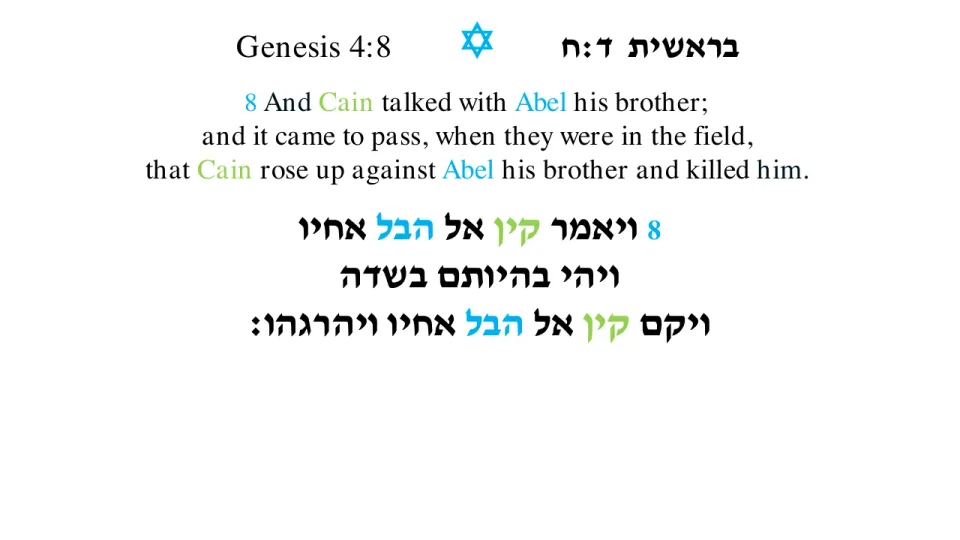 Genesis 4:8 — Cain rose up against Abel his brother and killed himSlide 80 · step 1 of 3
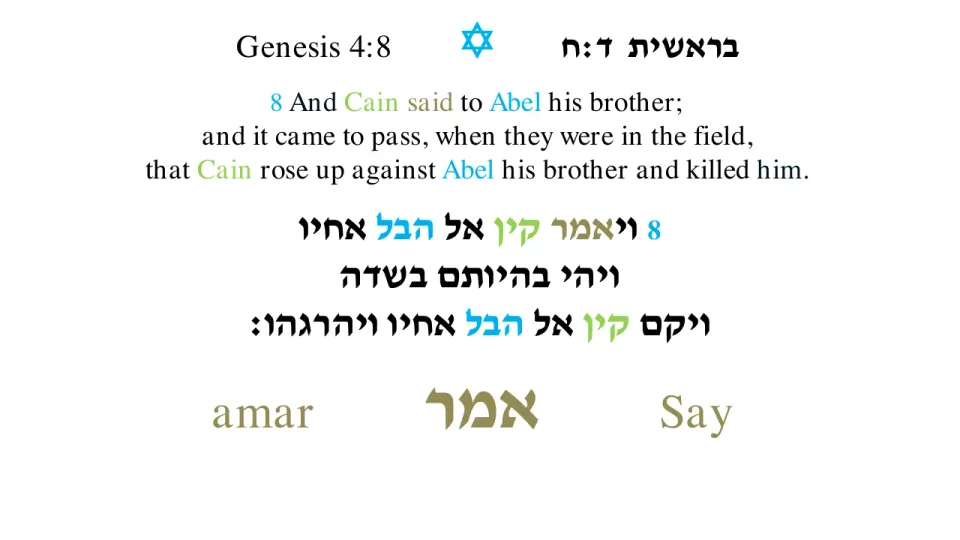 Genesis 4:8 — Cain said (amar, אמר) to Abel his brotherSlide 81 · step 2 of 3
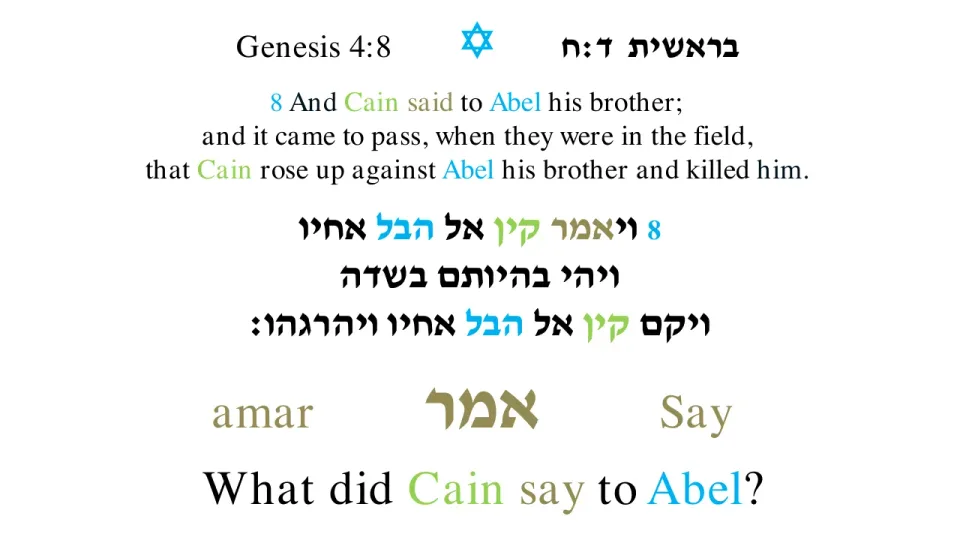 Genesis 4:8 — What did Cain say to Abel? (amar, אמר)Slide 82 · step 3 of 3
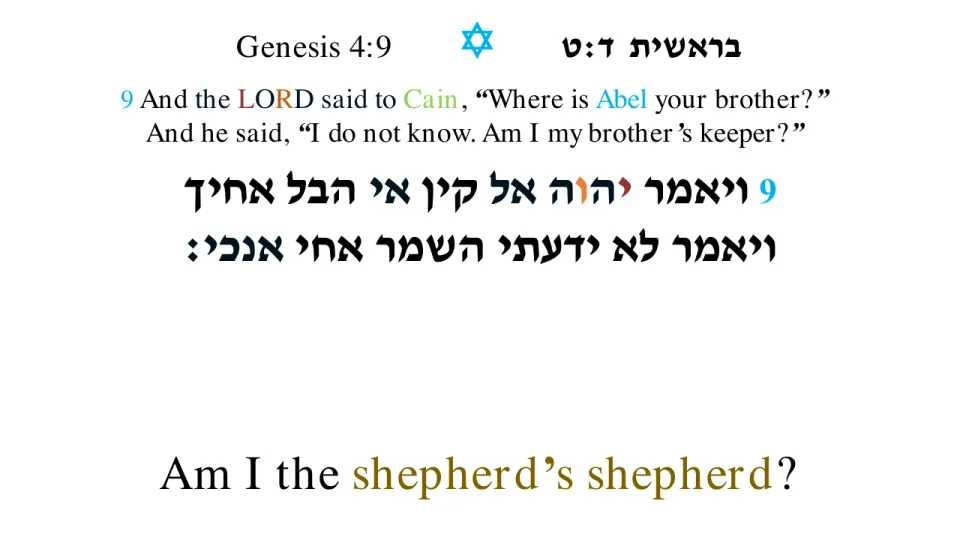 Genesis 4:9 — “Am I my brother’s keeper?” = Am I the shepherd’s shepherd?Slide 83 · step 1 of 7
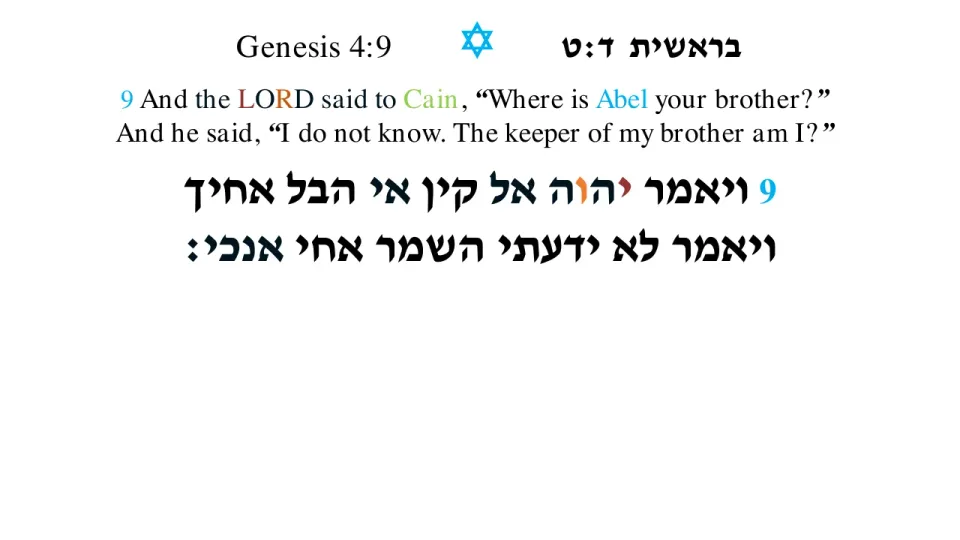 Genesis 4:9 — “The keeper of my brother am I?”Slide 84 · step 2 of 7
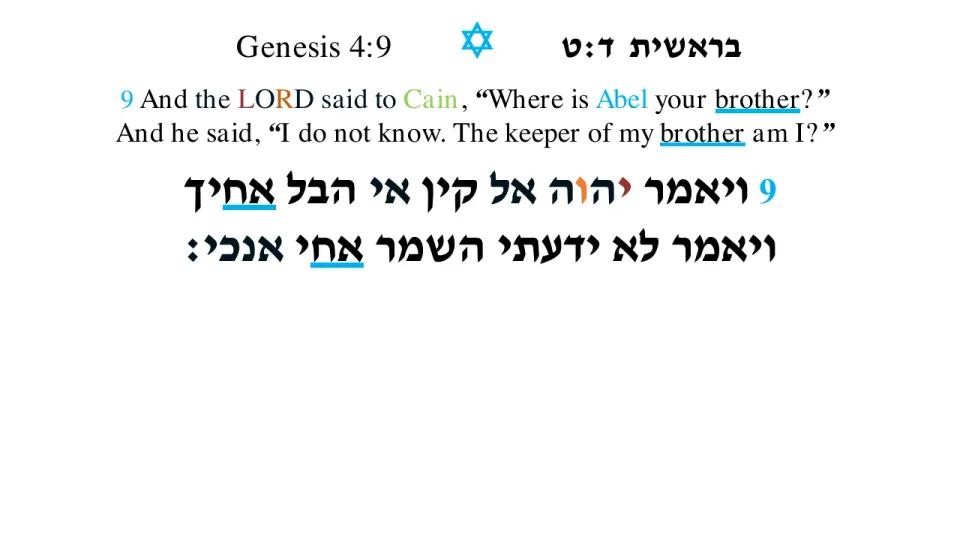 Genesis 4:9 — “brother” underlined twice (אחיך, אחי)Slide 85 · step 3 of 7
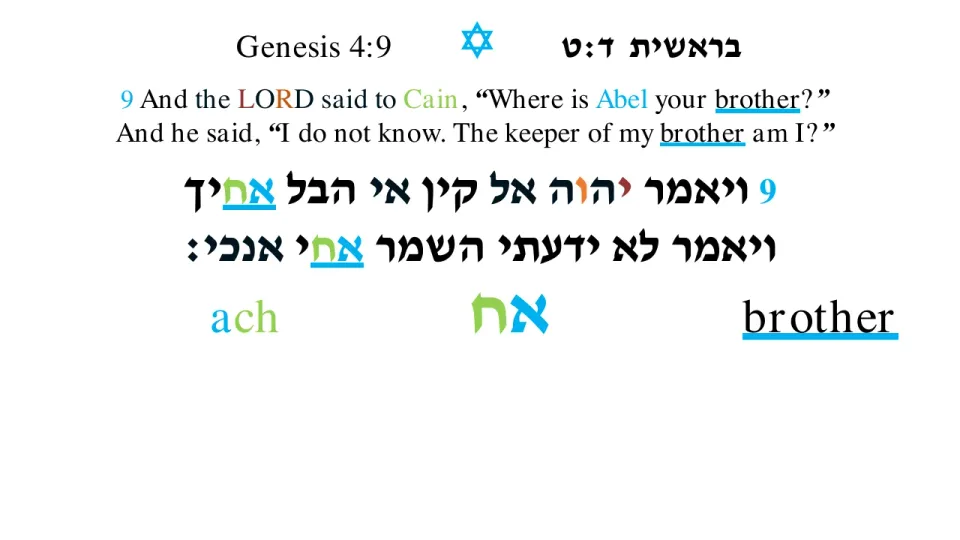 Genesis 4:9 — brother (ach, אח)Slide 86 · step 4 of 7
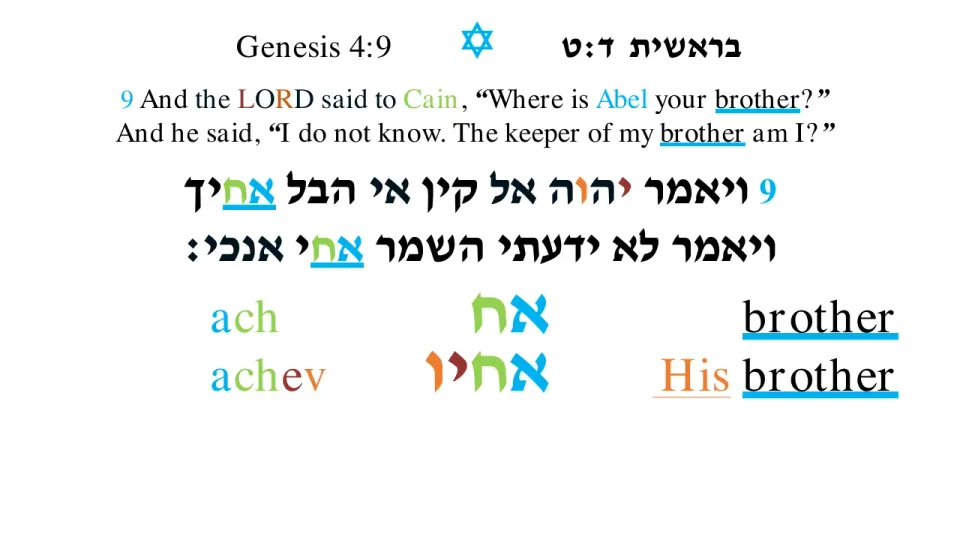 Genesis 4:9 — brother (ach, אח) and “his brother” (achev, אחיו)Slide 87 · step 5 of 7
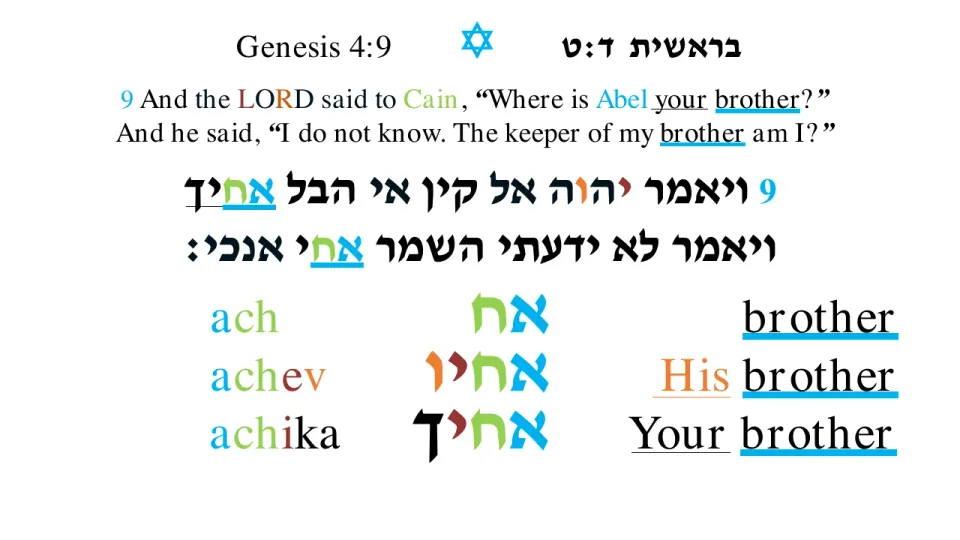 Genesis 4:9 — brother, his brother, your brother (achika, אחיך)Slide 88 · step 6 of 7
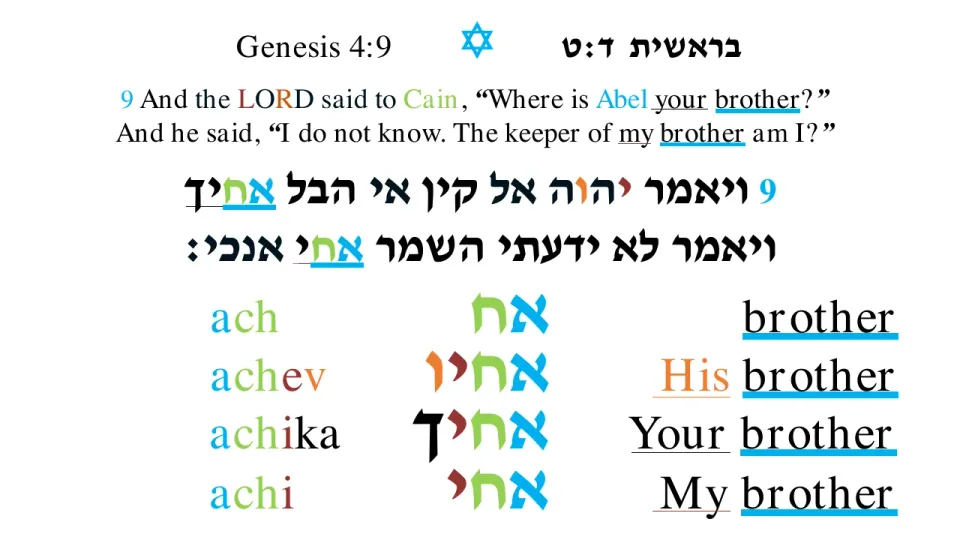 Genesis 4:9 — brother, his, your, my brother (achi, אחי)Slide 89 · step 7 of 7
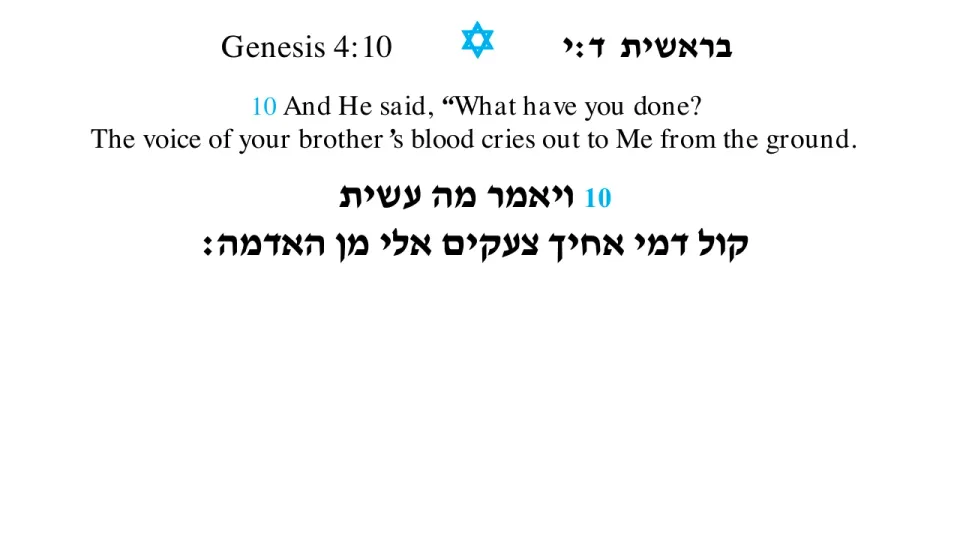 Genesis 4:10 — “What have you done? The voice of your brother’s blood cries out”Slide 90 · step 1 of 5
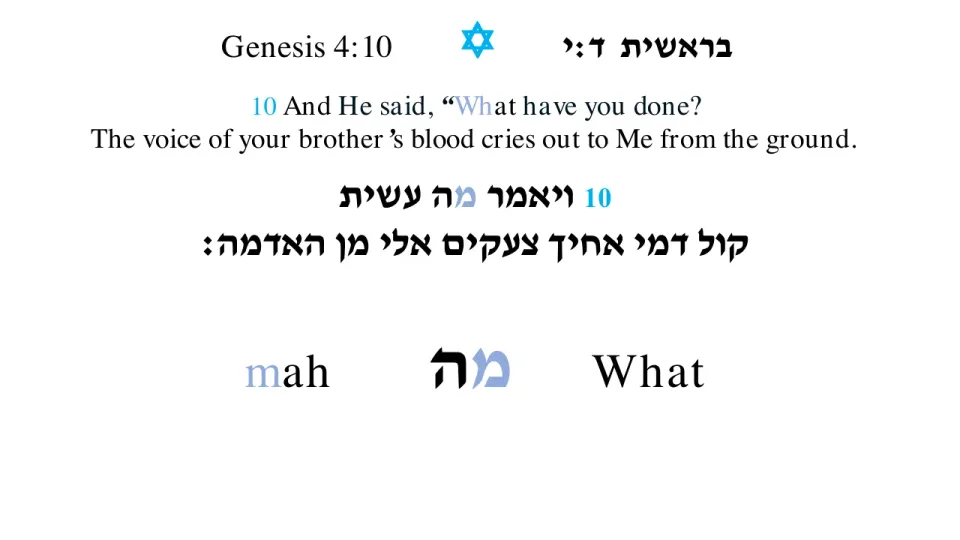 Genesis 4:10 — “What” (mah, מה)Slide 91 · step 2 of 5
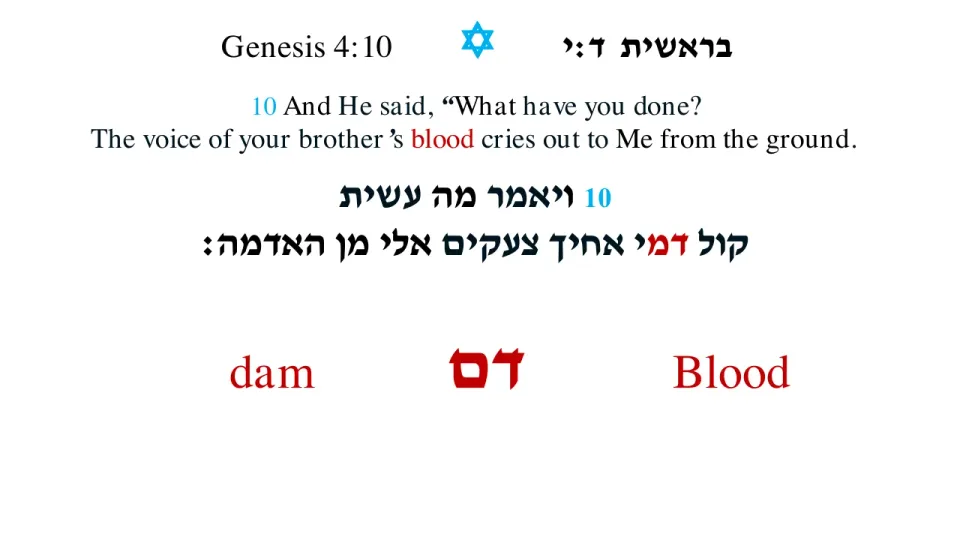 Genesis 4:10 — “blood” (dam, דם) in redSlide 92 · step 3 of 5
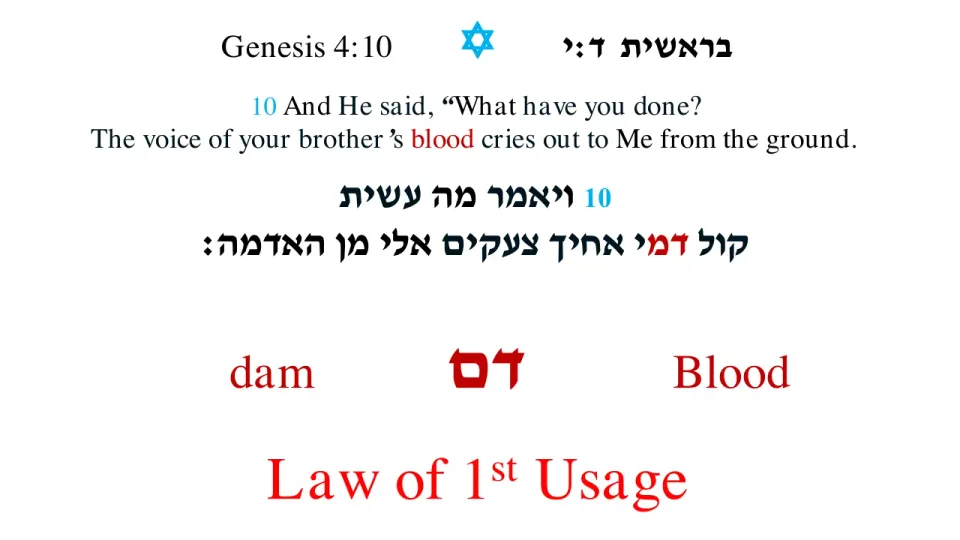 Genesis 4:10 — first use of “blood” (dam, דם): the Law of First UsageSlide 93 · step 4 of 5
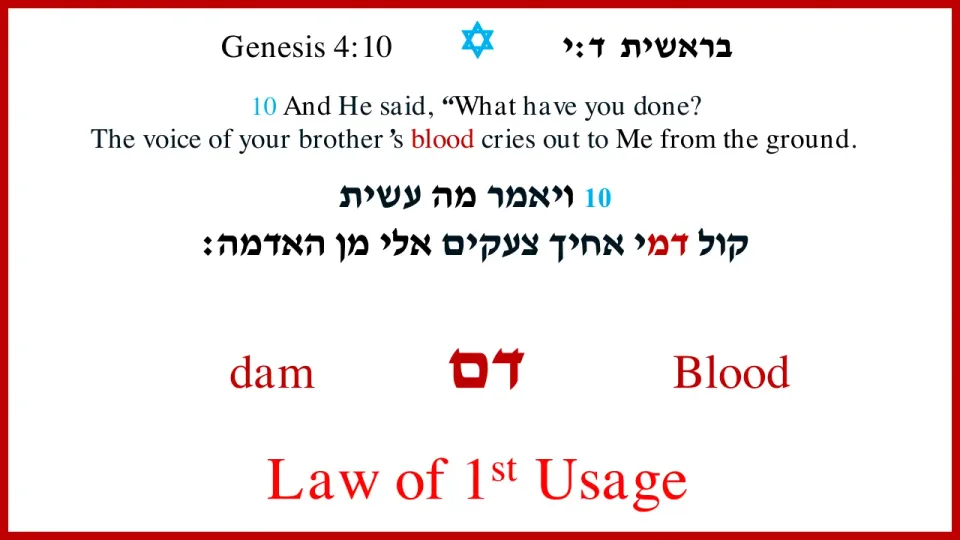 Genesis 4:10 — first use of “blood” (dam, דם): the Law of First UsageSlide 94 · step 5 of 5
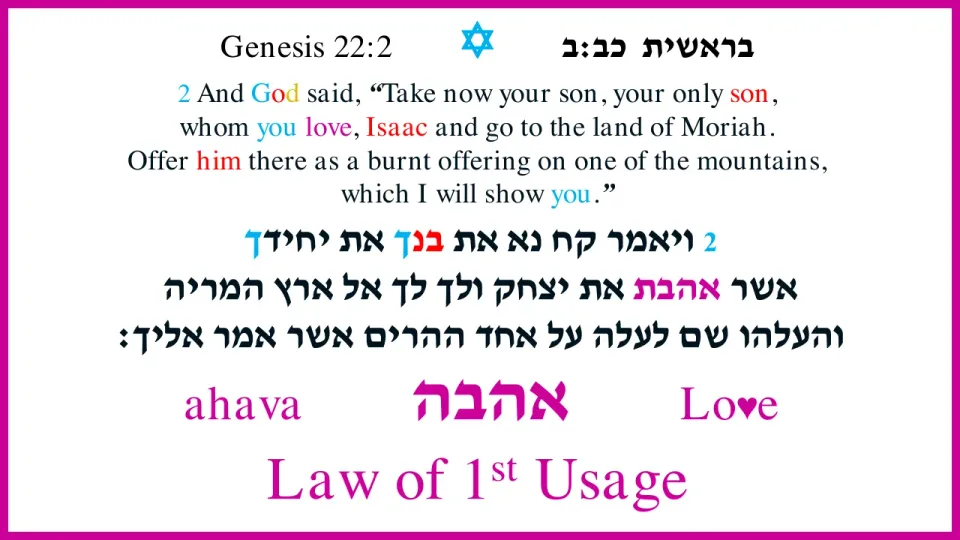 Genesis 22:2 — first use of “love” (ahava, אהבה): the Law of First UsageSlide 95
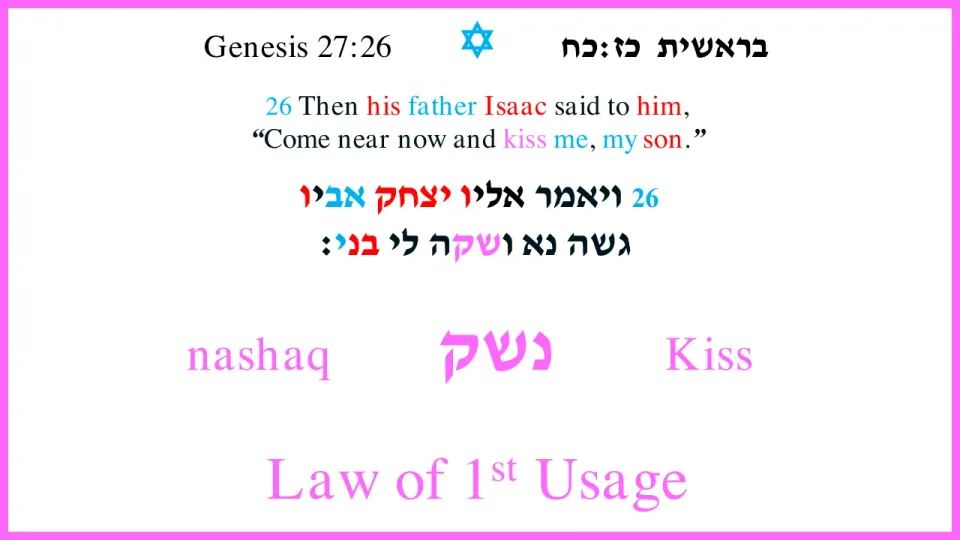 Genesis 27:26 — first use of “kiss” (nashaq, נשק): the Law of First UsageSlide 96
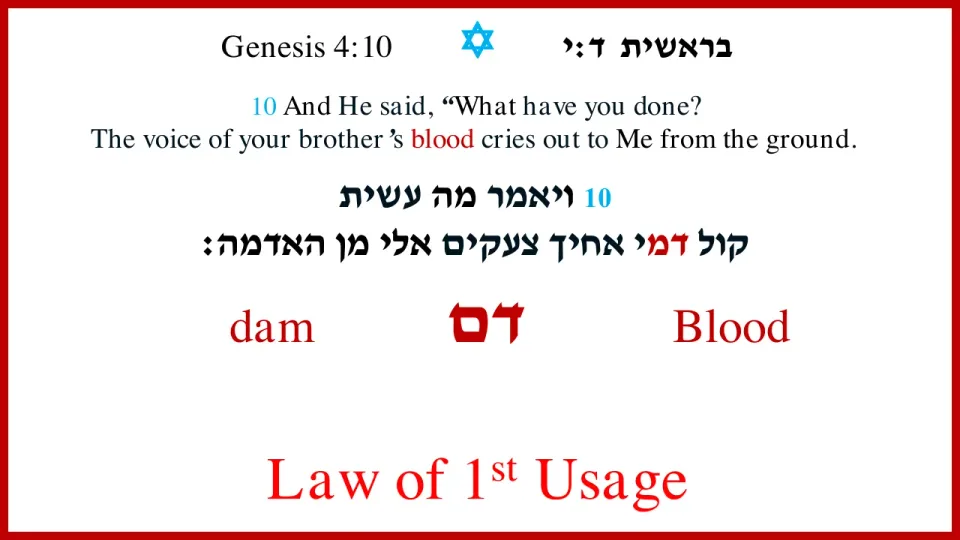 Genesis 4:10 — first use of “blood” (dam, דם): the Law of First UsageSlide 97
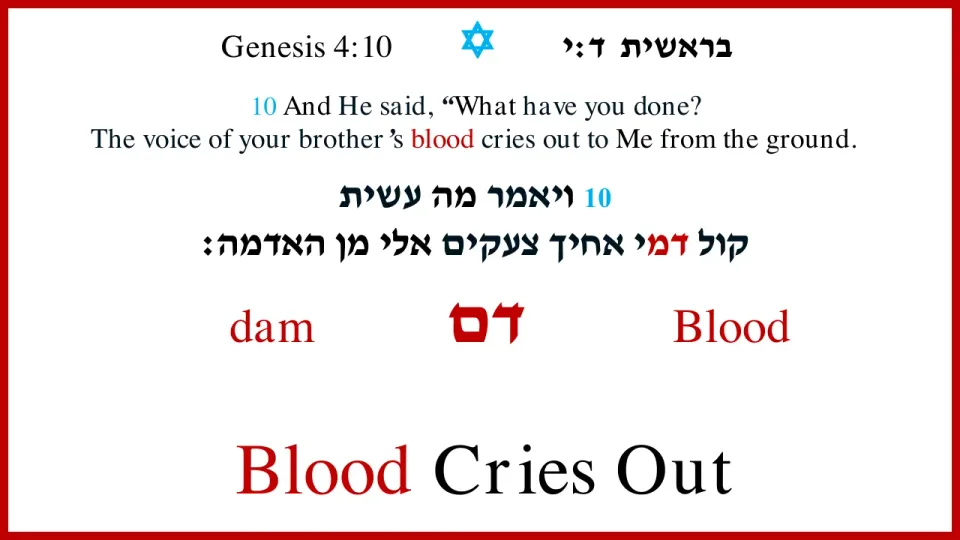 Genesis 4:10 — “Blood Cries Out”: Abel's blood (dam, דם)Slide 98 · step 1 of 3
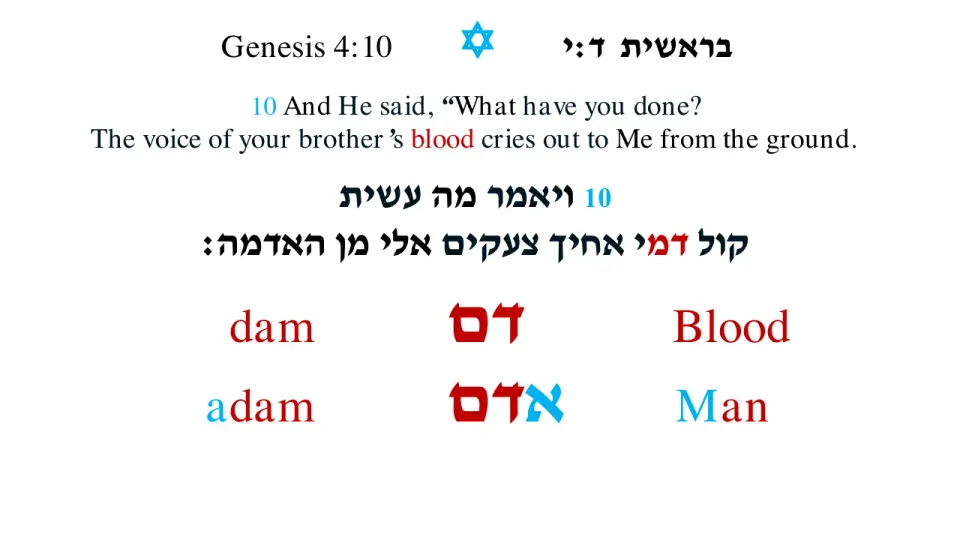 Genesis 4:10 — blood (dam, דם) inside man (adam, אדם)Slide 99 · step 2 of 3
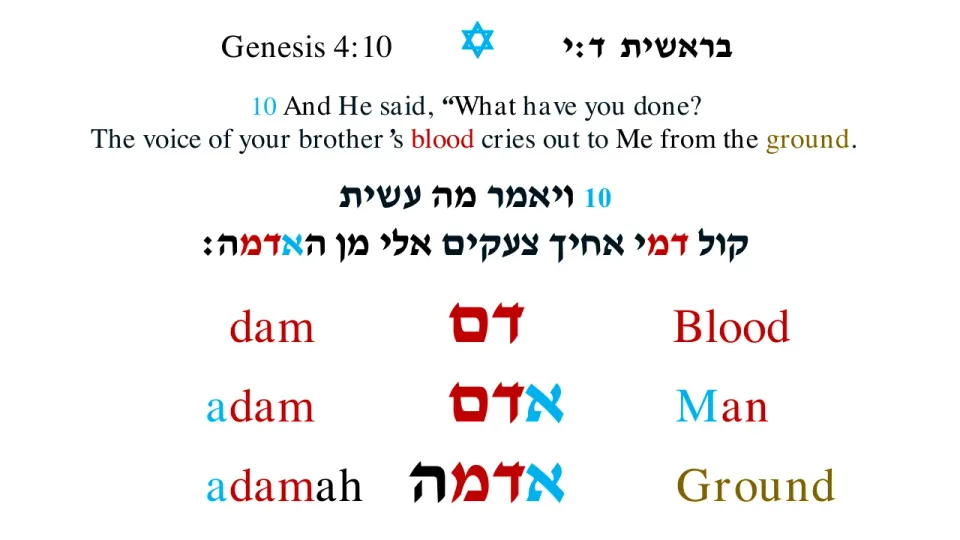 Genesis 4:10 — blood (dam), man (adam) and ground (adamah)Slide 100 · step 3 of 3
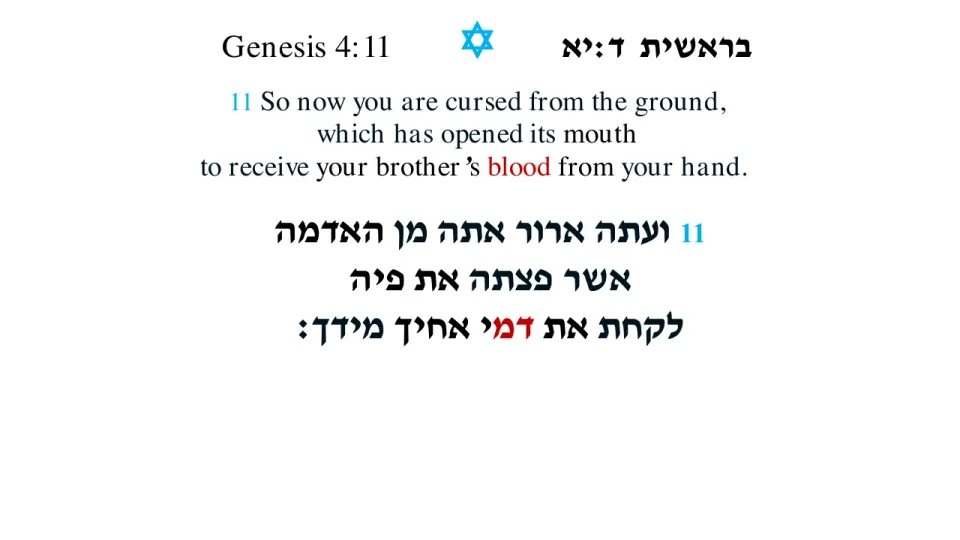 Genesis 4:11 — the ground opened its mouth to receive Abel's bloodSlide 101 · step 1 of 3
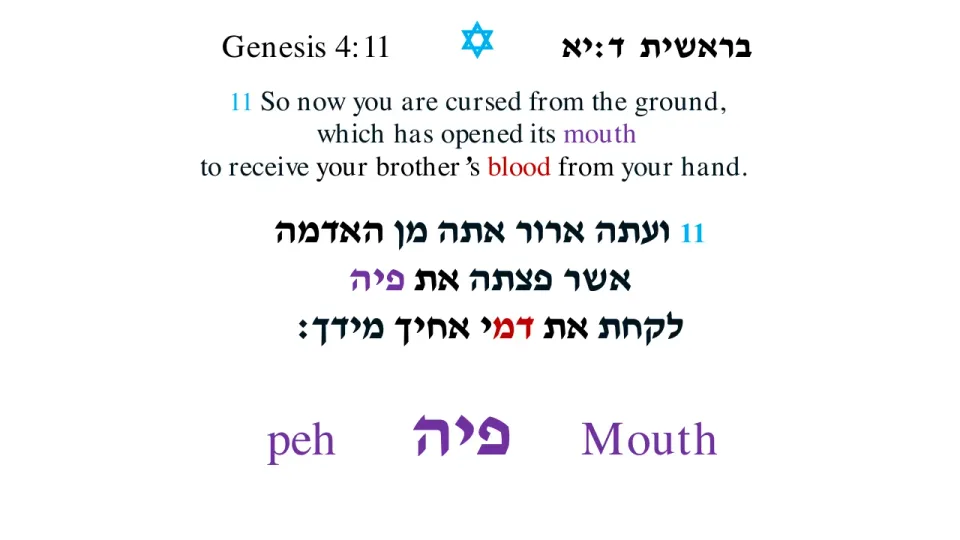 Genesis 4:11 — the ground's mouth (peh, פה)Slide 102 · step 2 of 3
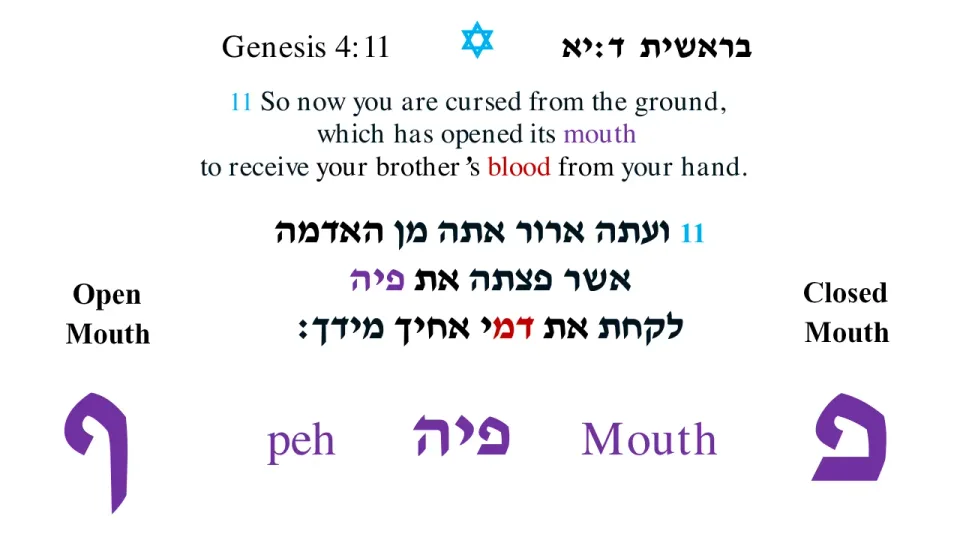 Genesis 4:11 — peh (mouth): the open-mouth ף and closed-mouth פSlide 103 · step 3 of 3
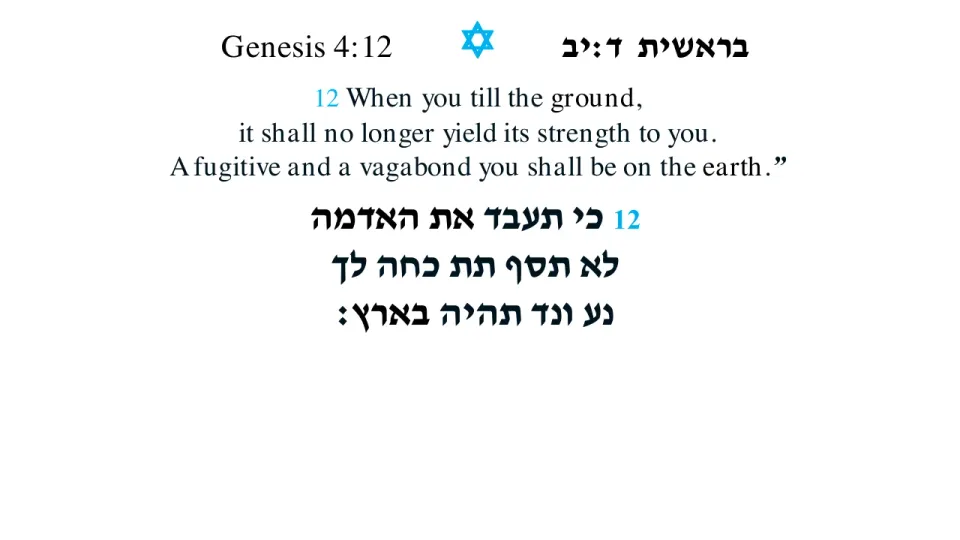 Genesis 4:12 — Cain to be a fugitive and a vagabond on the earthSlide 104 · step 1 of 4
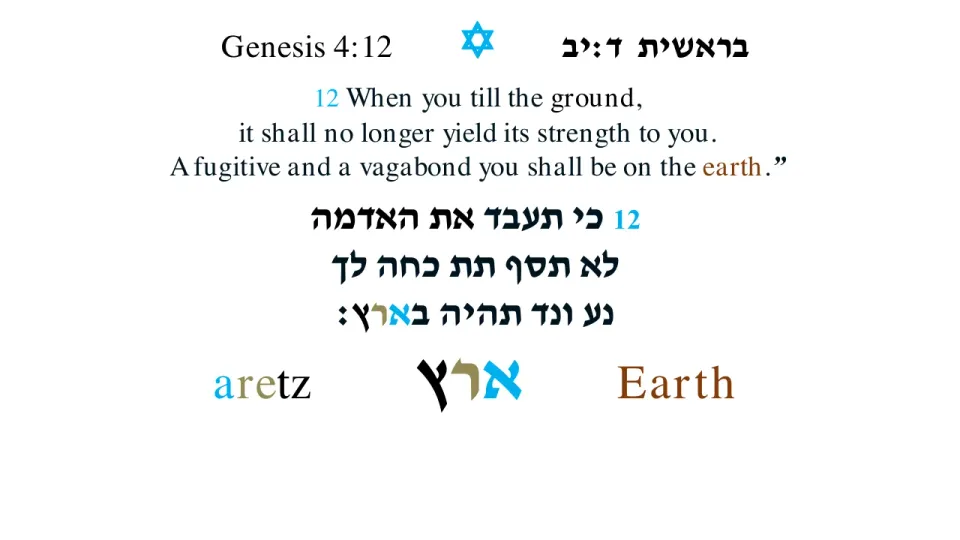 Genesis 4:12 — earth (aretz, ארץ)Slide 105 · step 2 of 4
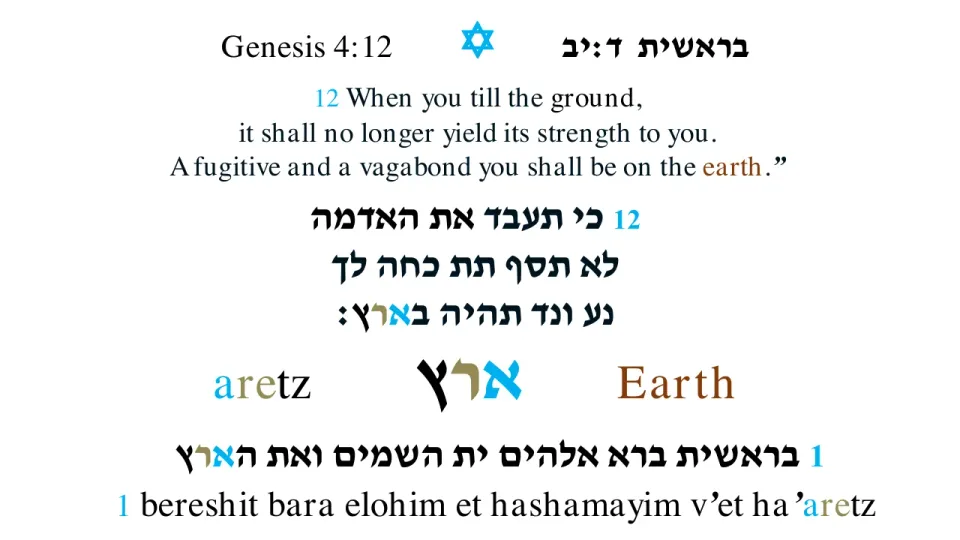 Genesis 4:12 — earth (aretz, ארץ) linked to Genesis 1:1Slide 106 · step 3 of 4
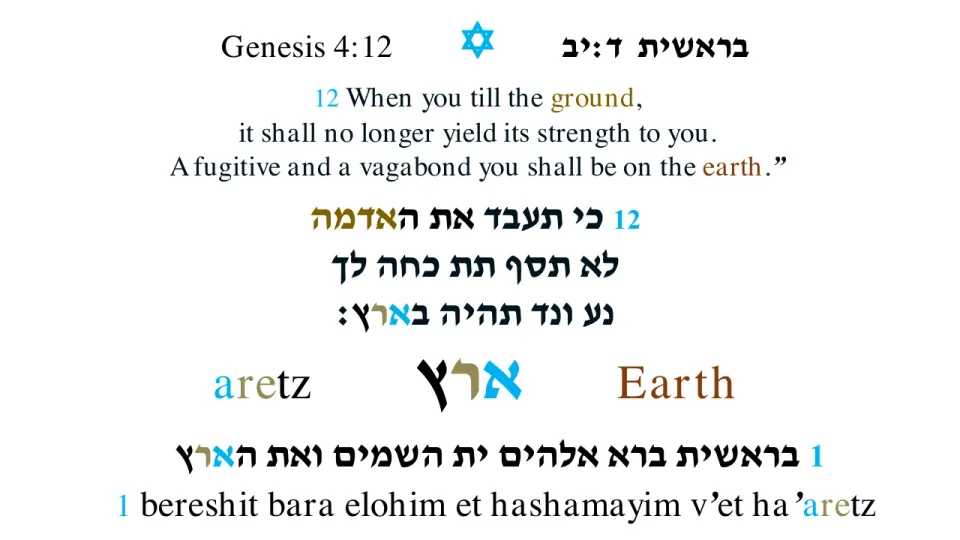 Genesis 4:12 — ground (adamah) and earth (aretz), with Genesis 1:1Slide 107 · step 4 of 4
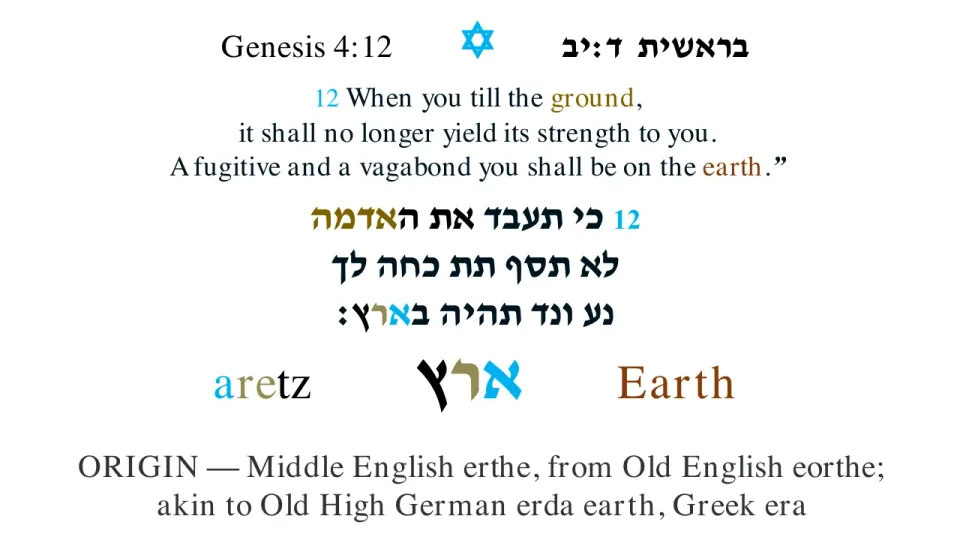 Earth (aretz, ארץ) and the origin of the English word “earth”Slide 108
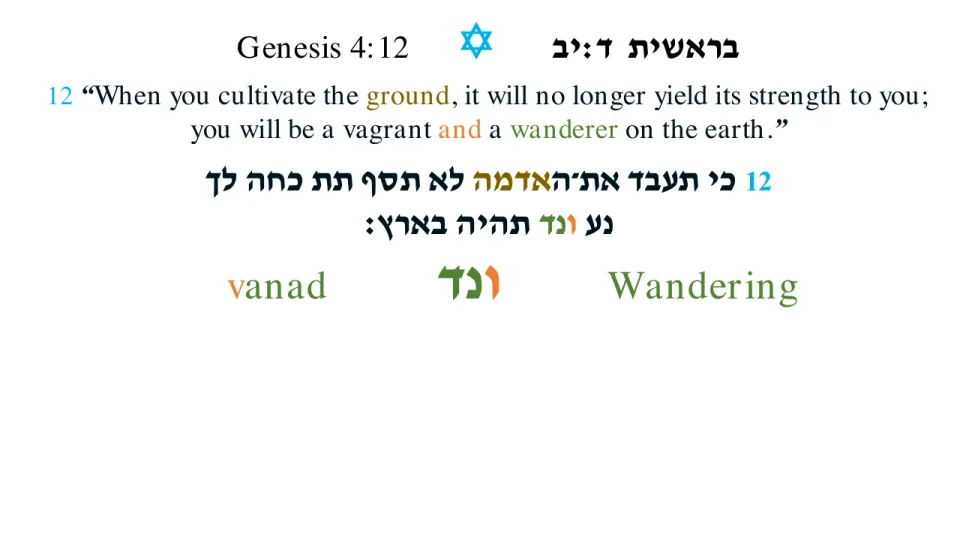 Genesis 4:12 — vagrant and wanderer (vanad, ונד)Slide 109 · step 1 of 2
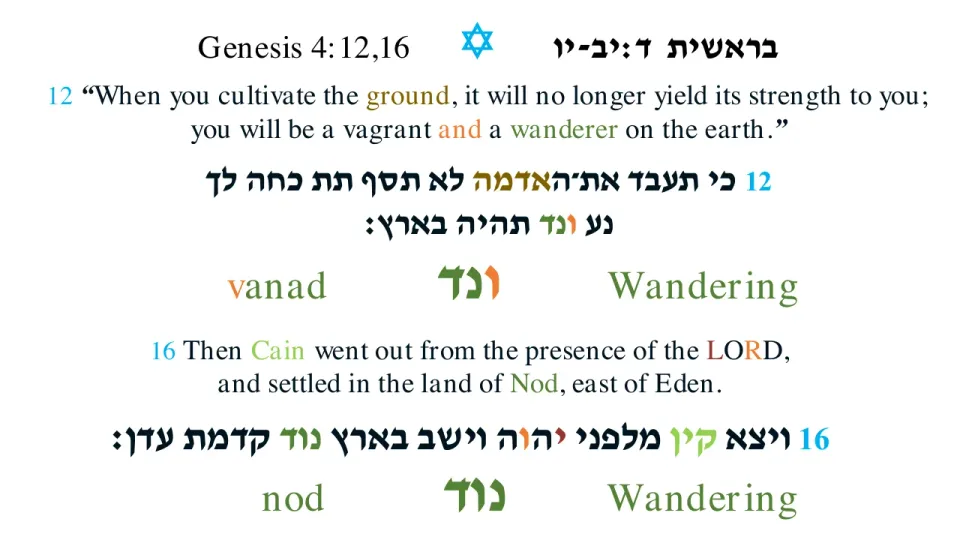 Genesis 4:12 and 4:16 — wandering: vanad (ונד) and the land of Nod (נוד)Slide 110 · step 2 of 2
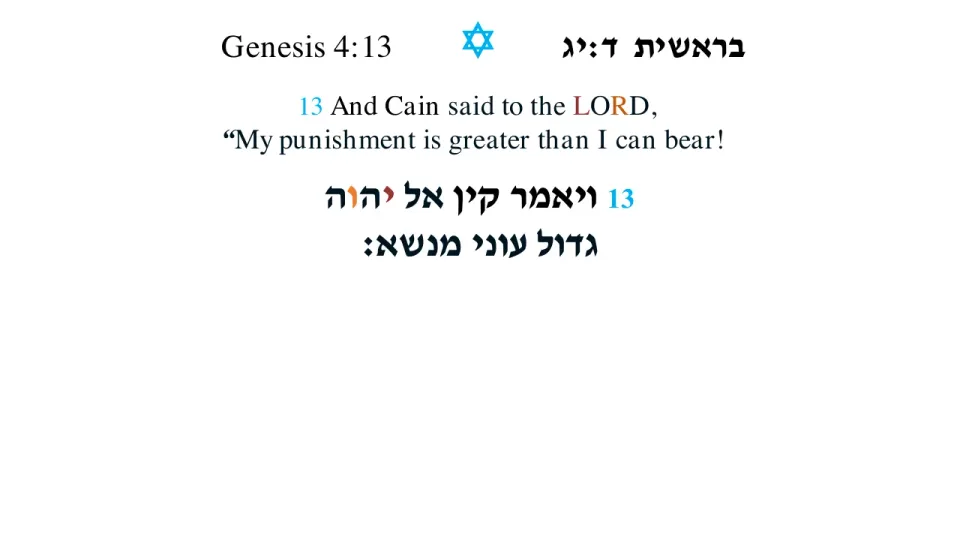 Genesis 4:13 — “My punishment is greater than I can bear”Slide 111 · step 1 of 4
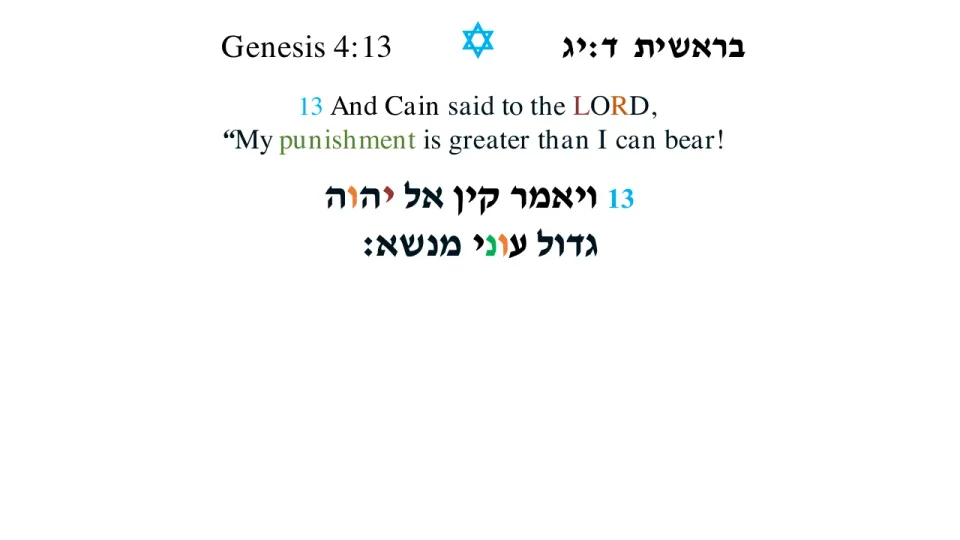 Genesis 4:13 — “punishment” highlighted (עוני)Slide 112 · step 2 of 4
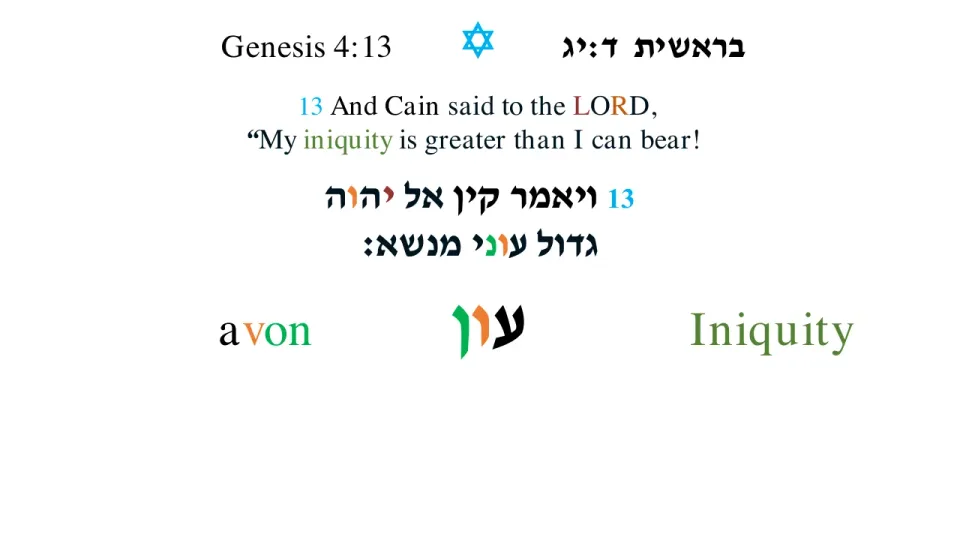 Genesis 4:13 — “iniquity” (avon, עון) instead of “punishment”Slide 113 · step 3 of 4
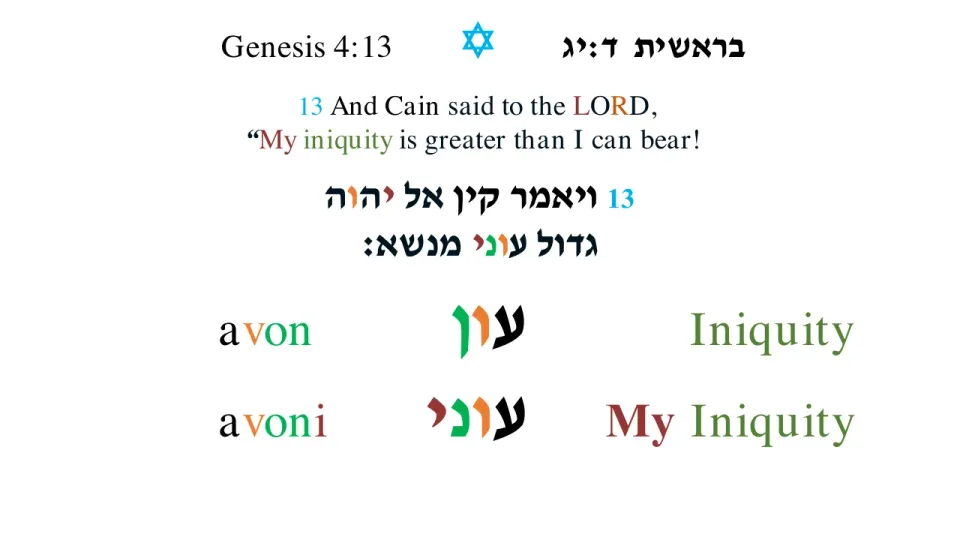 Genesis 4:13 — “My iniquity” (avoni, עוני): the yod means “my”Slide 114 · step 4 of 4
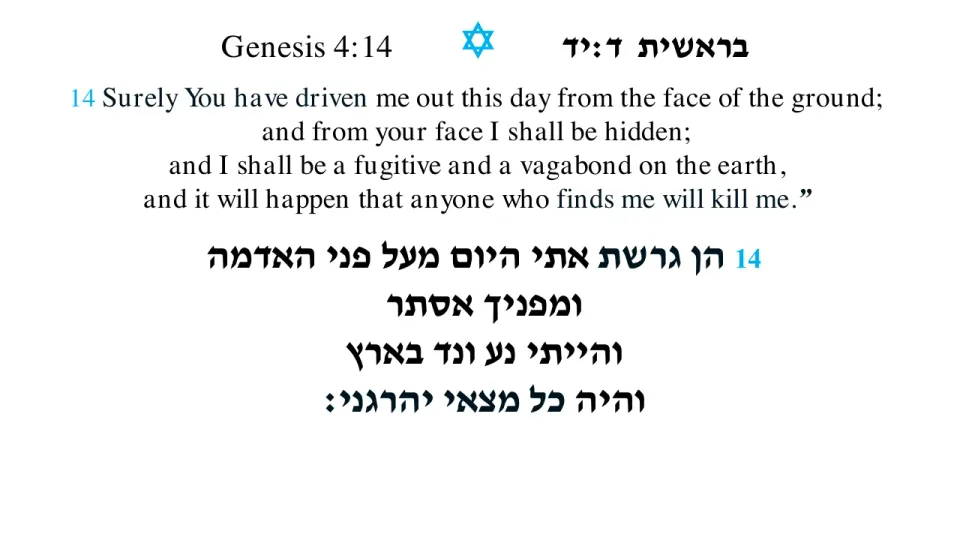 Genesis 4:14 — “I shall be hidden… a fugitive and a vagabond”Slide 115 · step 1 of 6
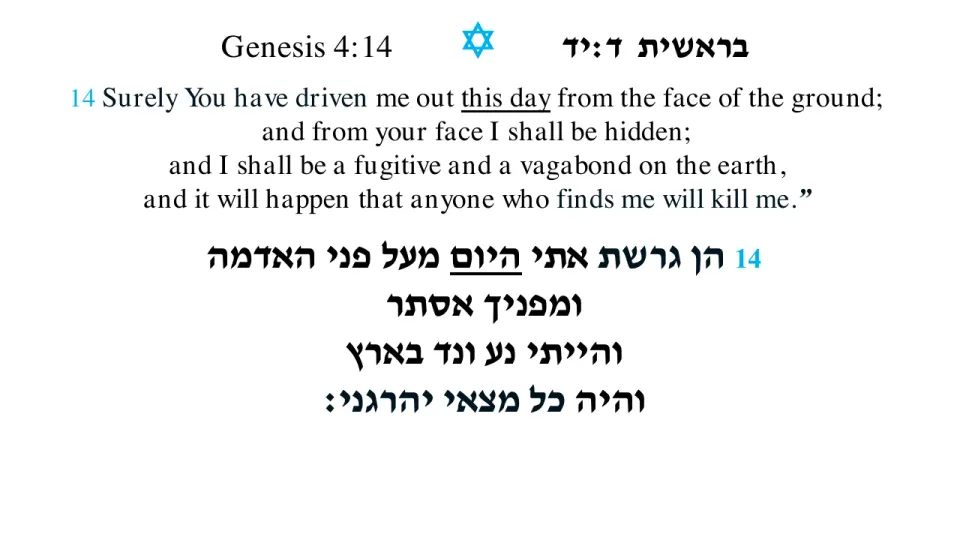 Genesis 4:14 — “this day” (היום) underlinedSlide 116 · step 2 of 6
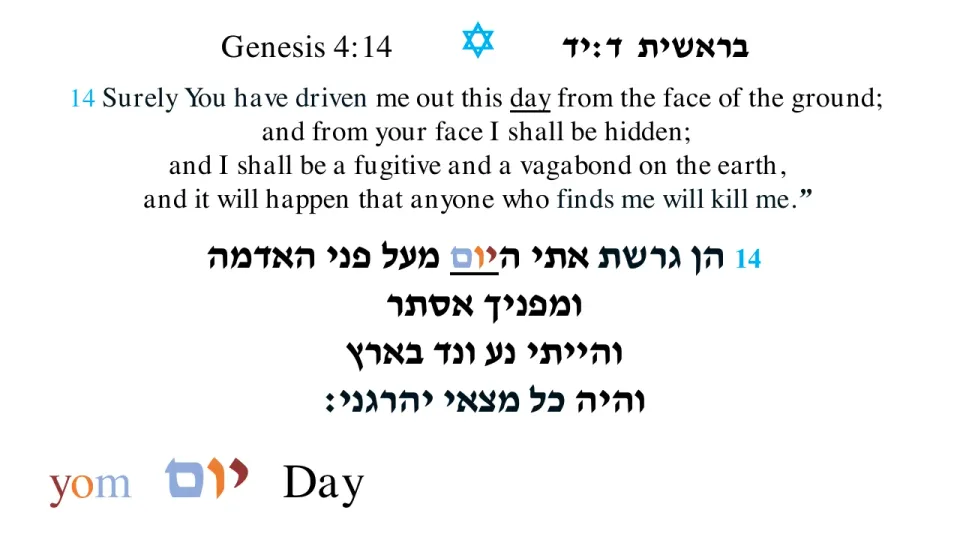 Genesis 4:14 — “day” (yom, יום)Slide 117 · step 3 of 6
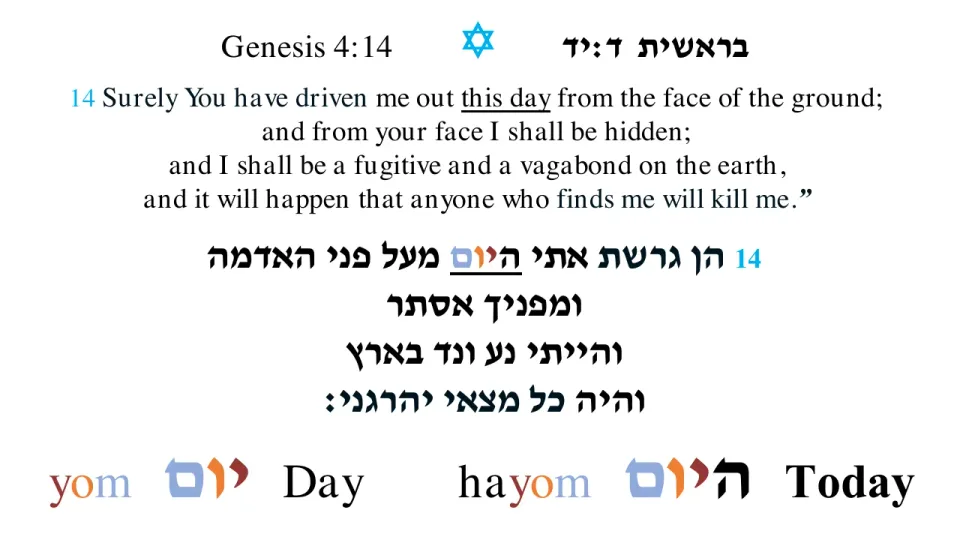 Genesis 4:14 — “today” (hayom, היום) from “day” (yom, יום)Slide 118 · step 4 of 6
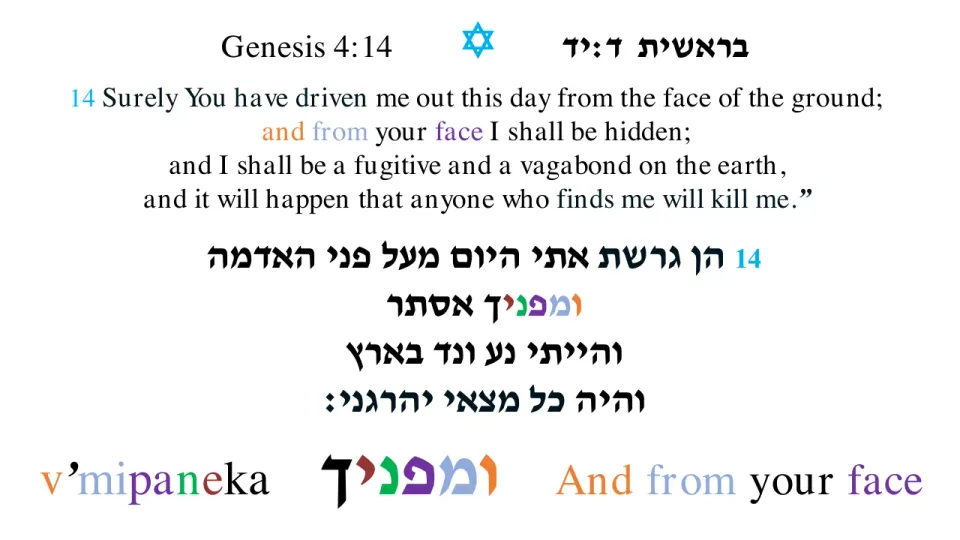 Genesis 4:14 — “and from your face” (v’mipaneka, ומפניך)Slide 119 · step 5 of 6
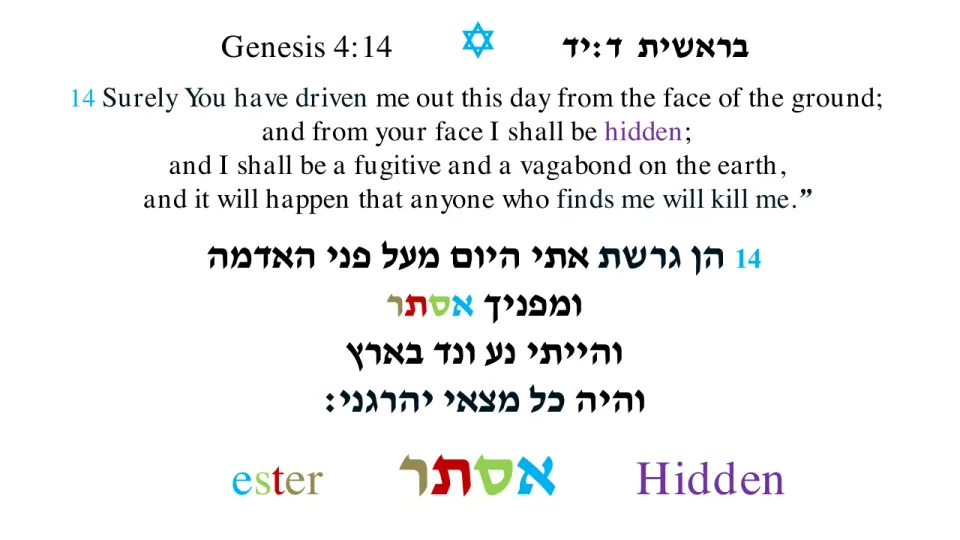 Genesis 4:14 — “hidden” (ester, אסתר)Slide 120 · step 6 of 6
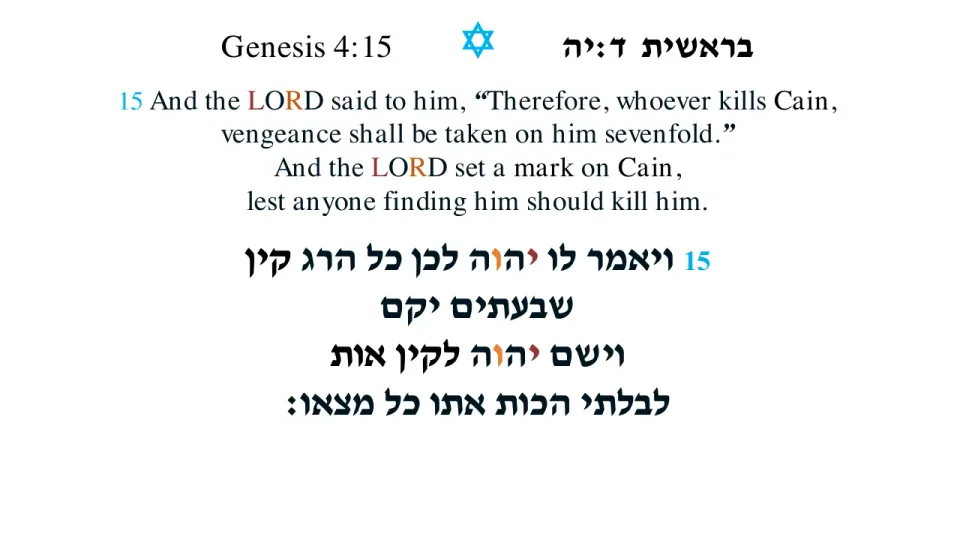 Genesis 4:15 — the LORD sets a mark on Cain; vengeance sevenfoldSlide 121 · step 1 of 2
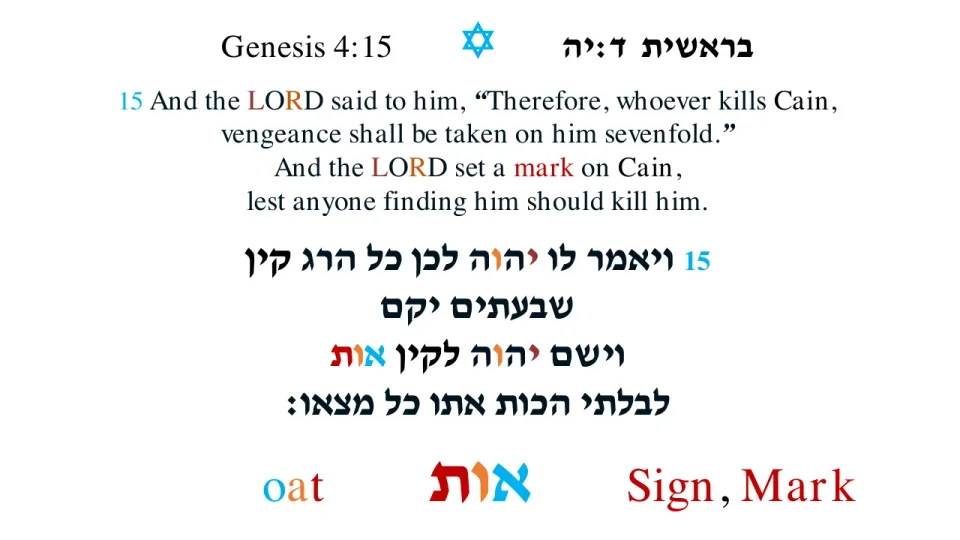 Genesis 4:15 — “mark” or “sign” (oat, אות)Slide 122 · step 2 of 2
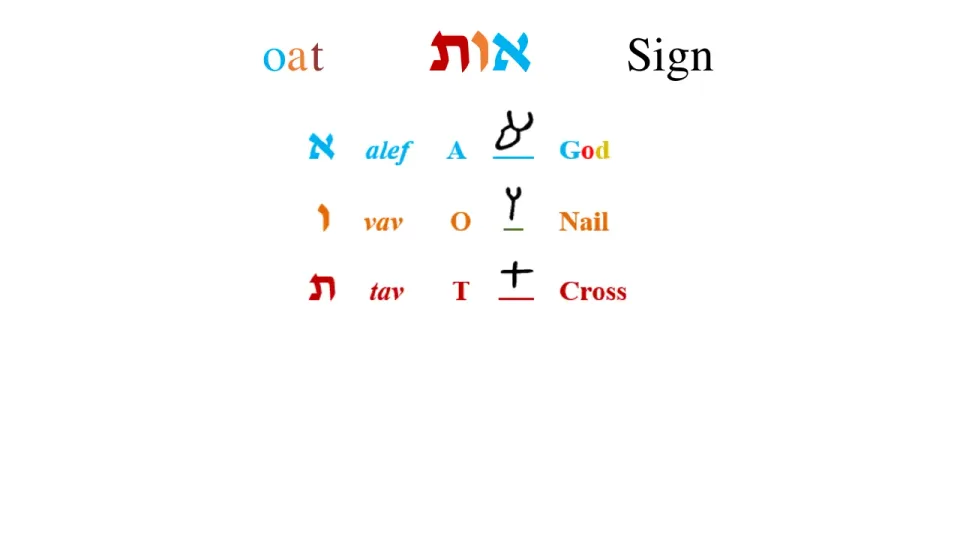 Oat (אות) means Sign: alef = God, vav = Nail, tav = CrossSlide 123
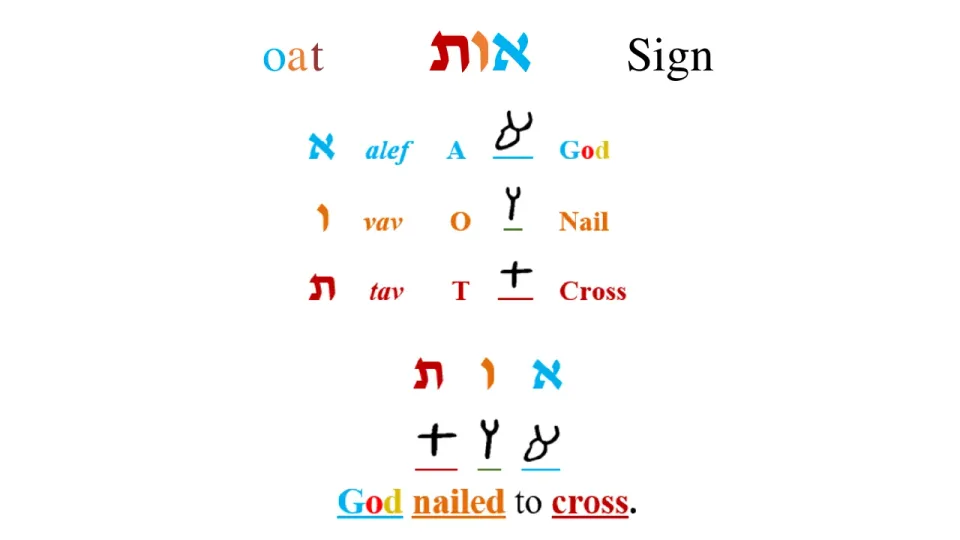 Oat (אות) Sign: God nailed to crossSlide 124
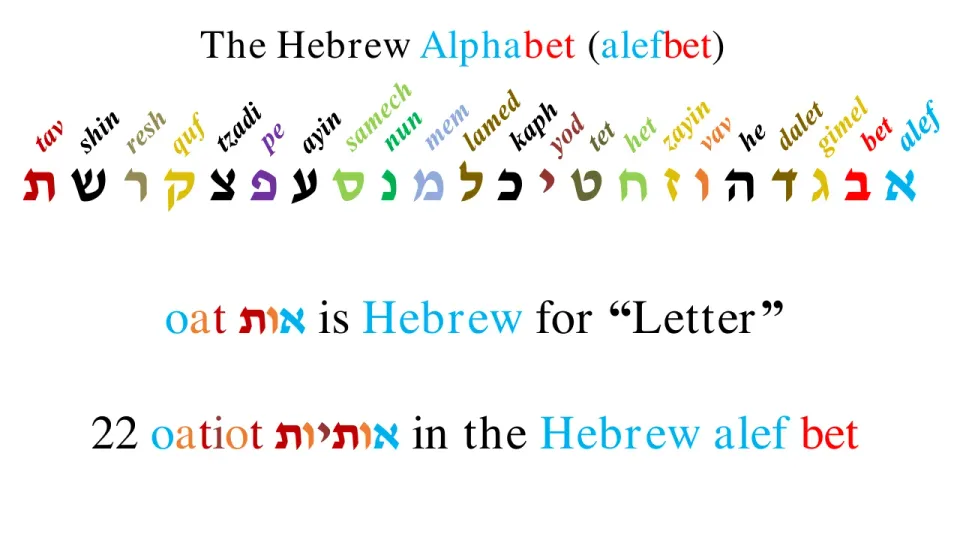 The Hebrew alphabet (alefbet): oat means letter, 22 oatiotSlide 125
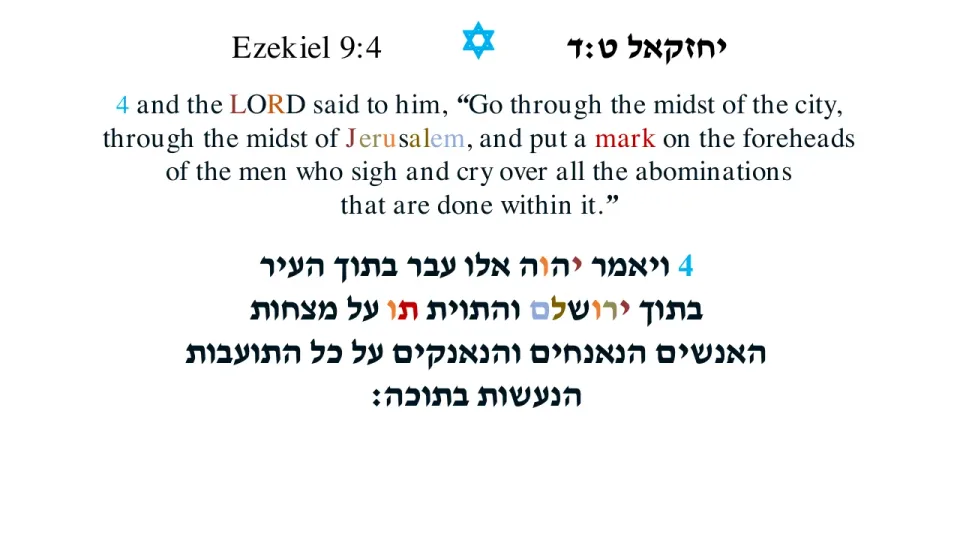 Ezekiel 9:4 — put a mark on the foreheadsSlide 126 · step 1 of 3
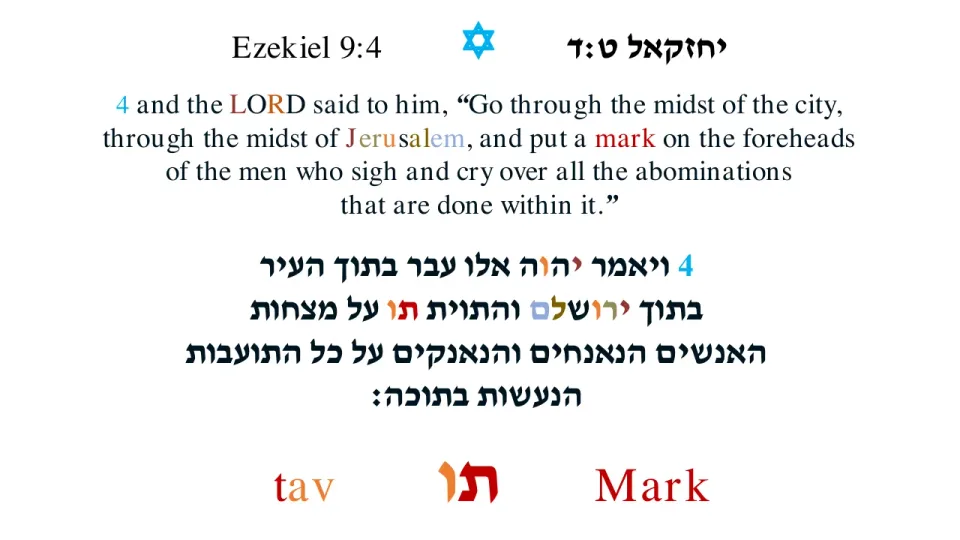 Ezekiel 9:4 — tav (תו) means MarkSlide 127 · step 2 of 3
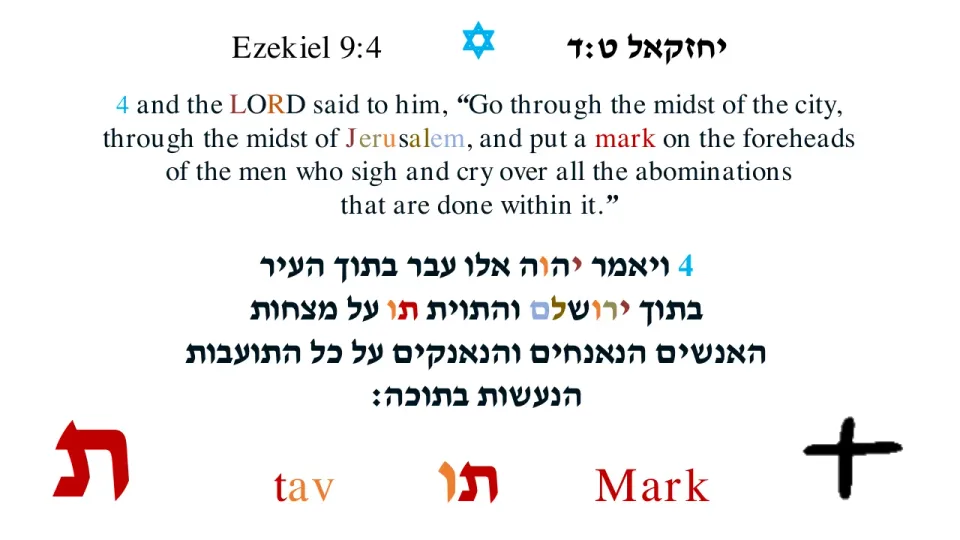 Ezekiel 9:4 — tav (תו) Mark, with the letter tav and a crossSlide 128 · step 3 of 3
 Exodus 33:19 — I will proclaim My name, the LORDSlide 129 · step 1 of 2
 Exodus 33:19 and Acts 3:19 — mercy and repentanceSlide 130 · step 2 of 2
 The EndSlide 131
 BonusSlide 132
 Genesis 4:1-2 — Eve, Cain and Abel, with et (את) before the LORDSlide 133 · step 1 of 3
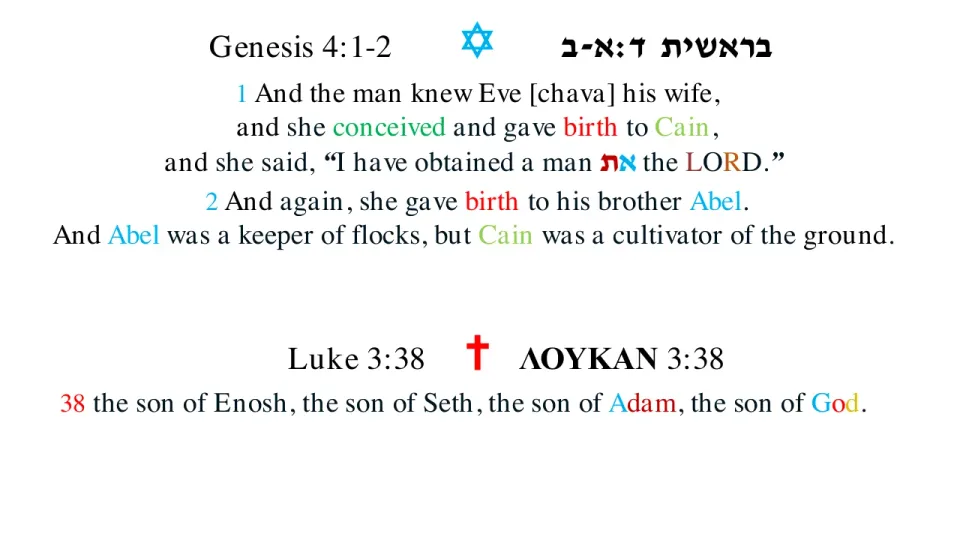 Genesis 4:1-2 compared with Luke 3:38 — Adam, the son of GodSlide 134 · step 2 of 3
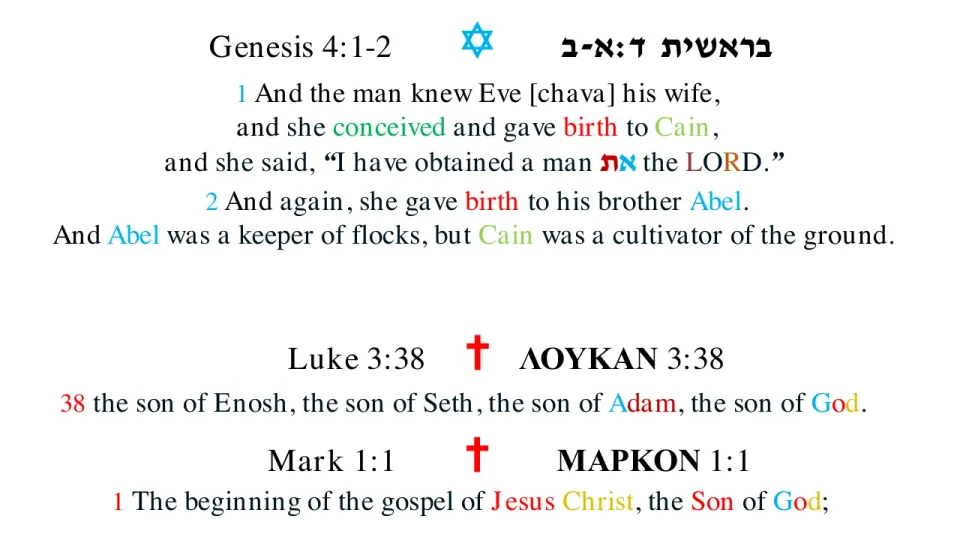 Genesis 4:1-2 compared with Luke 3:38 and Mark 1:1 — sons of GodSlide 135 · step 3 of 3
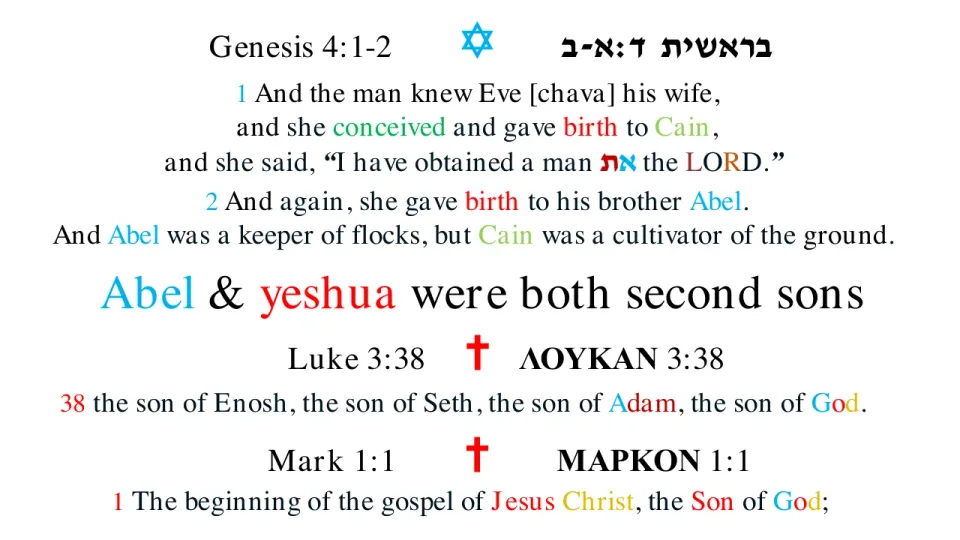 Abel and Yeshua were both second sonsSlide 136
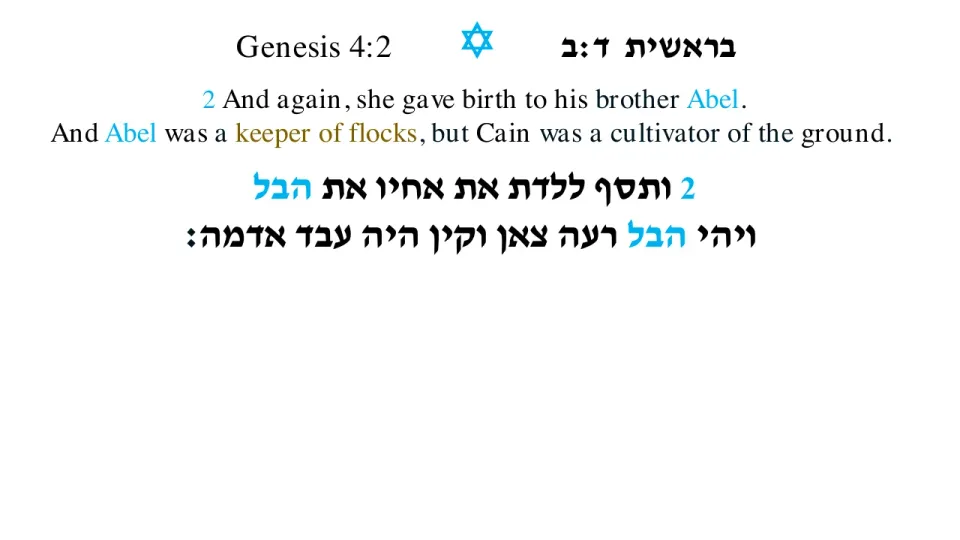 Genesis 4:2 — Abel the keeper of flocks (הבל)Slide 137 · step 1 of 3
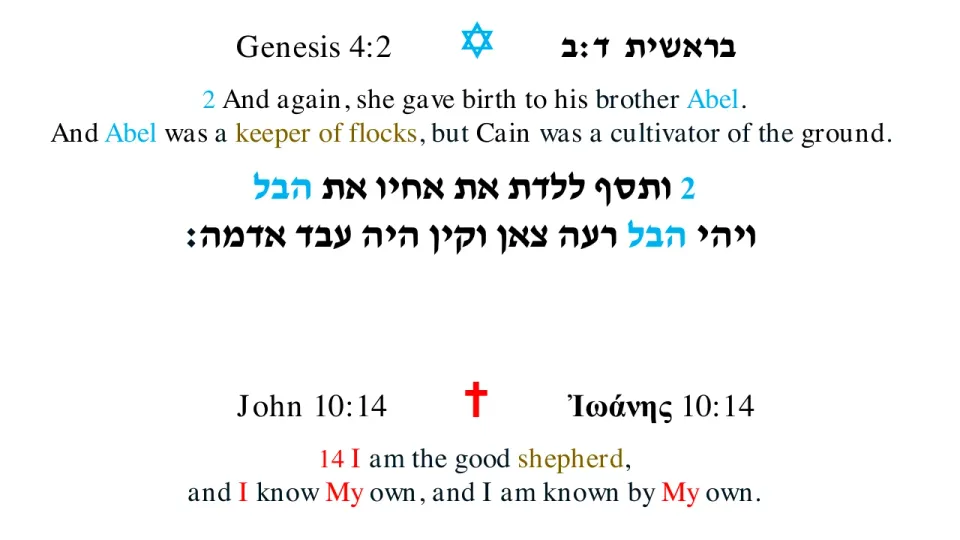 Genesis 4:2 and John 10:14 — Abel the shepherd and the good shepherdSlide 138 · step 2 of 3
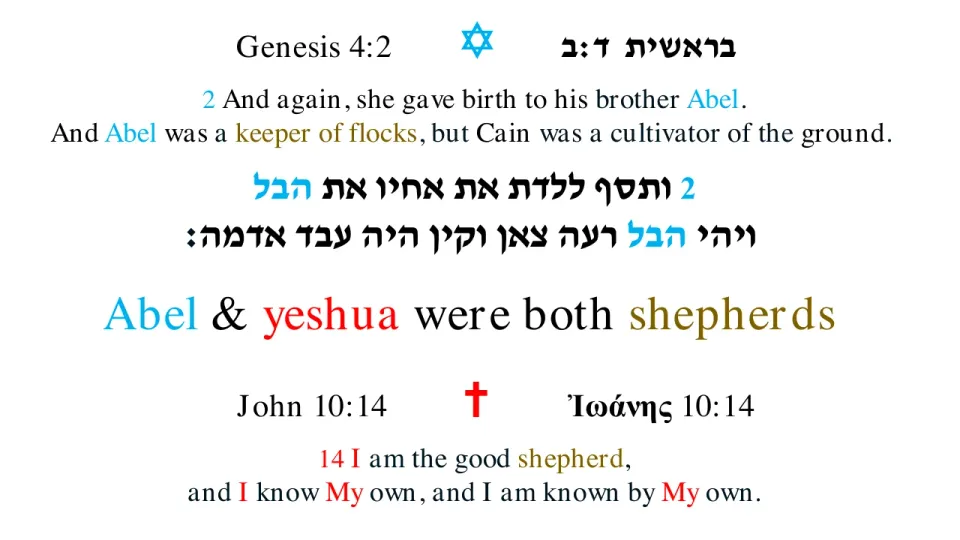 Abel and Yeshua were both shepherds (Genesis 4:2; John 10:14)Slide 139 · step 3 of 3
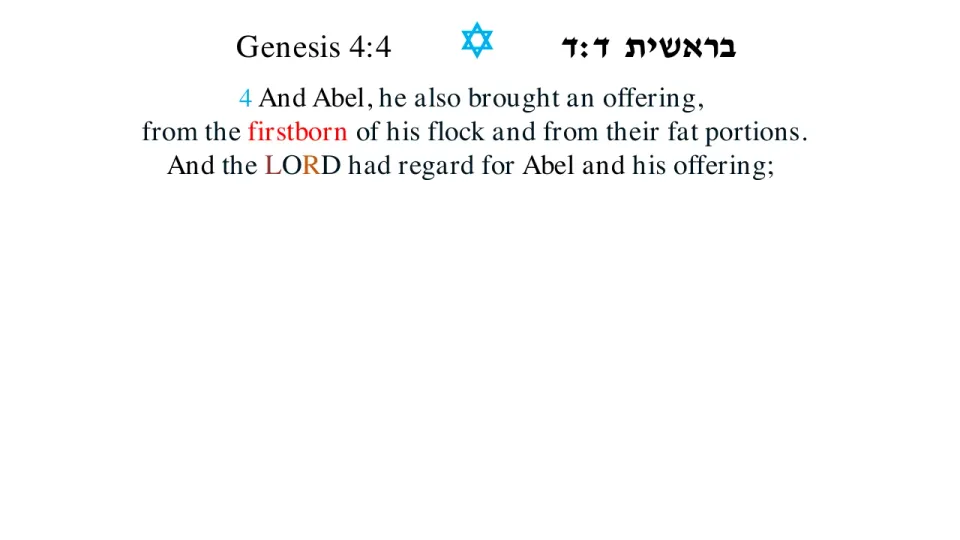 Genesis 4:4 — Abel brings the firstborn of his flockSlide 140 · step 1 of 3
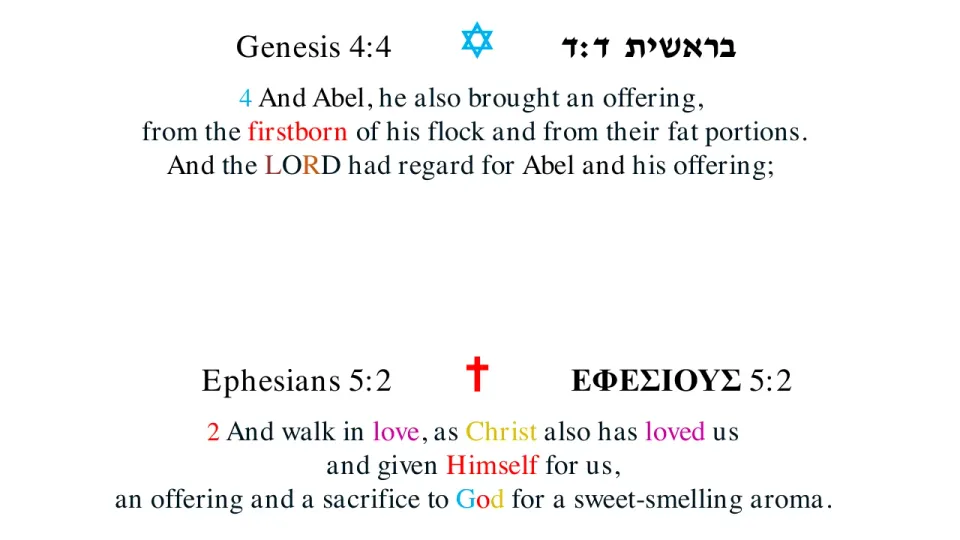 Abel's offering and Christ's offering (Genesis 4:4; Ephesians 5:2)Slide 141 · step 2 of 3
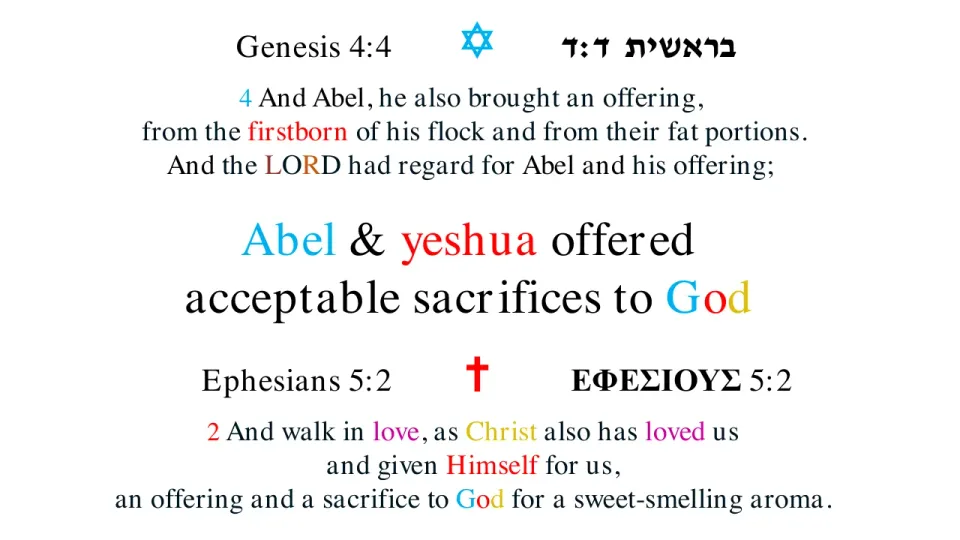 Abel and Yeshua offered acceptable sacrifices to GodSlide 142 · step 3 of 3
 Genesis 4:4 — Abel brings the firstborn of his flockSlide 143 · step 1 of 4
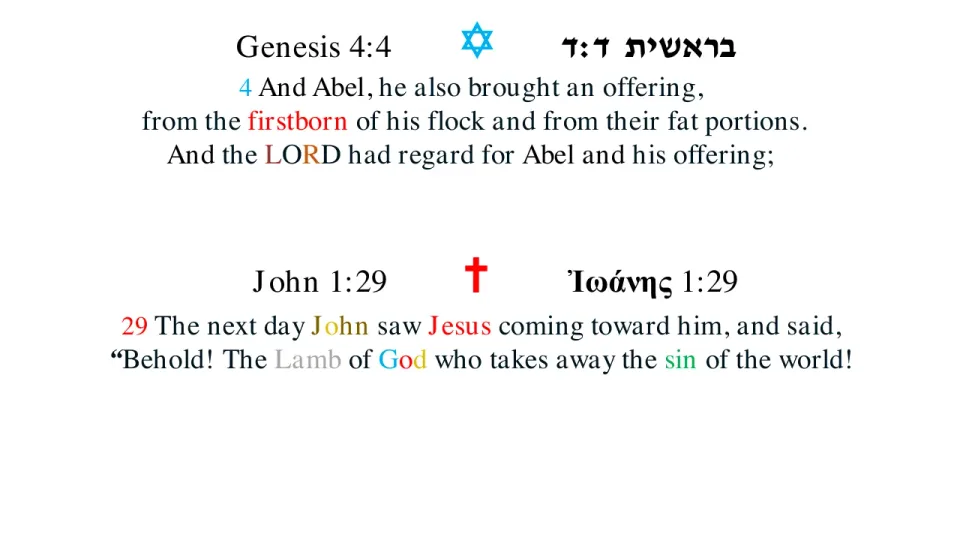 Abel's firstborn offering and the Lamb of God (Genesis 4:4; John 1:29)Slide 144 · step 2 of 4
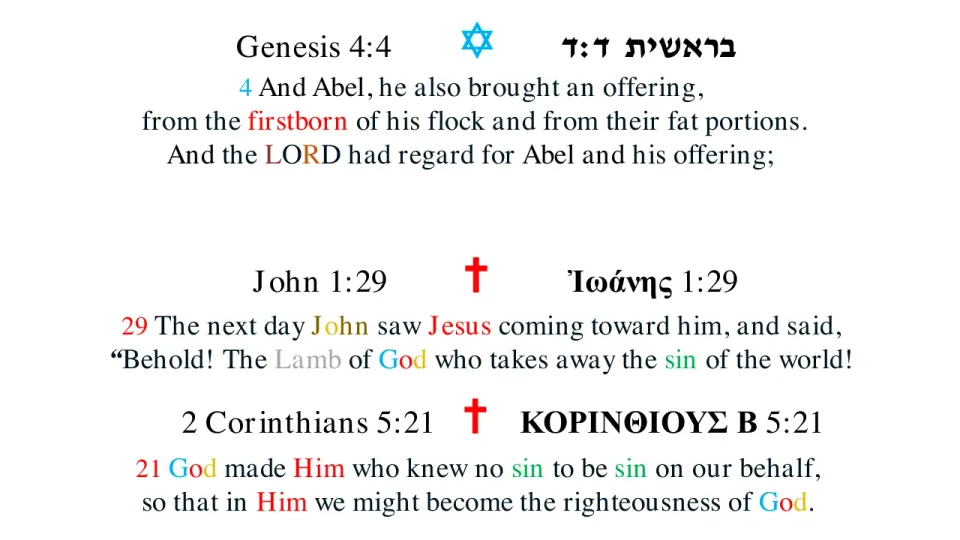 Abel's offering, the Lamb of God, and the sinless one made sinSlide 145 · step 3 of 4
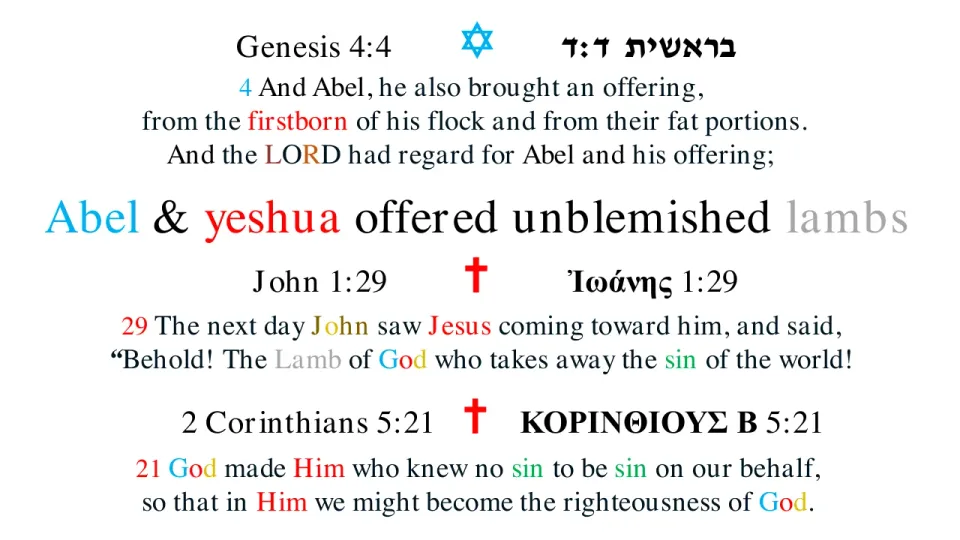 Abel and Yeshua offered unblemished lambsSlide 146 · step 4 of 4
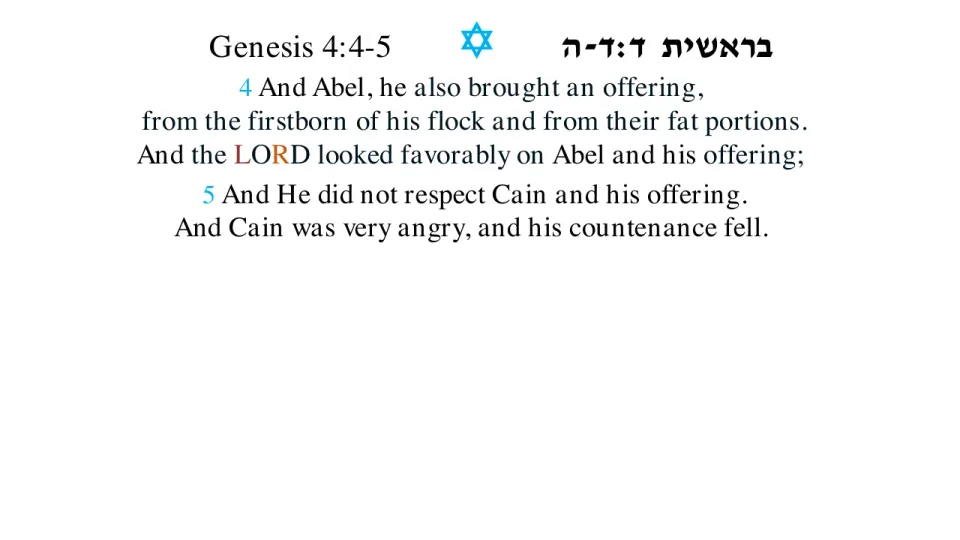 Genesis 4:4-5 — the LORD favours Abel's offering, not Cain'sSlide 147 · step 1 of 3
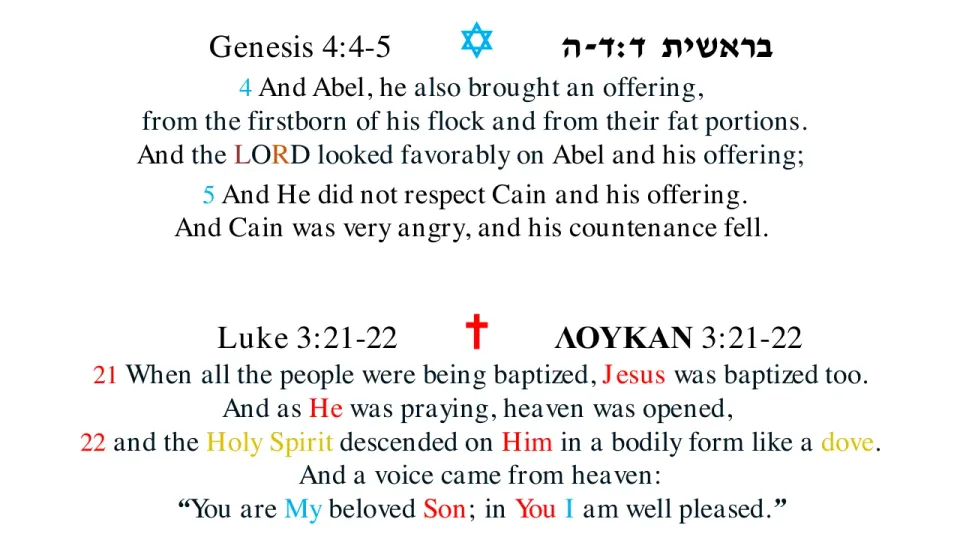 God accepts Abel's offering and is well pleased with Jesus at His baptismSlide 148 · step 2 of 3
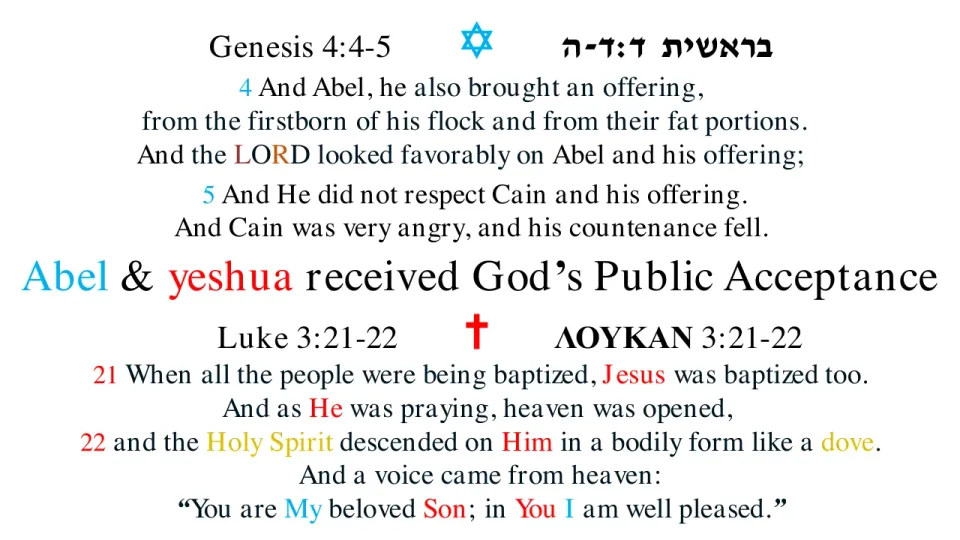 Abel and Yeshua received God's public acceptanceSlide 149 · step 3 of 3
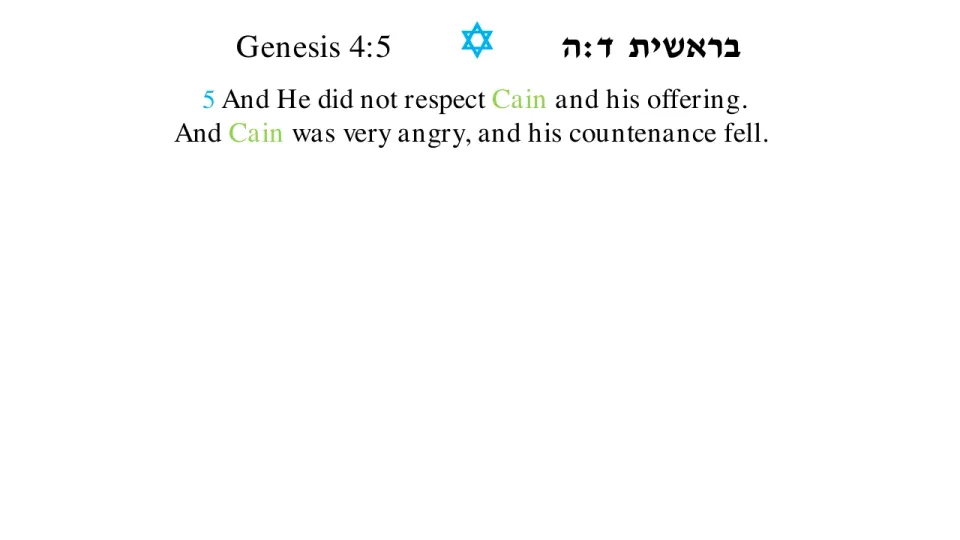 Genesis 4:5 — God does not respect Cain's offering; Cain is angrySlide 150 · step 1 of 3
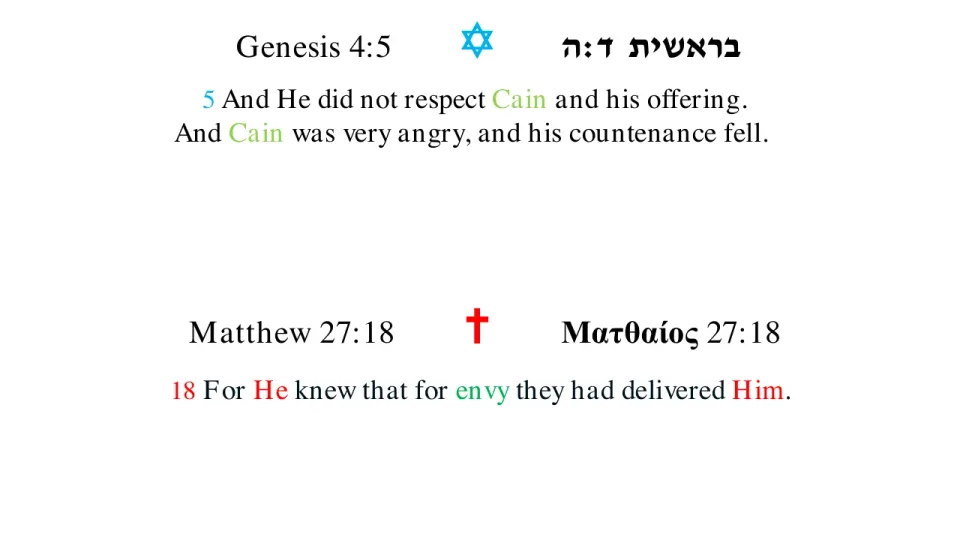 Cain's anger and the envy that delivered Jesus (Genesis 4:5; Matthew 27:18)Slide 151 · step 2 of 3
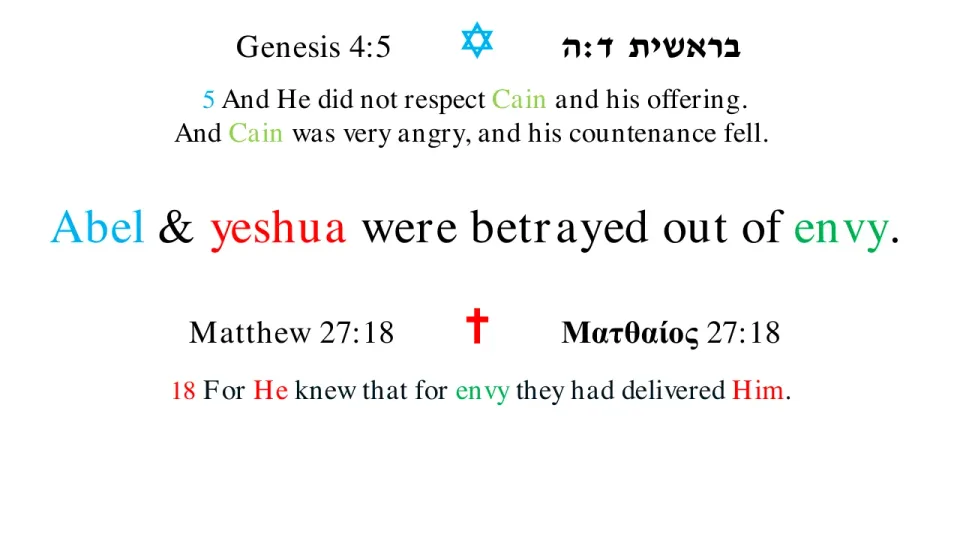 Abel and Yeshua were betrayed out of envySlide 152 · step 3 of 3
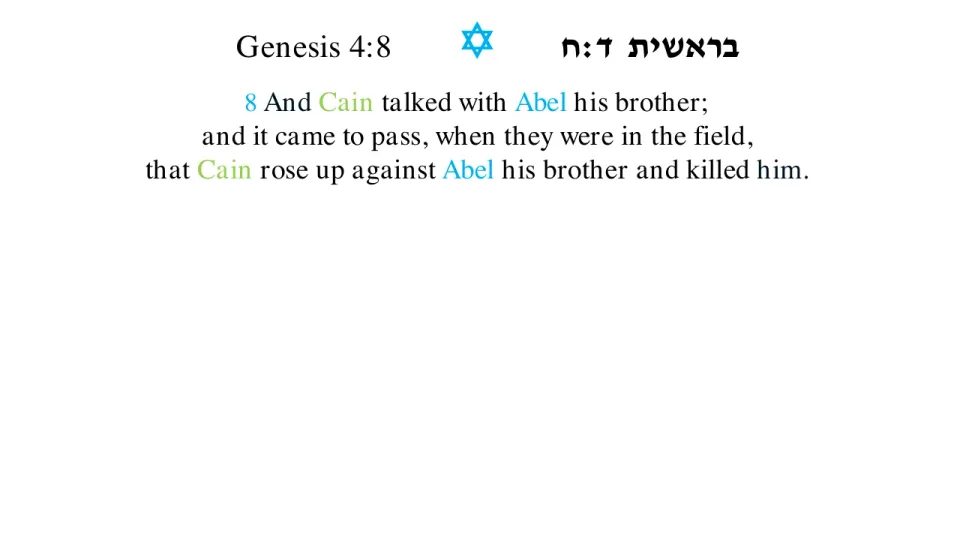 Genesis 4:8 — Cain rises up against Abel and kills himSlide 153 · step 1 of 3
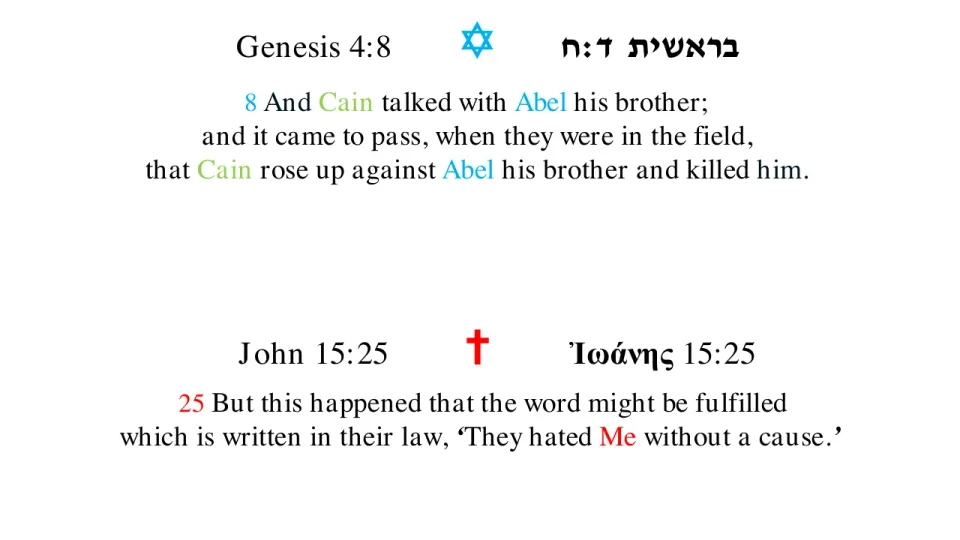 Cain kills Abel; "They hated Me without a cause" (Genesis 4:8; John 15:25)Slide 154 · step 2 of 3
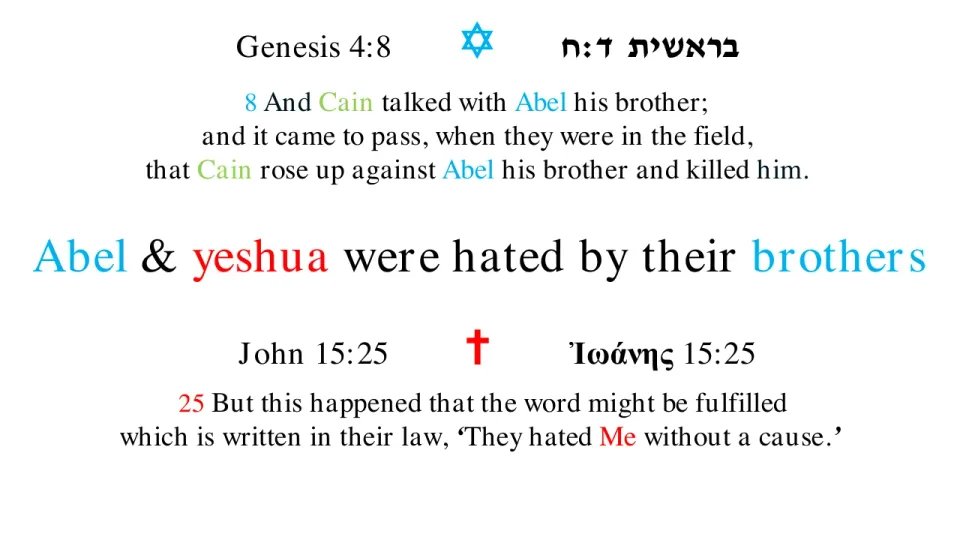 Abel and Yeshua were hated by their brothersSlide 155 · step 3 of 3
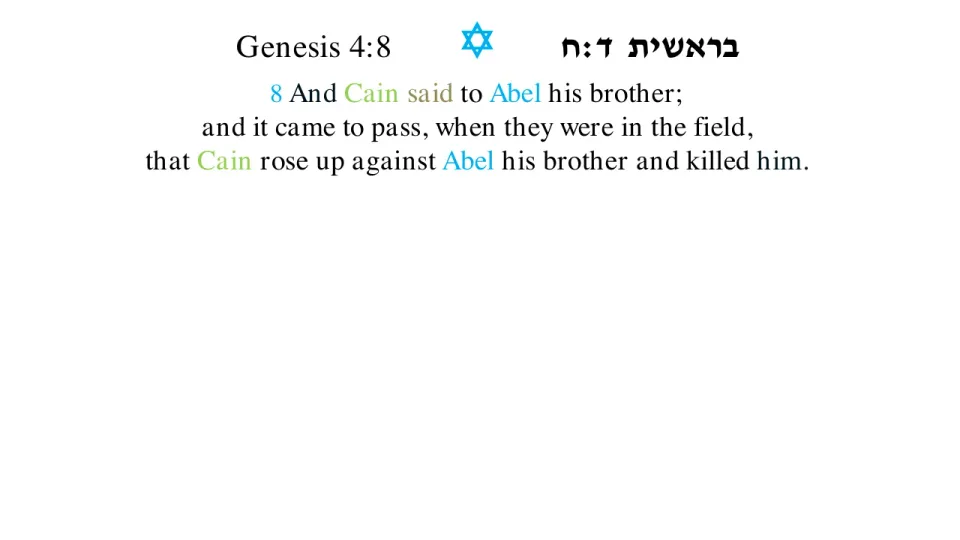 Genesis 4:8 — "And Cain said to Abel his brother"Slide 156 · step 1 of 3
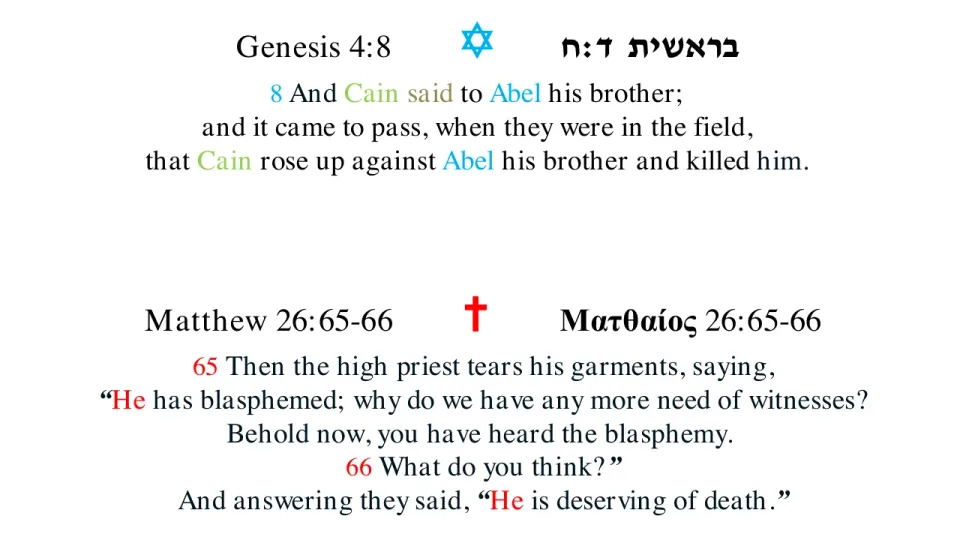 Cain kills Abel; the high priest declares Jesus deserving of deathSlide 157 · step 2 of 3
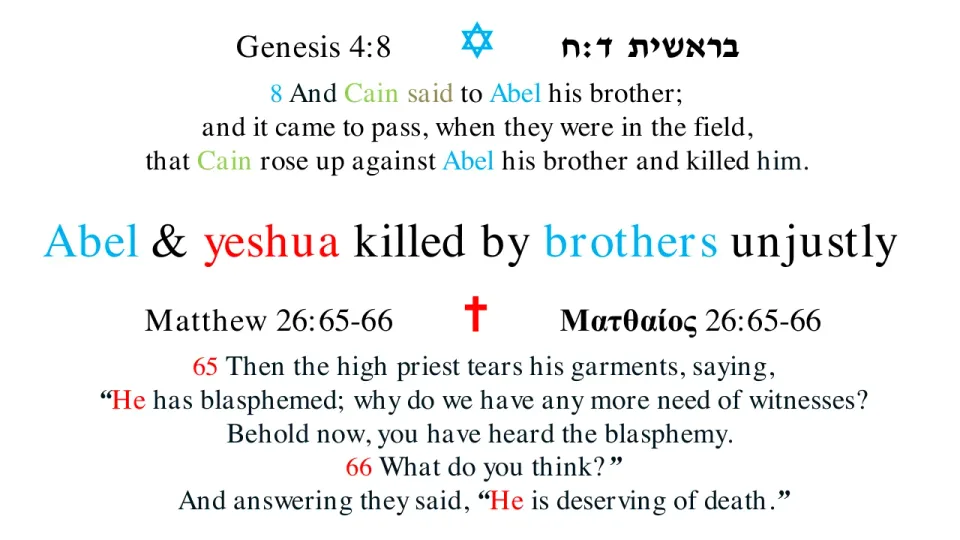 Abel and Yeshua killed by brothers unjustlySlide 158 · step 3 of 3
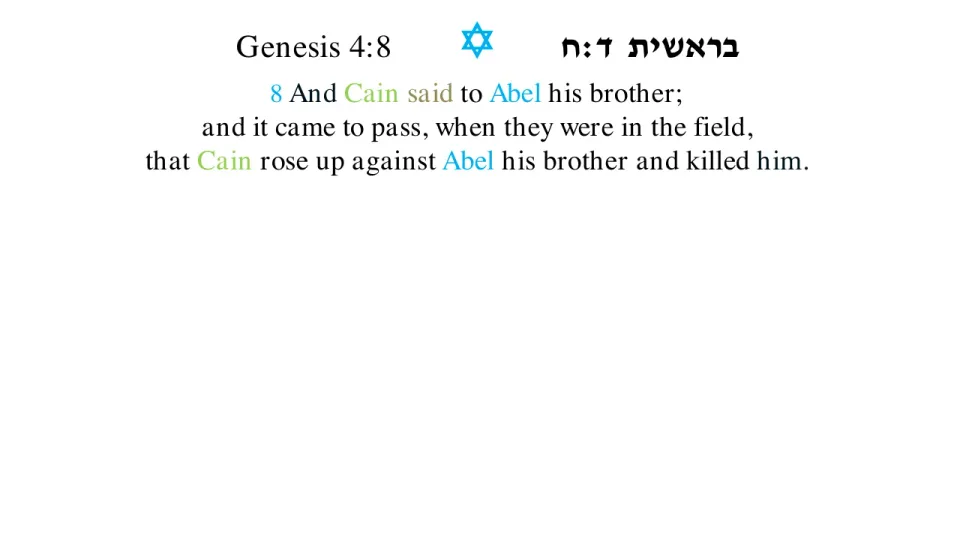 Genesis 4:8 — Cain rose up against Abel and killed himSlide 159 · step 1 of 3
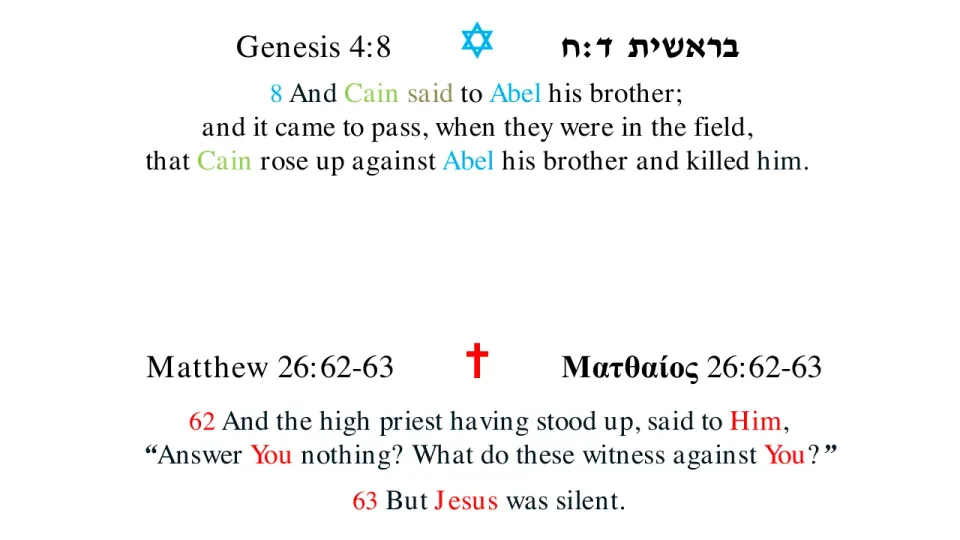 Genesis 4:8 and Matthew 26:62-63 — Cain kills Abel; Jesus is silent before the high priestSlide 160 · step 2 of 3
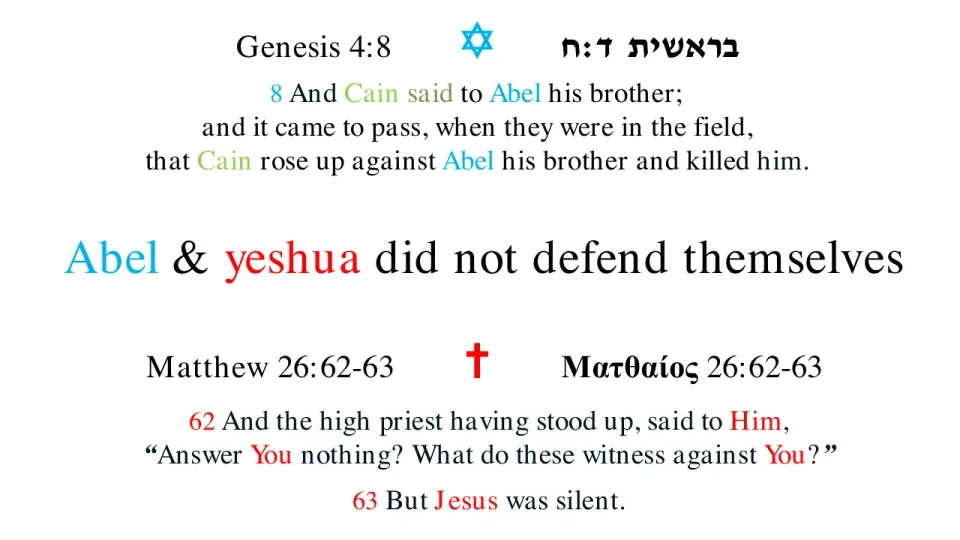 Abel and Yeshua did not defend themselvesSlide 161 · step 3 of 3
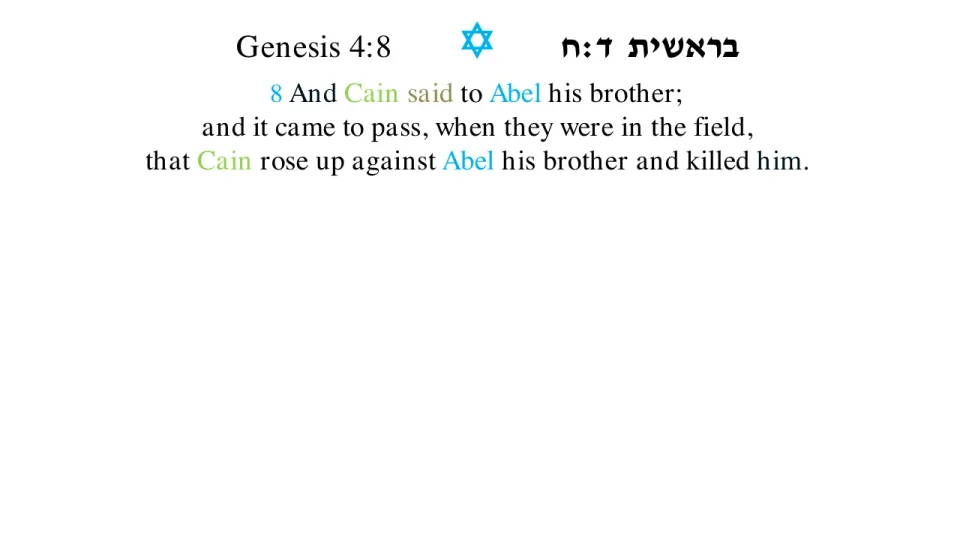 Genesis 4:8 — Cain rose up against Abel and killed him (repeat)Slide 162 · step 1 of 3
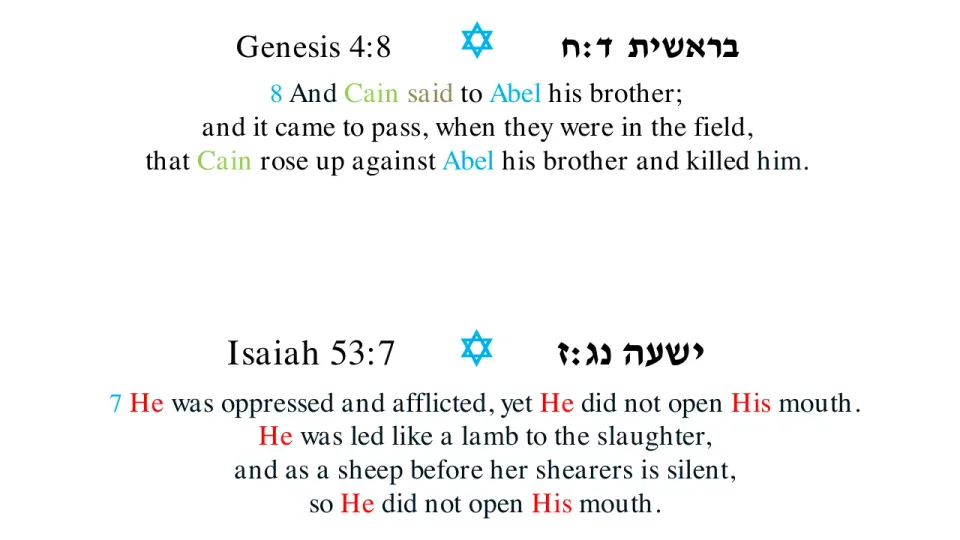 Genesis 4:8 and Isaiah 53:7 — Cain kills Abel; the lamb silent before its shearersSlide 163 · step 2 of 3
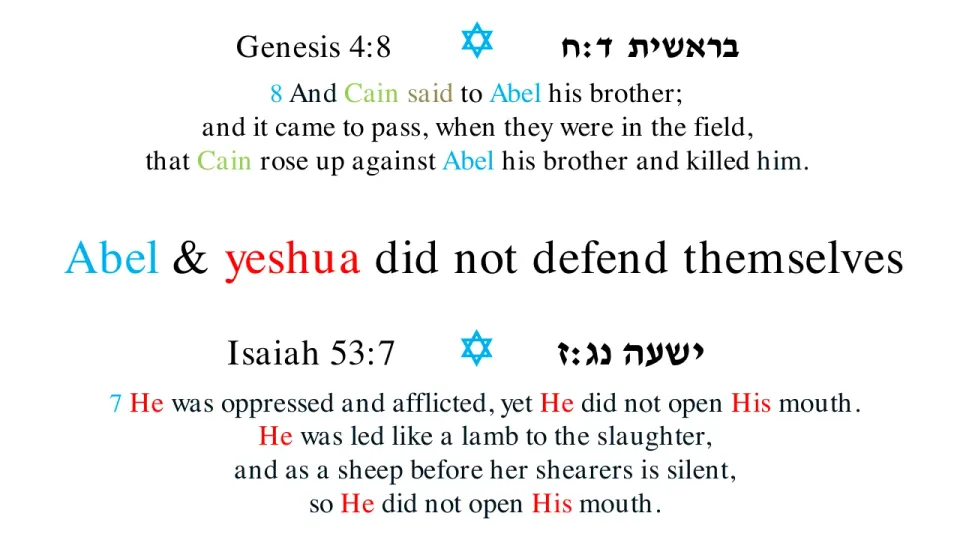 Abel and Yeshua did not defend themselves (Genesis 4:8; Isaiah 53:7)Slide 164 · step 3 of 3
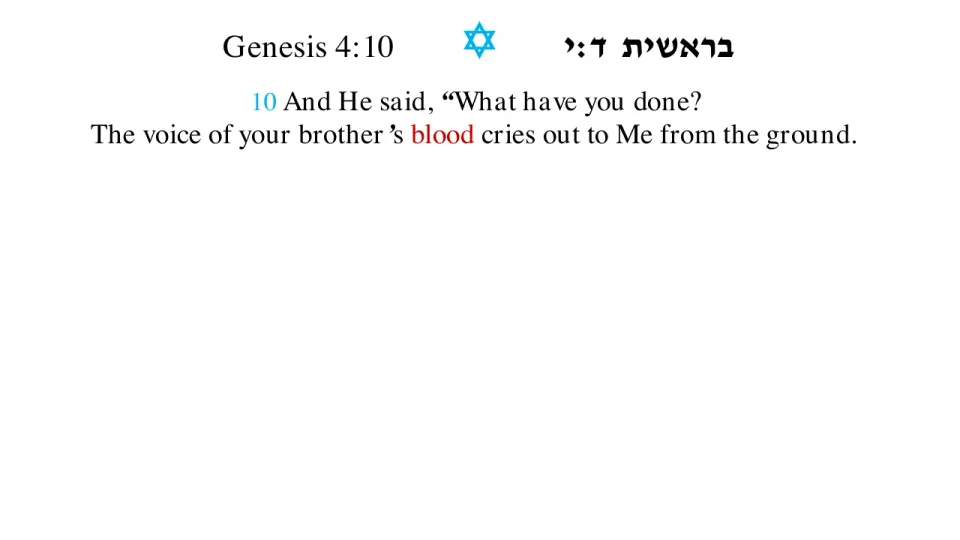 Genesis 4:10 — your brother's blood cries out to Me from the groundSlide 165 · step 1 of 3
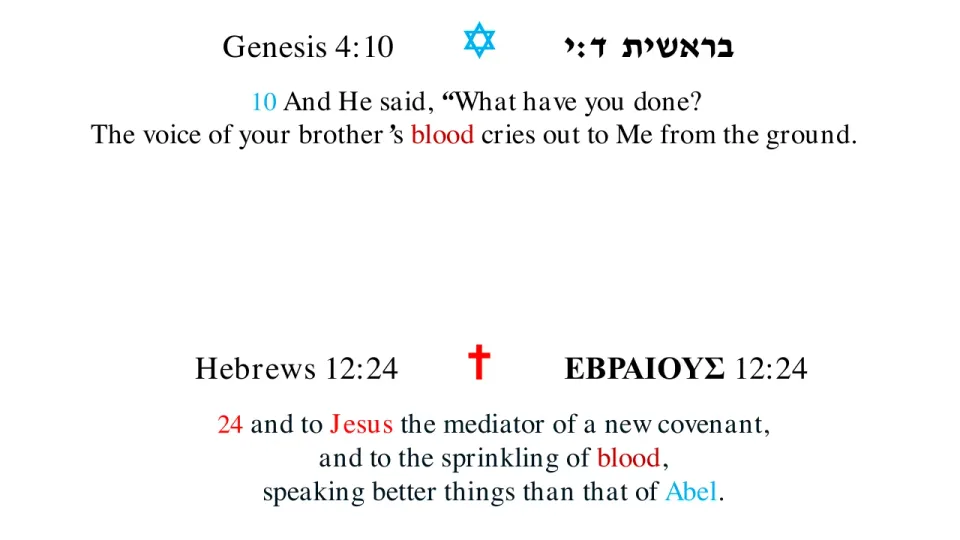 Genesis 4:10 and Hebrews 12:24 — Abel's blood and the blood that speaks better thingsSlide 166 · step 2 of 3
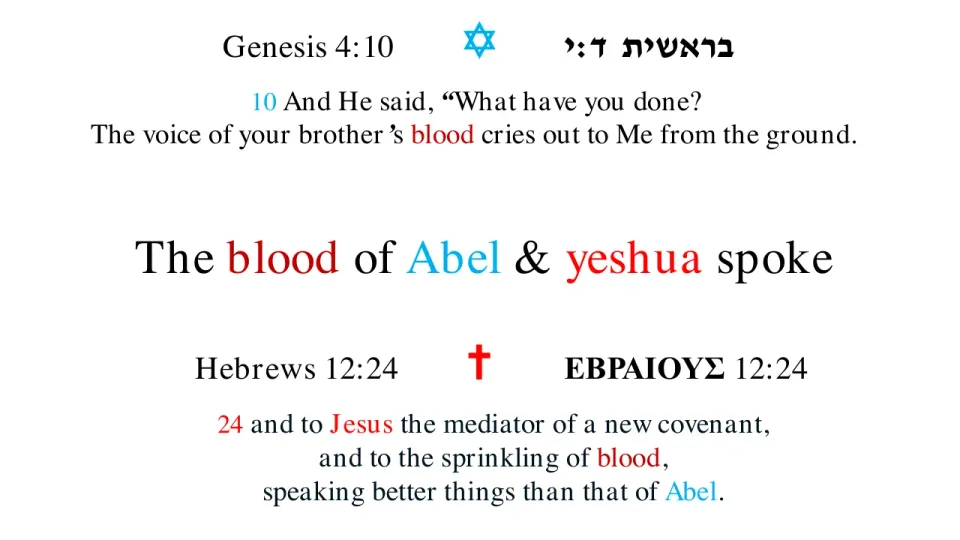 The blood of Abel and Yeshua spoke (Genesis 4:10; Hebrews 12:24)Slide 167 · step 3 of 3
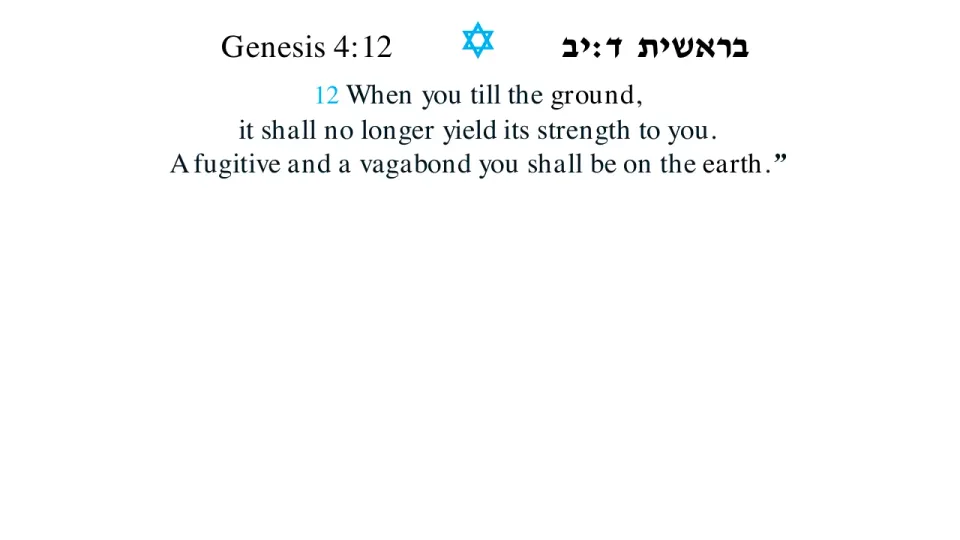 Genesis 4:12 — a fugitive and a vagabond on the earthSlide 168 · step 1 of 3
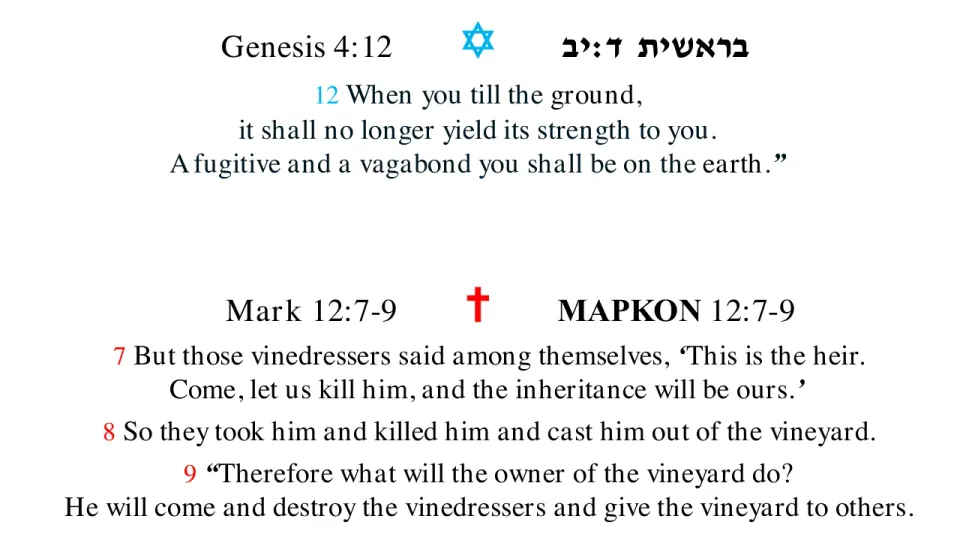 Genesis 4:12 and Mark 12:7-9 — the vinedressers kill the heirSlide 169 · step 2 of 3
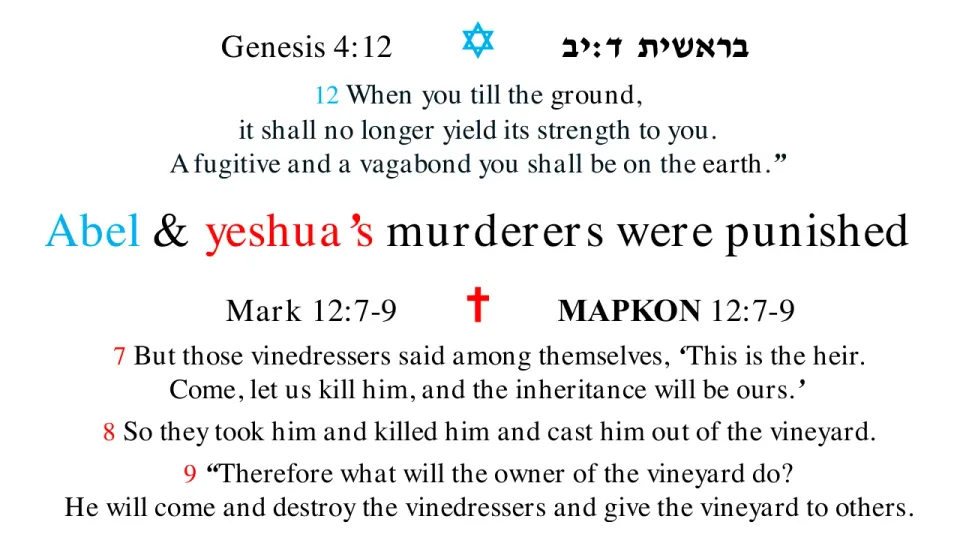 Abel and Yeshua's murderers were punished (Genesis 4:12, Mark 12:7-9)Slide 170 · step 3 of 3
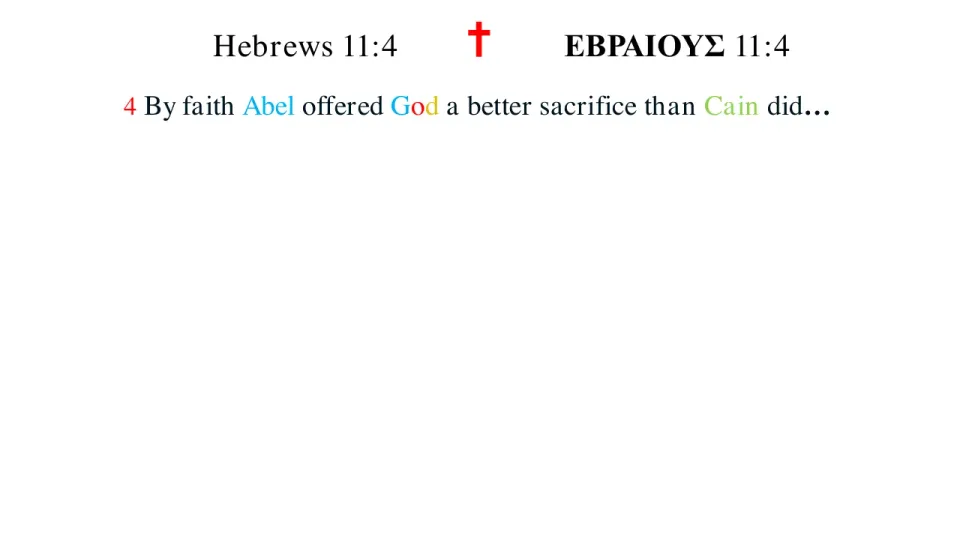 Hebrews 11:4 — By faith Abel offered God a better sacrifice than CainSlide 171 · step 1 of 3
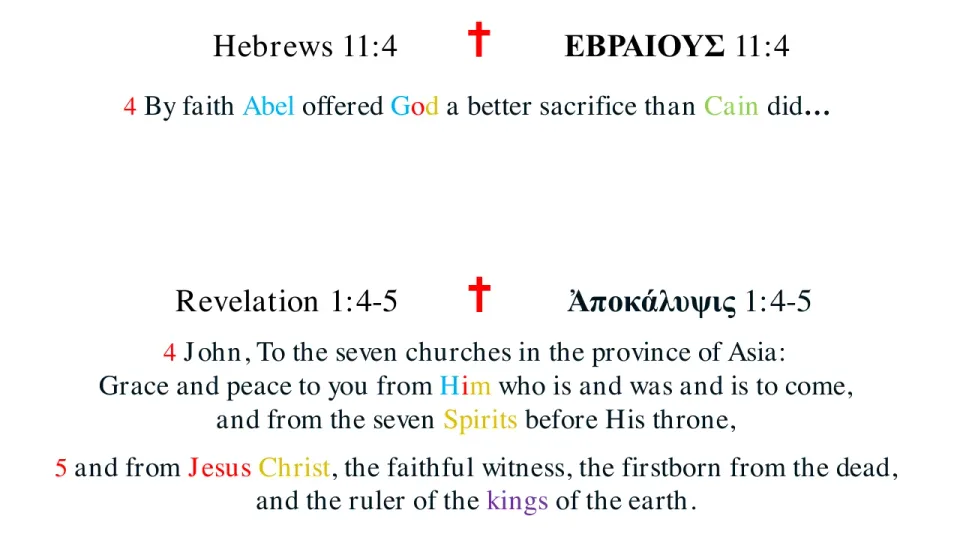 Hebrews 11:4 and Revelation 1:4-5 — Abel's faith; Jesus the faithful witnessSlide 172 · step 2 of 3
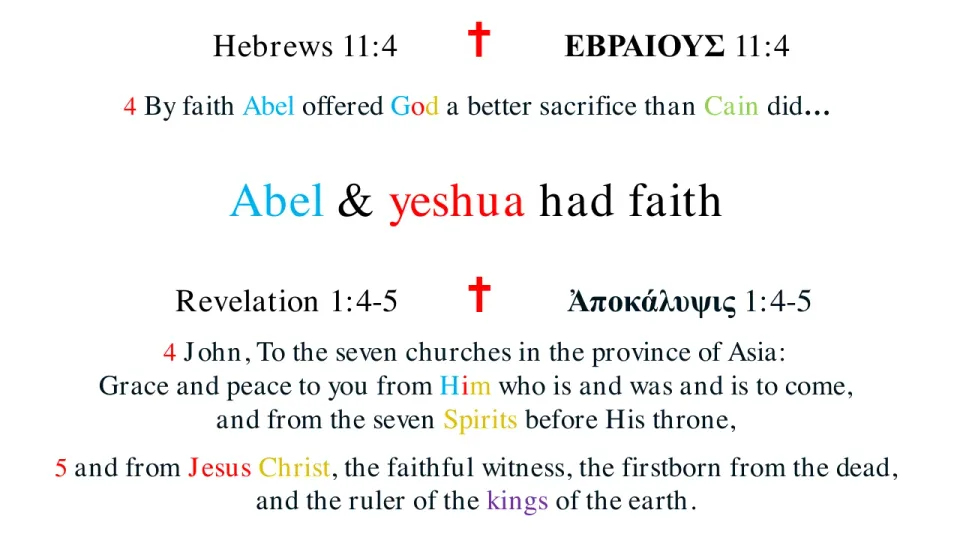 Abel and Yeshua had faith (Hebrews 11:4, Revelation 1:4-5)Slide 173 · step 3 of 3
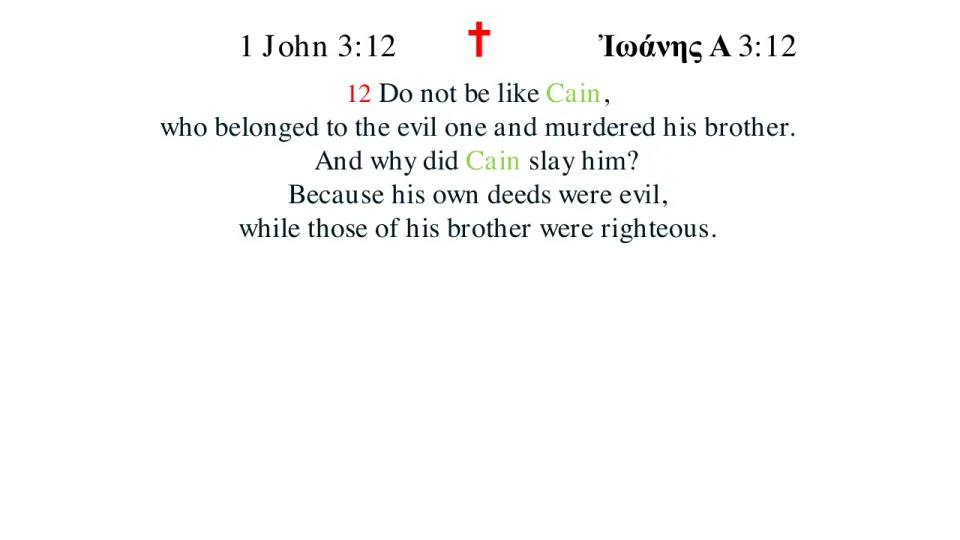 1 John 3:12 — Do not be like CainSlide 174 · step 1 of 3
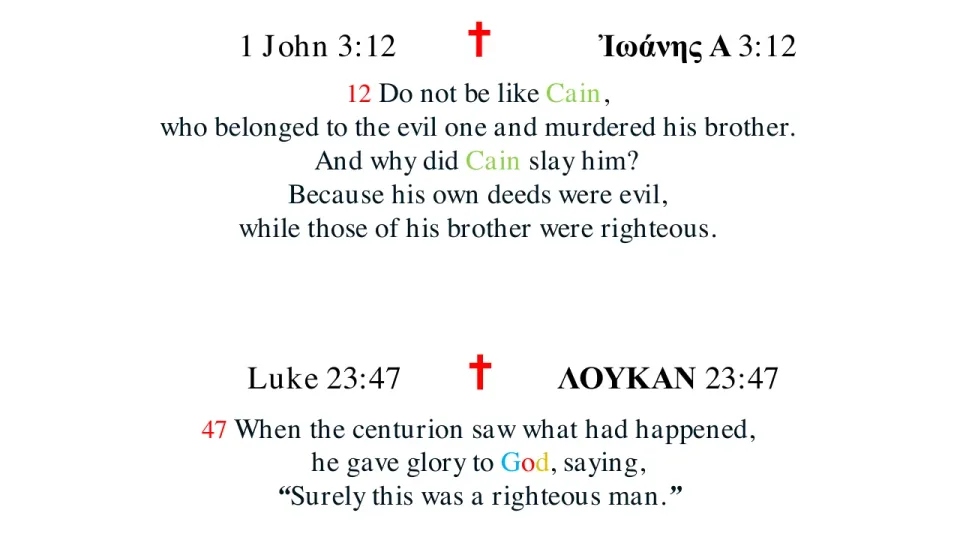 1 John 3:12 and Luke 23:47 — Cain's evil deeds, a righteous manSlide 175 · step 2 of 3
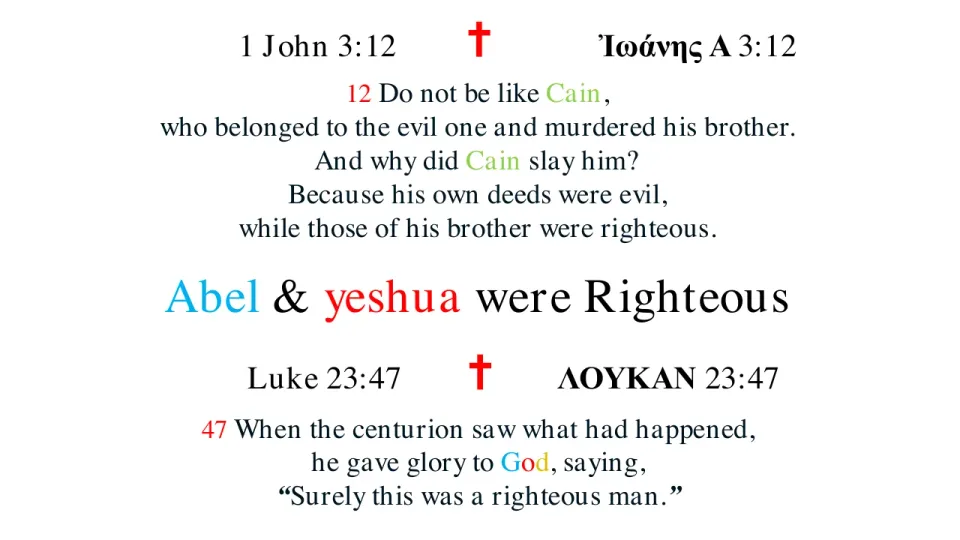 Abel and Yeshua were righteous (1 John 3:12, Luke 23:47)Slide 176 · step 3 of 3
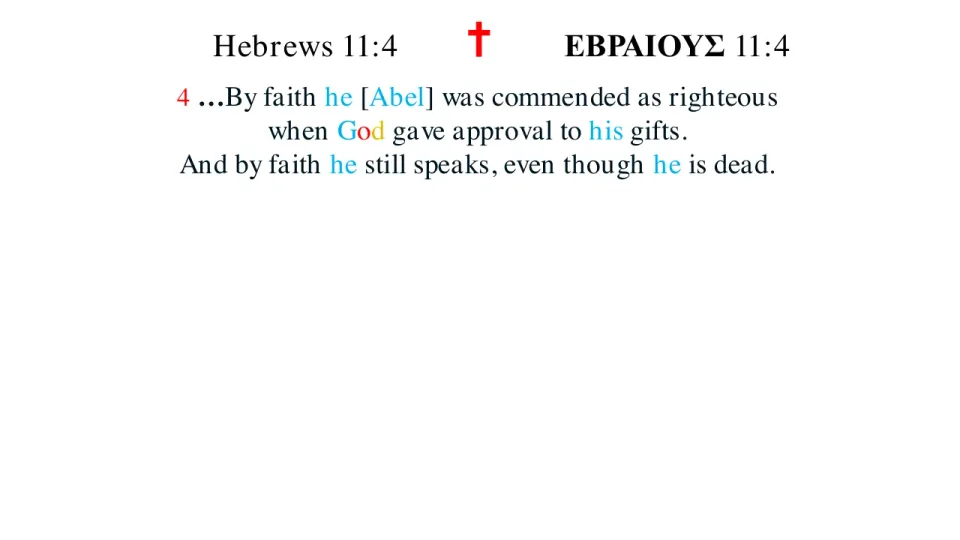 Hebrews 11:4 — Abel commended as righteous, he still speaksSlide 177 · step 1 of 2
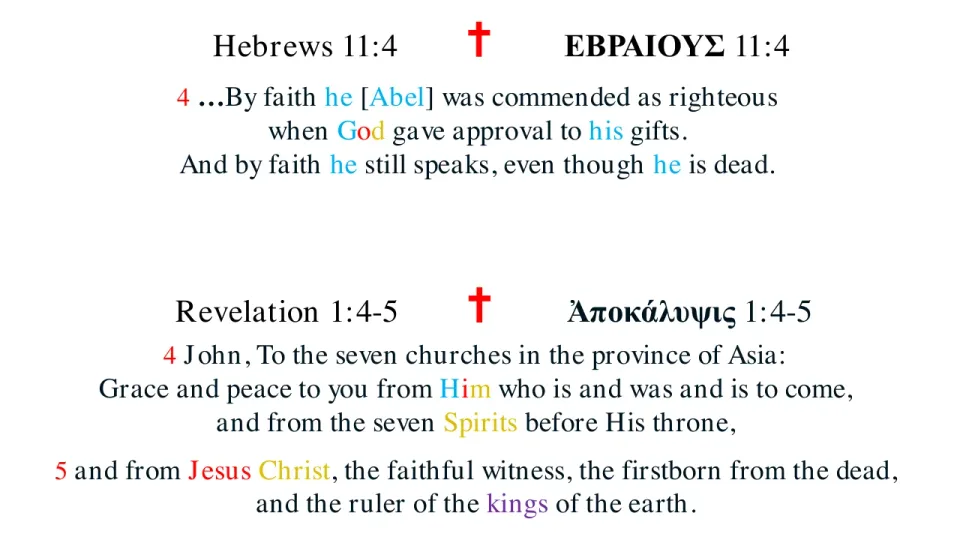 Hebrews 11:4 and Revelation 1:4-5 — Abel commended; Jesus the faithful witnessSlide 178 · step 2 of 2
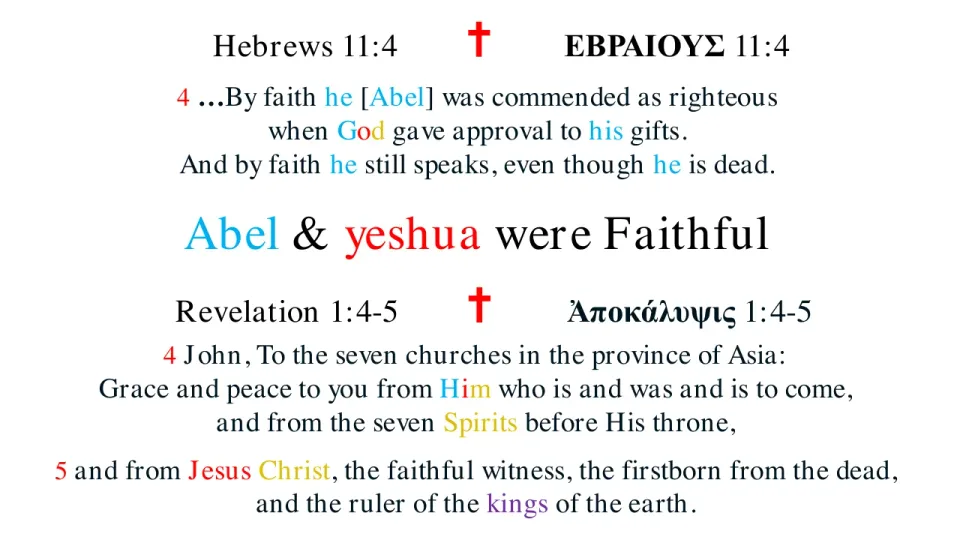 Abel and Yeshua were faithful (Hebrews 11:4, Revelation 1:4-5)Slide 179
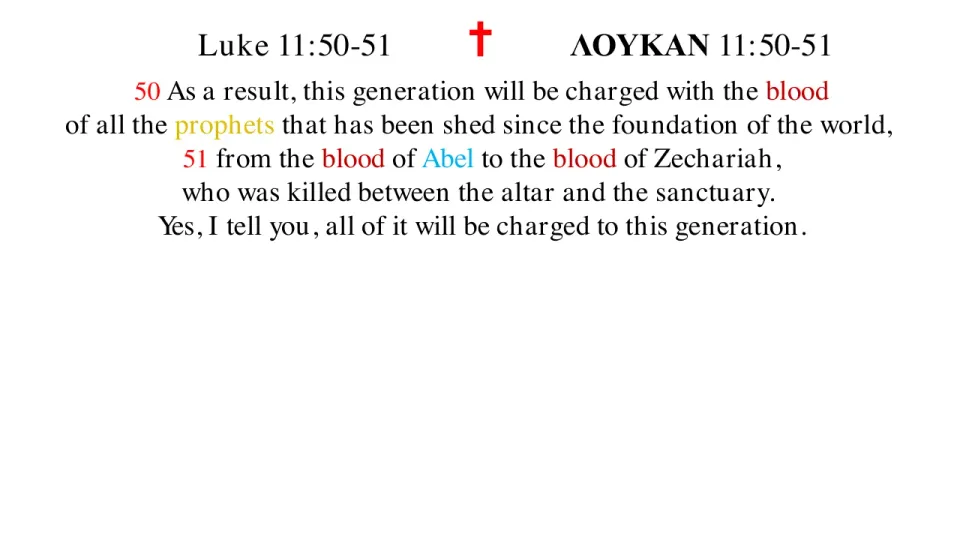 Luke 11:50-51 — the blood of the prophets from Abel to ZechariahSlide 180 · step 1 of 4
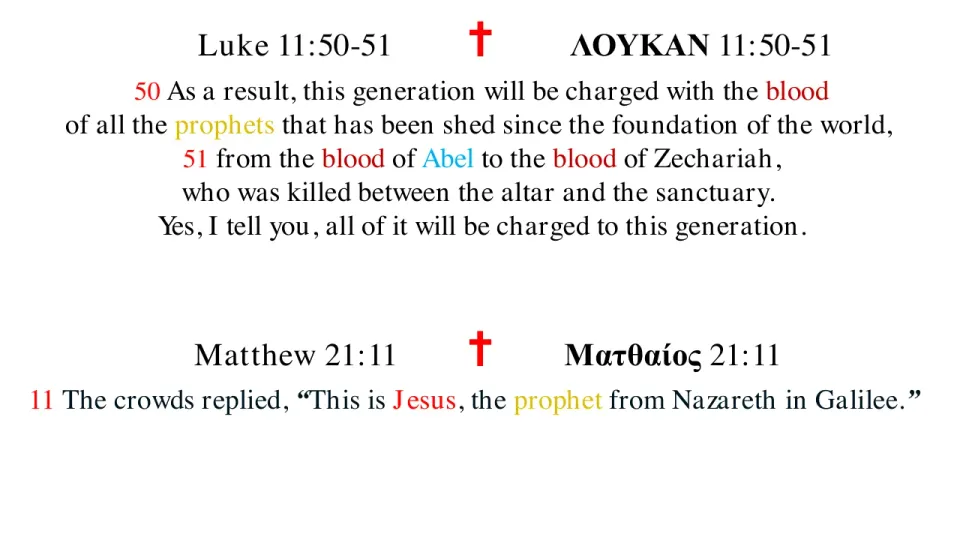 Luke 11:50-51 and Matthew 21:11 — Jesus, the prophet from NazarethSlide 181 · step 2 of 4
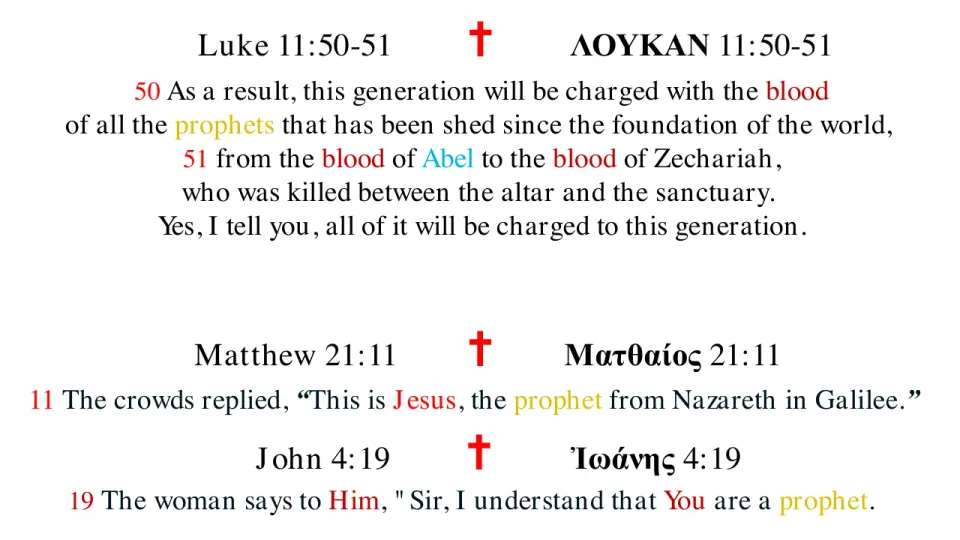 Luke 11:50-51, Matthew 21:11 and John 4:19 — Jesus called a prophetSlide 182 · step 3 of 4
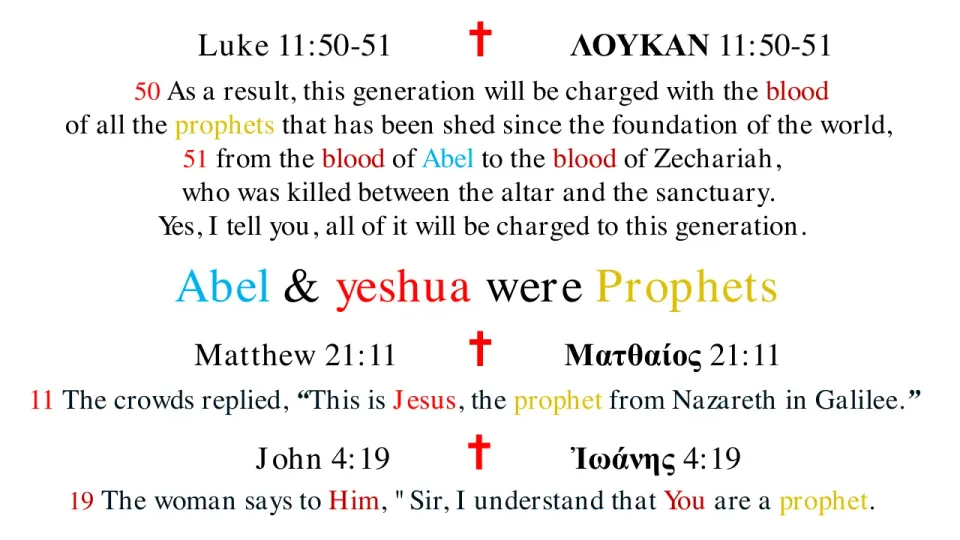 Abel and Yeshua were prophets (Luke 11:50-51, Matthew 21:11, John 4:19)Slide 183 · step 4 of 4
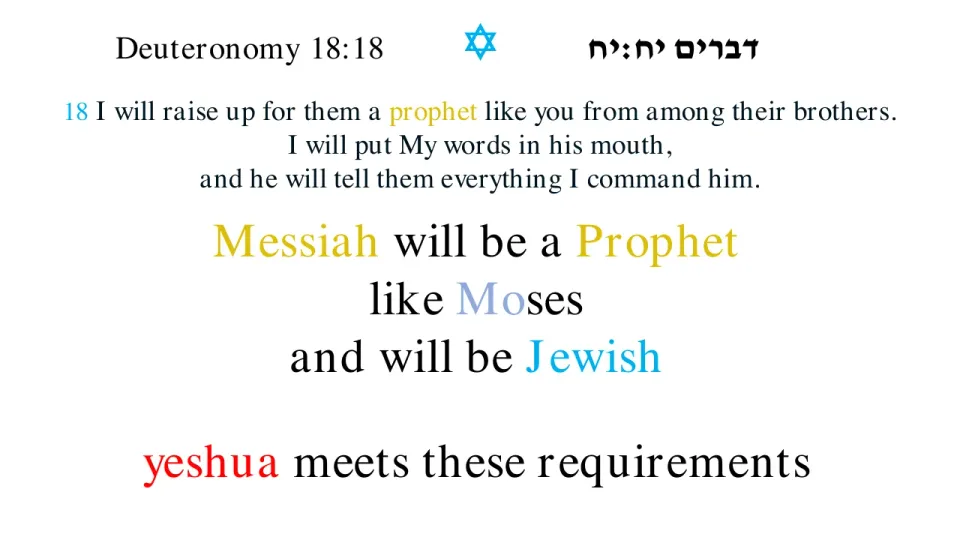 Deuteronomy 18:18 — Messiah will be a Prophet like Moses and JewishSlide 184
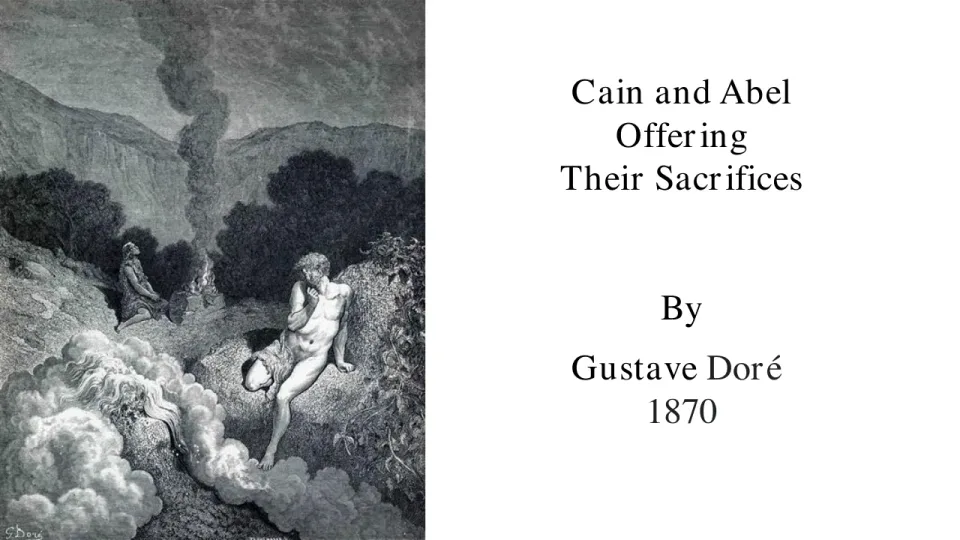 Gustave Doré: Cain and Abel Offering Their Sacrifices (1870)Slide 185