The Akedah II: The Briding of Isaac
157 slides · Genesis · ⬇ Original PDF (7.7 MB)
Main themes: AbrahamIsaacakedahsacrificebinding of IsaacRebekahbloodlamb
 Title: The Akedah II — The Binding of Isaac, Part 2Slide 1
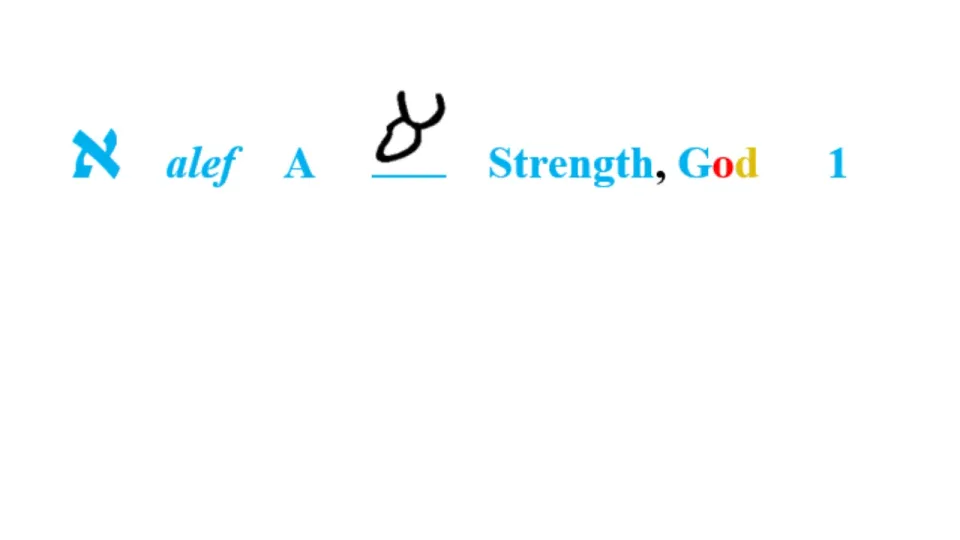 The letter alef: ox-head pictograph meaning strength, God; value 1Slide 2
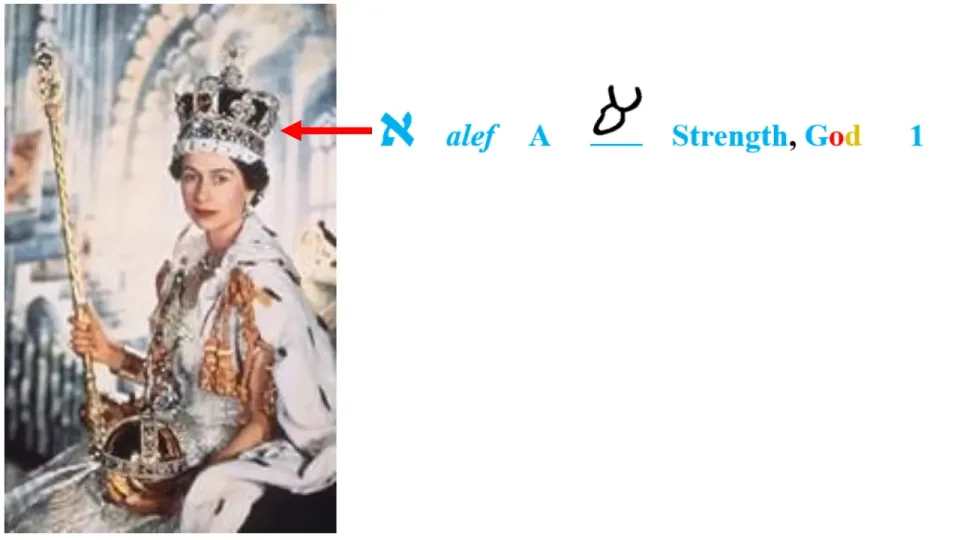 Alef (strength, God) pointing to a monarch's crownSlide 3 · step 1 of 2
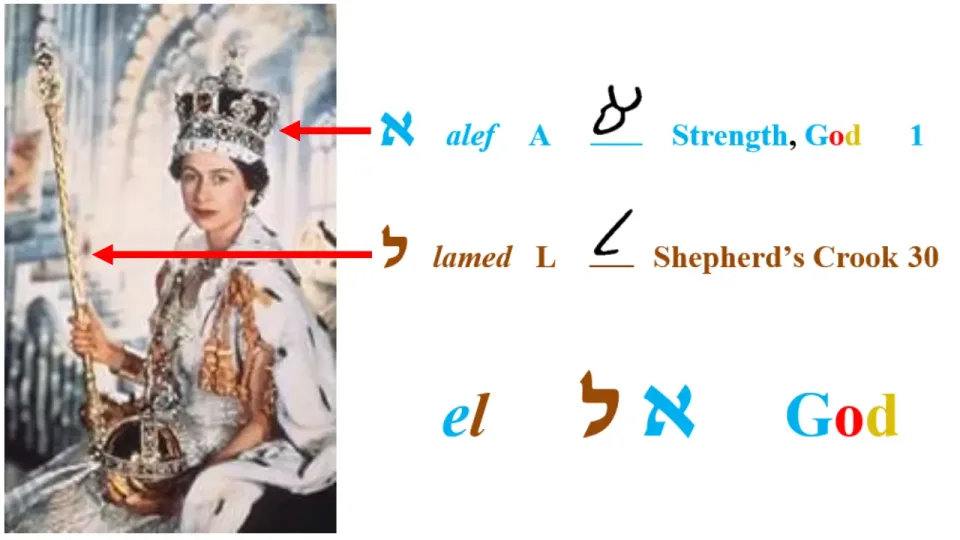 El (אל), God: alef (strength) + lamed (shepherd's crook)Slide 4 · step 2 of 2
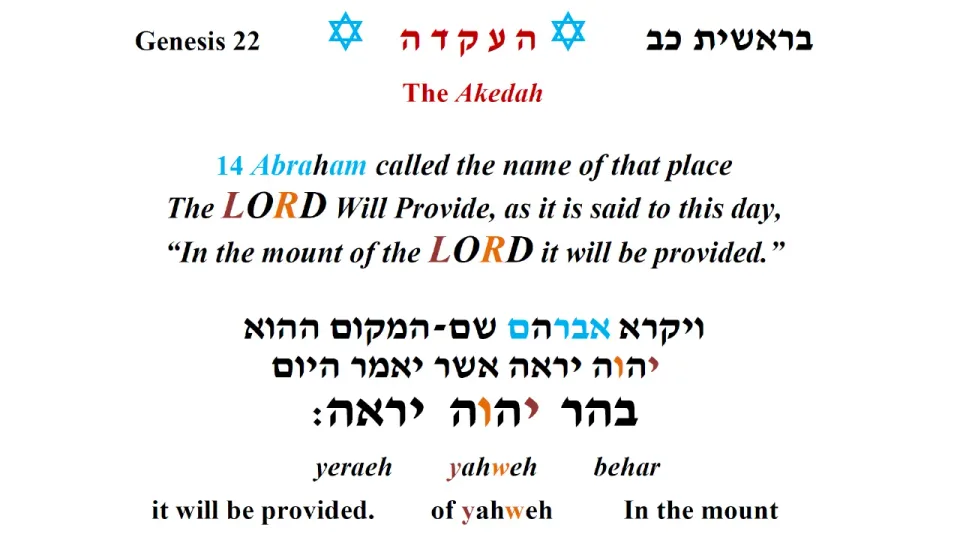 Genesis 22:14 — The LORD Will Provide: "In the mount of the LORD"Slide 5
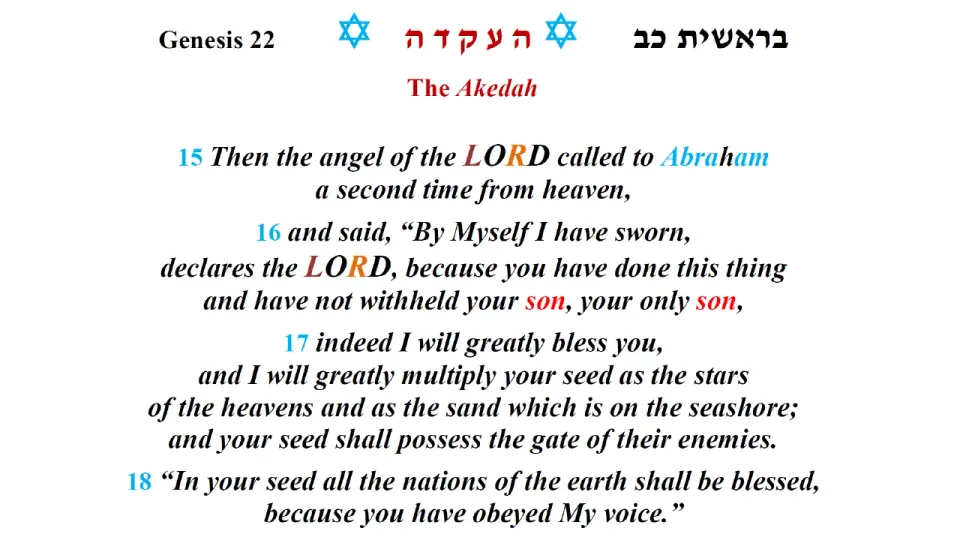 Genesis 22:15-18 — God's oath: your seed shall possess the gate of their enemiesSlide 6
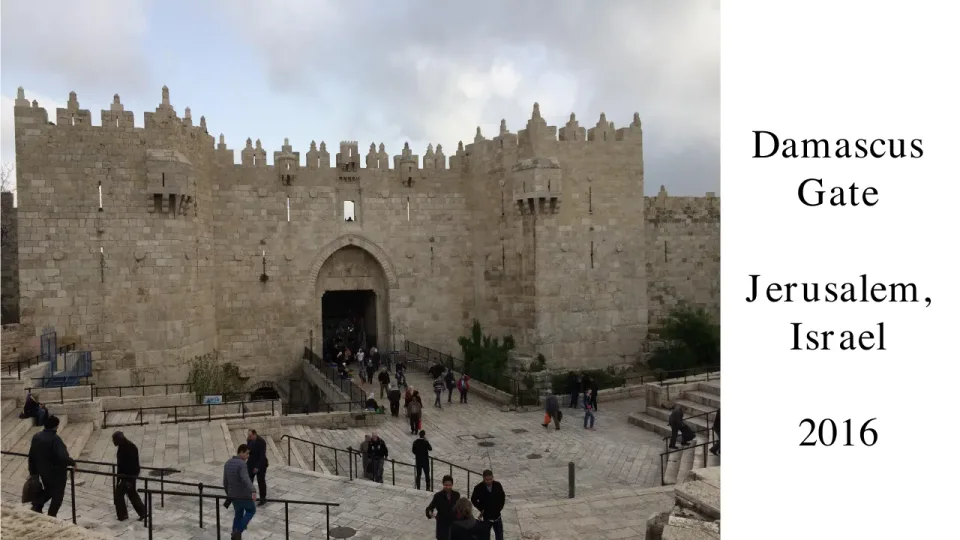 Photo: Damascus Gate, Jerusalem, Israel (2016)Slide 7
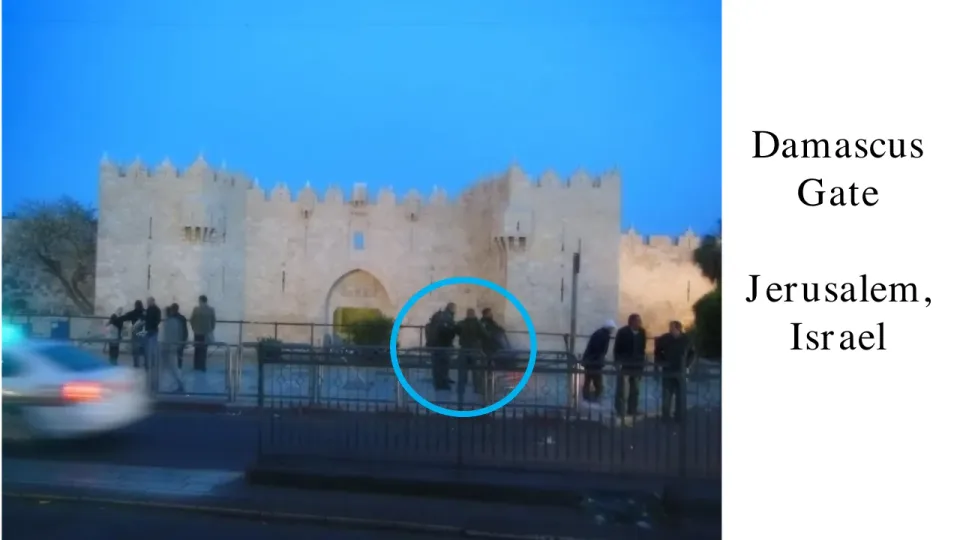 Photo: uniformed guards at the Damascus Gate, JerusalemSlide 8
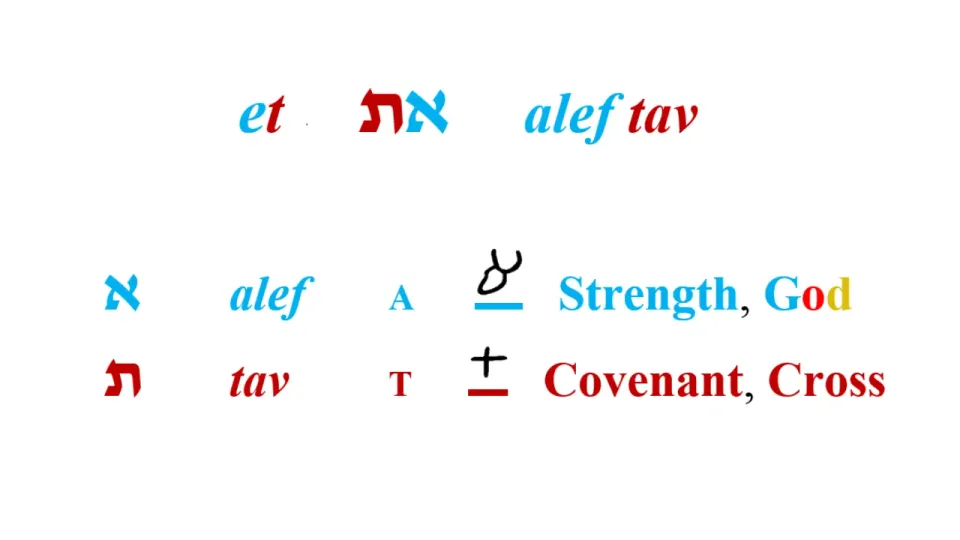 Et (את): alef-tav — strength/God and covenant/crossSlide 9
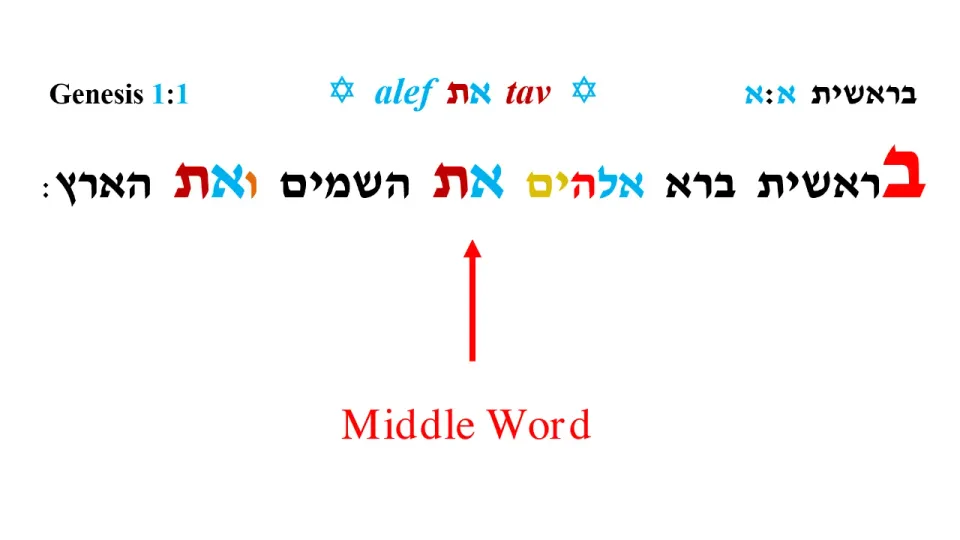 Genesis 1:1 — alef-tav (את) is the middle wordSlide 10
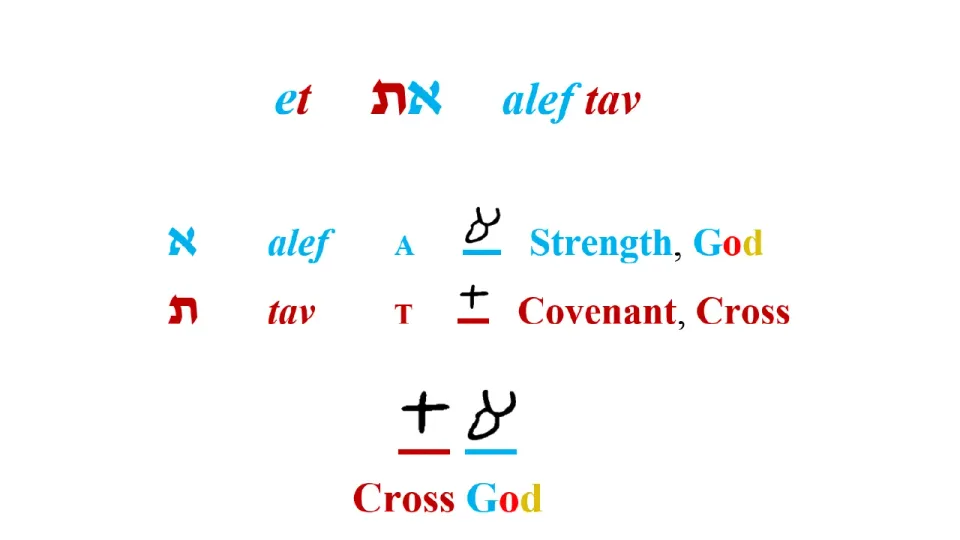 Alef-tav (את): alef is Strength/God, tav is Covenant/CrossSlide 11
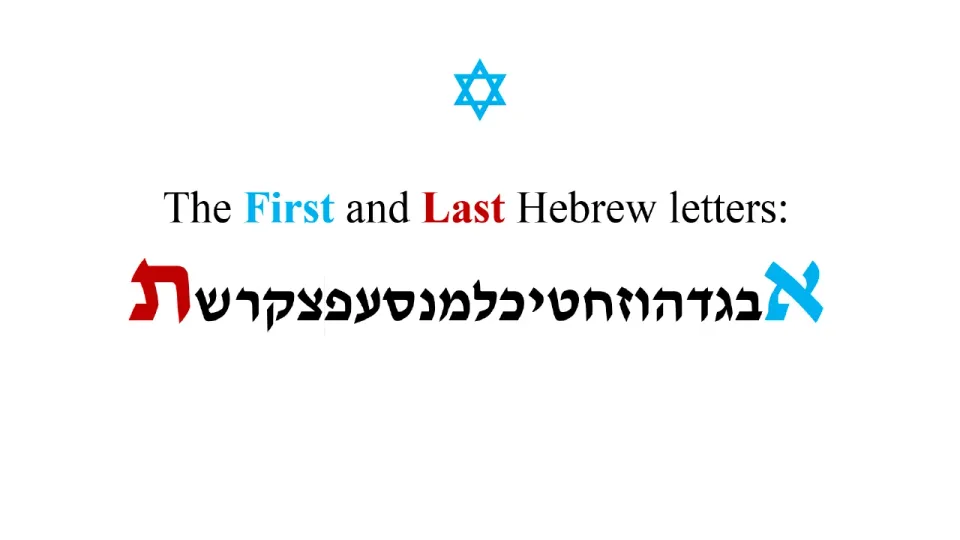 The first and last Hebrew letters: alef and tavSlide 12
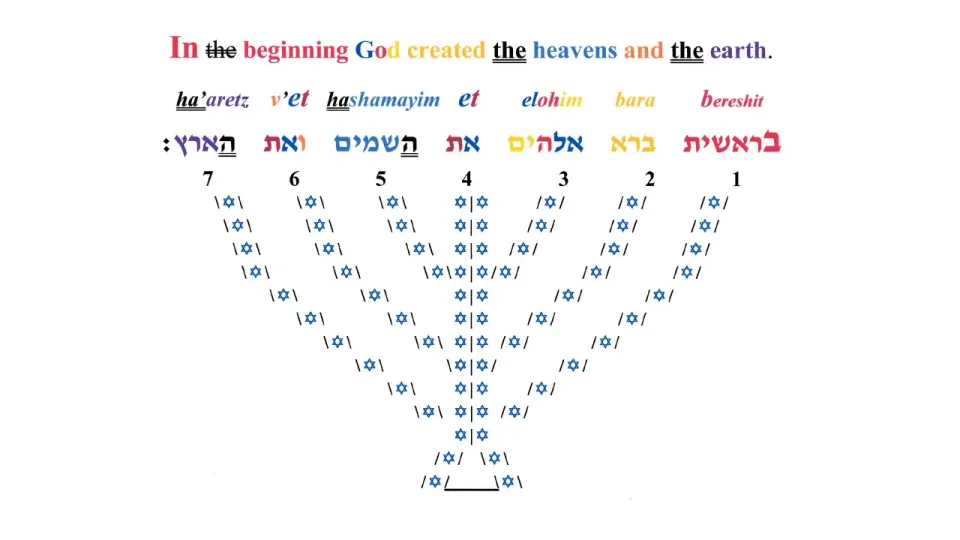 Genesis 1:1 — seven words with a menorah of stars; et is the centerSlide 13
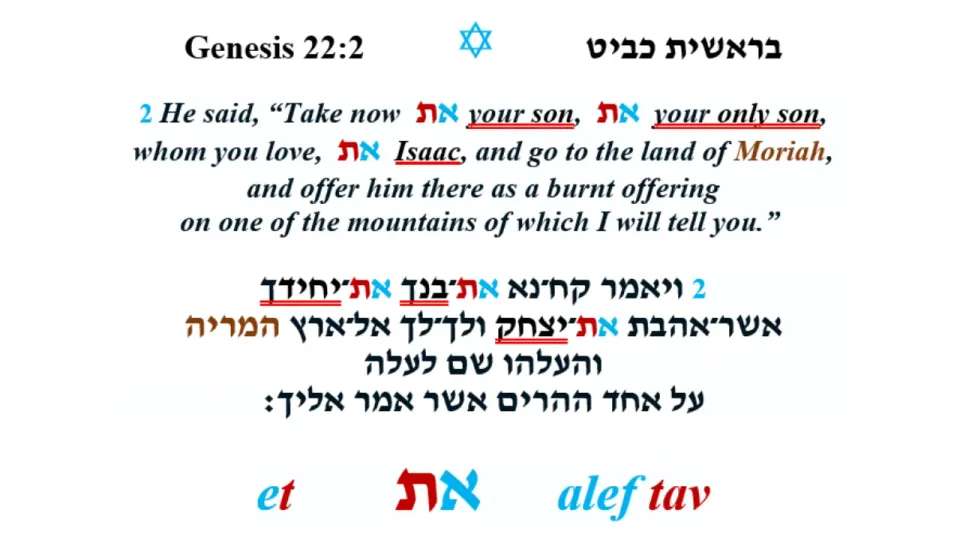 Genesis 22:2 — take your son, your only son Isaac; et marks each objectSlide 14
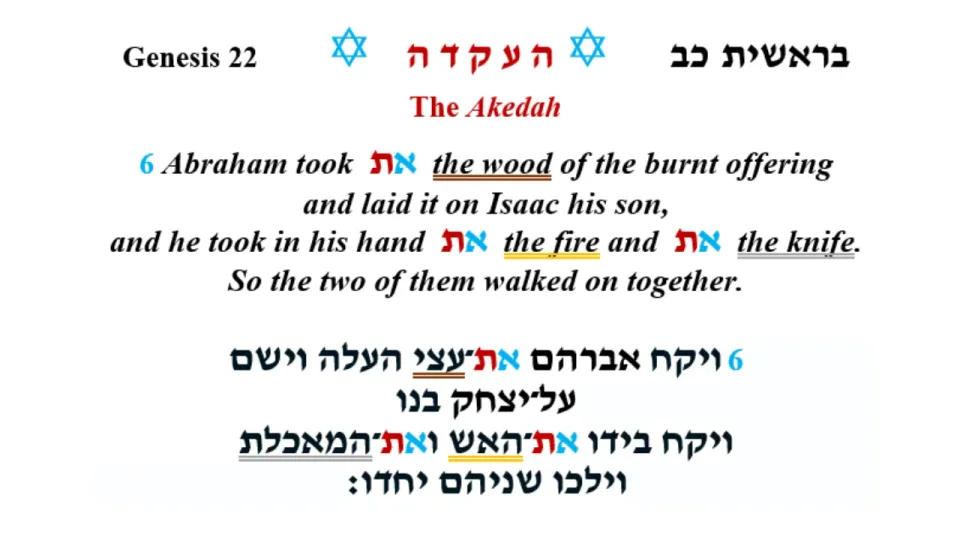 Genesis 22:6 — Abraham takes the wood, the fire and the knifeSlide 15
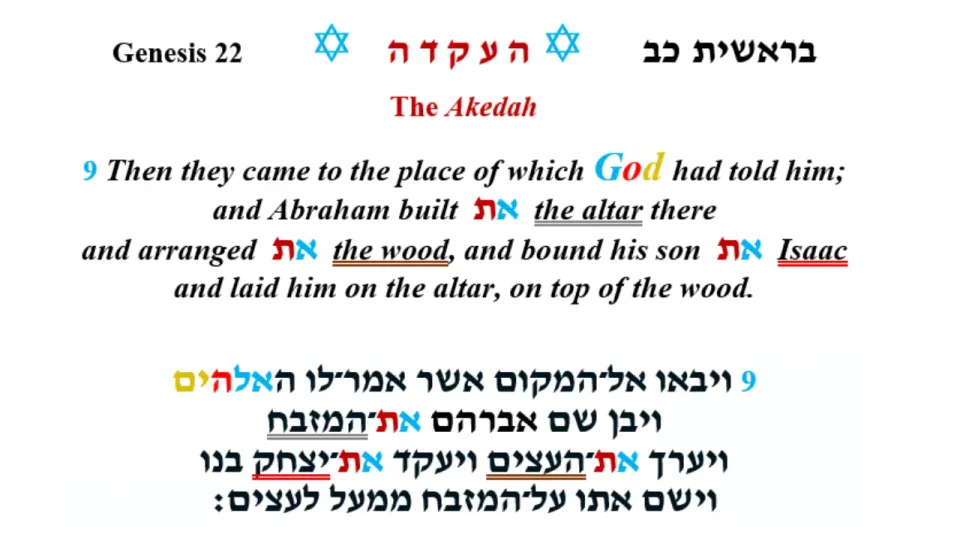 Genesis 22:9 — Abraham builds the altar and binds Isaac on the woodSlide 16
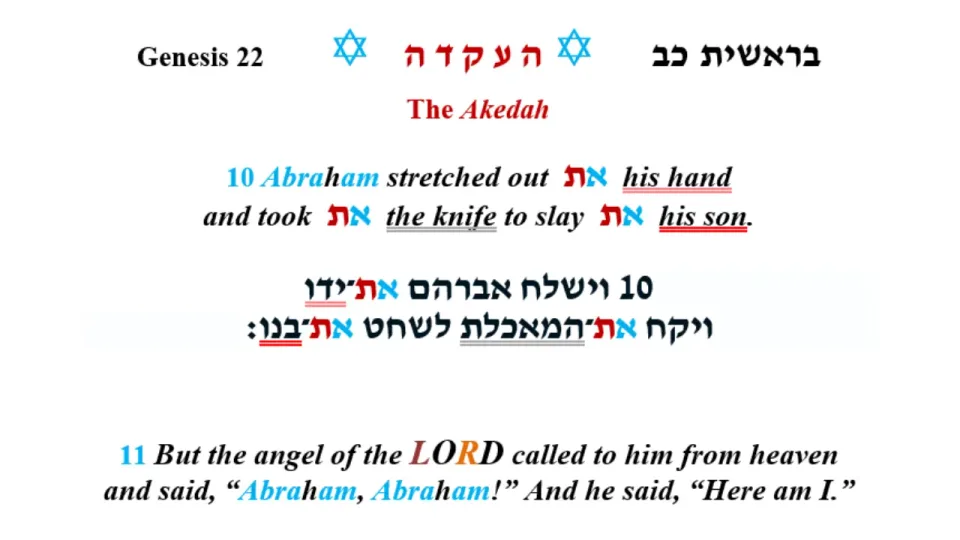 Genesis 22:10-11 — Abraham takes the knife; the angel calls from heavenSlide 17
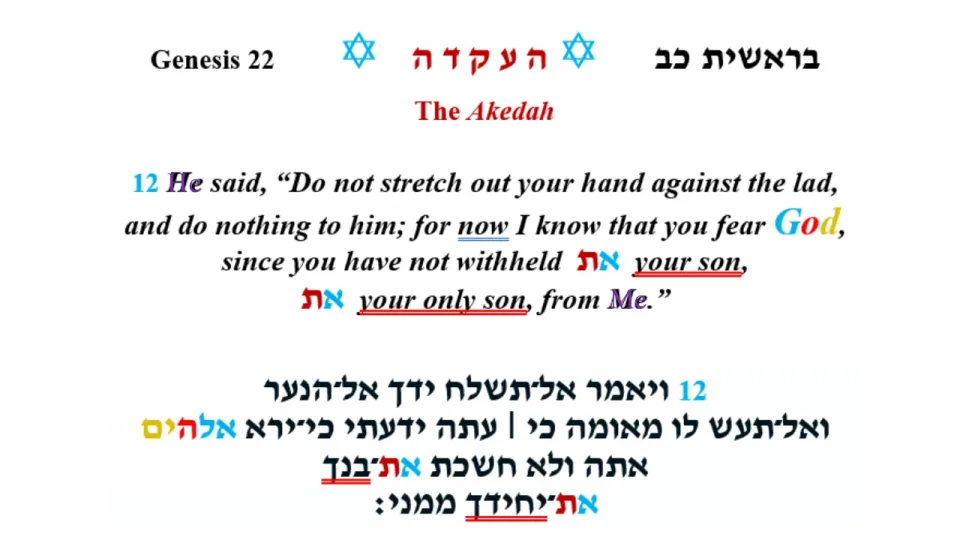 Genesis 22:12 — Do not stretch out your hand; now I know you fear GodSlide 18
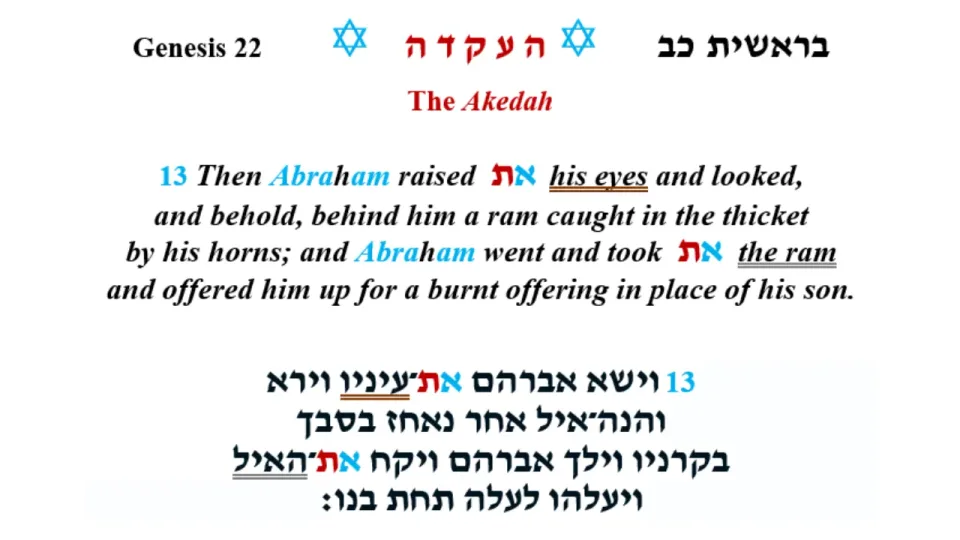 Genesis 22:13 — Abraham sees a ram and offers it in place of his sonSlide 19
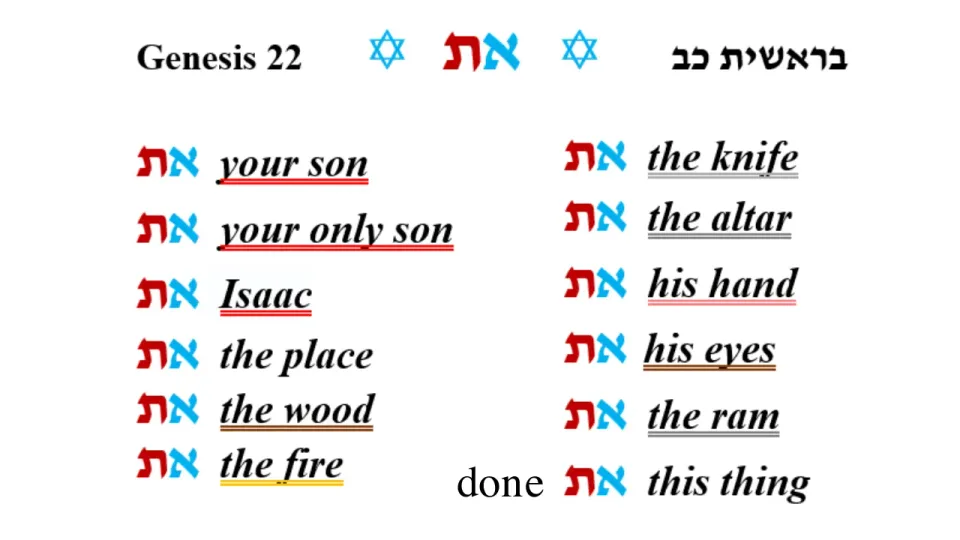 The word et (alef-tav) before twelve things in Genesis 22Slide 20
 Coca-Cola advertisement: “Coke is it!”Slide 21
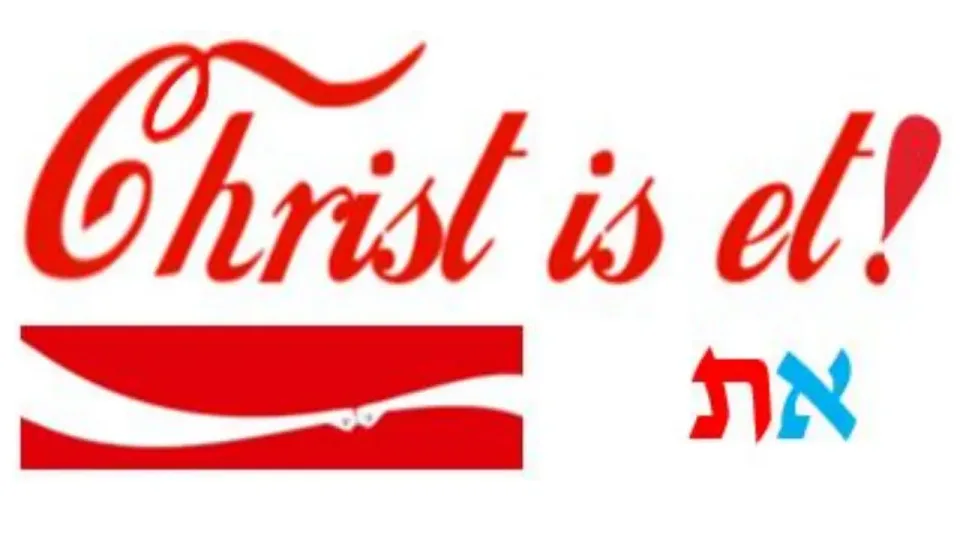 “Christ is et!” — a Coca-Cola style slogan with the Hebrew word etSlide 22
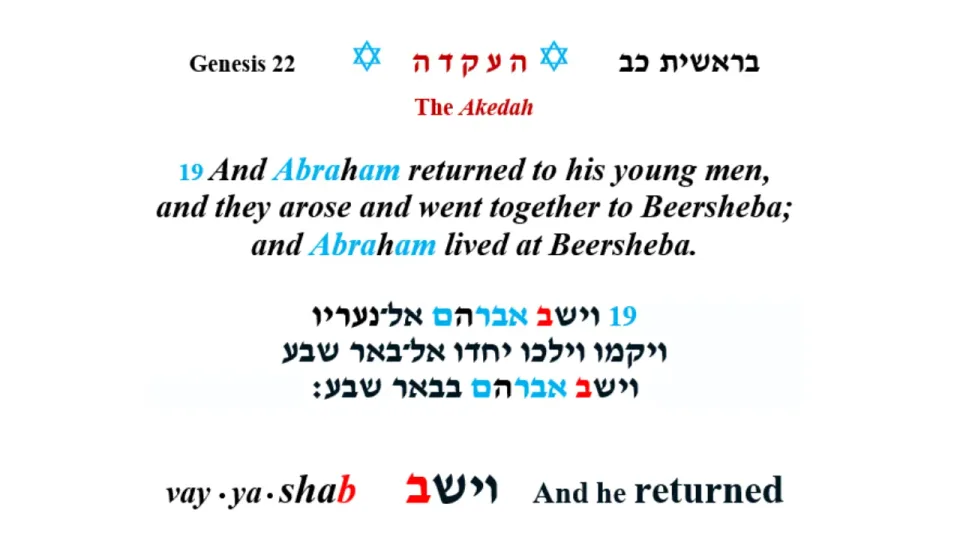 Genesis 22:19 — Abraham returned (vayashav) to BeershebaSlide 23
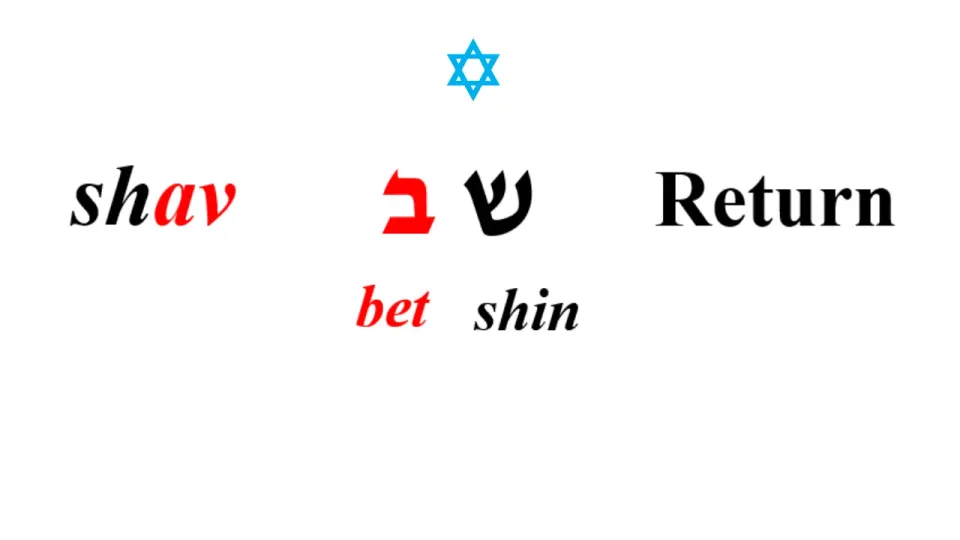 Shav (שב) means Return — spelled shin and betSlide 24
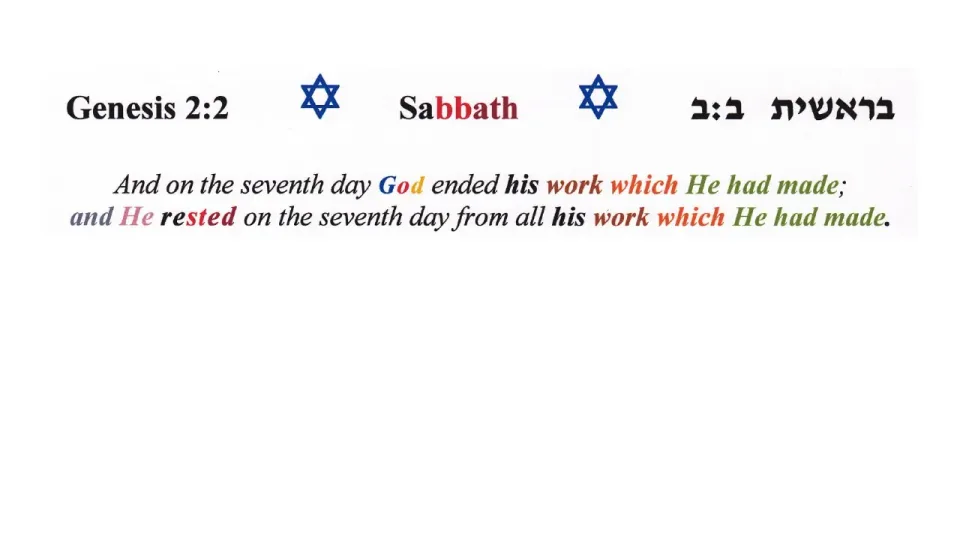 Genesis 2:2 — Sabbath: God ended his work and rested on the seventh daySlide 25
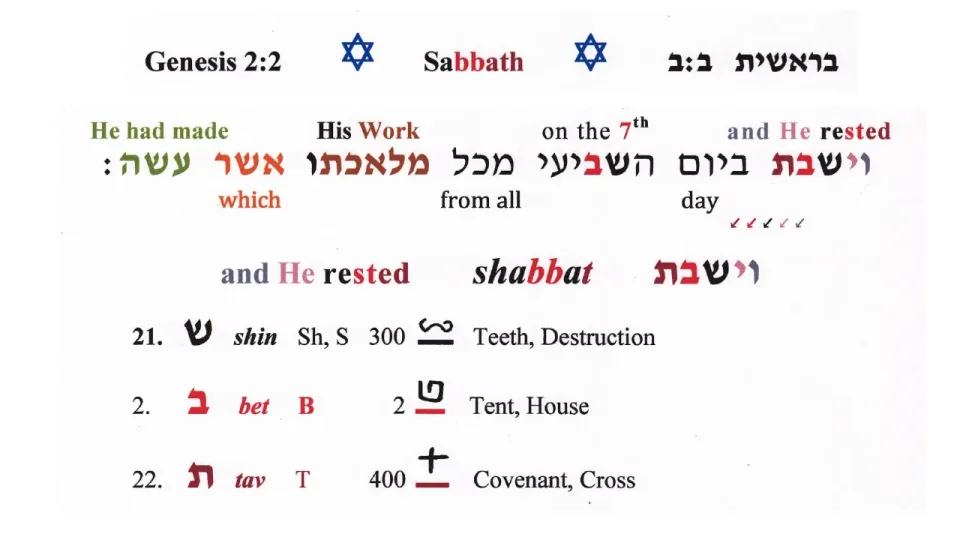 Genesis 2:2 — Sabbath: "and He rested" (shin, bet, tav)Slide 26
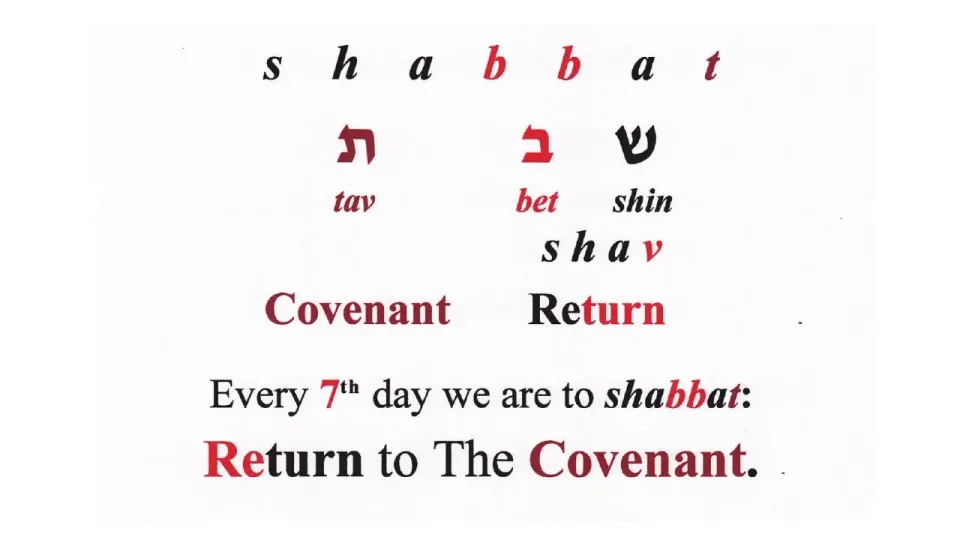 Shabbat = tav + bet + shin: Return to the CovenantSlide 27
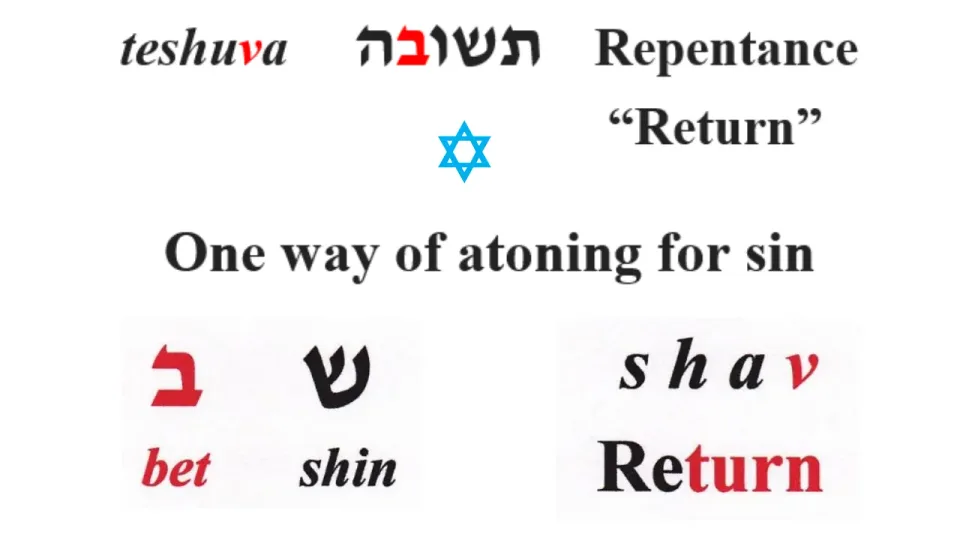 Teshuva (תשובה): repentance means "return"Slide 28
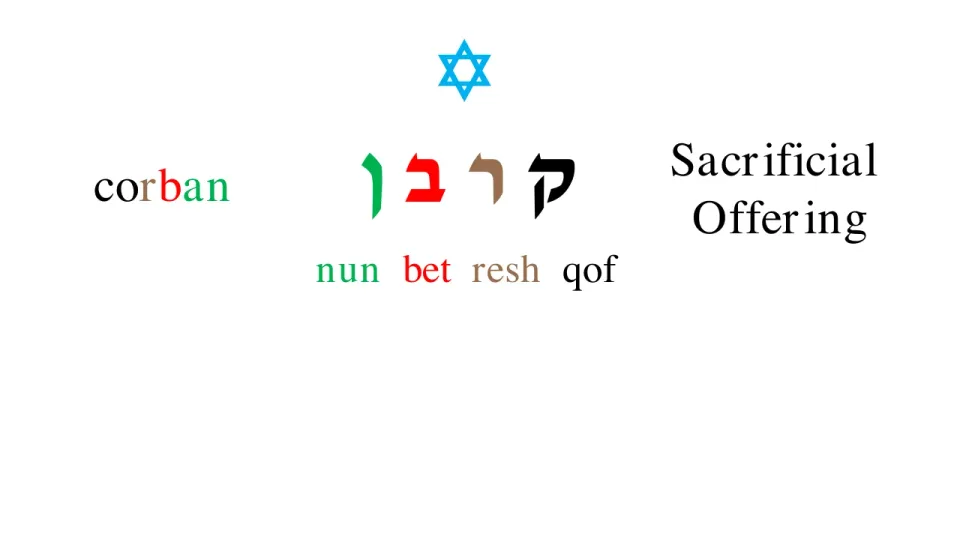 Corban (קרבן): sacrificial offeringSlide 29
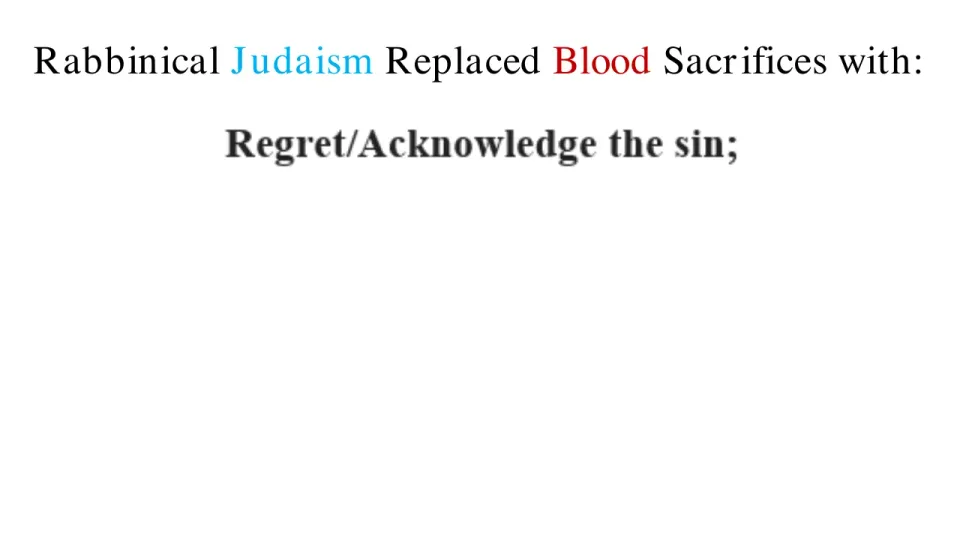 Rabbinical Judaism replaced blood sacrifices with: step 1Slide 30 · step 1 of 9
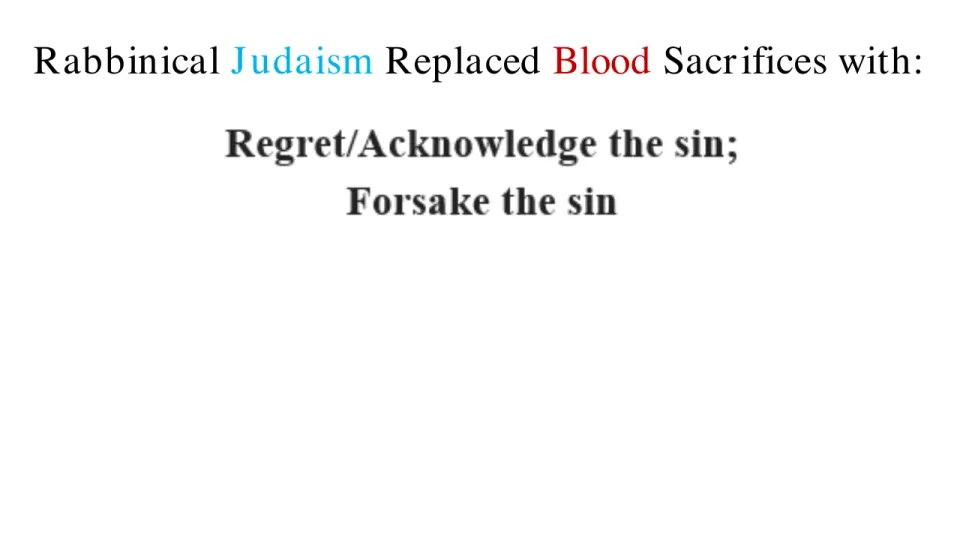 Rabbinical Judaism replaced blood sacrifices with: steps 1-2Slide 31 · step 2 of 9
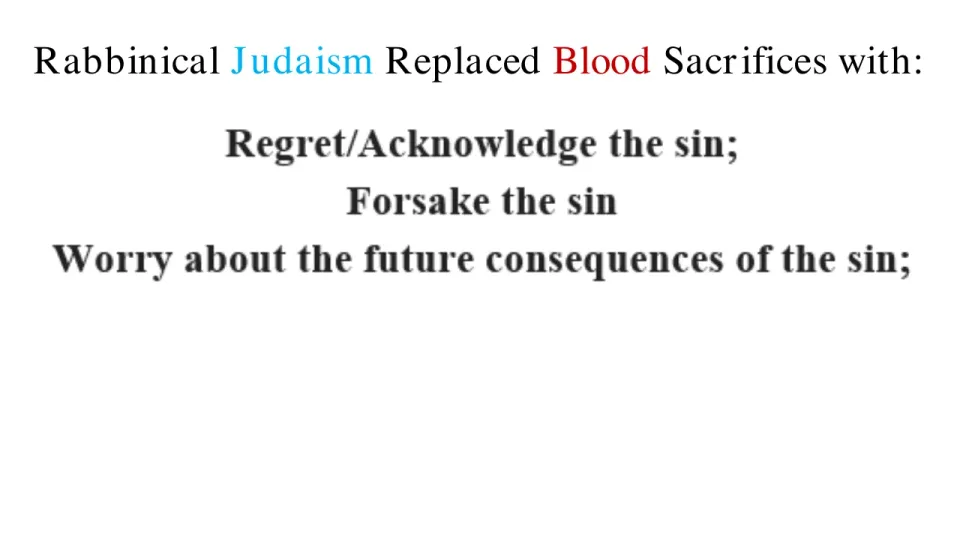 Rabbinical Judaism replaced blood sacrifices with: steps 1-3Slide 32 · step 3 of 9
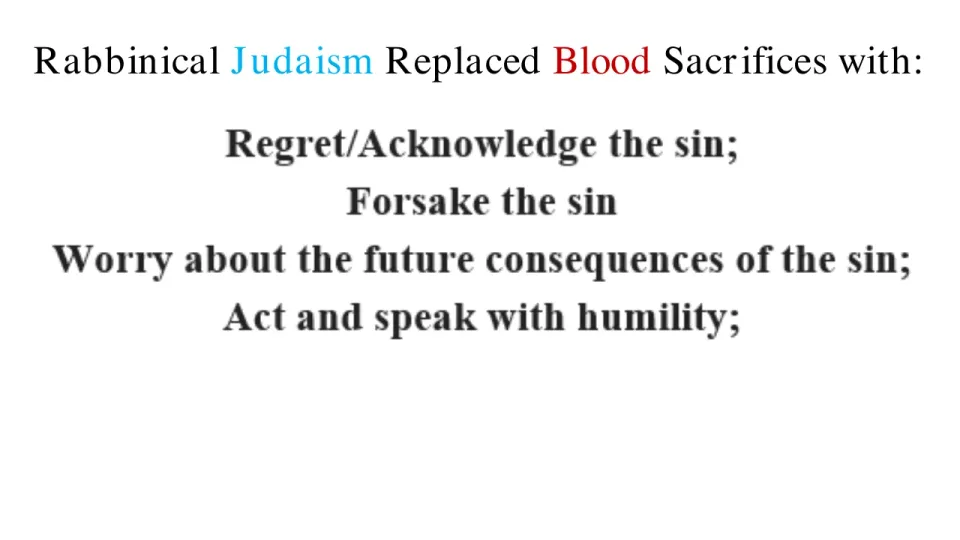 Rabbinical Judaism replaced blood sacrifices with repentance stepsSlide 33 · step 4 of 9
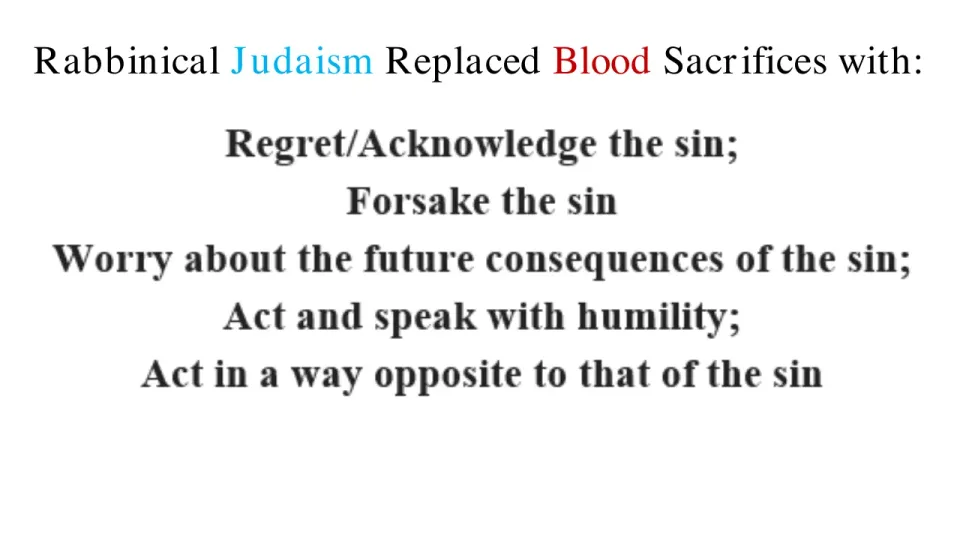 Rabbinical Judaism replaced blood sacrifices with: steps 1-5Slide 34 · step 5 of 9
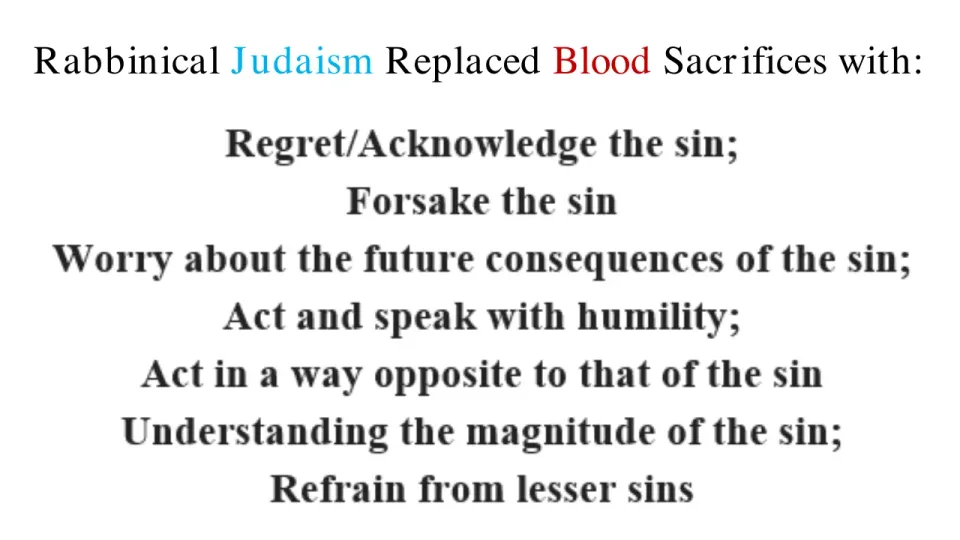 Rabbinical Judaism replaced blood sacrifices with: seven repentance stepsSlide 35 · step 6 of 9
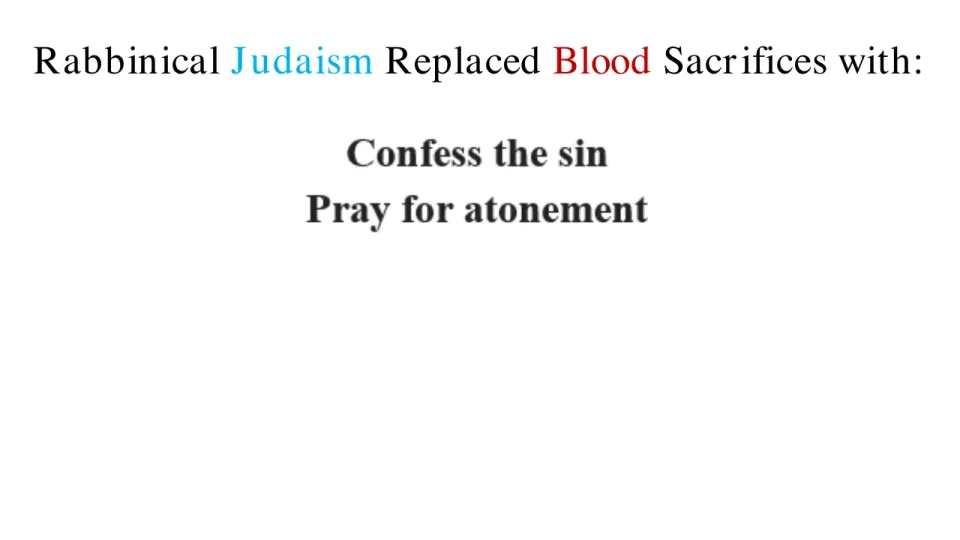 Rabbinical Judaism replaced blood sacrifices: confess and praySlide 36 · step 7 of 9
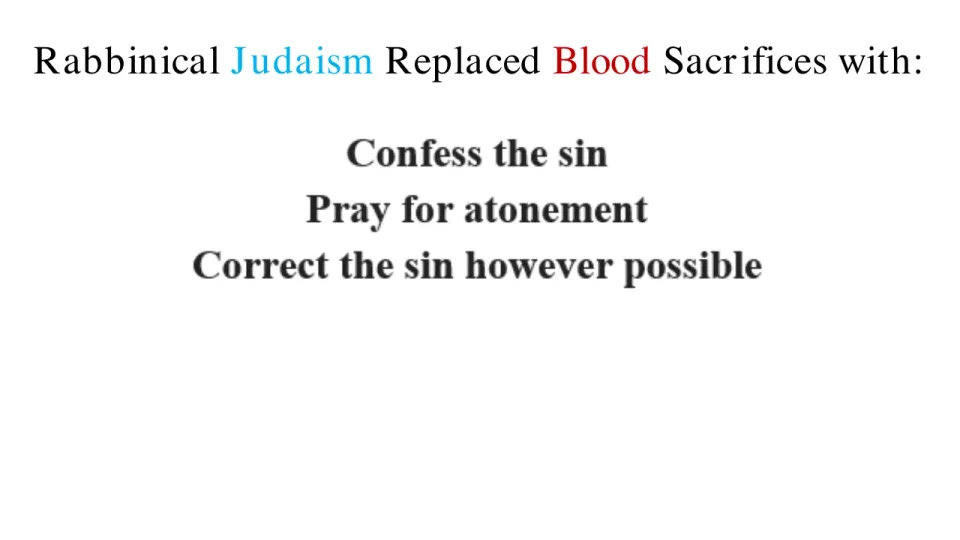 Rabbinical Judaism replaced blood sacrifices: three stepsSlide 37 · step 8 of 9
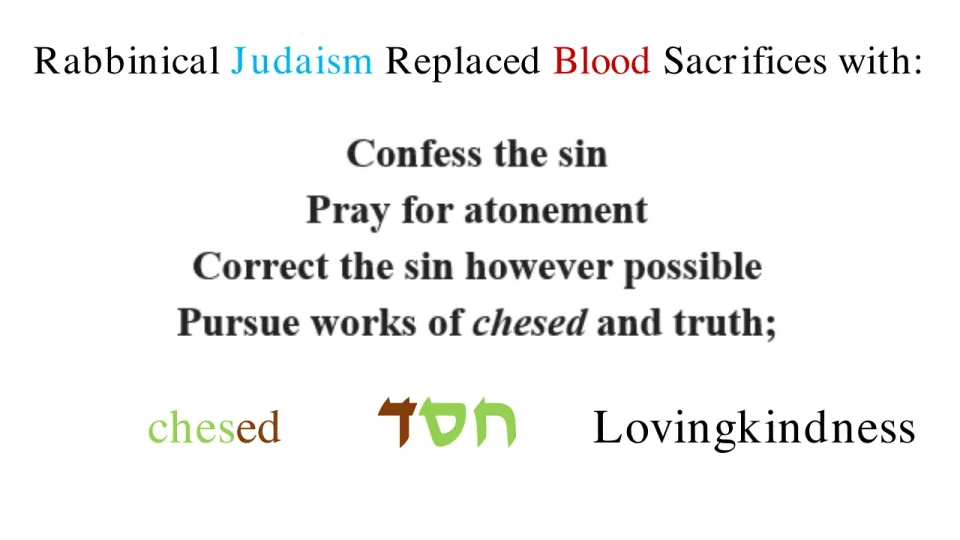 Rabbinical Judaism replaced blood sacrifices: chesed (lovingkindness)Slide 38 · step 9 of 9
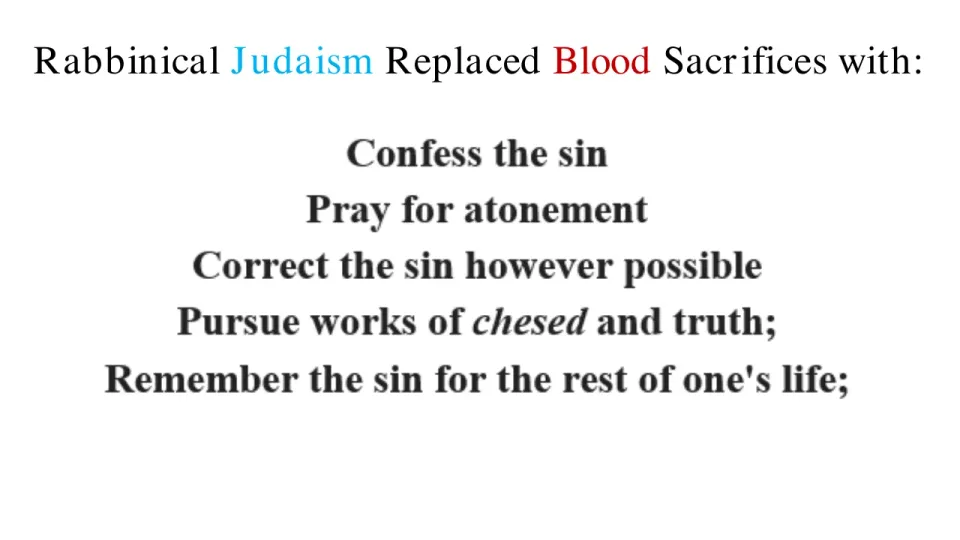 Rabbinical Judaism replaced blood sacrifices: five stepsSlide 39 · step 1 of 3
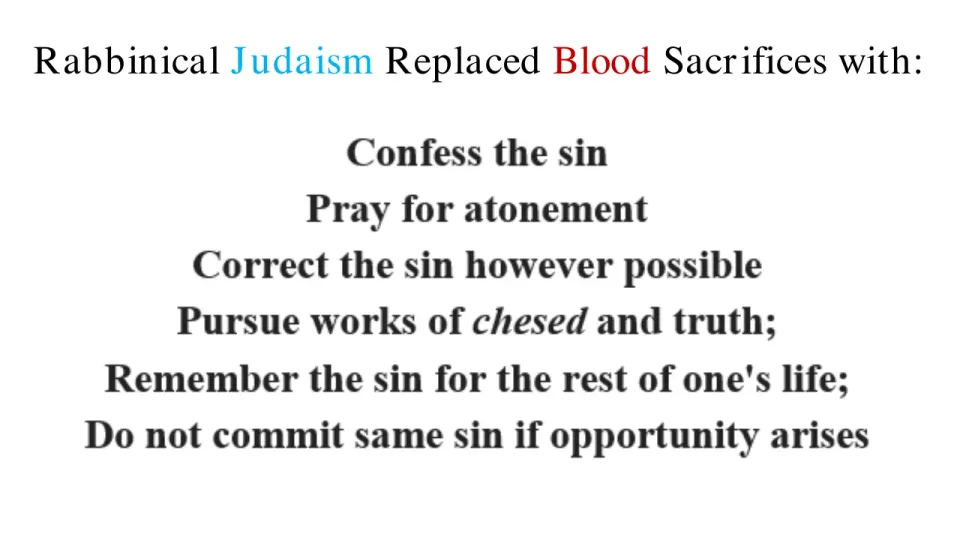 Rabbinical Judaism replaced blood sacrifices: six stepsSlide 40 · step 2 of 3
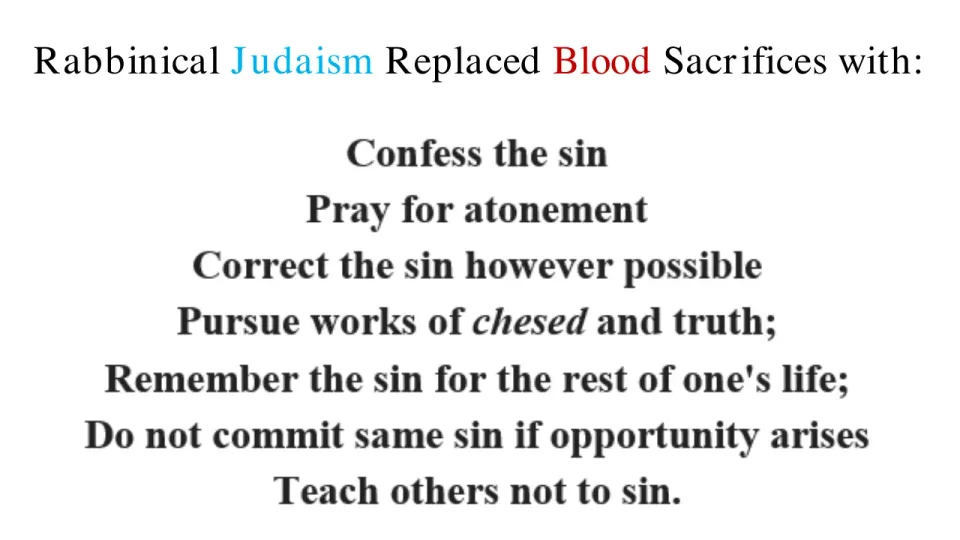 What Rabbinical Judaism put in place of blood sacrificesSlide 41 · step 3 of 3
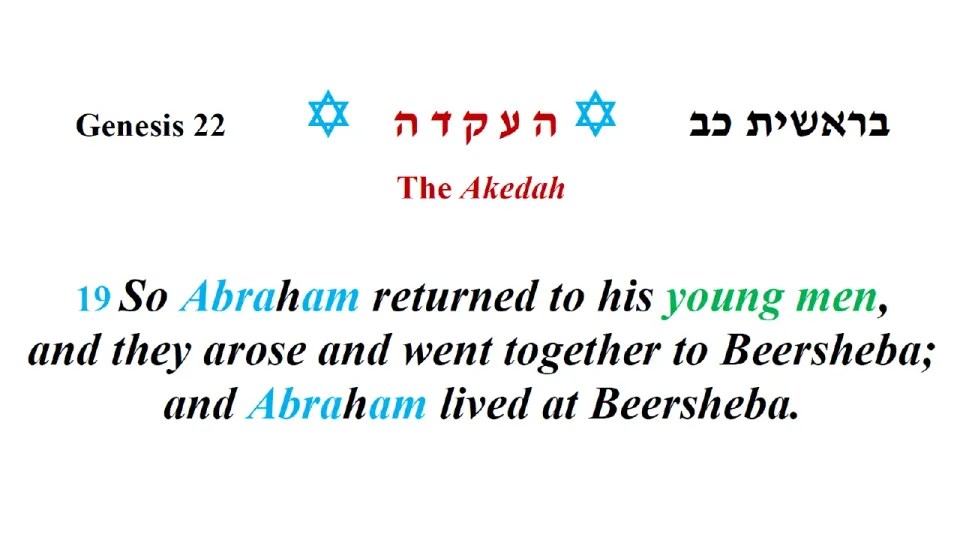 Genesis 22:19 — Abraham returned to his young men at BeershebaSlide 42
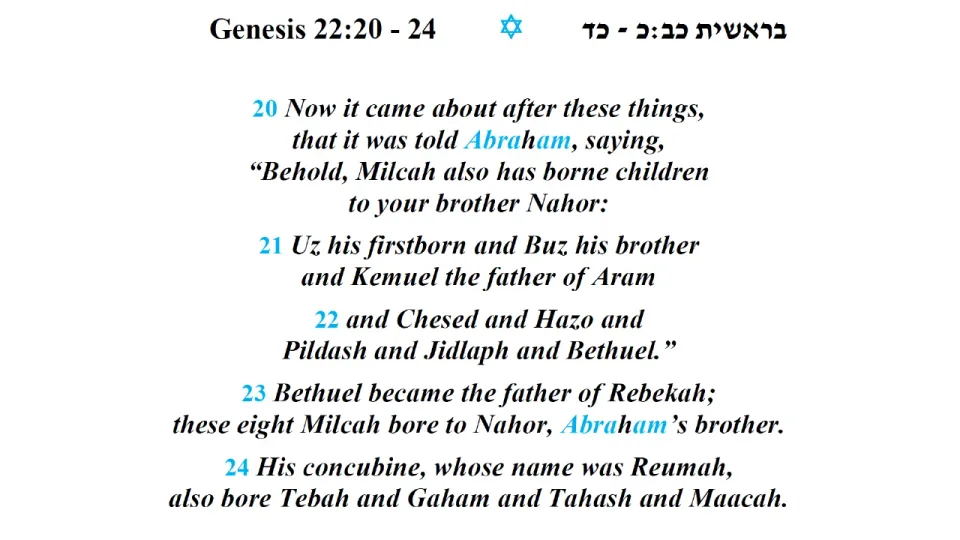 Genesis 22:20-24 — the children of Nahor and Milcah; Bethuel father of RebekahSlide 43
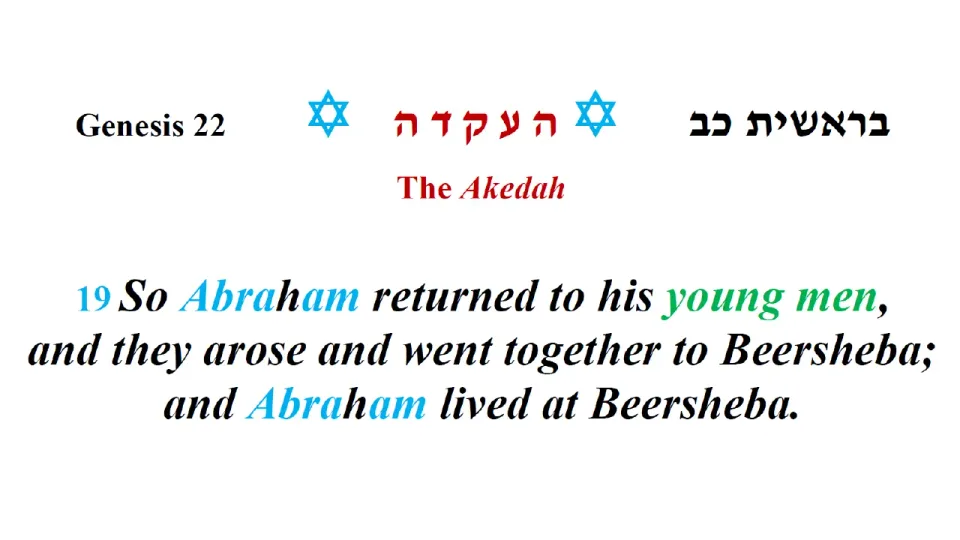 Genesis 22:19 — Abraham returned to his young men at BeershebaSlide 44
 Genesis 22:20-24 — the children of Nahor and Milcah; Bethuel father of RebekahSlide 45
 Genesis 23:1-4 — Sarah dies at Hebron; Abraham asks for a burial siteSlide 46
 Genesis 23:5-7 — the sons of Heth call Abraham a mighty princeSlide 47
 Genesis 23:8-9 — Abraham asks for the cave of MachpelahSlide 48
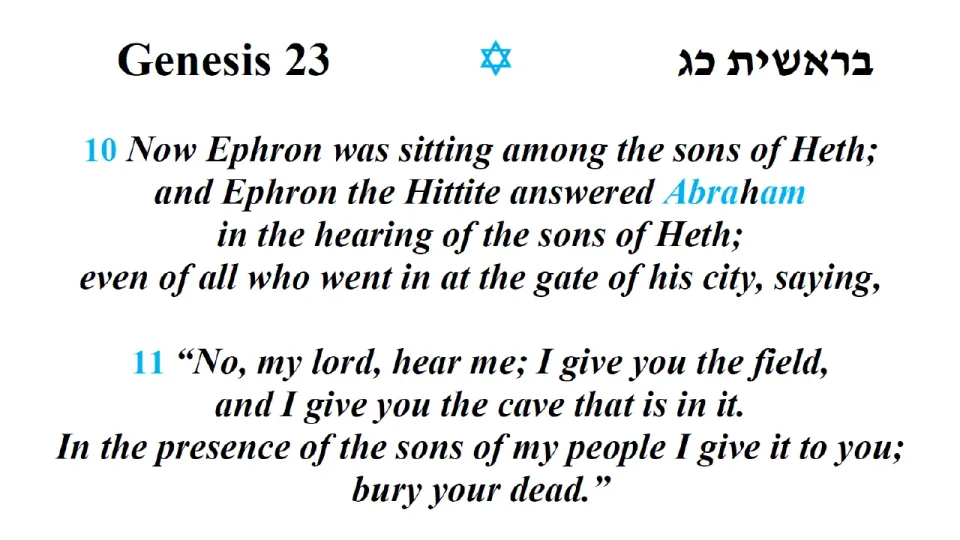 Genesis 23:10-11 — Ephron the Hittite offers the field and caveSlide 49
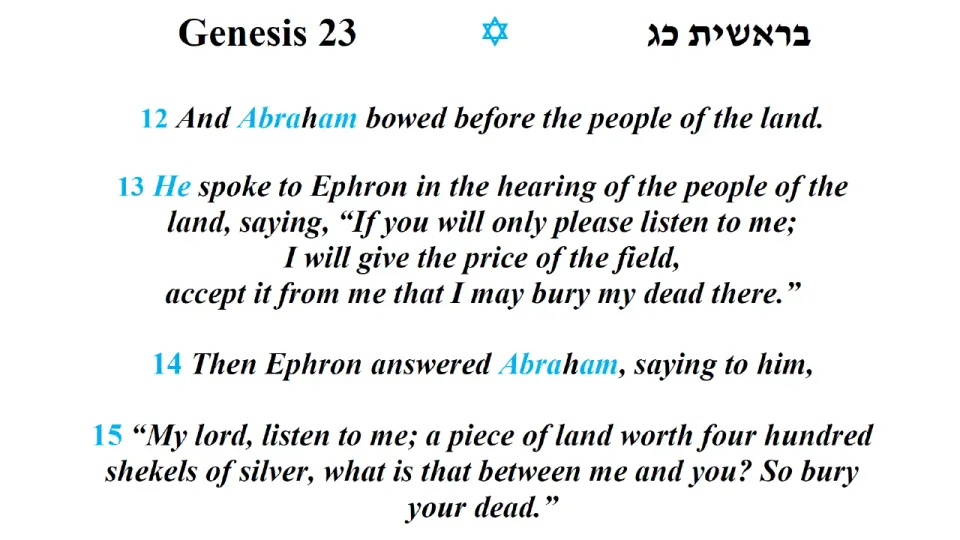 Genesis 23:12-15 — Ephron names the price: 400 shekels of silverSlide 50
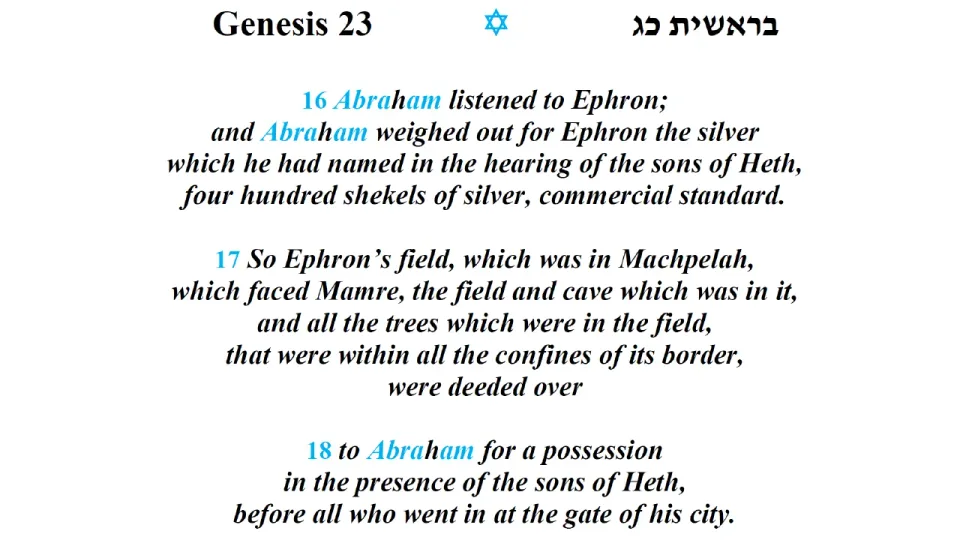 Genesis 23:16-18 — Abraham weighs out 400 shekels; the field is deeded to himSlide 51
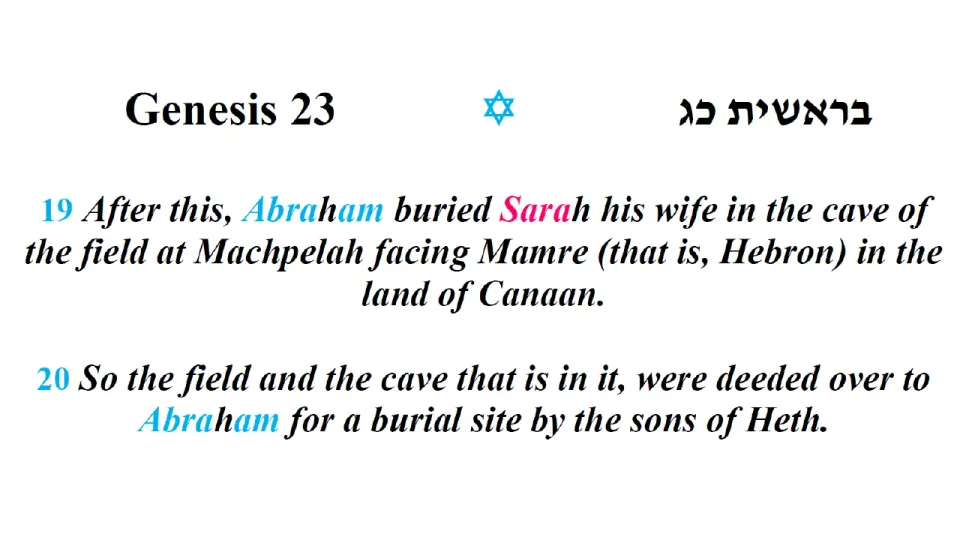 Genesis 23:19-20 — Abraham buries Sarah in the cave of MachpelahSlide 52
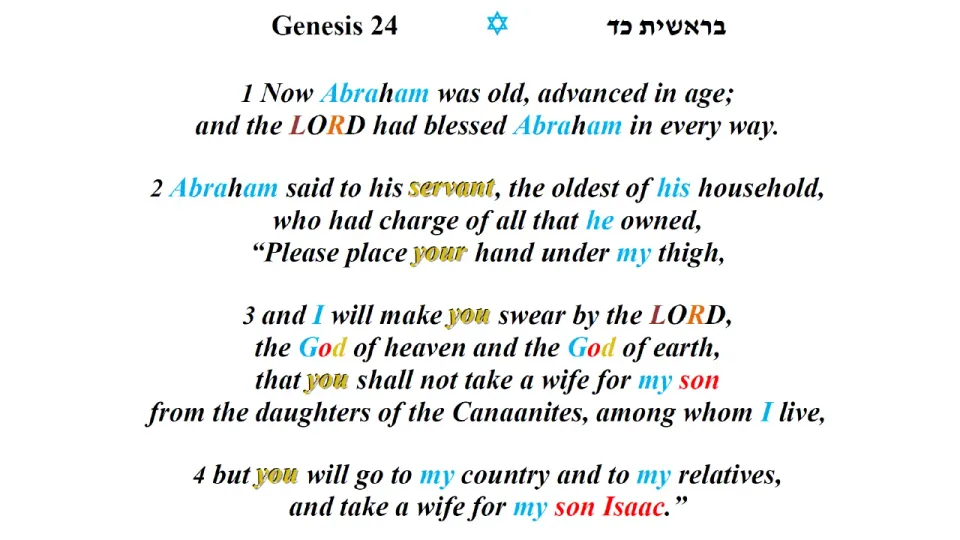 Genesis 24:1-4 — Abraham makes his servant swear to find a wife for IsaacSlide 53
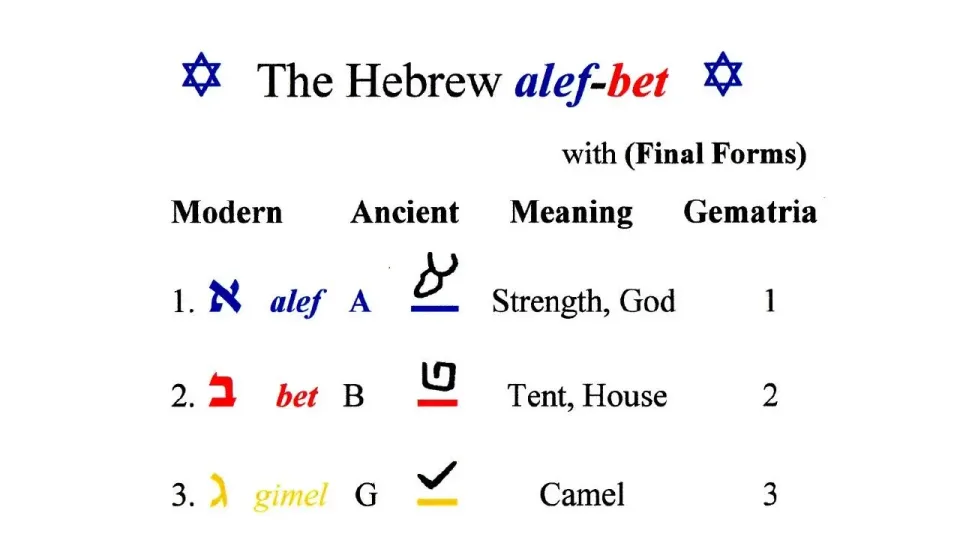 The Hebrew alef-bet: alef, bet, gimel with ancient formsSlide 54
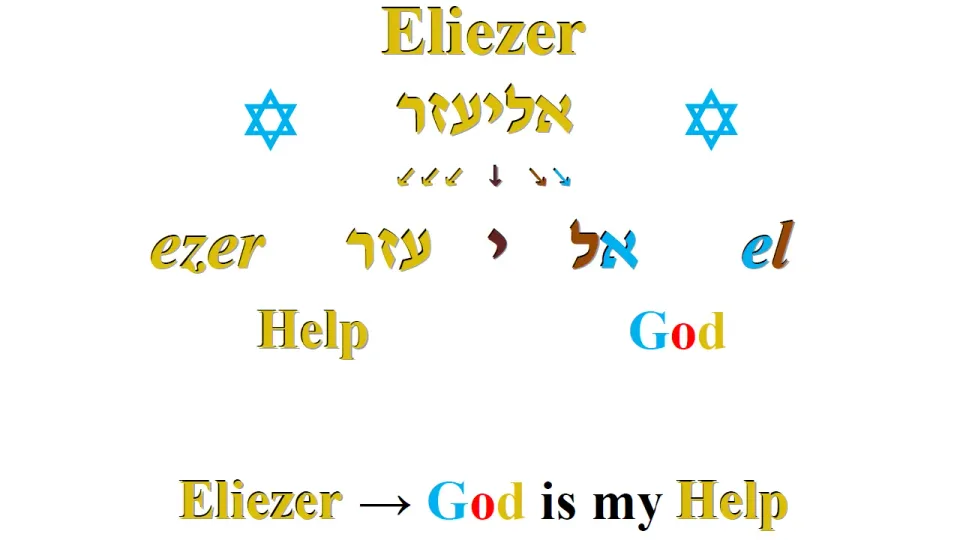 Eliezer (אליעזר) means "God is my Help"Slide 55
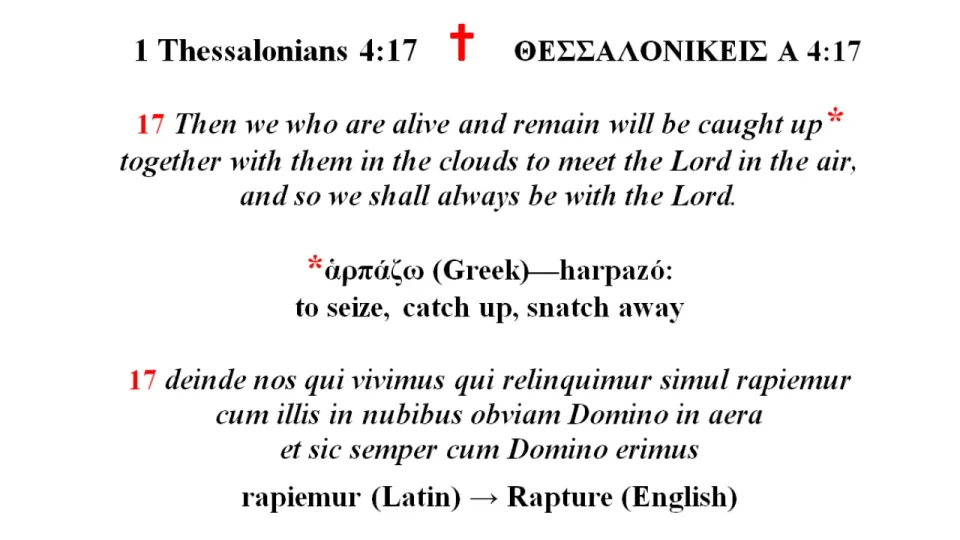 1 Thessalonians 4:17 — caught up (harpazo) and the word RaptureSlide 56
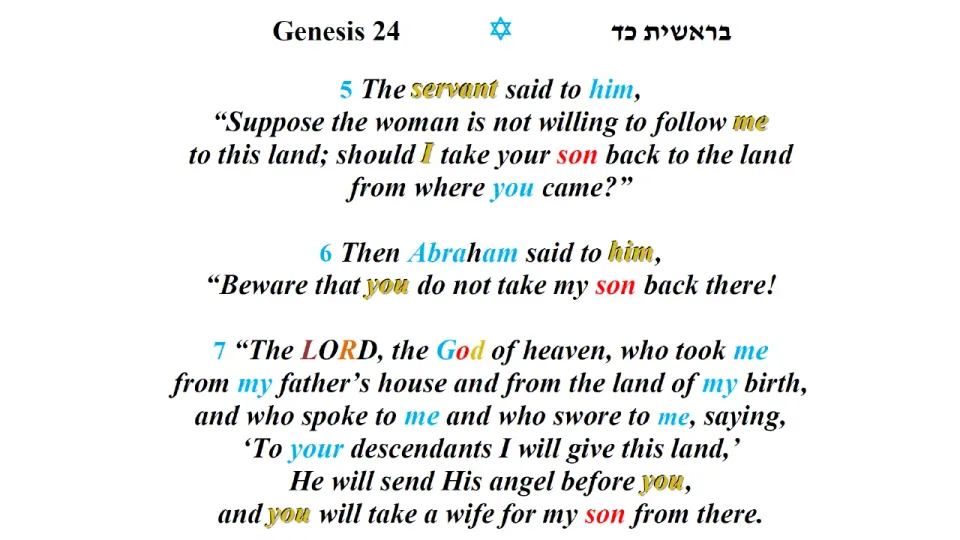 Genesis 24:5-7 — Abraham tells his servant not to take Isaac backSlide 57
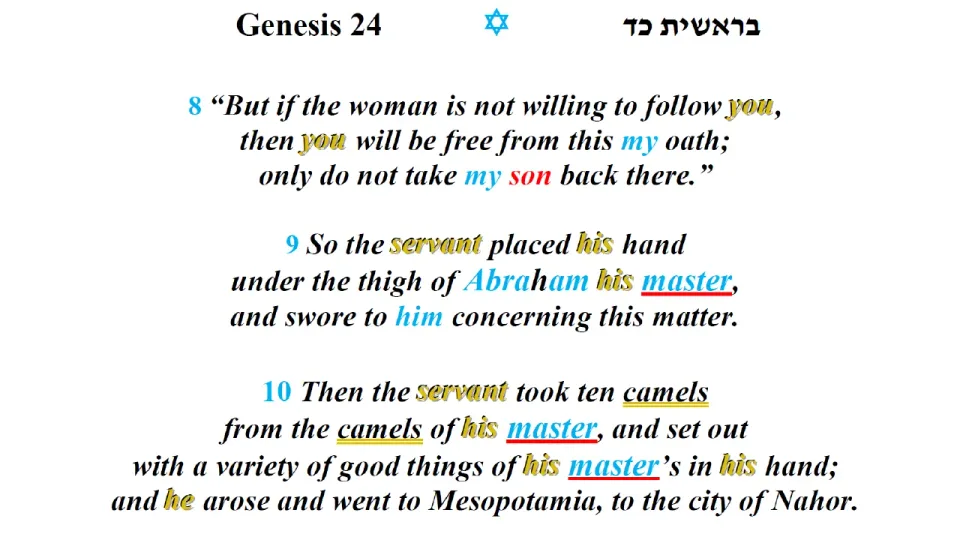 Genesis 24:8-10 — The servant swears the oath and sets out with ten camelsSlide 58 · step 1 of 2
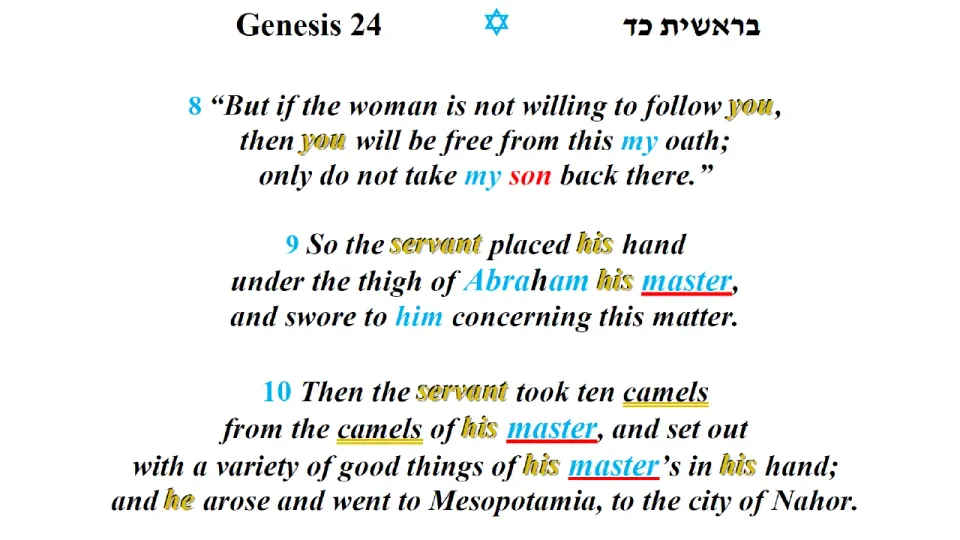 Genesis 24:8-10 — The servant swears the oath and sets out with ten camelsSlide 59 · step 2 of 2
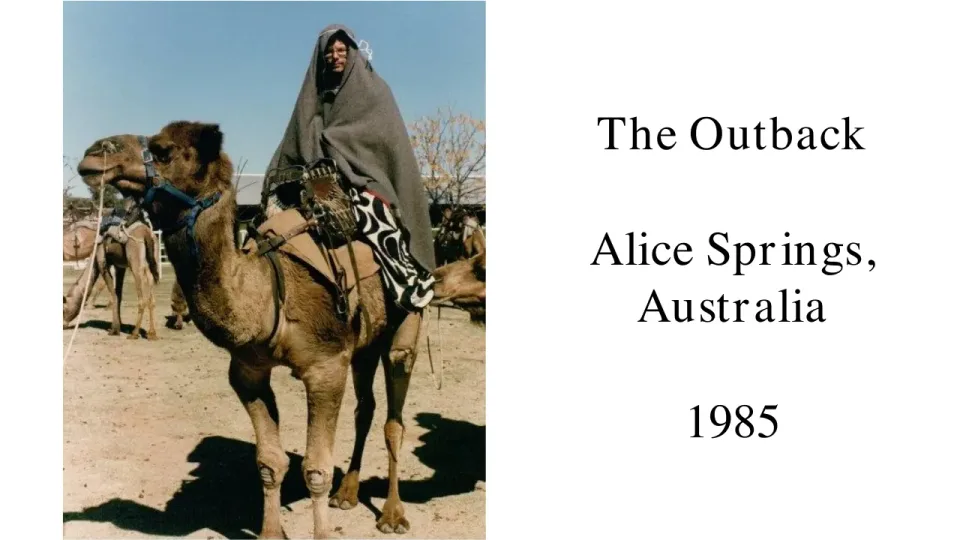 The Outback, Alice Springs, Australia, 1985 — rider on a camelSlide 60
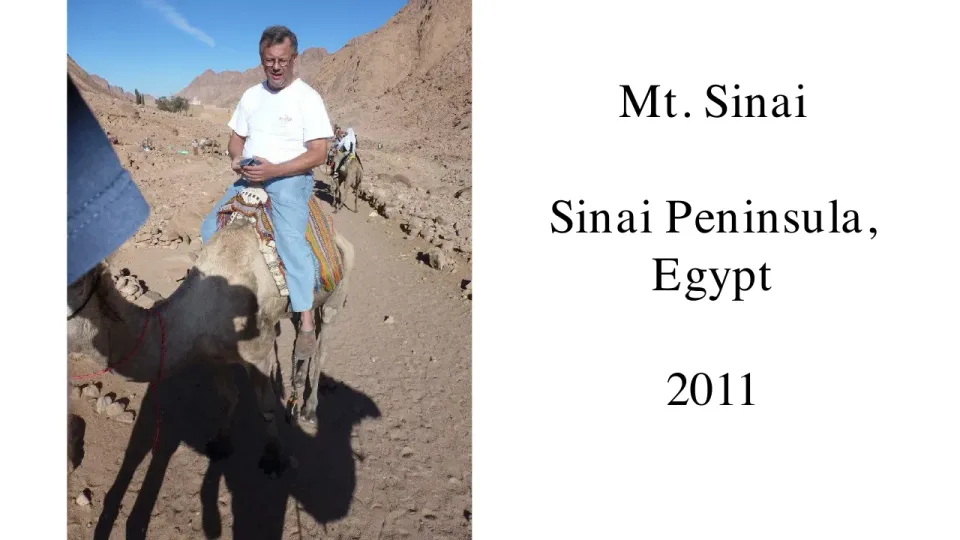 Mt. Sinai, Sinai Peninsula, Egypt, 2011 — man riding a camelSlide 61
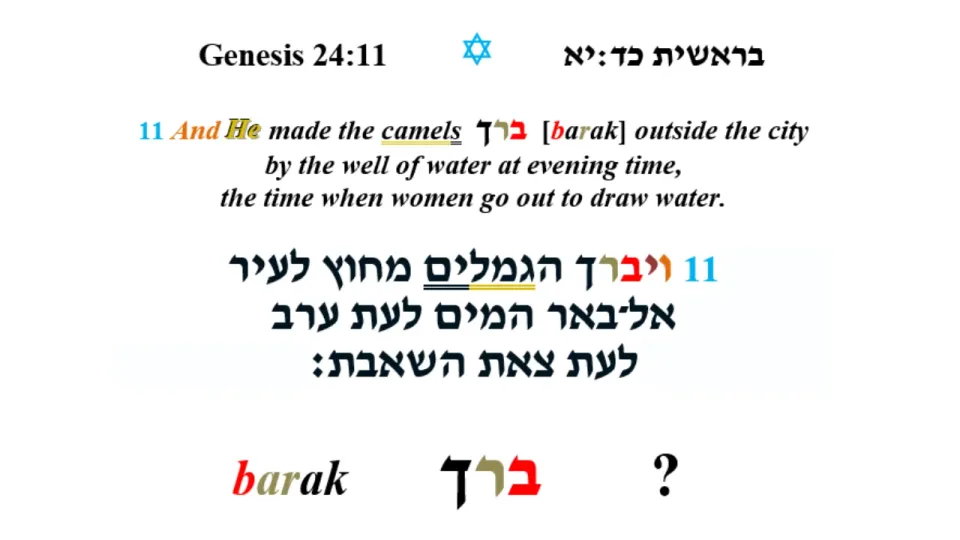 Genesis 24:11 — the camels made to barak (ברך) by the wellSlide 62
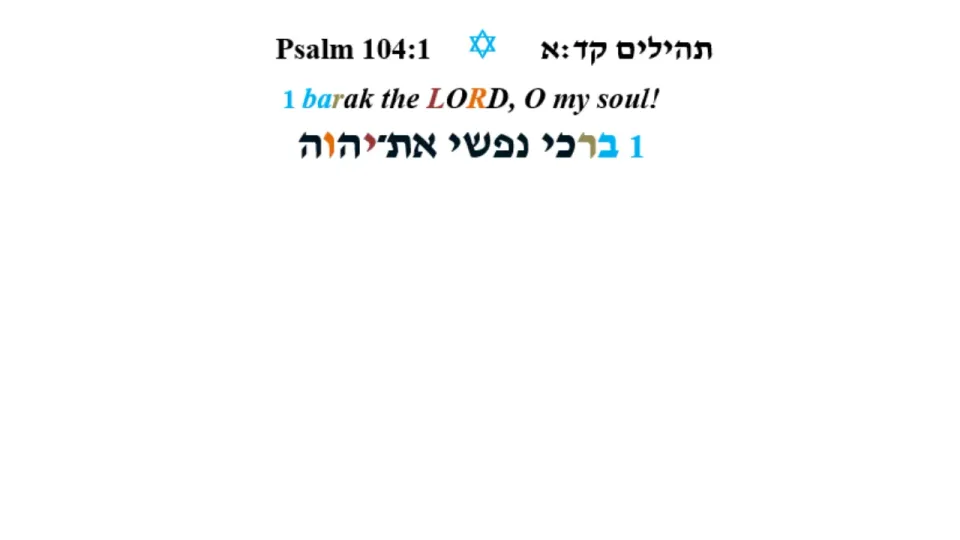 Psalm 104:1 — barak the LORD, O my soulSlide 63 · step 1 of 2
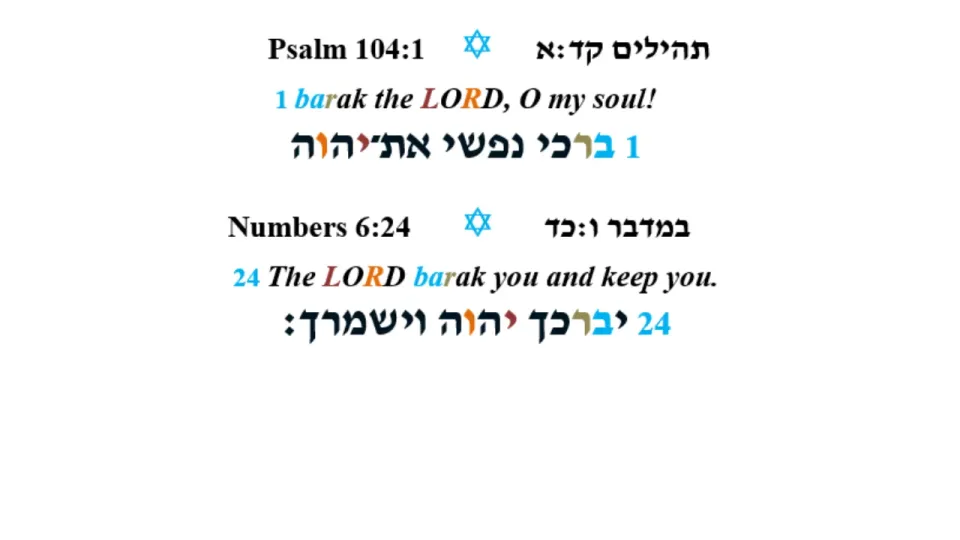 Psalm 104:1 and Numbers 6:24 — barak the LORD / the LORD barak youSlide 64 · step 2 of 2
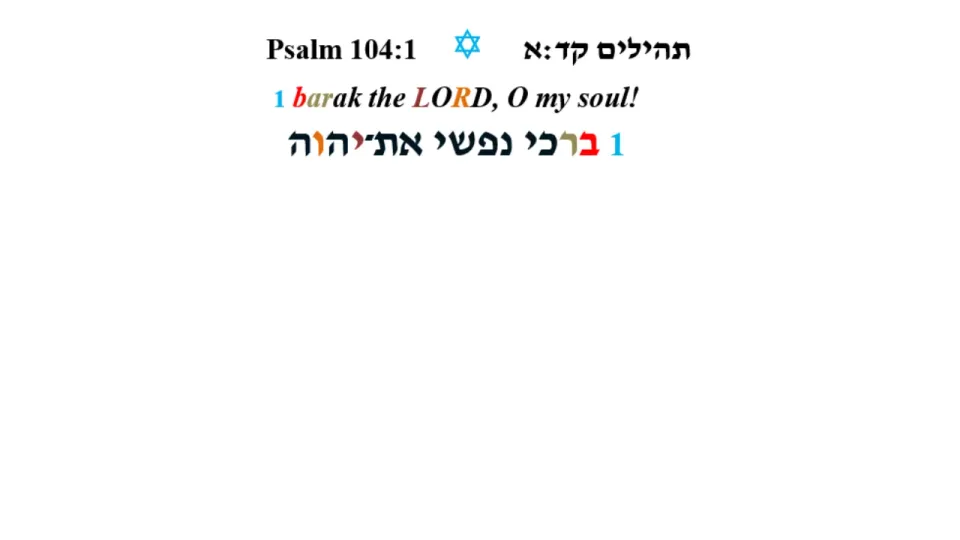 Psalm 104:1 — barak the LORD, O my soulSlide 65 · step 1 of 3
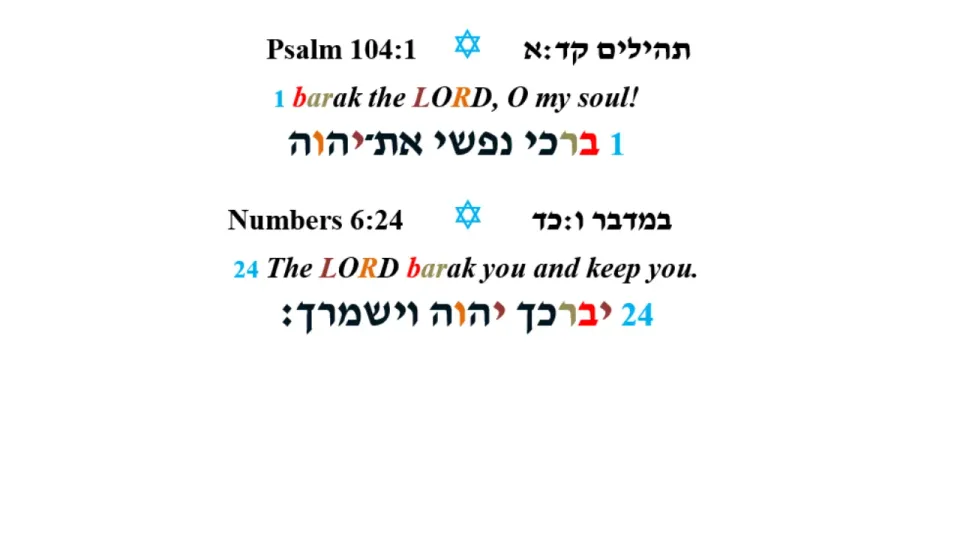 Psalm 104:1 and Numbers 6:24 — barak the LORD / the LORD barak youSlide 66 · step 2 of 3
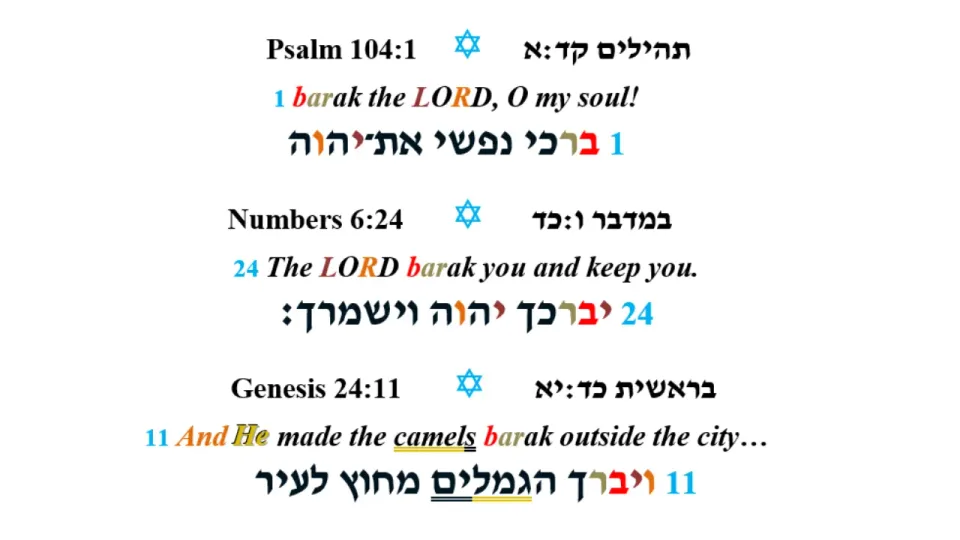 barak in Psalm 104:1, Numbers 6:24 and Genesis 24:11 (camels)Slide 67 · step 3 of 3
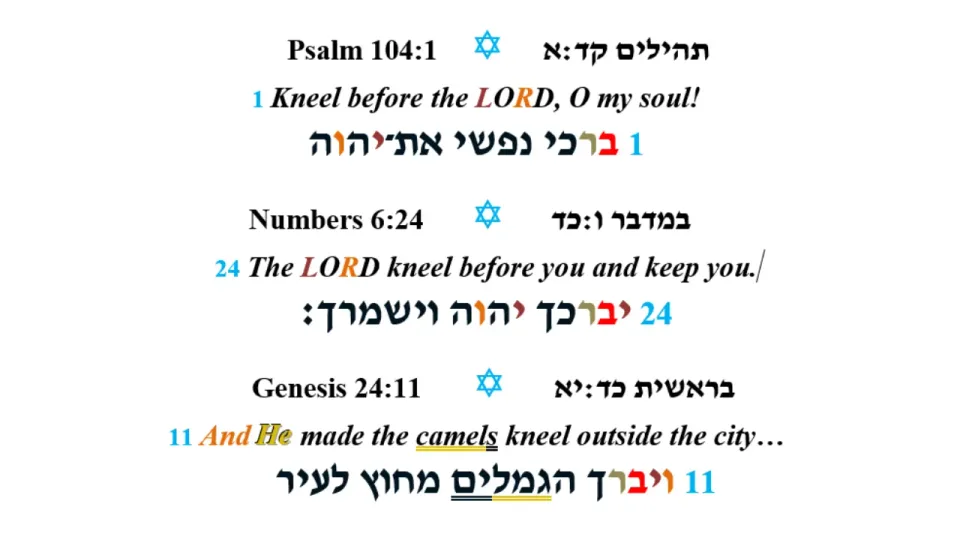 Three verses read with "kneel": Psalm 104:1, Numbers 6:24, Genesis 24:11Slide 68
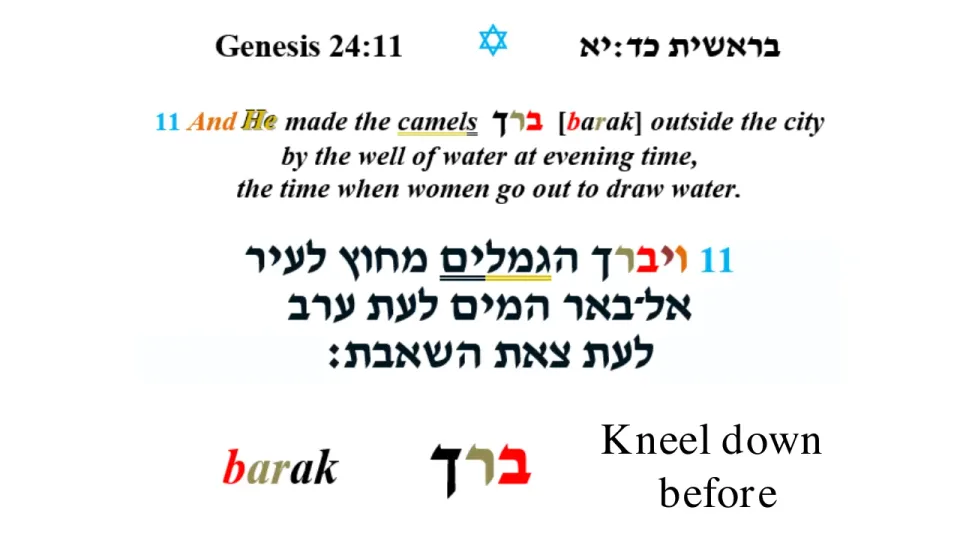 Genesis 24:11 — the camels barak: "kneel down before"Slide 69
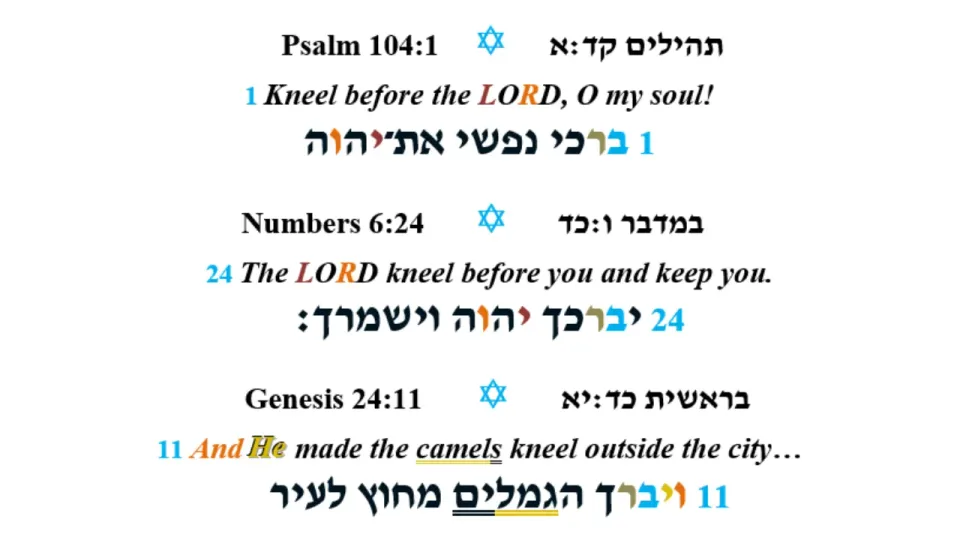 Three verses read with "kneel": Psalm 104:1, Numbers 6:24, Genesis 24:11Slide 70
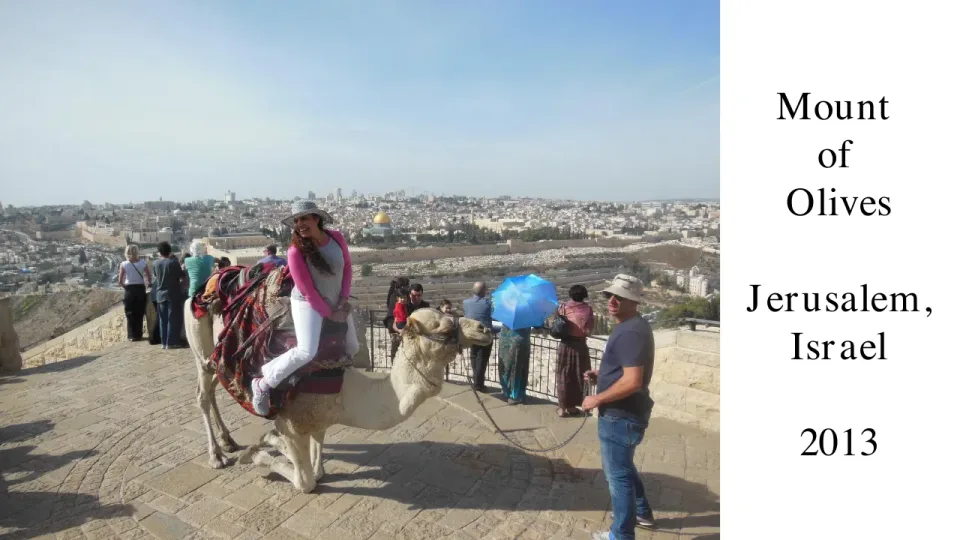 Photo: woman on a kneeling camel, Mount of Olives, Jerusalem (2013)Slide 71
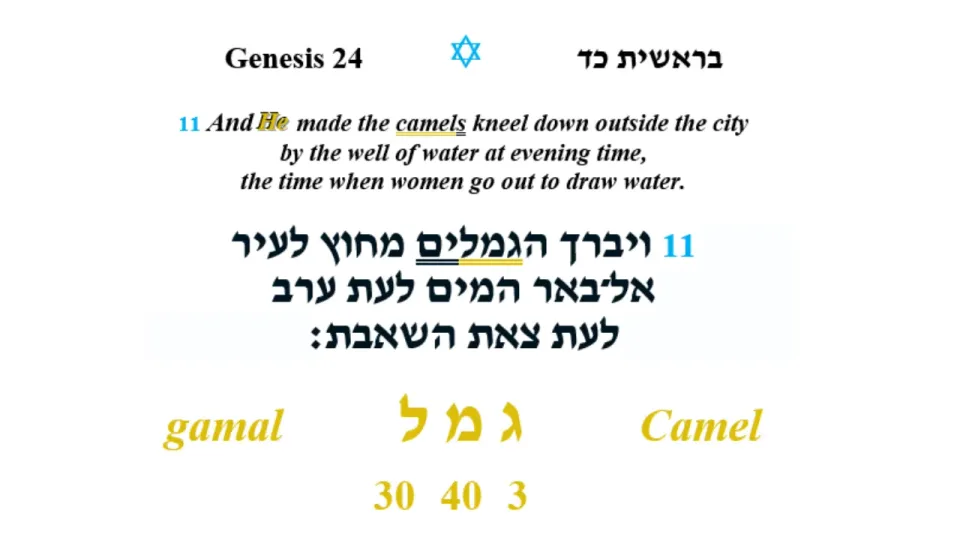 Genesis 24:11 — the camels (gamal גמל): letter values 30, 40, 3Slide 72
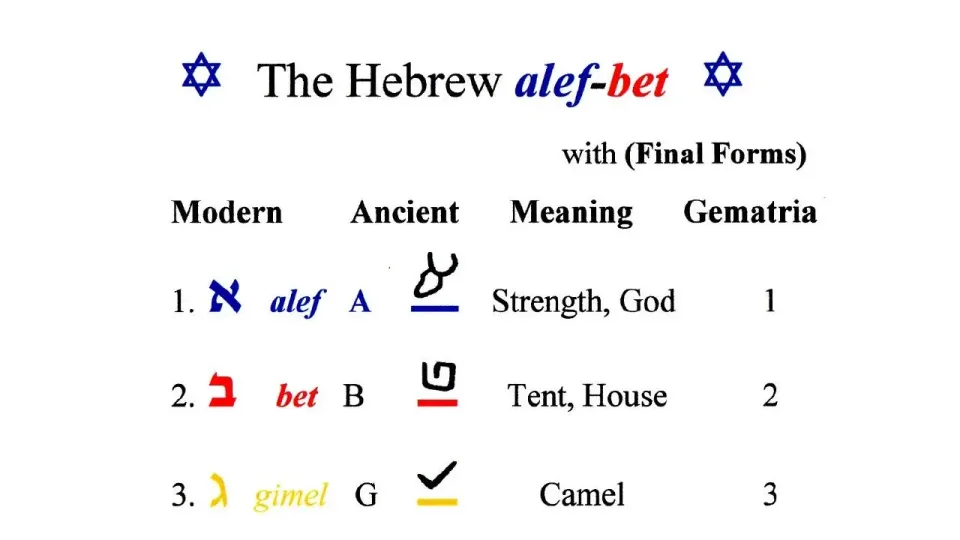 The Hebrew alef-bet: alef, bet, gimel with ancient letters, meanings, valuesSlide 73
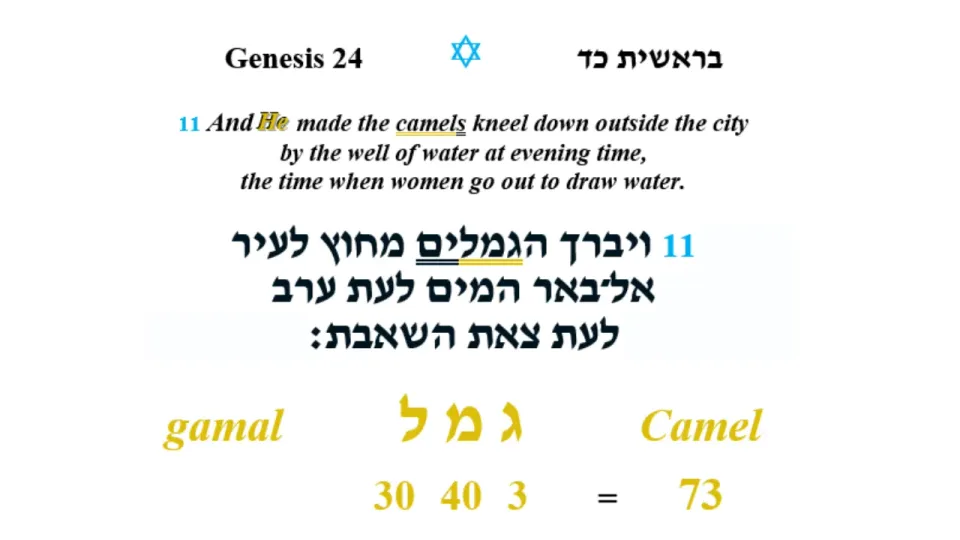 Genesis 24:11 — the camels: gamal גמל = 30 + 40 + 3 = 73Slide 74
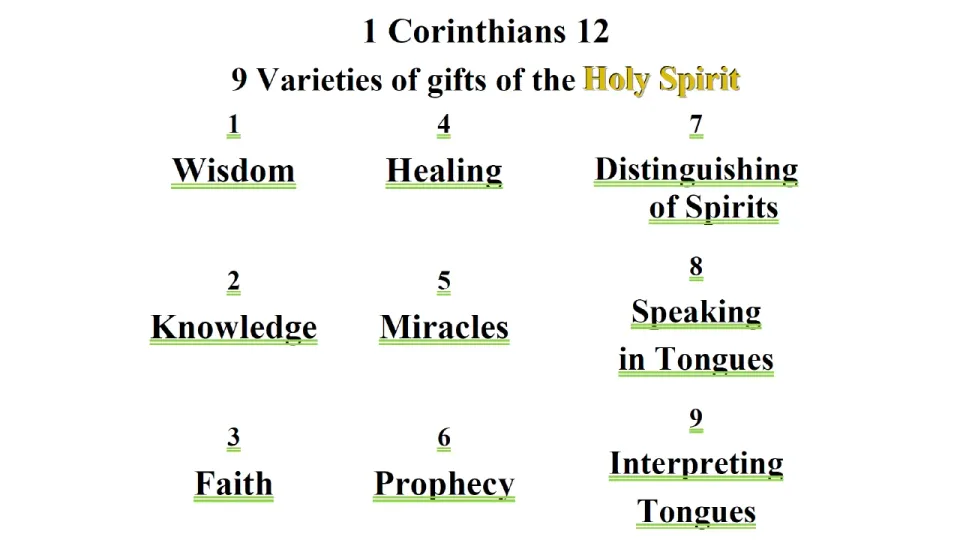 1 Corinthians 12: nine varieties of gifts of the Holy SpiritSlide 75
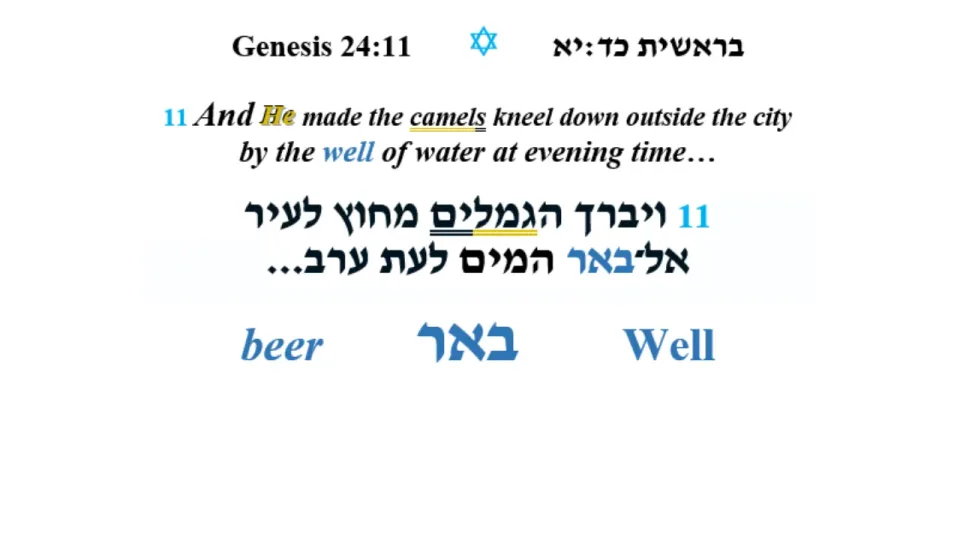 Genesis 24:11 — the well (beer באר)Slide 76 · step 1 of 2
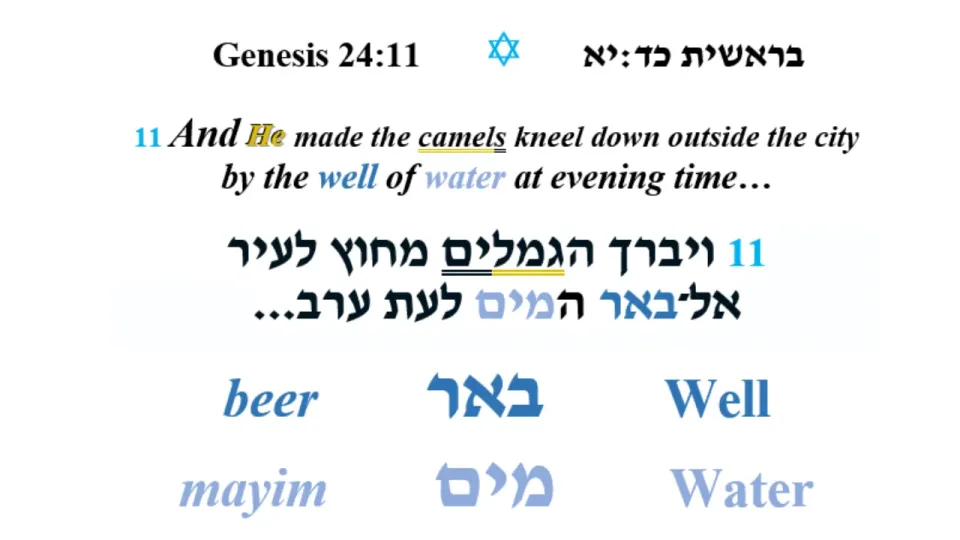 Genesis 24:11 — the well (beer באר) and the water (mayim מים)Slide 77 · step 2 of 2
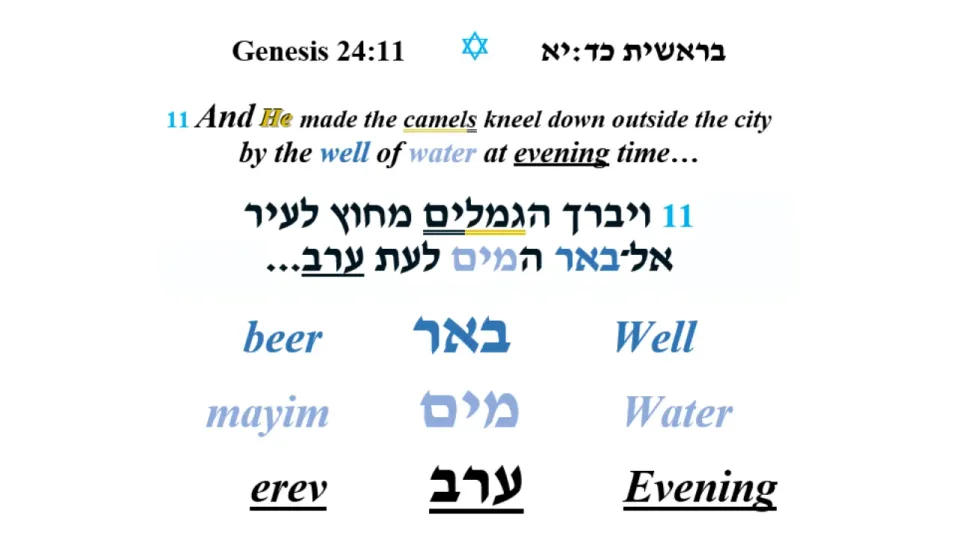 Genesis 24:11 — well (beer), water (mayim), evening (erev ערב)Slide 78
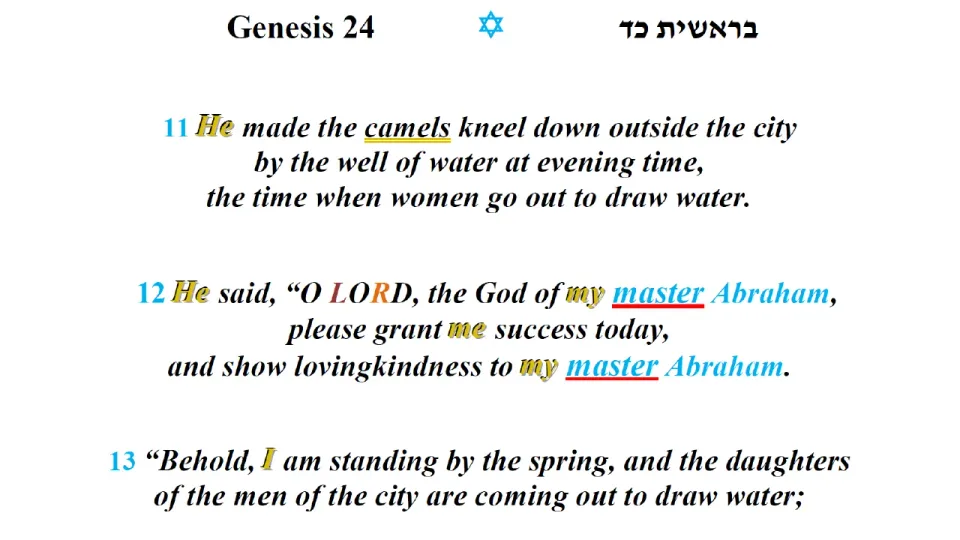 Genesis 24:11-13 — camels kneel at the well; "O LORD, the God of my master Abraham"Slide 79
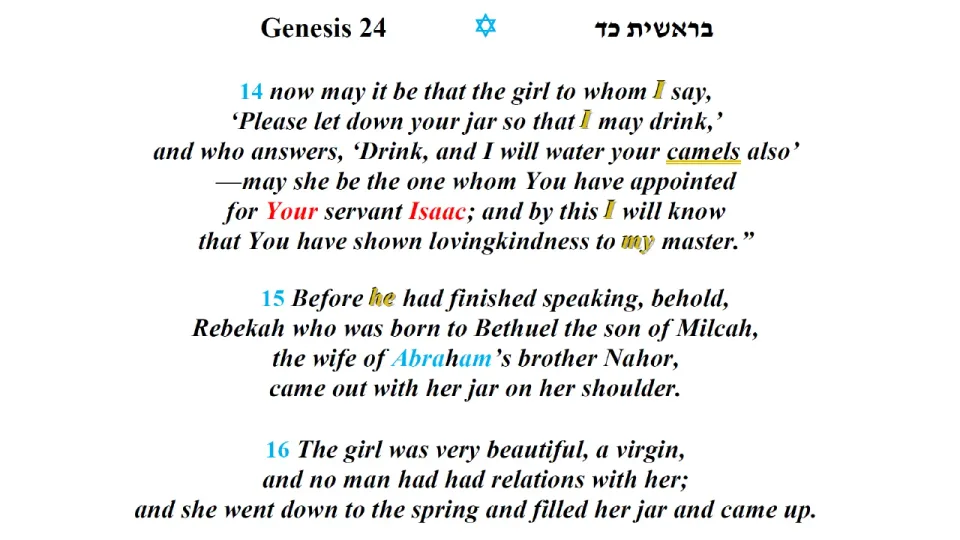 Genesis 24:14-16: the servant's prayer and Rebekah comes out with her jarSlide 80
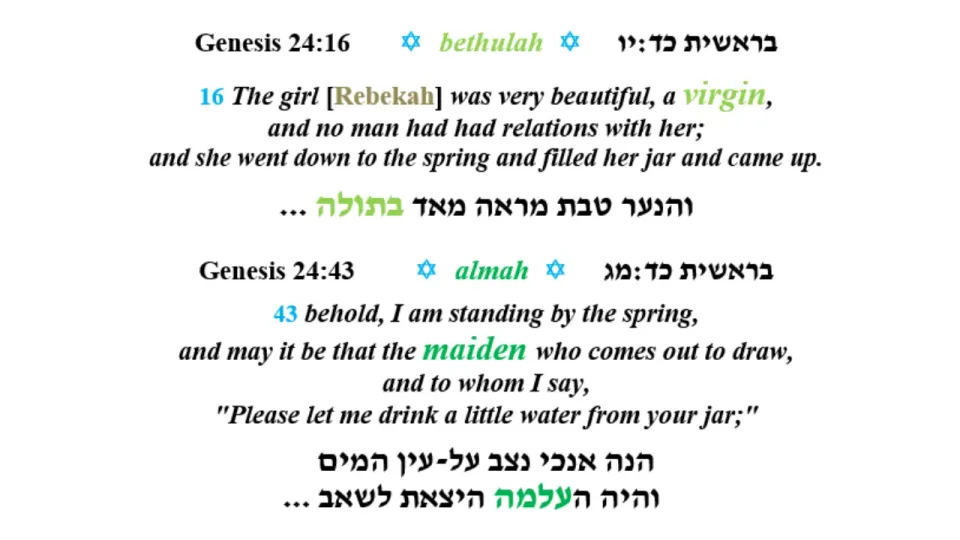 Rebekah: bethulah (virgin) in Genesis 24:16 and almah (maiden) in 24:43Slide 81
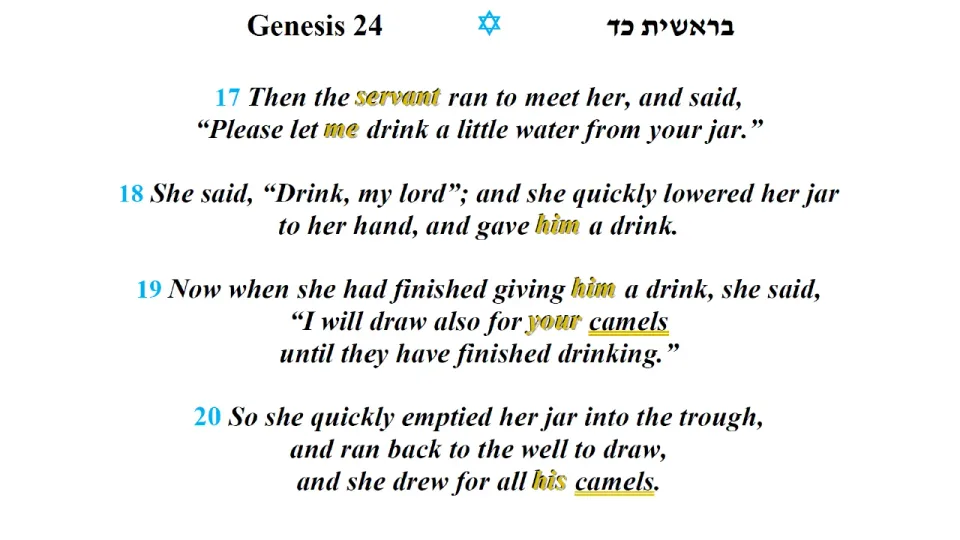 Genesis 24:17-20: Rebekah gives the servant a drink and waters his camelsSlide 82
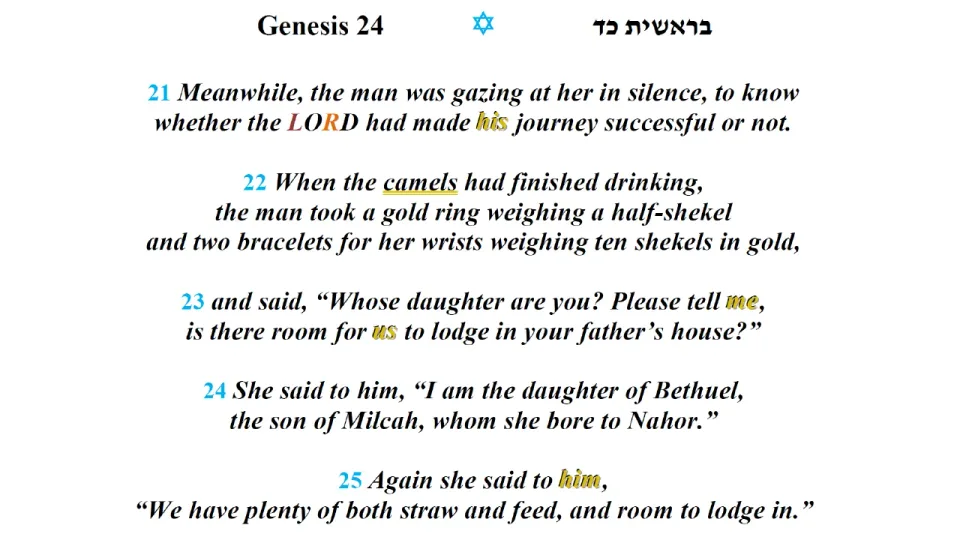 Genesis 24:21-25: the gold ring and bracelets; Rebekah, daughter of BethuelSlide 83
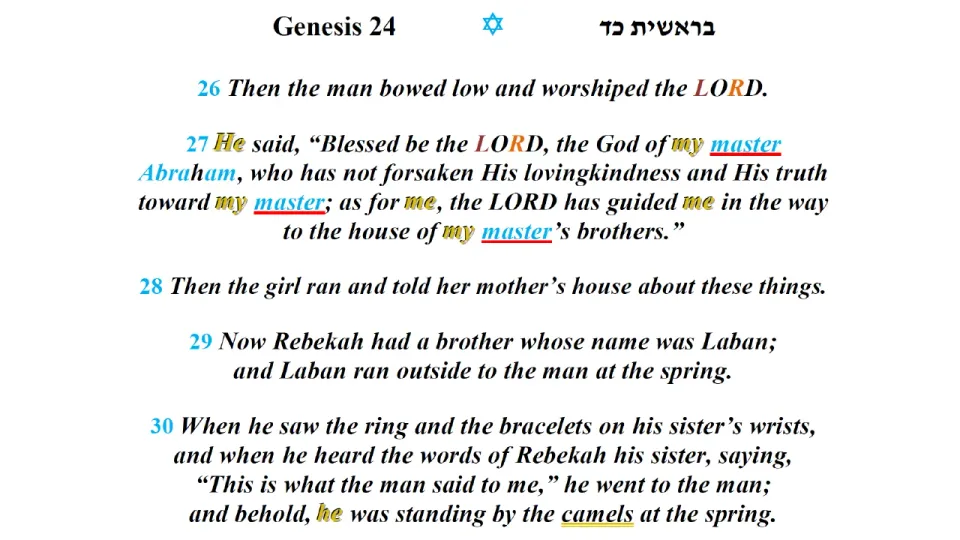 Genesis 24:26-30: the servant worships; Laban runs to meet himSlide 84
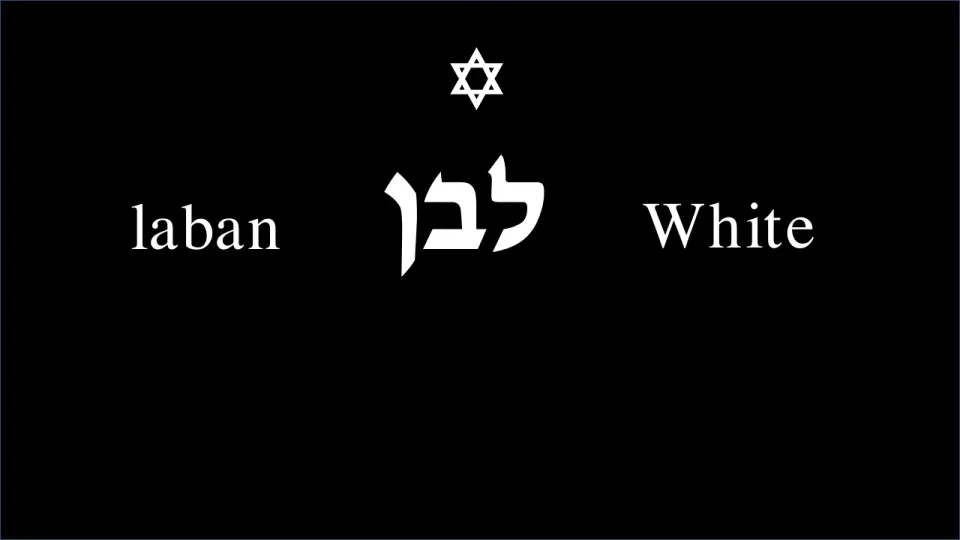 The name Laban (לבן) means 'White'Slide 85
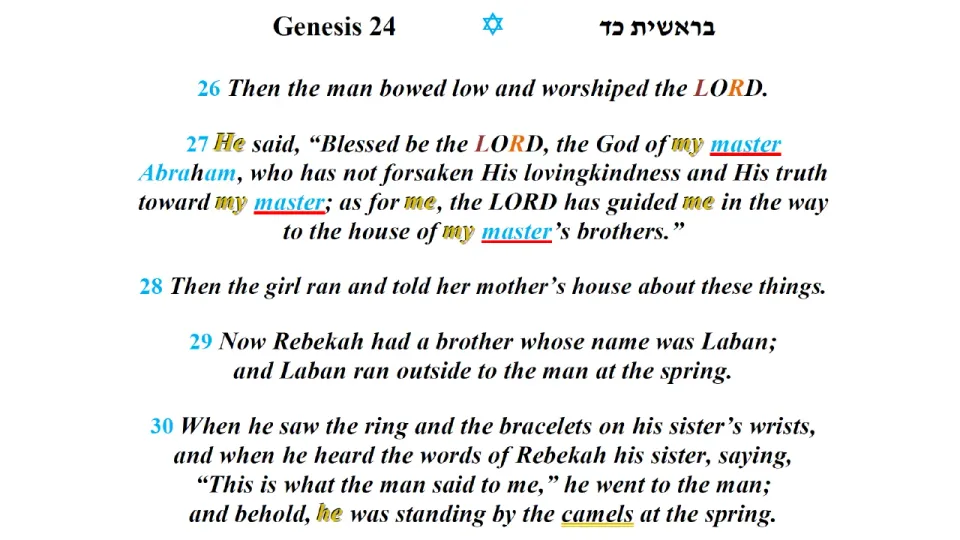 Genesis 24:26-30: the servant worships; Laban runs to meet himSlide 86
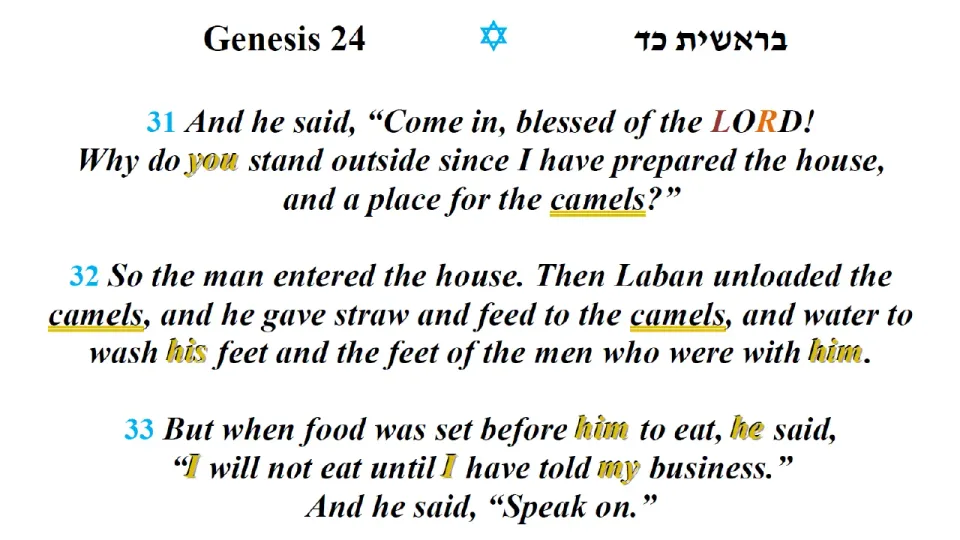 Genesis 24:31-33: Laban welcomes the servant, who will not eat until he speaksSlide 87
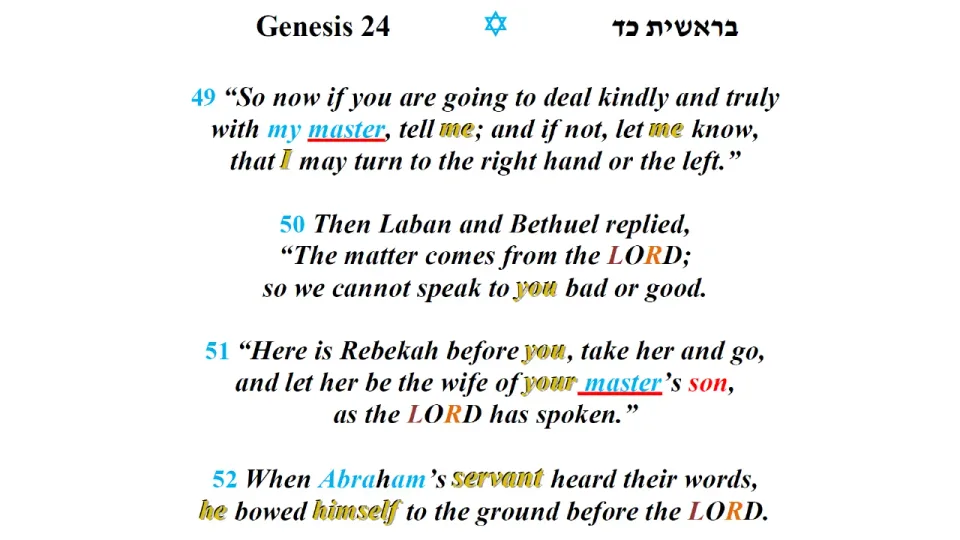 Genesis 24:49-52: 'The matter comes from the LORD' — Rebekah given as wifeSlide 88
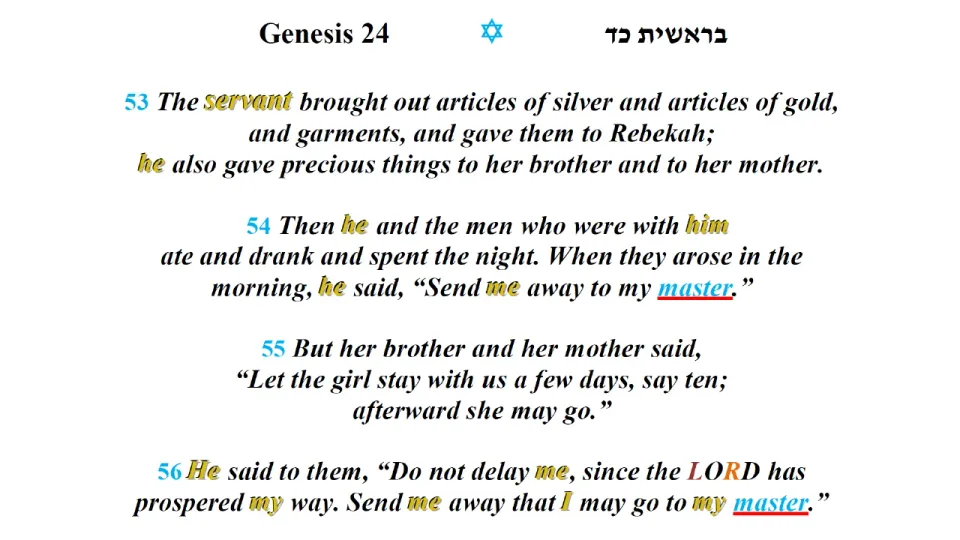 Genesis 24:53-56: gifts for Rebekah; 'Do not delay me'Slide 89
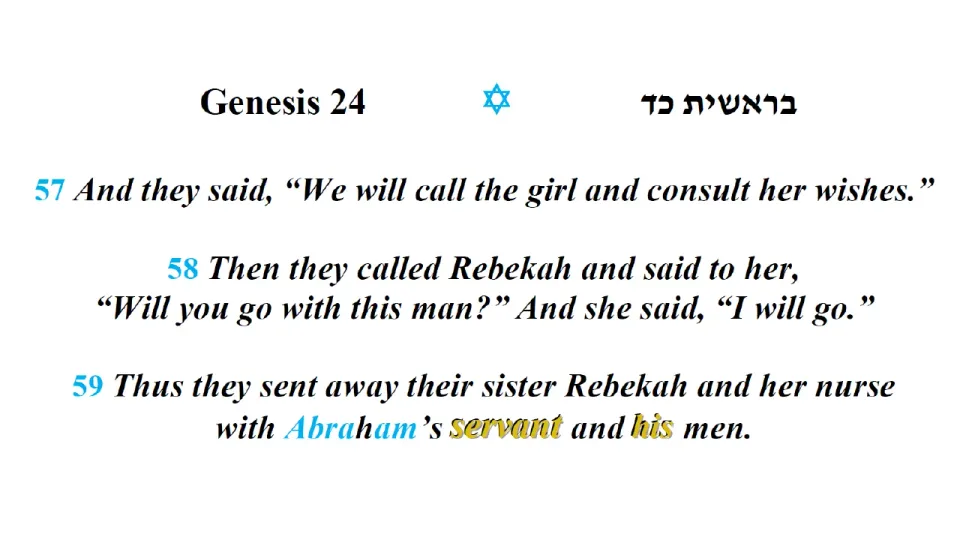 Genesis 24:57-59: 'Will you go with this man?' — 'I will go.'Slide 90
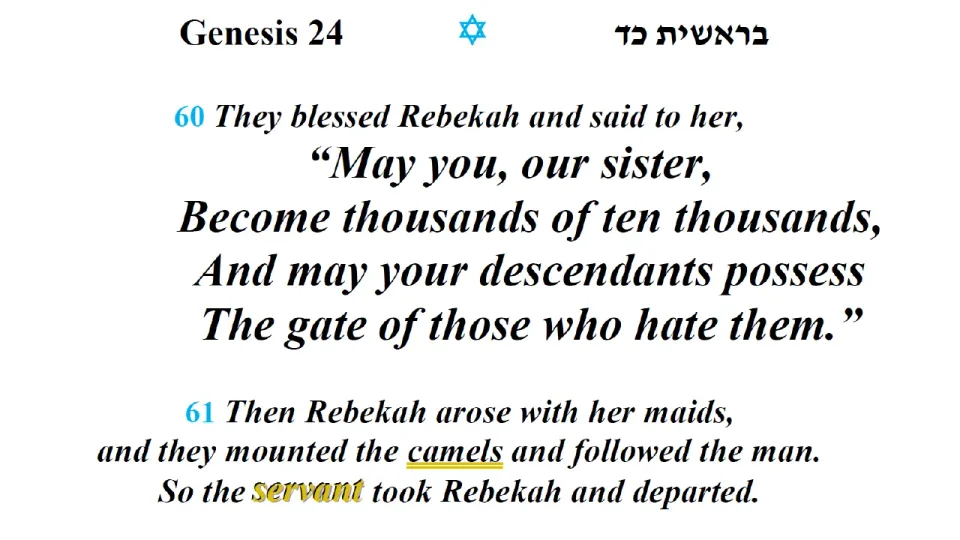 Genesis 24:60-61: the blessing on Rebekah — 'thousands of ten thousands'Slide 91 · step 1 of 2
 Genesis 24:60-61: the blessing on Rebekah — 'thousands of ten thousands'Slide 92 · step 2 of 2
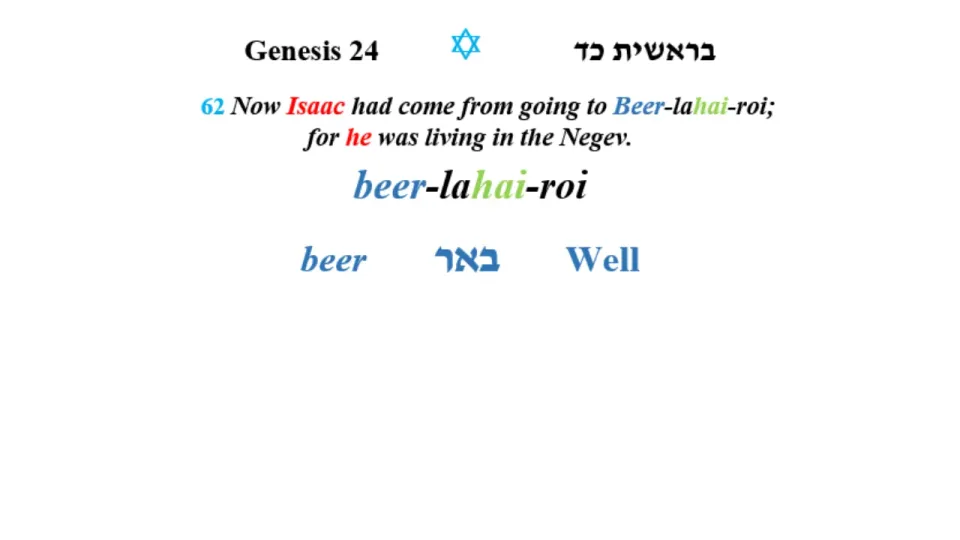 Genesis 24:62: Isaac at Beer-lahai-roi — beer (באר) means wellSlide 93 · step 1 of 5
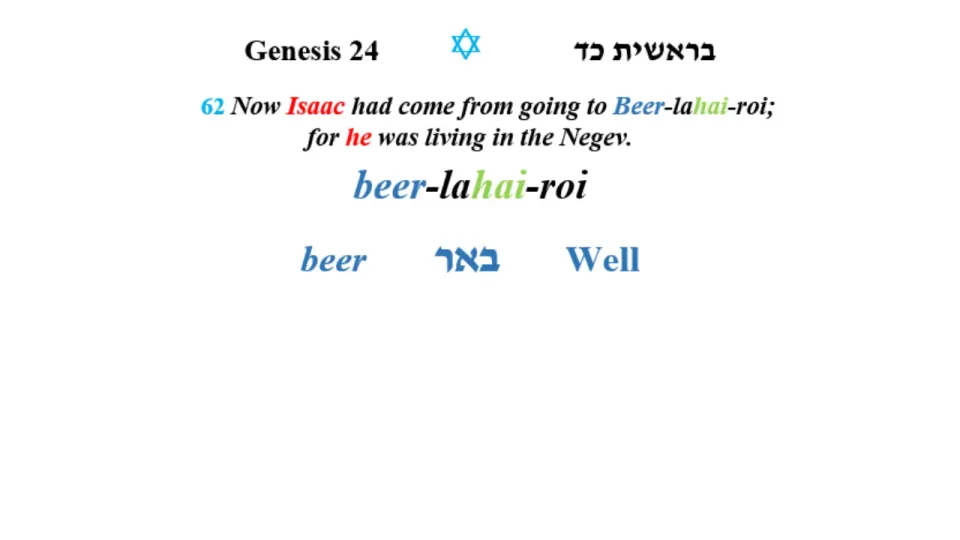 Genesis 24:62: Isaac at Beer-lahai-roi — beer (באר) means wellSlide 94 · step 2 of 5
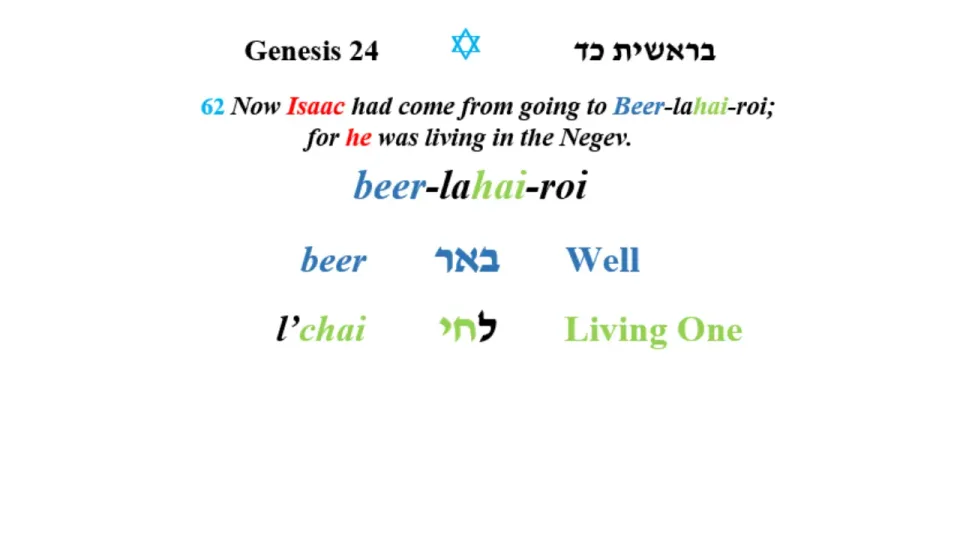 Beer-lahai-roi broken down: beer = Well, l'chai = Living OneSlide 95 · step 3 of 5
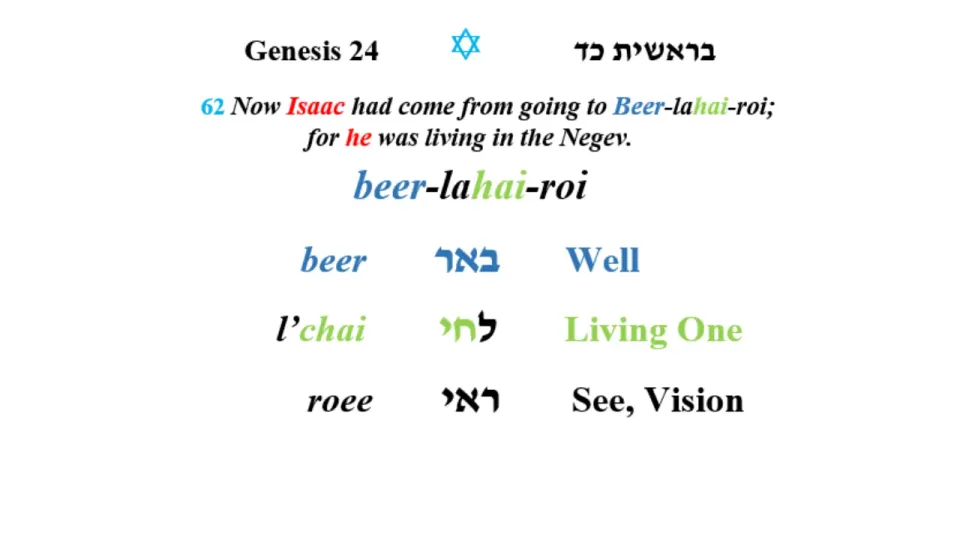 Beer-lahai-roi broken down: well, Living One, see/visionSlide 96 · step 4 of 5
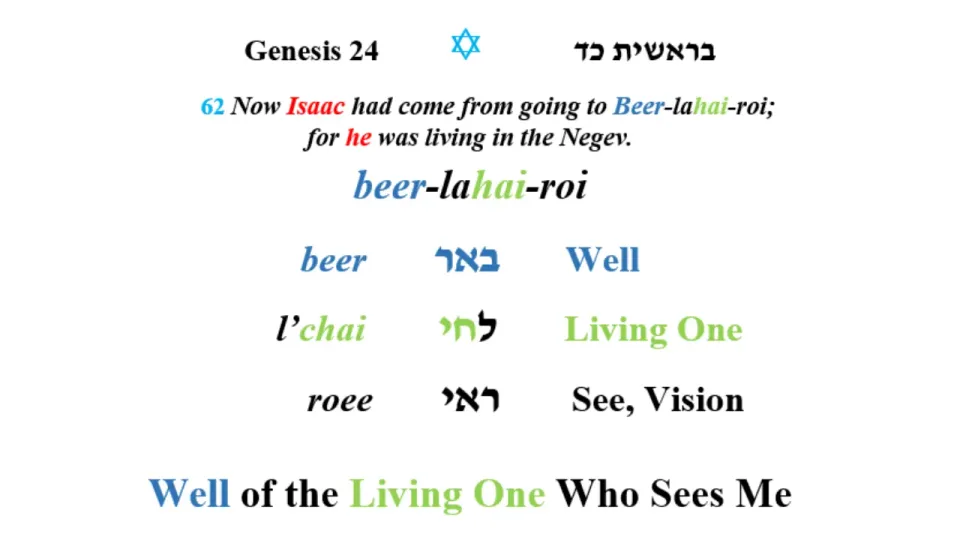 Beer-lahai-roi means 'Well of the Living One Who Sees Me'Slide 97 · step 5 of 5
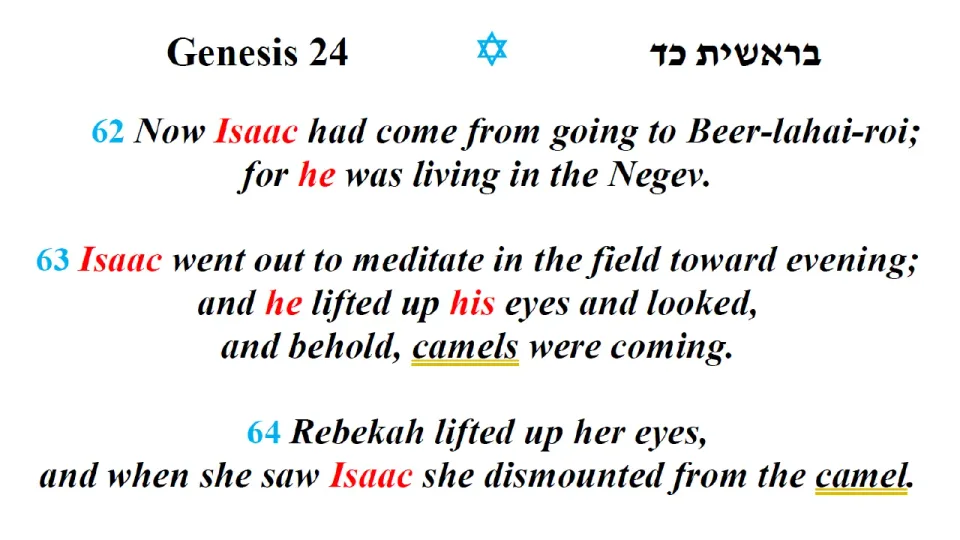 Genesis 24:62-64: Isaac meditating in the field sees the camels; Rebekah dismountsSlide 98
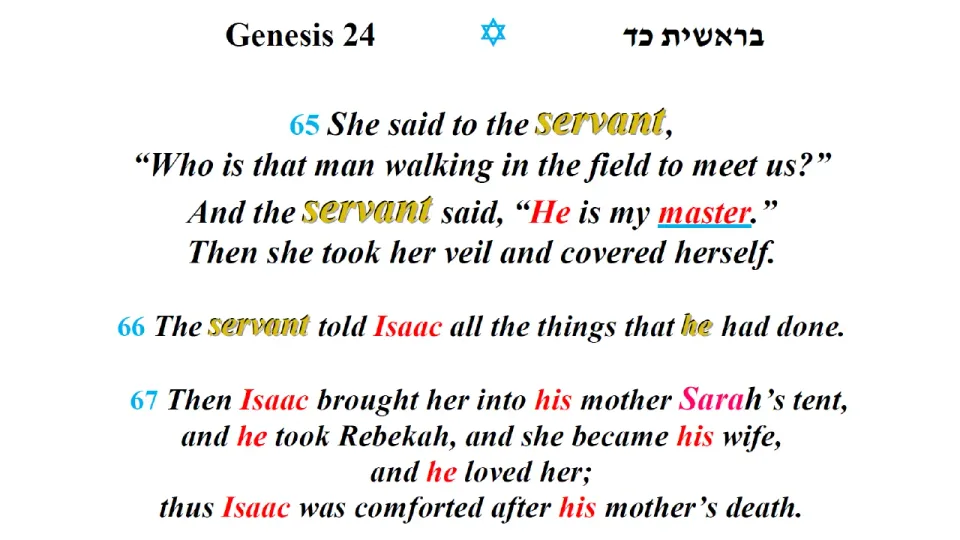 Genesis 24:65-67: Rebekah veils herself and becomes Isaac's wifeSlide 99 · step 1 of 2
 Genesis 24:65-67: Rebekah veils herself and becomes Isaac's wifeSlide 100 · step 2 of 2
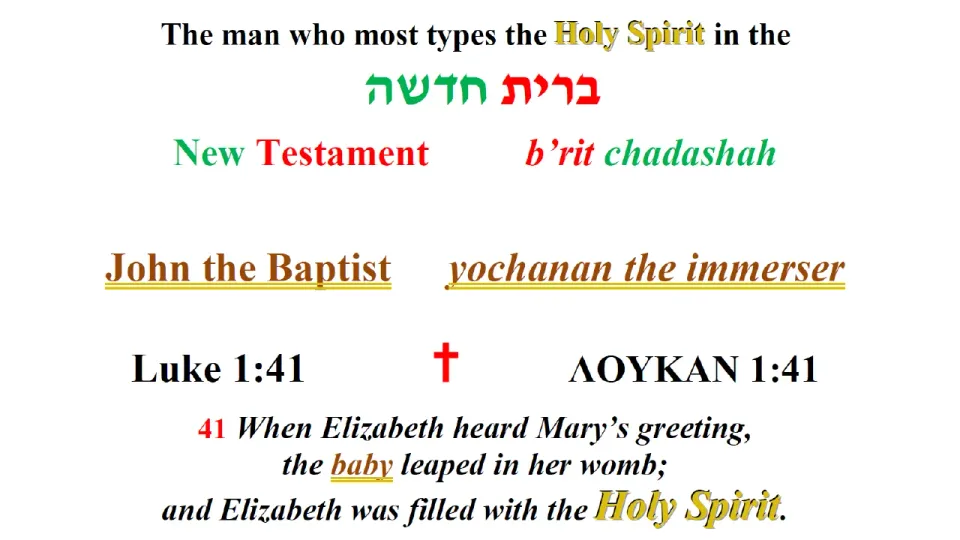 John the Baptist, the man who most types the Holy Spirit — Luke 1:41Slide 101
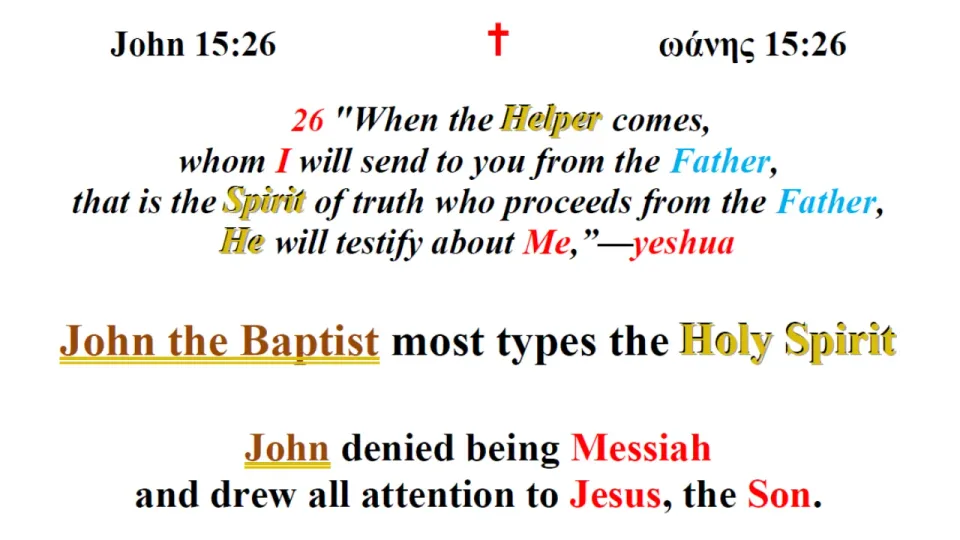 John 15:26: the Helper testifies about Jesus — John the Baptist types the Holy SpiritSlide 102
 John 1:20 — John the Baptist: "I am not the Christ"Slide 103 · step 1 of 3
 John 1:20 and 1:27 — not the Christ; not worthy to untie His sandalSlide 104 · step 2 of 3
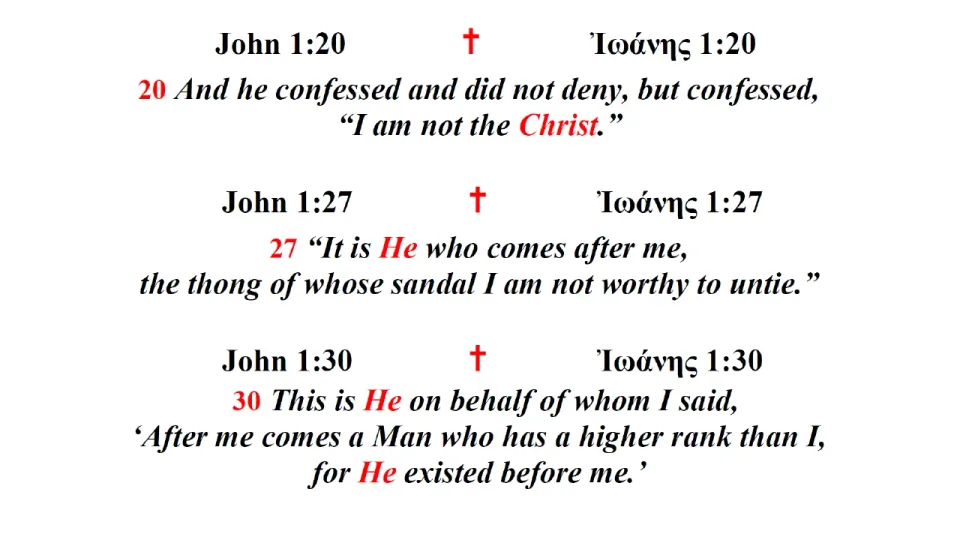 John 1:20, 1:27 and 1:30 — John the Baptist's testimony about the One who existed before himSlide 105 · step 3 of 3
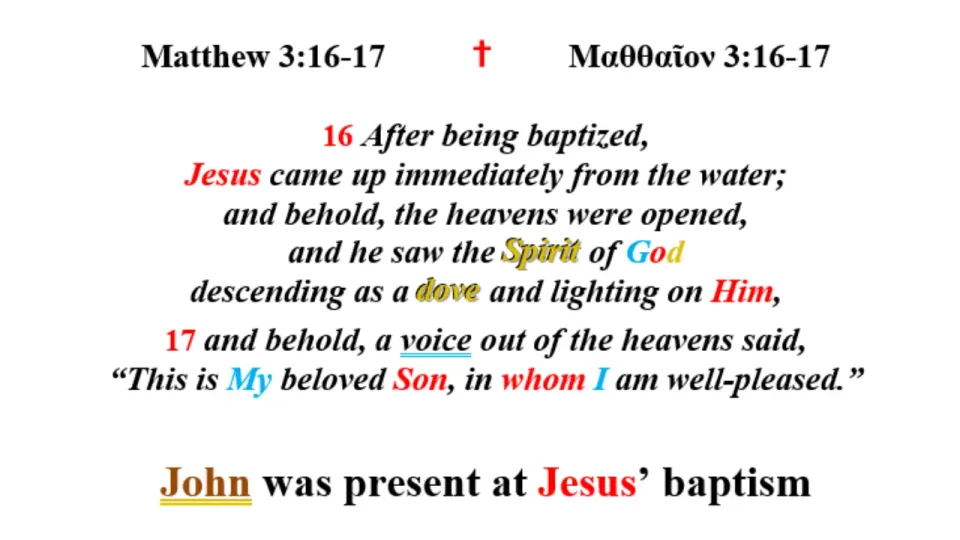 Matthew 3:16-17 — Jesus' baptism: the Spirit like a dove and the Father's voiceSlide 106
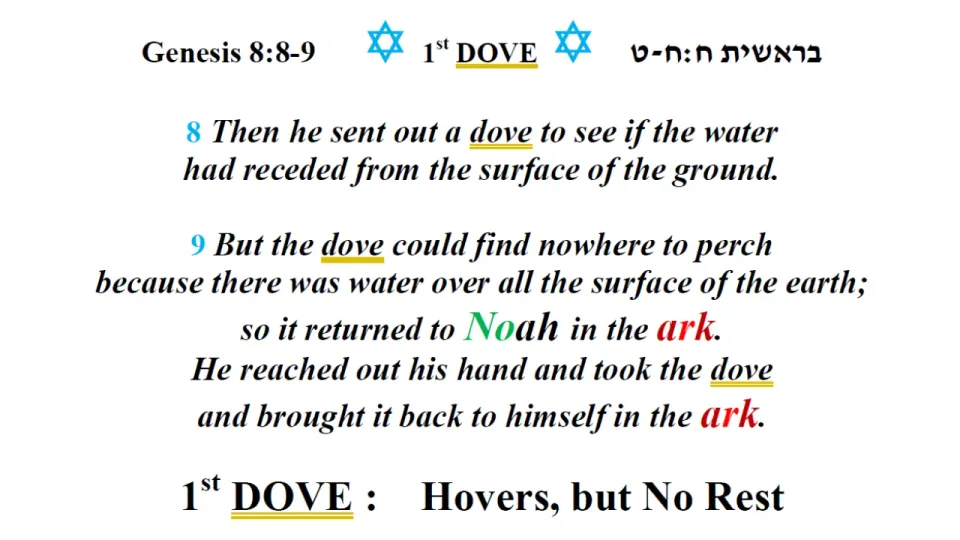 Genesis 8:8-9 — the first dove: hovers, but no restSlide 107
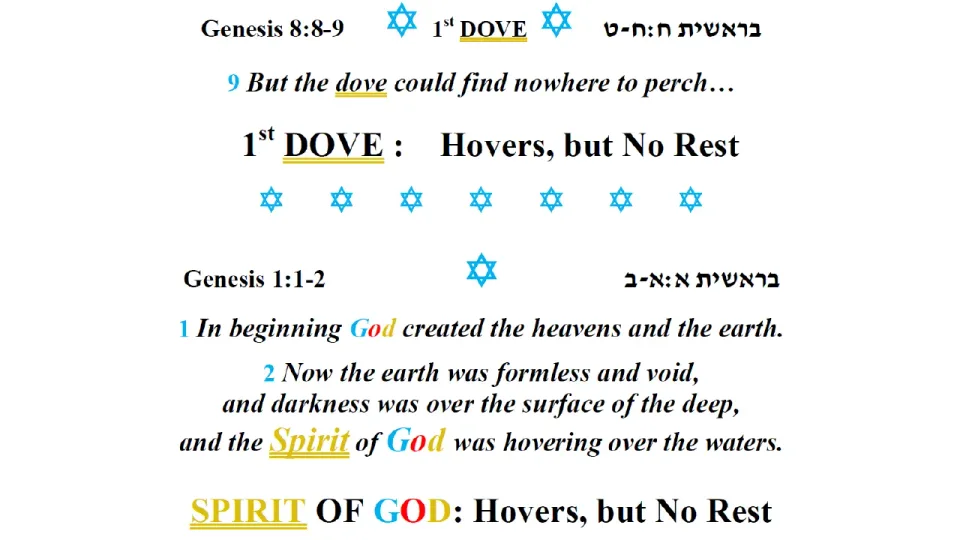 The first dove and the Spirit of God both hover but find no rest (Gen 8:9 and Gen 1:1-2)Slide 108
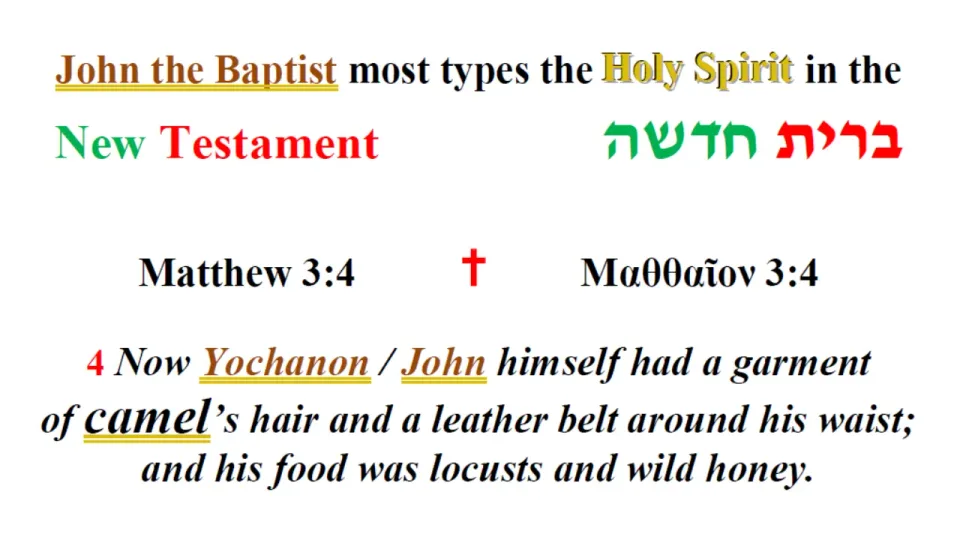 John the Baptist most types the Holy Spirit in the New Testament — Matthew 3:4Slide 109
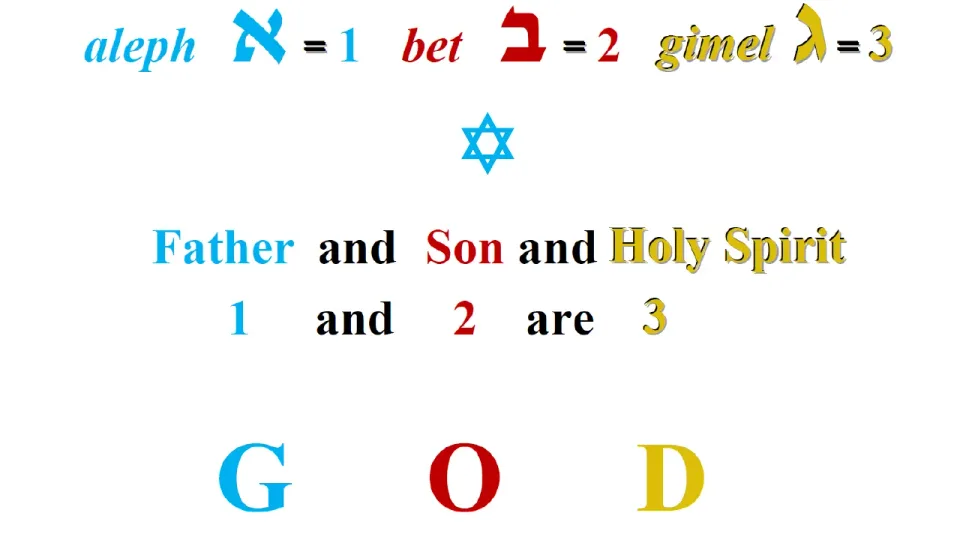 Aleph, bet, gimel = 1, 2, 3 — Father and Son and Holy Spirit: G-O-DSlide 110
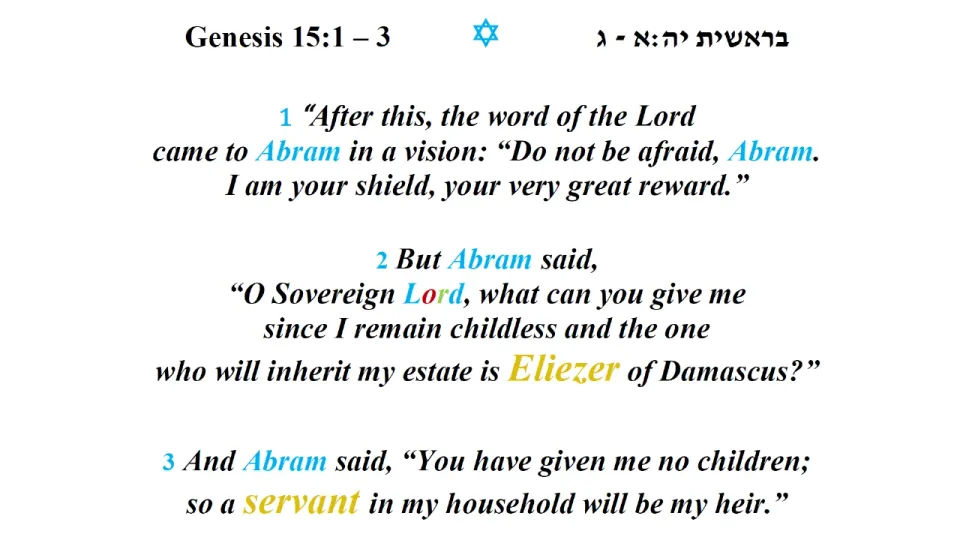 Genesis 15:1-3 — Abram's heir: Eliezer of Damascus, a servant in his householdSlide 111
 Isaac trusts his father by allowing himself to be tied up to be sacrificedSlide 112 · step 1 of 6
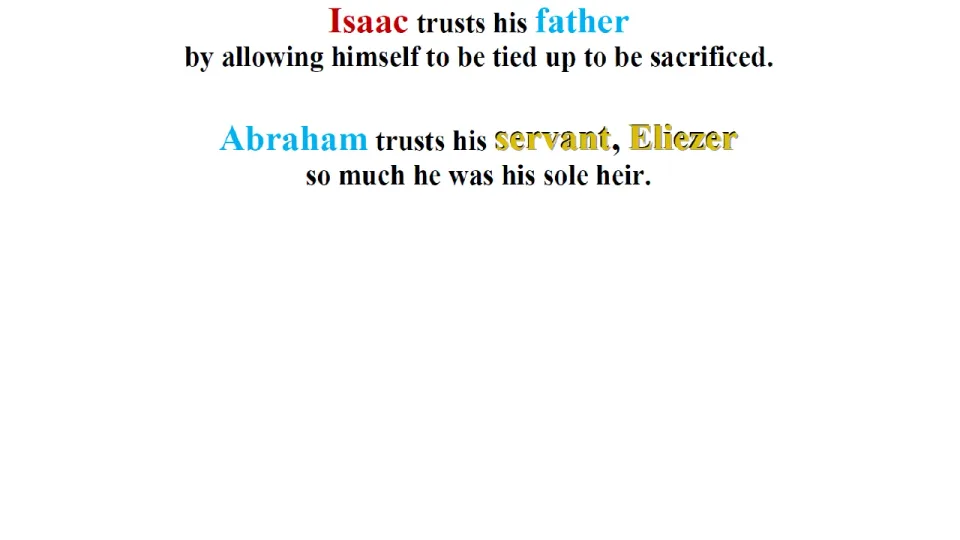 Abraham trusts his servant Eliezer so much he was his sole heirSlide 113 · step 2 of 6
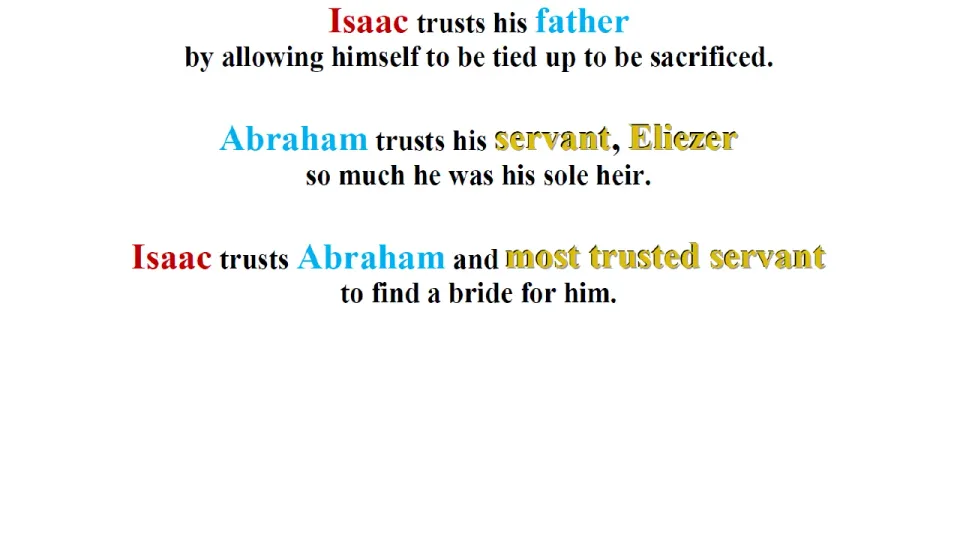 Isaac trusts Abraham and his most trusted servant to find a bride for himSlide 114 · step 3 of 6
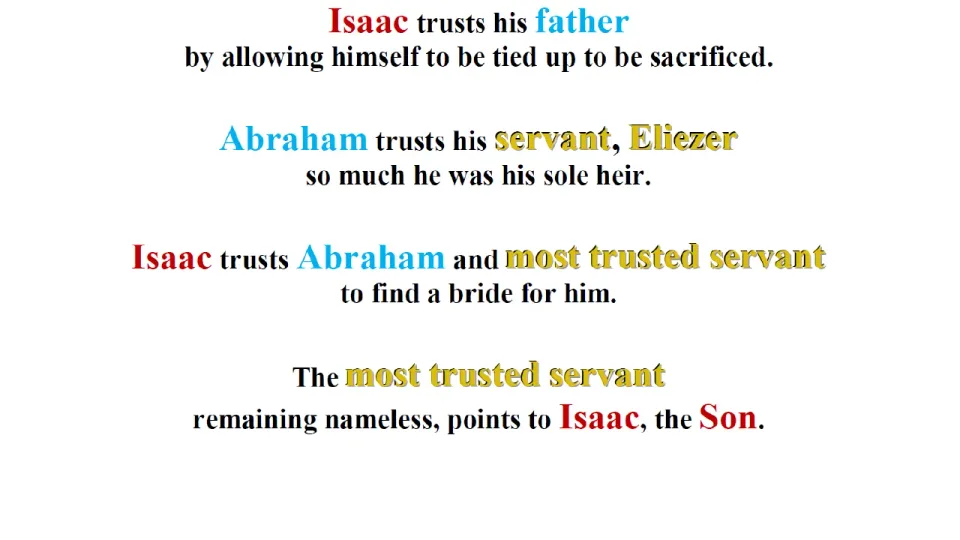 Trust between Isaac, Abraham and the servant EliezerSlide 115 · step 4 of 6
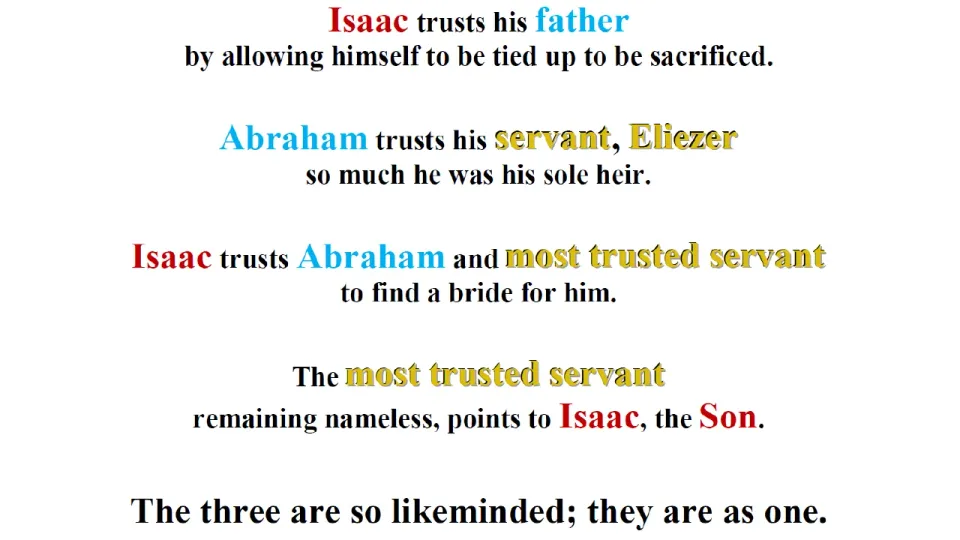 The three are so likeminded they are as oneSlide 116 · step 5 of 6
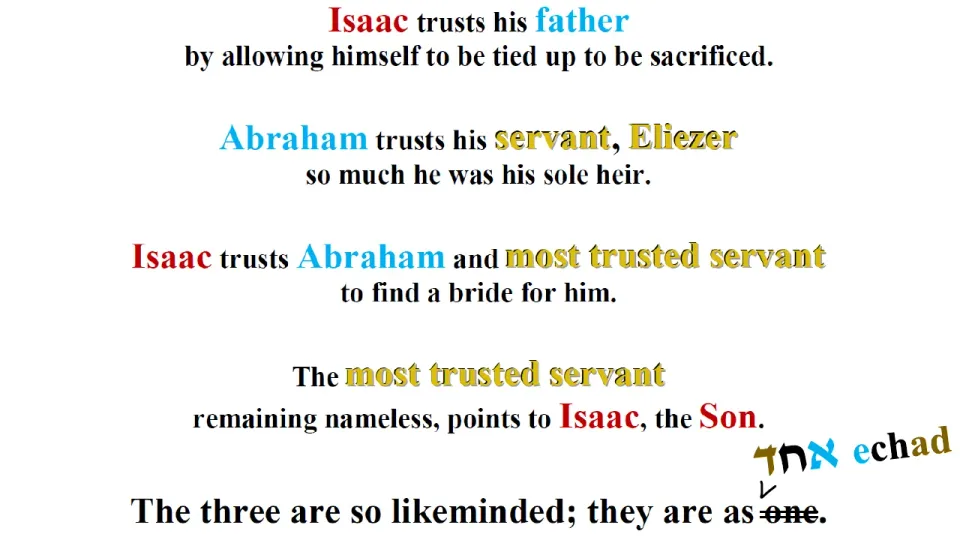 The three are as one: Hebrew echad (אחד) replaces "one"Slide 117 · step 6 of 6
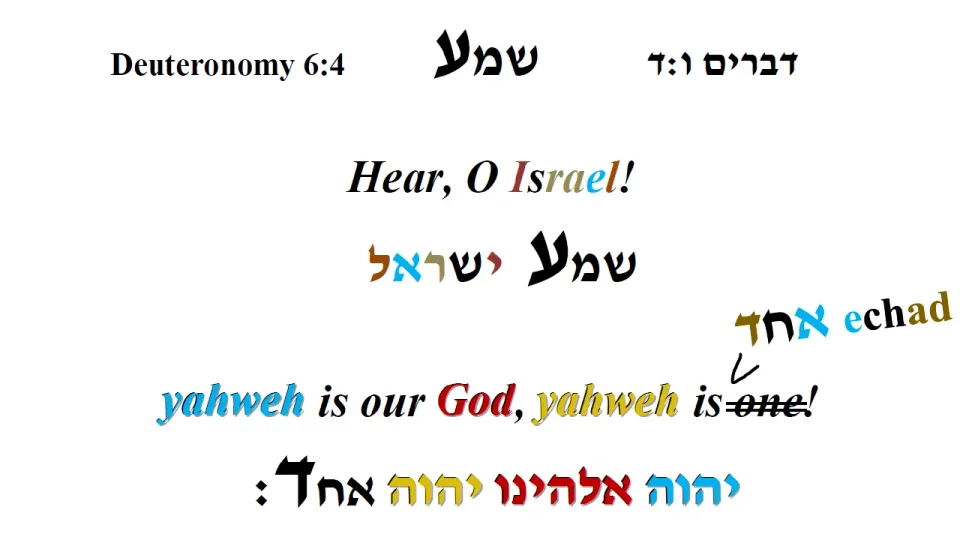 Deuteronomy 6:4 — Shema: Hear, O Israel, yahweh is echad (one)Slide 118
 Did Abraham truly love Isaac?Slide 119
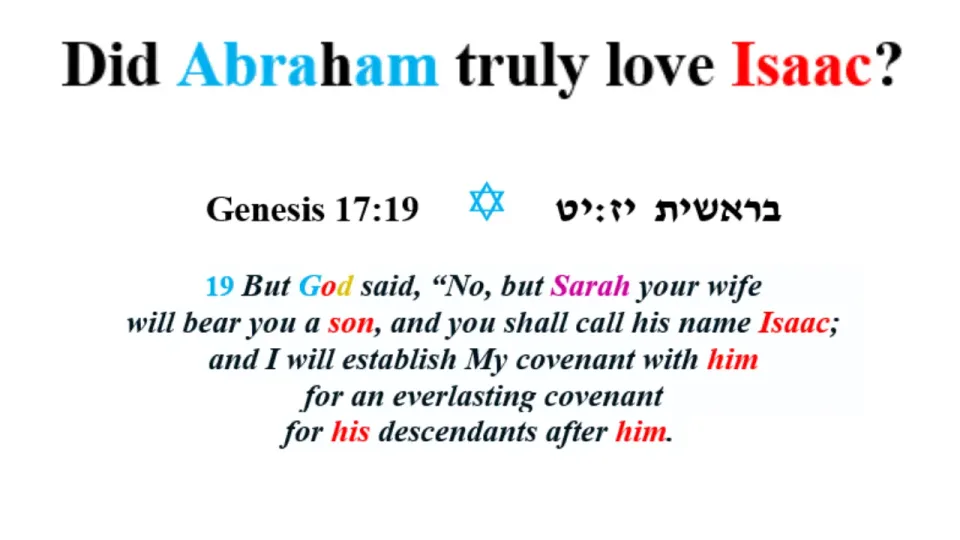 Did Abraham truly love Isaac? Genesis 17:19 — the promised son and covenantSlide 120
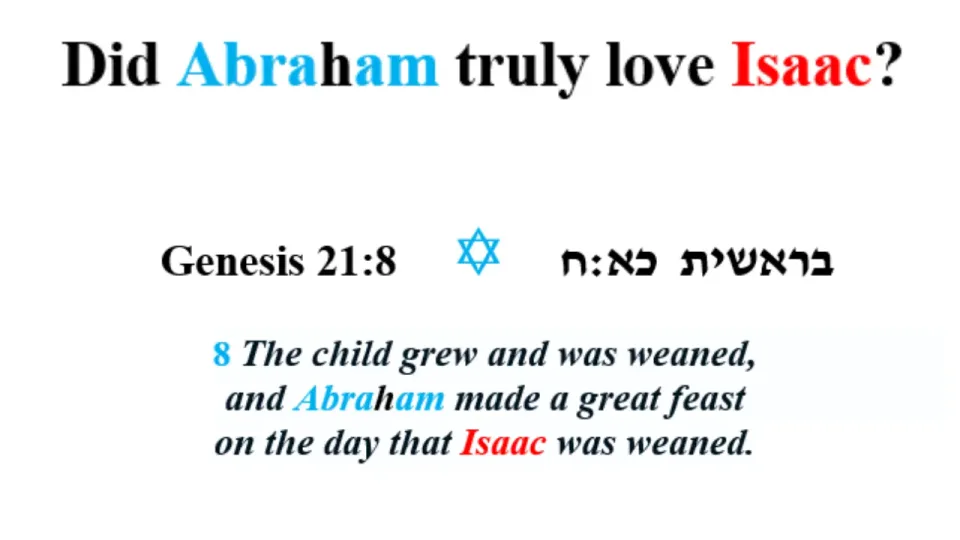 Did Abraham truly love Isaac? Genesis 21:8 — a great feast at Isaac's weaningSlide 121
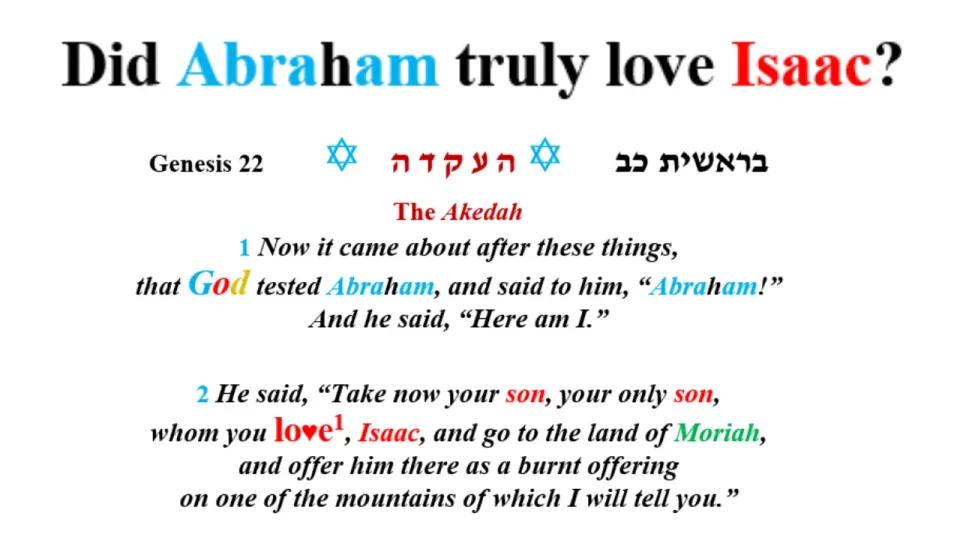 Did Abraham truly love Isaac? Genesis 22:1-2 — “your only son, whom you love”Slide 122
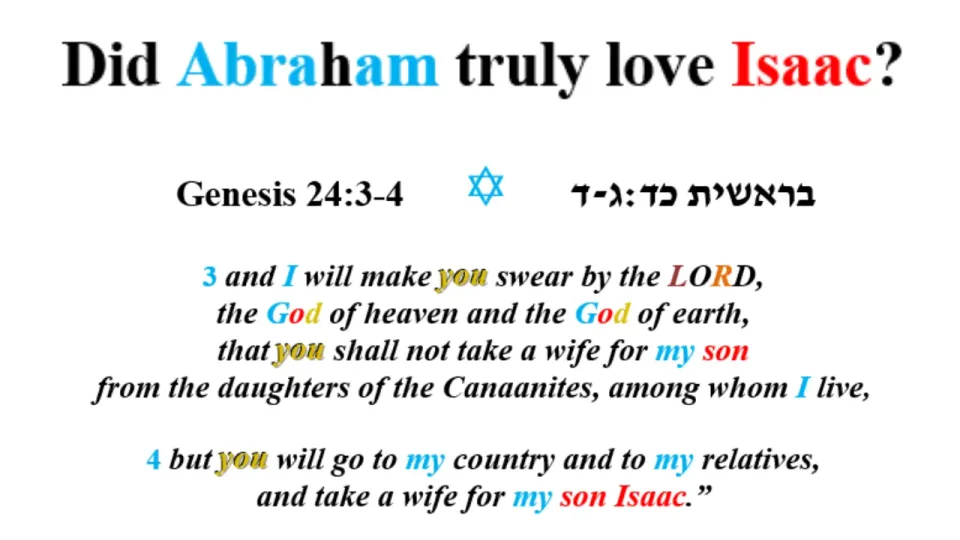 Did Abraham truly love Isaac? Genesis 24:3-4 — a wife for my son IsaacSlide 123
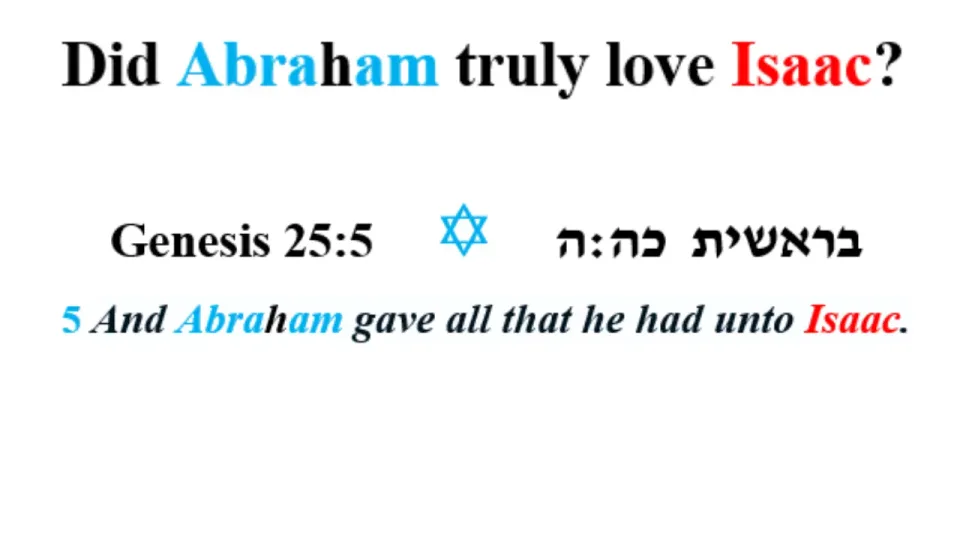 Did Abraham truly love Isaac? Genesis 25:5 — Abraham gave all he had to IsaacSlide 124
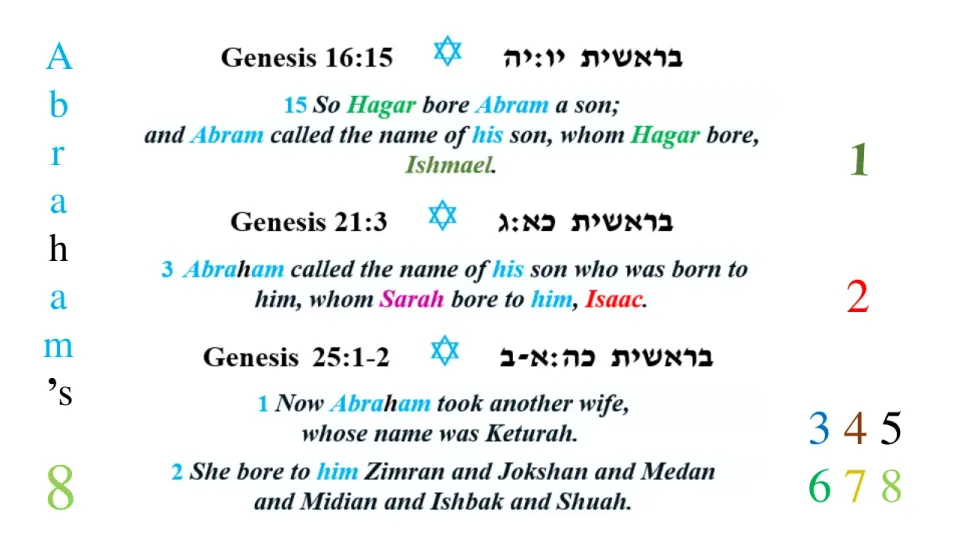 Abraham's 8 sons: Ishmael, Isaac and the six sons of KeturahSlide 125
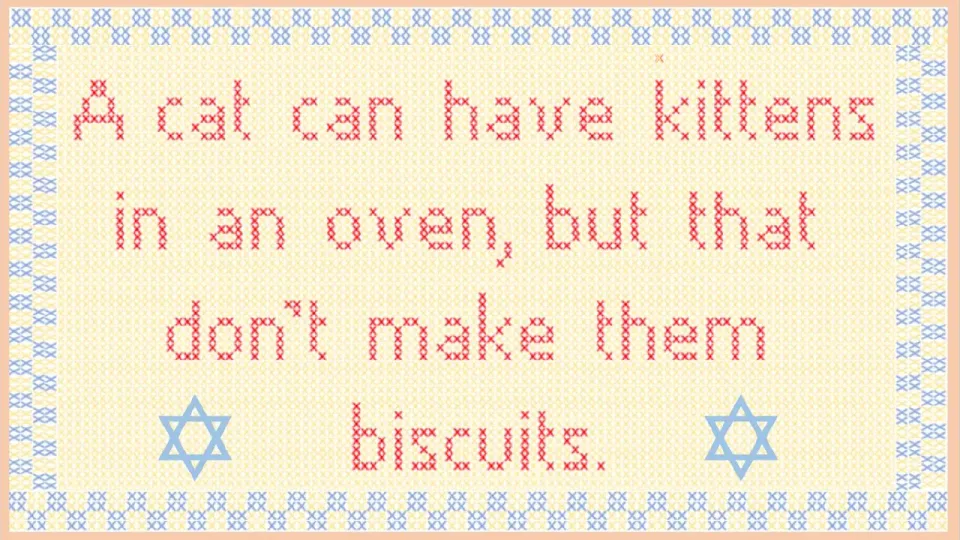 Cross-stitch saying: a cat can have kittens in an oven, but that don't make them biscuitsSlide 126
 The Jewish moral of the storySlide 127
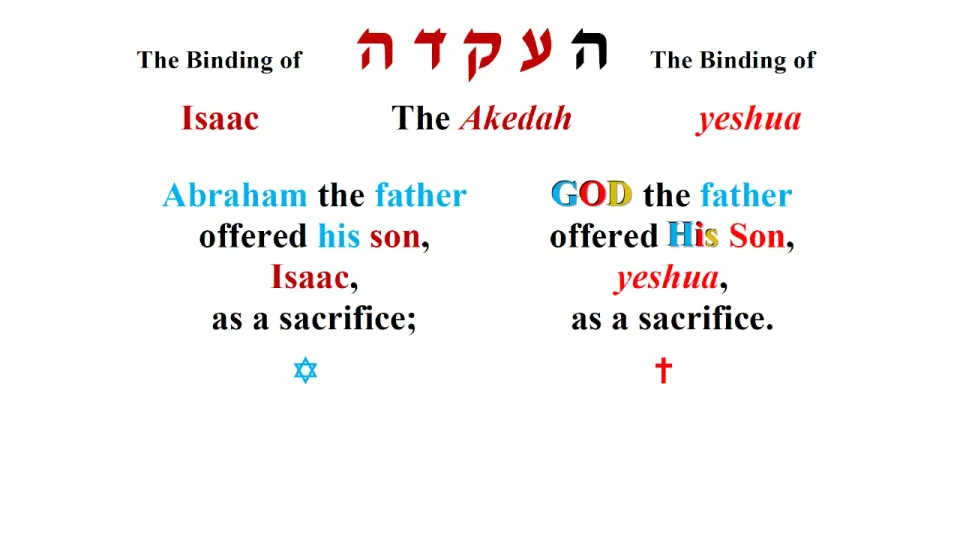 The Binding of Isaac and the Binding of Yeshua: a father offers his sonSlide 128 · step 1 of 2
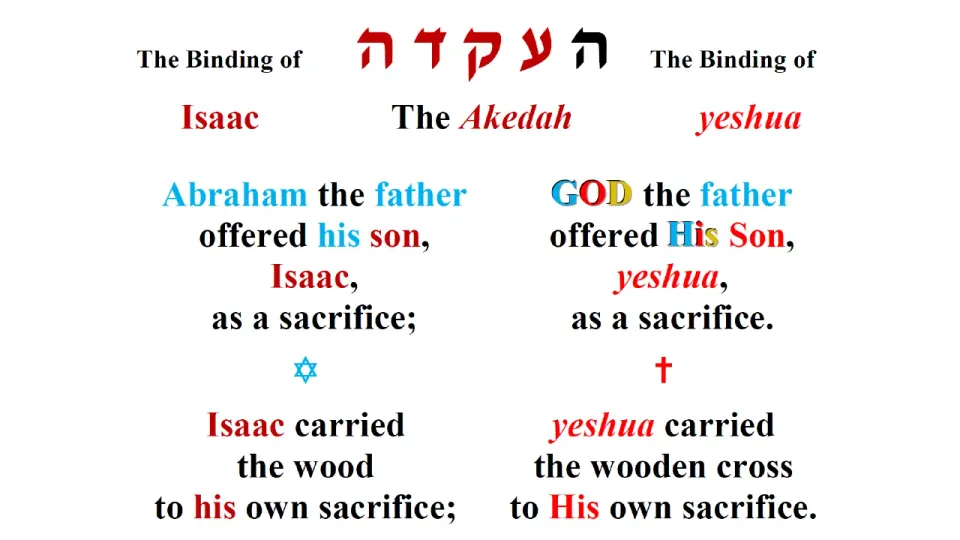 The Binding of Isaac and Yeshua: each carried the wood of his own sacrificeSlide 129 · step 2 of 2
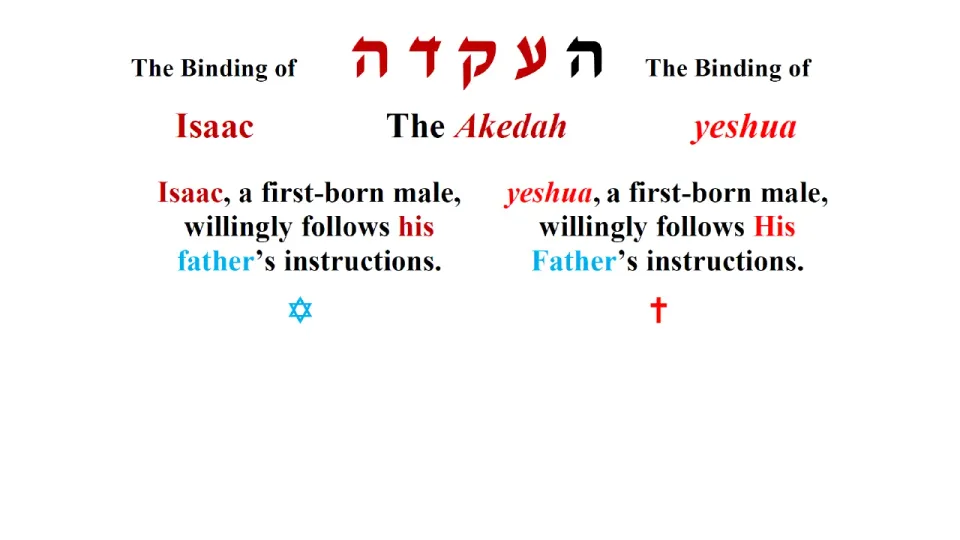 The Binding of Isaac and Yeshua: a first-born son willingly obeys his fatherSlide 130 · step 1 of 3
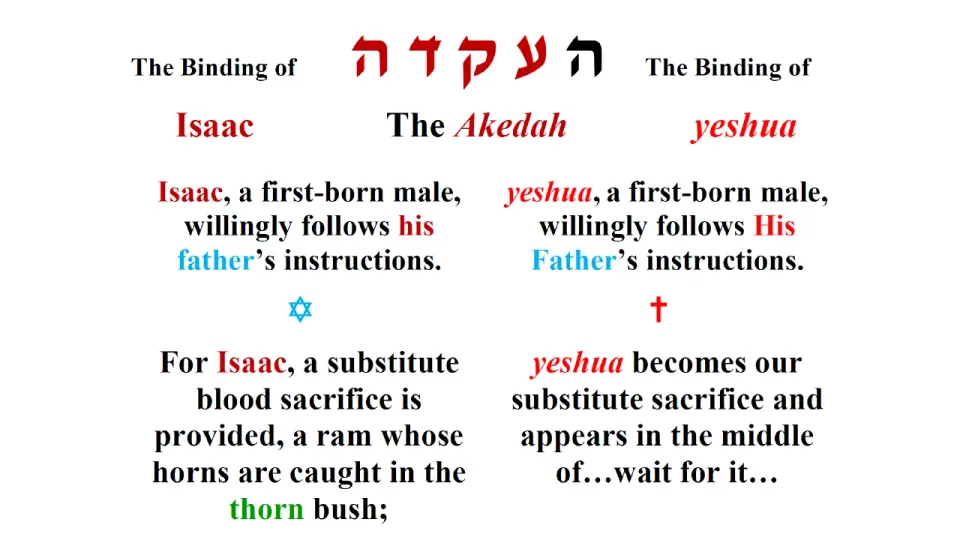 The Binding of Isaac and Yeshua: the substitute sacrifice — a ram in the thorn bushSlide 131 · step 2 of 3
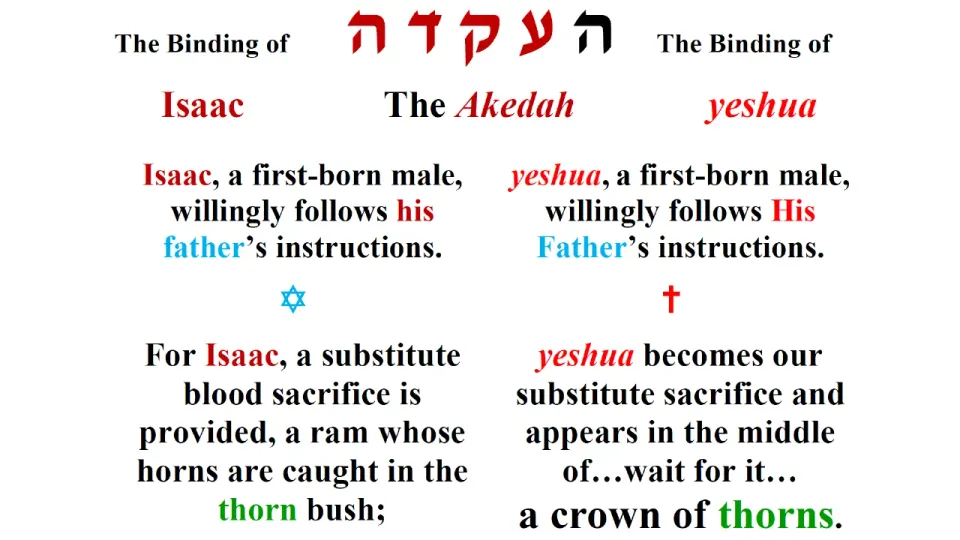 The Binding of Isaac and Yeshua: ram in the thorn bush, Yeshua in a crown of thornsSlide 132 · step 3 of 3
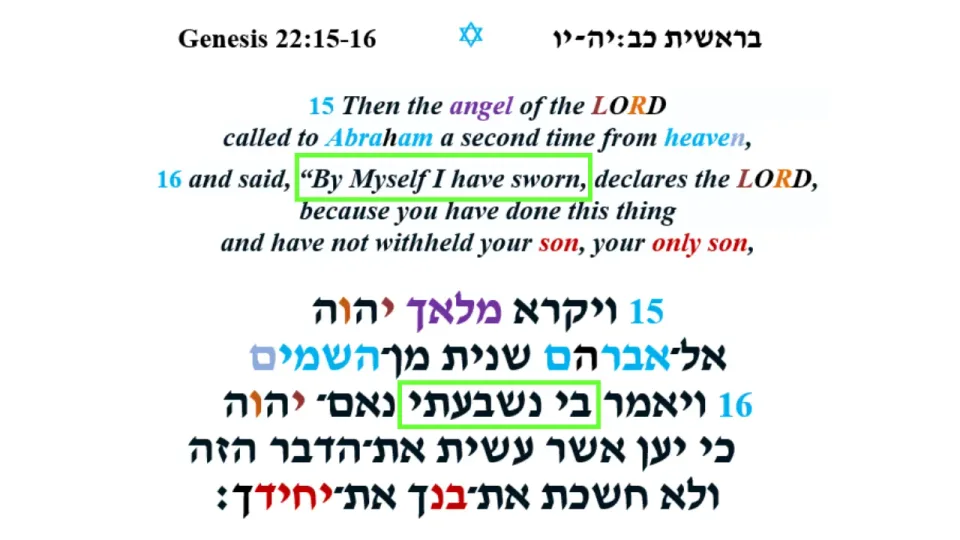 Genesis 22:15-16 — the angel calls again: “By Myself I have sworn”Slide 133
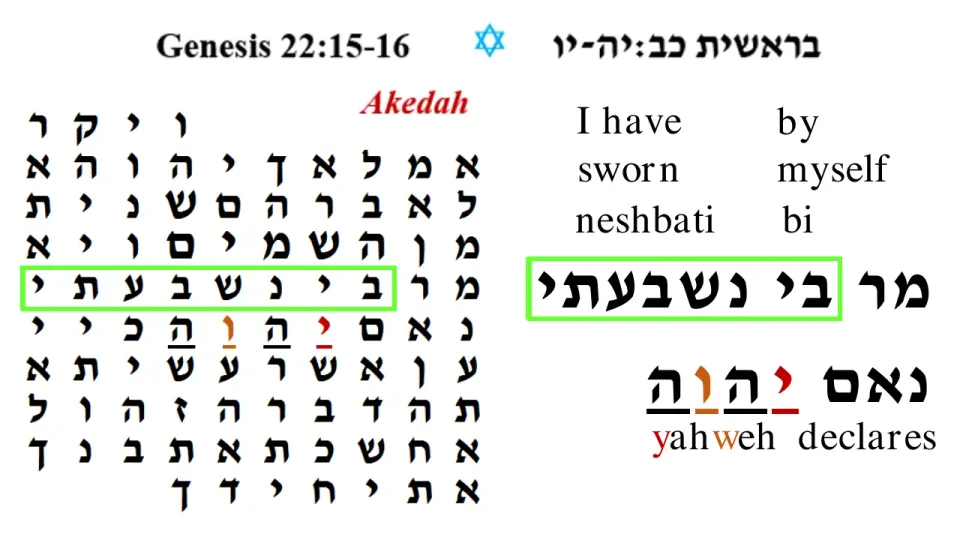 Hebrew letter grid: “bi neshbati” — by myself I have sworn (Gen 22:16)Slide 134 · step 1 of 3
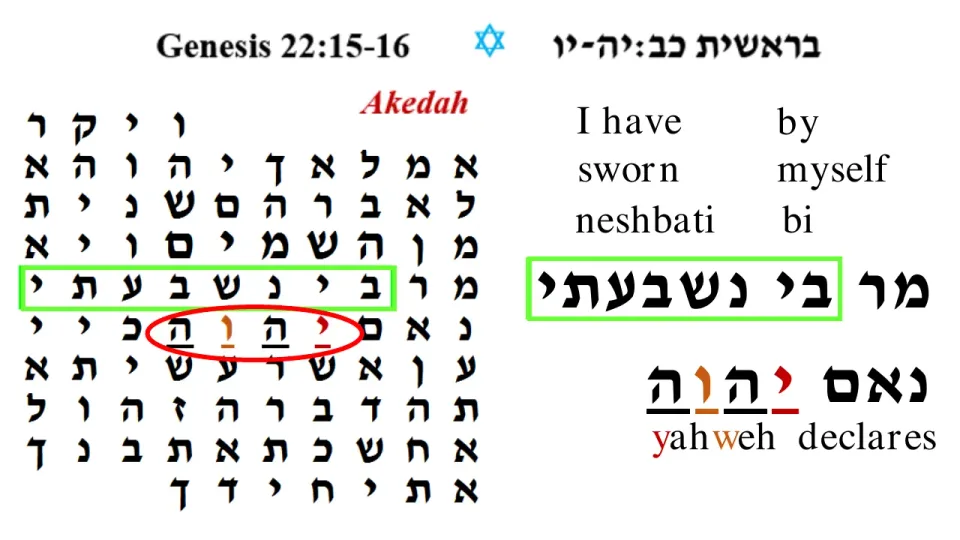 Hebrew letter grid: yahweh circled beneath “bi neshbati” (Gen 22:16)Slide 135 · step 2 of 3
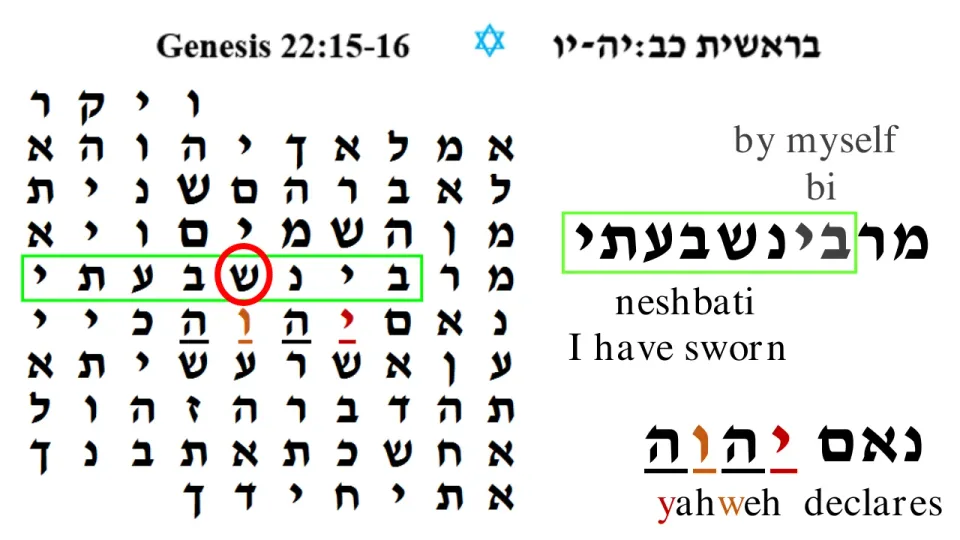 Akedah letter grid: the shin (ש) in “neshbati” circled (Gen 22:16)Slide 136 · step 3 of 3
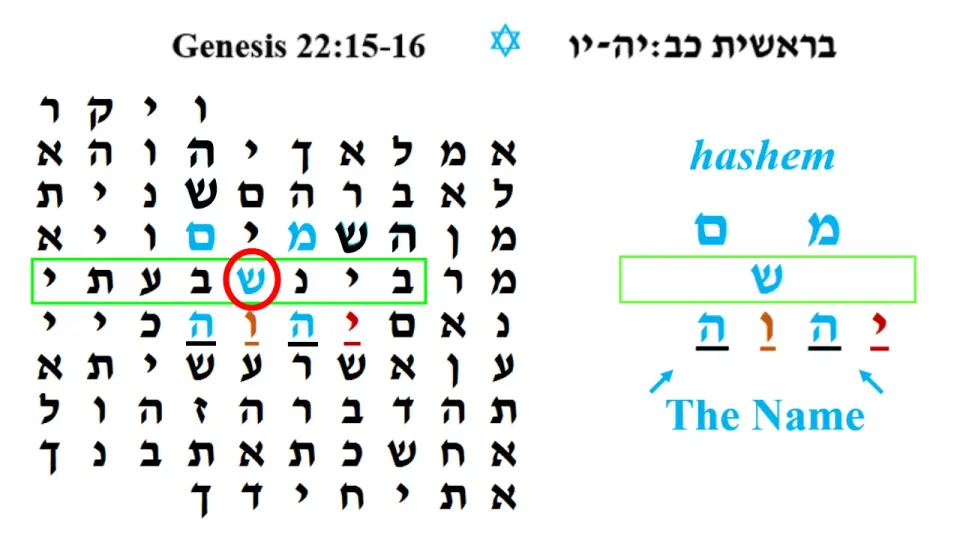 Akedah letter grid: ש circled, blue letters and “hashem — The Name”Slide 137
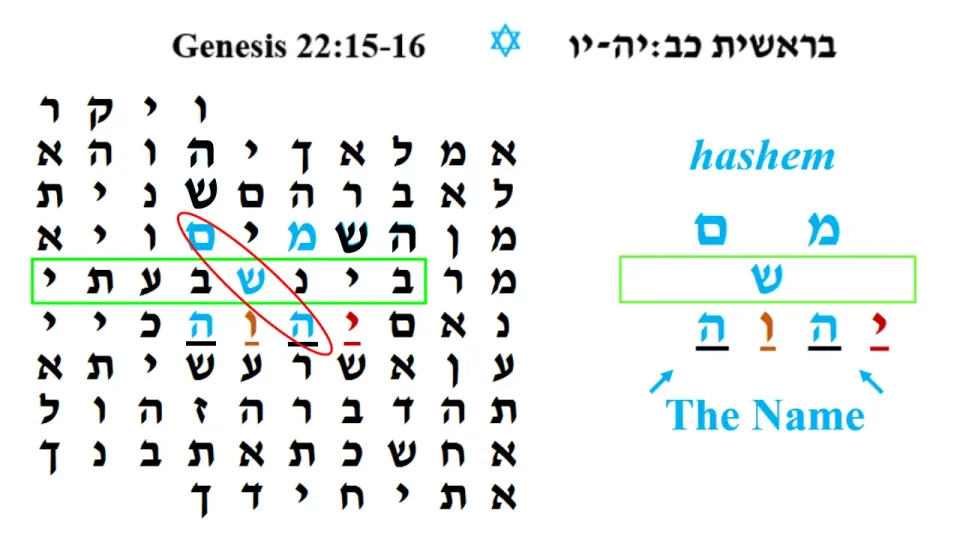 Akedah letter grid: diagonal through ם, ש and ה — “hashem, The Name”Slide 138
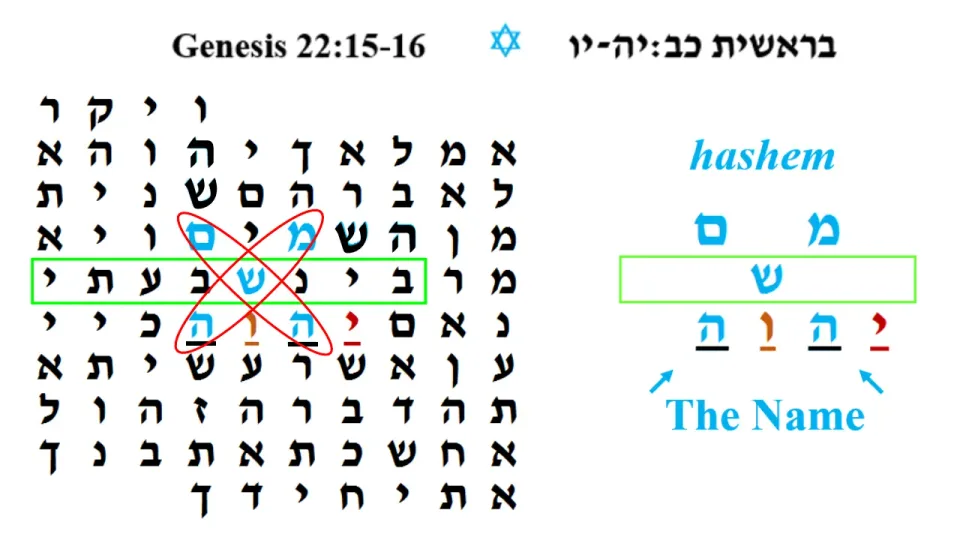 Akedah letter grid: two crossing diagonals meet at the ש — “The Name”Slide 139
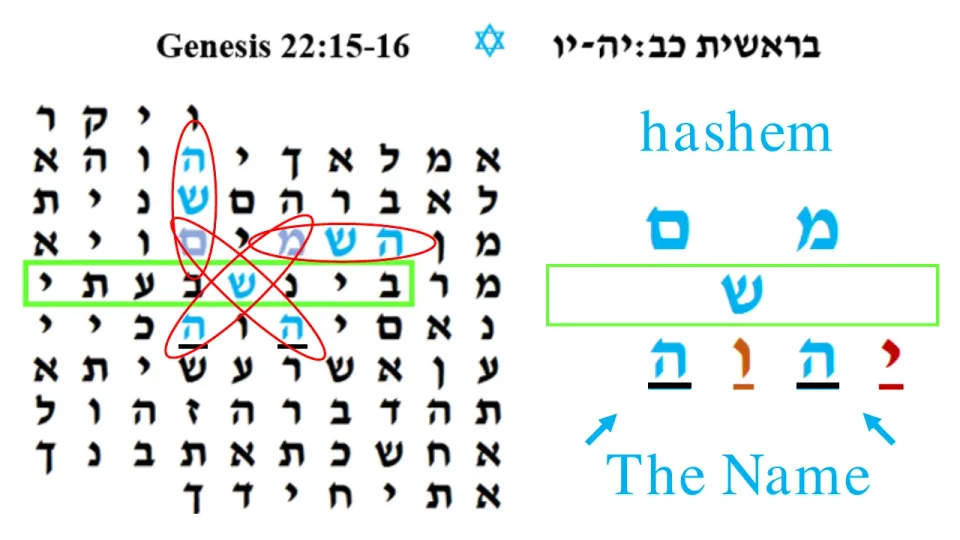 Genesis 22:15-16 letter grid: hidden "hashem" (the Name)Slide 140
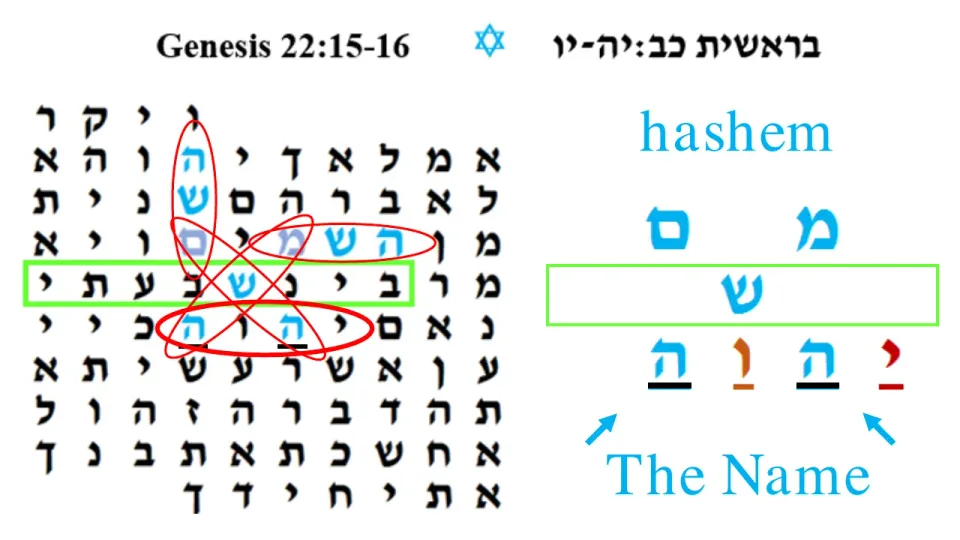 Genesis 22:15-16 letter grid: hidden "hashem" and the Name יהוהSlide 141
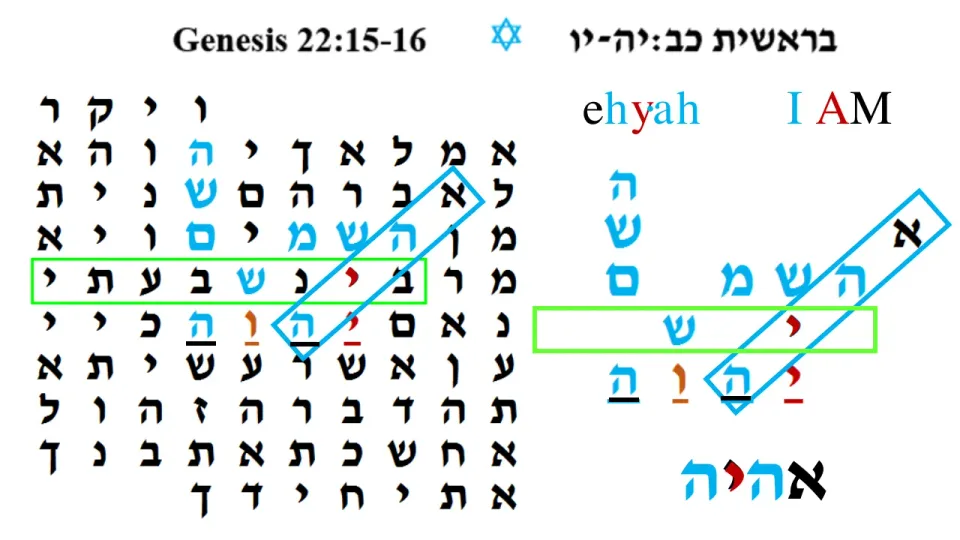 Genesis 22:15-16 letter grid: hidden "ehyah" (I AM)Slide 142
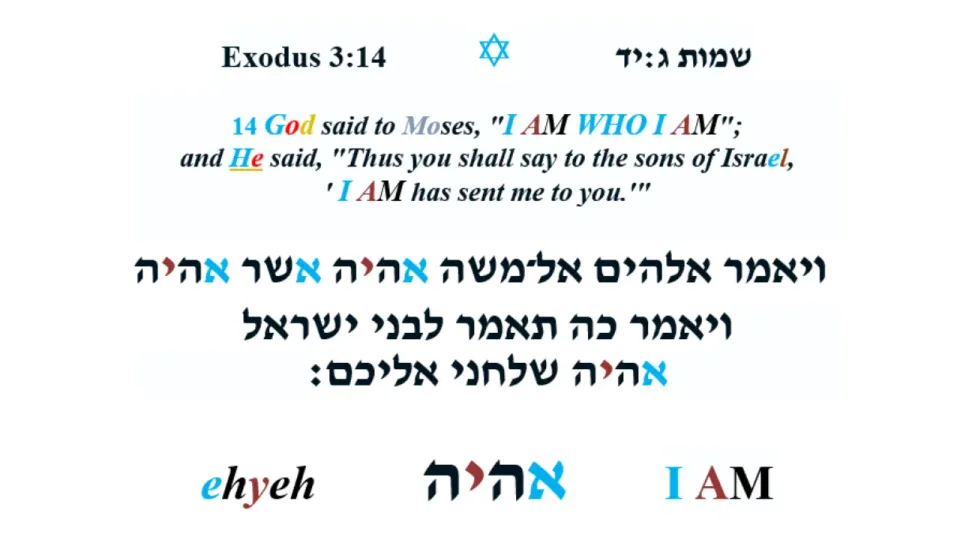 Exodus 3:14 — "I AM WHO I AM" (ehyeh asher ehyeh)Slide 143
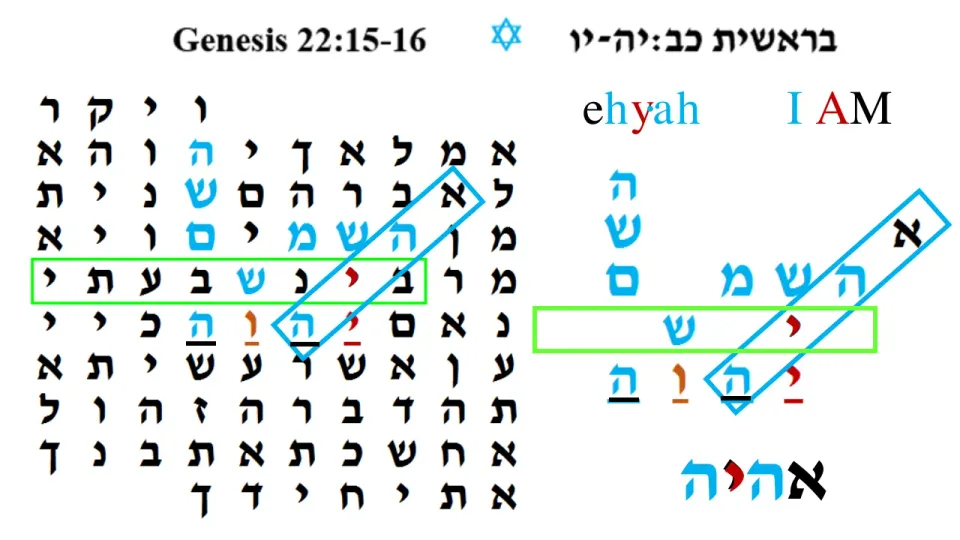 Genesis 22:15-16 letter grid: hidden "ehyah" (I AM)Slide 144
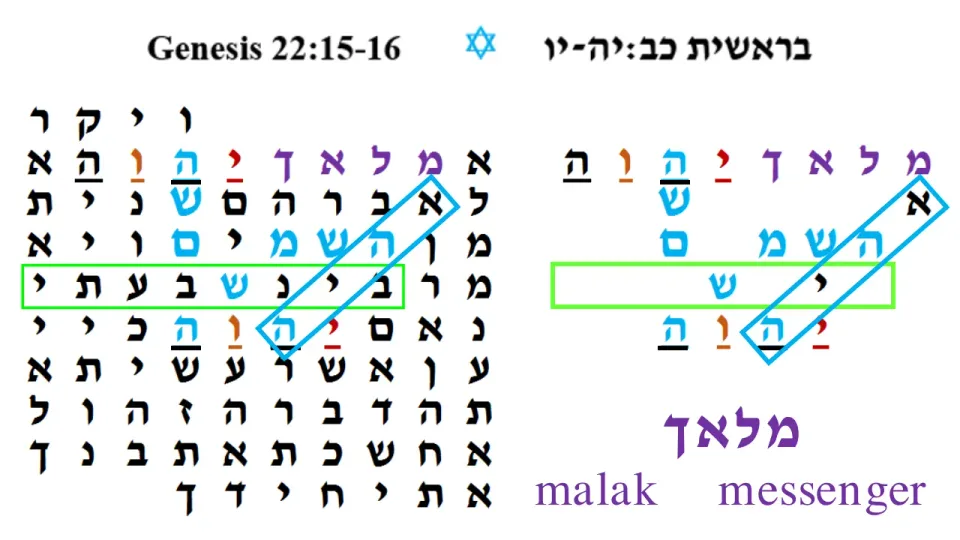 Genesis 22:15-16 letter grid: "malak" (messenger) before the NameSlide 145
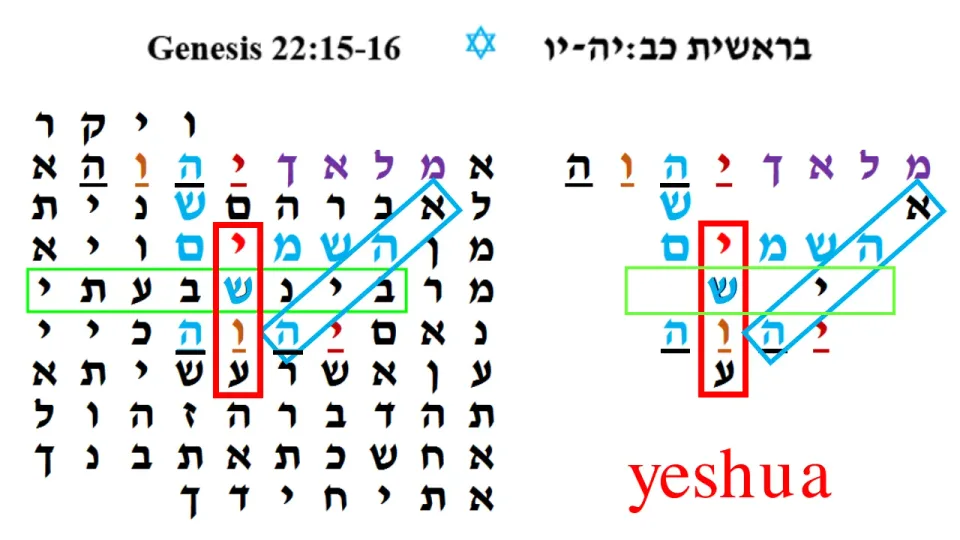 Genesis 22:15-16 letter grid: hidden "yeshua" (ישוע)Slide 146
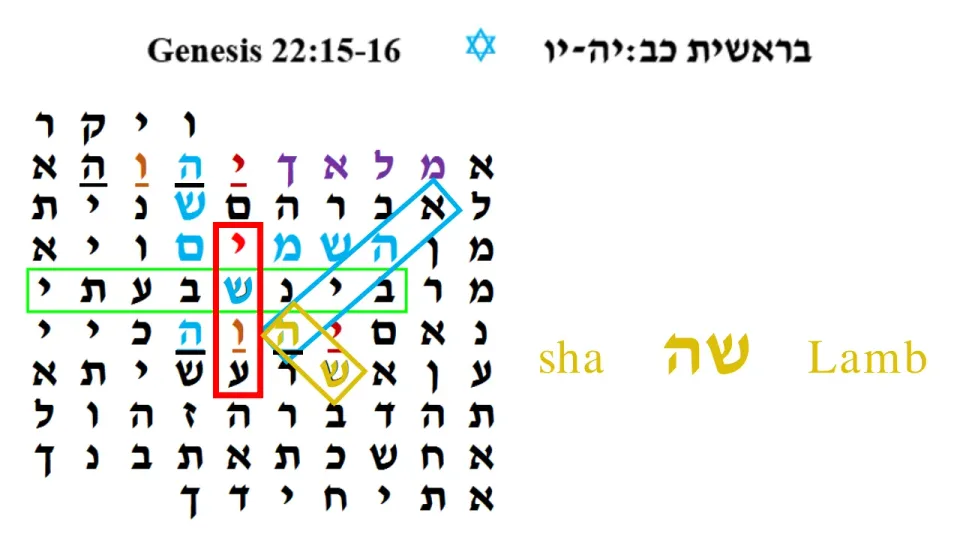 Genesis 22:15-16 letter grid: hidden "sha" (שה, lamb)Slide 147 · step 1 of 4
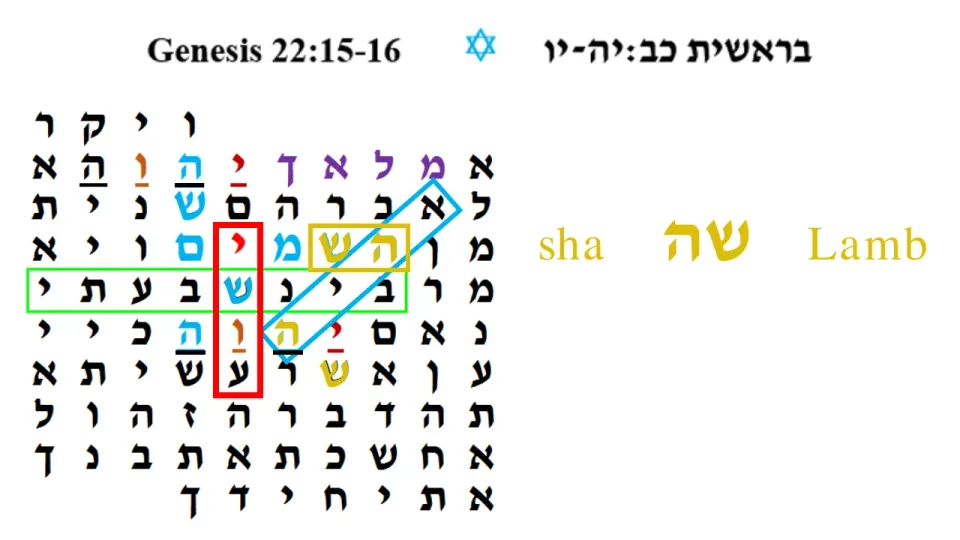 Genesis 22:15-16 letter grid: "sha" (שה, lamb) found in a rowSlide 148 · step 2 of 4
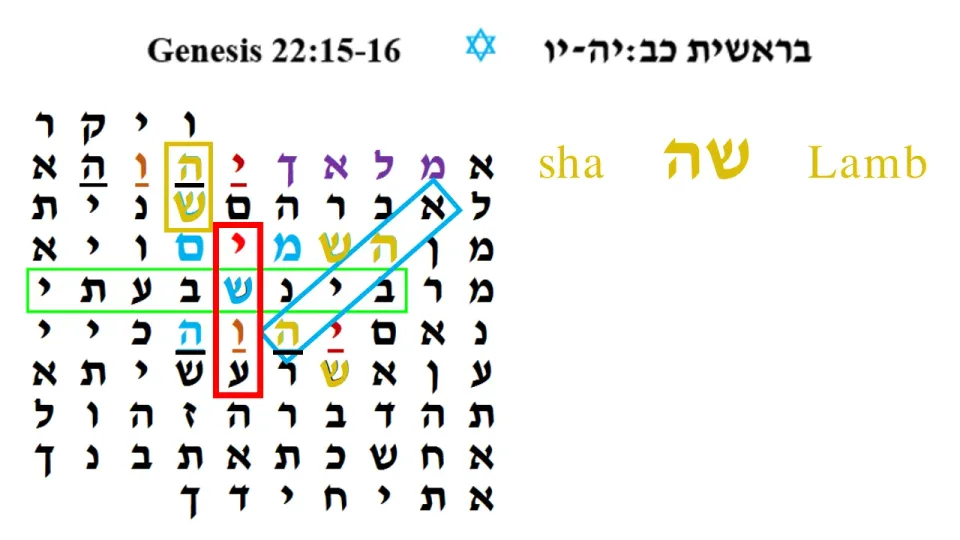 Genesis 22:15-16 letter grid: "sha" (שה, lamb) found in a columnSlide 149 · step 3 of 4
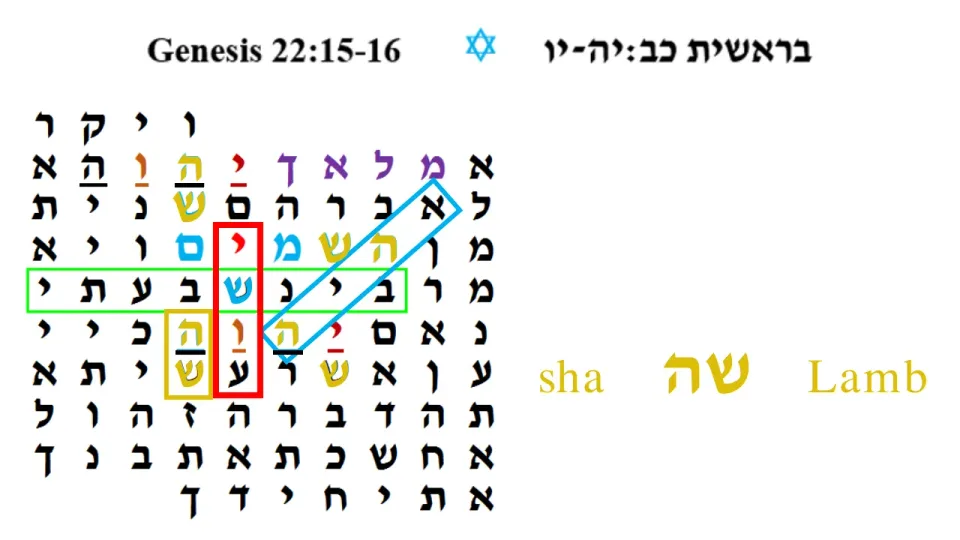 Genesis 22:15-16 letter grid: "sha" (שה, lamb) found lower in the columnSlide 150 · step 4 of 4
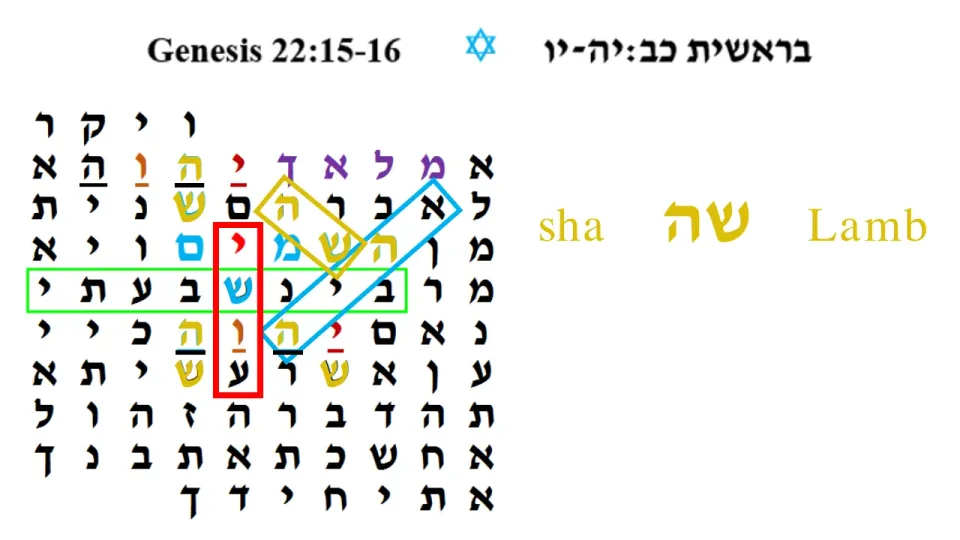 Genesis 22:15-16 letter grid: "sha" (שה, lamb) found on a diagonal near the topSlide 151
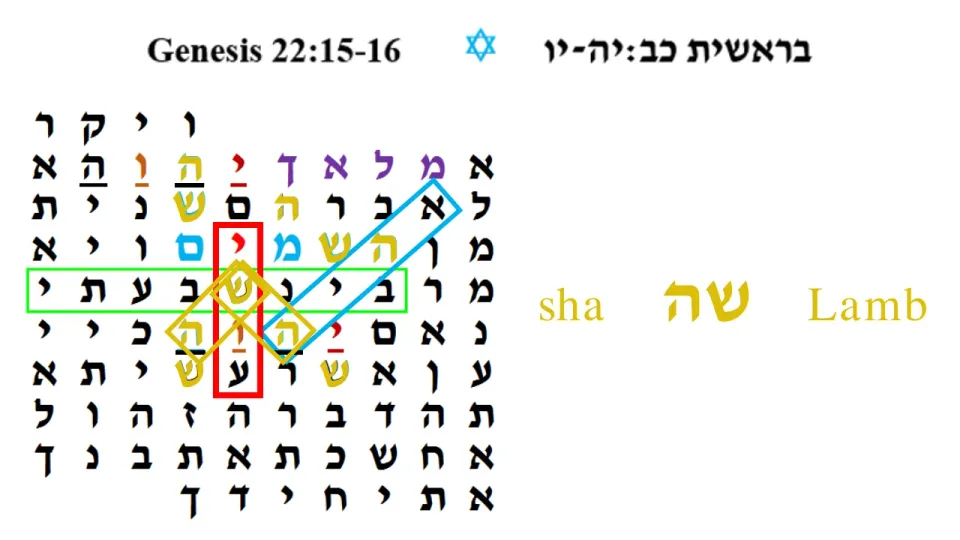 Genesis 22:15-16 letter grid: gold "sha" (lamb) boxes cross at the green-boxed שSlide 152
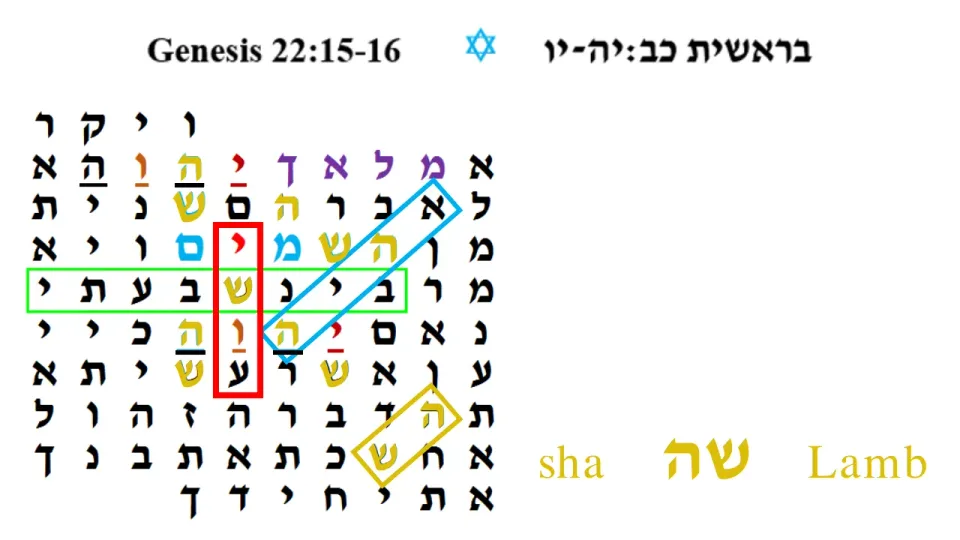 Genesis 22:15-16 letter grid: "sha" (שה, lamb) found at the lower rightSlide 153
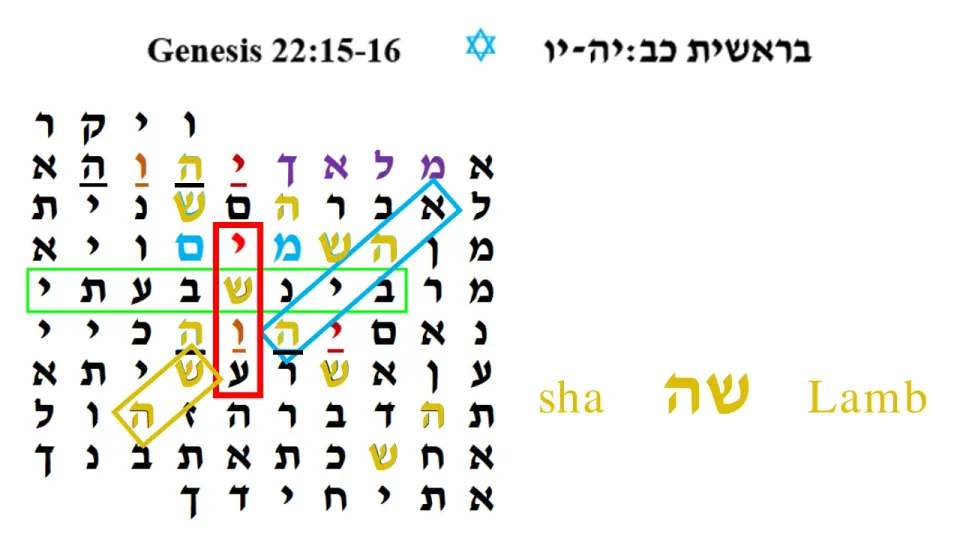 Genesis 22:15-16 letter grid: "sha" (שה, lamb) found at the lower leftSlide 154
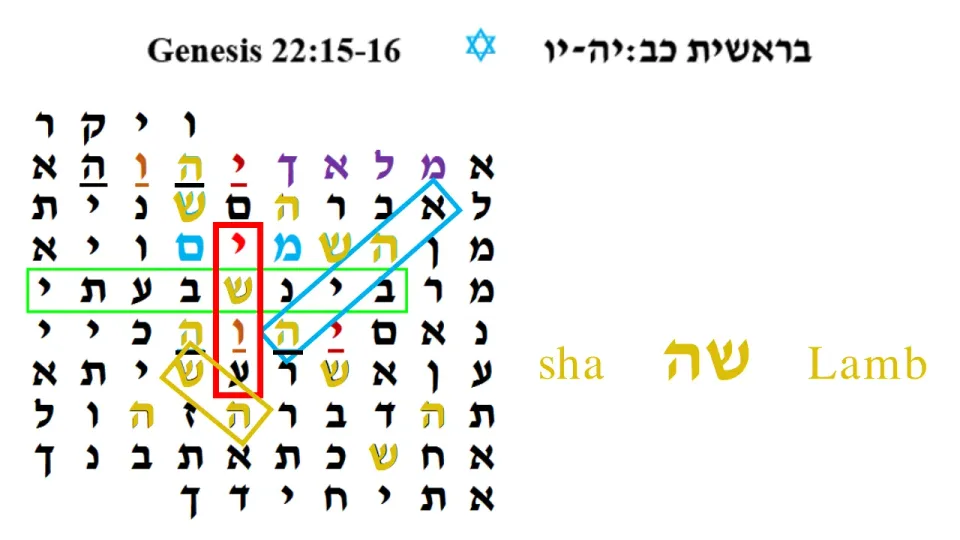 Genesis 22:15-16 letter grid: "sha" (שה, lamb) found near the red columnSlide 155
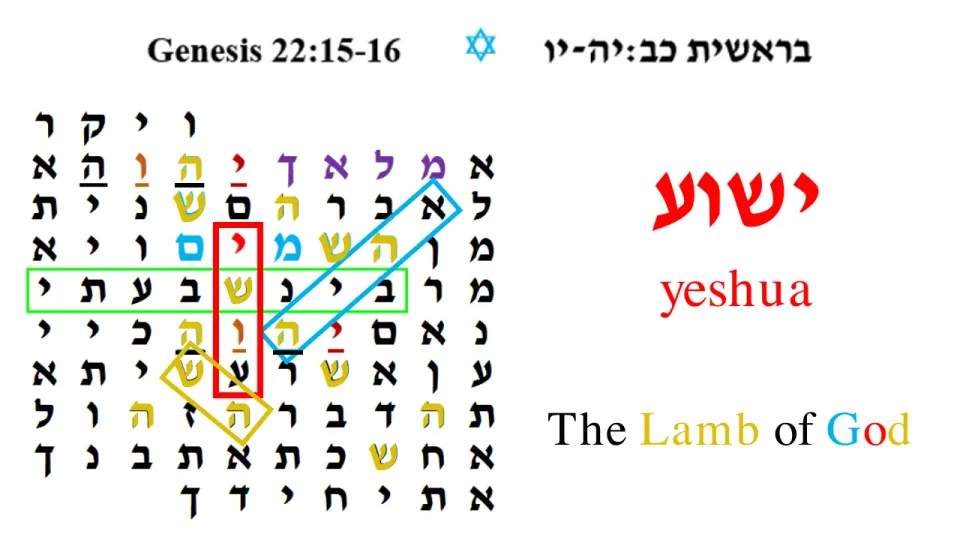 Yeshua, "The Lamb of God" — Genesis 22:15-16 letter grid conclusionSlide 156
 The End — speaking inquiries contactSlide 157