Genesis 4
Slides that quote or discuss Genesis 4. Jump to a verse: 1 · 2 · 3 · 4 · 5 · 6 · 7 · 8 · 9 · 10 · 11 · 12 · 13 · 14 · 15 · 24 · 25
Genesis 4:1 28 slides
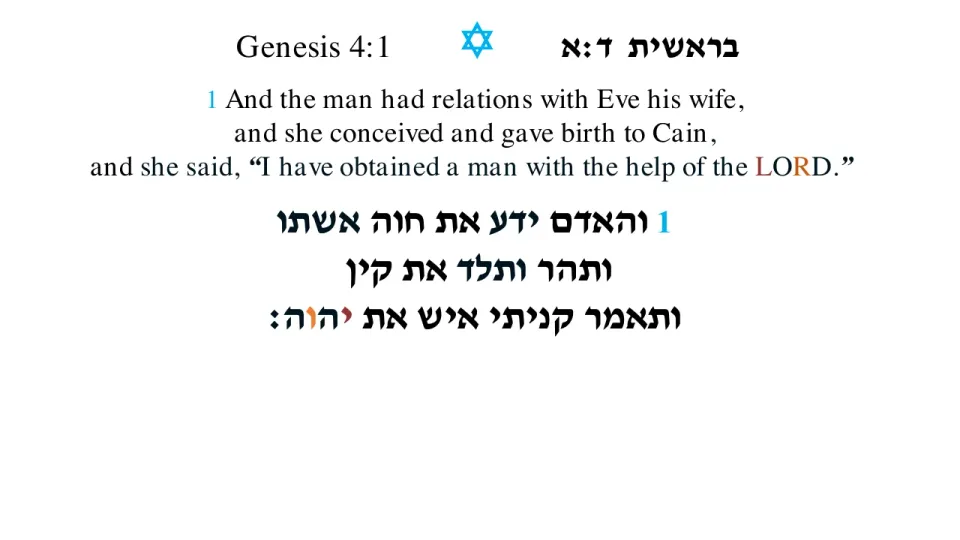 Genesis 4:1 — Eve gives birth to CainAbel · Slide 2
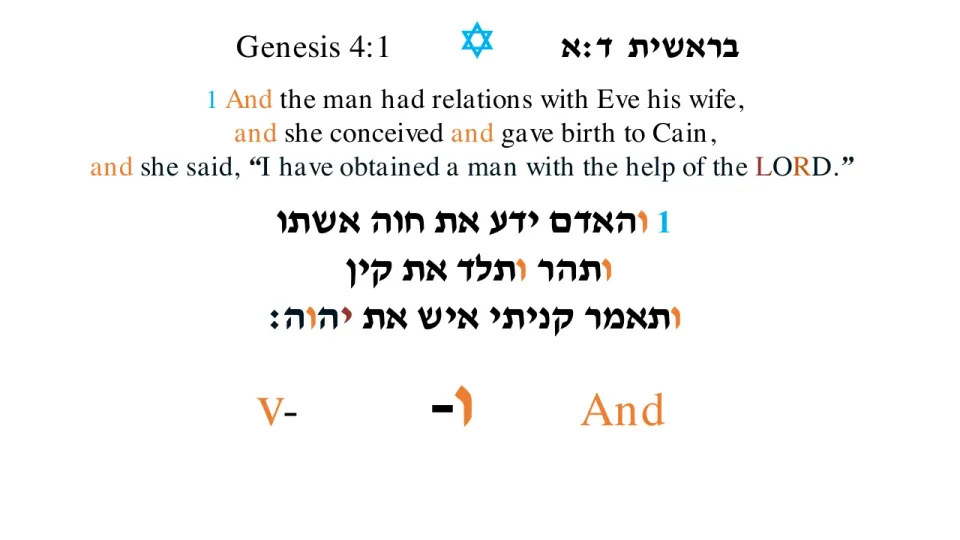 Genesis 4:1 — the Hebrew prefix vav (ו) means “and”Abel · Slide 3
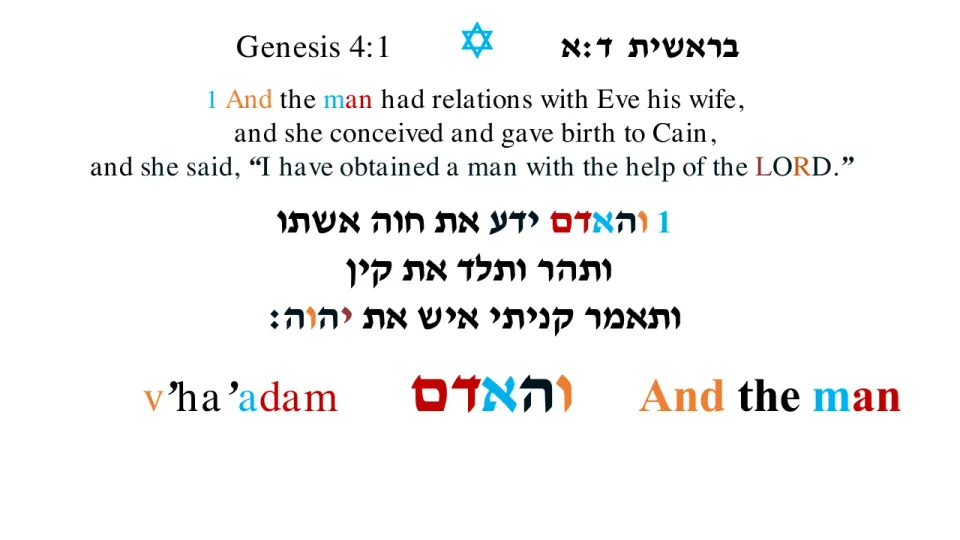 Genesis 4:1 — v'ha'adam, “and the man”Abel · Slide 4
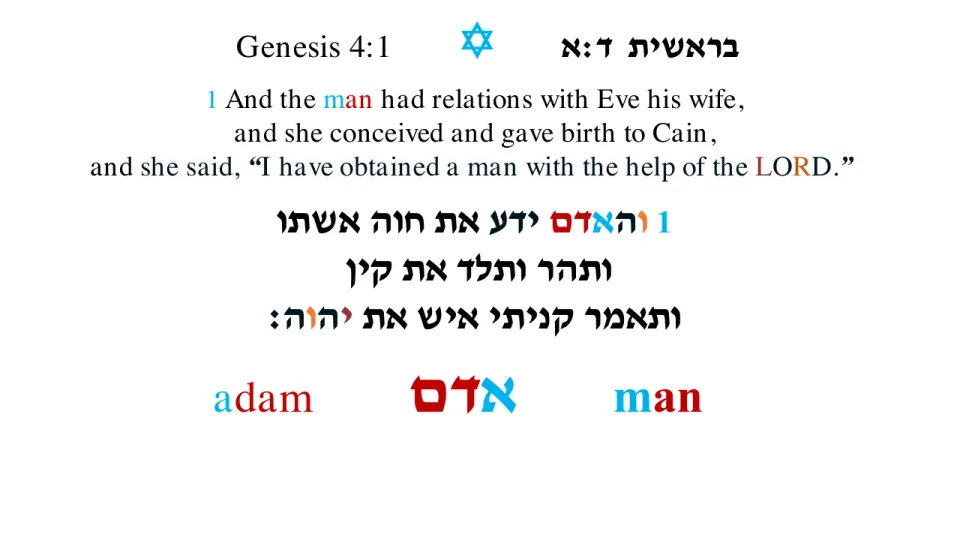 Genesis 4:1 — adam (אדם), “man”Abel · Slide 5
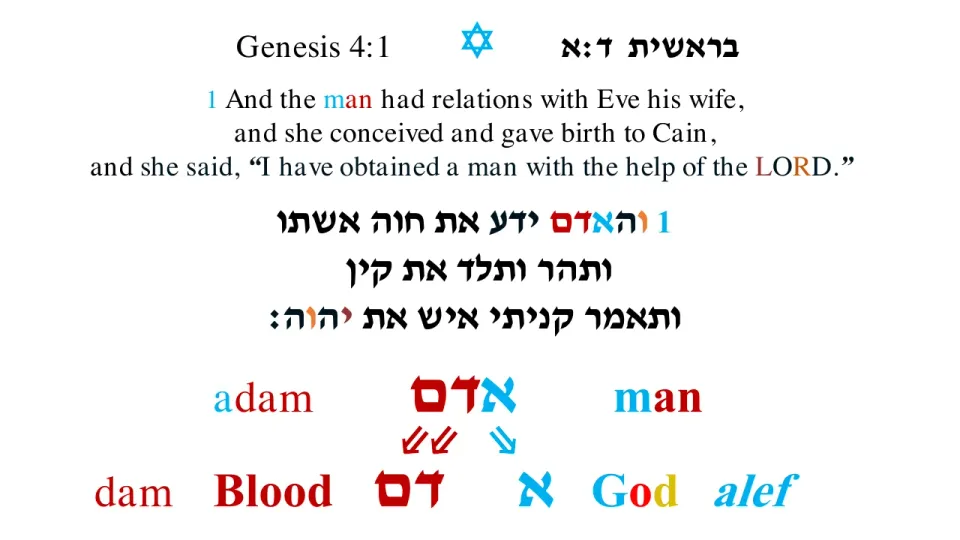 Adam (אדם) = alef (God) + dam (blood)Abel · Slide 6
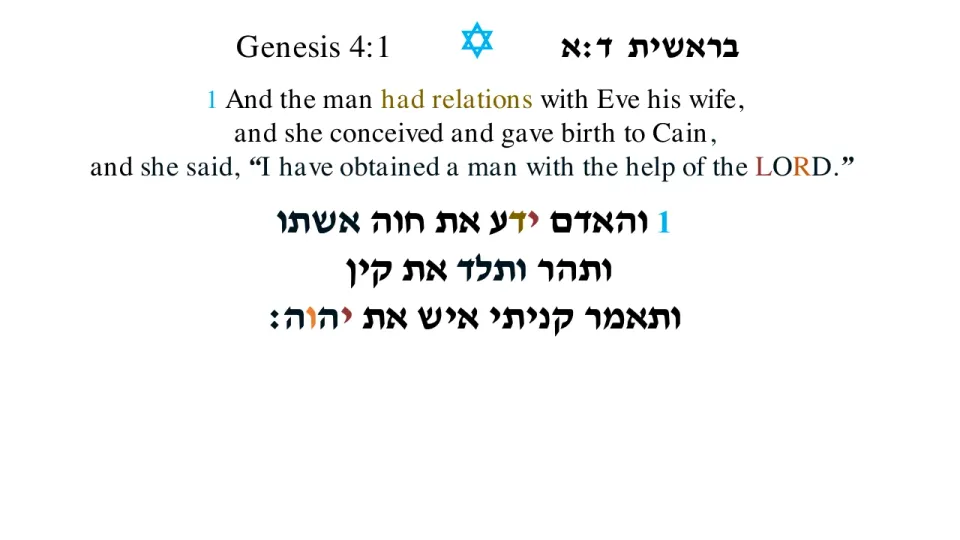 Genesis 4:1 — “had relations” is the Hebrew word ידעAbel · Slide 7
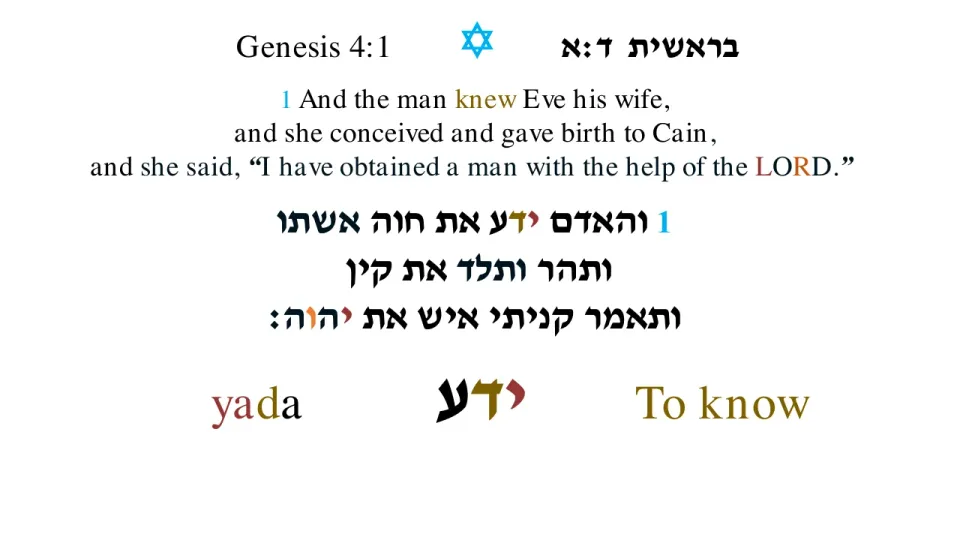 Genesis 4:1 — yada (ידע), “to know”Abel · Slide 8
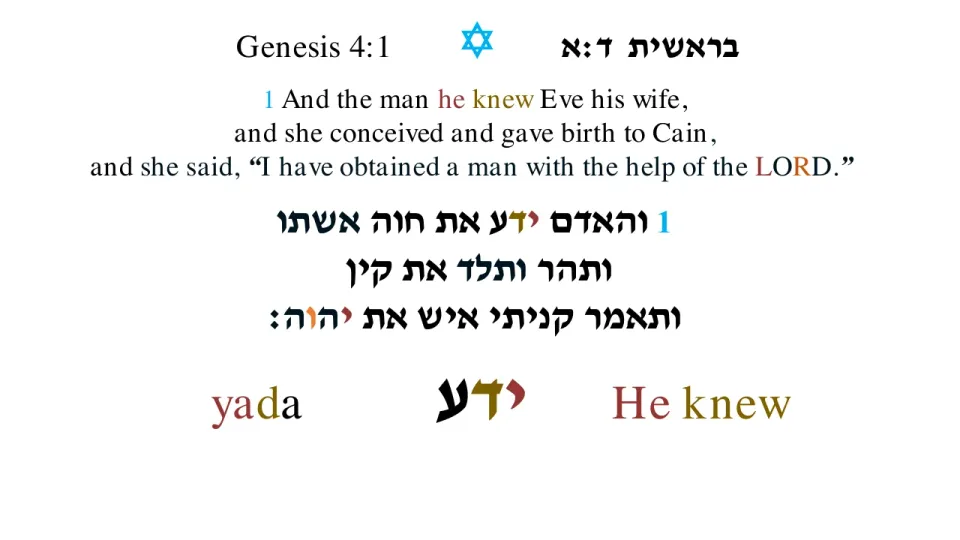 Genesis 4:1 — yada (ידע), “he knew”Abel · Slide 9
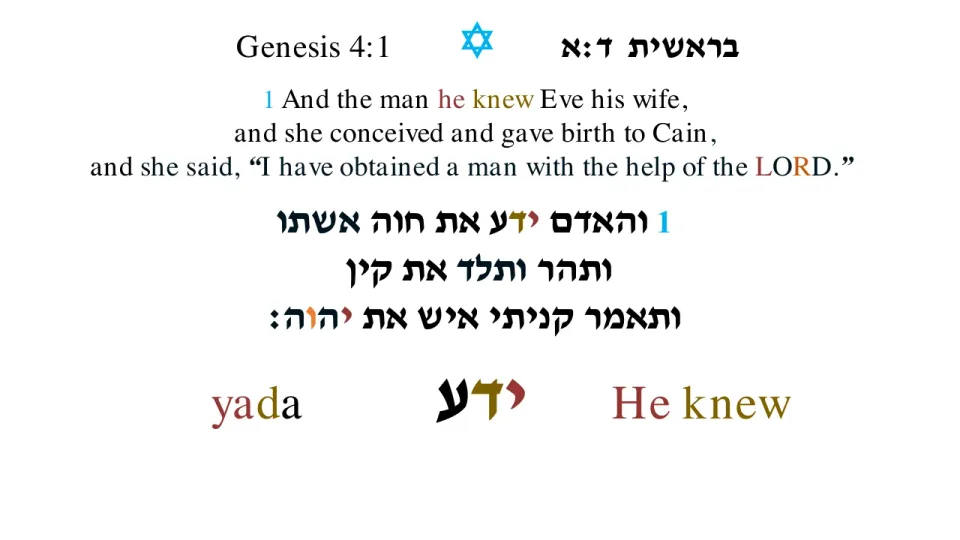 Genesis 4:1 — yada (ידע), “he knew” (repeat)Abel · Slide 10
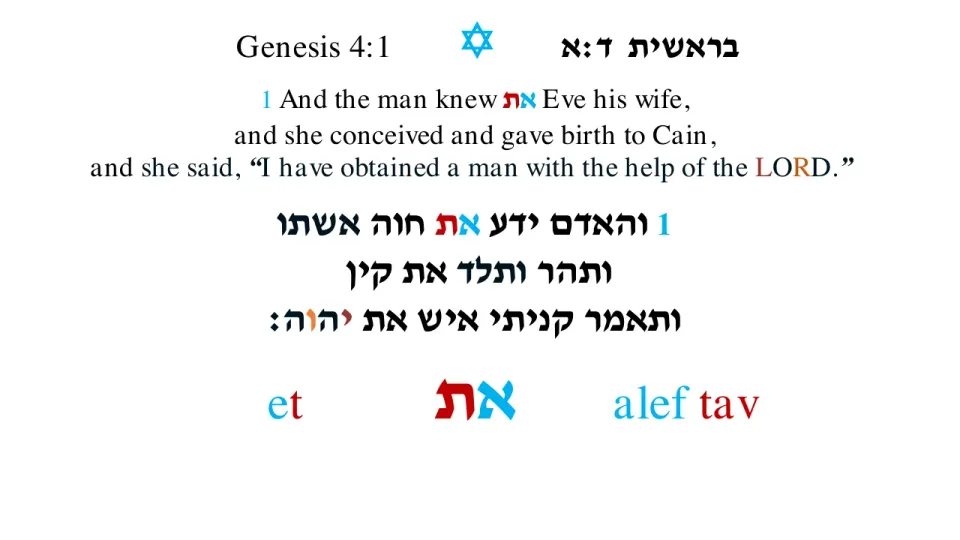 Genesis 4:1 — the untranslated word et (את), alef-tavAbel · Slide 11
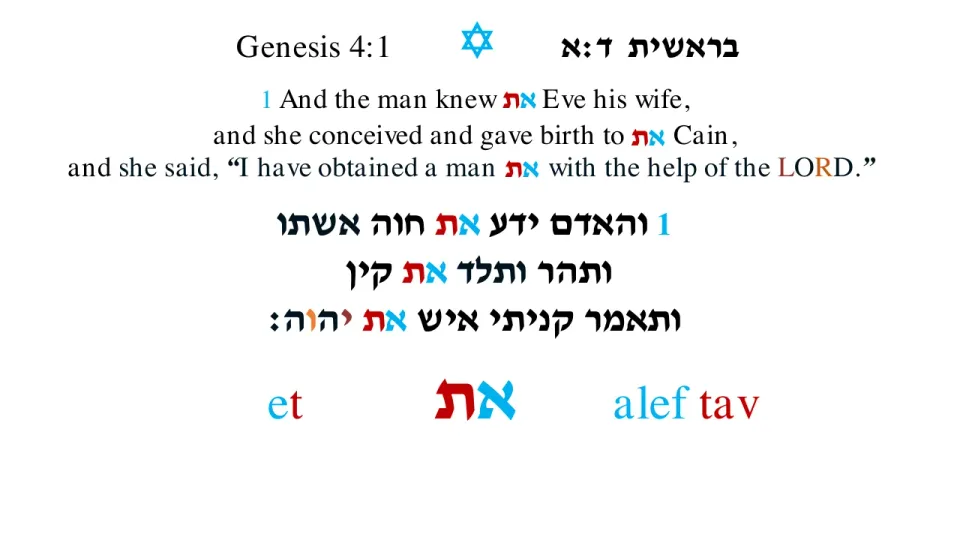 Genesis 4:1 — alef-tav (את) appears three timesAbel · Slide 12
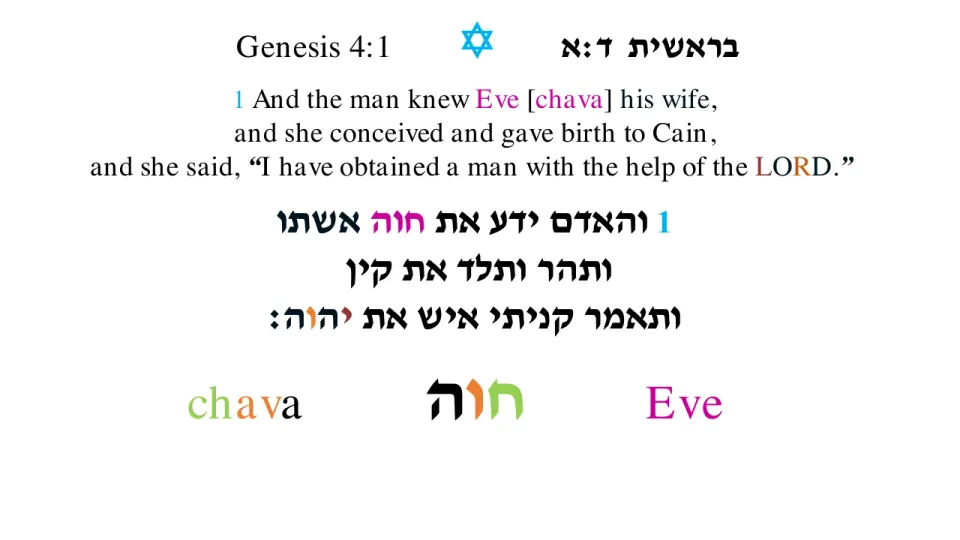 Genesis 4:1 — Eve is chava (חוה) in HebrewAbel · Slide 13
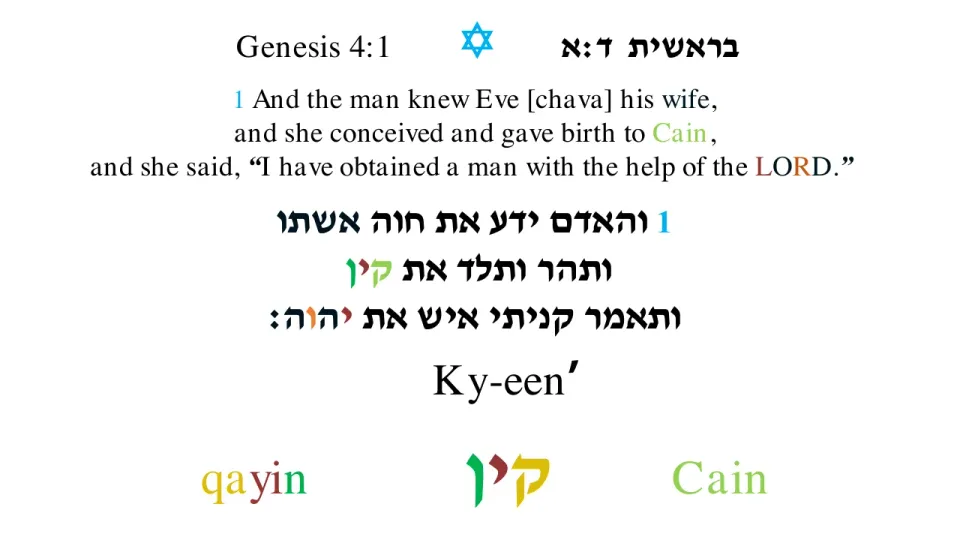 Genesis 4:1 — Cain is qayin (קין), pronounced “Ky-een”Abel · Slide 14
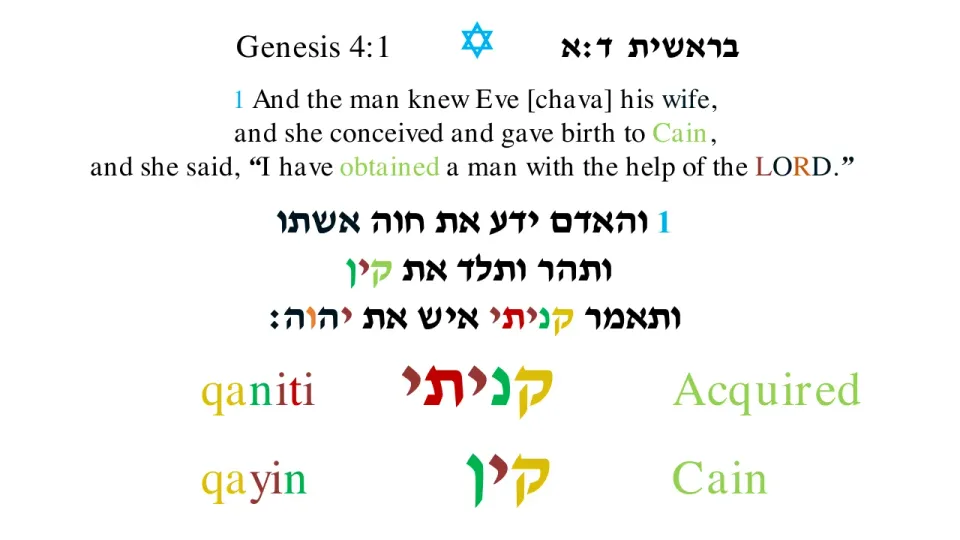 Genesis 4:1 — qaniti (קניתי) “acquired” and qayin (Cain)Abel · Slide 15
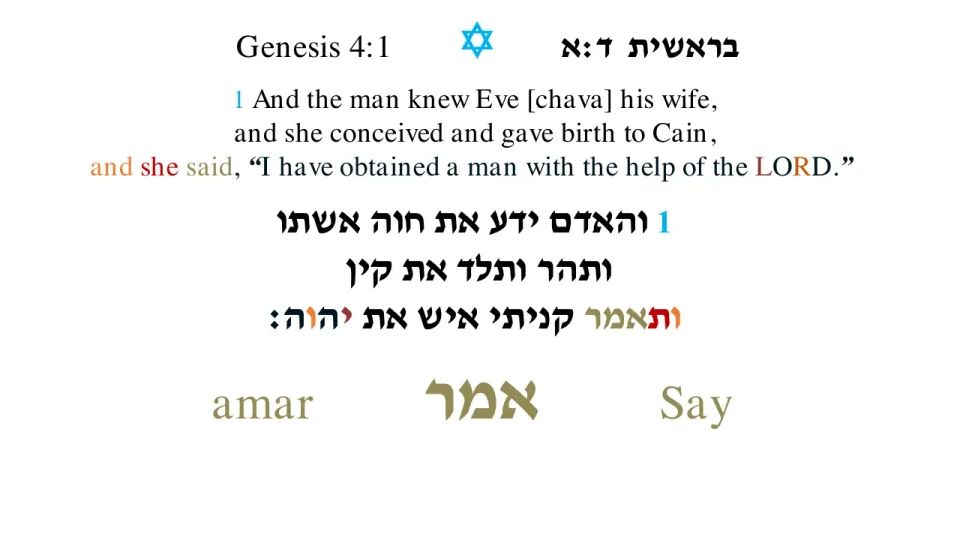 Genesis 4:1 — Eve says: “I have obtained a man”; amar = sayAbel · Slide 24
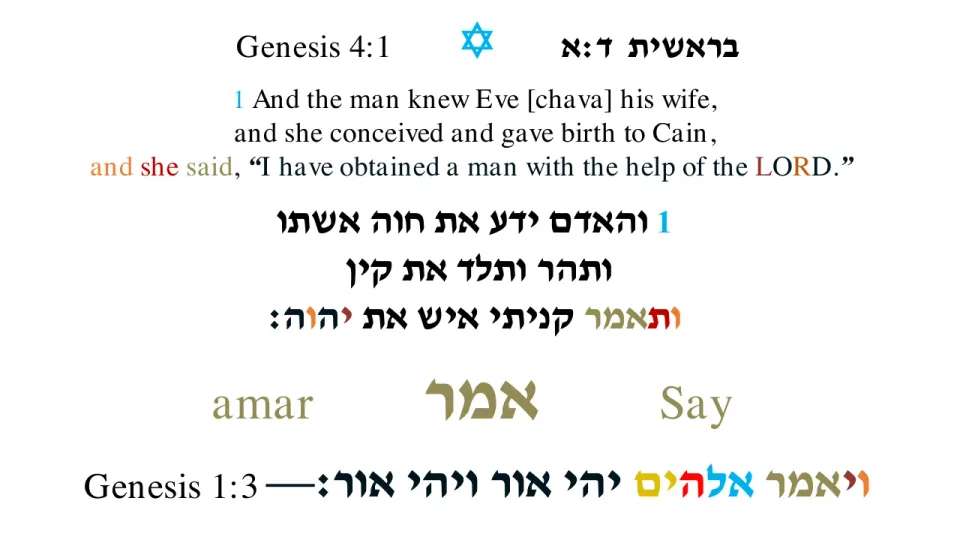 Genesis 4:1 and Genesis 1:3 — amar (say) in “and God said”Abel · Slide 25
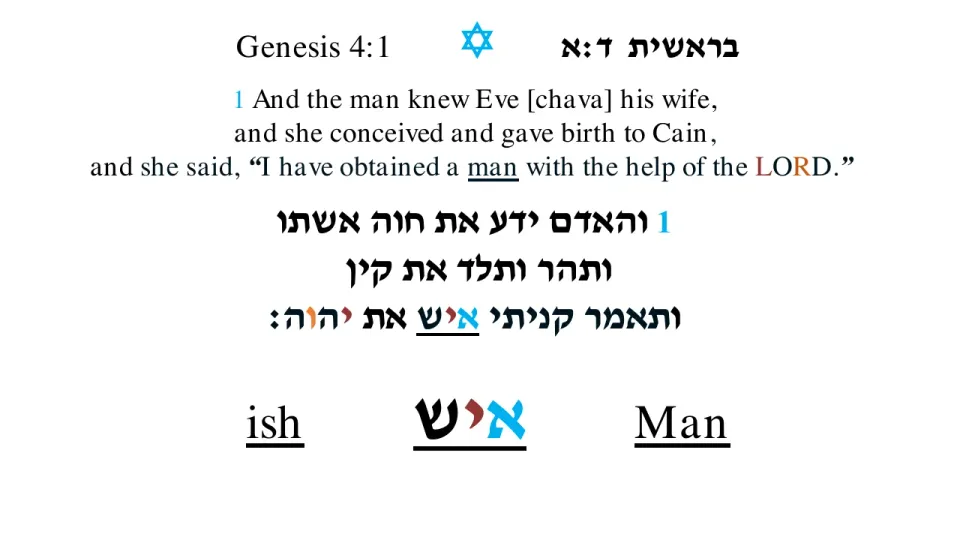 Genesis 4:1 — ish (איש) = manAbel · Slide 26
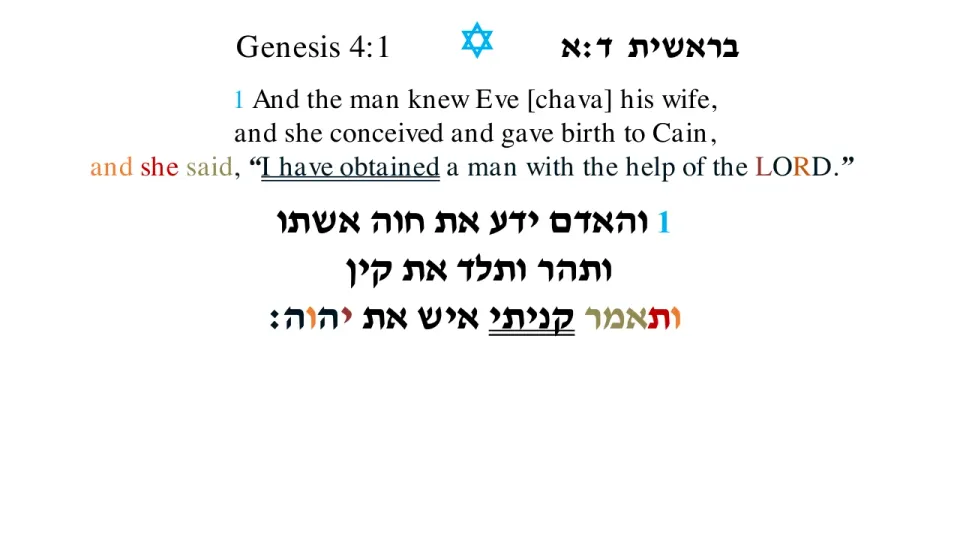 Genesis 4:1 — “I have obtained” = קניתי (qaniti)Abel · Slide 29
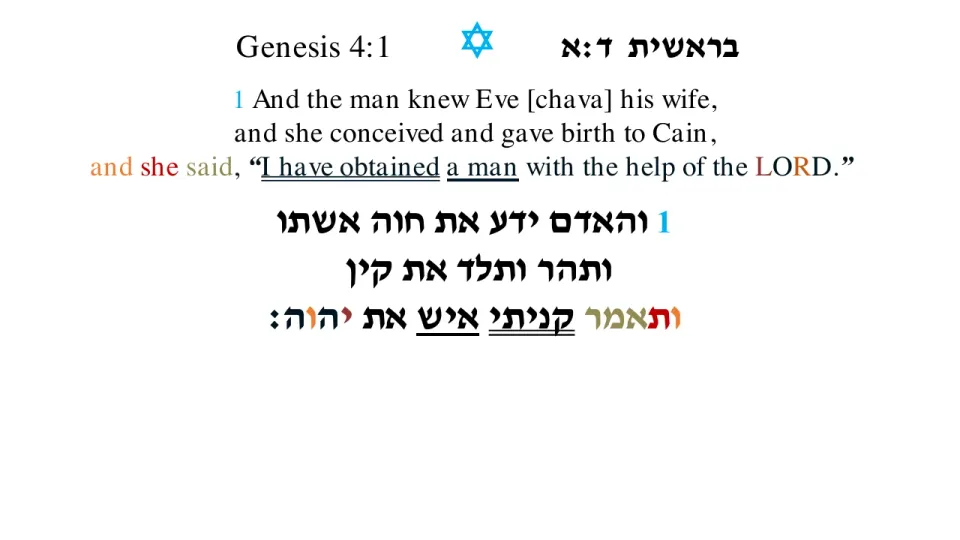 Genesis 4:1 — “a man” = איש (ish)Abel · Slide 30
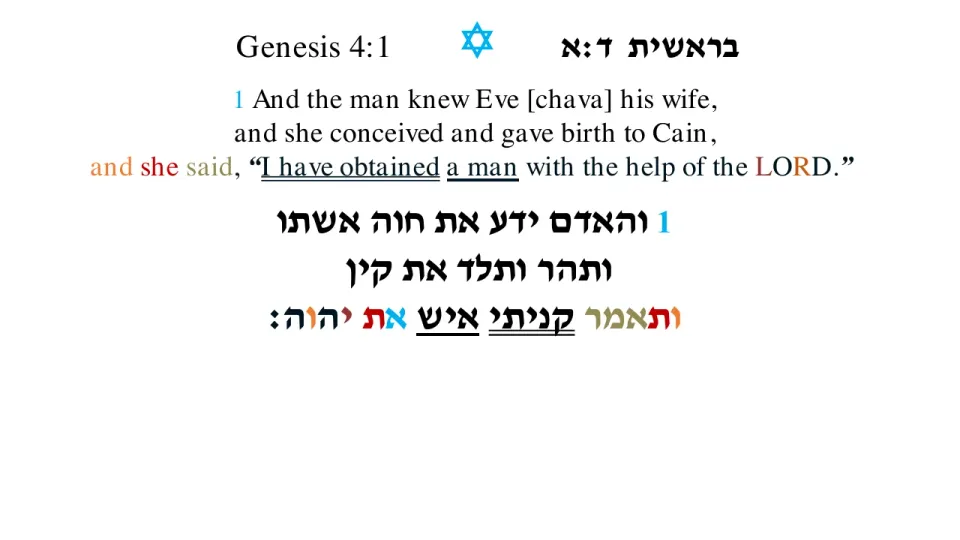 Genesis 4:1 — the untranslated word את (alef tav) before the LORDAbel · Slide 31
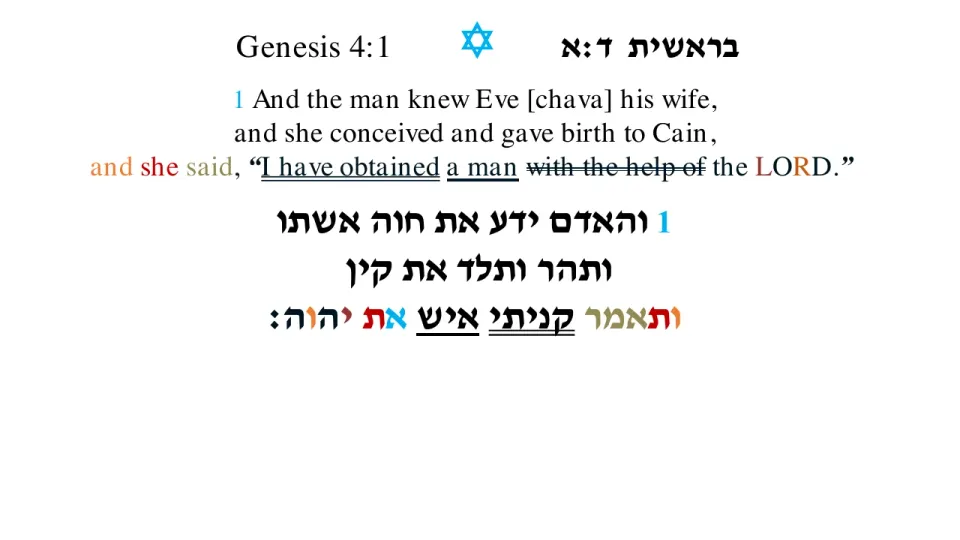 Genesis 4:1 — “with the help of” struck out; את stands before the LORDAbel · Slide 32
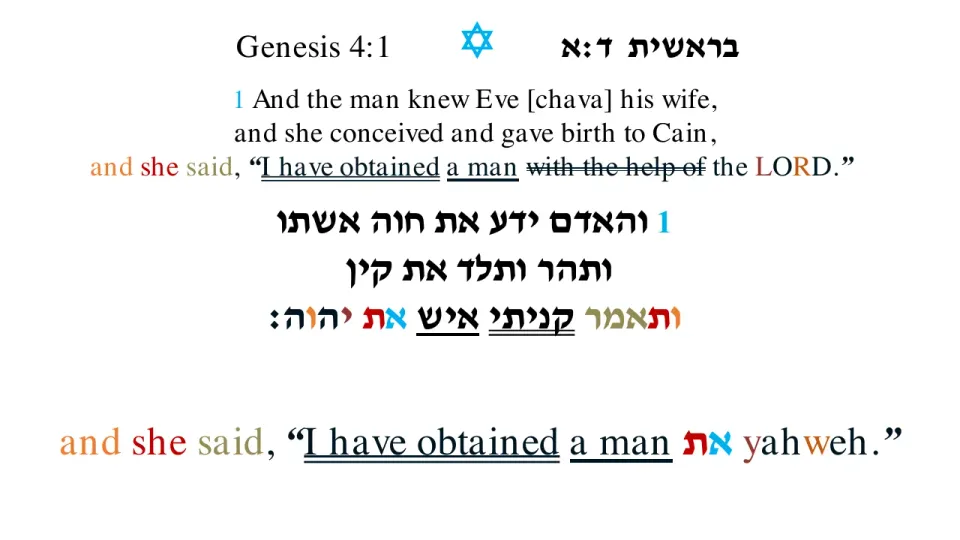 Genesis 4:1 — “I have obtained a man את yahweh”Abel · Slide 33
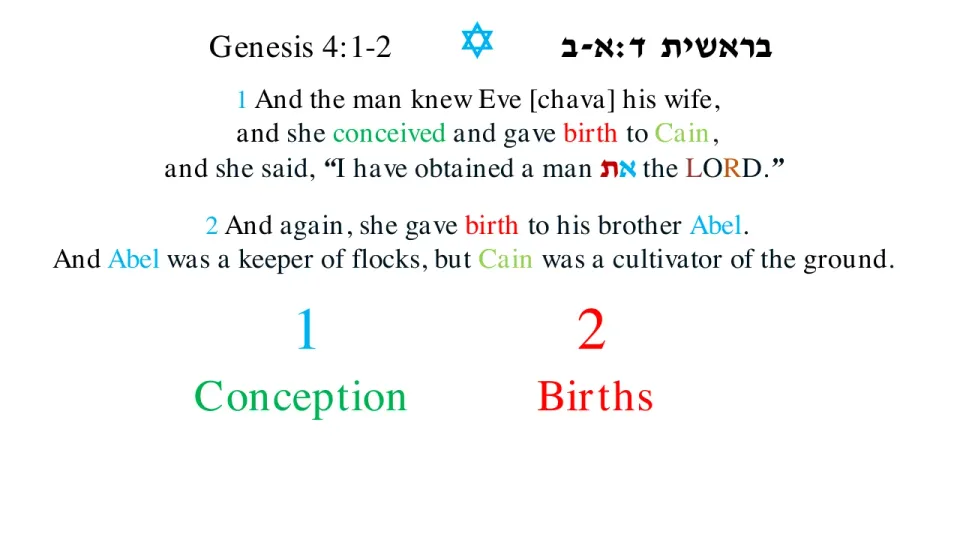 Genesis 4:1-2: 1 conception, 2 births (Cain and Abel)Abel · Slide 43
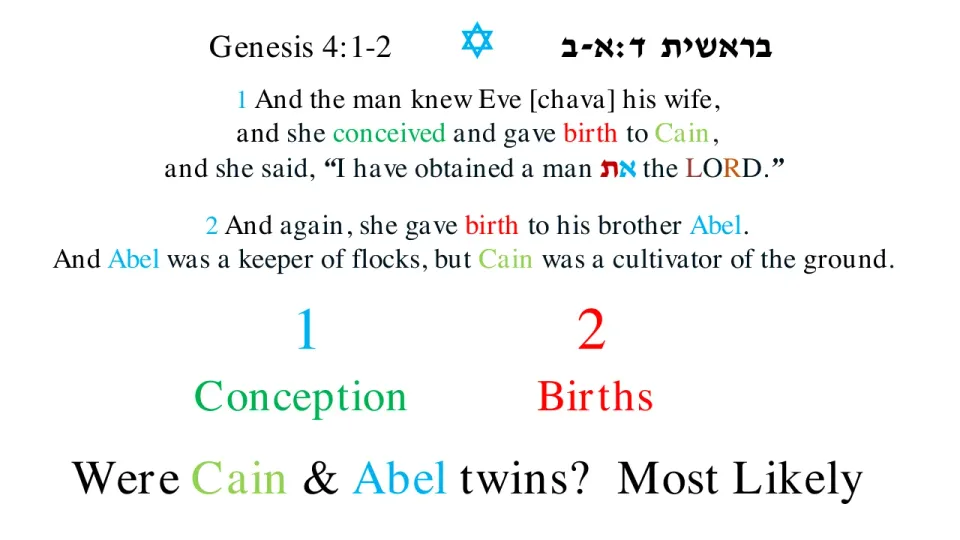 Genesis 4:1-2 — Were Cain and Abel twins? Most likelyAbel · Slide 44
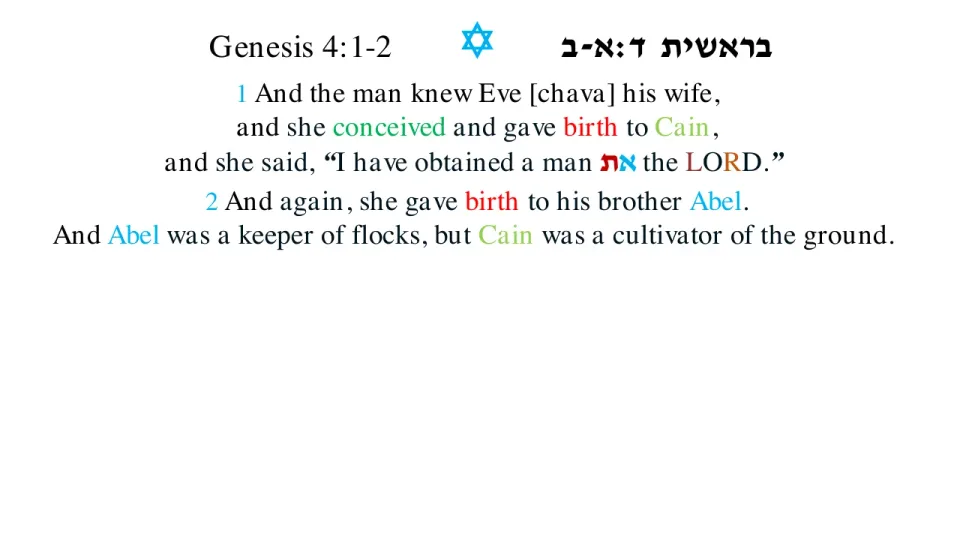 Genesis 4:1-2 — Eve, Cain and Abel, with et (את) before the LORDAbel · Slide 133
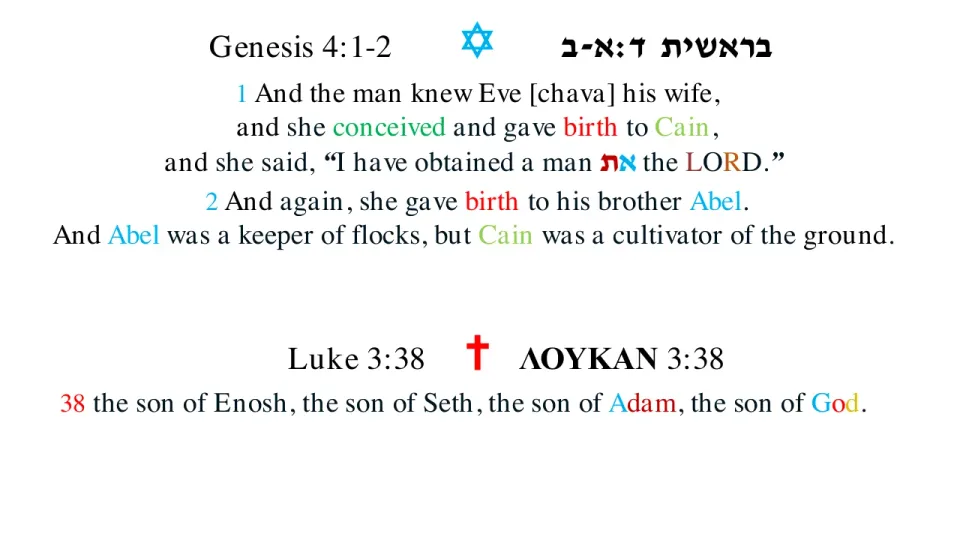 Genesis 4:1-2 compared with Luke 3:38 — Adam, the son of GodAbel · Slide 134
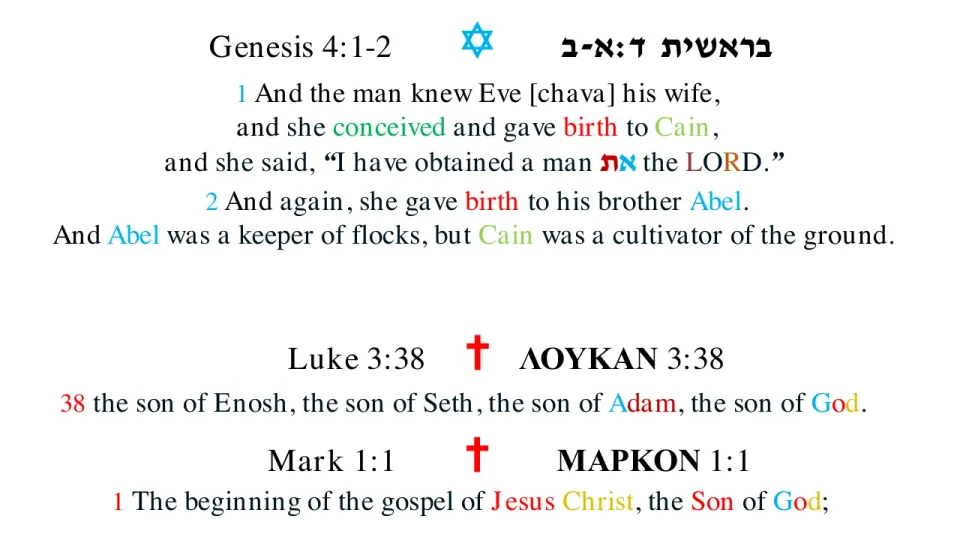 Genesis 4:1-2 compared with Luke 3:38 and Mark 1:1 — sons of GodAbel · Slide 135
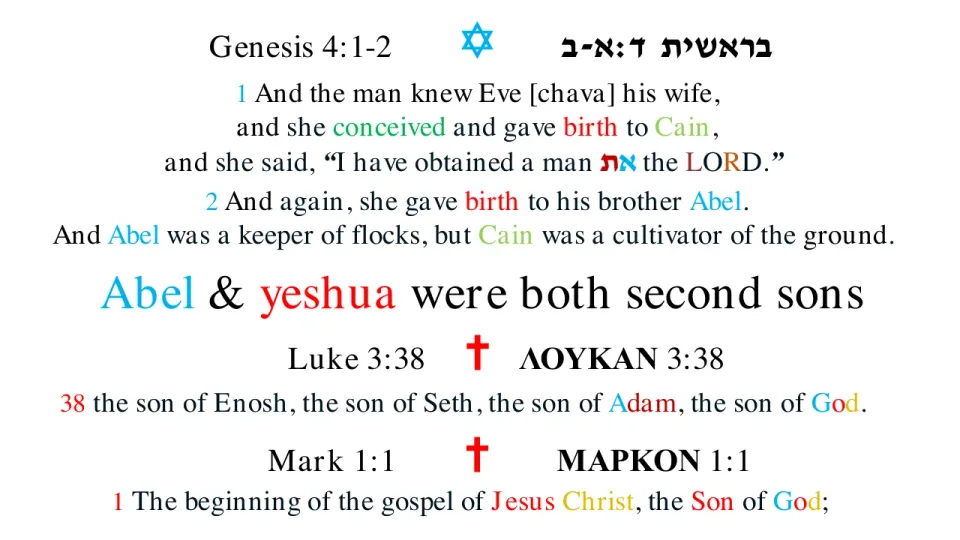 Abel and Yeshua were both second sonsAbel · Slide 136
Genesis 4:2 17 slides
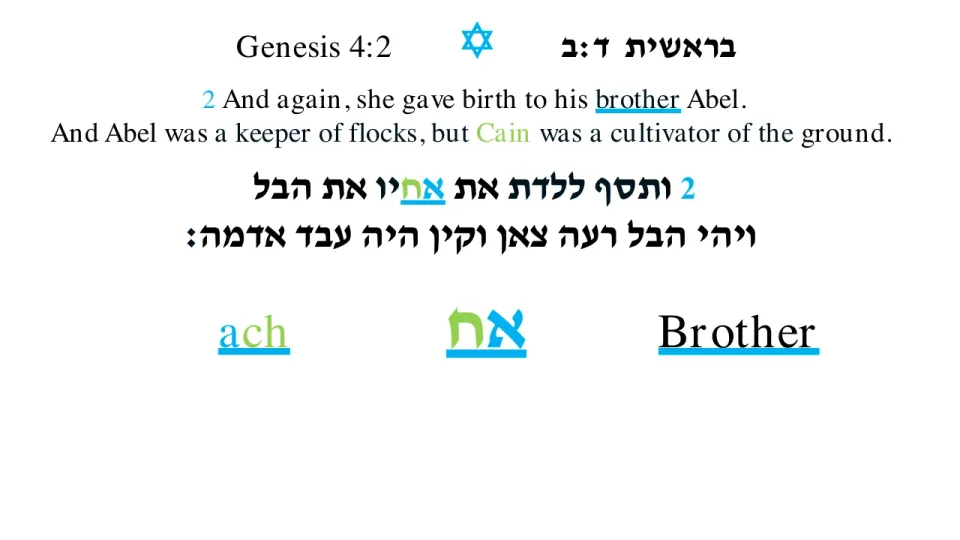 Genesis 4:2 — ach (אח) = brotherAbel · Slide 35
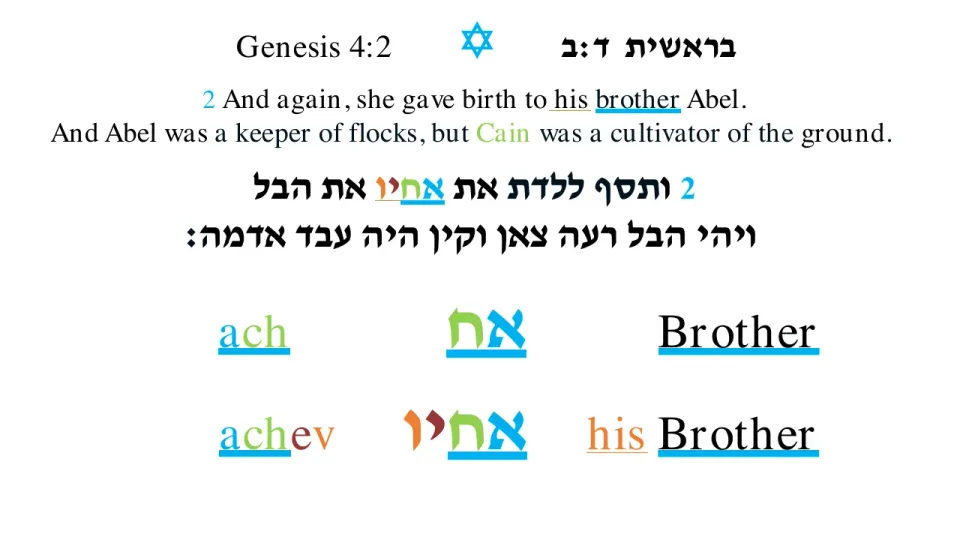 Genesis 4:2 — ach (brother) and achev (אחיו) = his brotherAbel · Slide 36
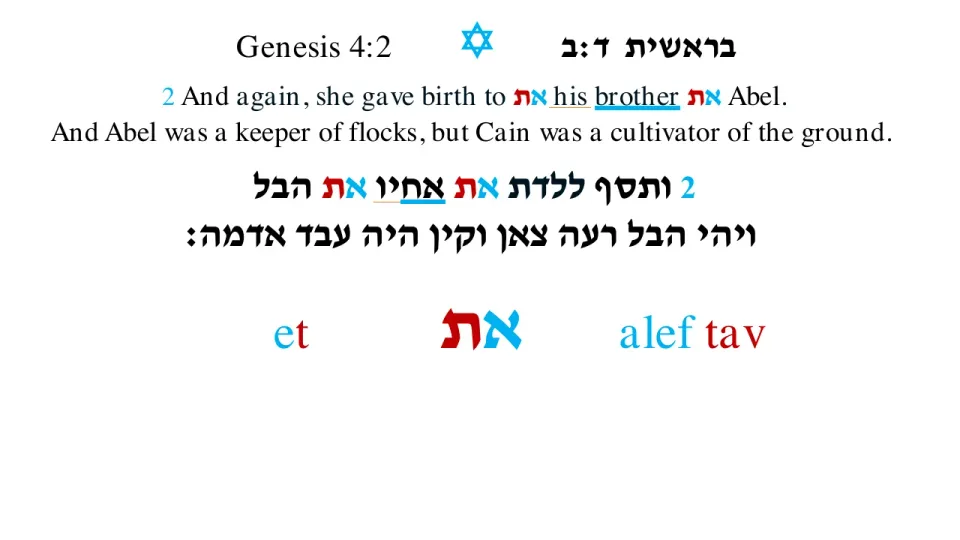 Genesis 4:2 — et (את), alef tav, before “his brother” and before AbelAbel · Slide 37
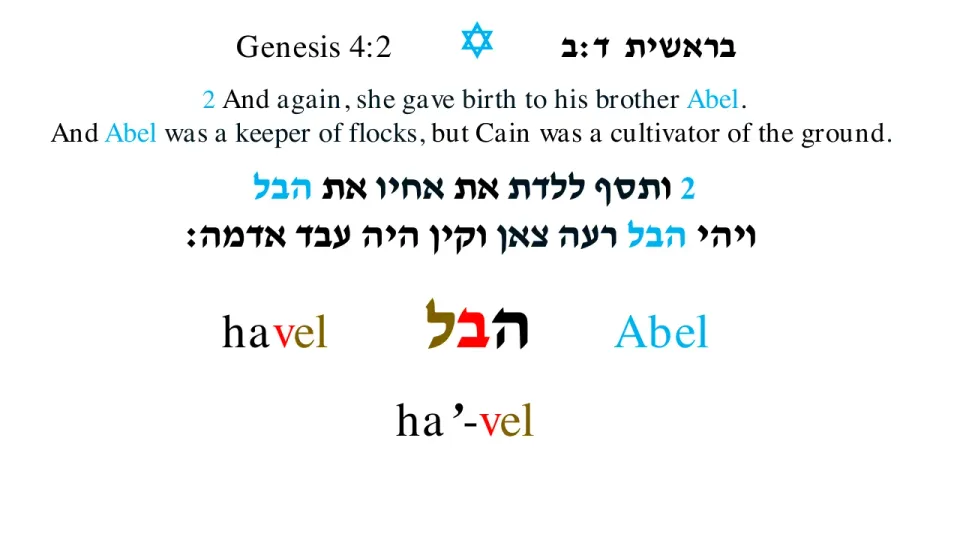 Genesis 4:2 — havel (הבל) = AbelAbel · Slide 38
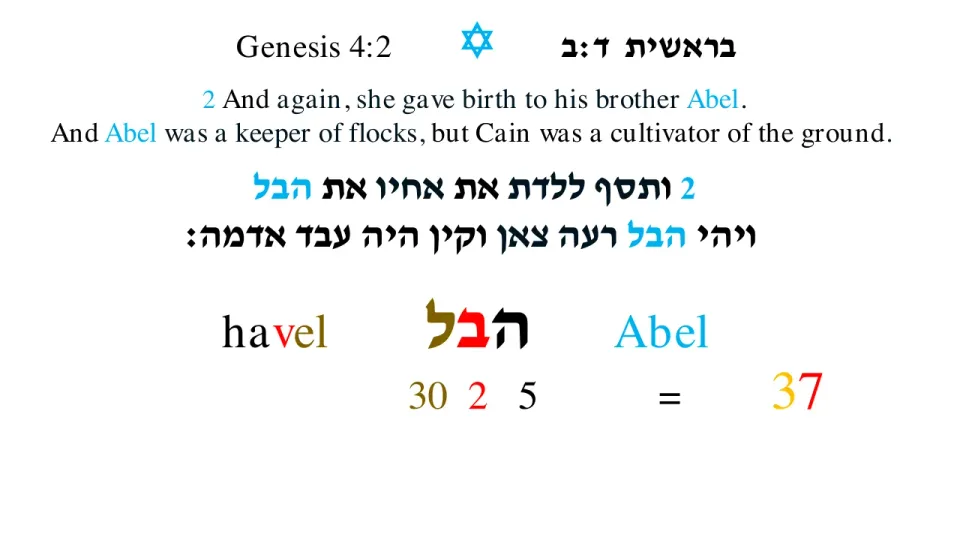 Genesis 4:2 — Abel (הבל): 30 + 2 + 5 = 37Abel · Slide 39
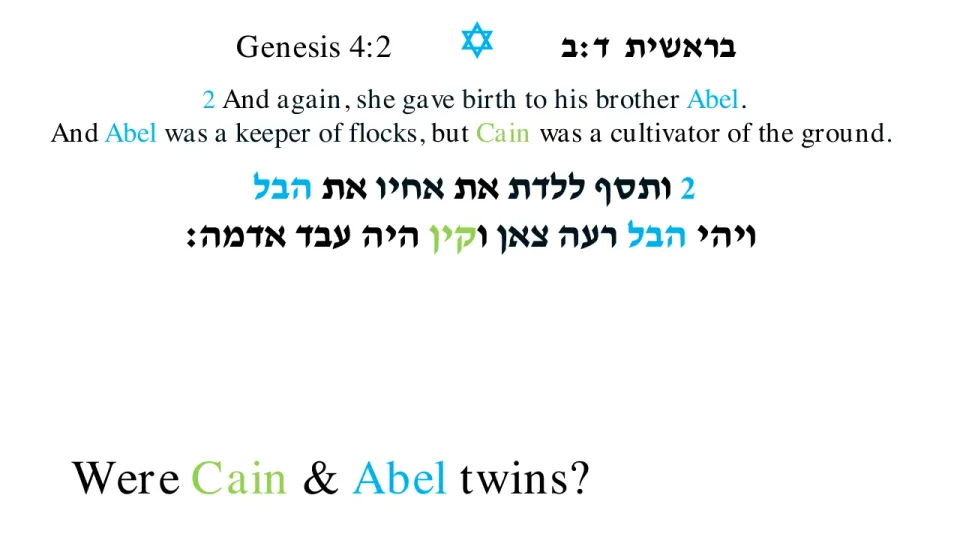 Were Cain and Abel twins? (Genesis 4:2)Abel · Slide 40Genesis 4:1-2: 1 conception, 2 births (Cain and Abel)Abel · Slide 43Genesis 4:1-2 — Were Cain and Abel twins? Most likelyAbel · Slide 44
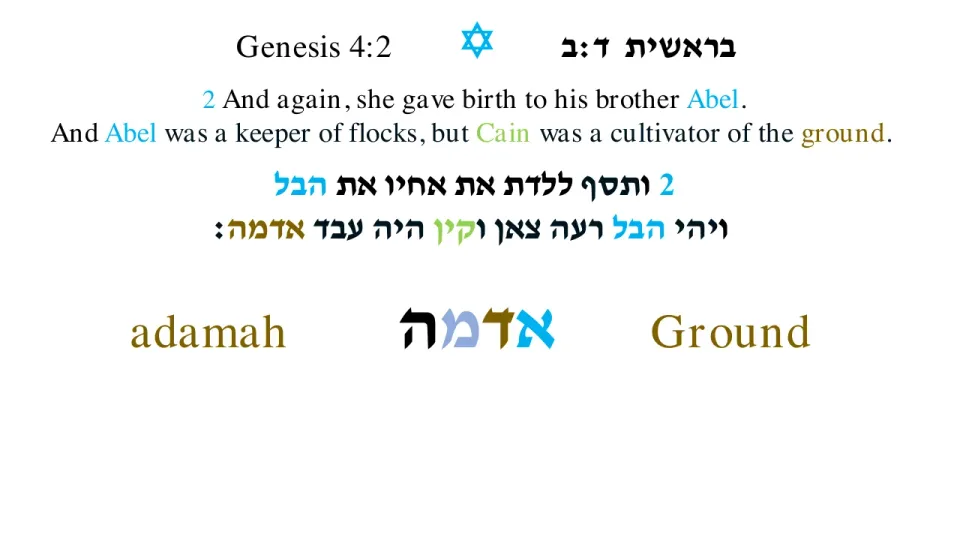 Genesis 4:2 — Abel the shepherd, Cain the ground-worker (adamah)Abel · Slide 45
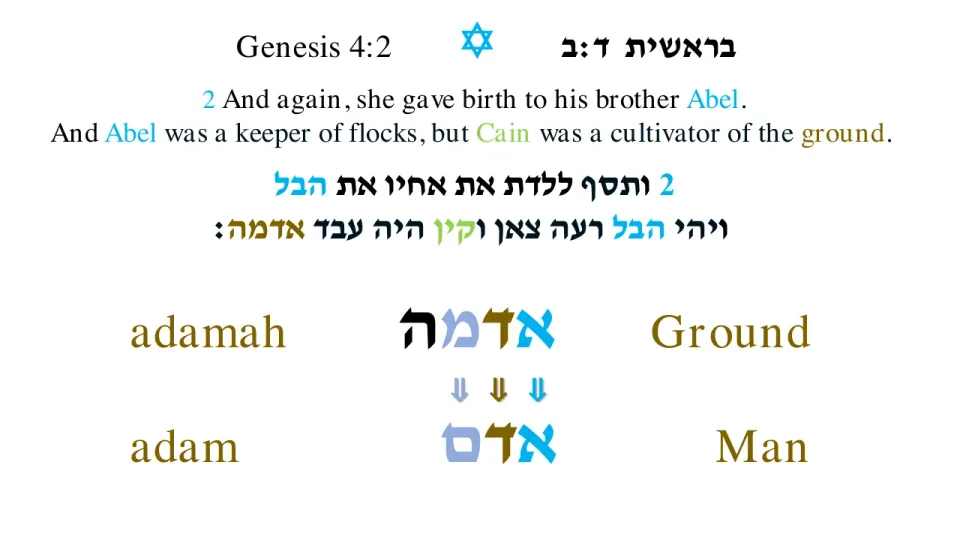 Genesis 4:2 — adamah (ground) is adam (man) plus הAbel · Slide 46Genesis 4:1-2 — Eve, Cain and Abel, with et (את) before the LORDAbel · Slide 133Genesis 4:1-2 compared with Luke 3:38 — Adam, the son of GodAbel · Slide 134Genesis 4:1-2 compared with Luke 3:38 and Mark 1:1 — sons of GodAbel · Slide 135Abel and Yeshua were both second sonsAbel · Slide 136
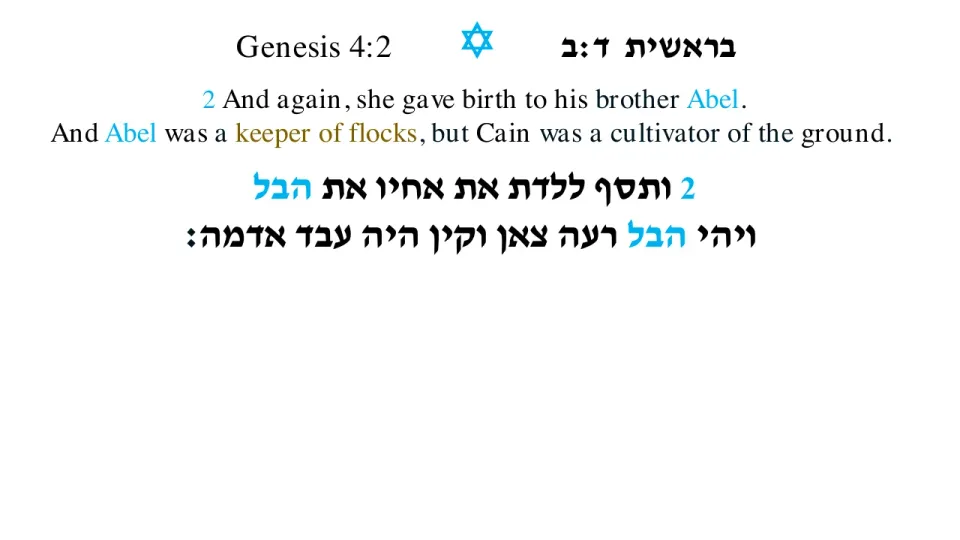 Genesis 4:2 — Abel the keeper of flocks (הבל)Abel · Slide 137
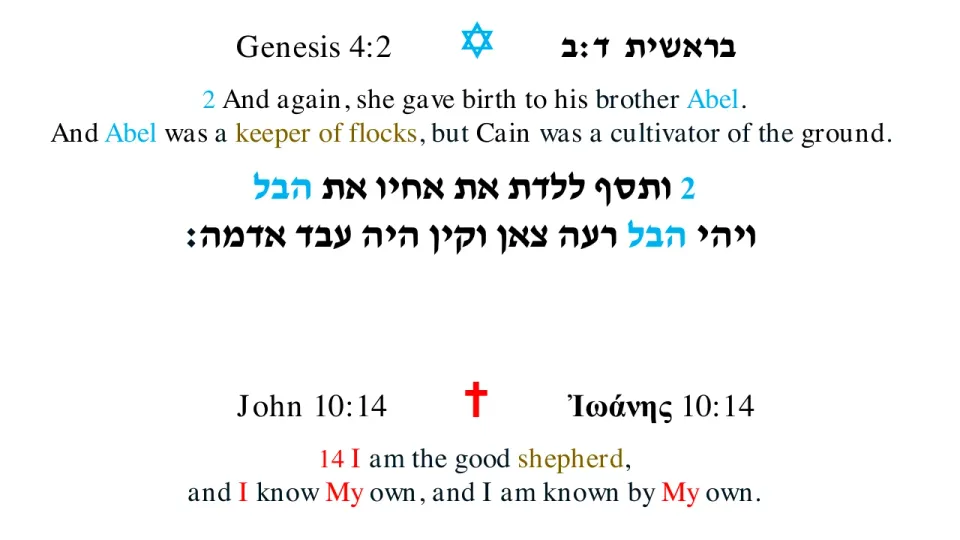 Genesis 4:2 and John 10:14 — Abel the shepherd and the good shepherdAbel · Slide 138
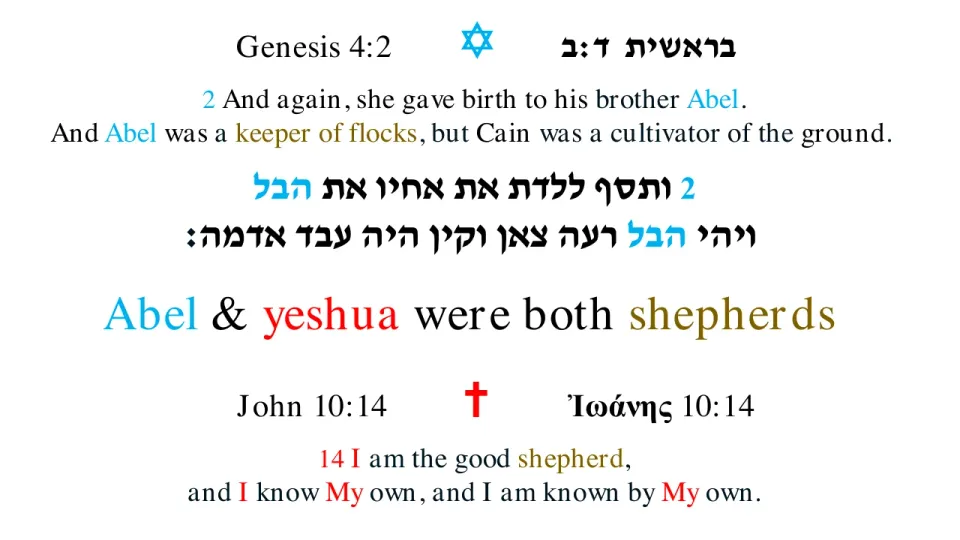 Abel and Yeshua were both shepherds (Genesis 4:2; John 10:14)Abel · Slide 139
Genesis 4:3 11 slides
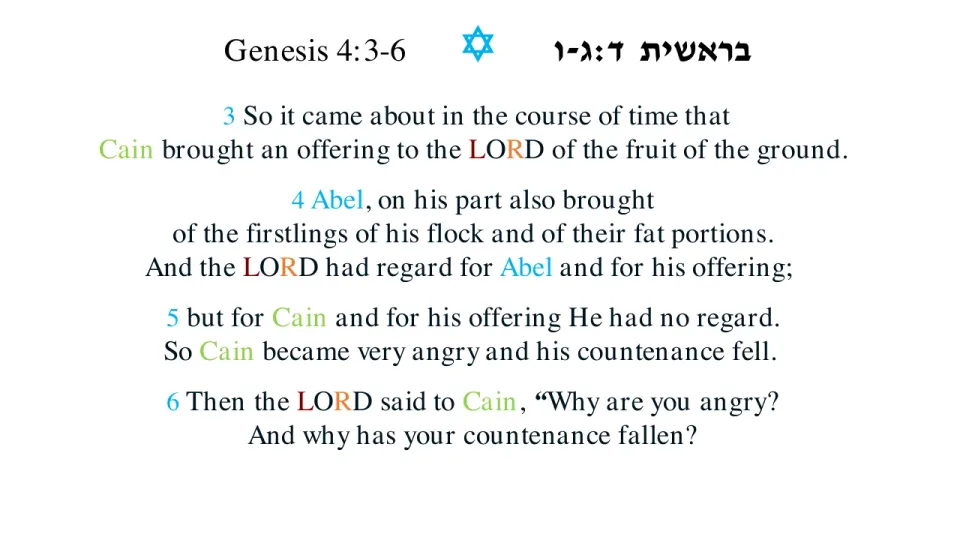 Genesis 4:3-6 — So it came about in the course of time thatTet (ט) · Slide 67
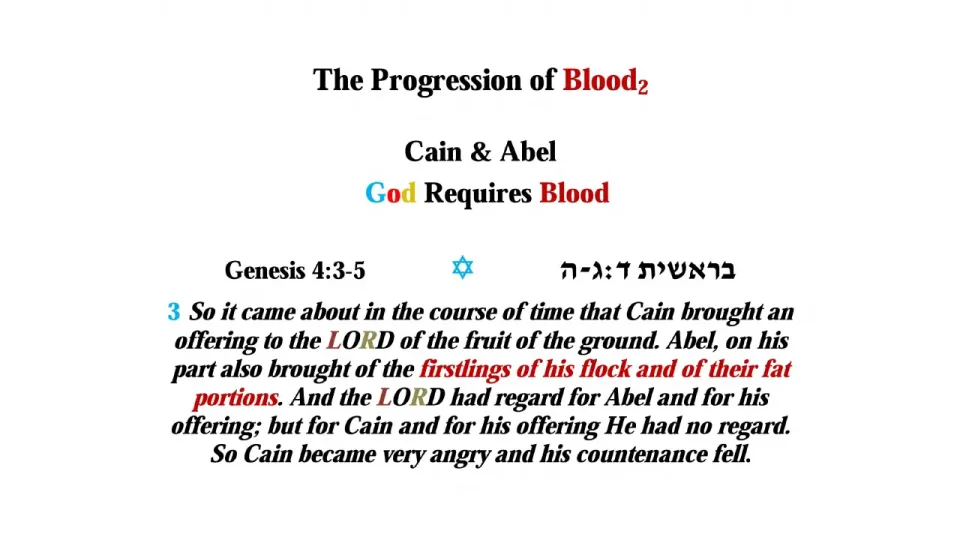 The Progression of Blood (2): Cain & Abel — God requires bloodFall of Man: Genesis 3 · Slide 47
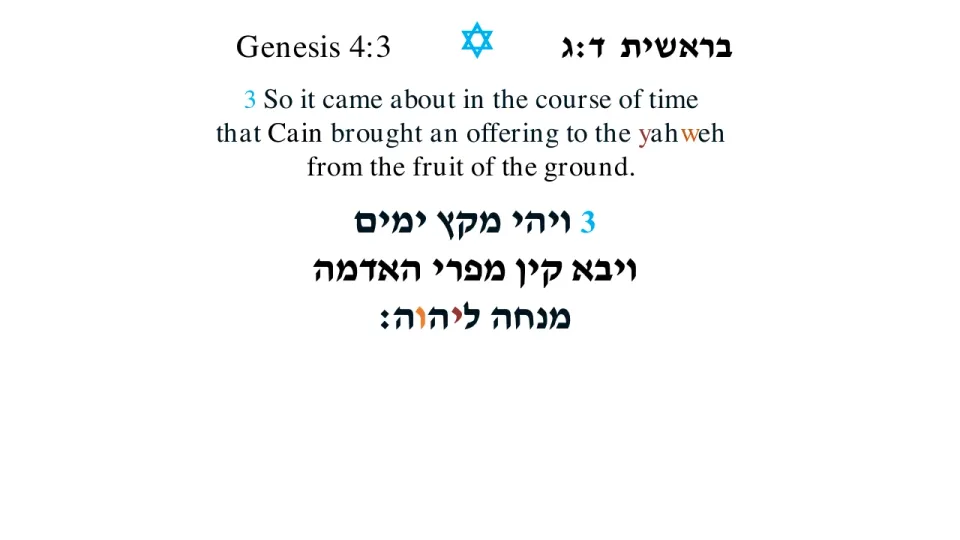 Genesis 4:3 — Cain brought an offering to the LORD (yahweh)Abel · Slide 47
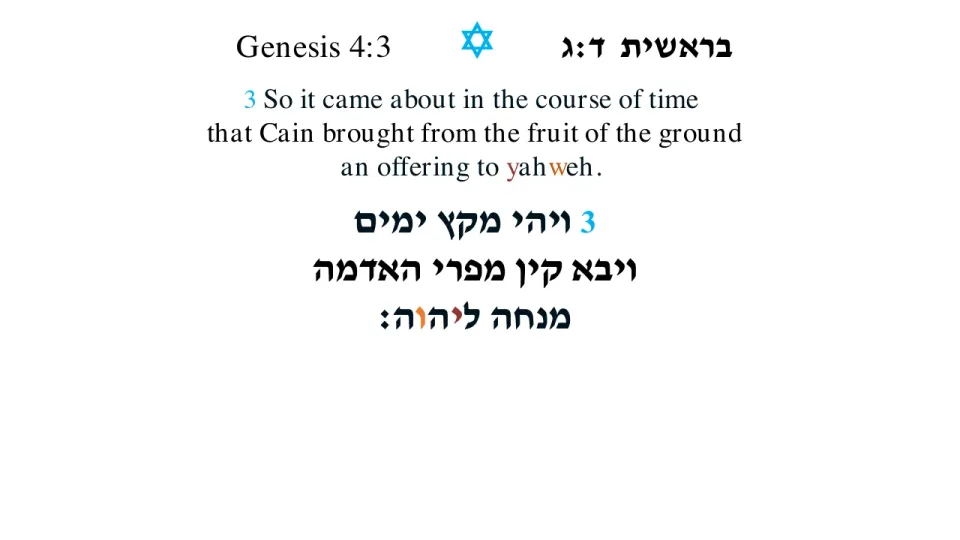 Genesis 4:3 — Cain brought from the fruit of the ground an offeringAbel · Slide 48
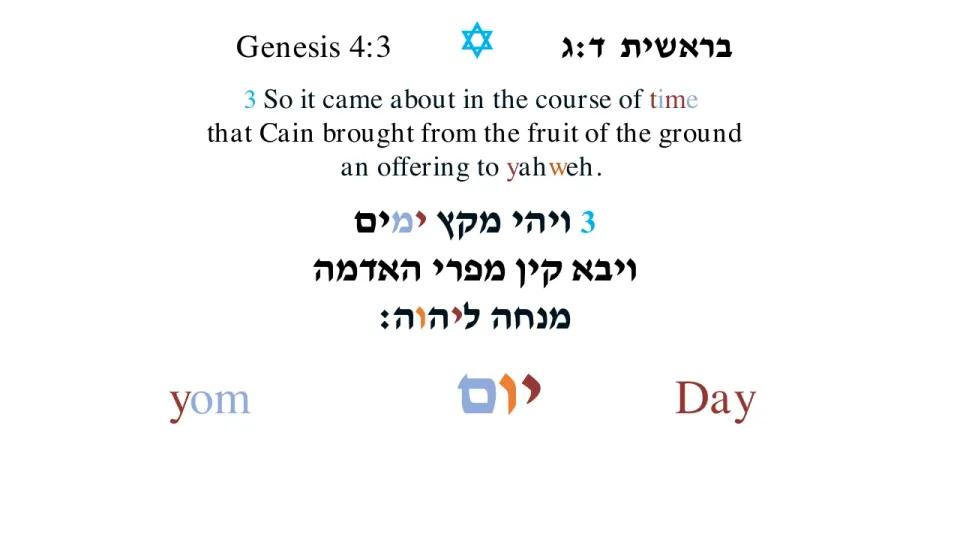 Genesis 4:3 — yom (יום), the Hebrew word for dayAbel · Slide 49
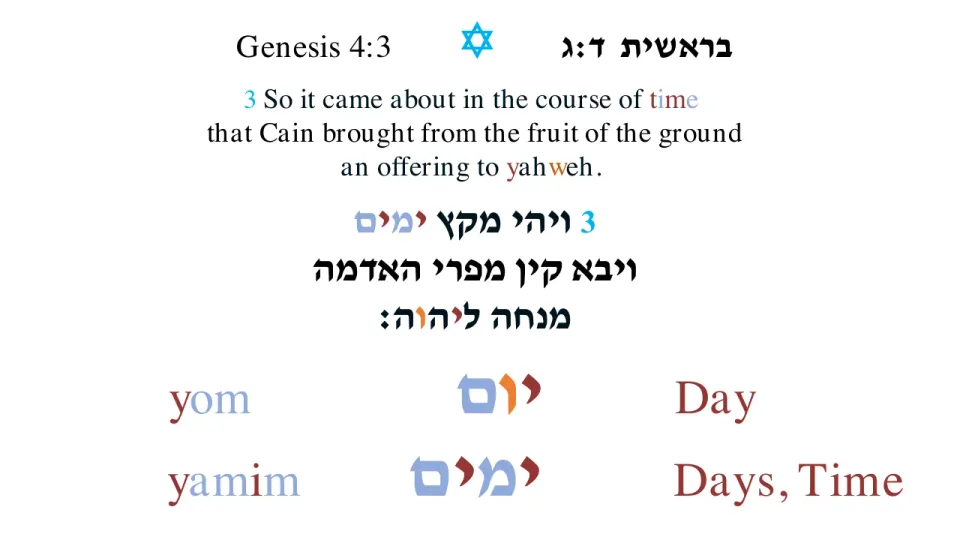 Genesis 4:3 — yom (day) and yamim (days, time)Abel · Slide 50
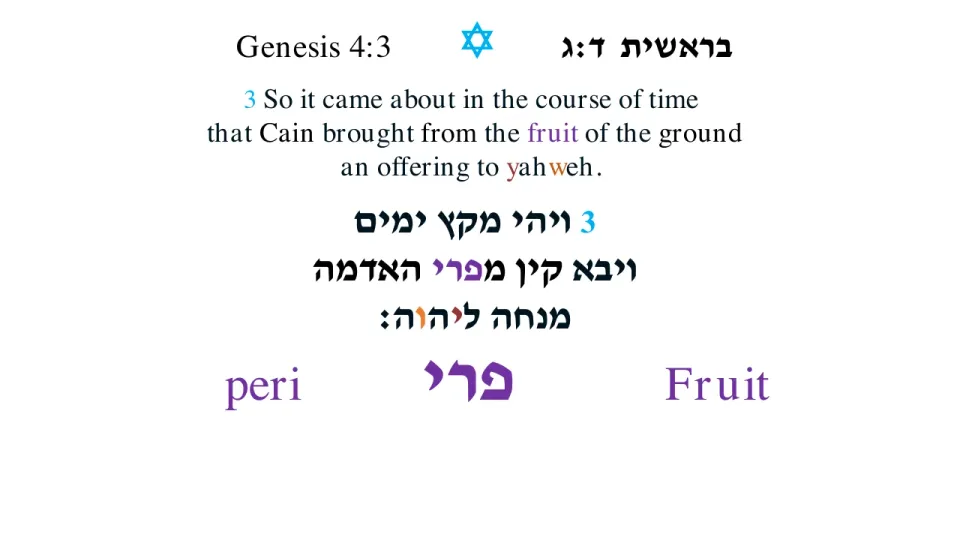 Genesis 4:3 — peri (פרי), fruitAbel · Slide 51
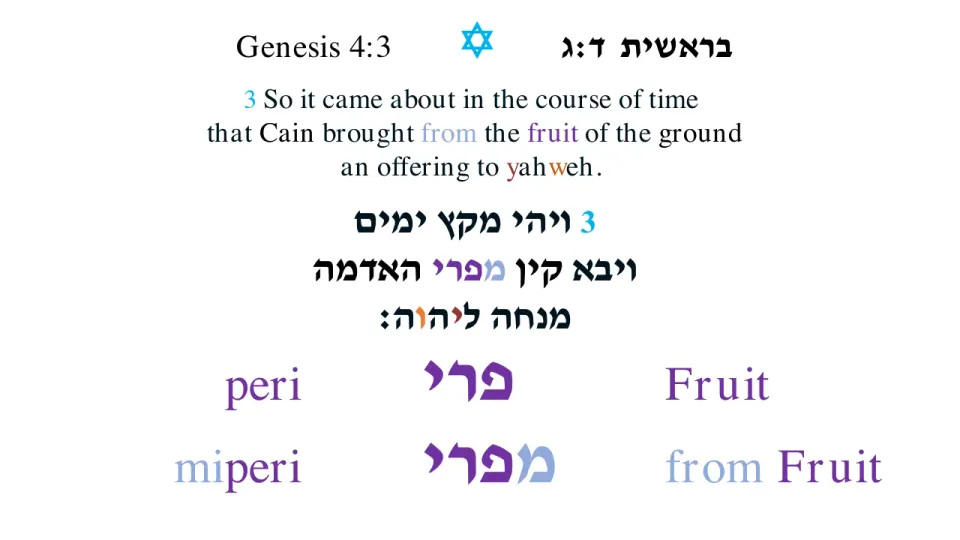 Genesis 4:3 — peri (fruit) and miperi (from fruit)Abel · Slide 52
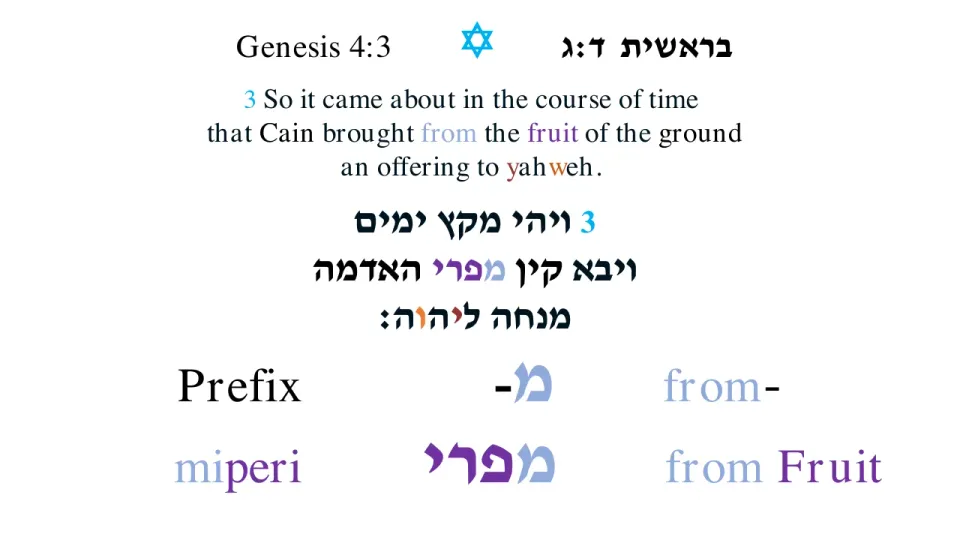 Genesis 4:3 — the Hebrew prefix mem (מ-) meaning “from”Abel · Slide 53
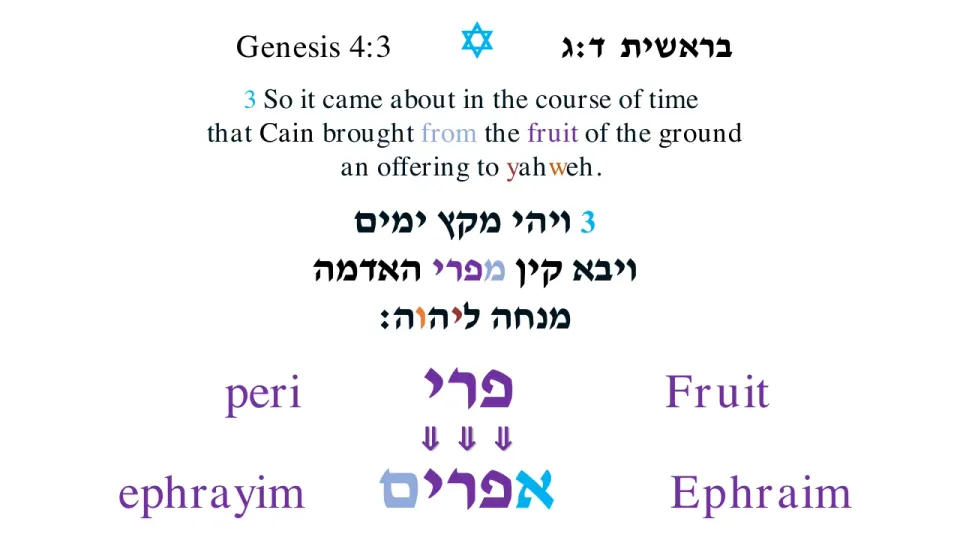 Peri (fruit) inside the name Ephraim (אפרים)Abel · Slide 54
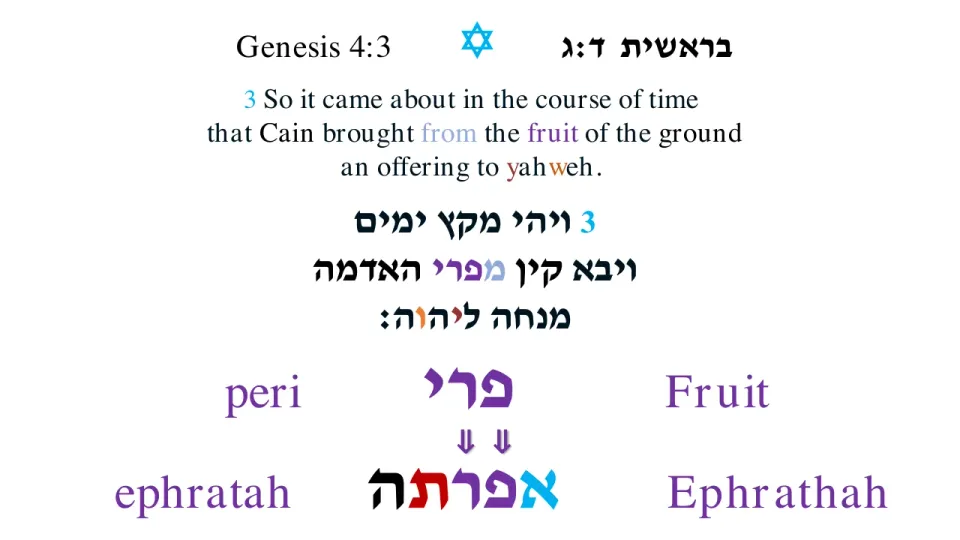 Peri (fruit) inside the name Ephrathah (אפרתה)Abel · Slide 55
Genesis 4:4 16 slides
Genesis 4:3-6 — So it came about in the course of time thatTet (ט) · Slide 67The Progression of Blood (2): Cain & Abel — God requires bloodFall of Man: Genesis 3 · Slide 47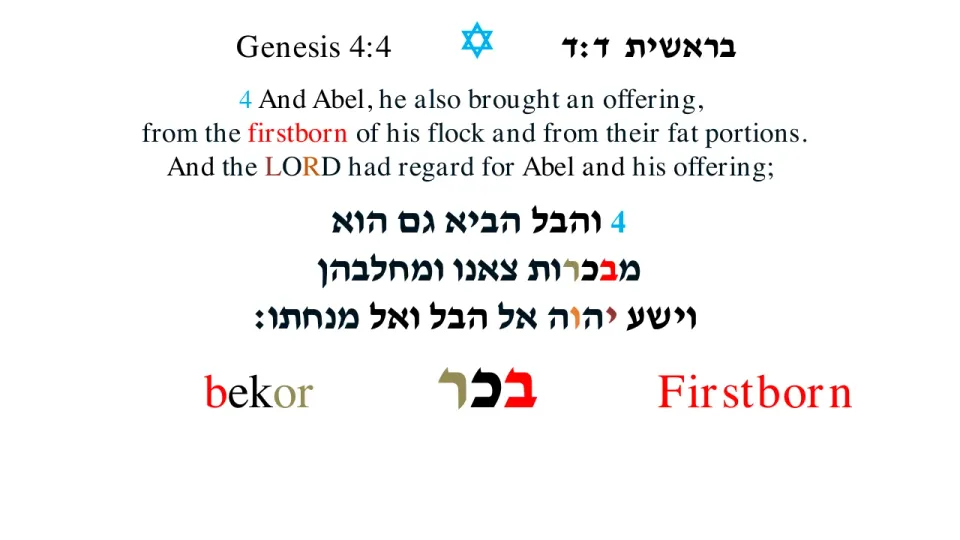 Genesis 4:4 — Abel brought the firstborn (bekor, בכר) of his flockAbel · Slide 56
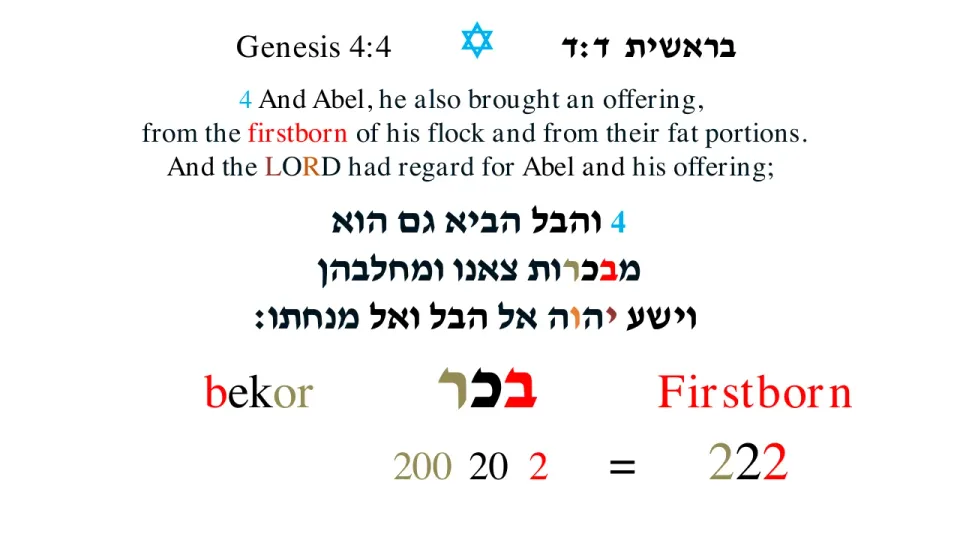 Genesis 4:4 — bekor (בכר, firstborn) has gematria 222Abel · Slide 57
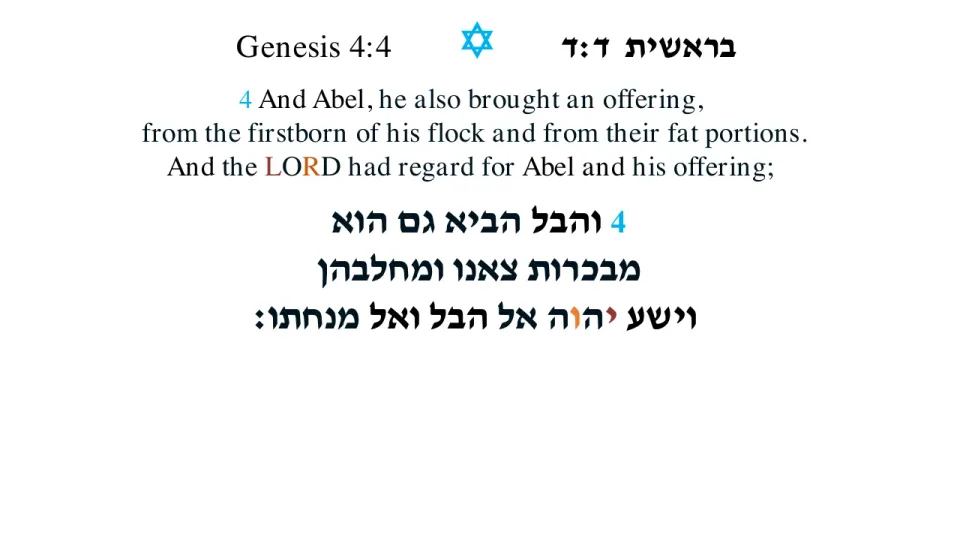 Genesis 4:4 — Abel brings the firstborn of his flock; the LORD has regard for AbelAbel · Slide 59
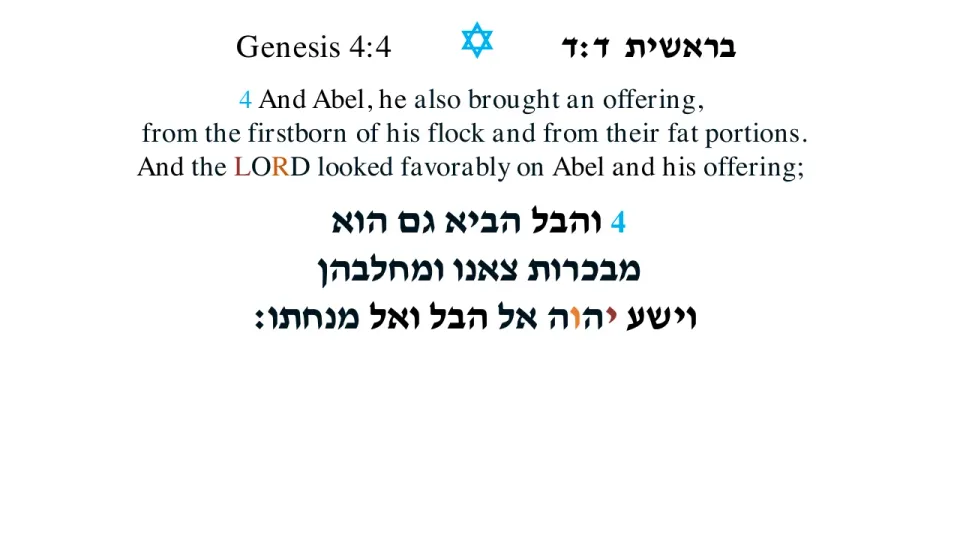 Genesis 4:4 — Abel brings the firstborn of his flock; the LORD has regard for AbelAbel · Slide 60
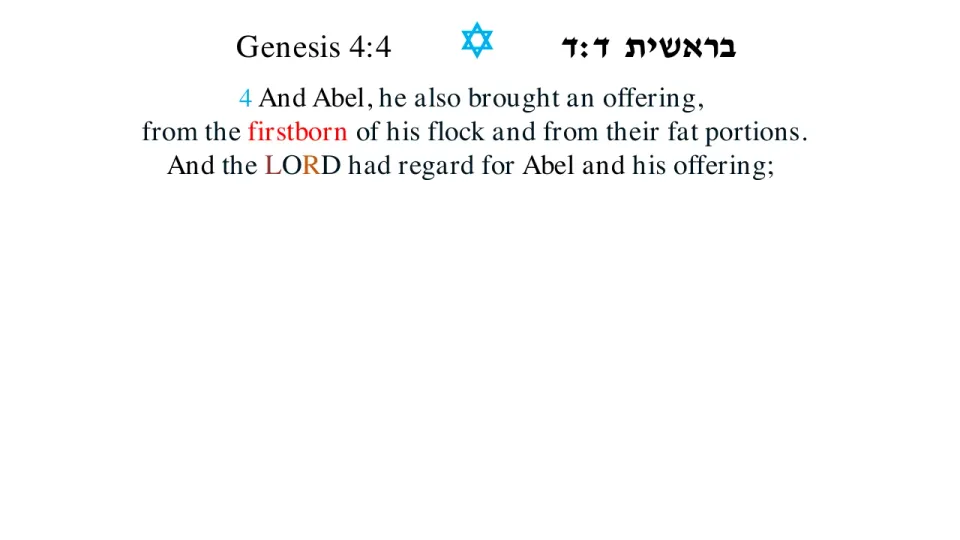 Genesis 4:4 — Abel brings the firstborn of his flockAbel · Slide 140
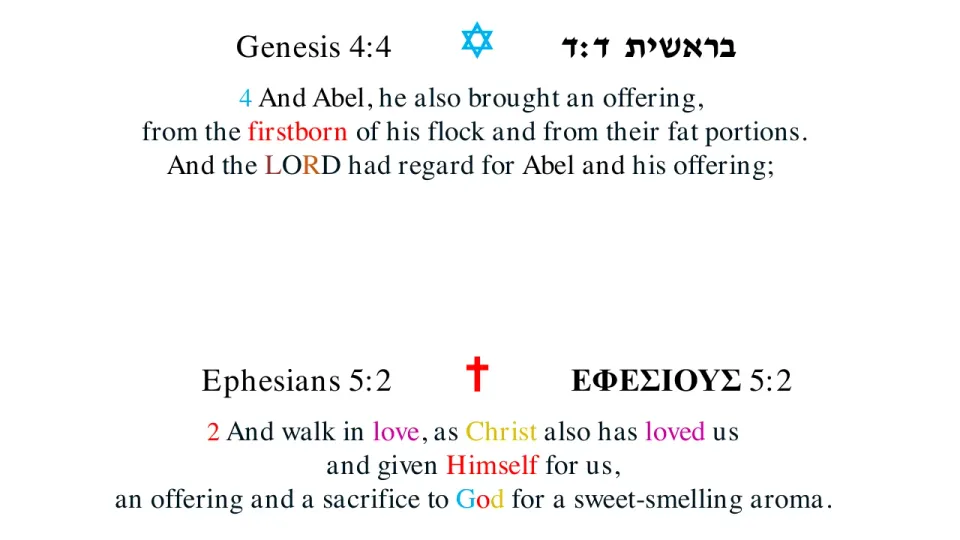 Abel's offering and Christ's offering (Genesis 4:4; Ephesians 5:2)Abel · Slide 141
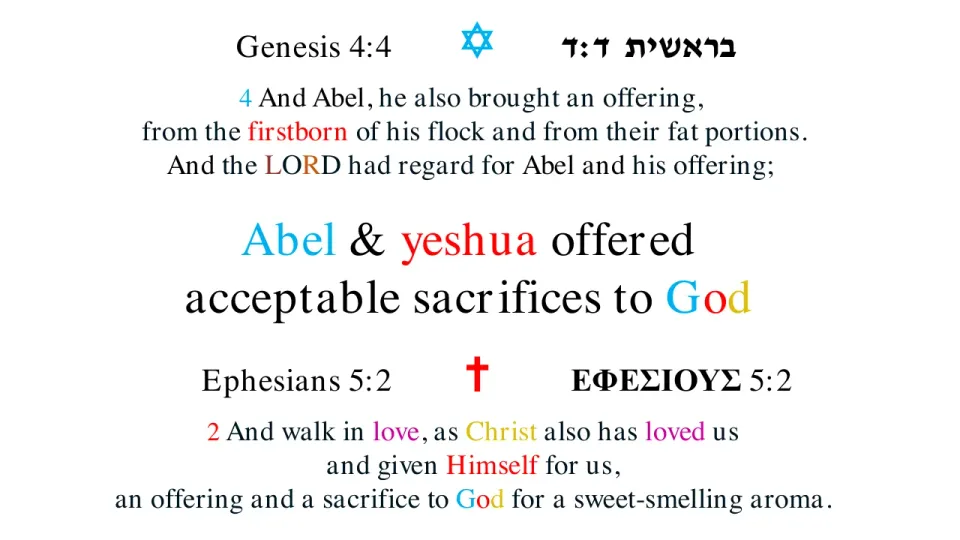 Abel and Yeshua offered acceptable sacrifices to GodAbel · Slide 142
 Genesis 4:4 — Abel brings the firstborn of his flockAbel · Slide 143
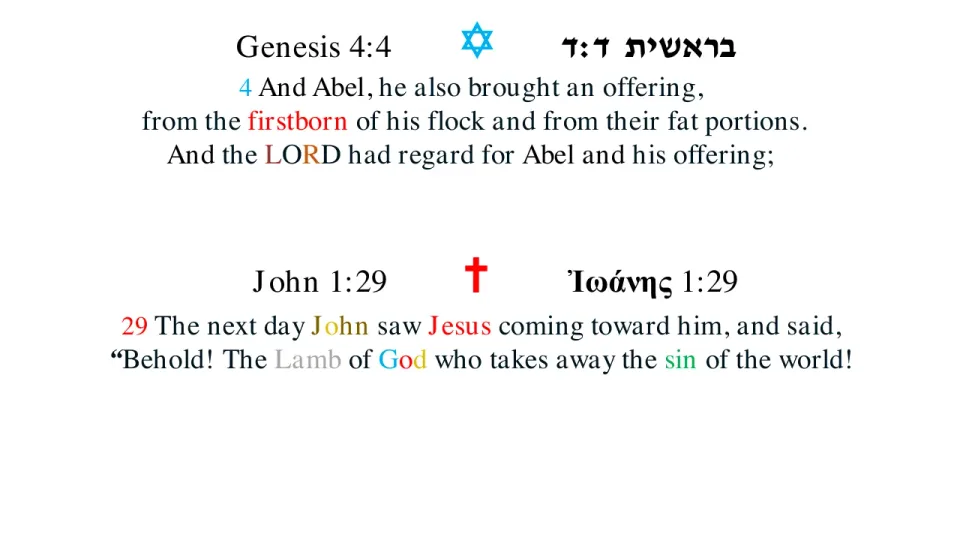 Abel's firstborn offering and the Lamb of God (Genesis 4:4; John 1:29)Abel · Slide 144
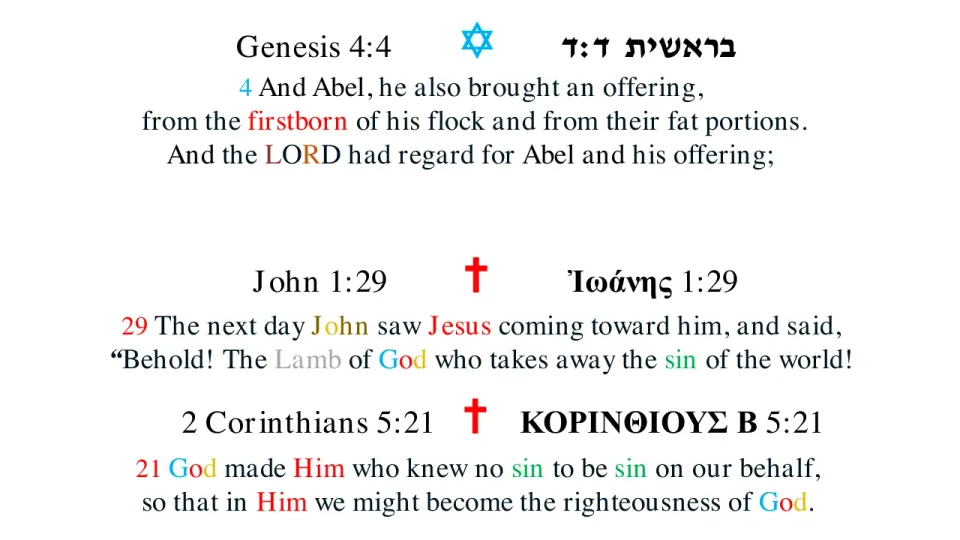 Abel's offering, the Lamb of God, and the sinless one made sinAbel · Slide 145
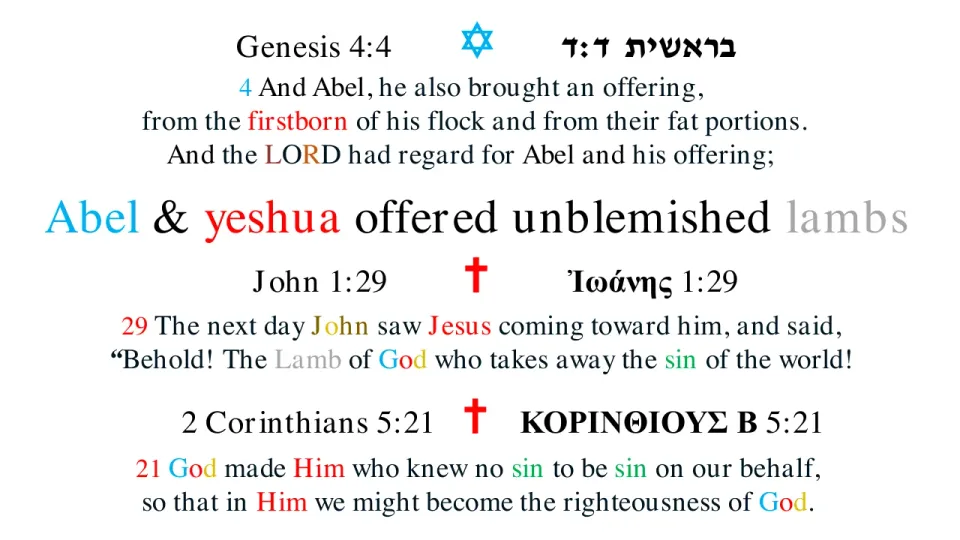 Abel and Yeshua offered unblemished lambsAbel · Slide 146
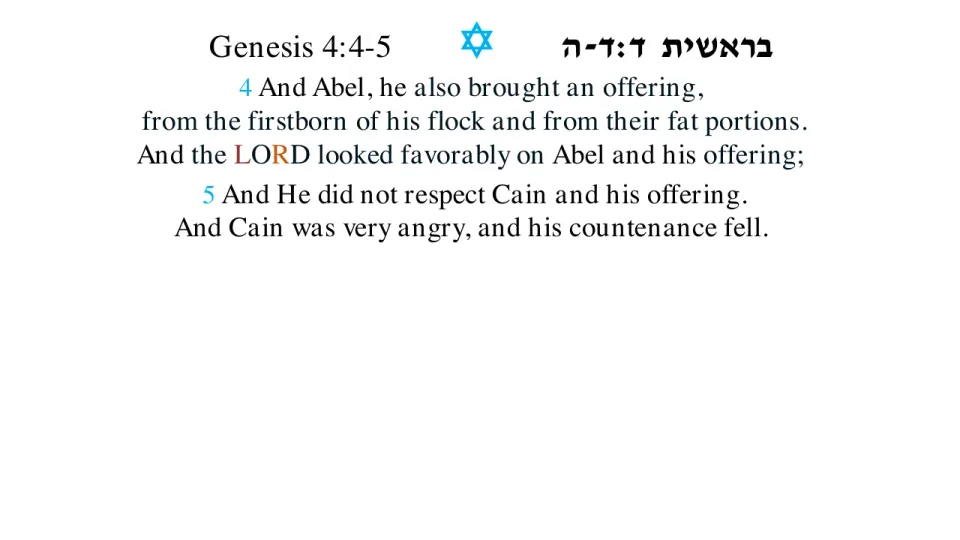 Genesis 4:4-5 — the LORD favours Abel's offering, not Cain'sAbel · Slide 147
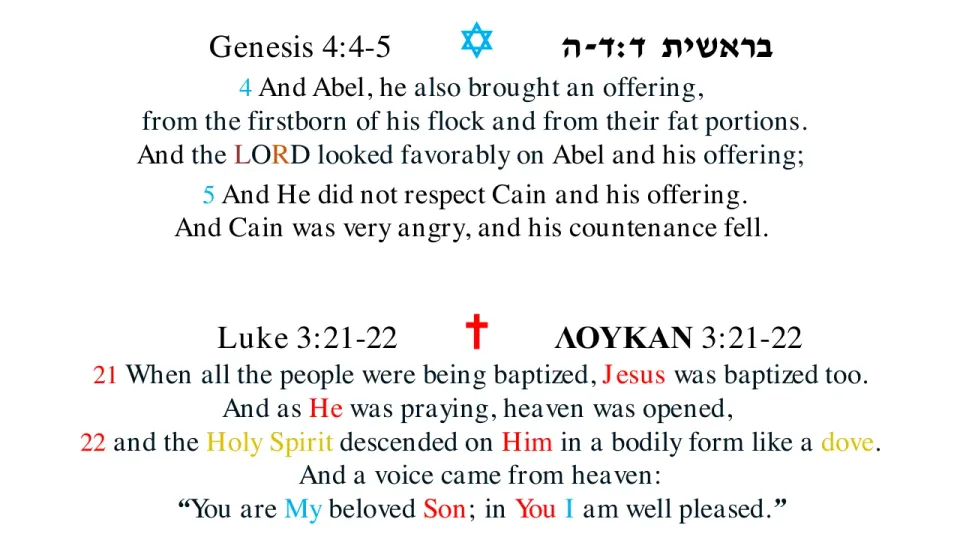 God accepts Abel's offering and is well pleased with Jesus at His baptismAbel · Slide 148
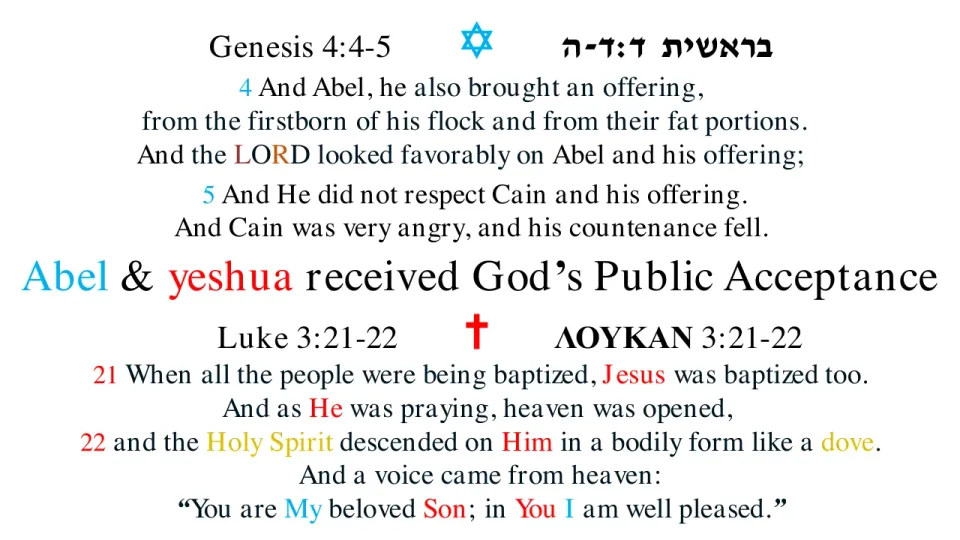 Abel and Yeshua received God's public acceptanceAbel · Slide 149
Genesis 4:5 11 slides
Genesis 4:3-6 — So it came about in the course of time thatTet (ט) · Slide 67The Progression of Blood (2): Cain & Abel — God requires bloodFall of Man: Genesis 3 · Slide 47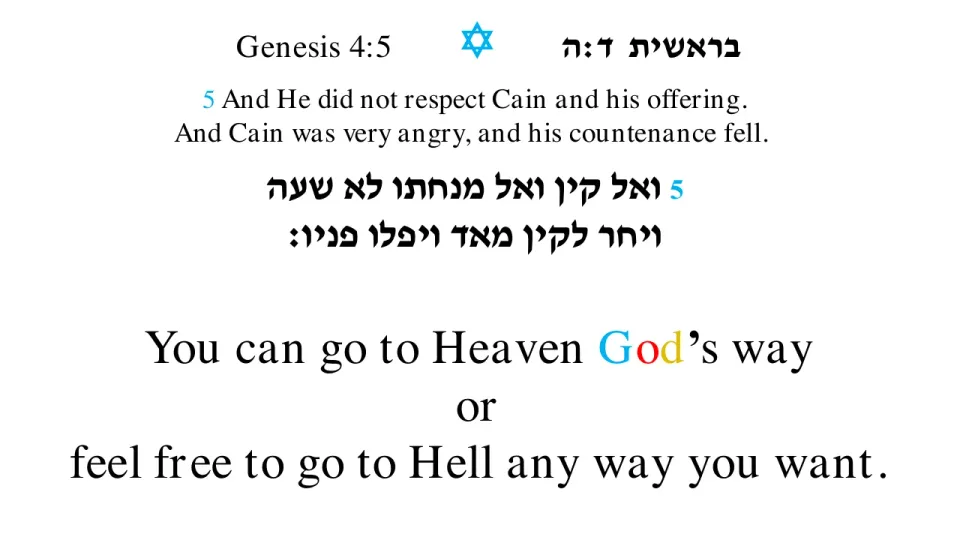 Genesis 4:5 — God did not respect Cain's offering; Heaven God's way or Hell your wayAbel · Slide 61
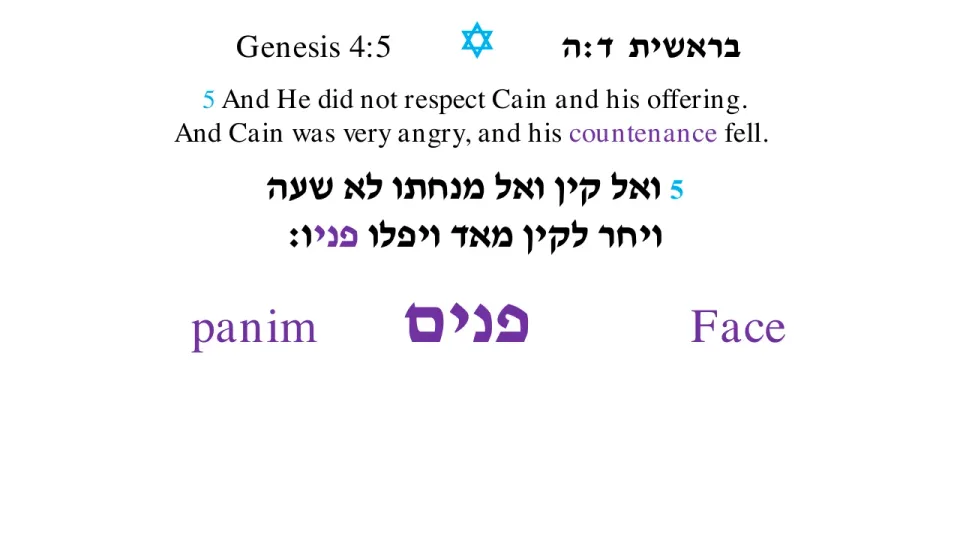 Genesis 4:5 — countenance = panim (face)Abel · Slide 62
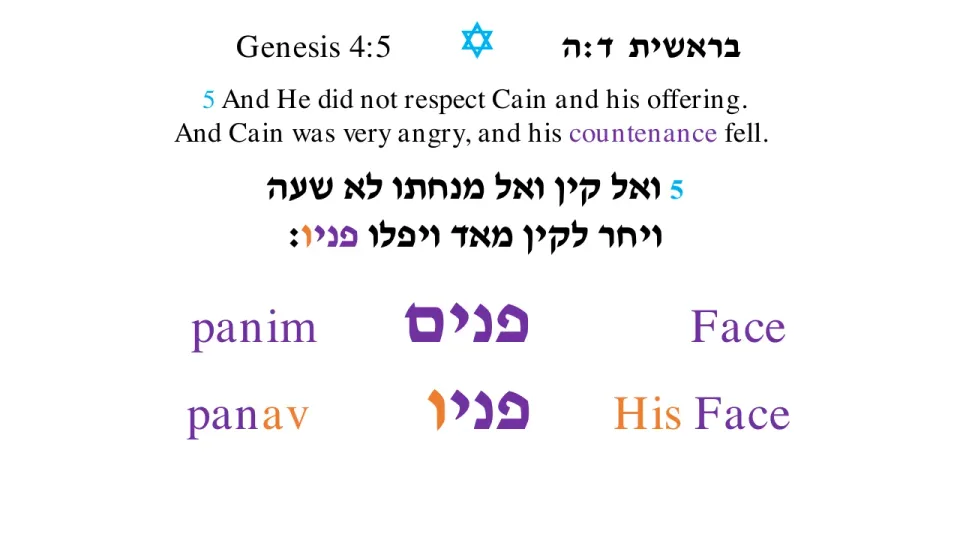 Genesis 4:5 — panim (face) becomes panav (his face)Abel · Slide 63Genesis 4:4-5 — the LORD favours Abel's offering, not Cain'sAbel · Slide 147God accepts Abel's offering and is well pleased with Jesus at His baptismAbel · Slide 148Abel and Yeshua received God's public acceptanceAbel · Slide 149
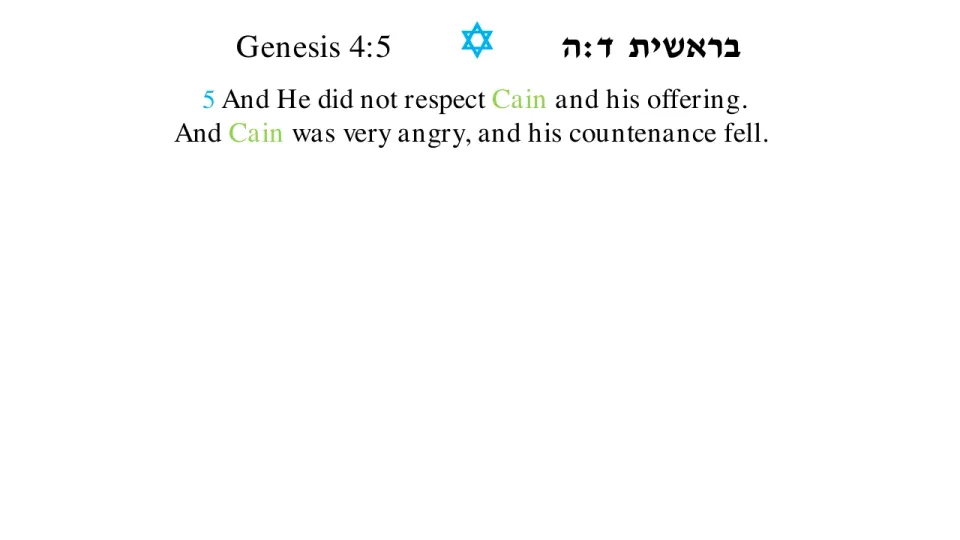 Genesis 4:5 — God does not respect Cain's offering; Cain is angryAbel · Slide 150
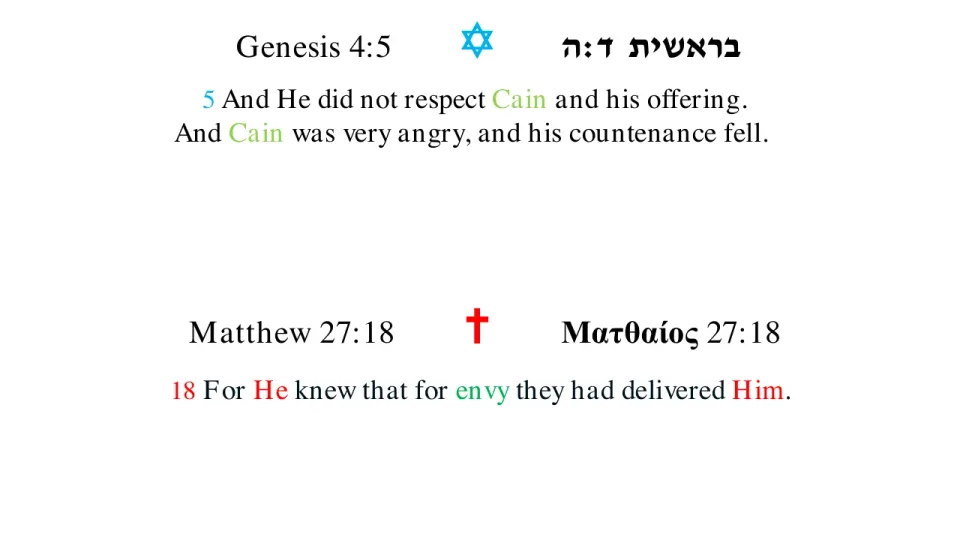 Cain's anger and the envy that delivered Jesus (Genesis 4:5; Matthew 27:18)Abel · Slide 151
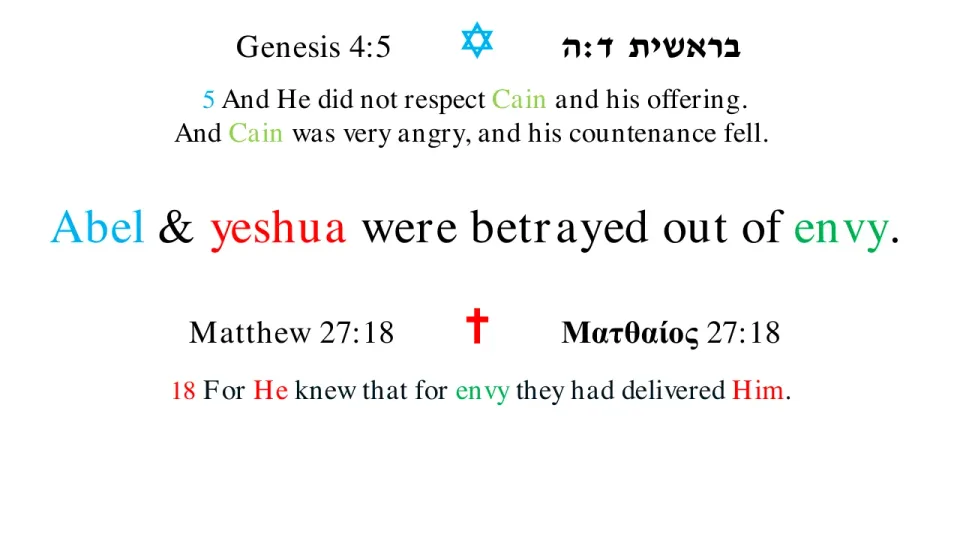 Abel and Yeshua were betrayed out of envyAbel · Slide 152
Genesis 4:6 8 slides
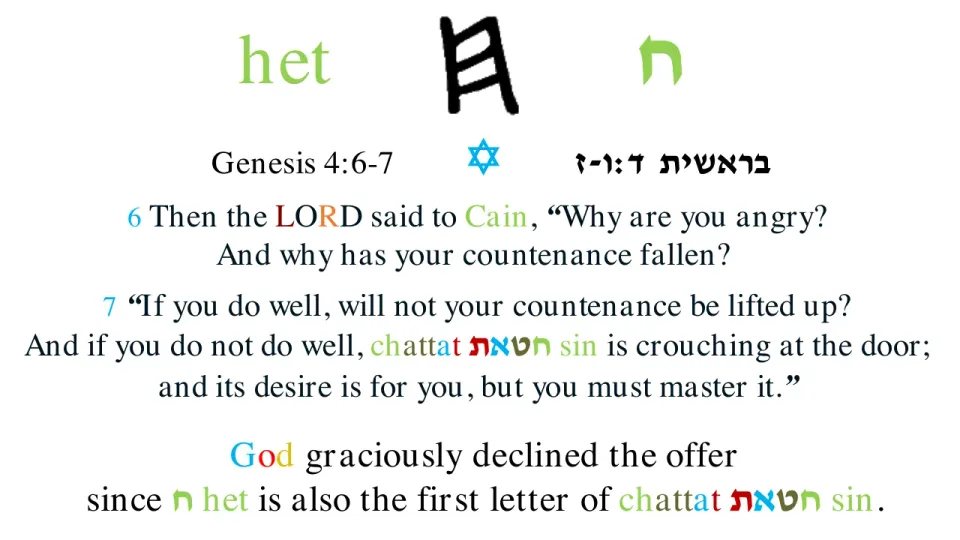 het — Genesis 4:6-7Bet (ב) · Slide 200Genesis 4:3-6 — So it came about in the course of time thatTet (ט) · Slide 67
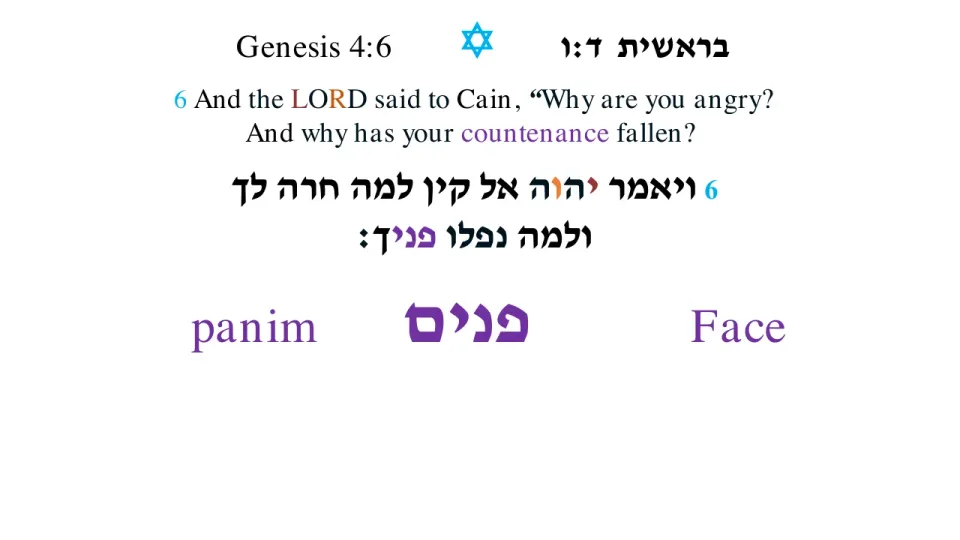 Genesis 4:6 — the LORD asks Cain why his face has fallen (panim)Abel · Slide 64
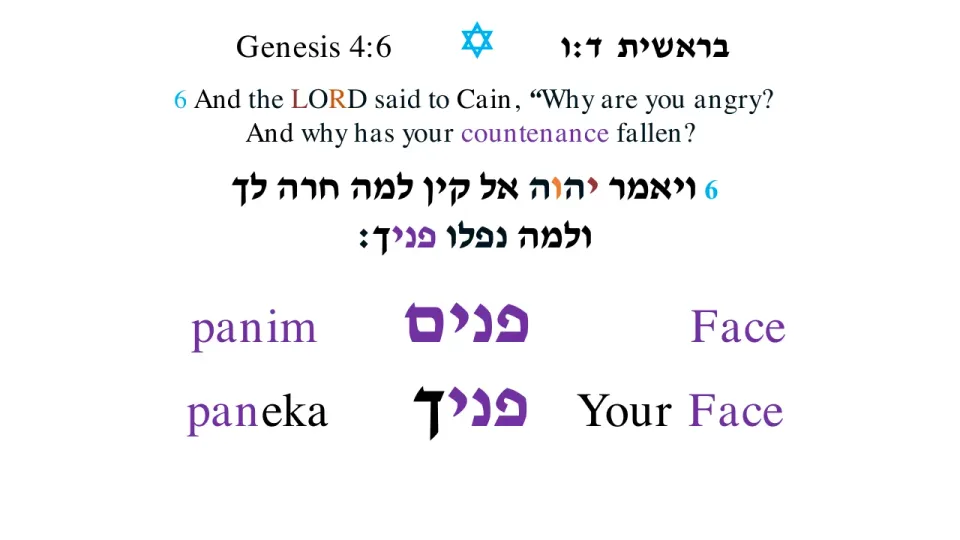 Genesis 4:6 — panim (face) becomes paneka (your face)Abel · Slide 65
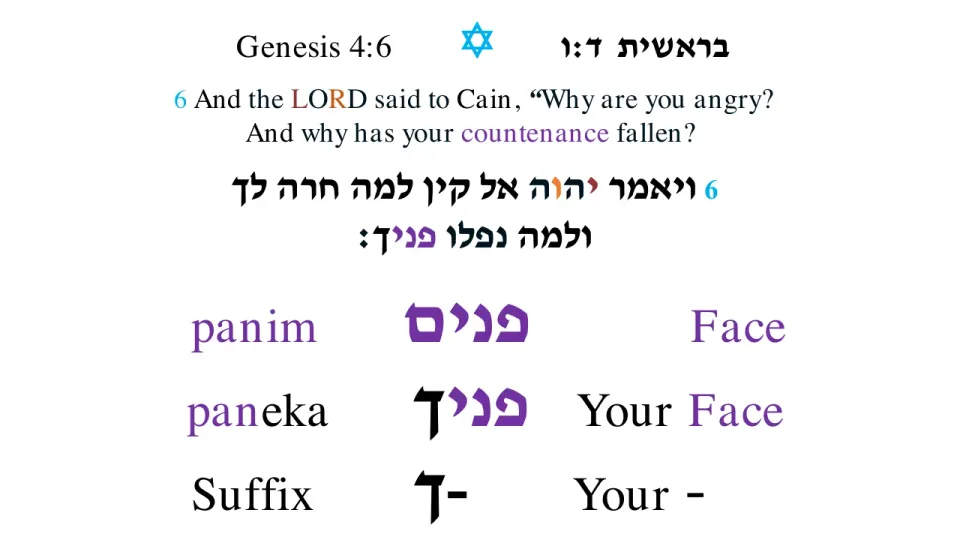 Genesis 4:6 — the suffix ך (-ka) means “your”Abel · Slide 66
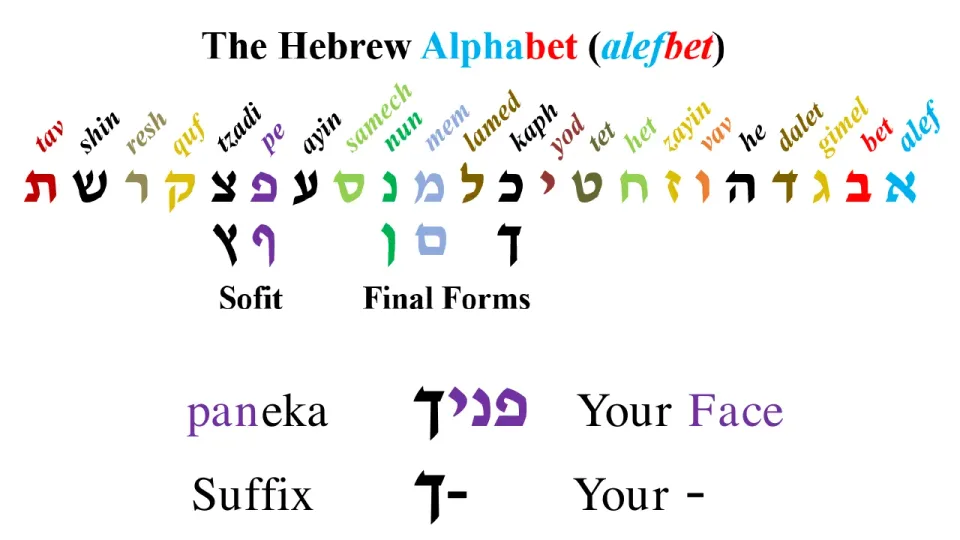 The Hebrew alphabet (alefbet) with final forms; paneka and the suffix ךAbel · Slide 67
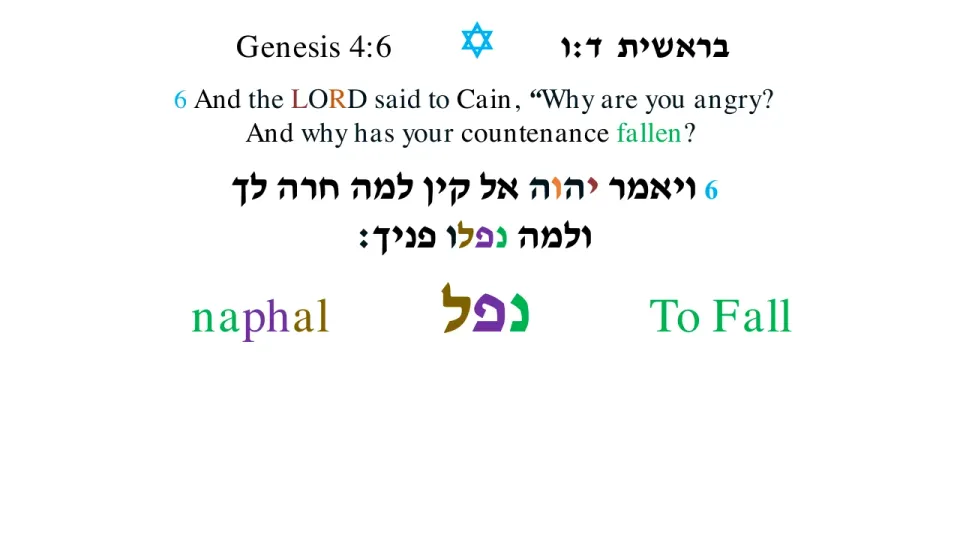 Genesis 4:6 — naphal (to fall)Abel · Slide 68
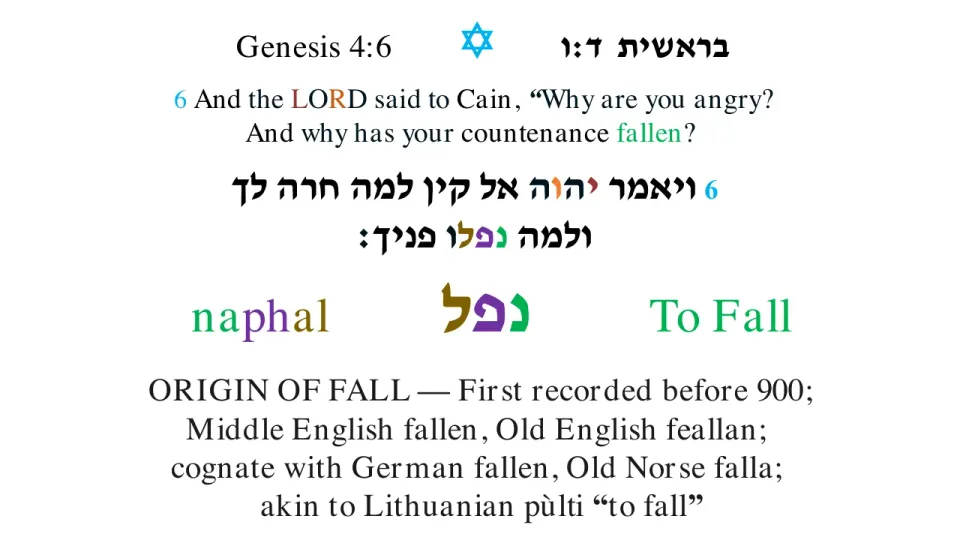 Genesis 4:6 — naphal (to fall) and the English origin of “fall”Abel · Slide 69
Genesis 4:7 15 slides
het — Genesis 4:6-7Bet (ב) · Slide 200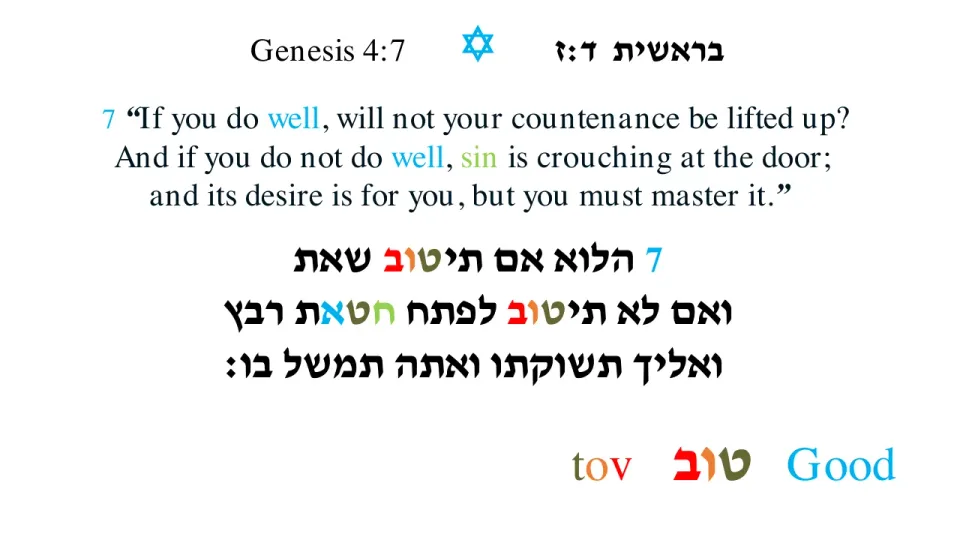 Genesis 4:7 — “If you do well, will not your countenance be lifted up?Tet (ט) · Slide 68
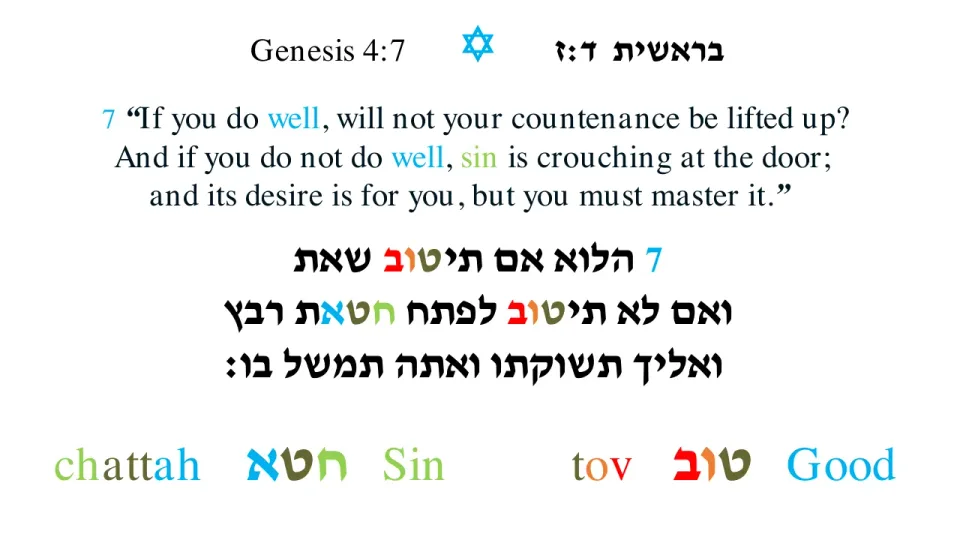 Genesis 4:7 — “If you do well, will not your countenance be lifted up?Tet (ט) · Slide 69
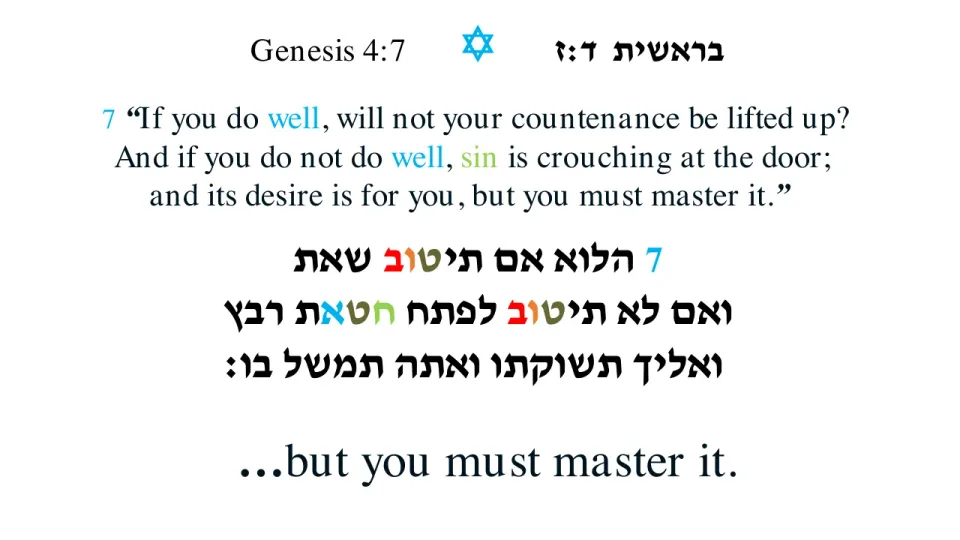 Genesis 4:7 — “If you do well, will not your countenance be lifted up?Tet (ט) · Slide 84
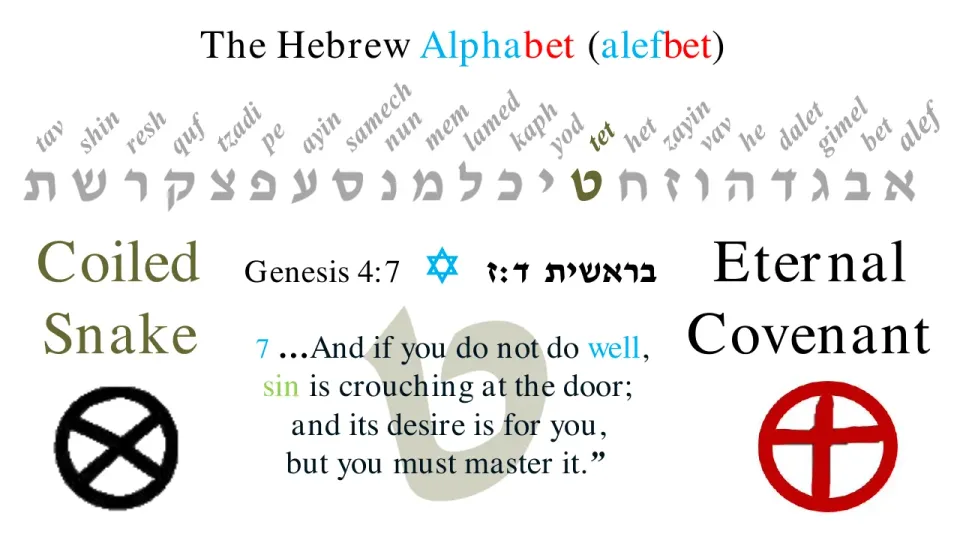 The Hebrew Alphabet (alefbet) — Coiled Genesis 4:7 EternalTet (ט) · Slide 151
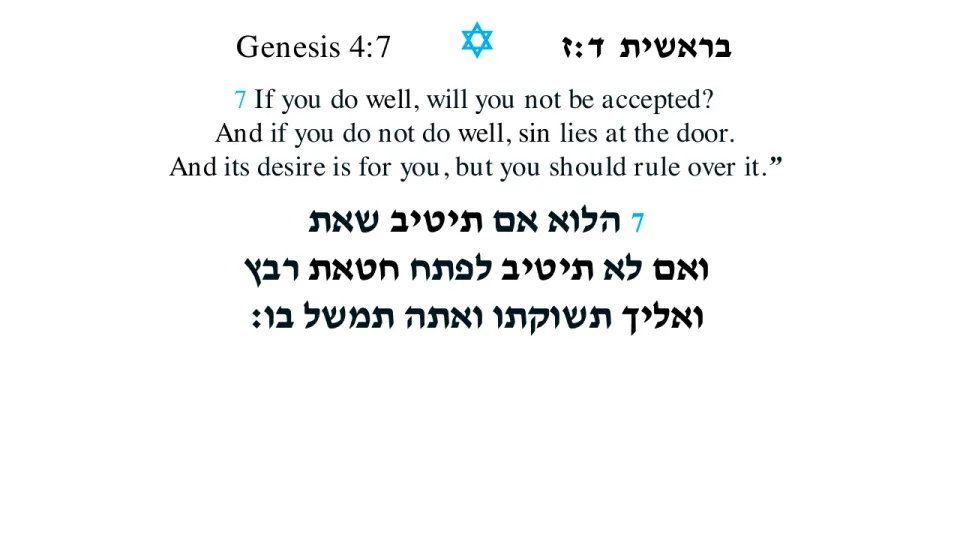 Genesis 4:7 — if you do well, will you not be accepted? Sin lies at the doorAbel · Slide 70
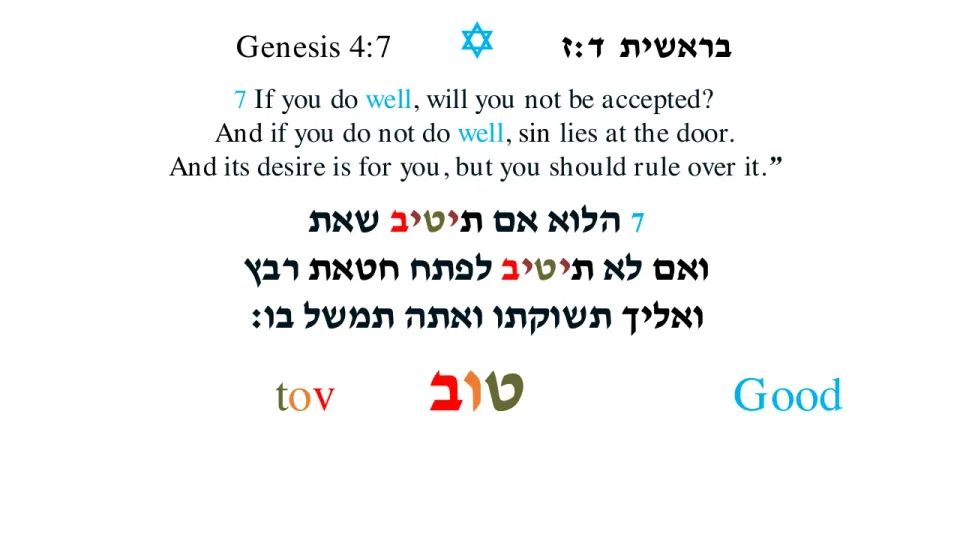 Genesis 4:7 — tov (good): “do well” comes from the root of goodAbel · Slide 71
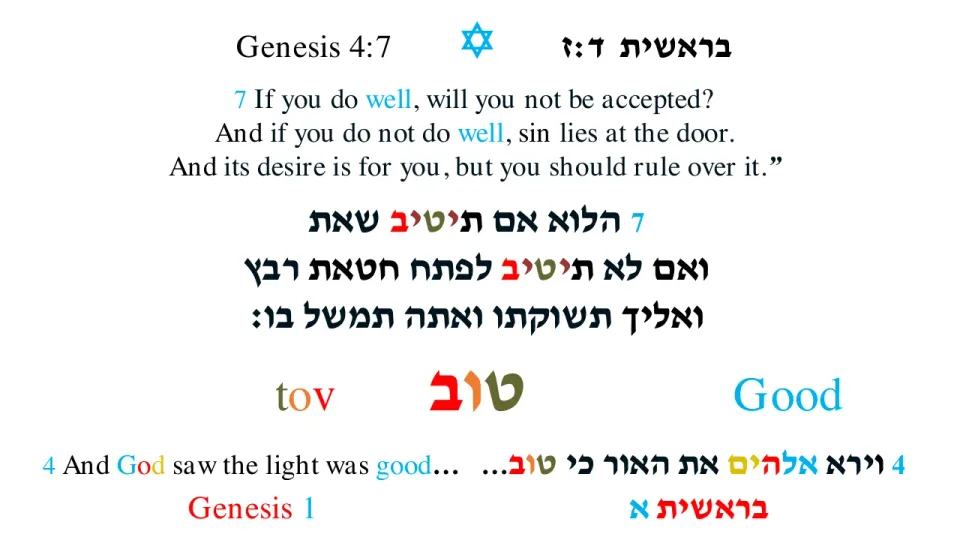 Genesis 4:7 — tov (good), compared with Genesis 1:4 “God saw the light was good”Abel · Slide 72
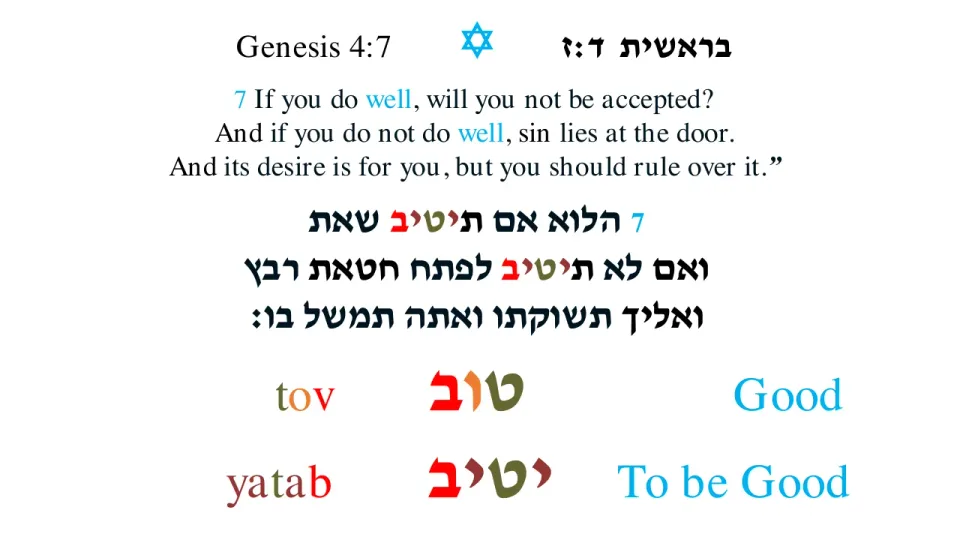 Genesis 4:7 — yatab (to be good) alongside tov (good)Abel · Slide 73
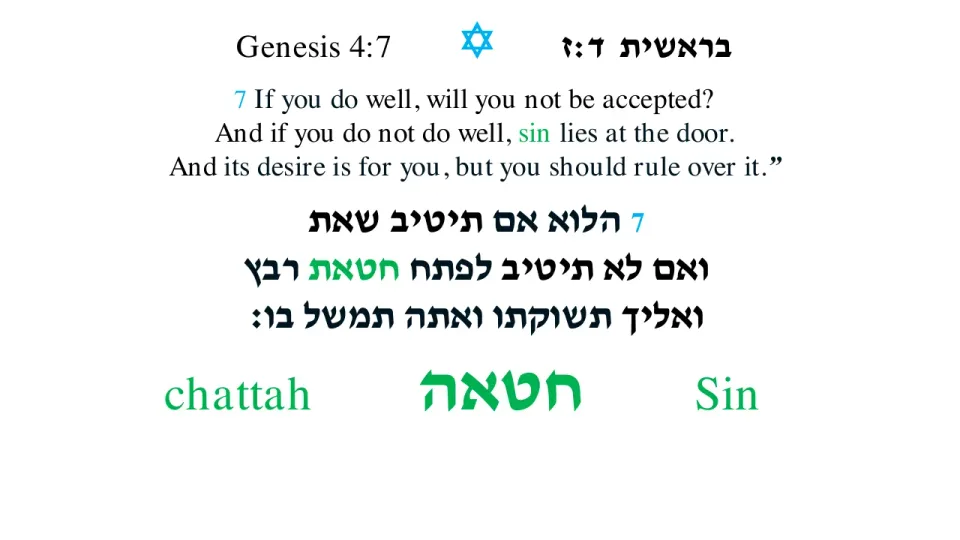 Genesis 4:7 — chattah (sin) lies at the doorAbel · Slide 74
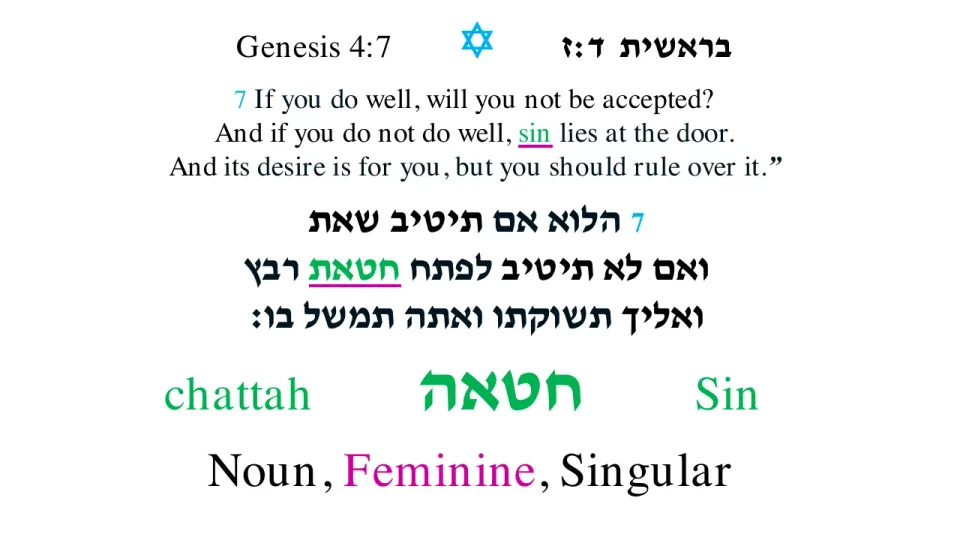 Genesis 4:7 — chattah (sin) is a feminine singular nounAbel · Slide 75
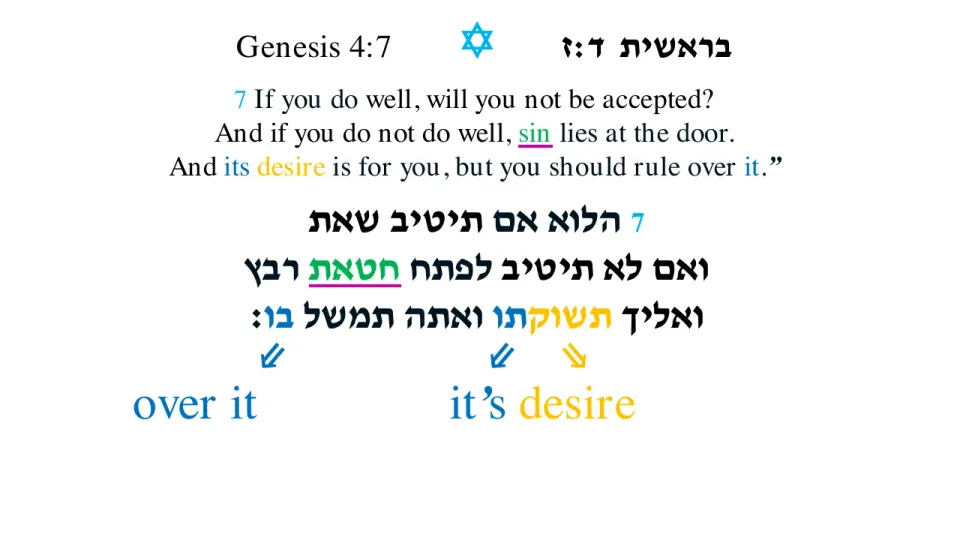 Genesis 4:7 — “its desire” and “over it” traced to the Hebrew endings -וAbel · Slide 76
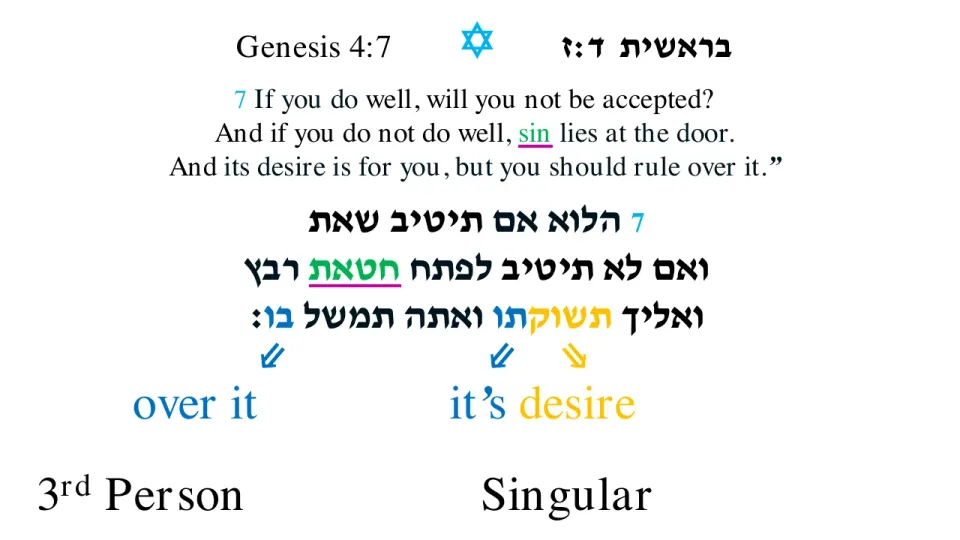 Genesis 4:7 — the suffixes are 3rd person singularAbel · Slide 77
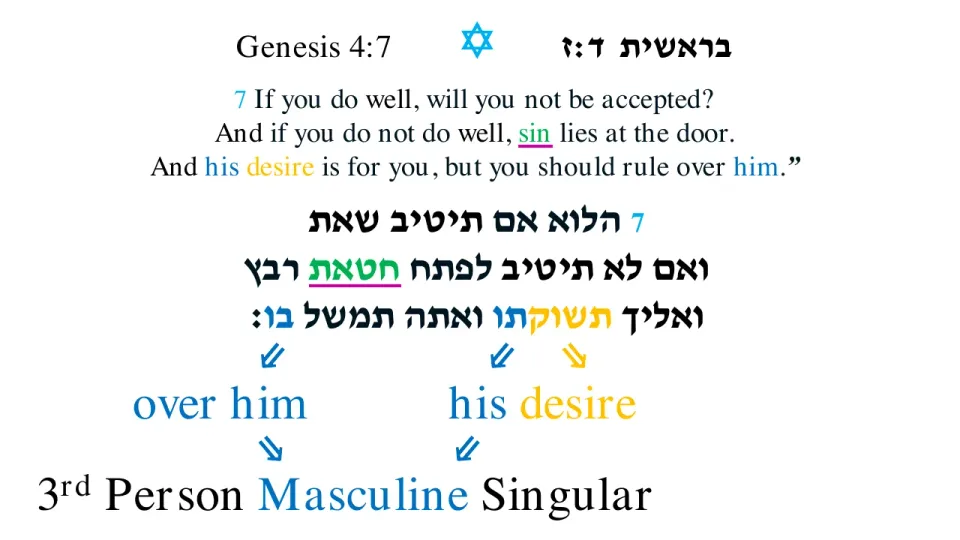 Genesis 4:7 — “his desire … rule over him”: 3rd person masculine singularAbel · Slide 78
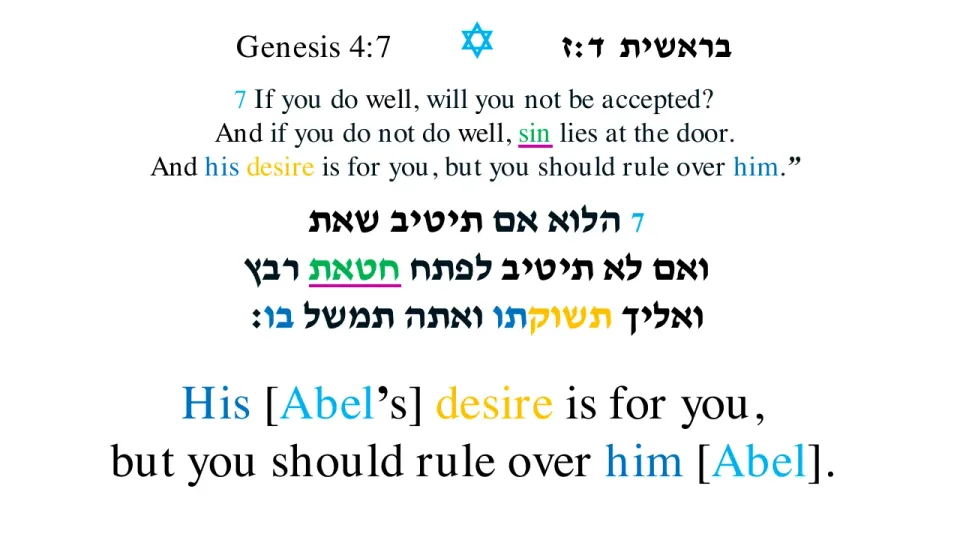 Genesis 4:7 — “His [Abel’s] desire is for you, but you should rule over him [Abel]”Abel · Slide 79
Genesis 4:8 15 slides
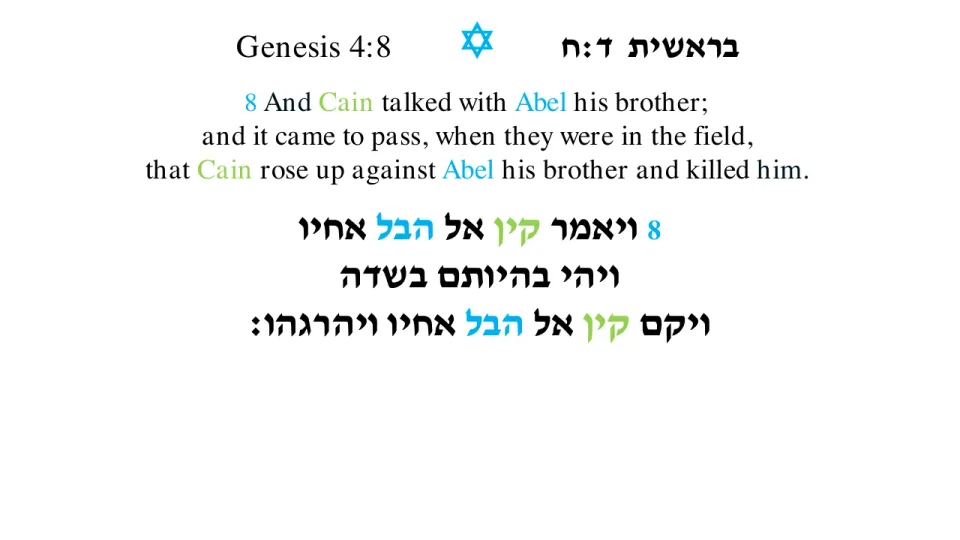 Genesis 4:8 — Cain rose up against Abel his brother and killed himAbel · Slide 80
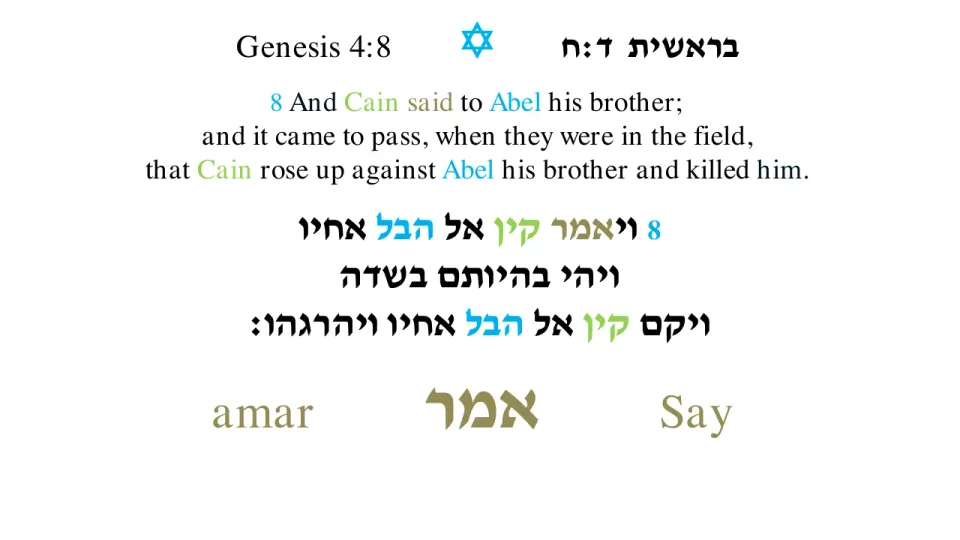 Genesis 4:8 — Cain said (amar, אמר) to Abel his brotherAbel · Slide 81
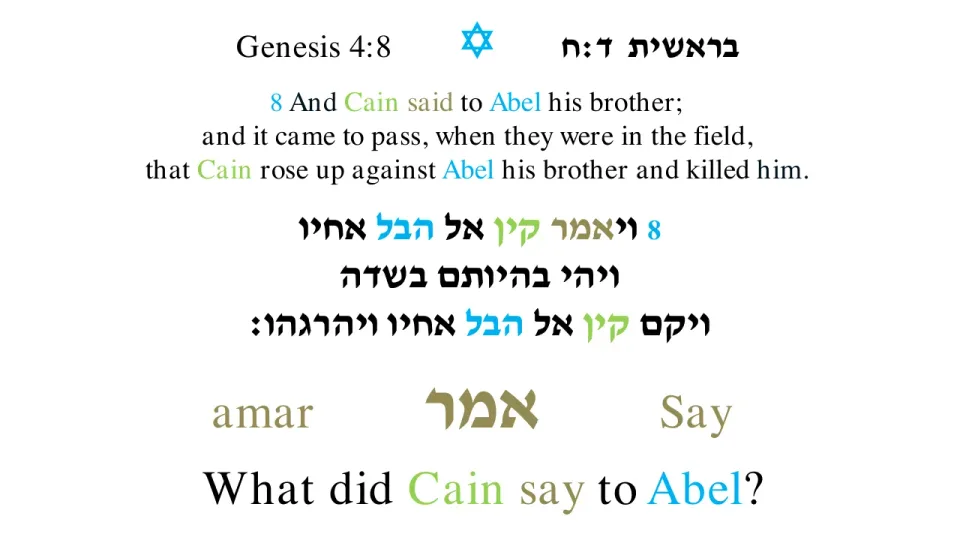 Genesis 4:8 — What did Cain say to Abel? (amar, אמר)Abel · Slide 82
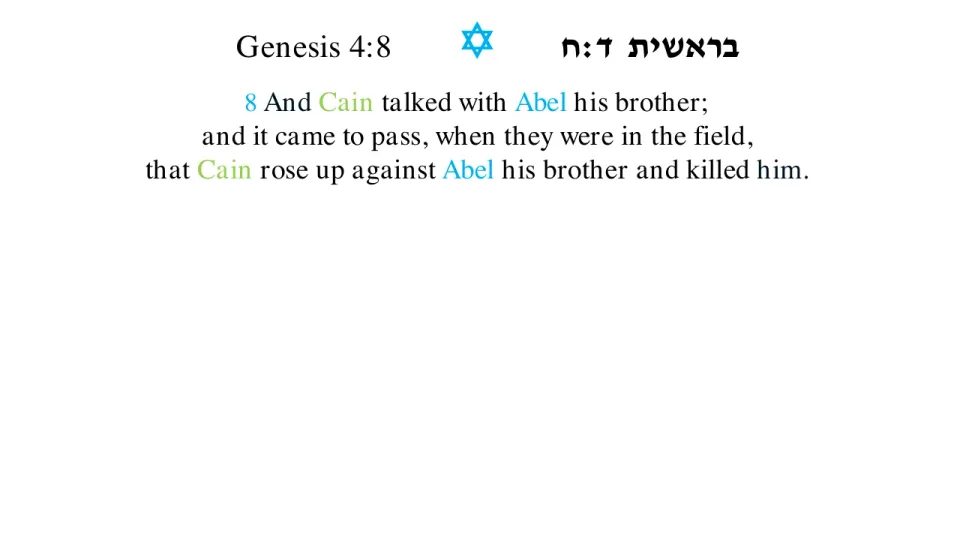 Genesis 4:8 — Cain rises up against Abel and kills himAbel · Slide 153
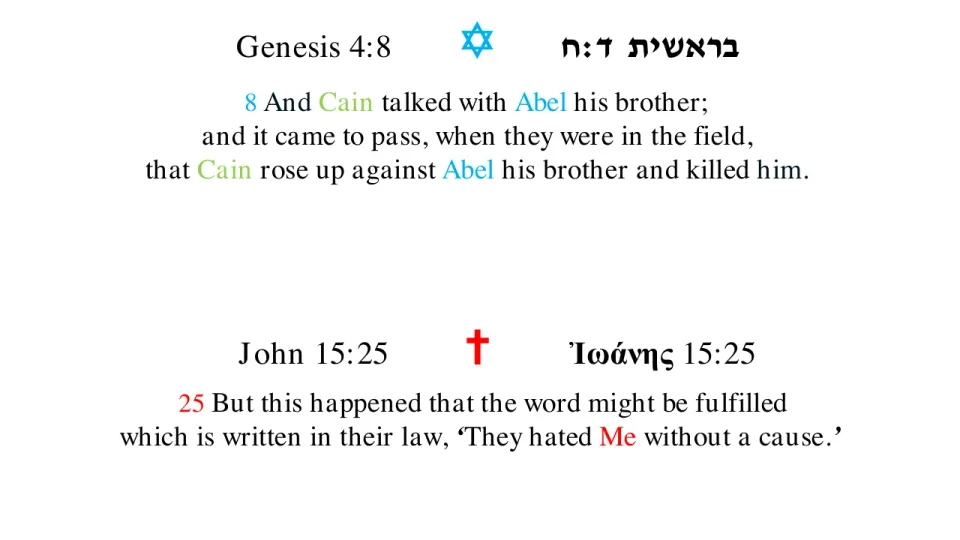 Cain kills Abel; "They hated Me without a cause" (Genesis 4:8; John 15:25)Abel · Slide 154
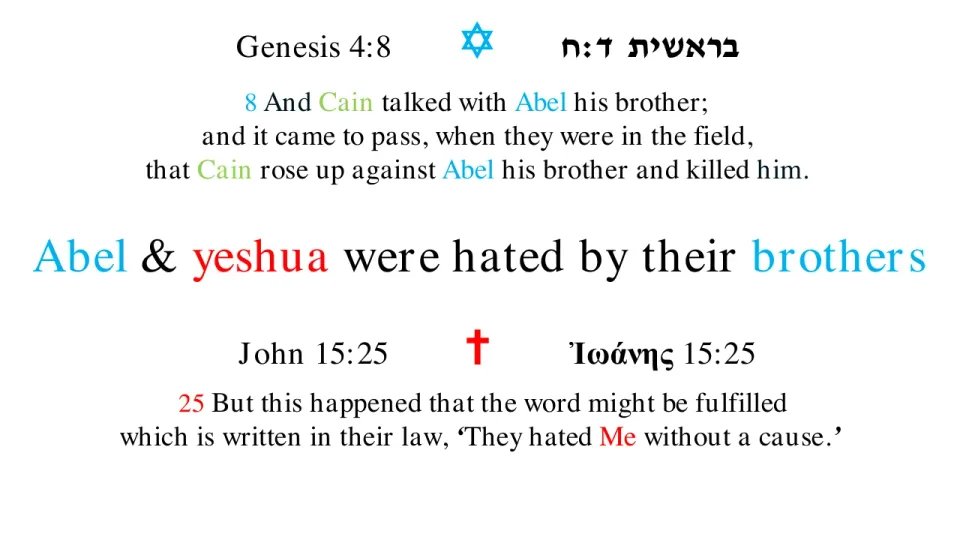 Abel and Yeshua were hated by their brothersAbel · Slide 155
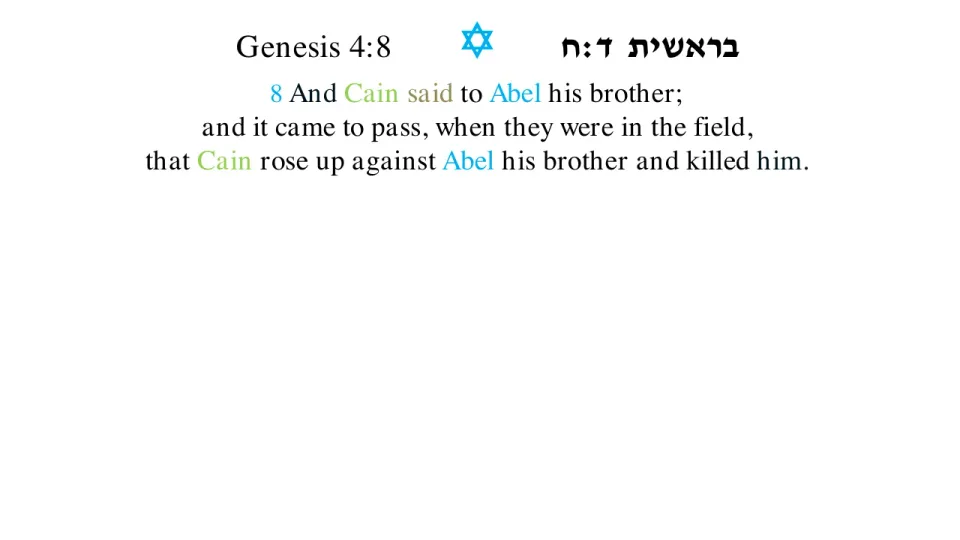 Genesis 4:8 — "And Cain said to Abel his brother"Abel · Slide 156
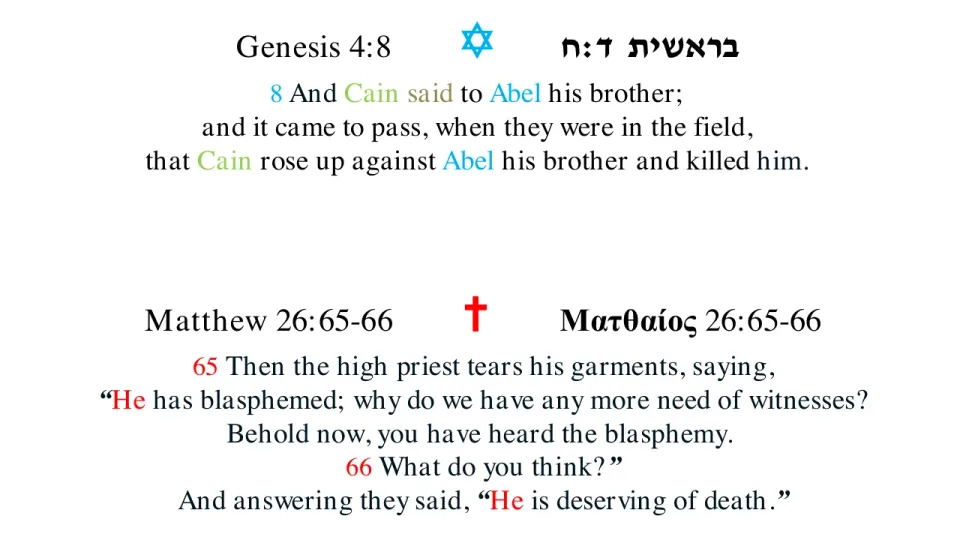 Cain kills Abel; the high priest declares Jesus deserving of deathAbel · Slide 157
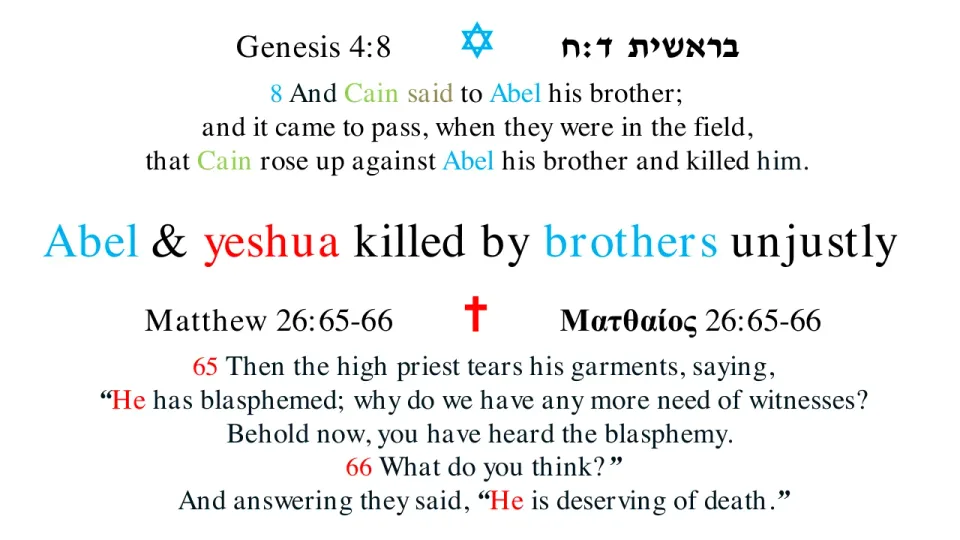 Abel and Yeshua killed by brothers unjustlyAbel · Slide 158
 Genesis 4:8 — Cain rose up against Abel and killed himAbel · Slide 159
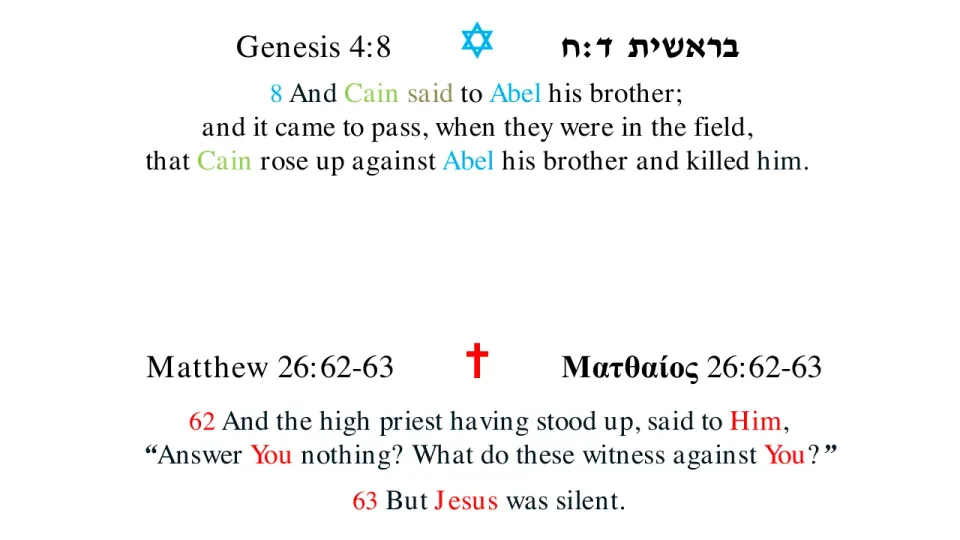 Genesis 4:8 and Matthew 26:62-63 — Cain kills Abel; Jesus is silent before the high priestAbel · Slide 160
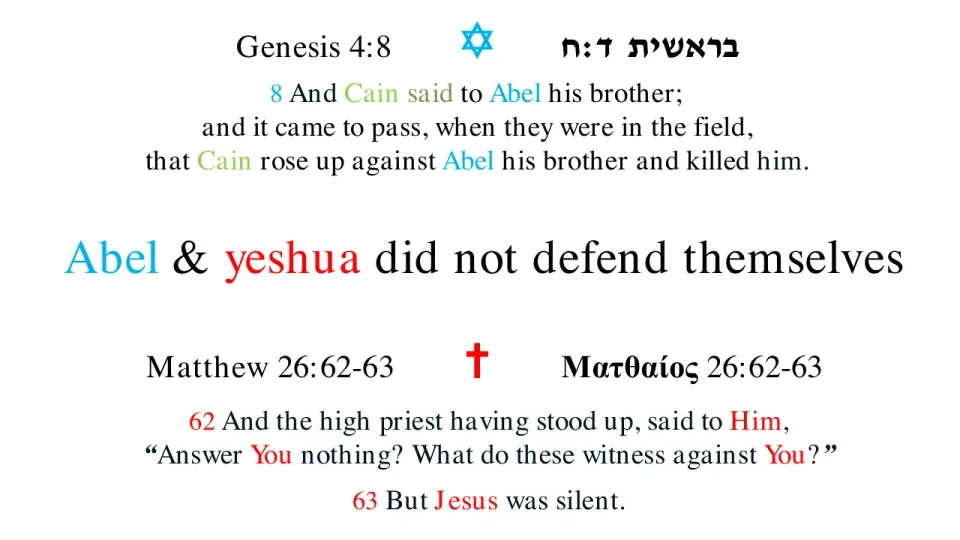 Abel and Yeshua did not defend themselvesAbel · Slide 161
 Genesis 4:8 — Cain rose up against Abel and killed him (repeat)Abel · Slide 162
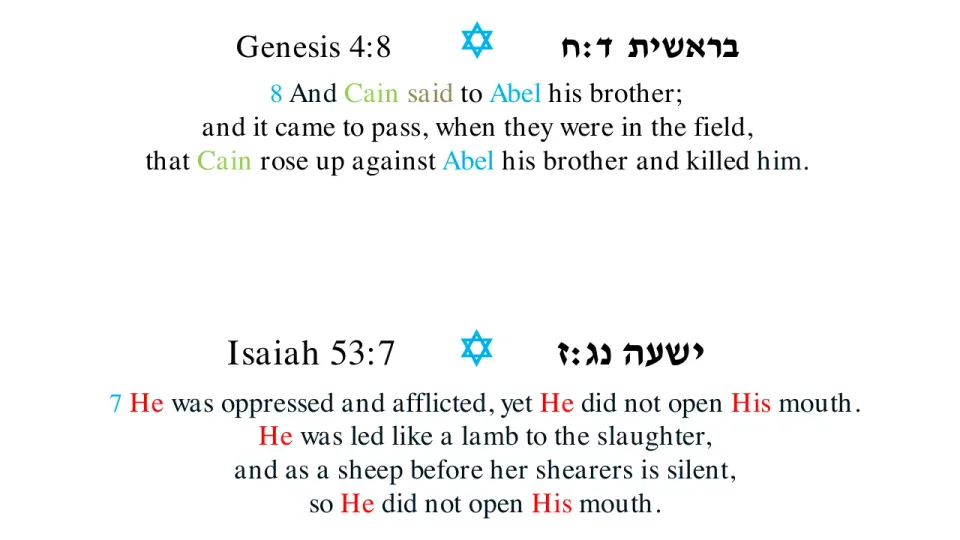 Genesis 4:8 and Isaiah 53:7 — Cain kills Abel; the lamb silent before its shearersAbel · Slide 163
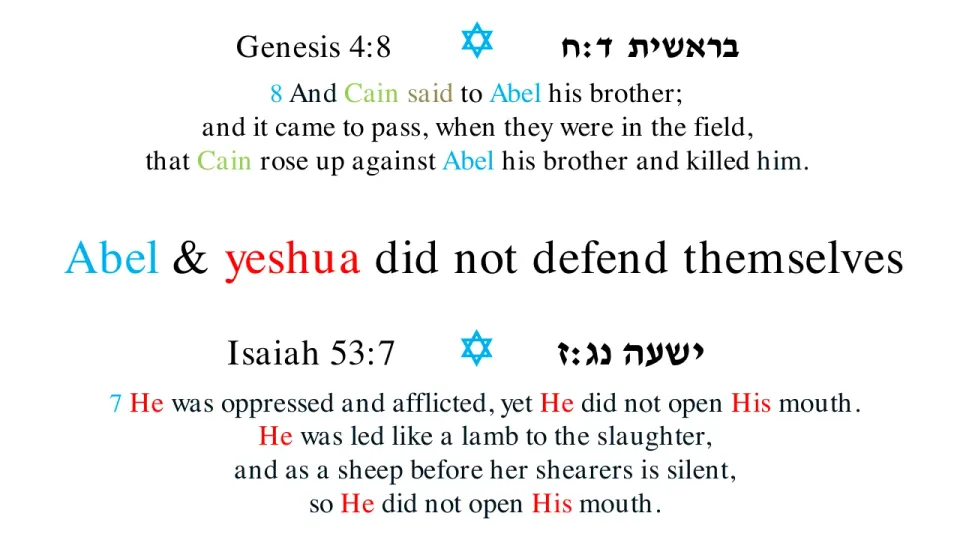 Abel and Yeshua did not defend themselves (Genesis 4:8; Isaiah 53:7)Abel · Slide 164
Genesis 4:9 7 slides
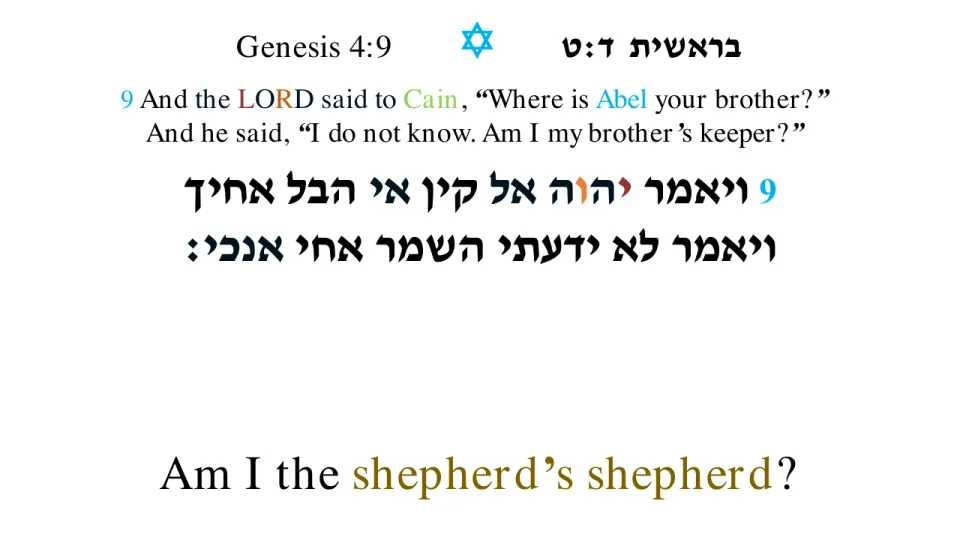 Genesis 4:9 — “Am I my brother’s keeper?” = Am I the shepherd’s shepherd?Abel · Slide 83
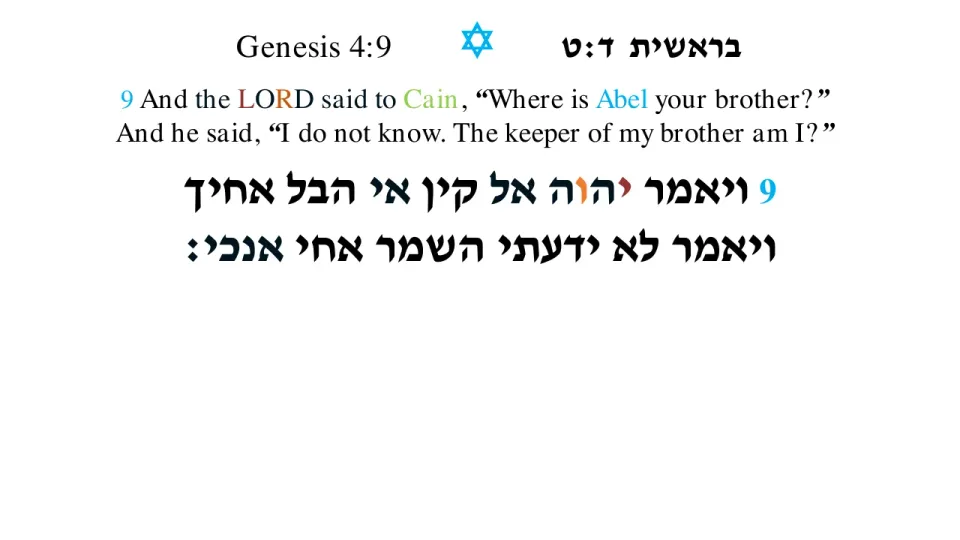 Genesis 4:9 — “The keeper of my brother am I?”Abel · Slide 84
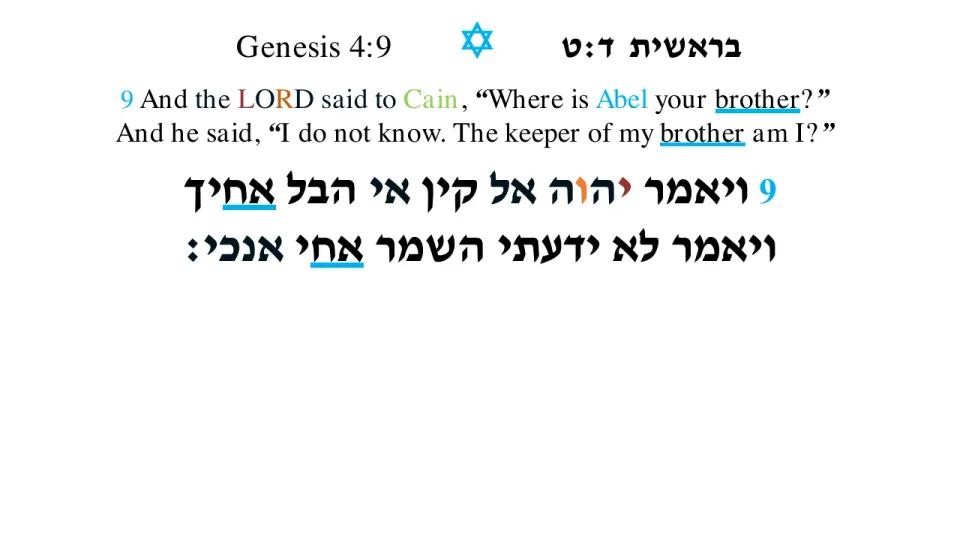 Genesis 4:9 — “brother” underlined twice (אחיך, אחי)Abel · Slide 85
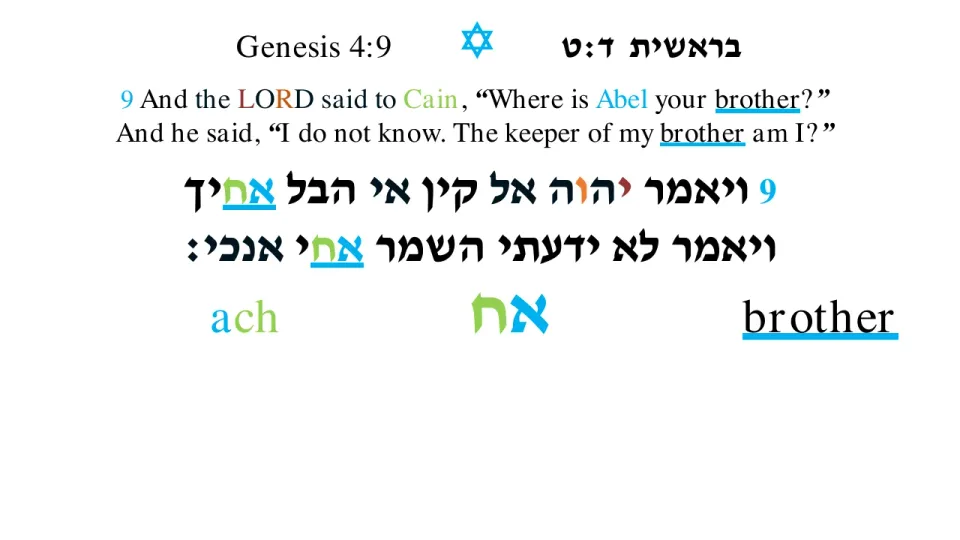 Genesis 4:9 — brother (ach, אח)Abel · Slide 86
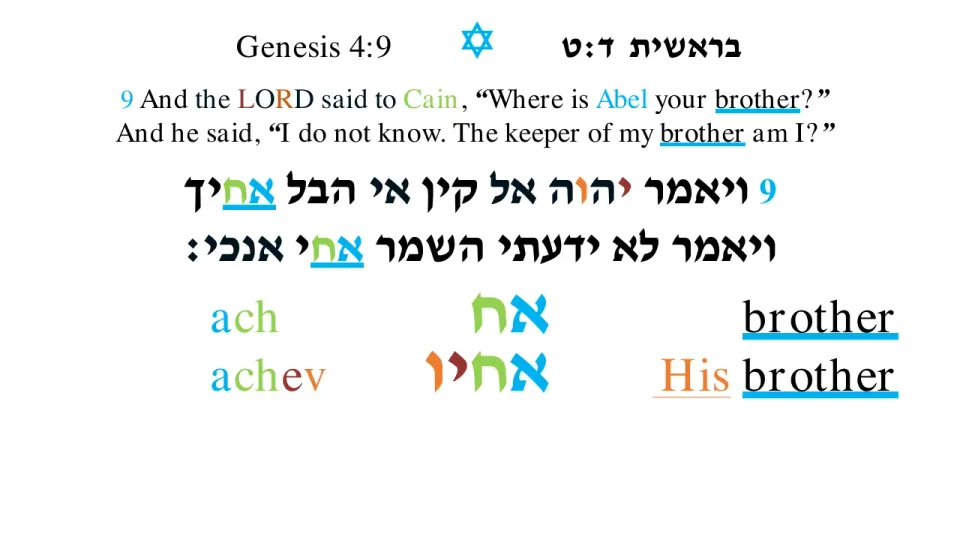 Genesis 4:9 — brother (ach, אח) and “his brother” (achev, אחיו)Abel · Slide 87
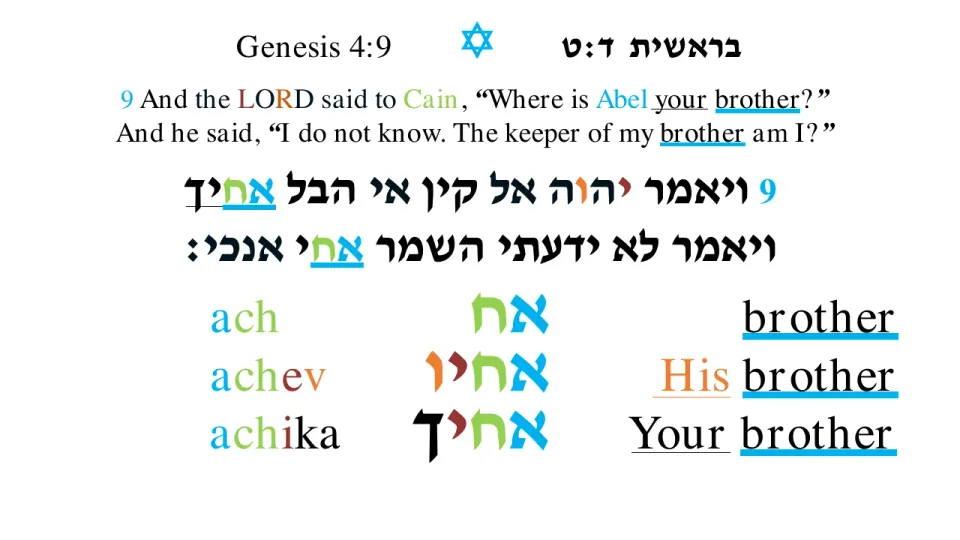 Genesis 4:9 — brother, his brother, your brother (achika, אחיך)Abel · Slide 88
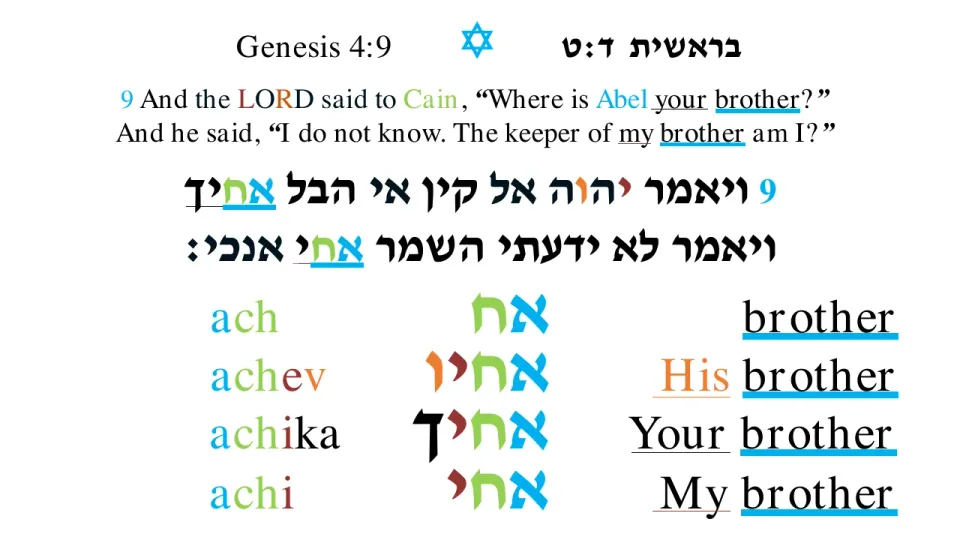 Genesis 4:9 — brother, his, your, my brother (achi, אחי)Abel · Slide 89
Genesis 4:10 12 slides
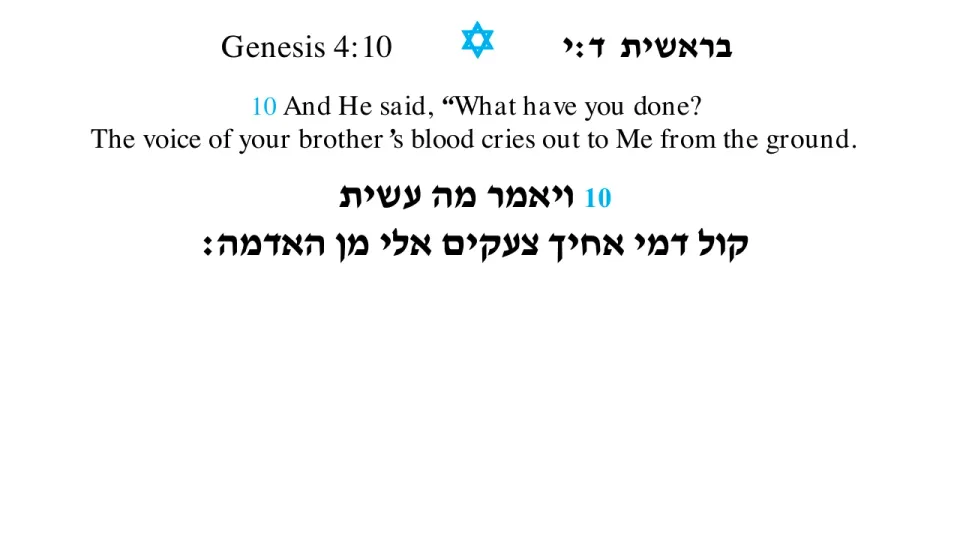 Genesis 4:10 — “What have you done? The voice of your brother’s blood cries out”Abel · Slide 90
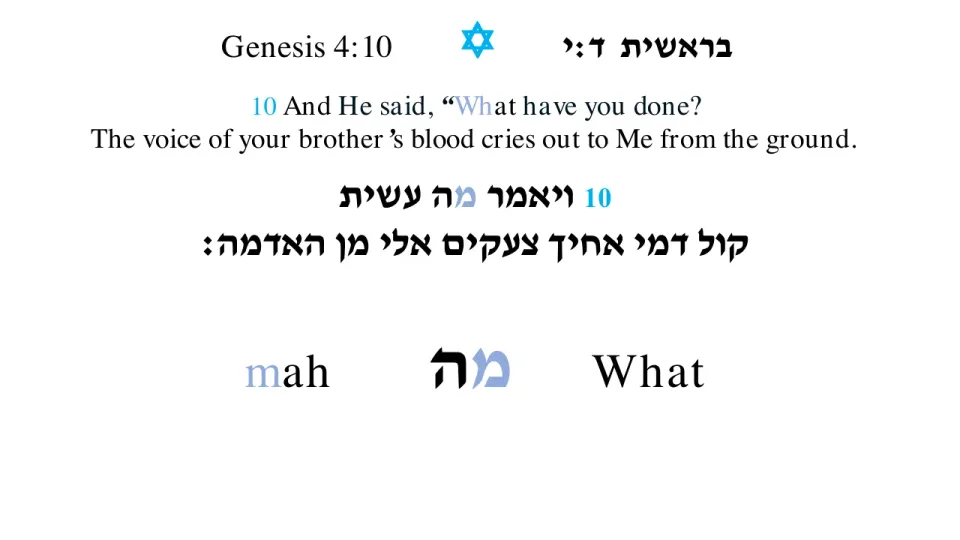 Genesis 4:10 — “What” (mah, מה)Abel · Slide 91
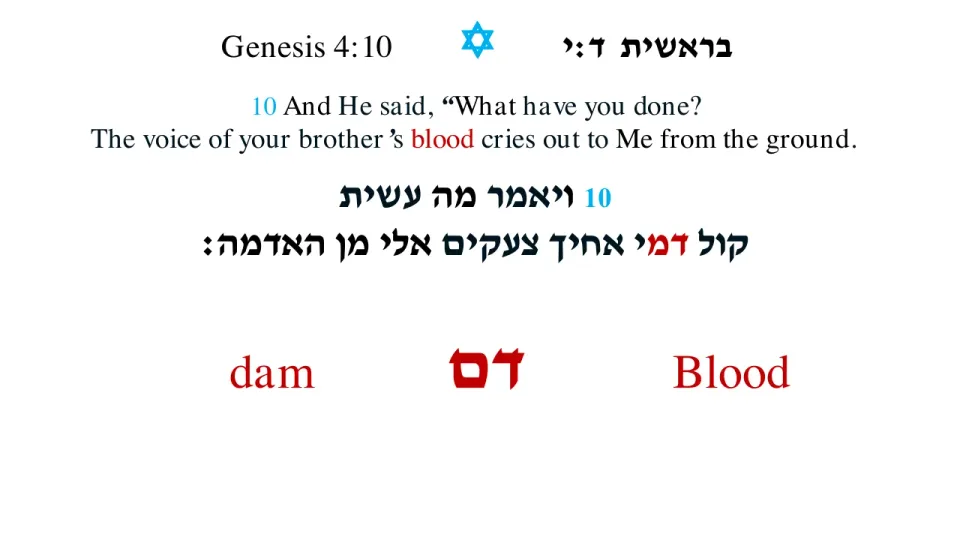 Genesis 4:10 — “blood” (dam, דם) in redAbel · Slide 92
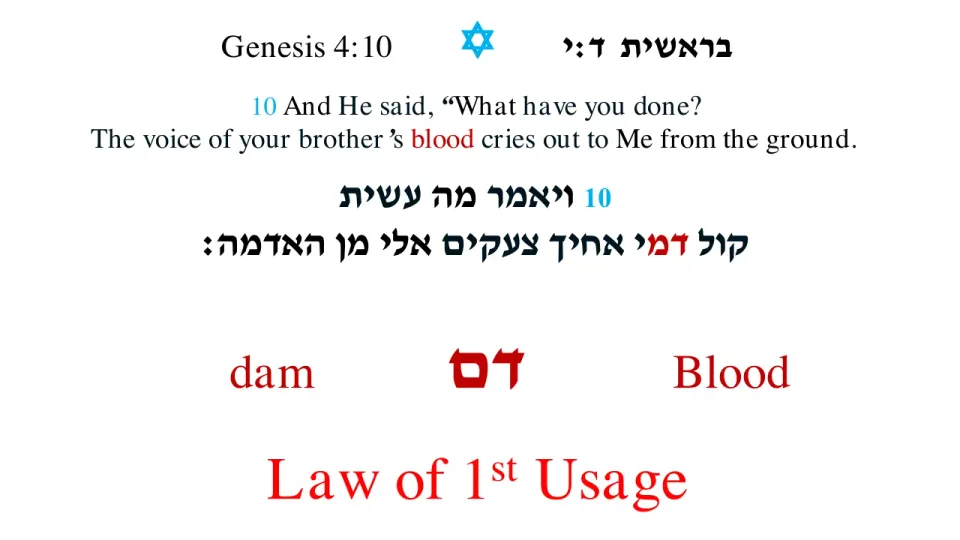 Genesis 4:10 — first use of “blood” (dam, דם): the Law of First UsageAbel · Slide 93
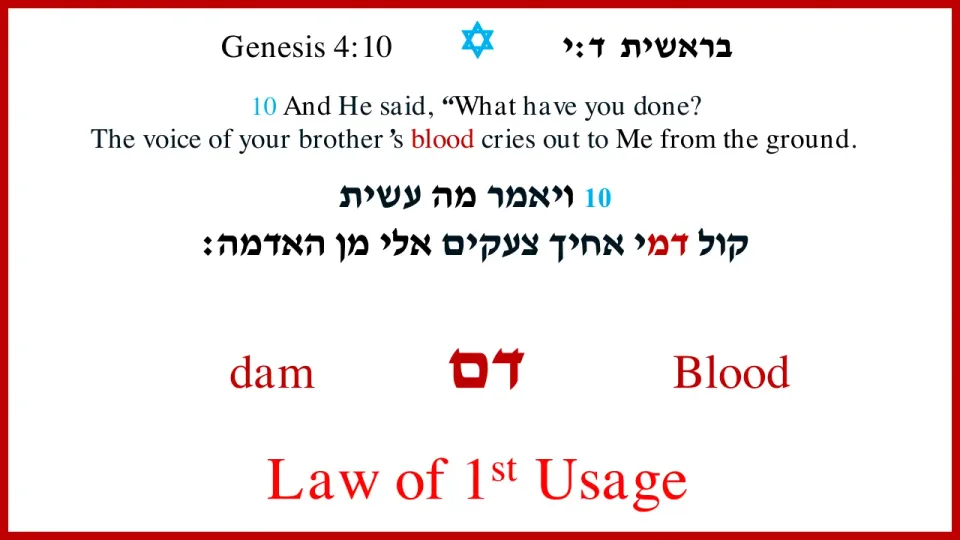 Genesis 4:10 — first use of “blood” (dam, דם): the Law of First UsageAbel · Slide 94
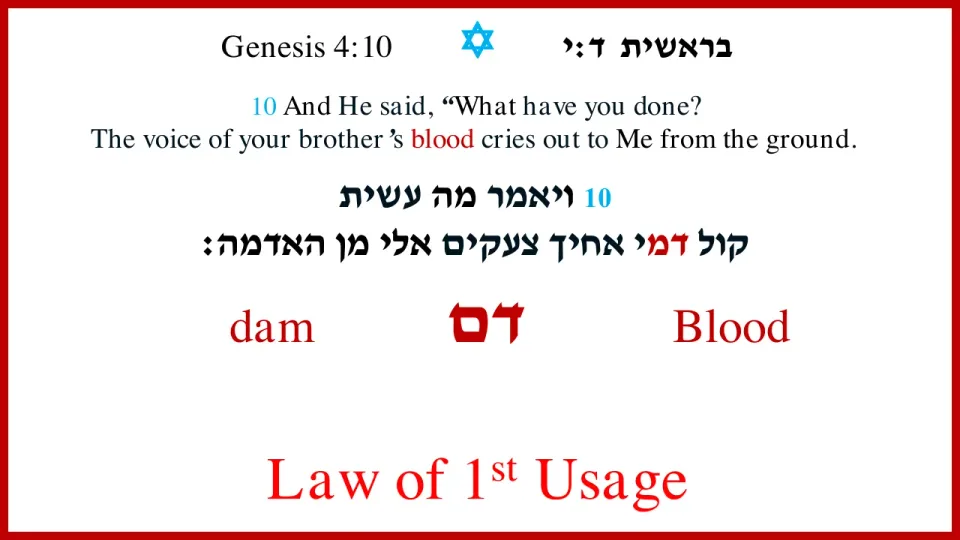 Genesis 4:10 — first use of “blood” (dam, דם): the Law of First UsageAbel · Slide 97
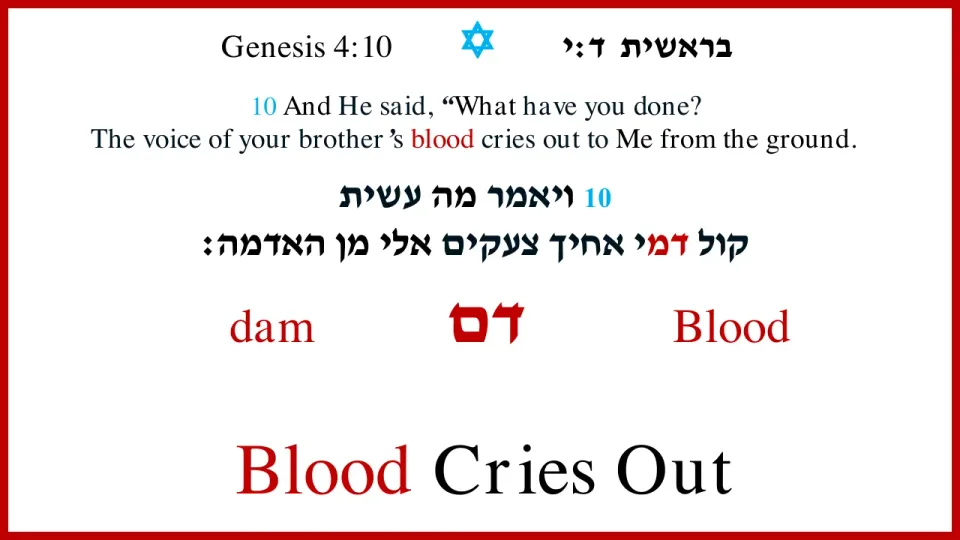 Genesis 4:10 — “Blood Cries Out”: Abel's blood (dam, דם)Abel · Slide 98
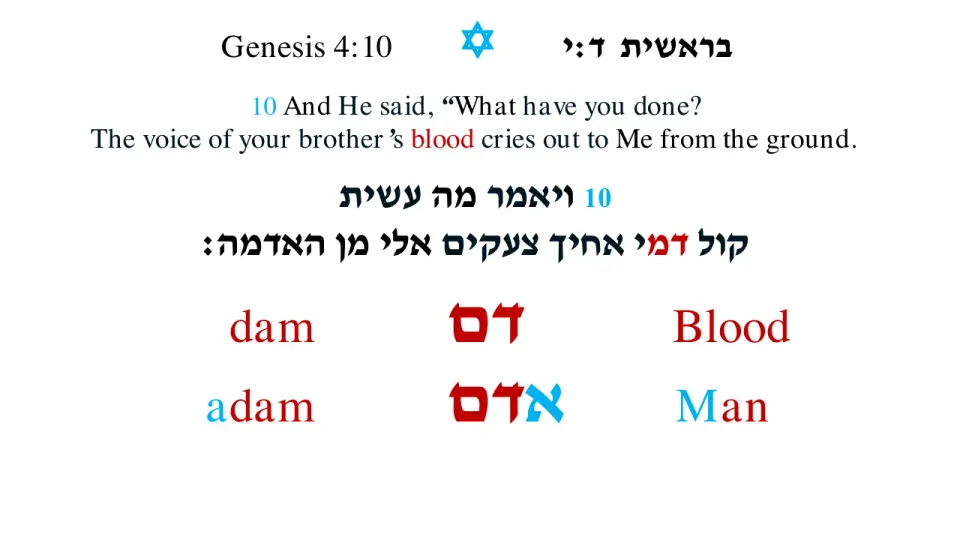 Genesis 4:10 — blood (dam, דם) inside man (adam, אדם)Abel · Slide 99
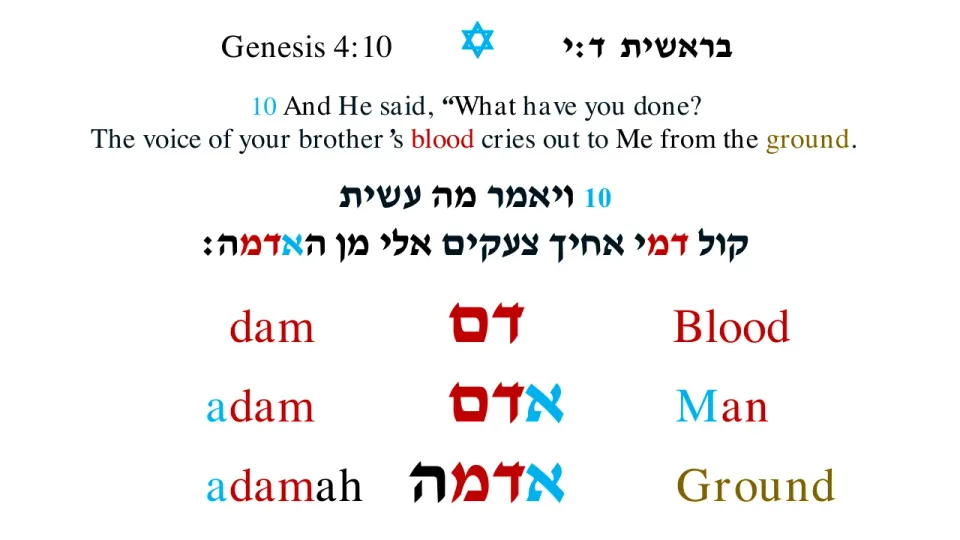 Genesis 4:10 — blood (dam), man (adam) and ground (adamah)Abel · Slide 100
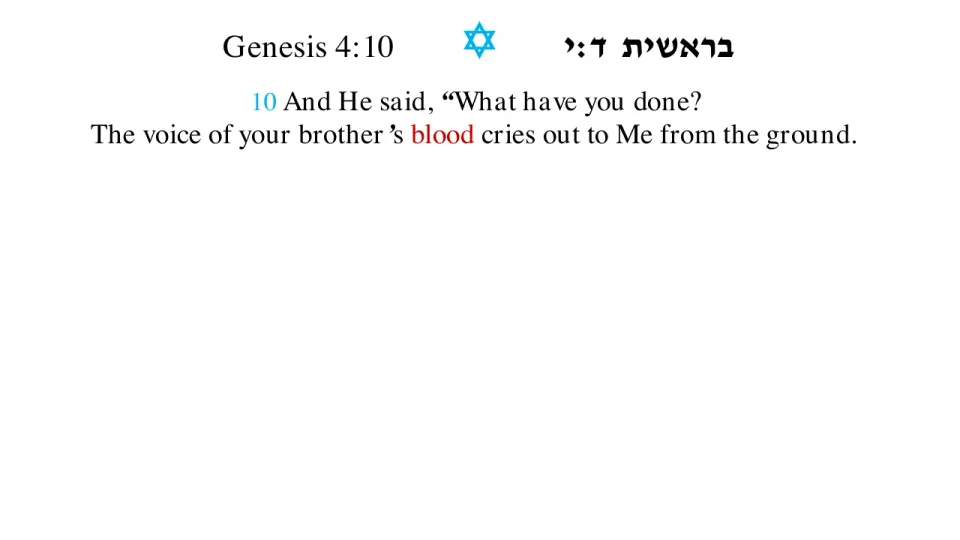 Genesis 4:10 — your brother's blood cries out to Me from the groundAbel · Slide 165
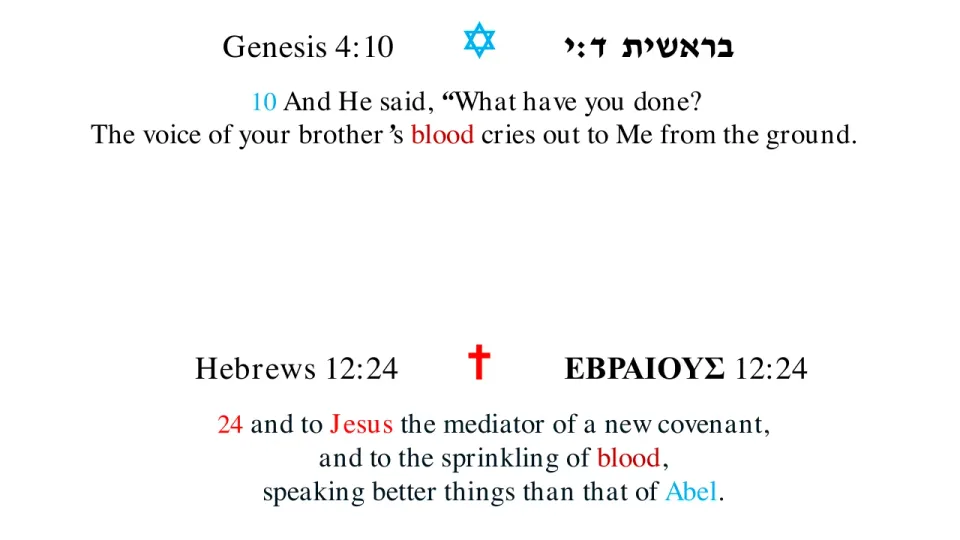 Genesis 4:10 and Hebrews 12:24 — Abel's blood and the blood that speaks better thingsAbel · Slide 166
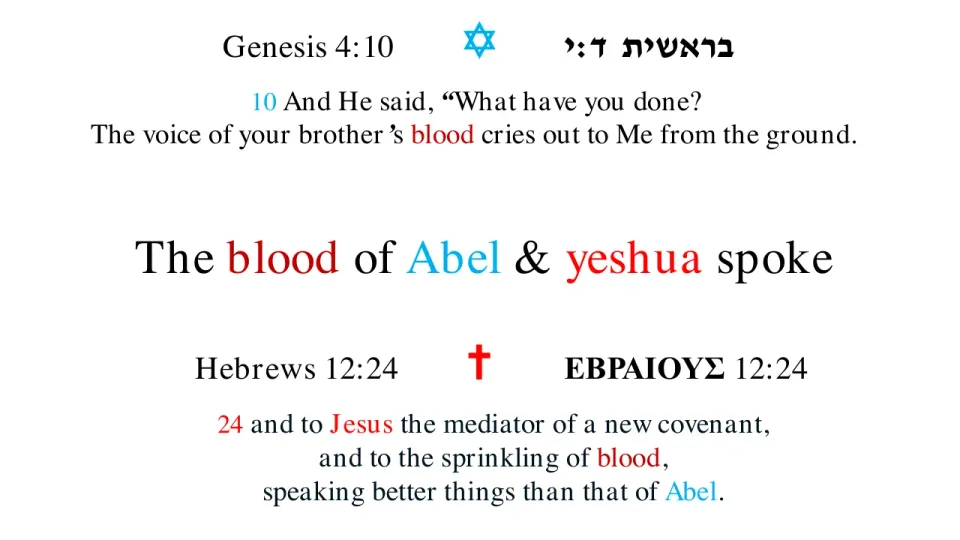 The blood of Abel and Yeshua spoke (Genesis 4:10; Hebrews 12:24)Abel · Slide 167
Genesis 4:11 3 slides
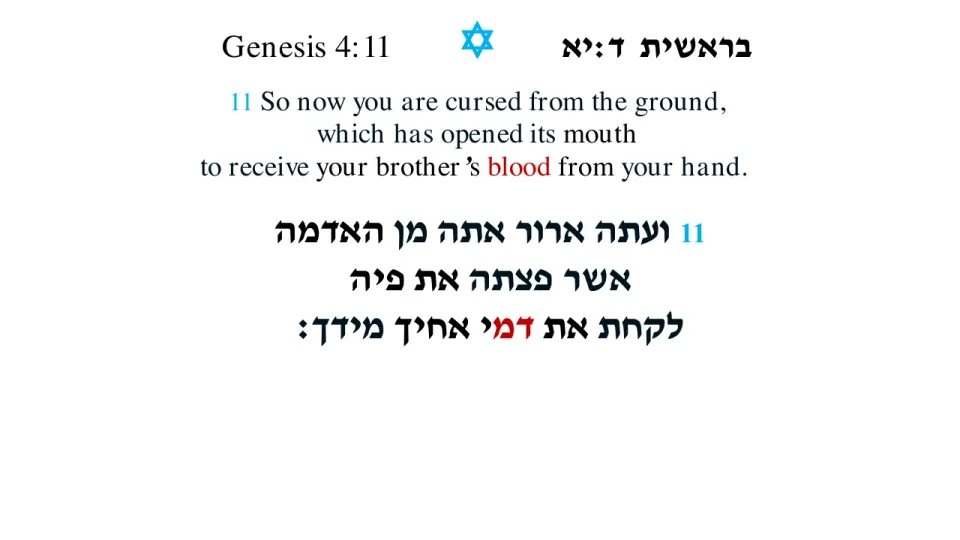
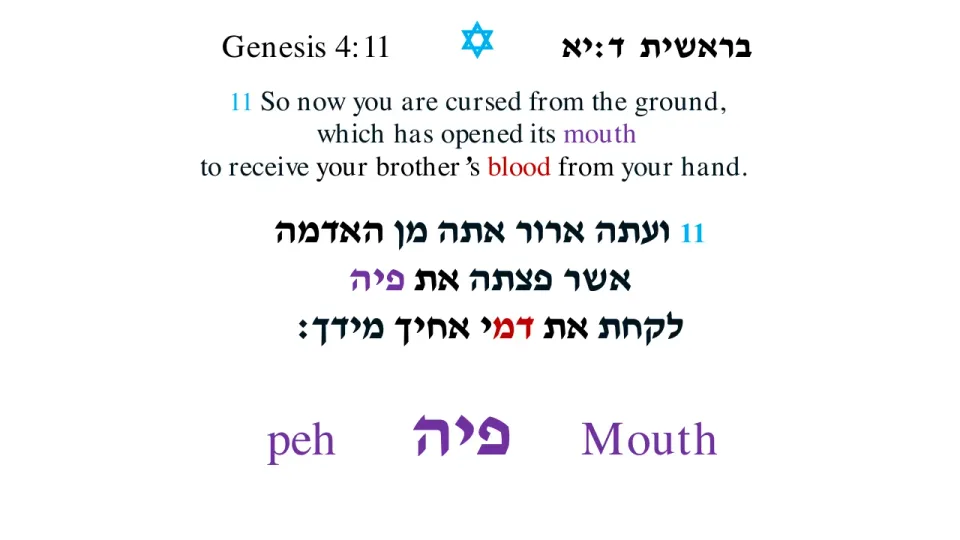
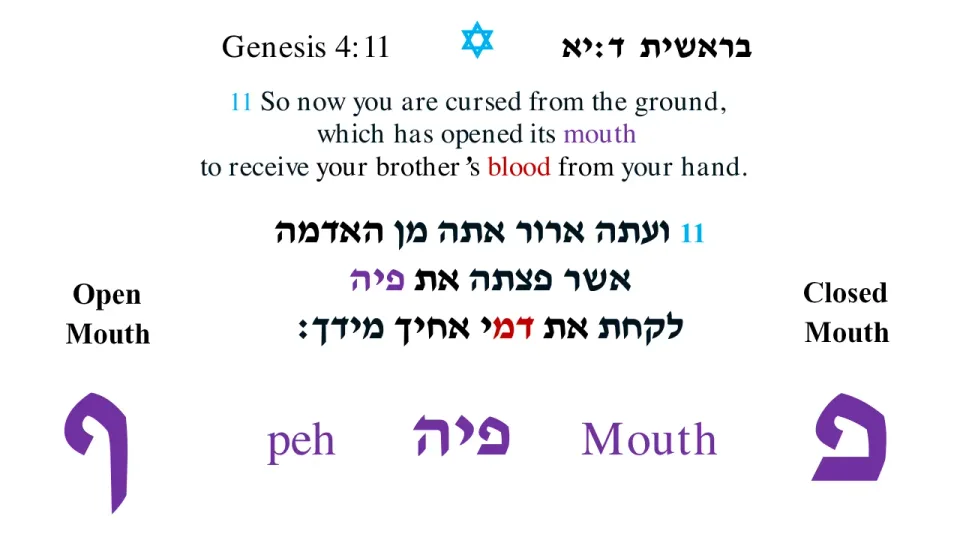
Genesis 4:12 10 slides
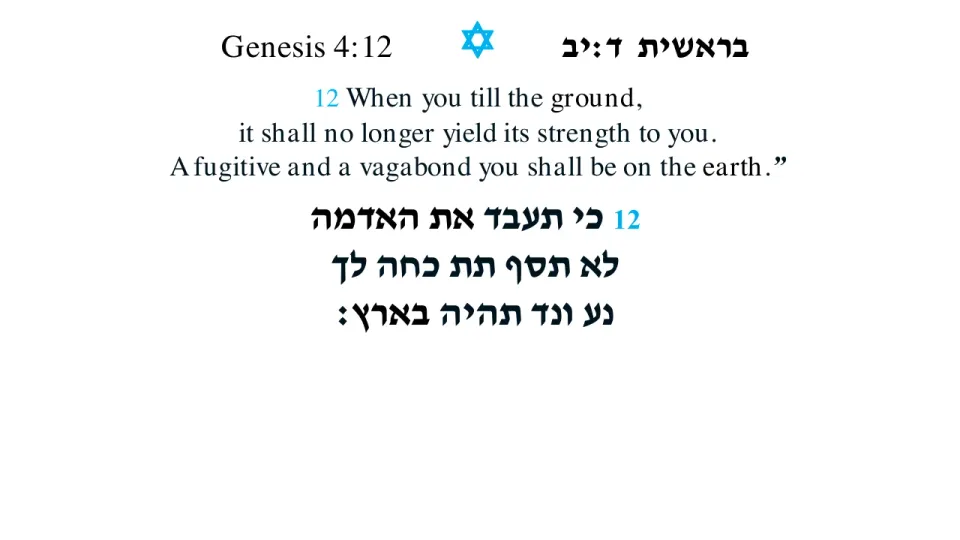 Genesis 4:12 — Cain to be a fugitive and a vagabond on the earthAbel · Slide 104
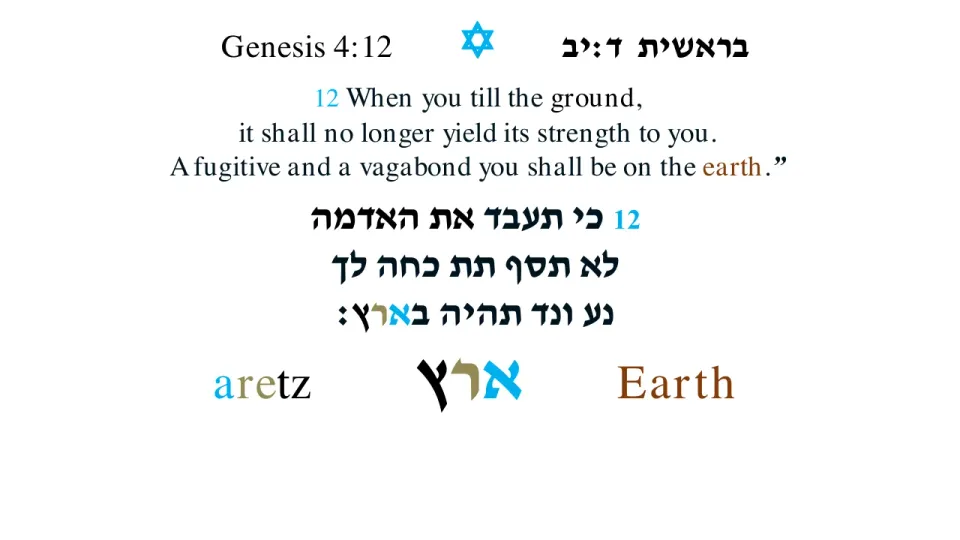 Genesis 4:12 — earth (aretz, ארץ)Abel · Slide 105
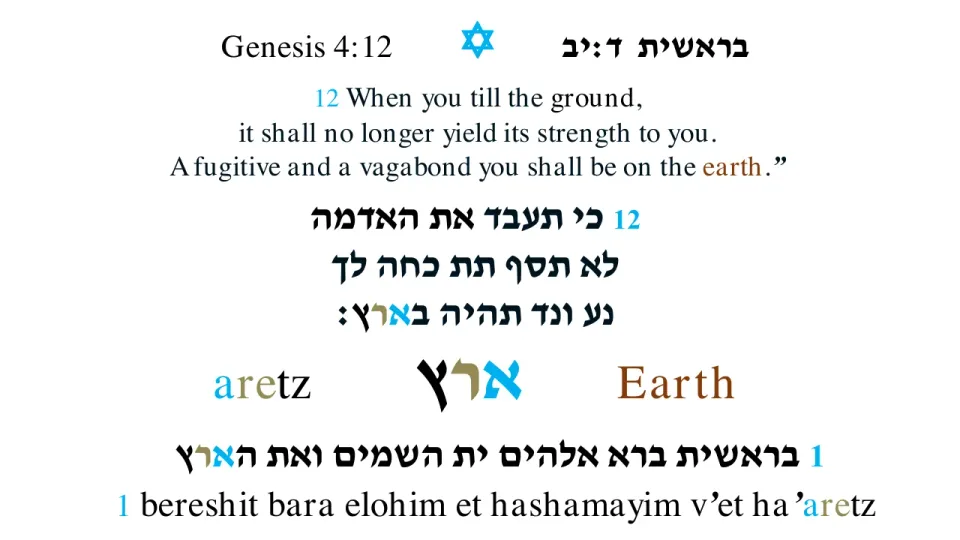 Genesis 4:12 — earth (aretz, ארץ) linked to Genesis 1:1Abel · Slide 106
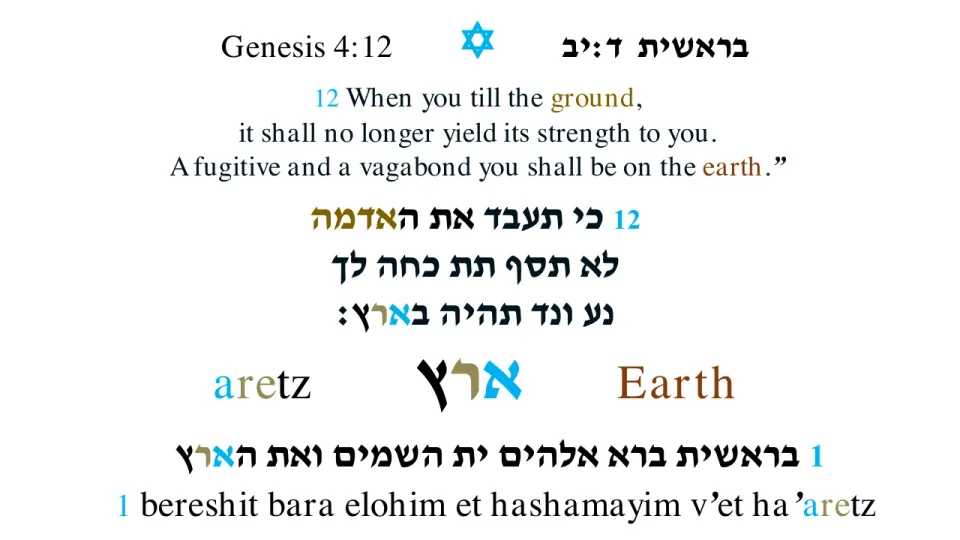 Genesis 4:12 — ground (adamah) and earth (aretz), with Genesis 1:1Abel · Slide 107
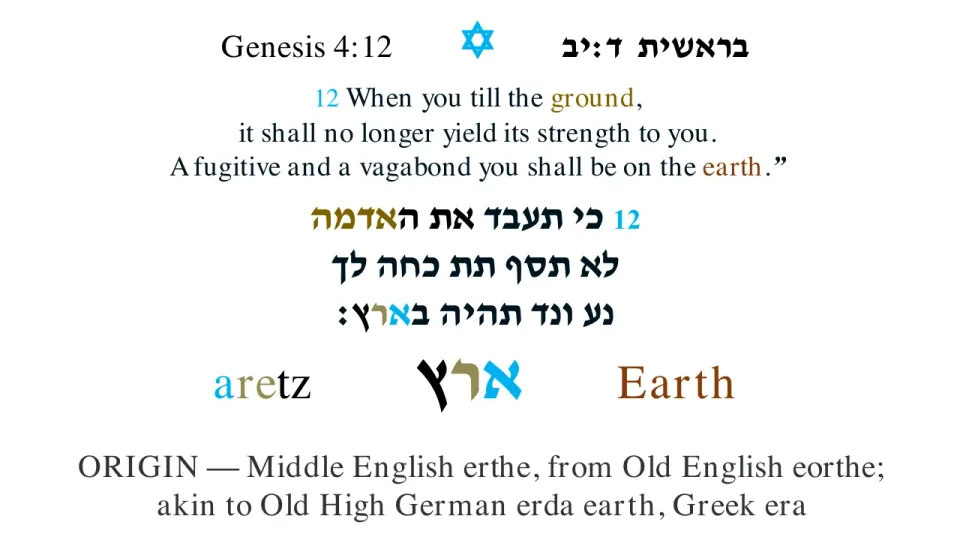 Earth (aretz, ארץ) and the origin of the English word “earth”Abel · Slide 108
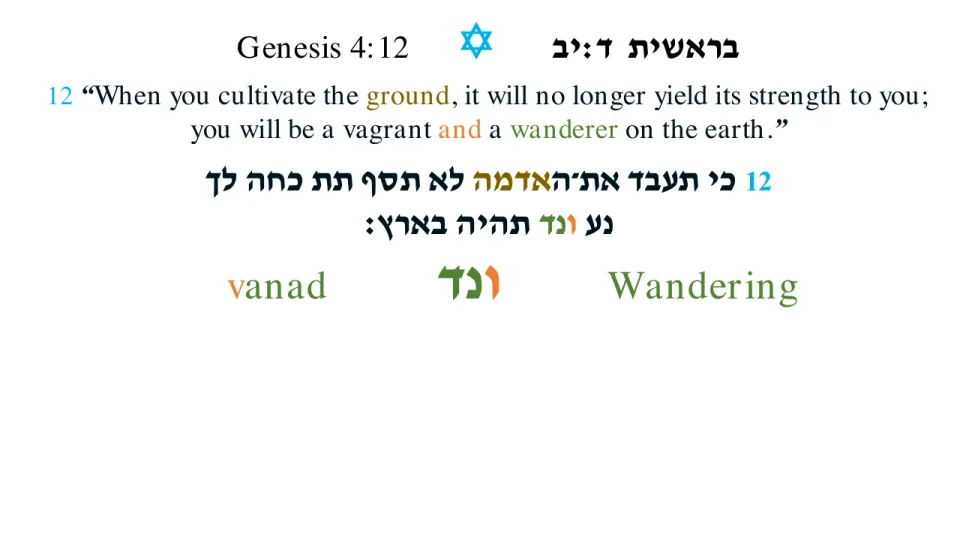 Genesis 4:12 — vagrant and wanderer (vanad, ונד)Abel · Slide 109
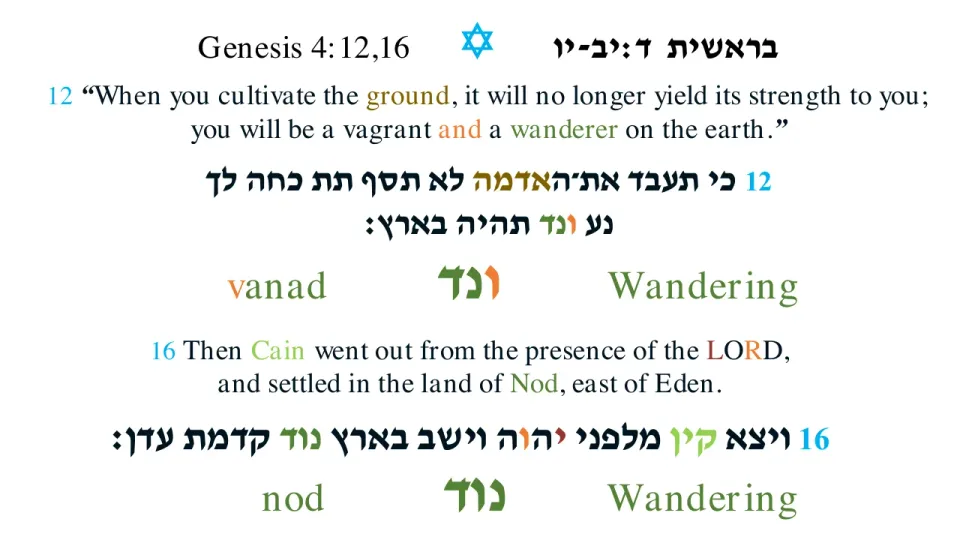 Genesis 4:12 and 4:16 — wandering: vanad (ונד) and the land of Nod (נוד)Abel · Slide 110
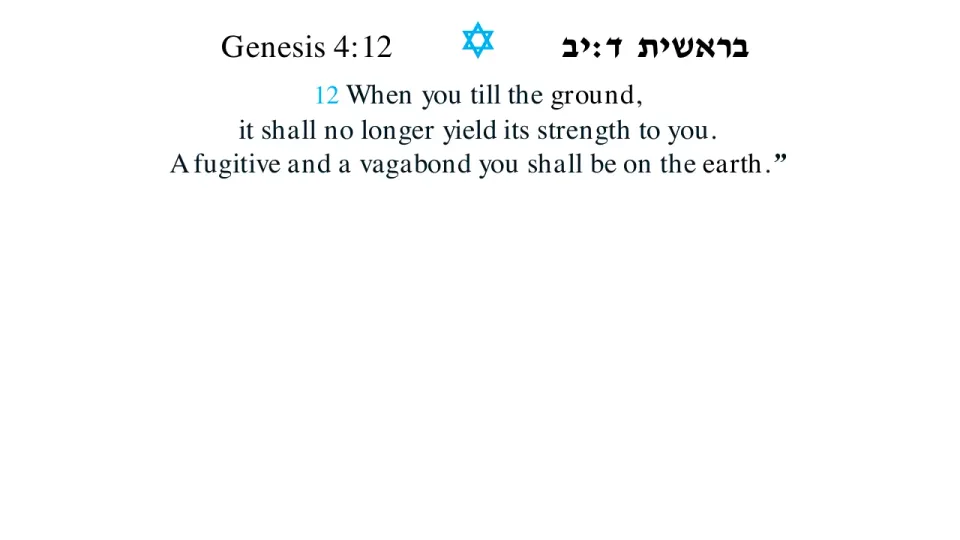 Genesis 4:12 — a fugitive and a vagabond on the earthAbel · Slide 168
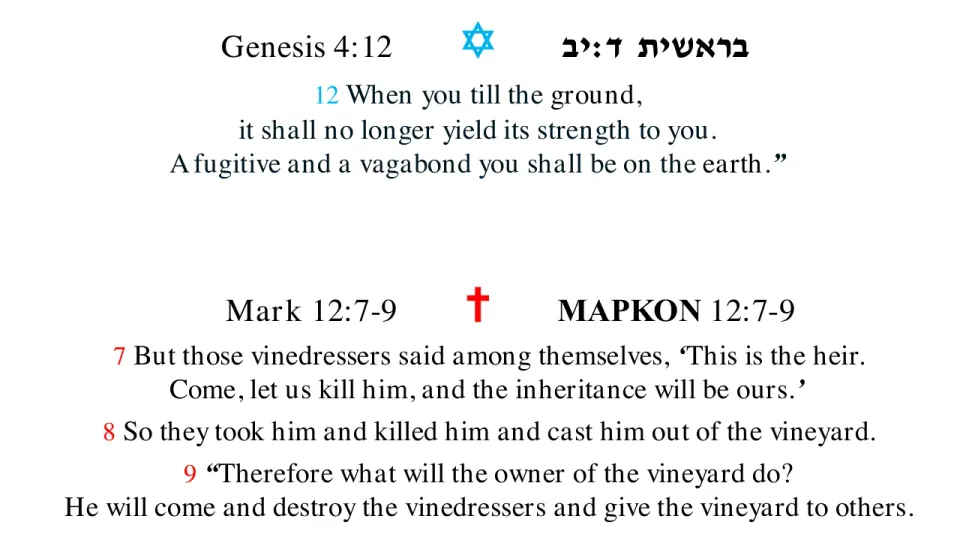 Genesis 4:12 and Mark 12:7-9 — the vinedressers kill the heirAbel · Slide 169
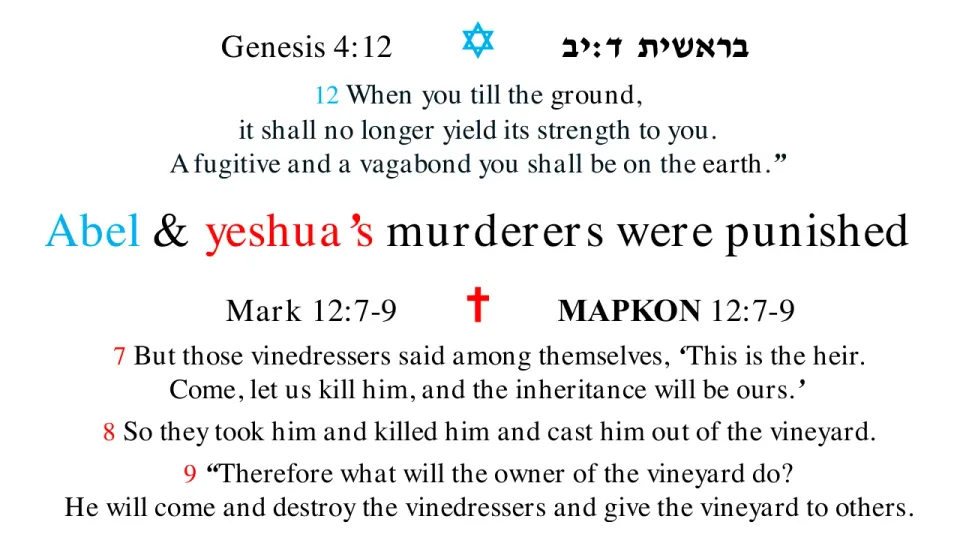 Abel and Yeshua's murderers were punished (Genesis 4:12, Mark 12:7-9)Abel · Slide 170
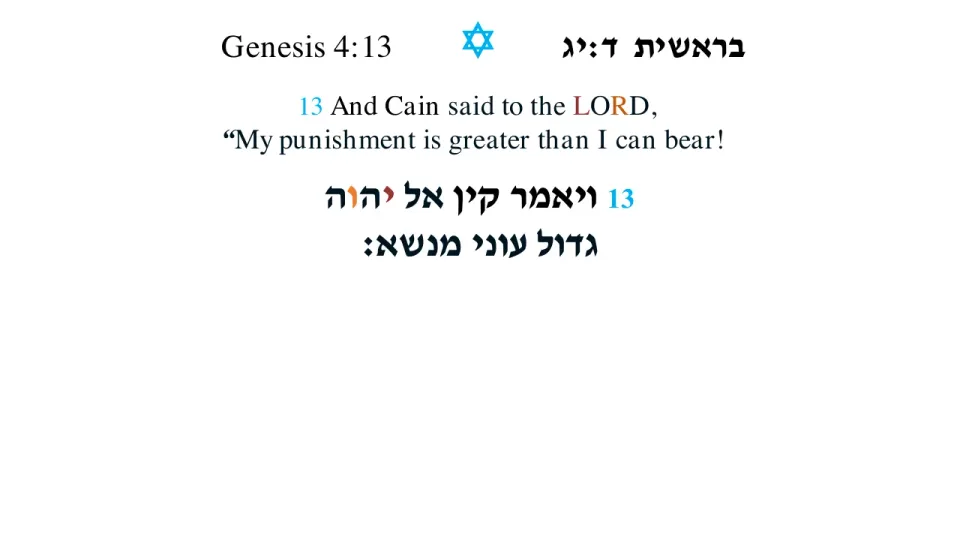
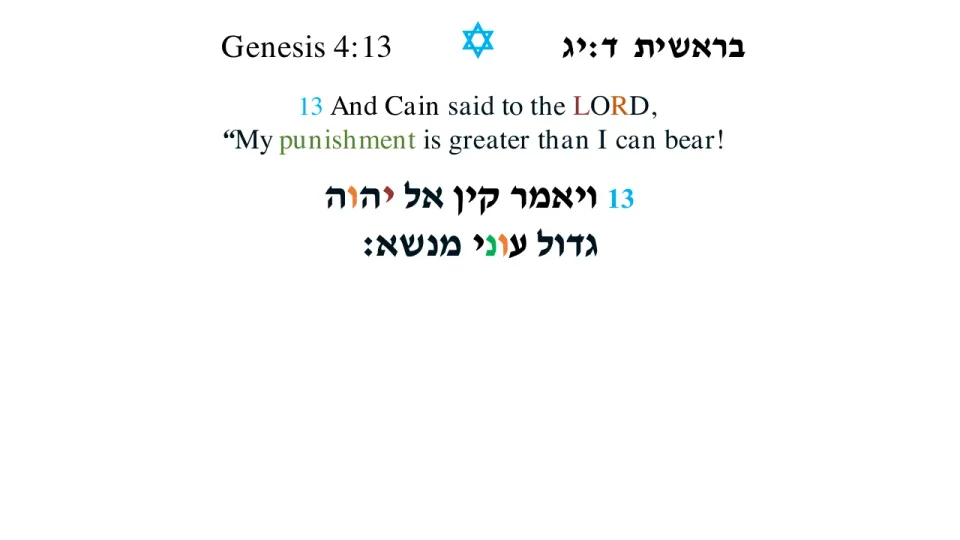
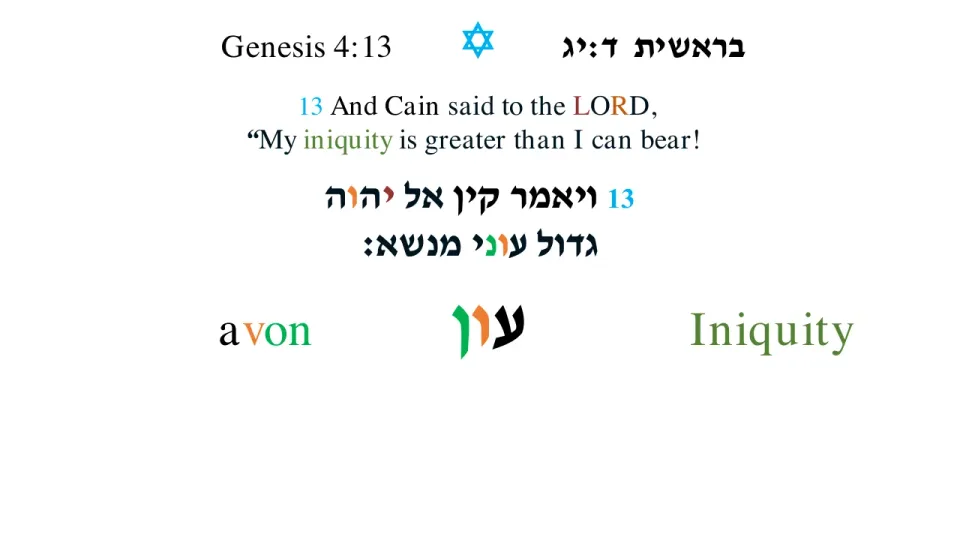
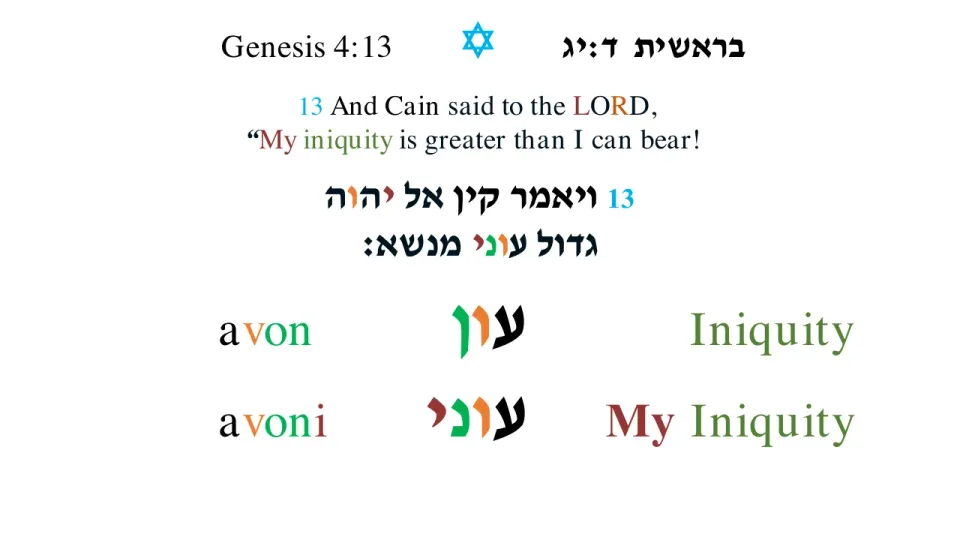
Genesis 4:13 4 slides
Genesis 4:14 6 slides
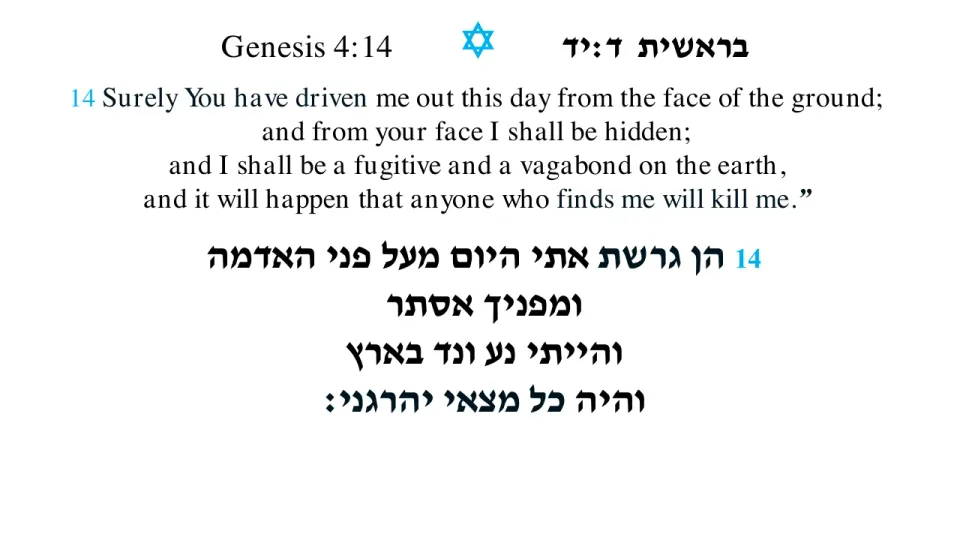 Genesis 4:14 — “I shall be hidden… a fugitive and a vagabond”Abel · Slide 115
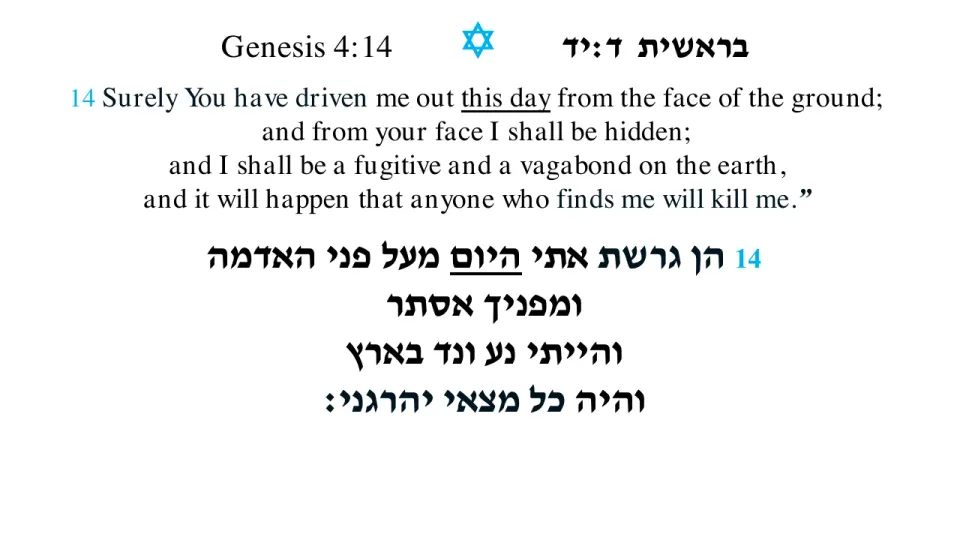 Genesis 4:14 — “this day” (היום) underlinedAbel · Slide 116
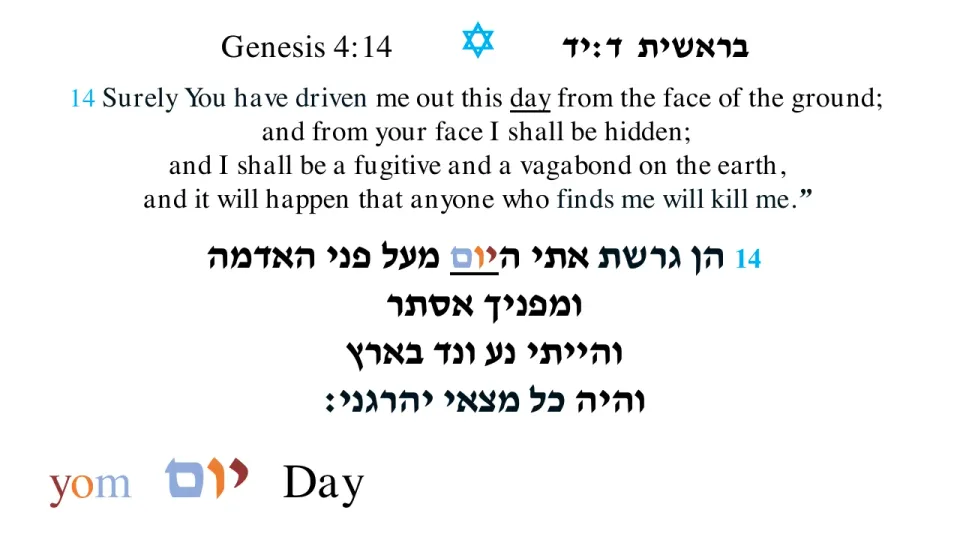 Genesis 4:14 — “day” (yom, יום)Abel · Slide 117
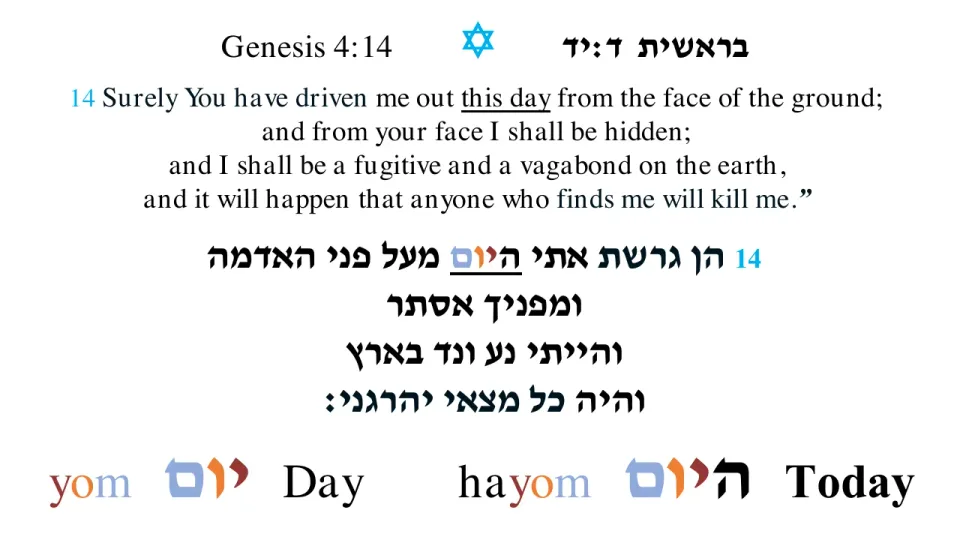 Genesis 4:14 — “today” (hayom, היום) from “day” (yom, יום)Abel · Slide 118
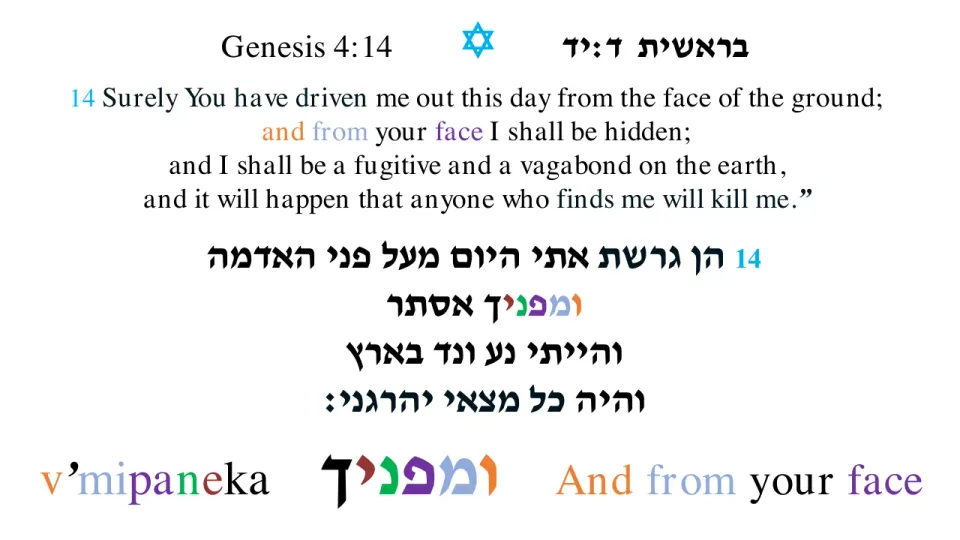 Genesis 4:14 — “and from your face” (v’mipaneka, ומפניך)Abel · Slide 119
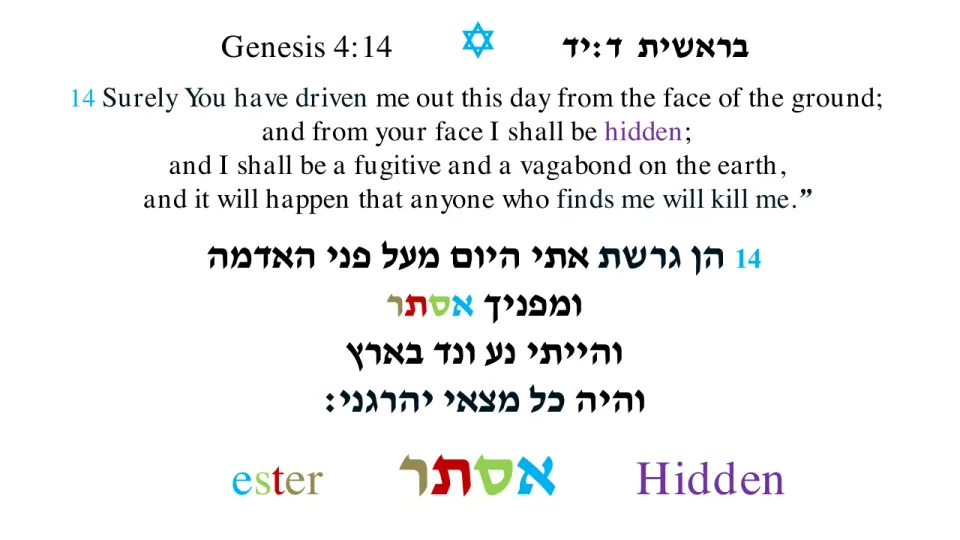 Genesis 4:14 — “hidden” (ester, אסתר)Abel · Slide 120