Pictures
1,456 slides with paintings, photos, maps and charts.
The Akedah II: The Briding of Isaac 76 slides
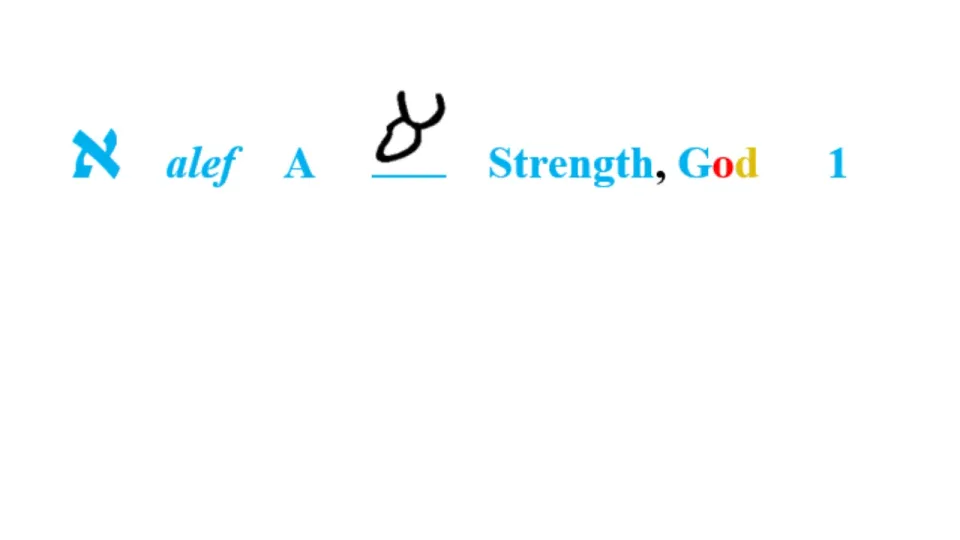 The letter alef: ox-head pictograph meaning strength, God; value 1Slide 2
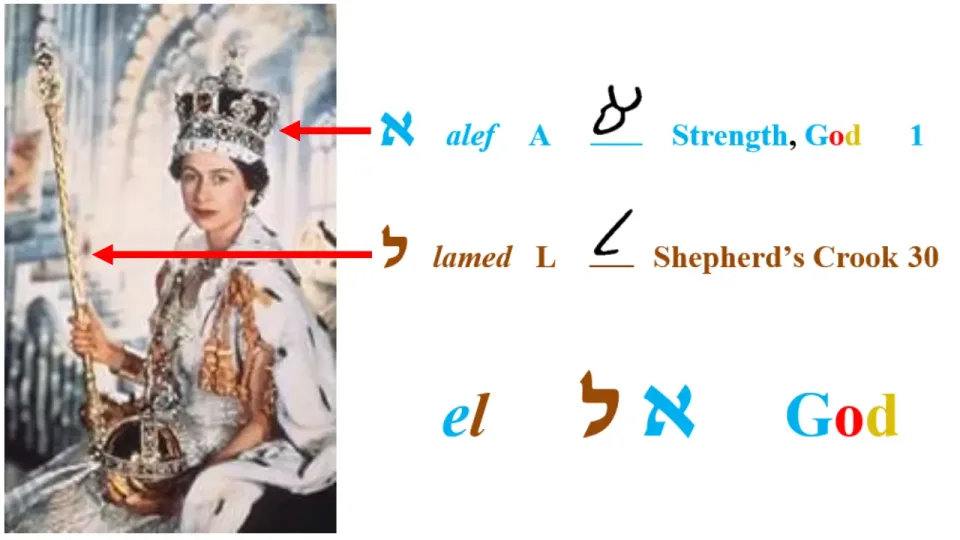 El (אל), God: alef (strength) + lamed (shepherd's crook)Slide 4
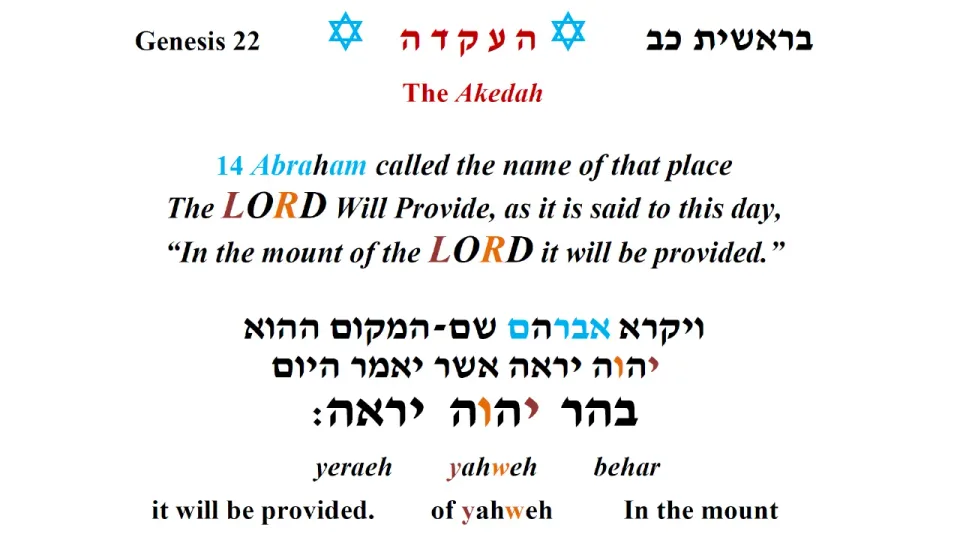 Genesis 22:14 — The LORD Will Provide: "In the mount of the LORD"Slide 5
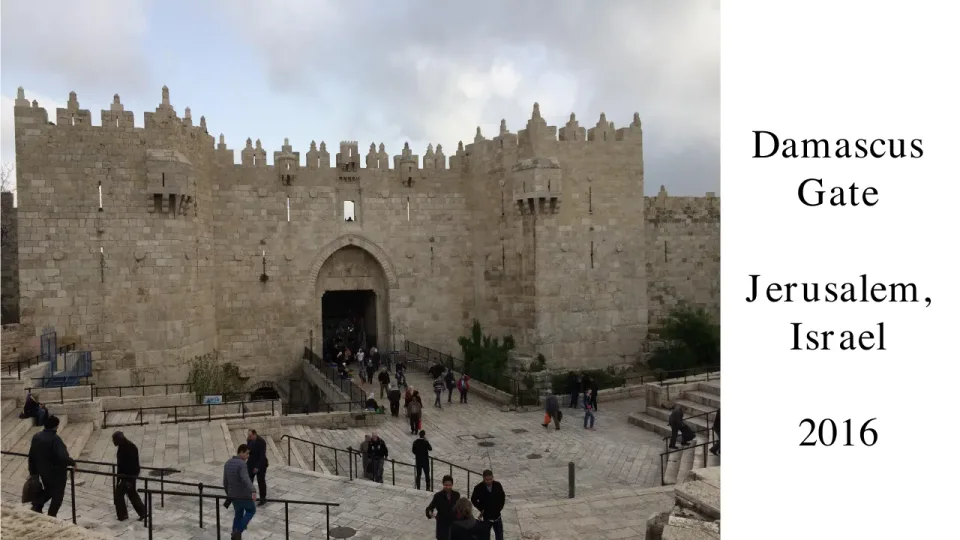 Photo: Damascus Gate, Jerusalem, Israel (2016)Slide 7
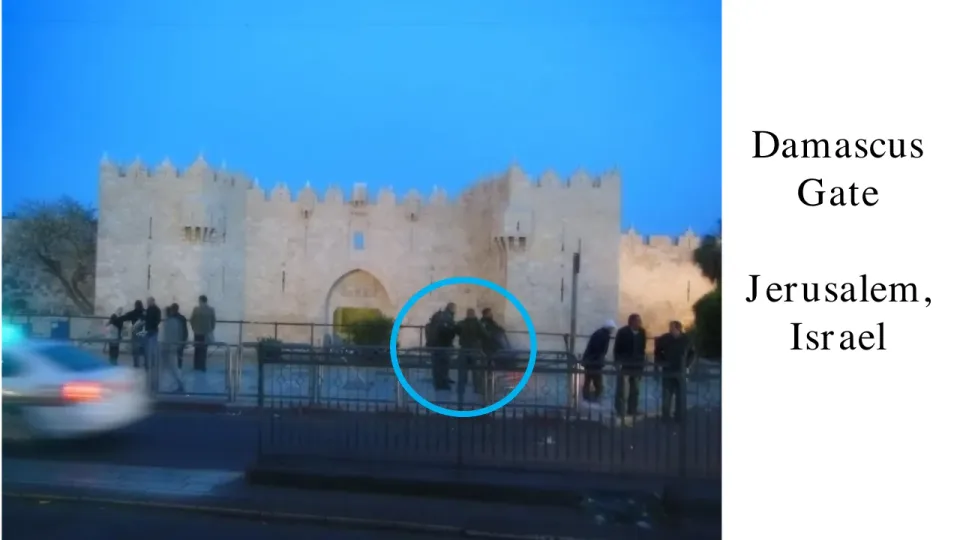 Photo: uniformed guards at the Damascus Gate, JerusalemSlide 8
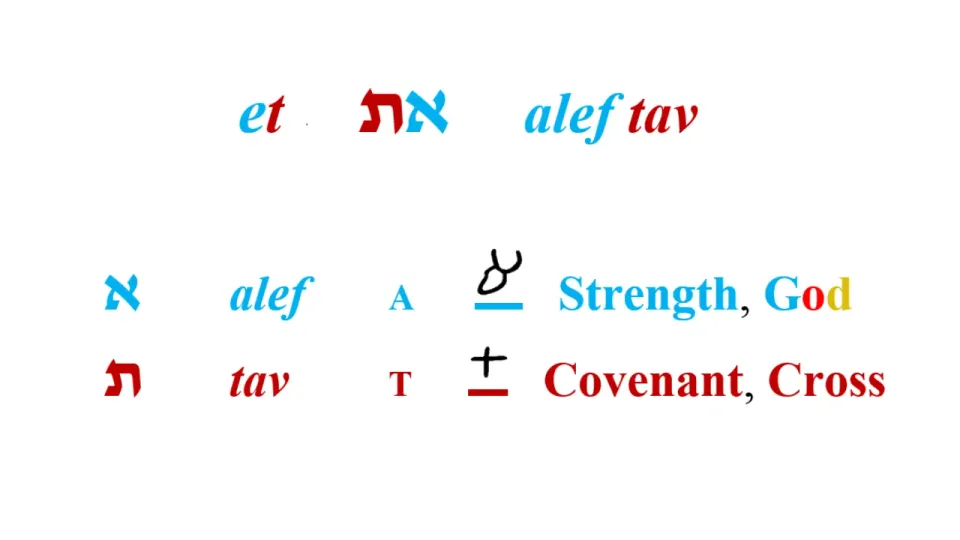 Et (את): alef-tav — strength/God and covenant/crossSlide 9
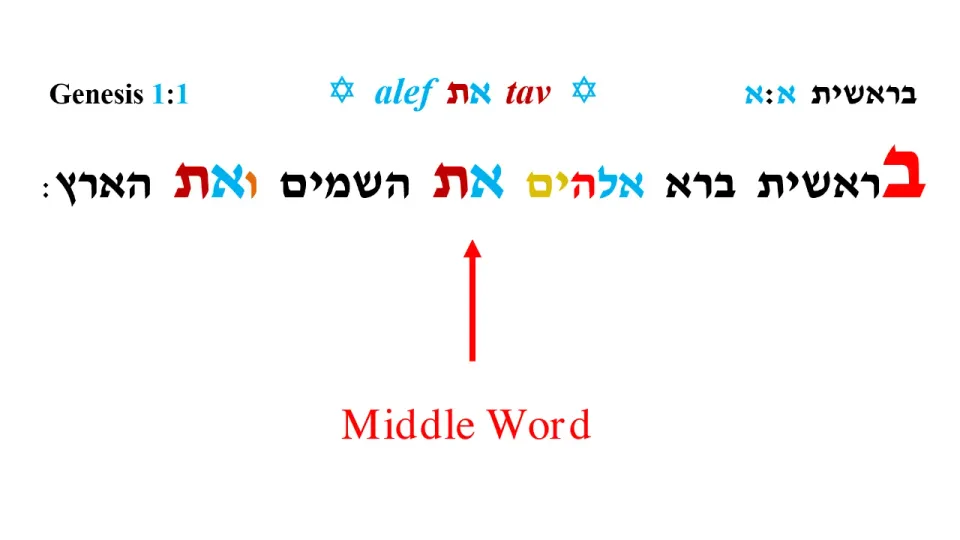 Genesis 1:1 — alef-tav (את) is the middle wordSlide 10
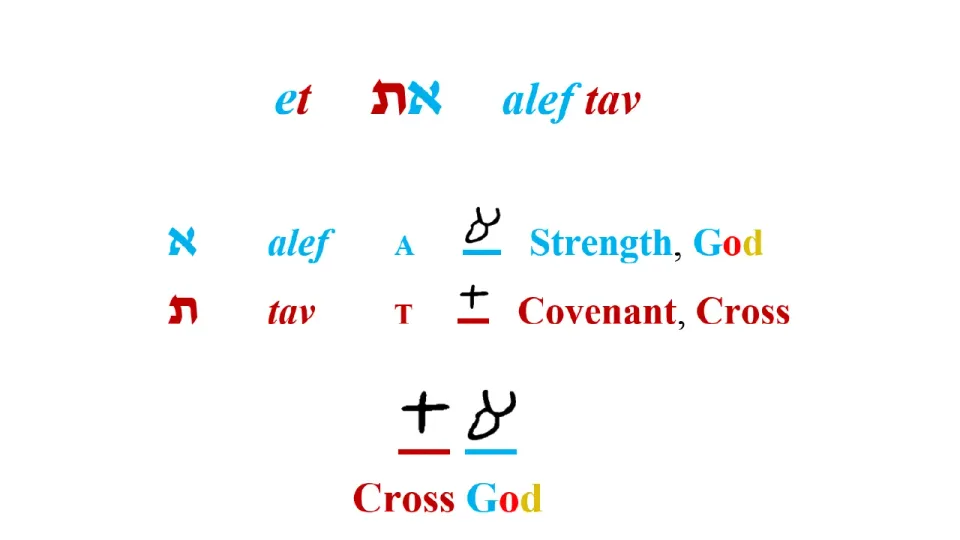 Alef-tav (את): alef is Strength/God, tav is Covenant/CrossSlide 11
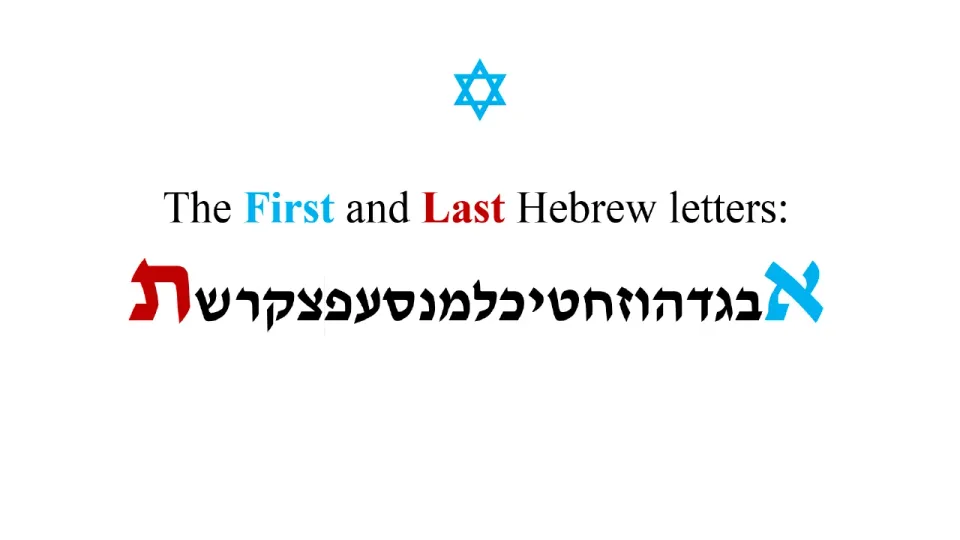 The first and last Hebrew letters: alef and tavSlide 12
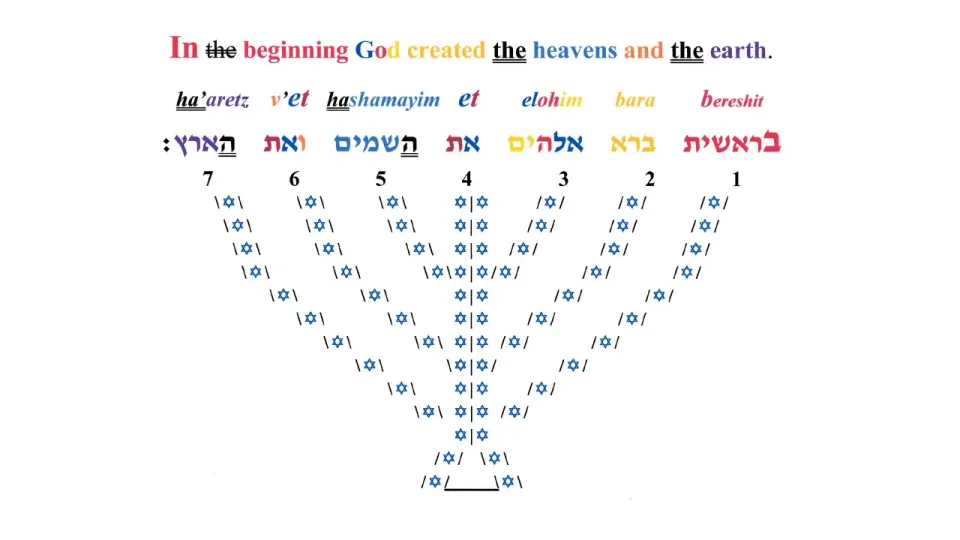 Genesis 1:1 — seven words with a menorah of stars; et is the centerSlide 13
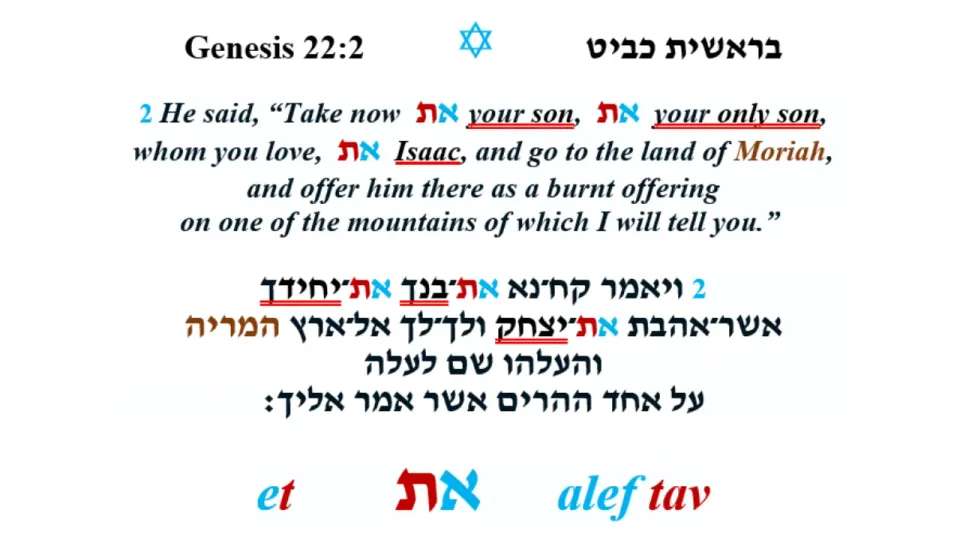 Genesis 22:2 — take your son, your only son Isaac; et marks each objectSlide 14
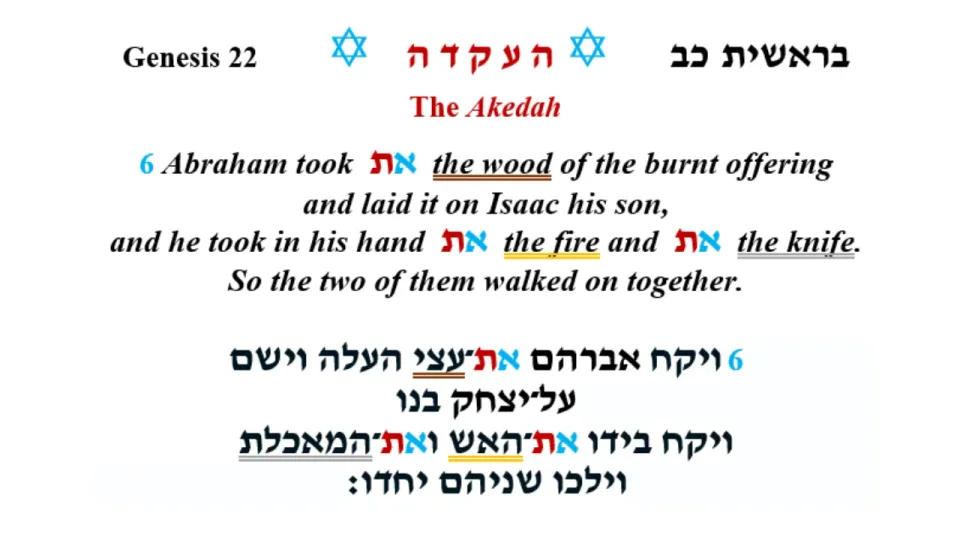 Genesis 22:6 — Abraham takes the wood, the fire and the knifeSlide 15
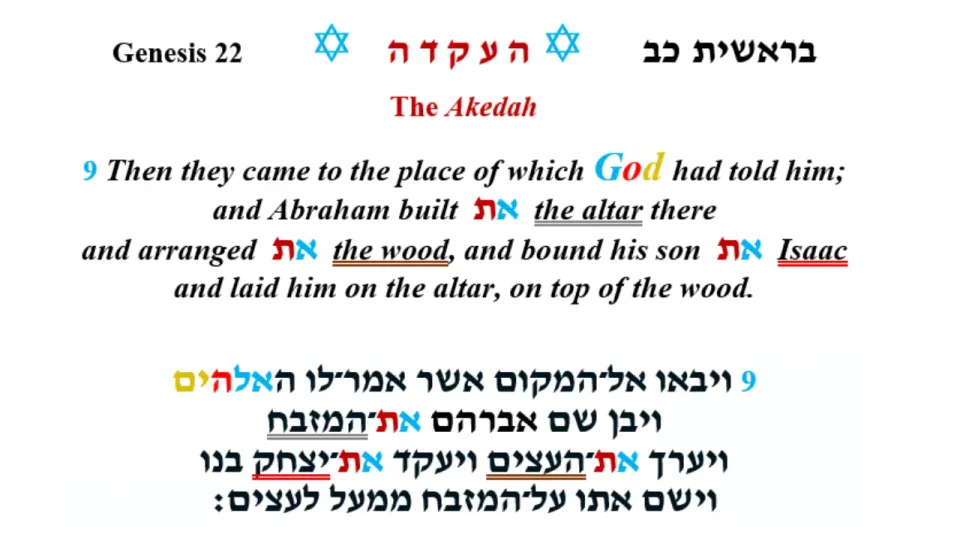 Genesis 22:9 — Abraham builds the altar and binds Isaac on the woodSlide 16
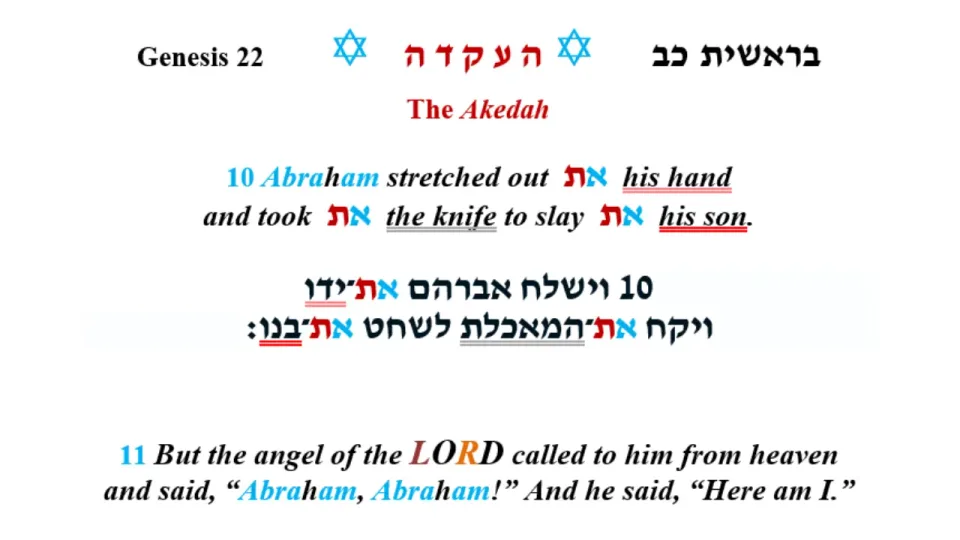 Genesis 22:10-11 — Abraham takes the knife; the angel calls from heavenSlide 17
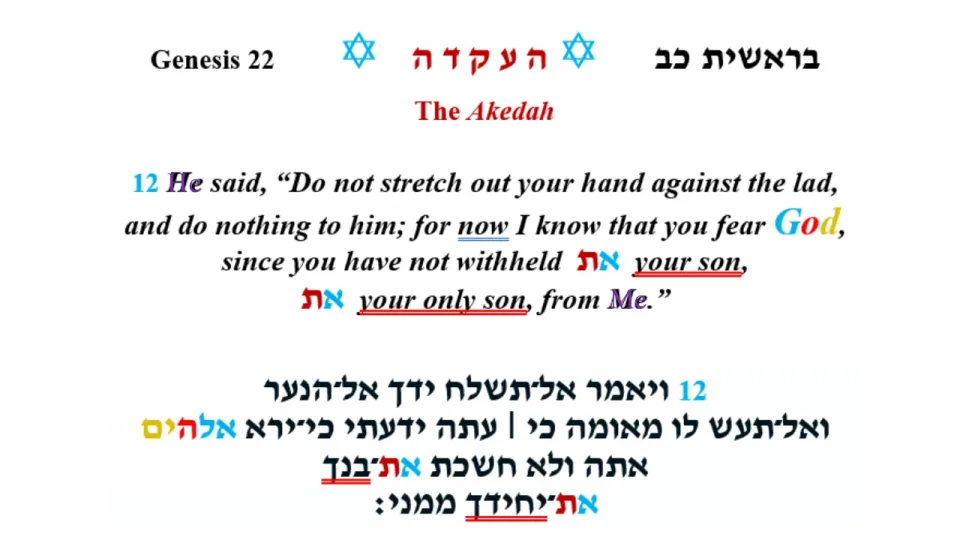 Genesis 22:12 — Do not stretch out your hand; now I know you fear GodSlide 18
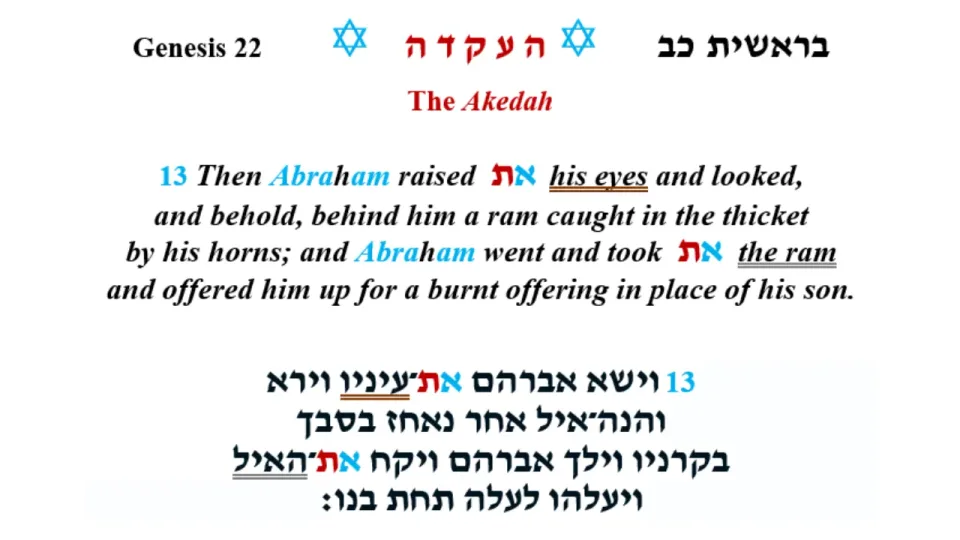 Genesis 22:13 — Abraham sees a ram and offers it in place of his sonSlide 19
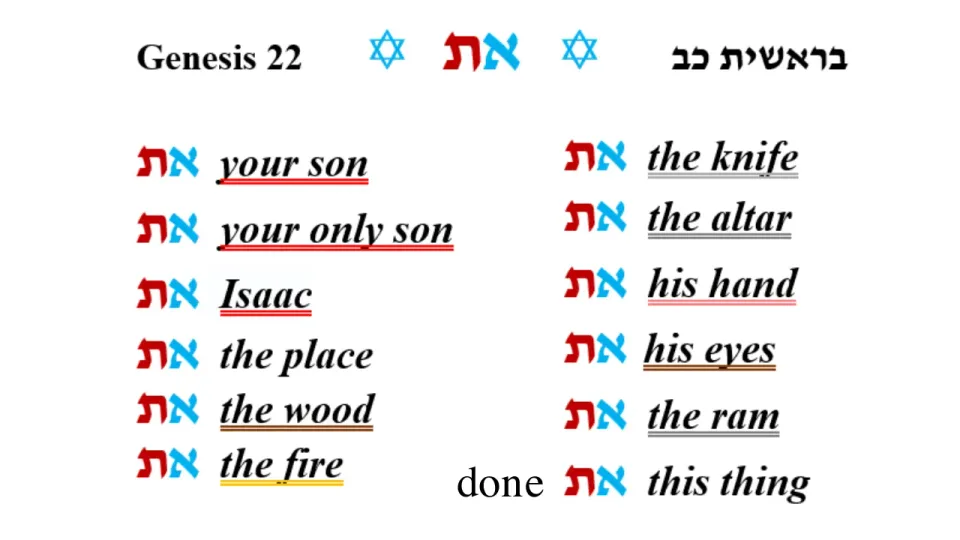 The word et (alef-tav) before twelve things in Genesis 22Slide 20
 Coca-Cola advertisement: “Coke is it!”Slide 21
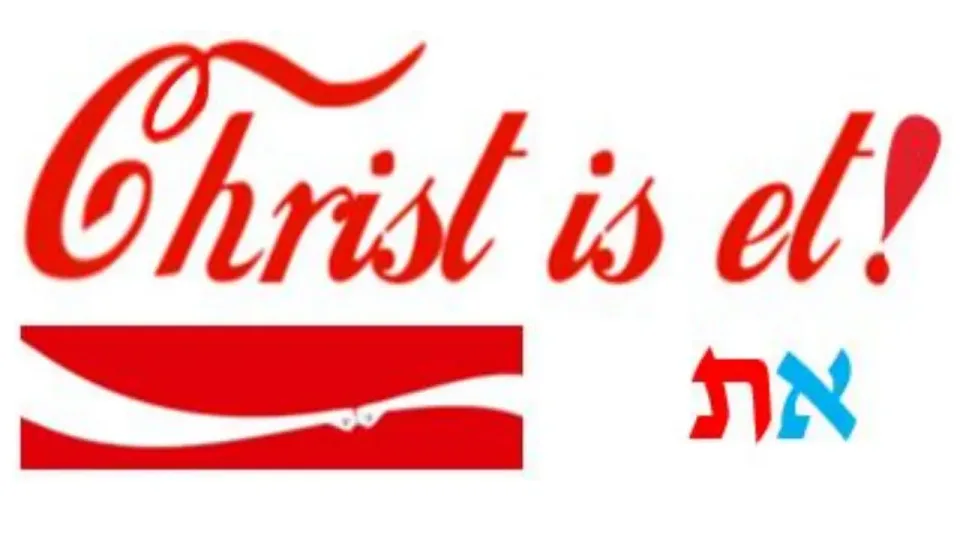 “Christ is et!” — a Coca-Cola style slogan with the Hebrew word etSlide 22
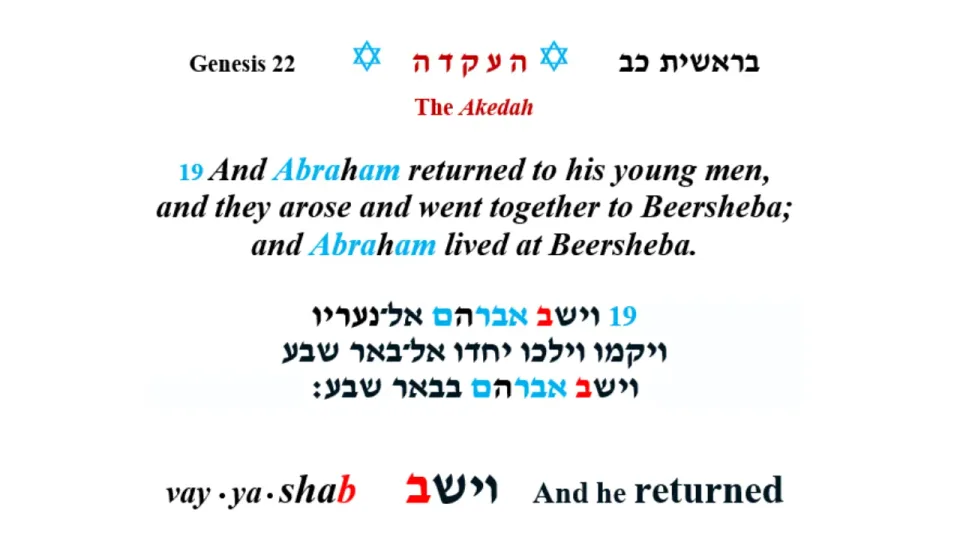 Genesis 22:19 — Abraham returned (vayashav) to BeershebaSlide 23
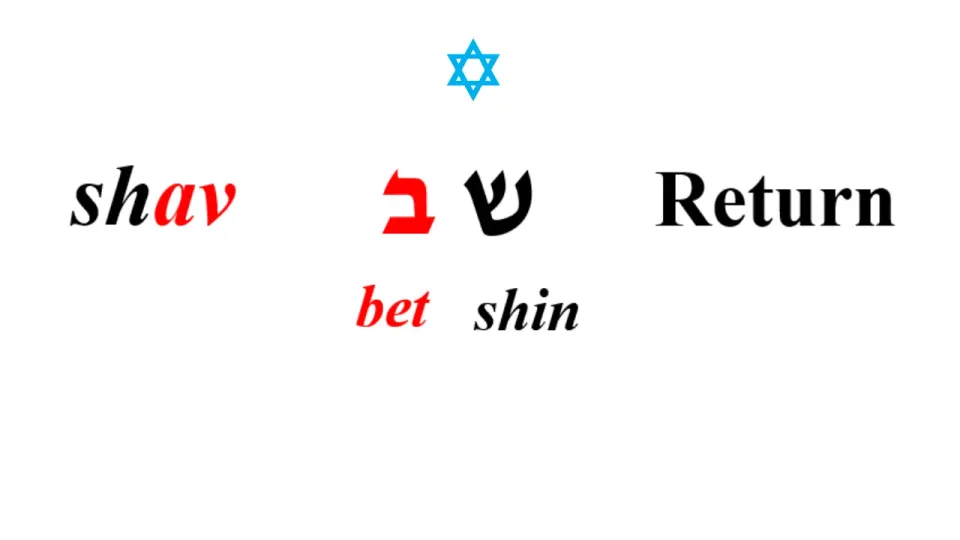 Shav (שב) means Return — spelled shin and betSlide 24
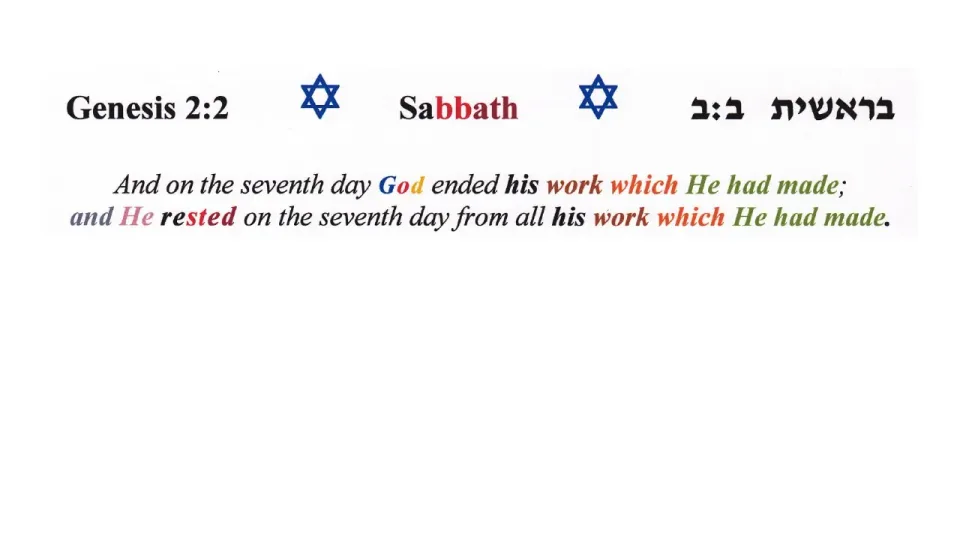 Genesis 2:2 — Sabbath: God ended his work and rested on the seventh daySlide 25
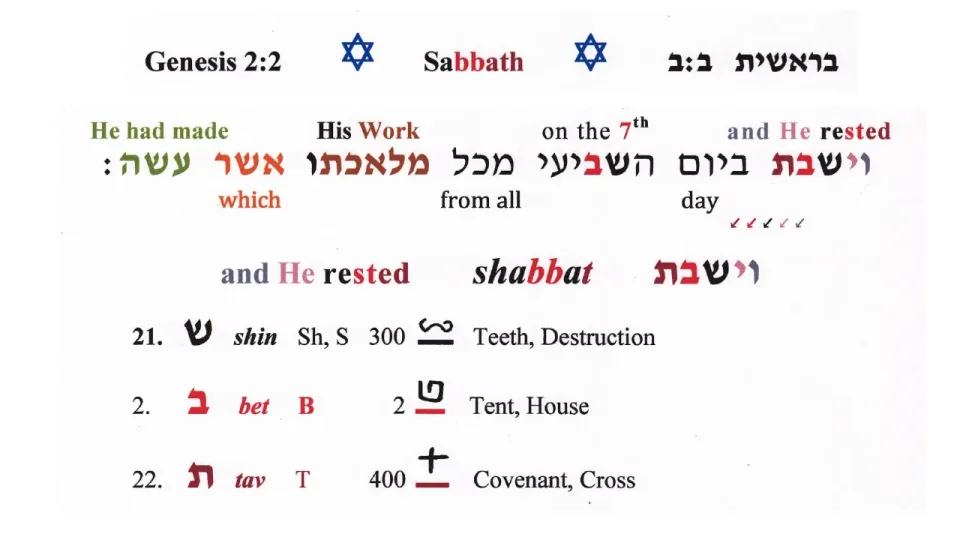 Genesis 2:2 — Sabbath: "and He rested" (shin, bet, tav)Slide 26
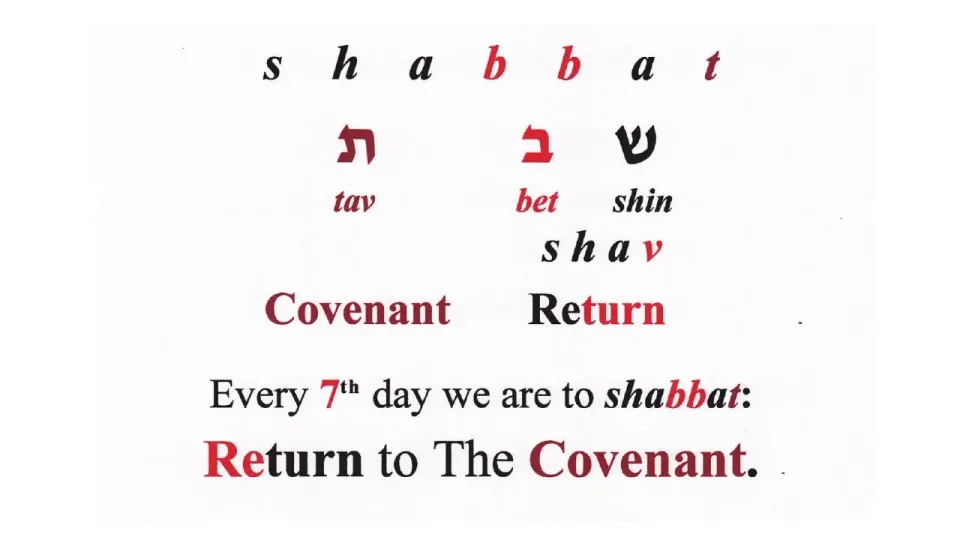 Shabbat = tav + bet + shin: Return to the CovenantSlide 27
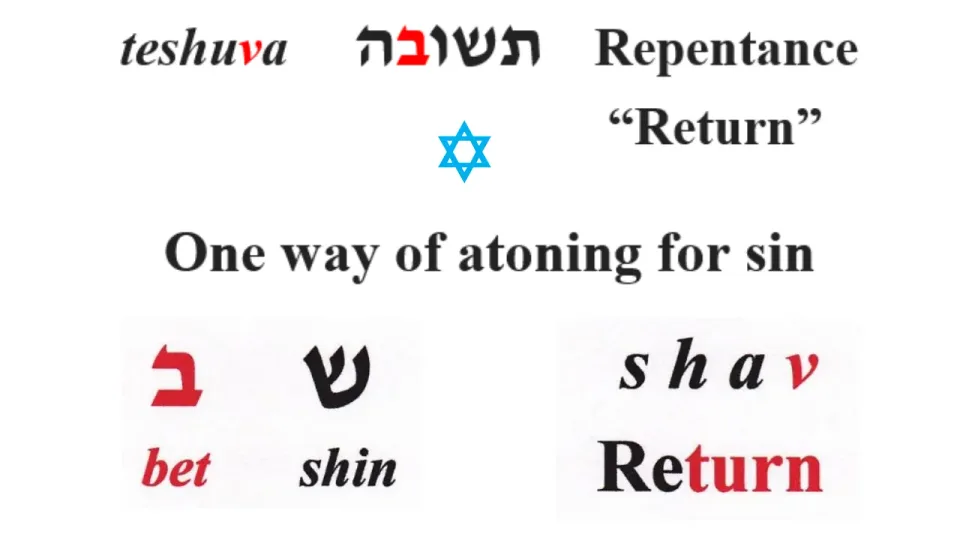 Teshuva (תשובה): repentance means "return"Slide 28
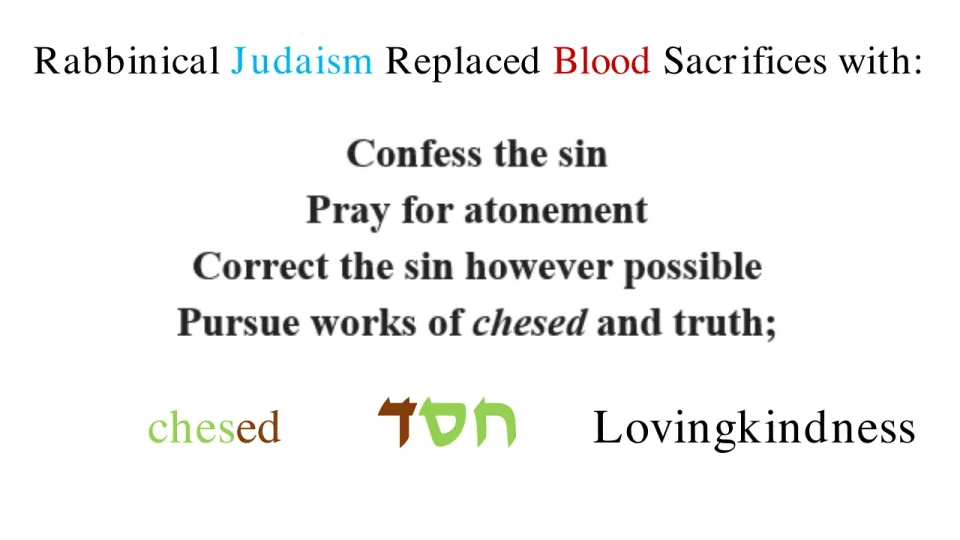 Rabbinical Judaism replaced blood sacrifices: chesed (lovingkindness)Slide 38
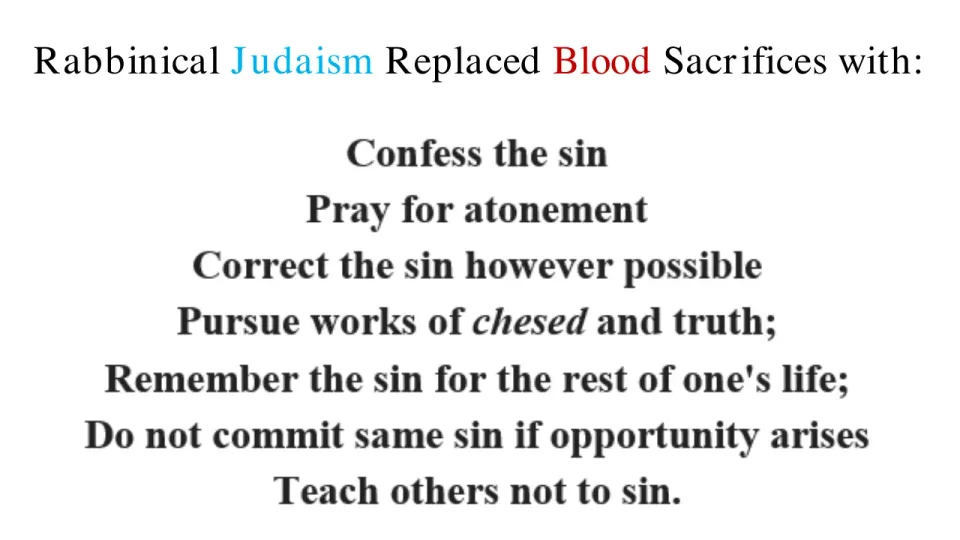 What Rabbinical Judaism put in place of blood sacrificesSlide 41
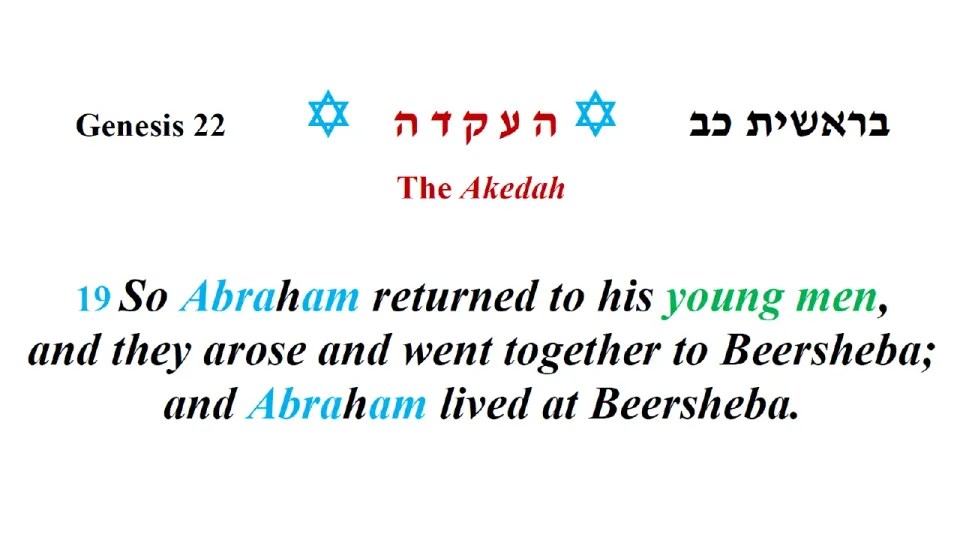 Genesis 22:19 — Abraham returned to his young men at BeershebaSlide 42
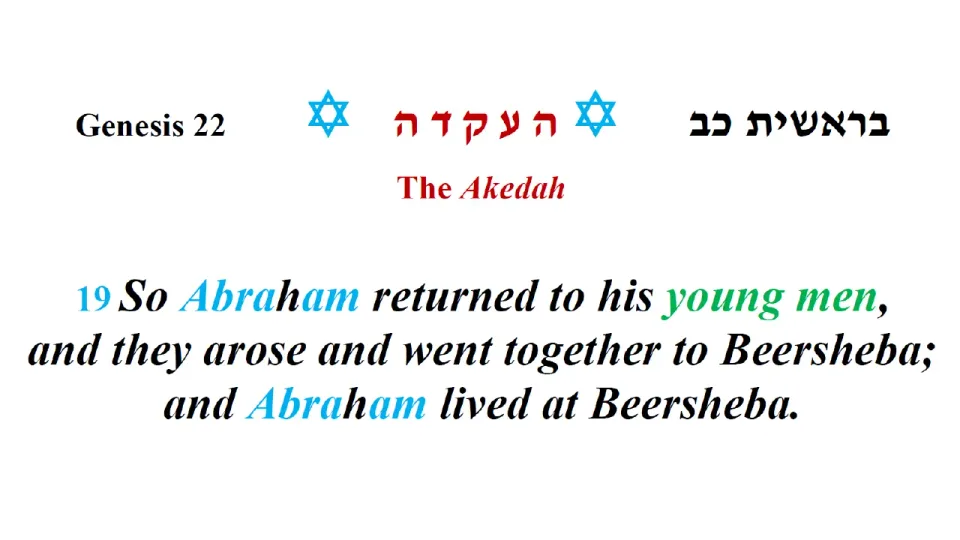 Genesis 22:19 — Abraham returned to his young men at BeershebaSlide 44
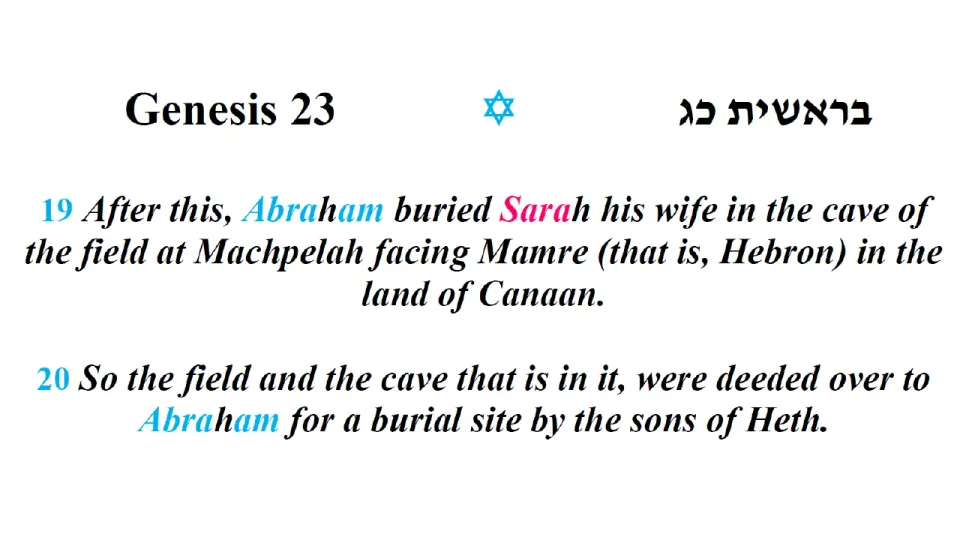 Genesis 23:19-20 — Abraham buries Sarah in the cave of MachpelahSlide 52
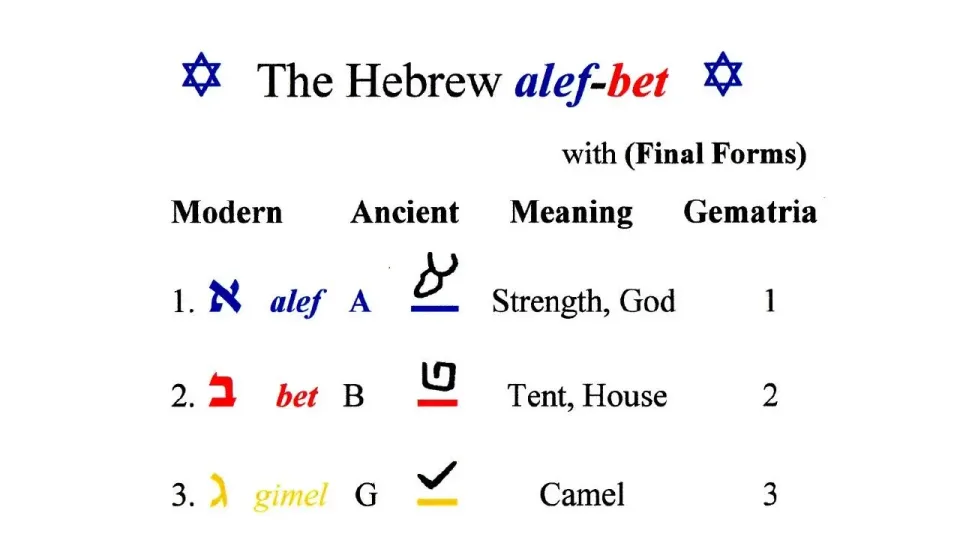 The Hebrew alef-bet: alef, bet, gimel with ancient formsSlide 54
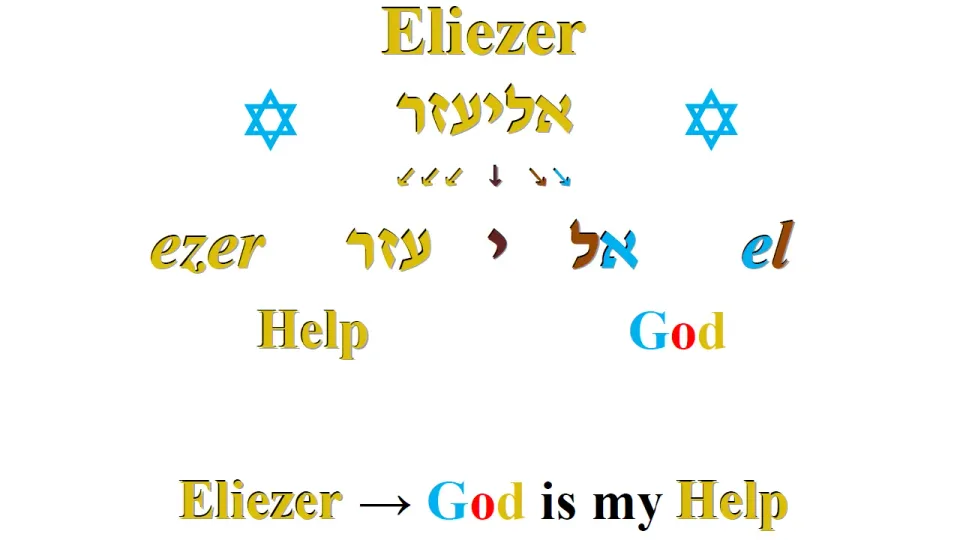 Eliezer (אליעזר) means "God is my Help"Slide 55
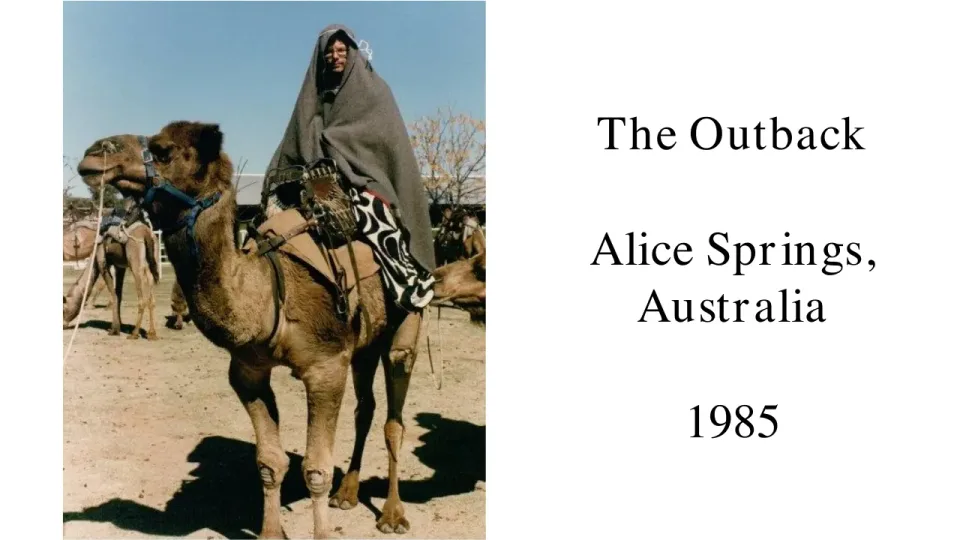 The Outback, Alice Springs, Australia, 1985 — rider on a camelSlide 60
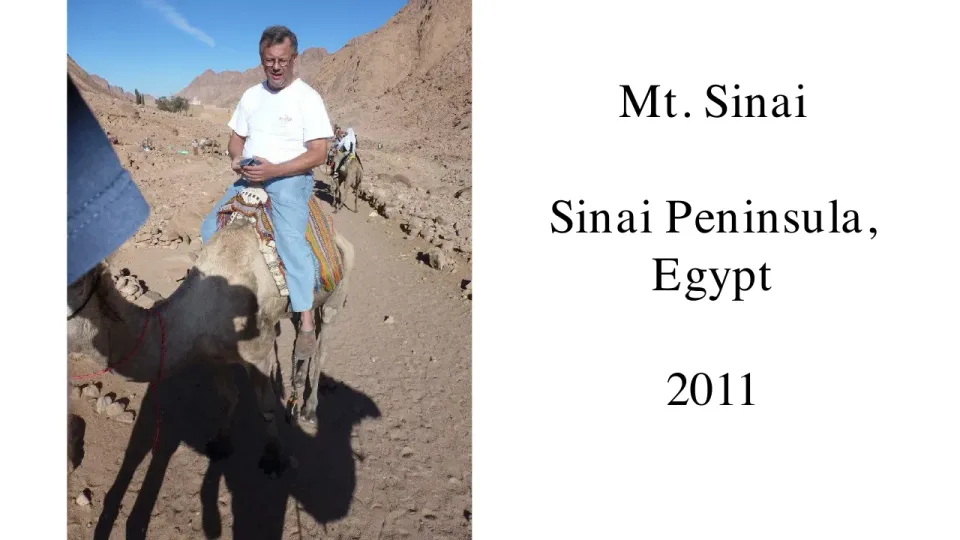 Mt. Sinai, Sinai Peninsula, Egypt, 2011 — man riding a camelSlide 61
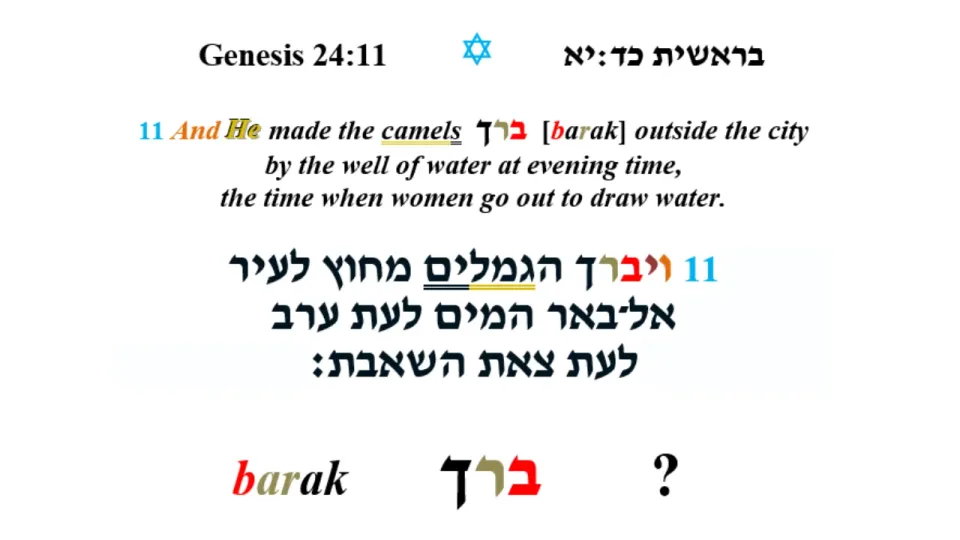 Genesis 24:11 — the camels made to barak (ברך) by the wellSlide 62
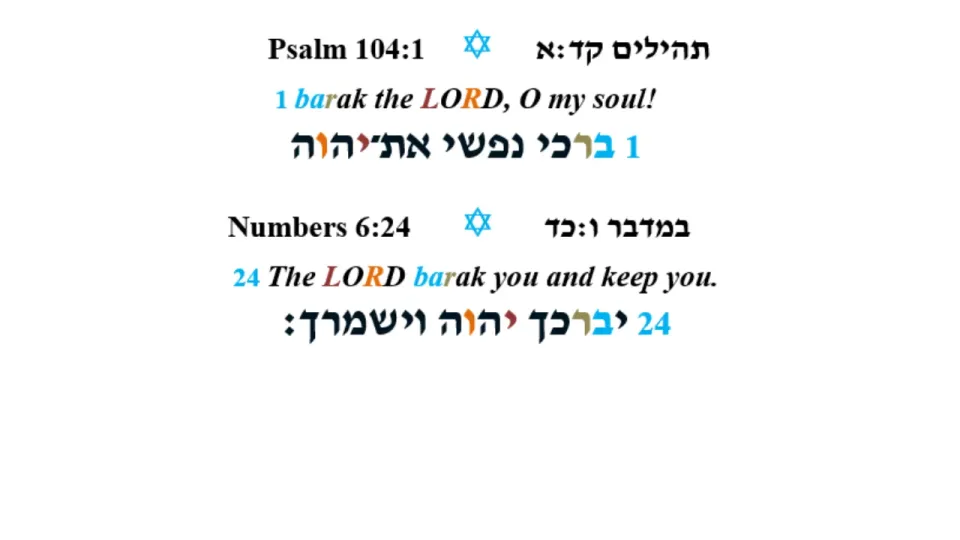 Psalm 104:1 and Numbers 6:24 — barak the LORD / the LORD barak youSlide 64
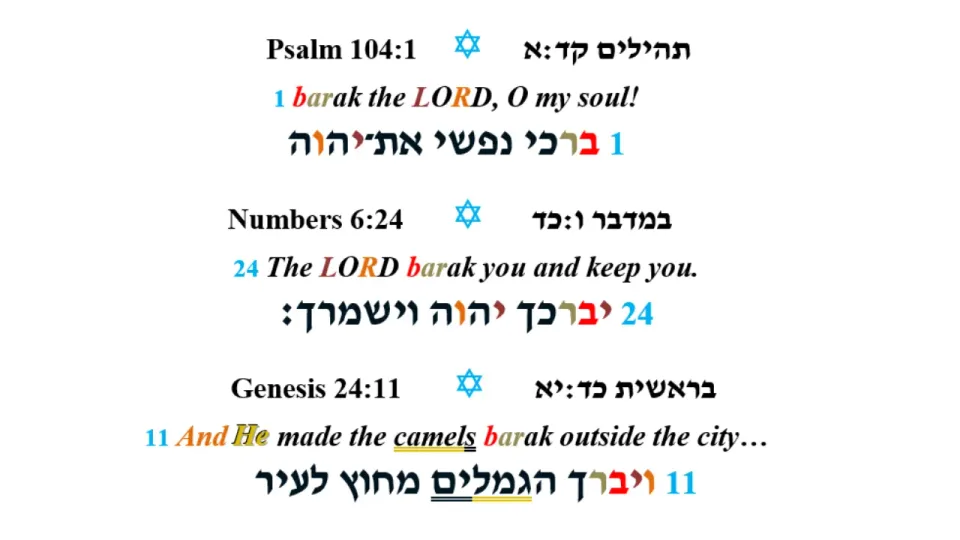 barak in Psalm 104:1, Numbers 6:24 and Genesis 24:11 (camels)Slide 67
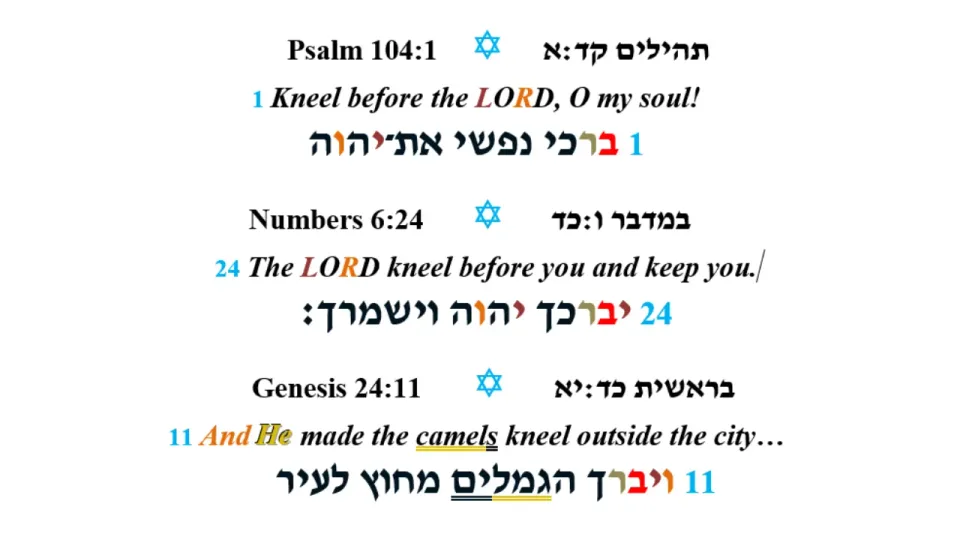 Three verses read with "kneel": Psalm 104:1, Numbers 6:24, Genesis 24:11Slide 68
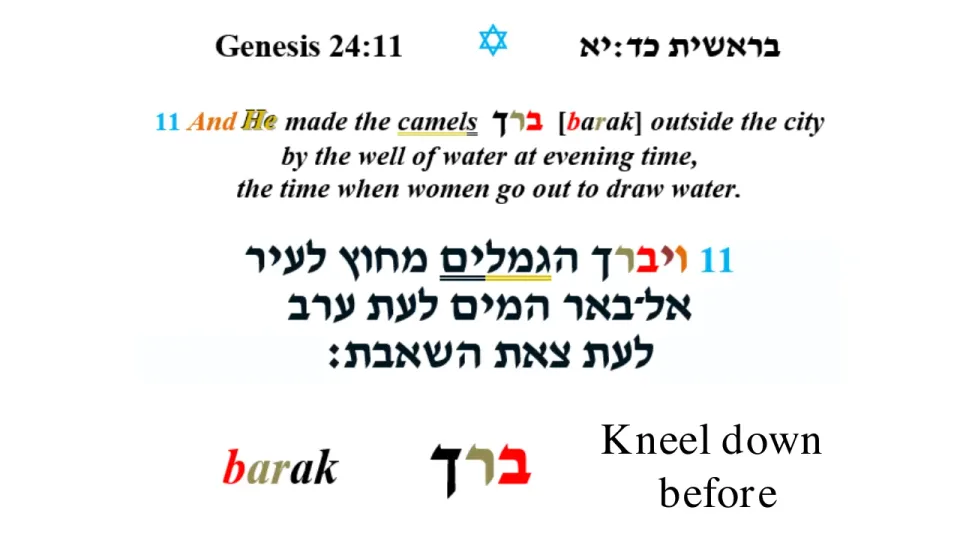 Genesis 24:11 — the camels barak: "kneel down before"Slide 69
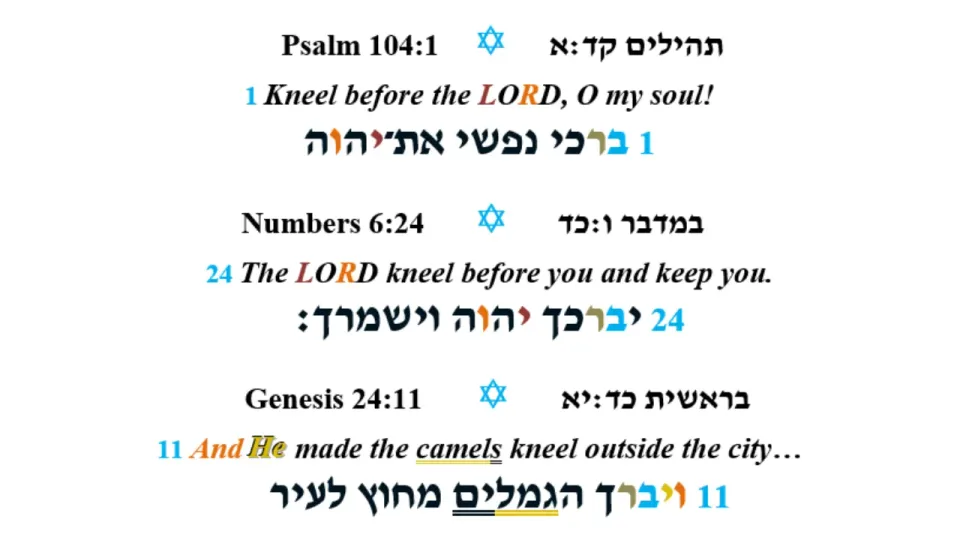 Three verses read with "kneel": Psalm 104:1, Numbers 6:24, Genesis 24:11Slide 70
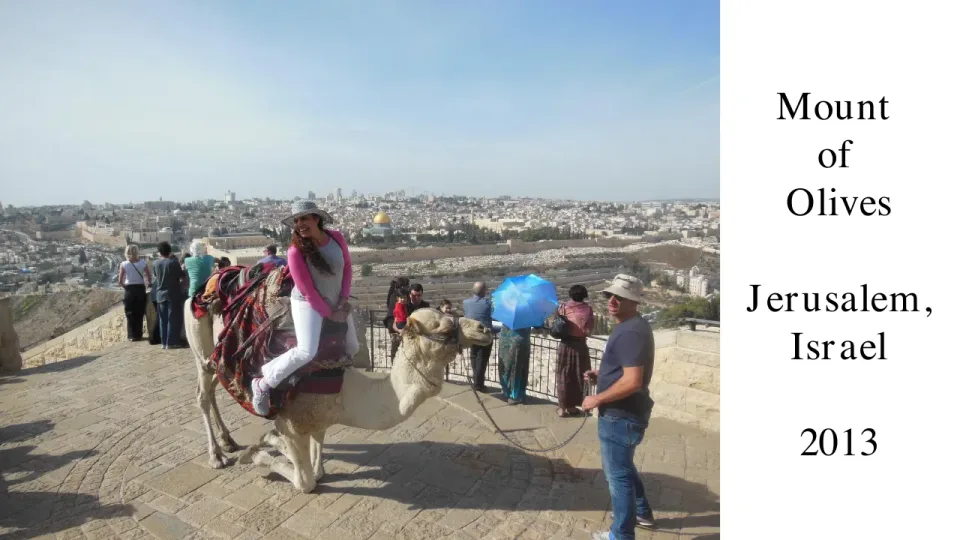 Photo: woman on a kneeling camel, Mount of Olives, Jerusalem (2013)Slide 71
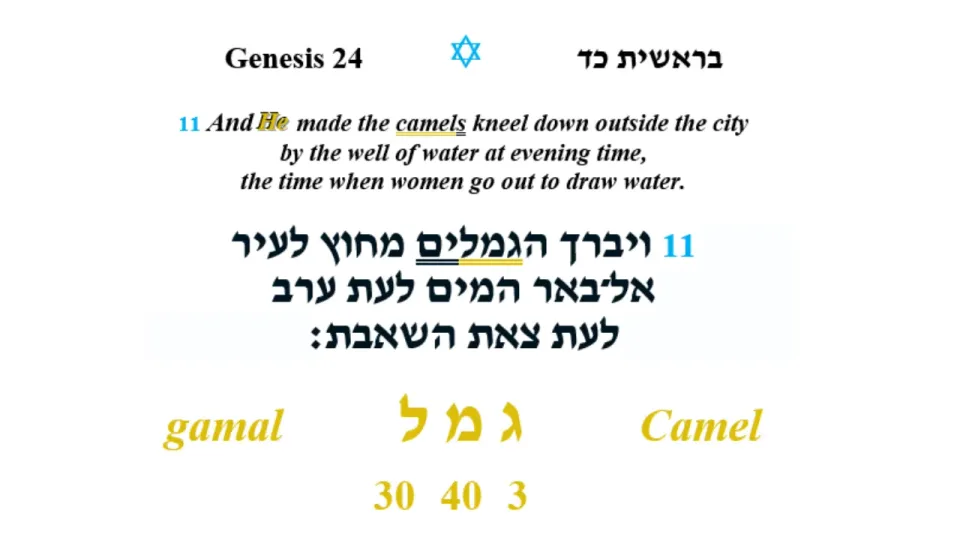 Genesis 24:11 — the camels (gamal גמל): letter values 30, 40, 3Slide 72
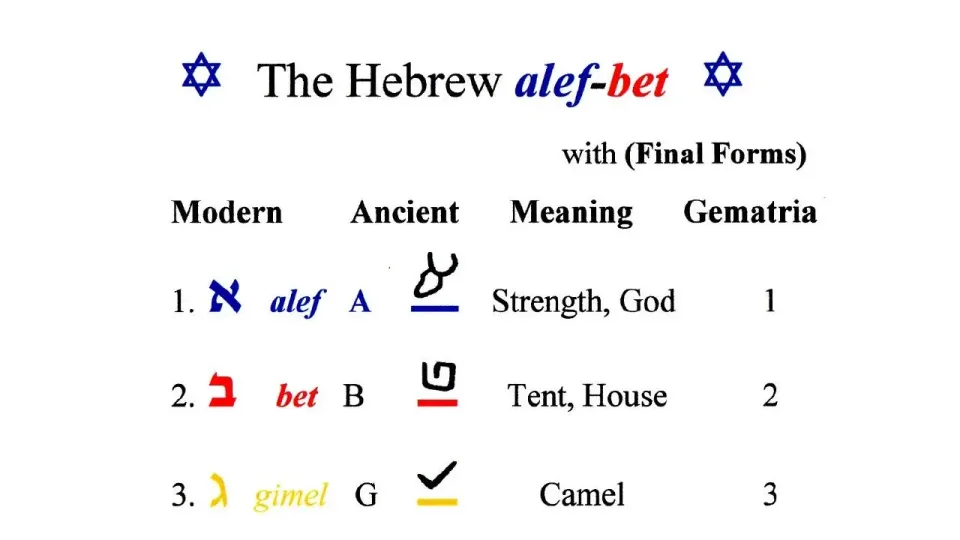 The Hebrew alef-bet: alef, bet, gimel with ancient letters, meanings, valuesSlide 73
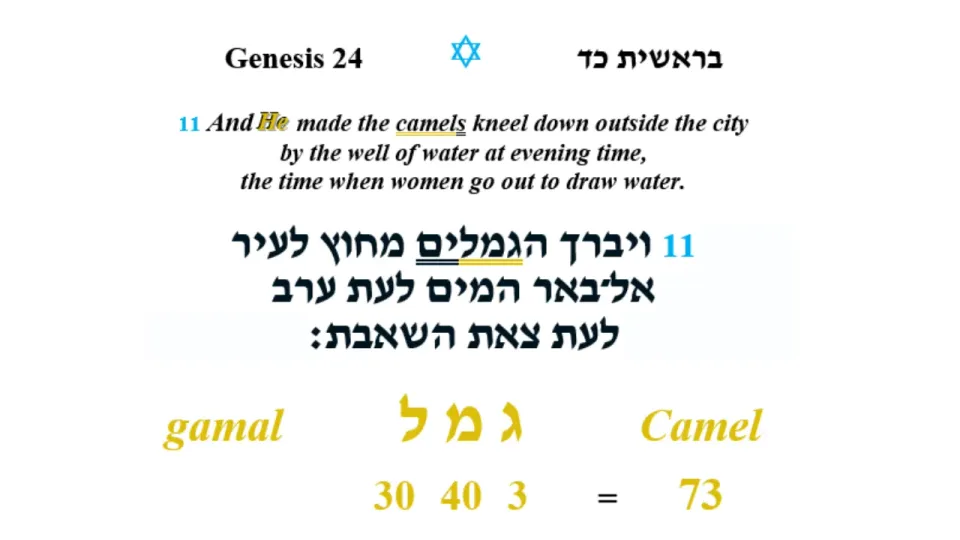 Genesis 24:11 — the camels: gamal גמל = 30 + 40 + 3 = 73Slide 74
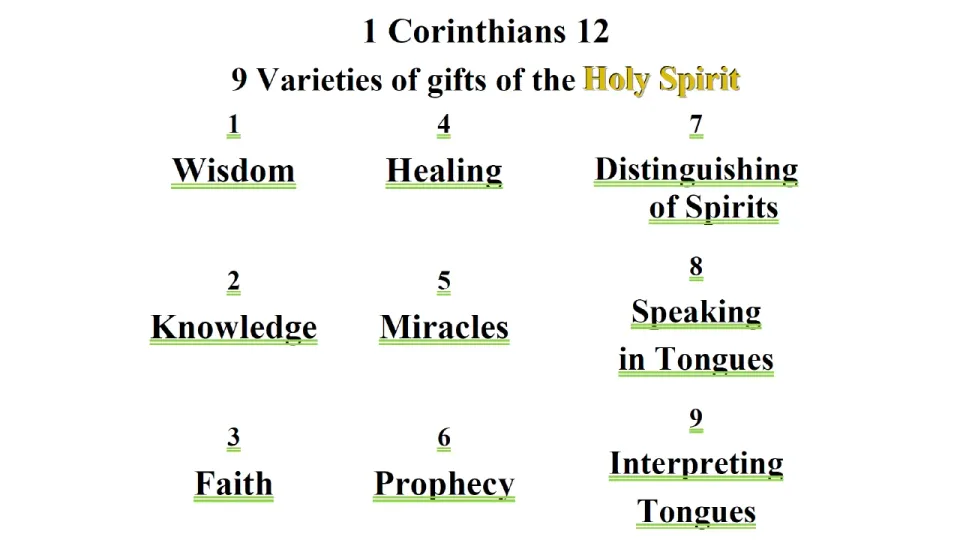 1 Corinthians 12: nine varieties of gifts of the Holy SpiritSlide 75
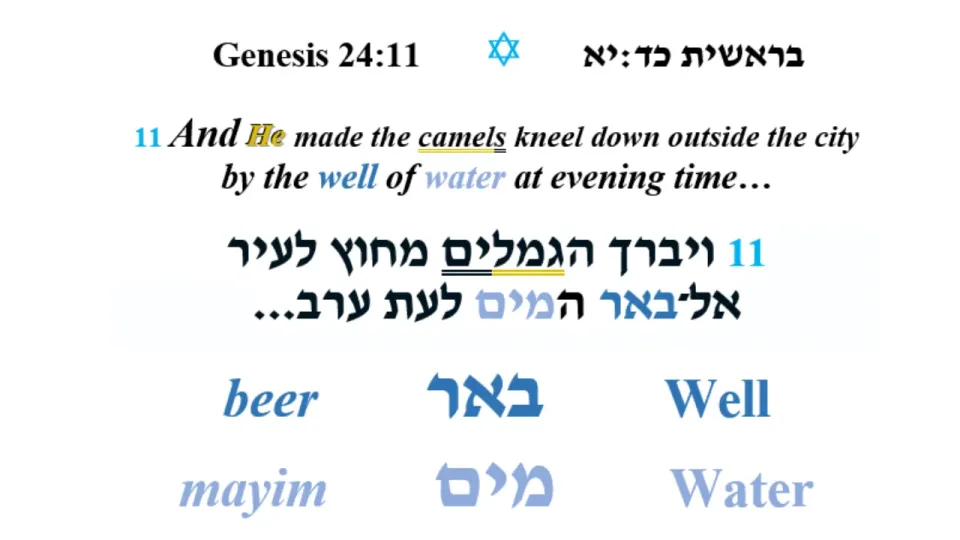 Genesis 24:11 — the well (beer באר) and the water (mayim מים)Slide 77
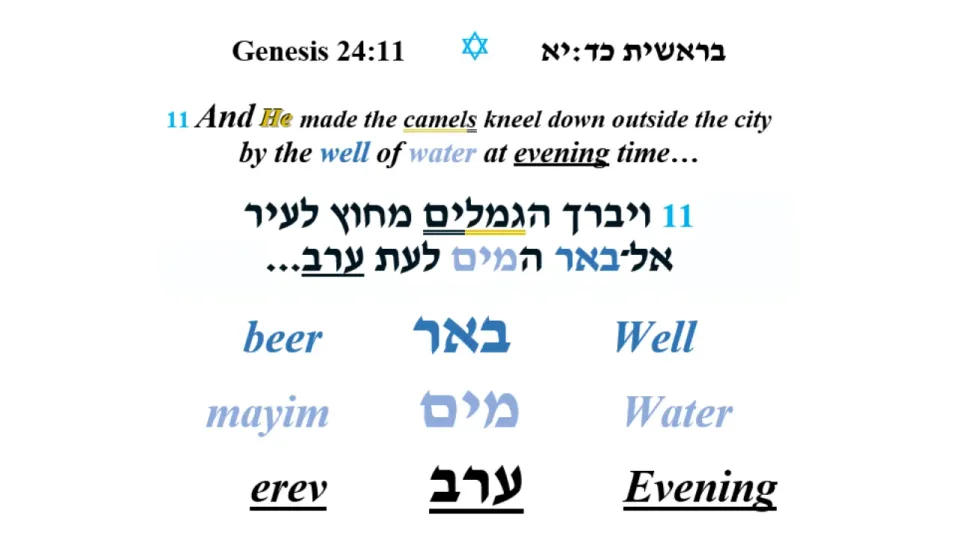 Genesis 24:11 — well (beer), water (mayim), evening (erev ערב)Slide 78
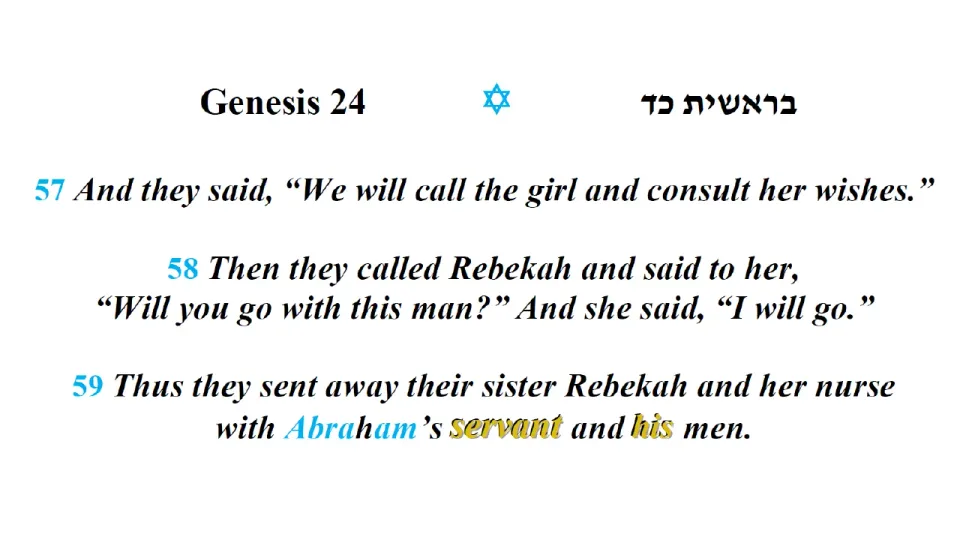 Genesis 24:57-59: 'Will you go with this man?' — 'I will go.'Slide 90
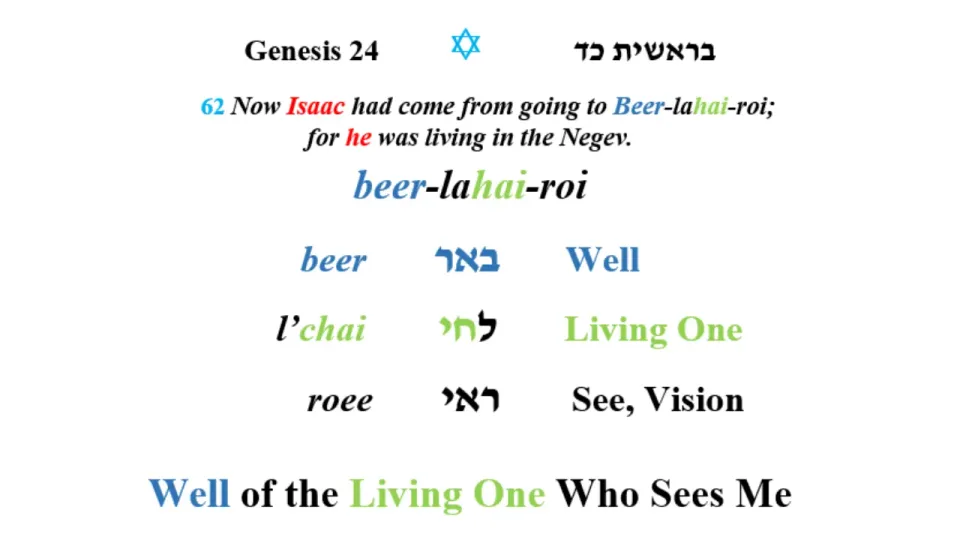 Beer-lahai-roi means 'Well of the Living One Who Sees Me'Slide 97
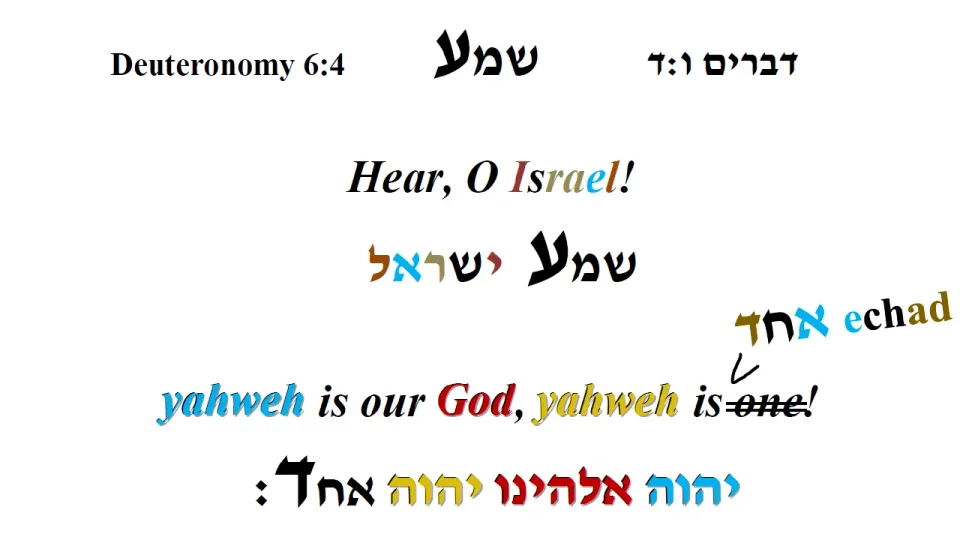 Deuteronomy 6:4 — Shema: Hear, O Israel, yahweh is echad (one)Slide 118
 Did Abraham truly love Isaac?Slide 119
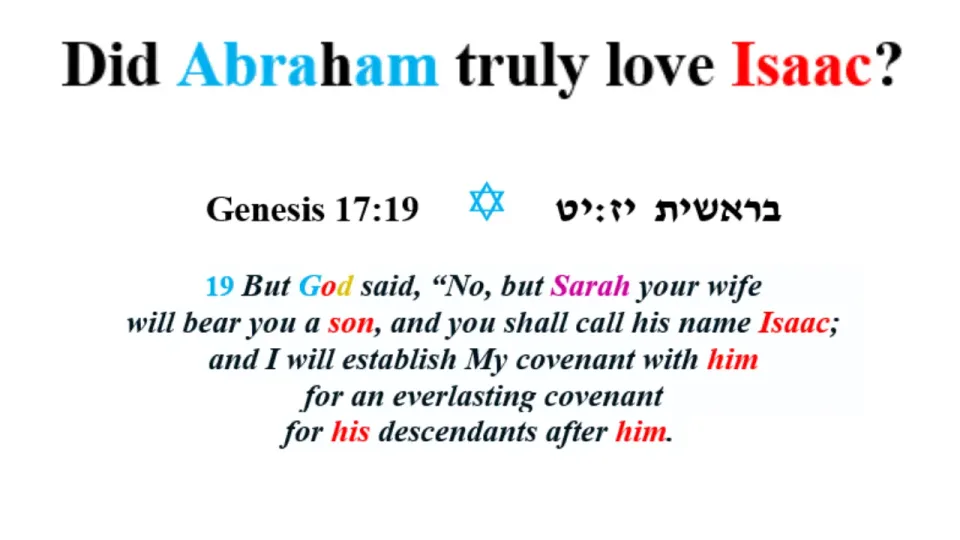 Did Abraham truly love Isaac? Genesis 17:19 — the promised son and covenantSlide 120
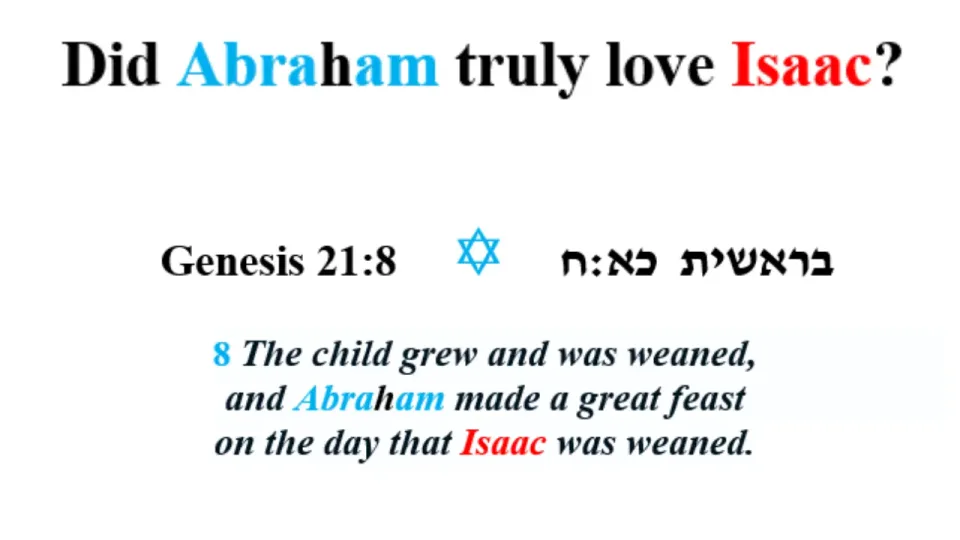 Did Abraham truly love Isaac? Genesis 21:8 — a great feast at Isaac's weaningSlide 121
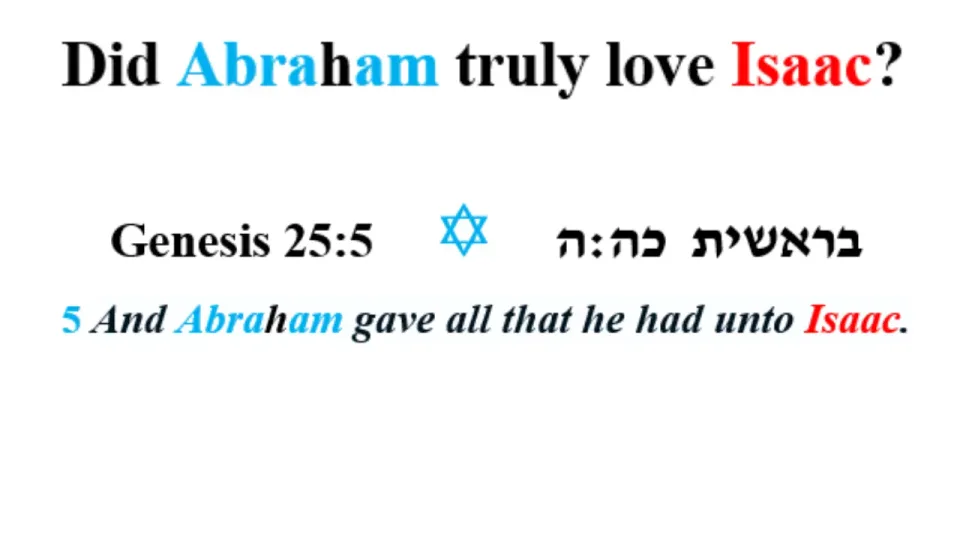 Did Abraham truly love Isaac? Genesis 25:5 — Abraham gave all he had to IsaacSlide 124
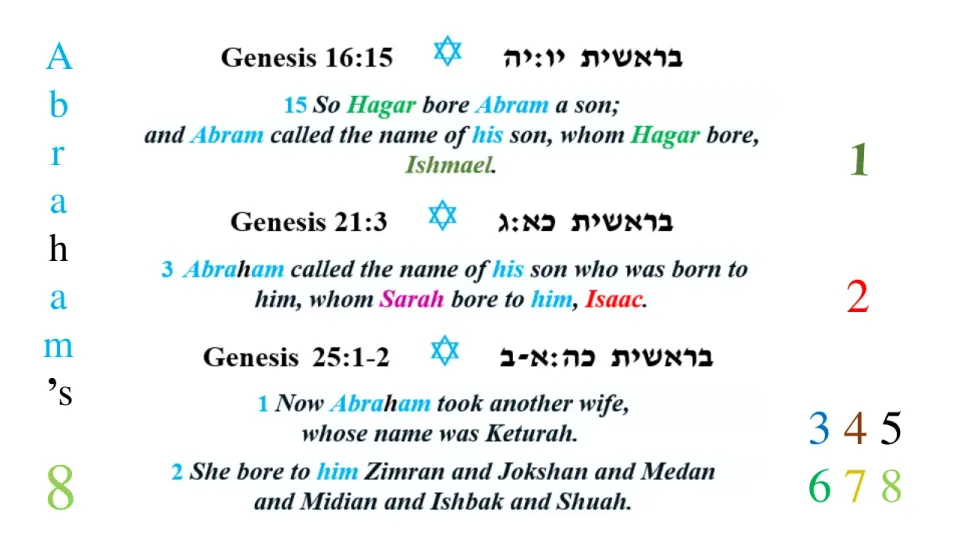 Abraham's 8 sons: Ishmael, Isaac and the six sons of KeturahSlide 125
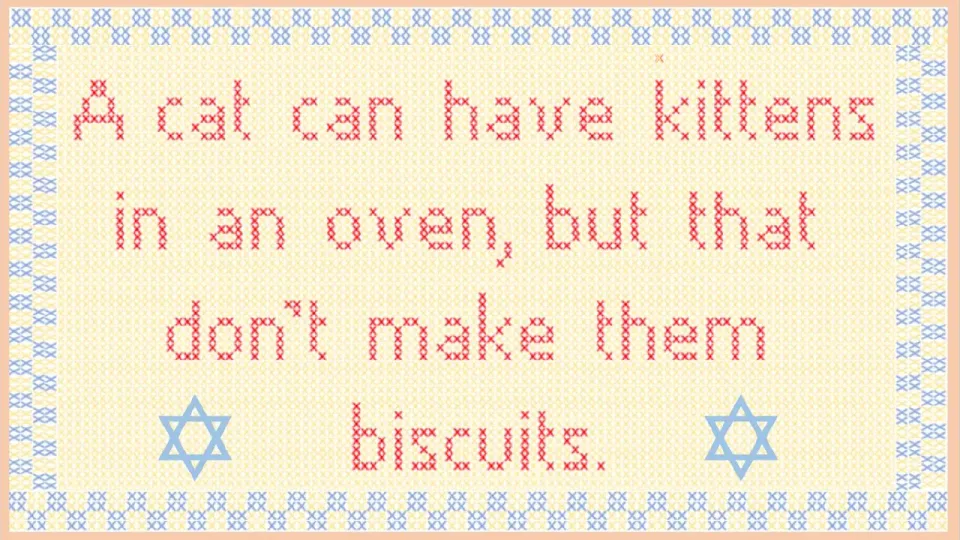 Cross-stitch saying: a cat can have kittens in an oven, but that don't make them biscuitsSlide 126
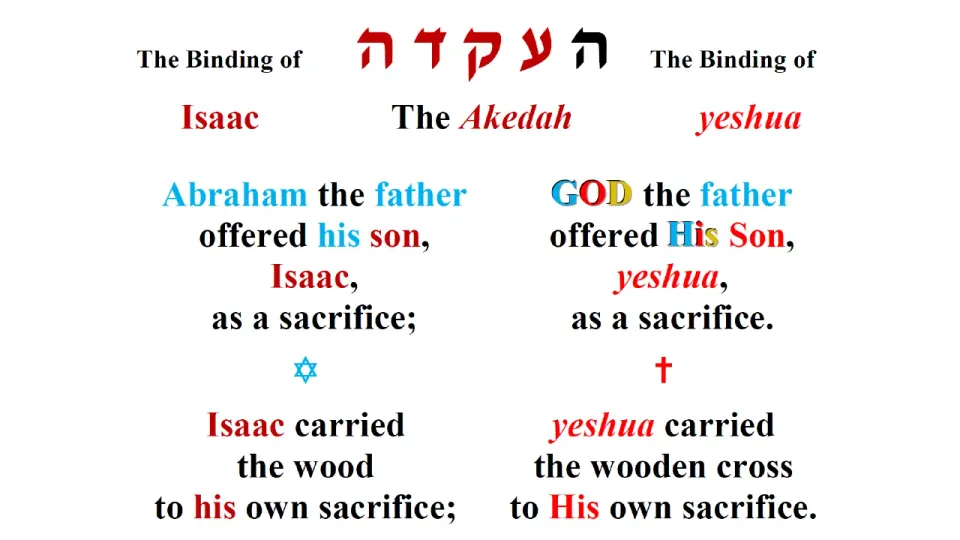 The Binding of Isaac and Yeshua: each carried the wood of his own sacrificeSlide 129
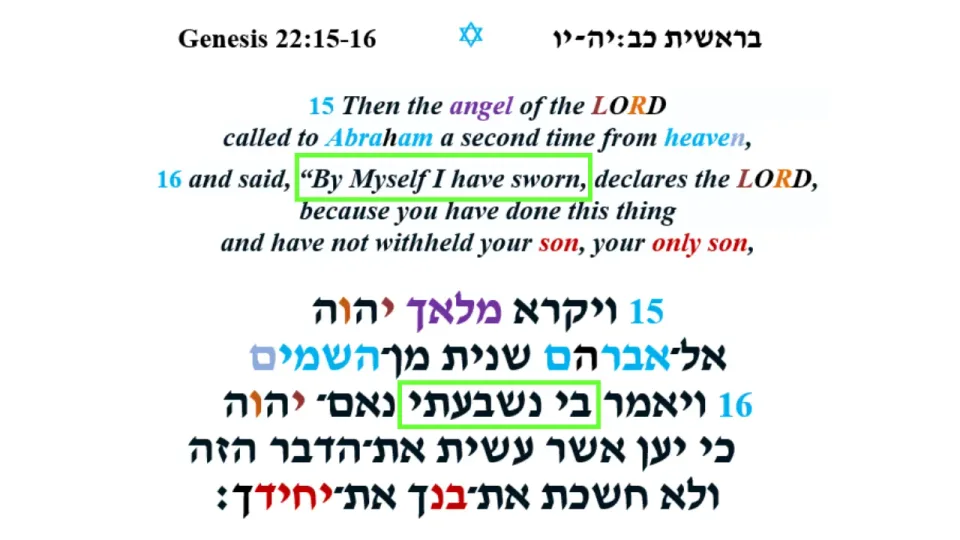 Genesis 22:15-16 — the angel calls again: “By Myself I have sworn”Slide 133
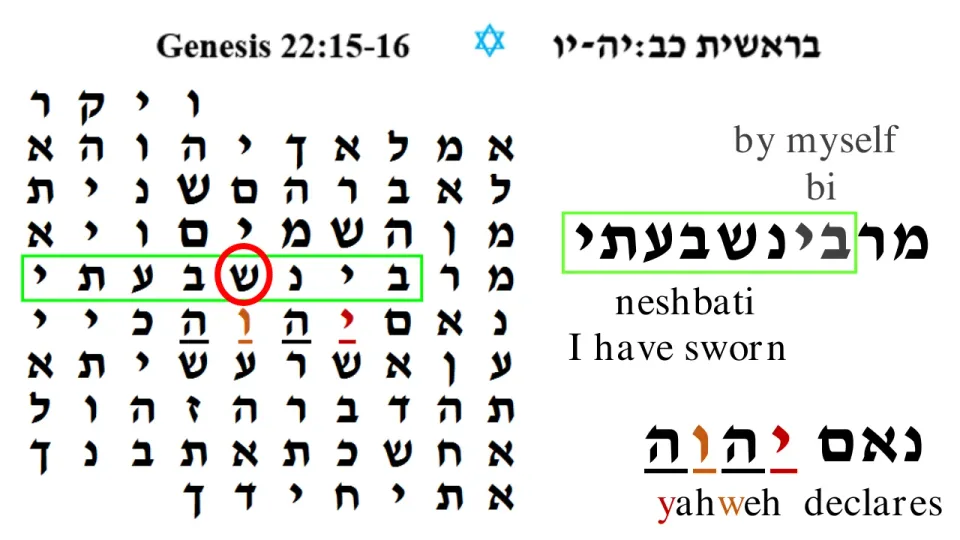 Akedah letter grid: the shin (ש) in “neshbati” circled (Gen 22:16)Slide 136
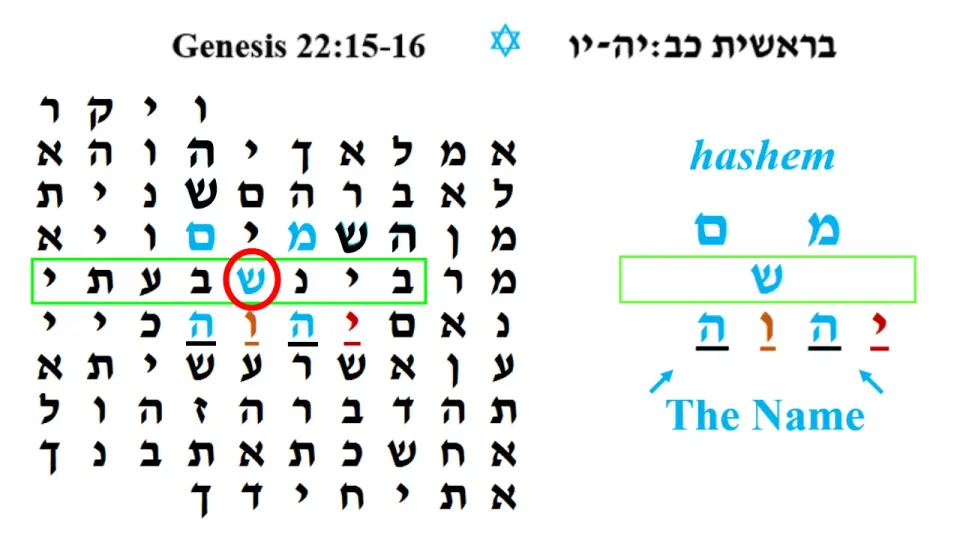 Akedah letter grid: ש circled, blue letters and “hashem — The Name”Slide 137
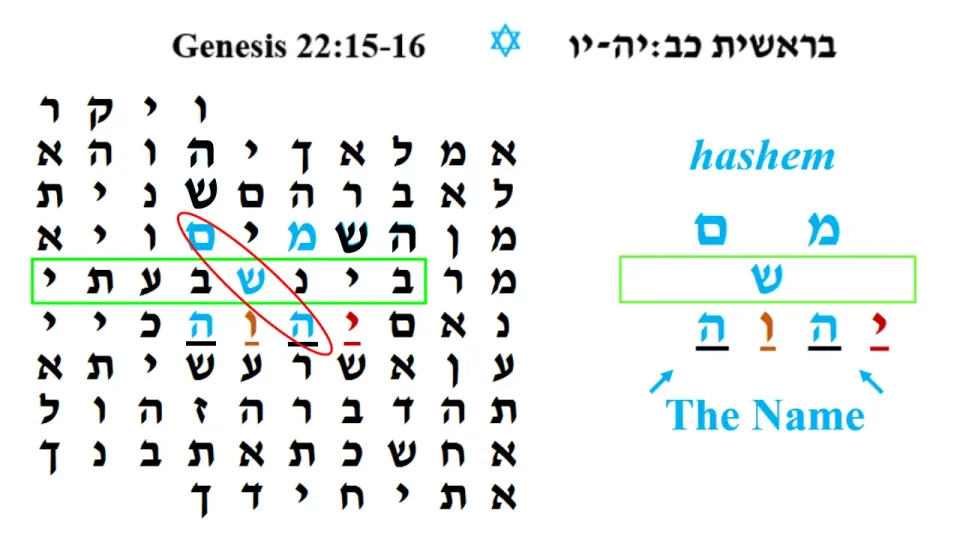 Akedah letter grid: diagonal through ם, ש and ה — “hashem, The Name”Slide 138
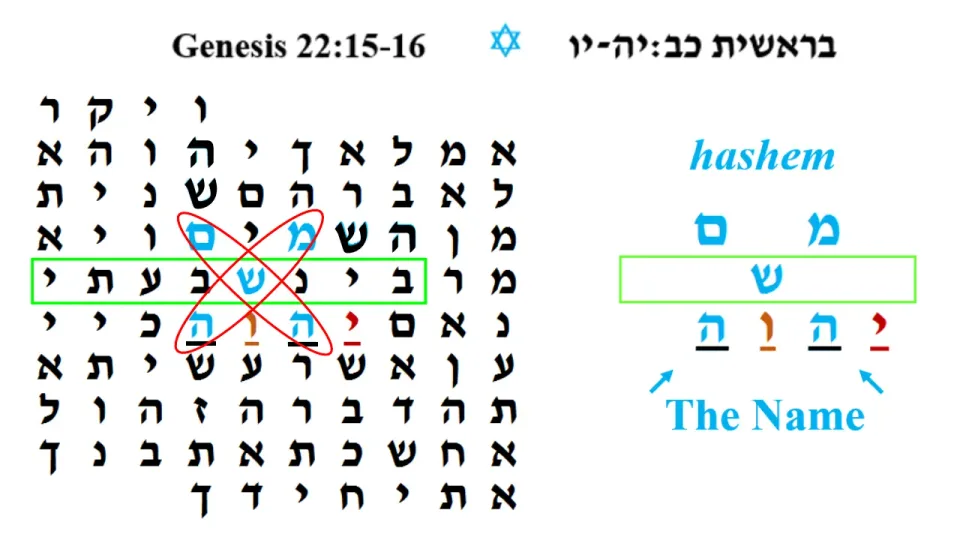 Akedah letter grid: two crossing diagonals meet at the ש — “The Name”Slide 139
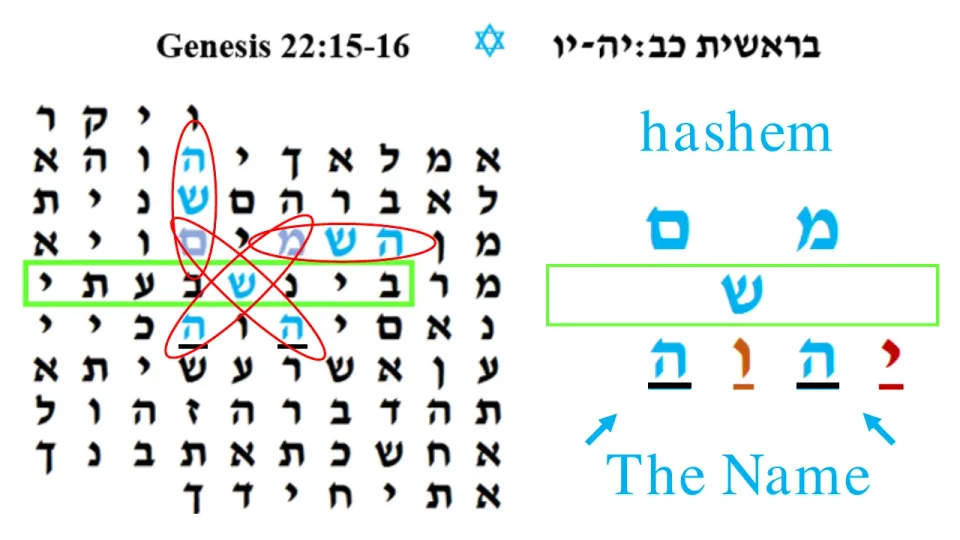 Genesis 22:15-16 letter grid: hidden "hashem" (the Name)Slide 140
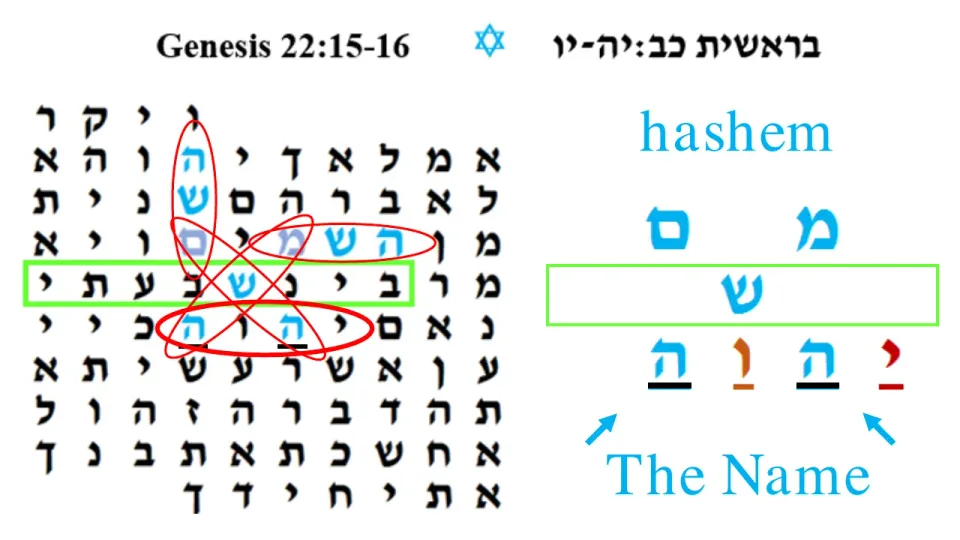 Genesis 22:15-16 letter grid: hidden "hashem" and the Name יהוהSlide 141
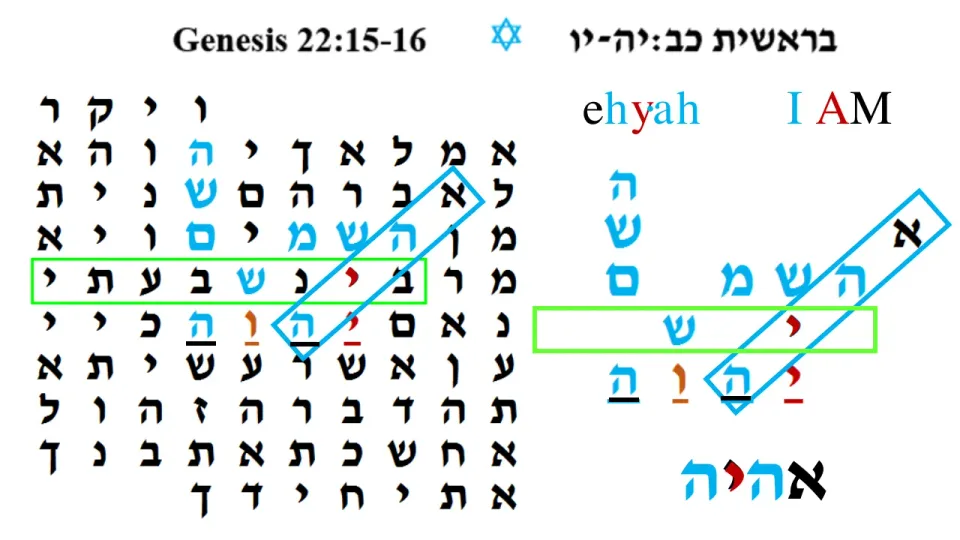 Genesis 22:15-16 letter grid: hidden "ehyah" (I AM)Slide 142
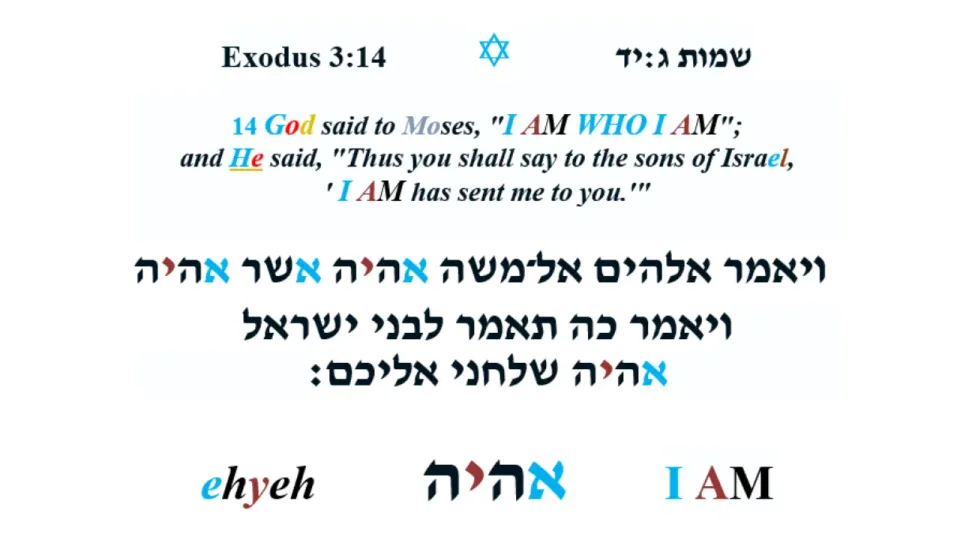 Exodus 3:14 — "I AM WHO I AM" (ehyeh asher ehyeh)Slide 143
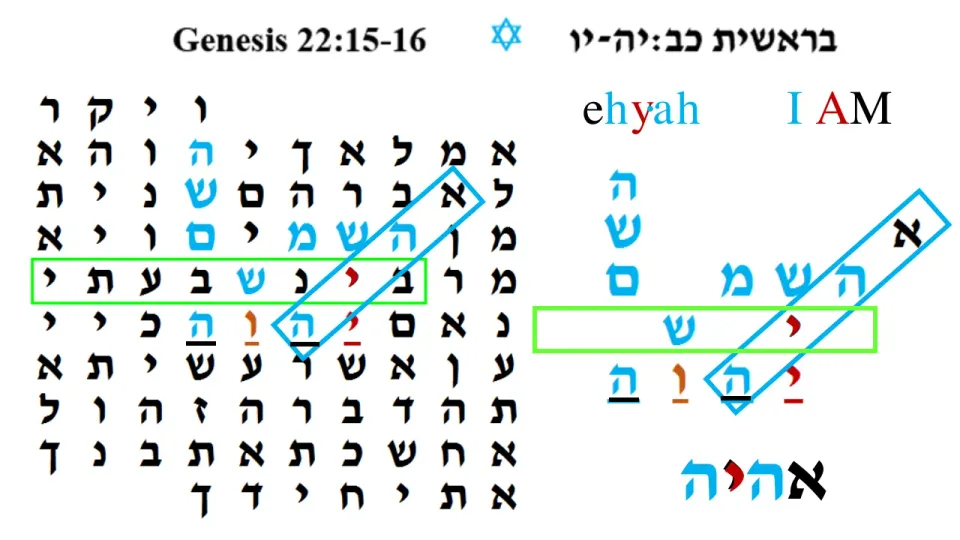 Genesis 22:15-16 letter grid: hidden "ehyah" (I AM)Slide 144
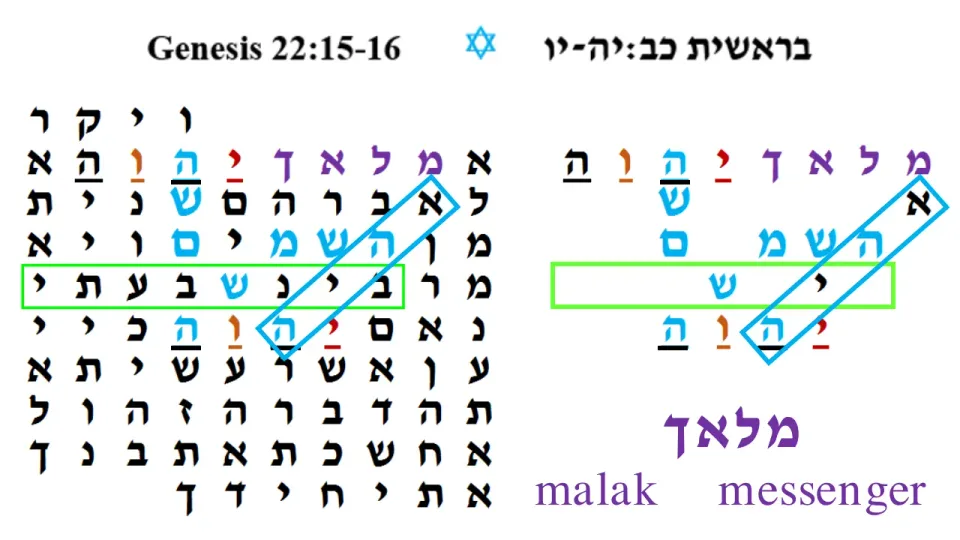 Genesis 22:15-16 letter grid: "malak" (messenger) before the NameSlide 145
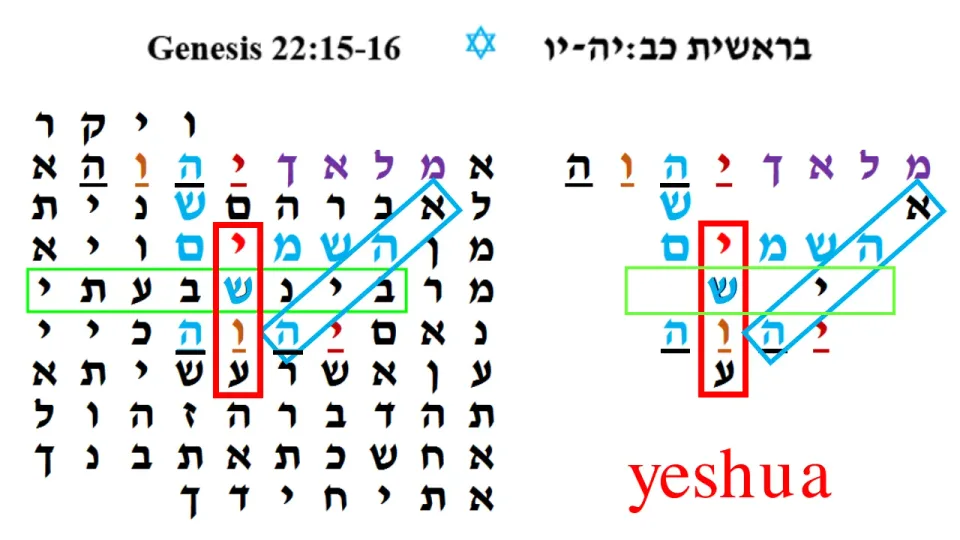 Genesis 22:15-16 letter grid: hidden "yeshua" (ישוע)Slide 146
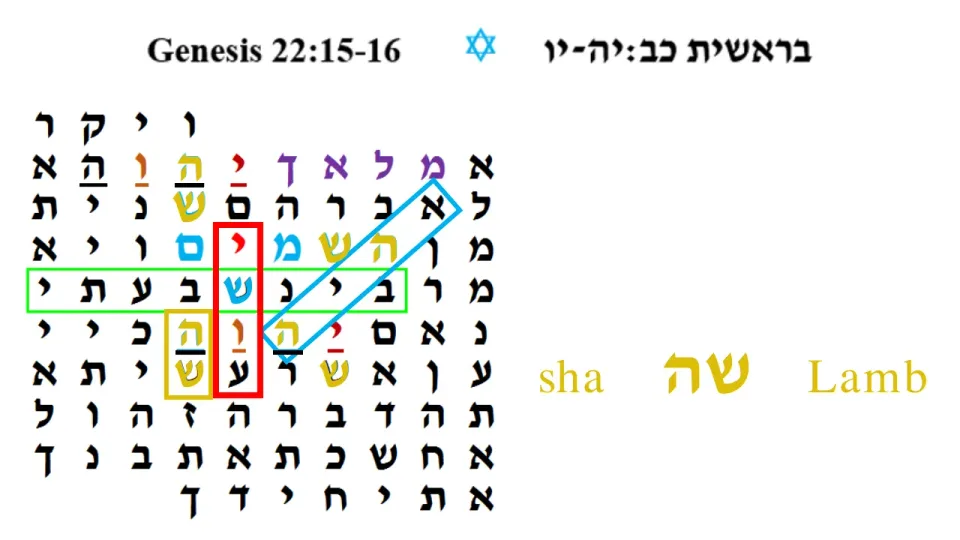 Genesis 22:15-16 letter grid: "sha" (שה, lamb) found lower in the columnSlide 150
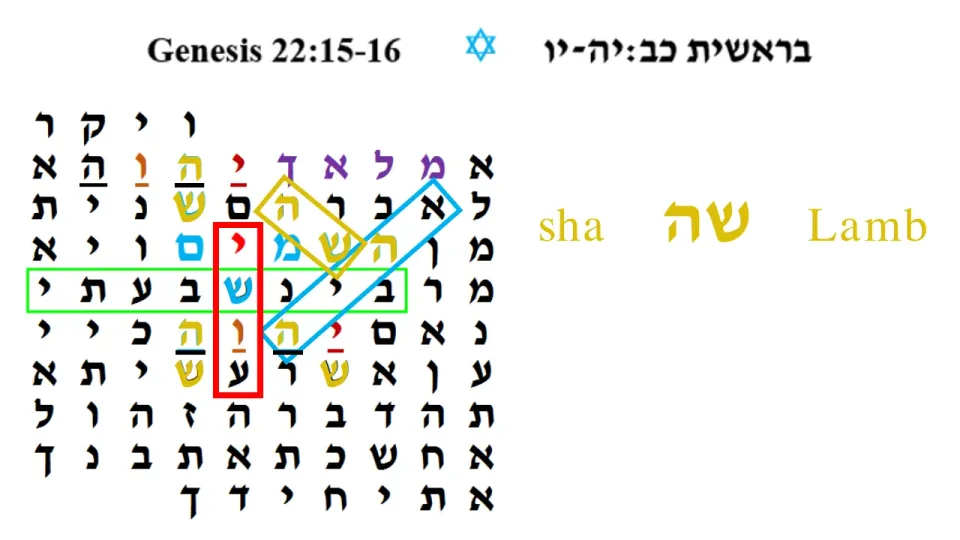 Genesis 22:15-16 letter grid: "sha" (שה, lamb) found on a diagonal near the topSlide 151
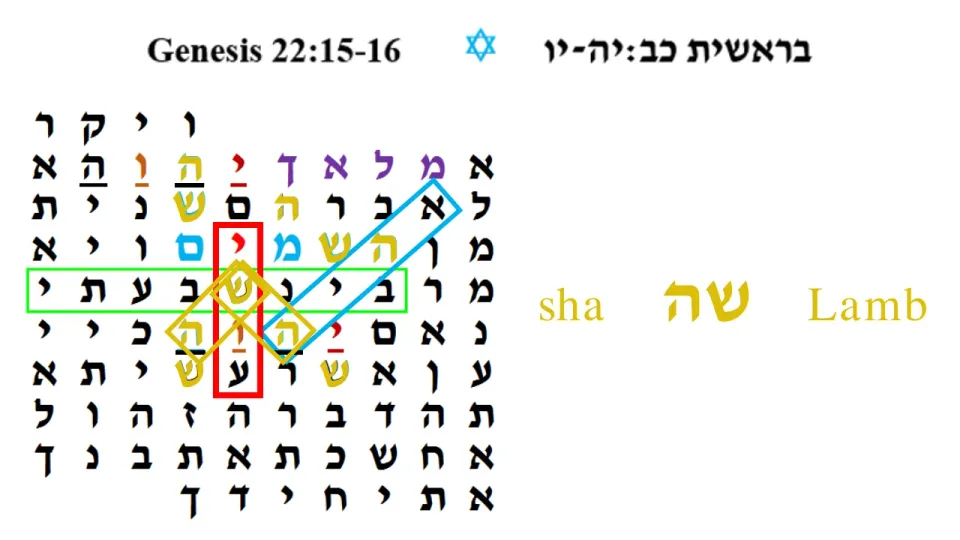 Genesis 22:15-16 letter grid: gold "sha" (lamb) boxes cross at the green-boxed שSlide 152
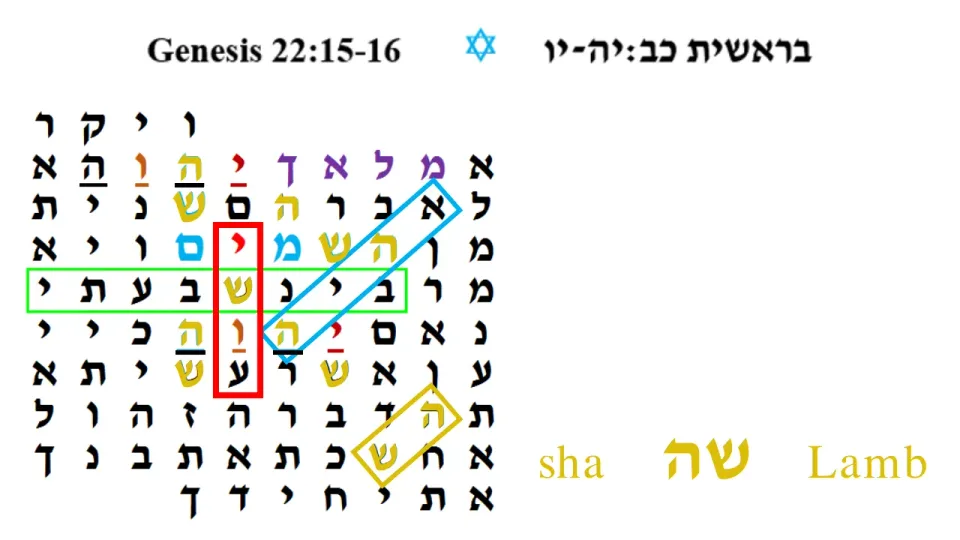 Genesis 22:15-16 letter grid: "sha" (שה, lamb) found at the lower rightSlide 153
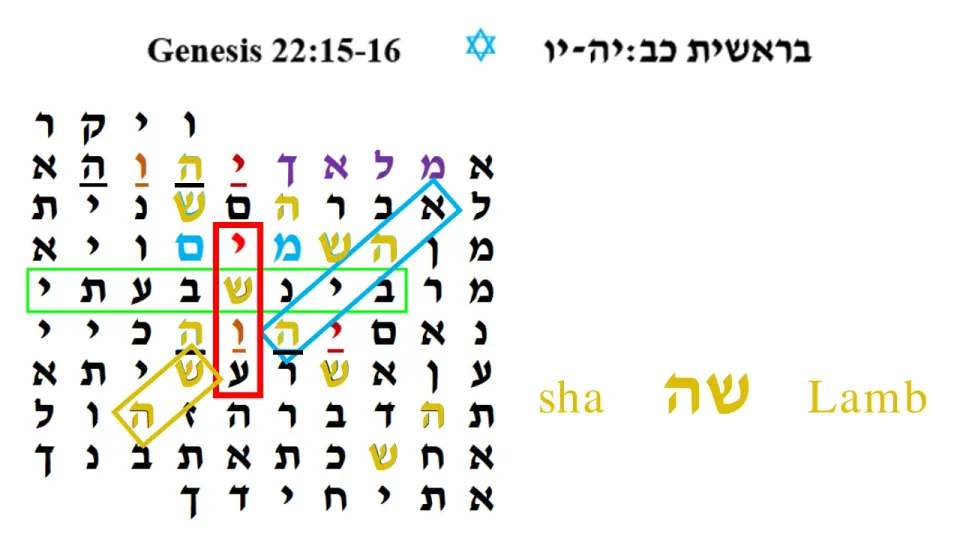 Genesis 22:15-16 letter grid: "sha" (שה, lamb) found at the lower leftSlide 154
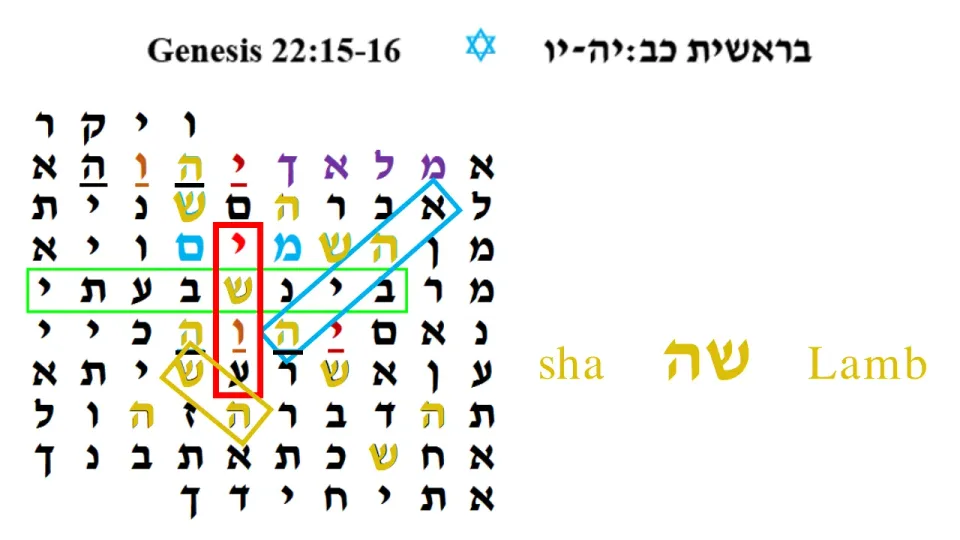 Genesis 22:15-16 letter grid: "sha" (שה, lamb) found near the red columnSlide 155
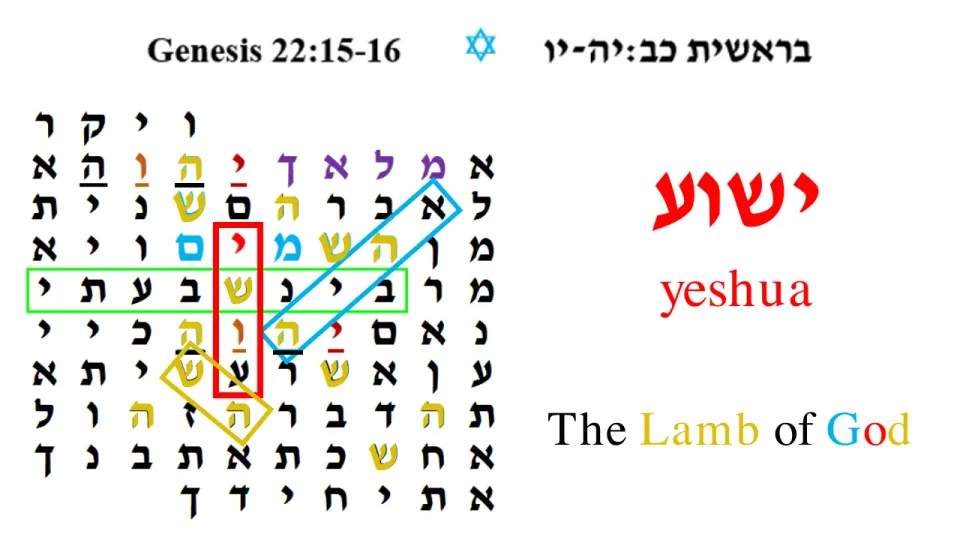 Yeshua, "The Lamb of God" — Genesis 22:15-16 letter grid conclusionSlide 156