Hebrew / Greek word · found on 738 slides
et
Meaning: alef-tav, direct-object marker
Also known as: aleph tav, alef tav, את
Often studied together with: creationheavenbaraBereshitElohimTavAlefEve
Abel 45 slides
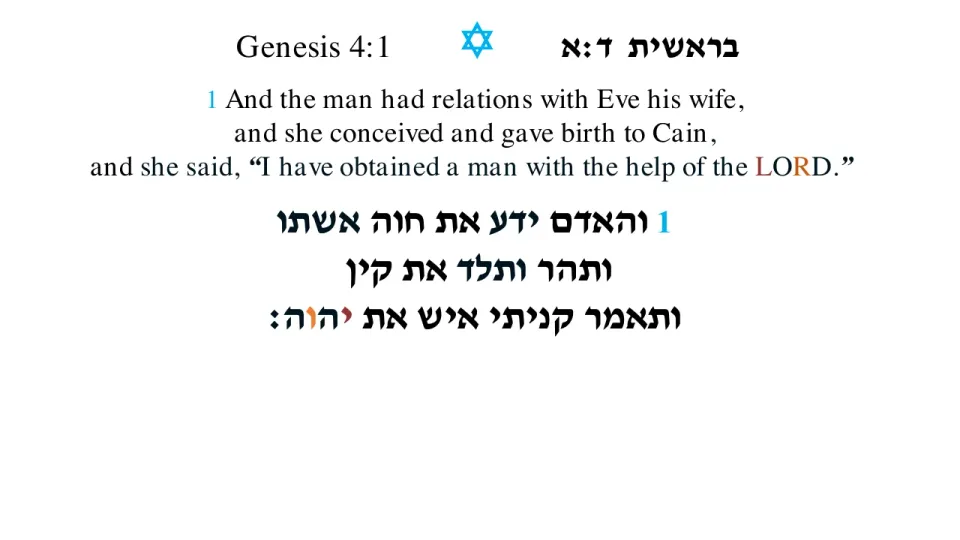 Genesis 4:1 — Eve gives birth to CainSlide 2
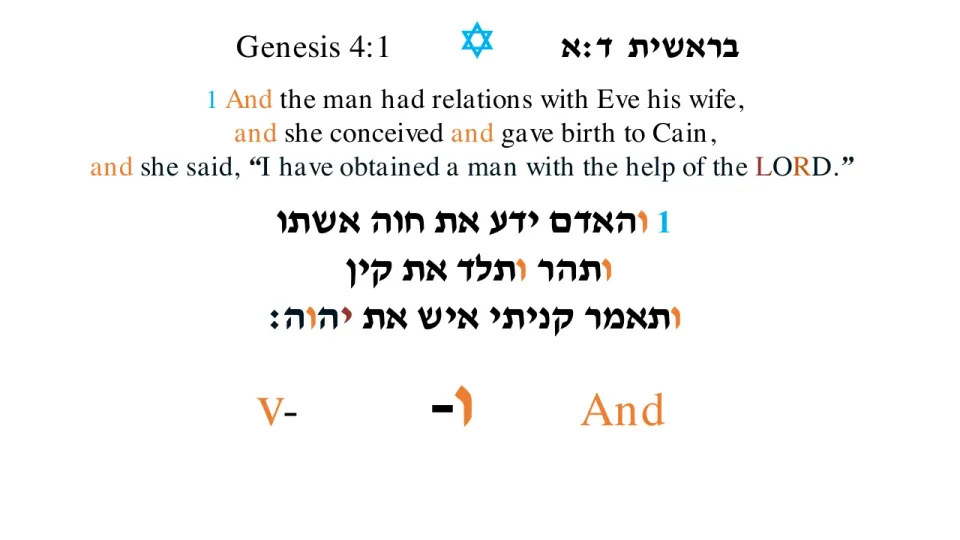 Genesis 4:1 — the Hebrew prefix vav (ו) means “and”Slide 3
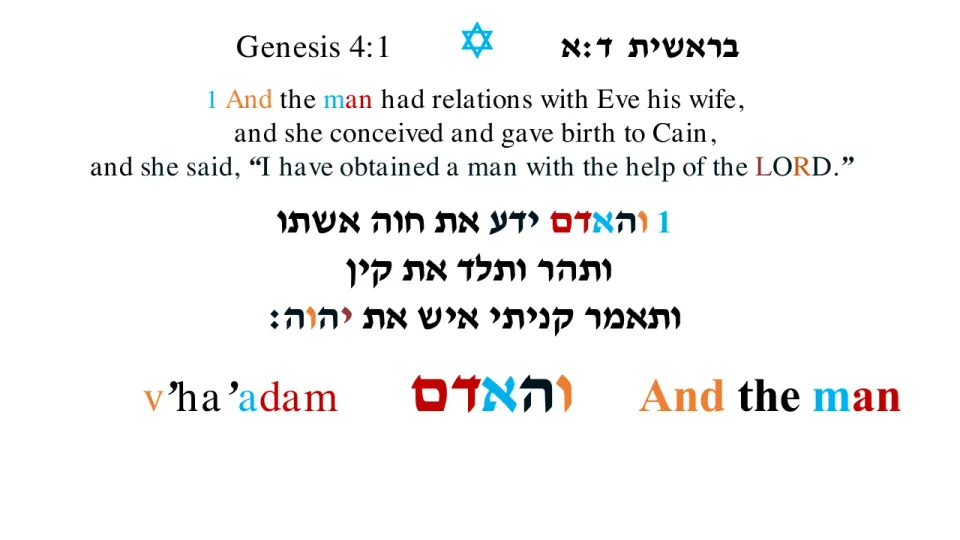 Genesis 4:1 — v'ha'adam, “and the man”Slide 4
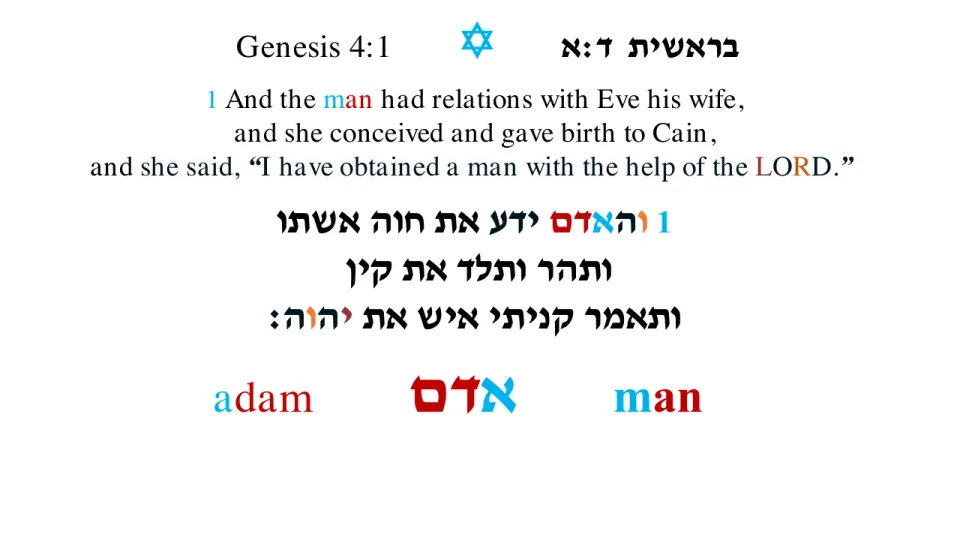 Genesis 4:1 — adam (אדם), “man”Slide 5
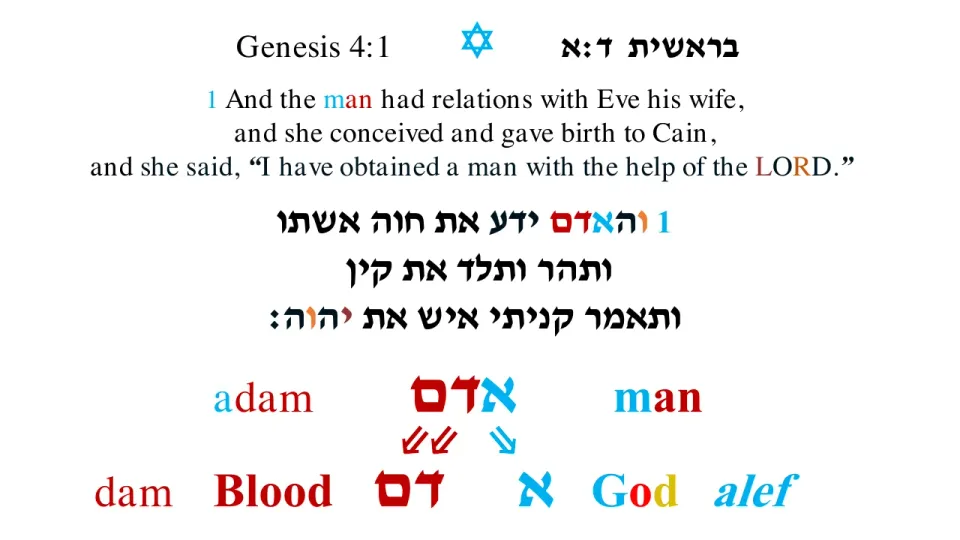 Adam (אדם) = alef (God) + dam (blood)Slide 6
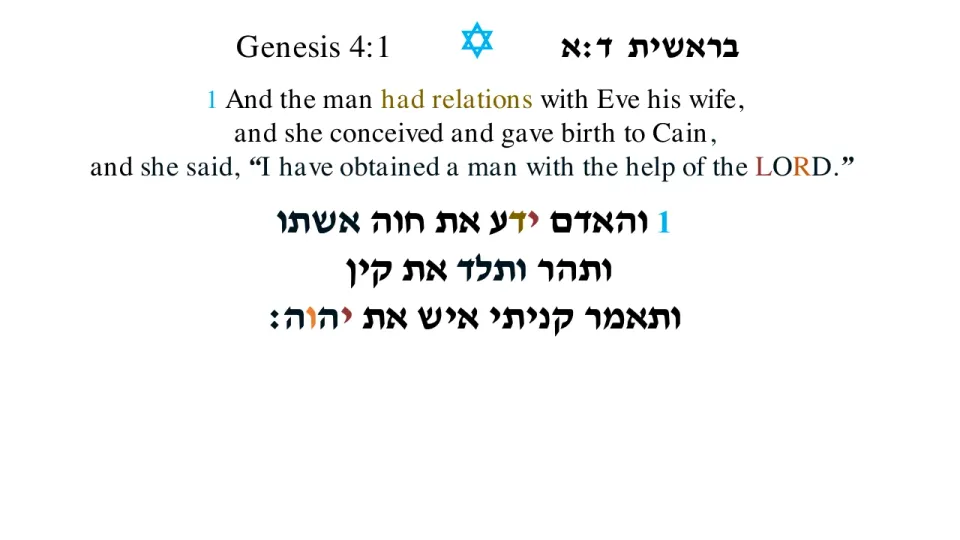 Genesis 4:1 — “had relations” is the Hebrew word ידעSlide 7
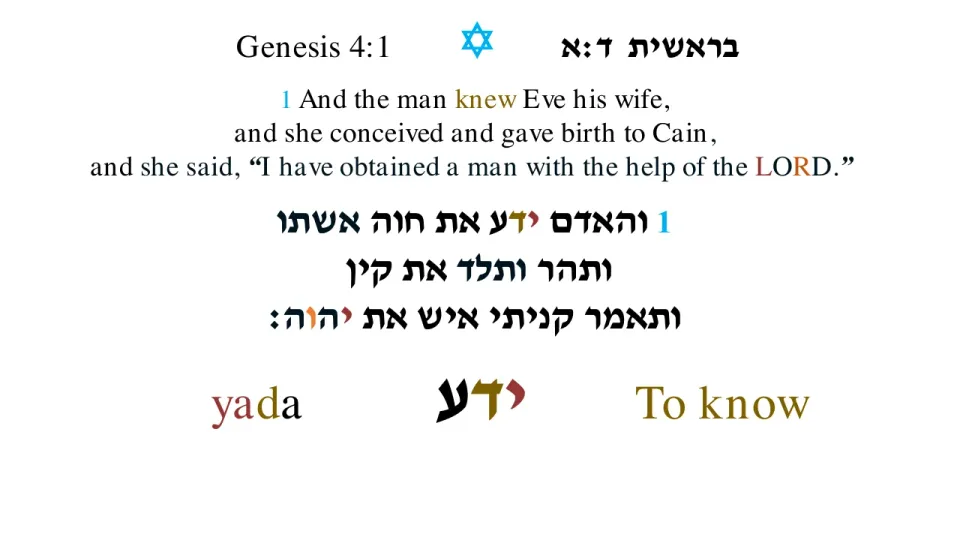 Genesis 4:1 — yada (ידע), “to know”Slide 8
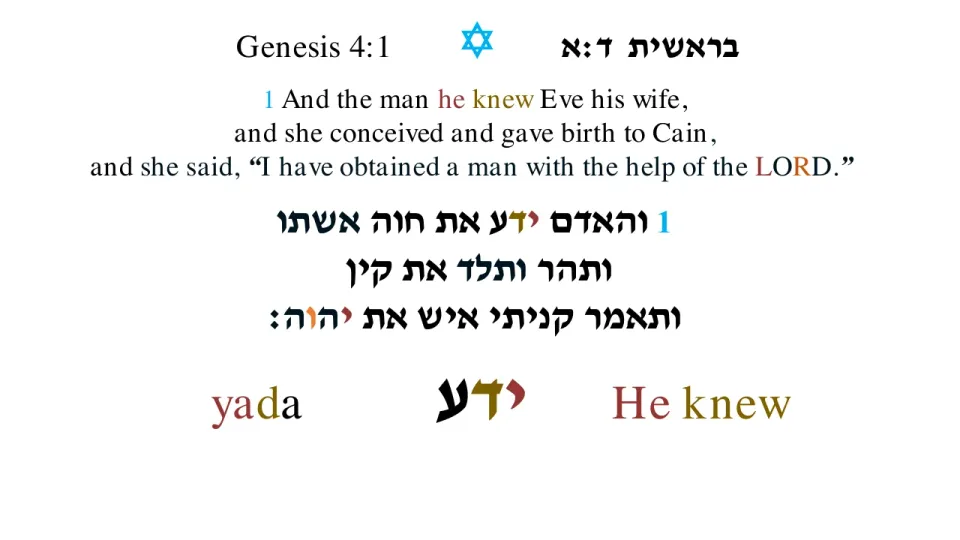 Genesis 4:1 — yada (ידע), “he knew”Slide 9
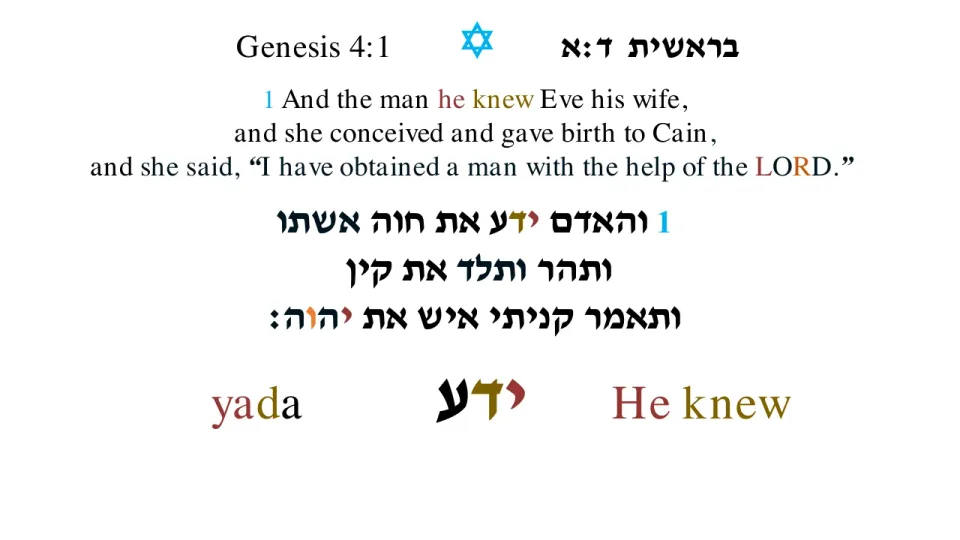 Genesis 4:1 — yada (ידע), “he knew” (repeat)Slide 10
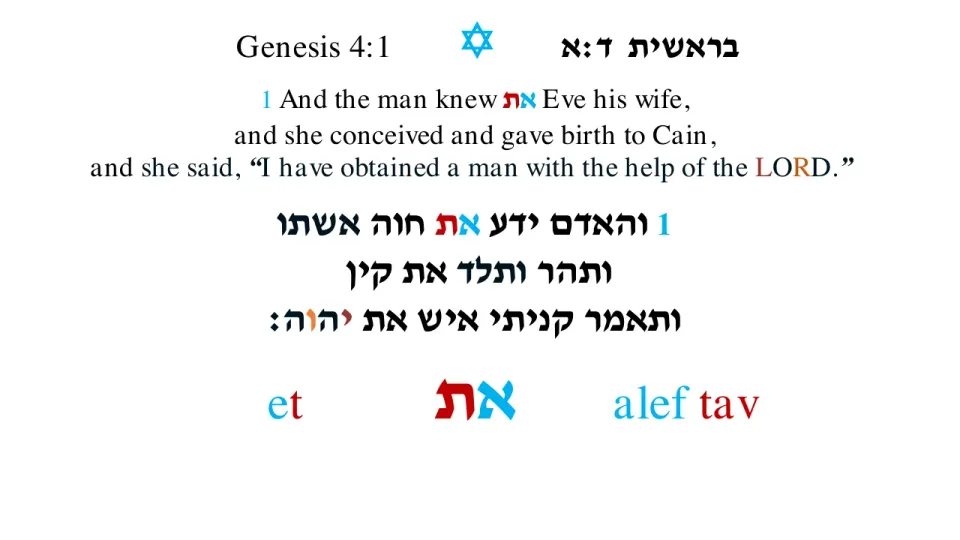 Genesis 4:1 — the untranslated word et (את), alef-tavSlide 11
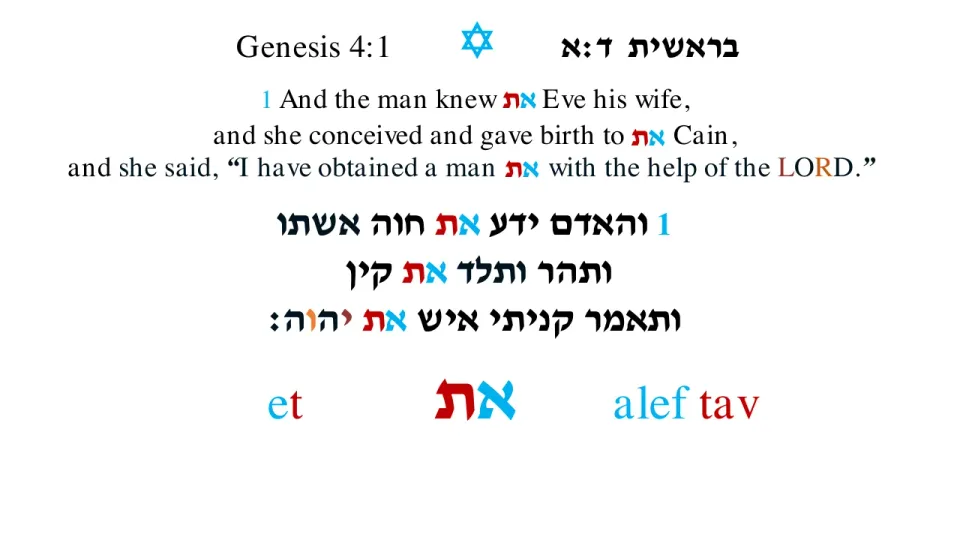 Genesis 4:1 — alef-tav (את) appears three timesSlide 12
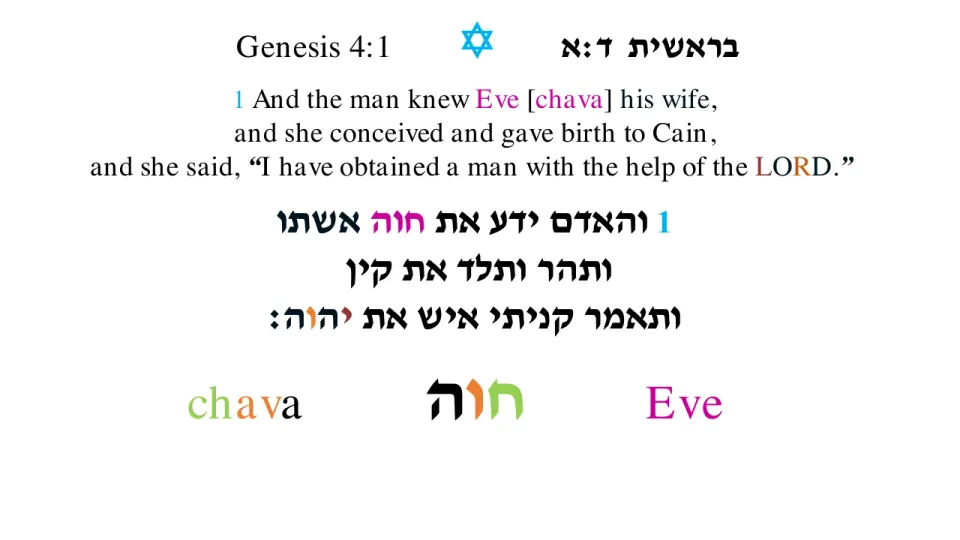 Genesis 4:1 — Eve is chava (חוה) in HebrewSlide 13
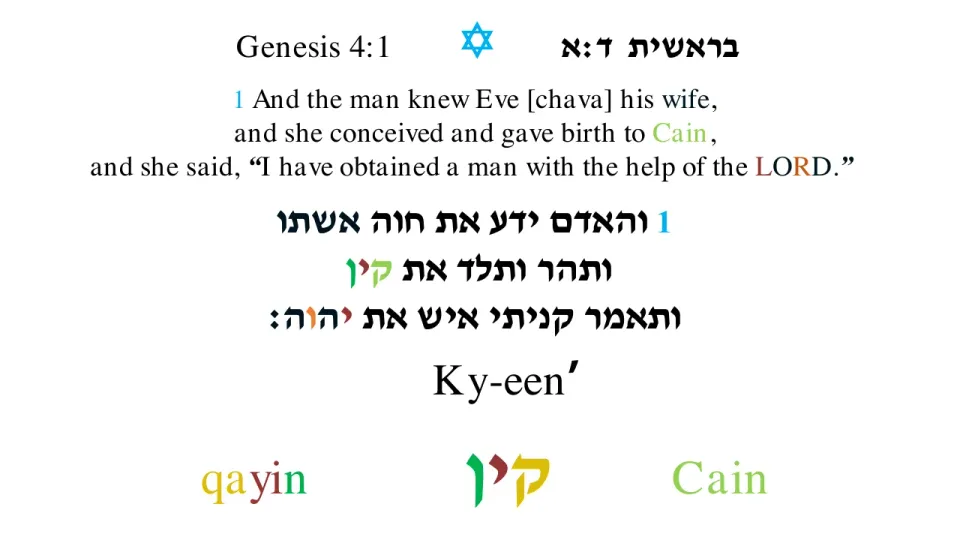 Genesis 4:1 — Cain is qayin (קין), pronounced “Ky-een”Slide 14
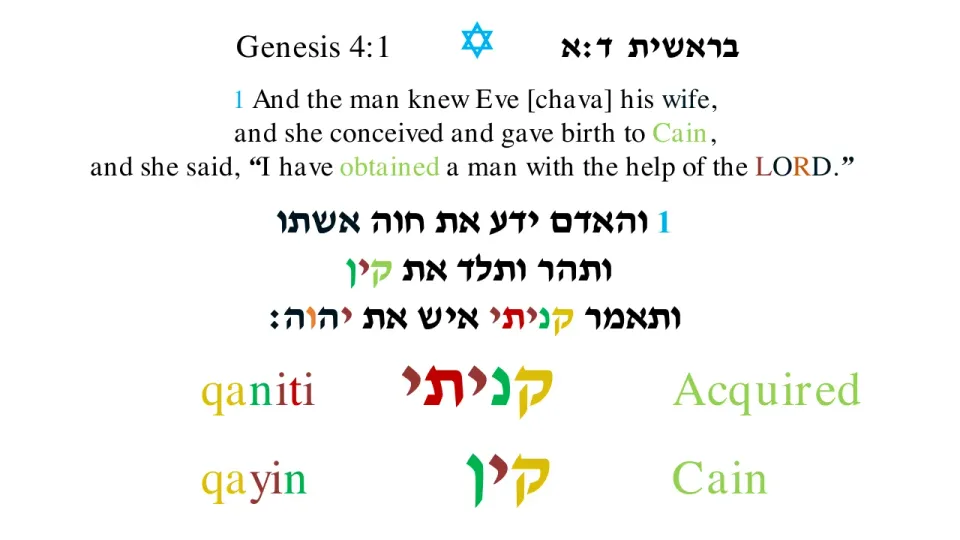 Genesis 4:1 — qaniti (קניתי) “acquired” and qayin (Cain)Slide 15
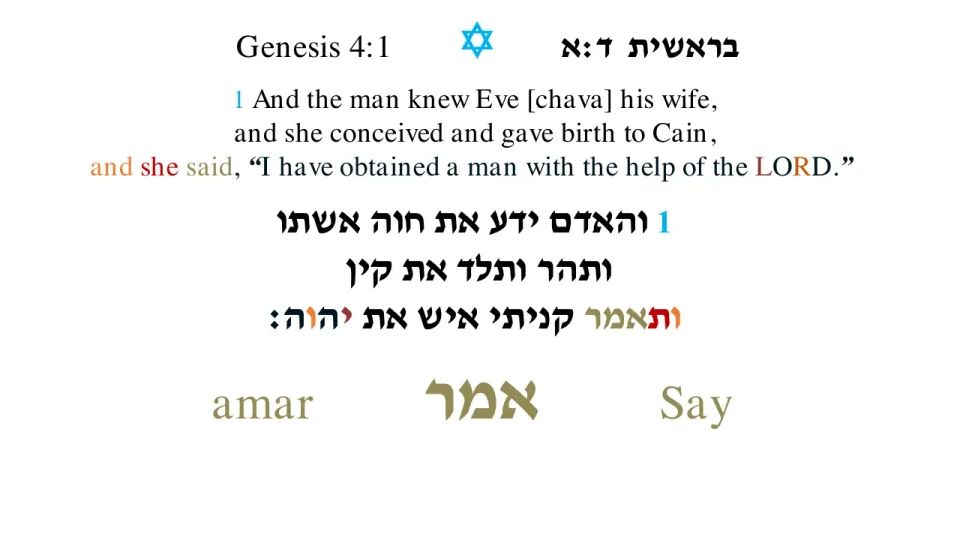 Genesis 4:1 — Eve says: “I have obtained a man”; amar = saySlide 24
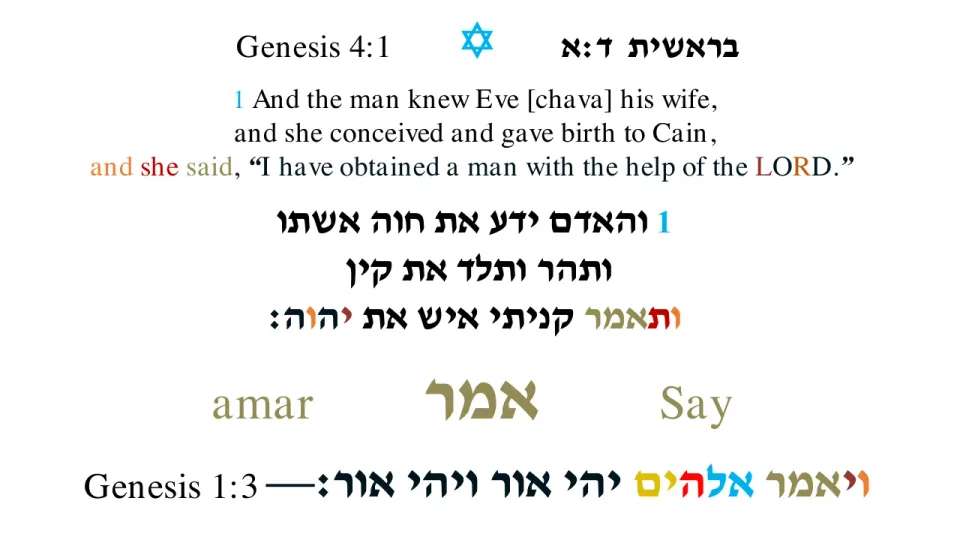 Genesis 4:1 and Genesis 1:3 — amar (say) in “and God said”Slide 25
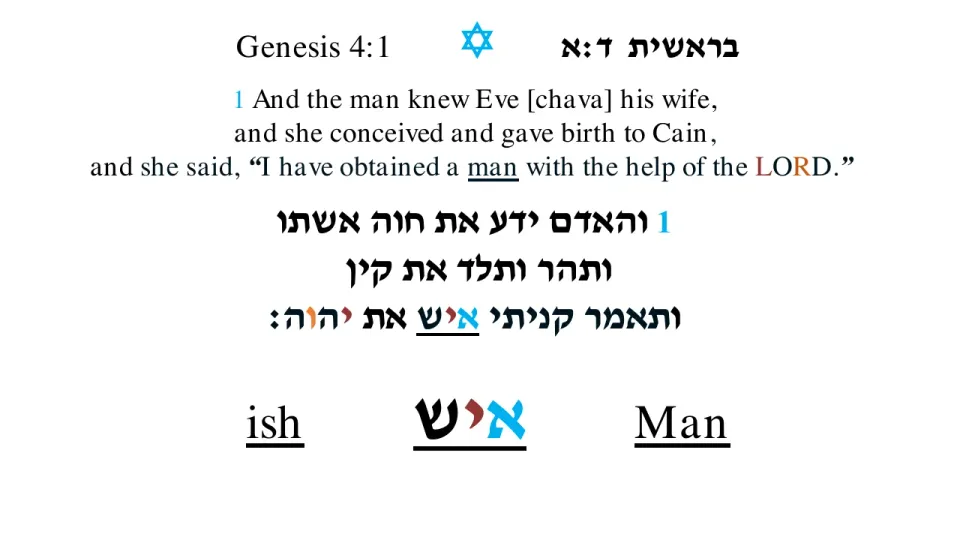 Genesis 4:1 — ish (איש) = manSlide 26
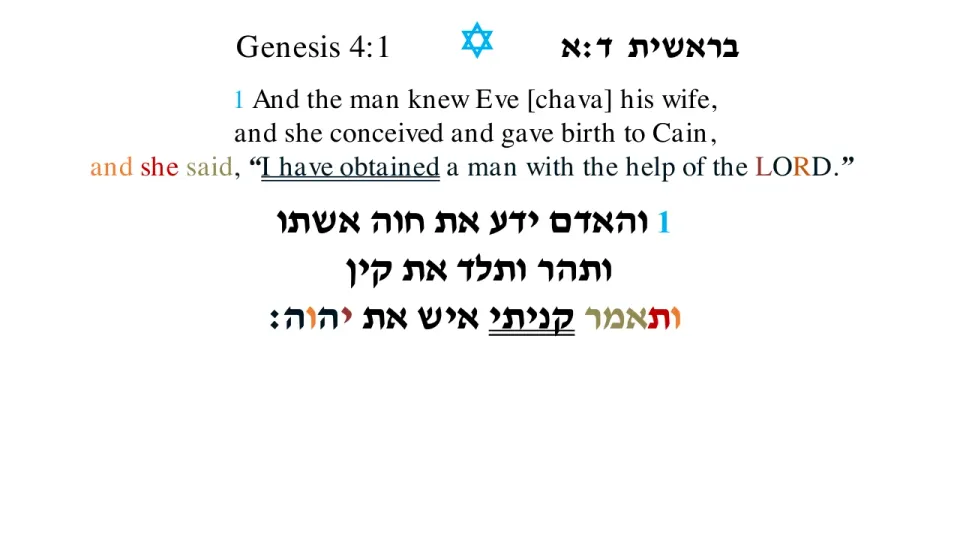 Genesis 4:1 — “I have obtained” = קניתי (qaniti)Slide 29
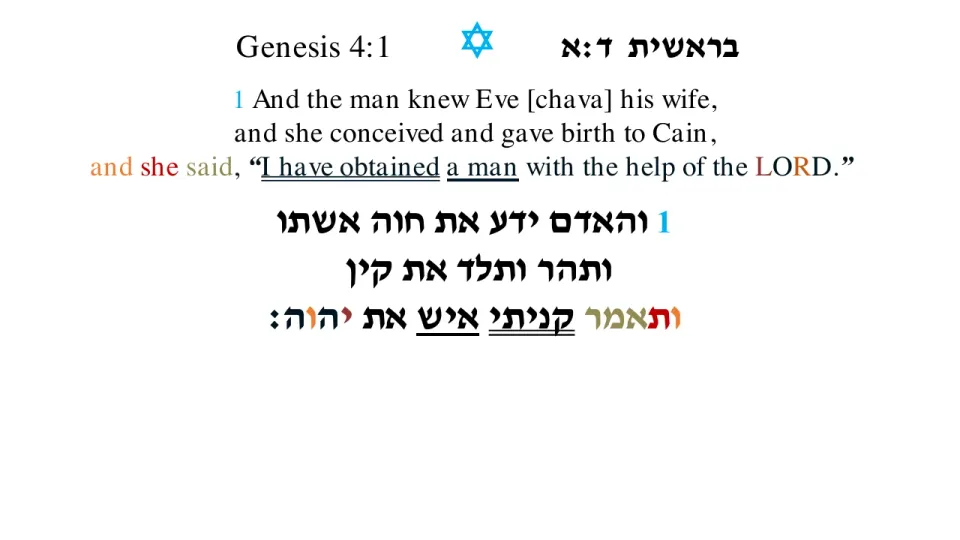 Genesis 4:1 — “a man” = איש (ish)Slide 30
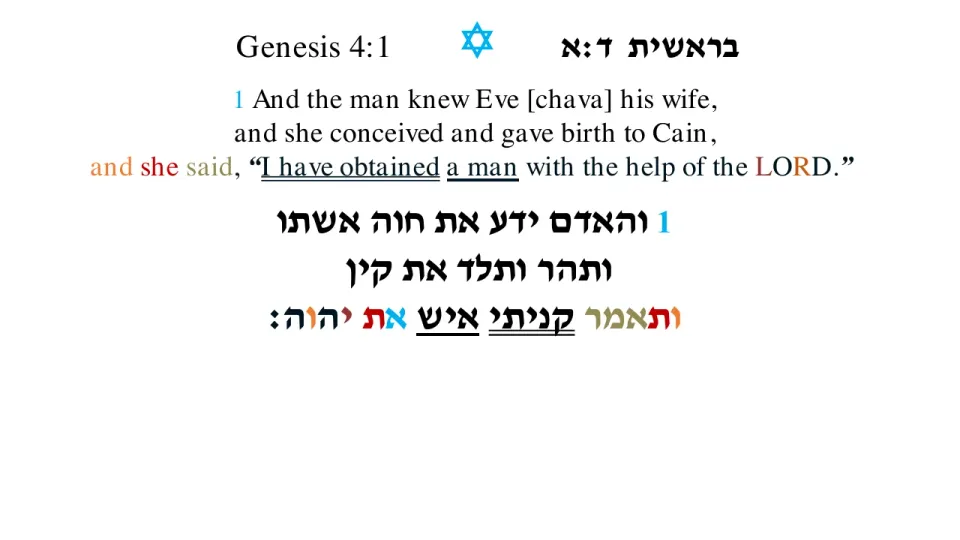 Genesis 4:1 — the untranslated word את (alef tav) before the LORDSlide 31
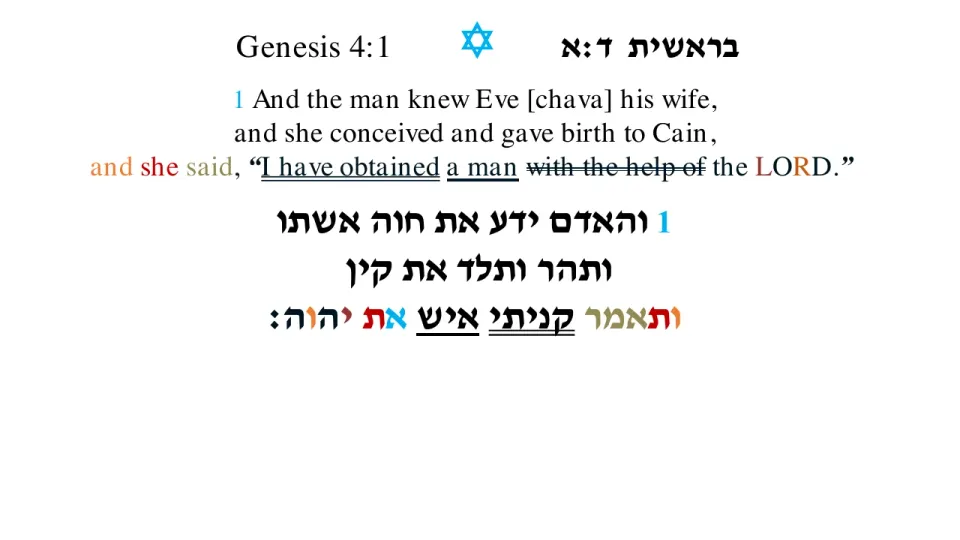 Genesis 4:1 — “with the help of” struck out; את stands before the LORDSlide 32
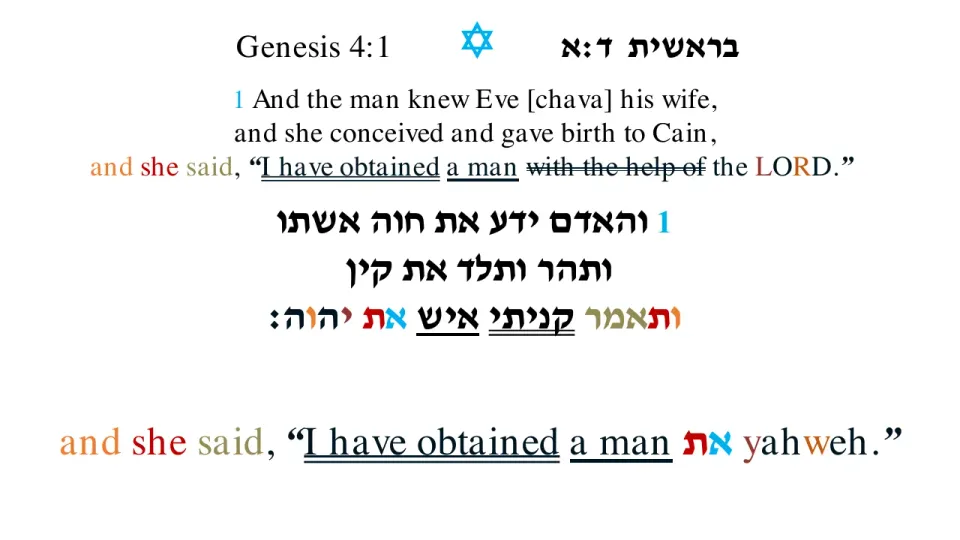 Genesis 4:1 — “I have obtained a man את yahweh”Slide 33
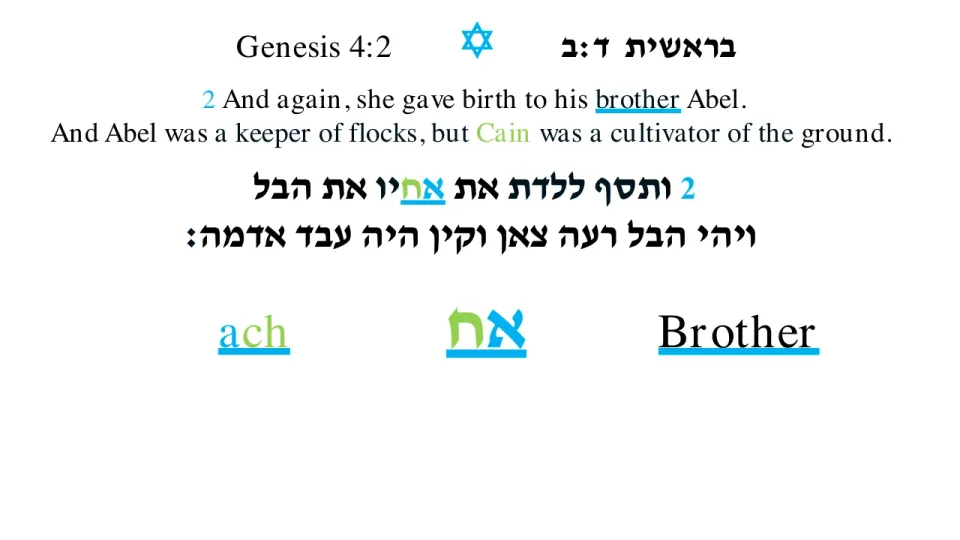 Genesis 4:2 — ach (אח) = brotherSlide 35
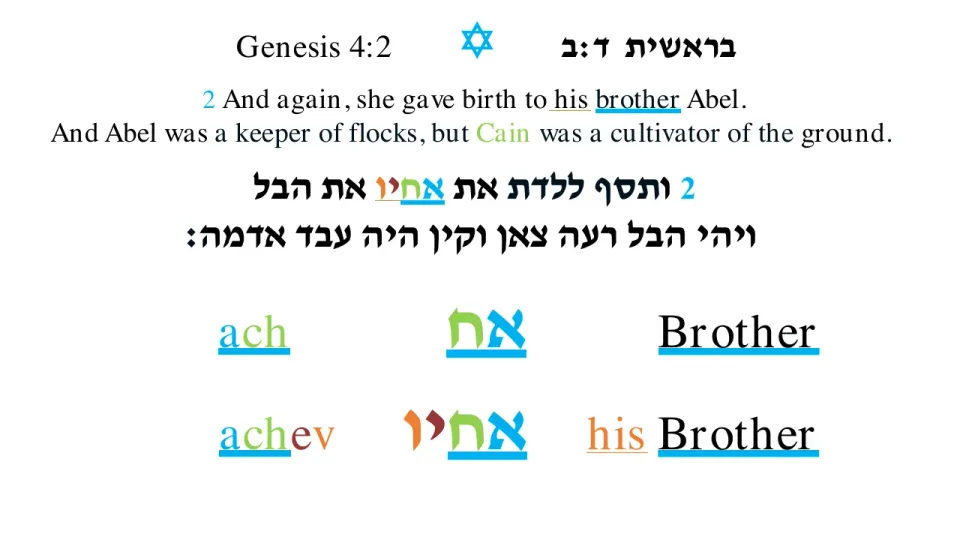 Genesis 4:2 — ach (brother) and achev (אחיו) = his brotherSlide 36
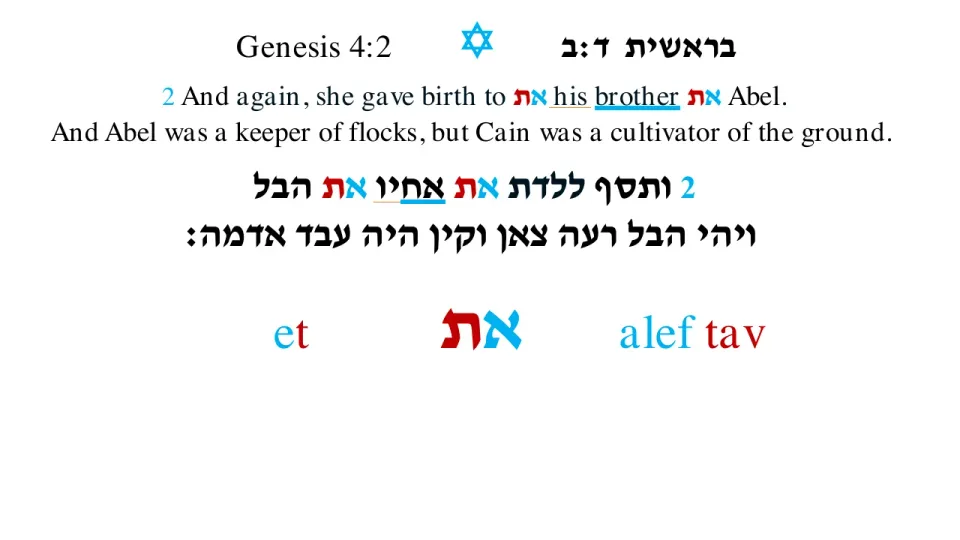 Genesis 4:2 — et (את), alef tav, before “his brother” and before AbelSlide 37
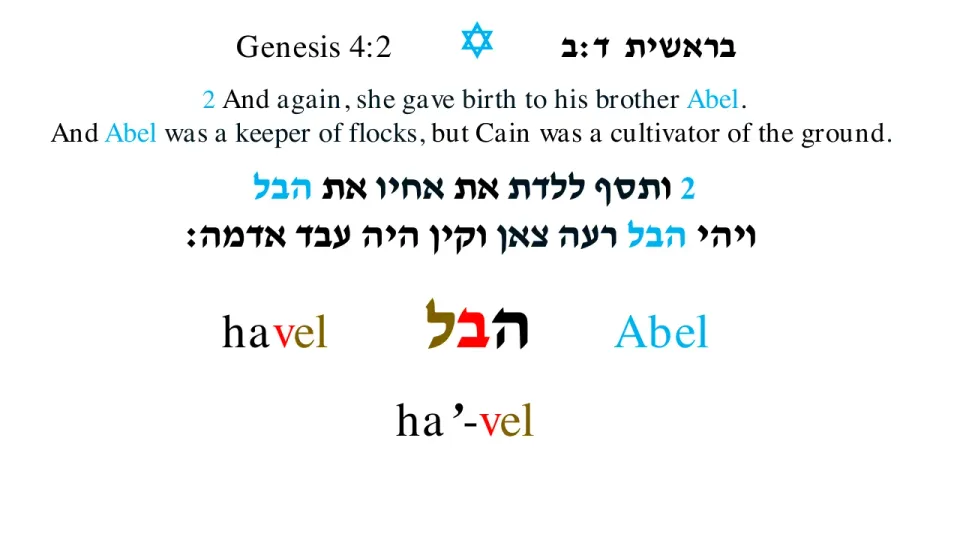 Genesis 4:2 — havel (הבל) = AbelSlide 38
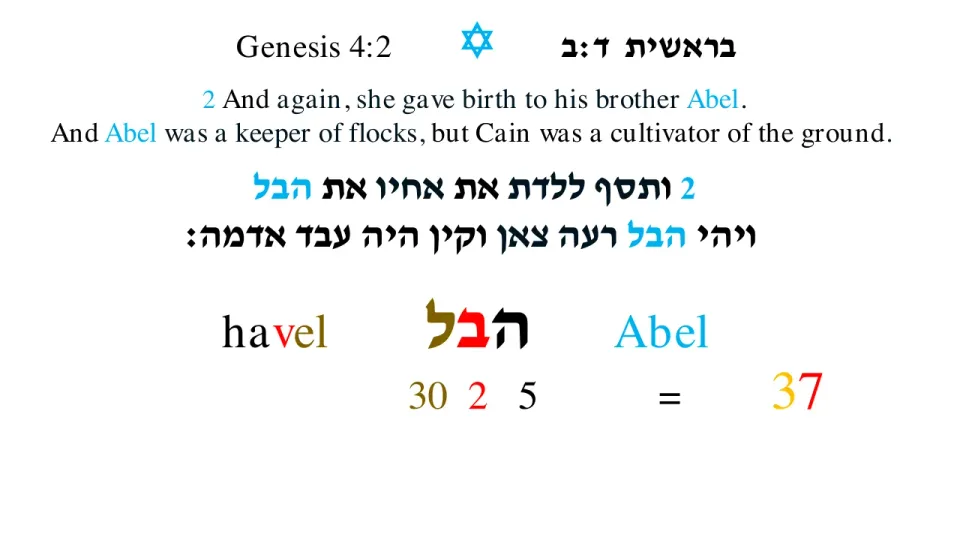 Genesis 4:2 — Abel (הבל): 30 + 2 + 5 = 37Slide 39
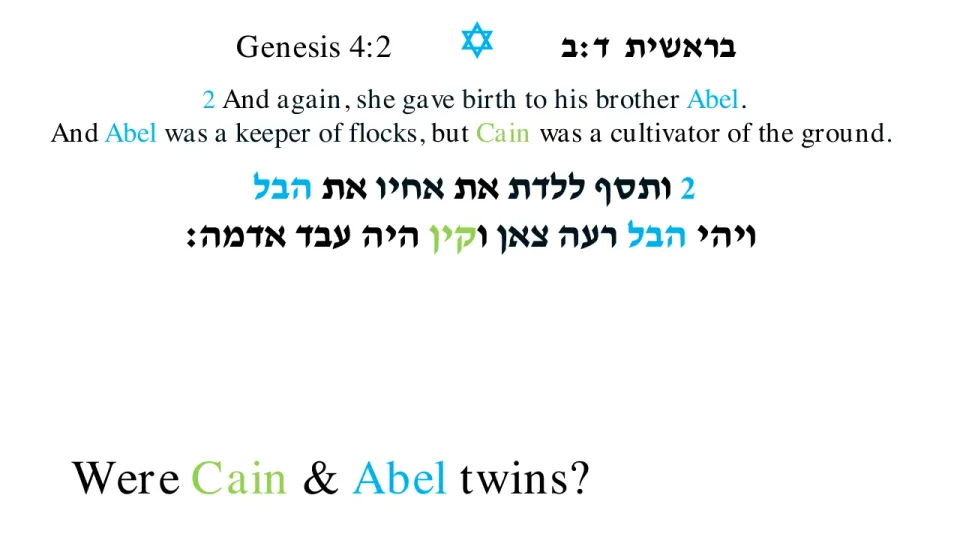 Were Cain and Abel twins? (Genesis 4:2)Slide 40
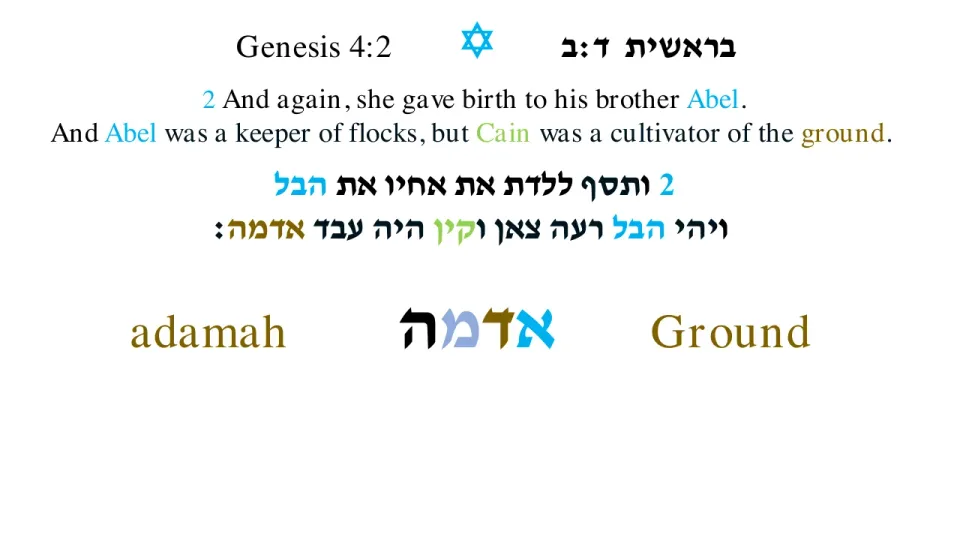 Genesis 4:2 — Abel the shepherd, Cain the ground-worker (adamah)Slide 45
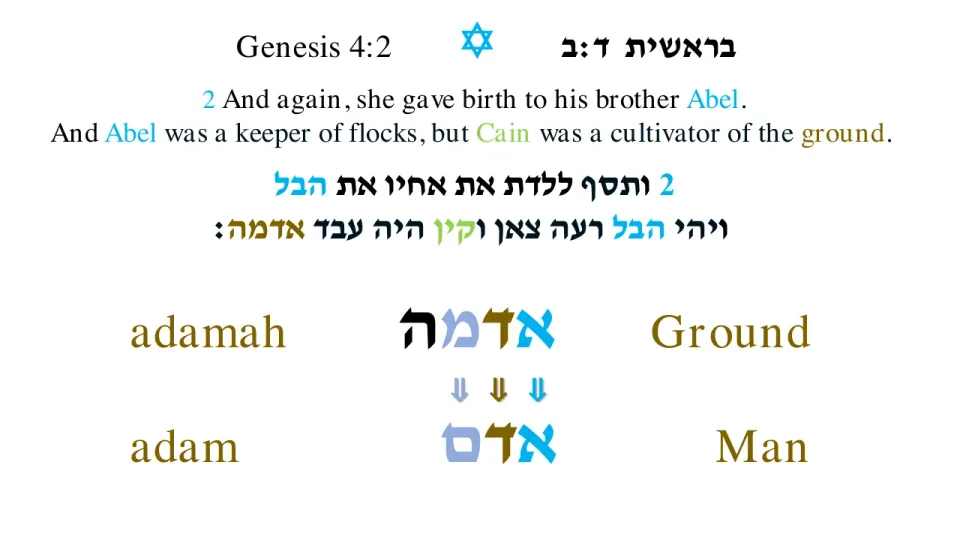 Genesis 4:2 — adamah (ground) is adam (man) plus הSlide 46
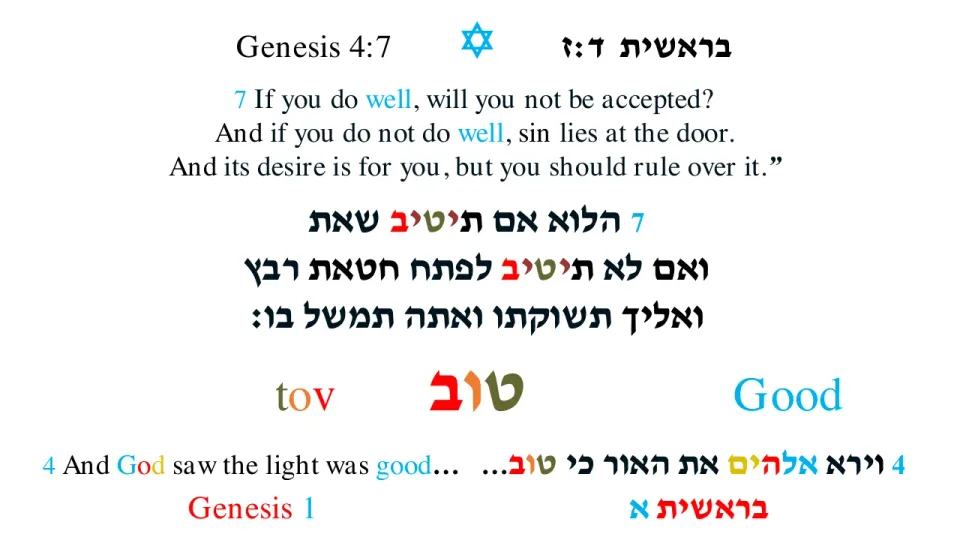 Genesis 4:7 — tov (good), compared with Genesis 1:4 “God saw the light was good”Slide 72
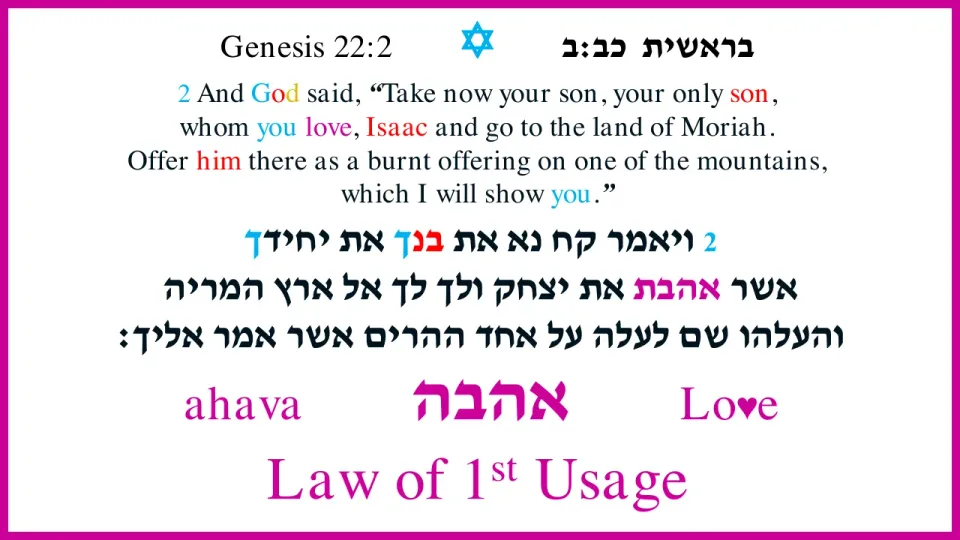 Genesis 22:2 — first use of “love” (ahava, אהבה): the Law of First UsageSlide 95
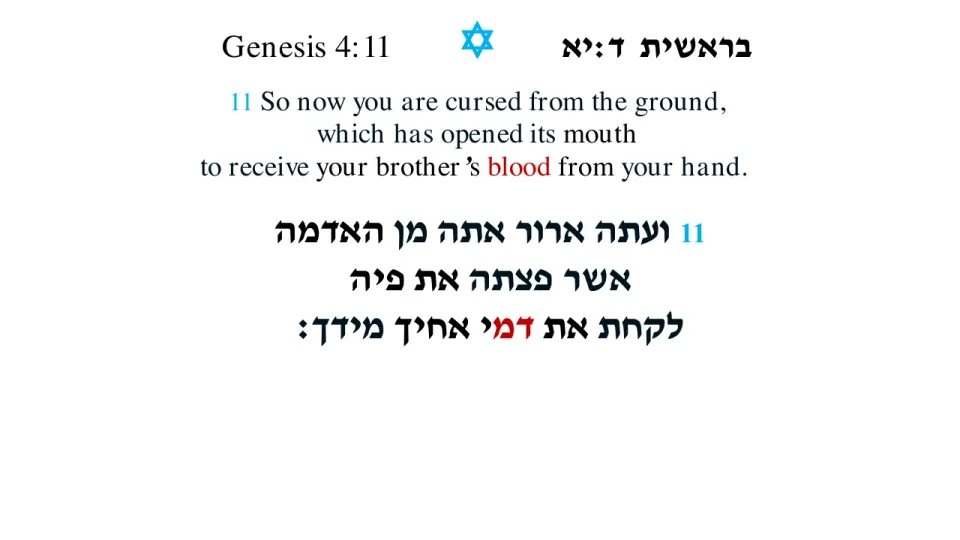 Genesis 4:11 — the ground opened its mouth to receive Abel's bloodSlide 101
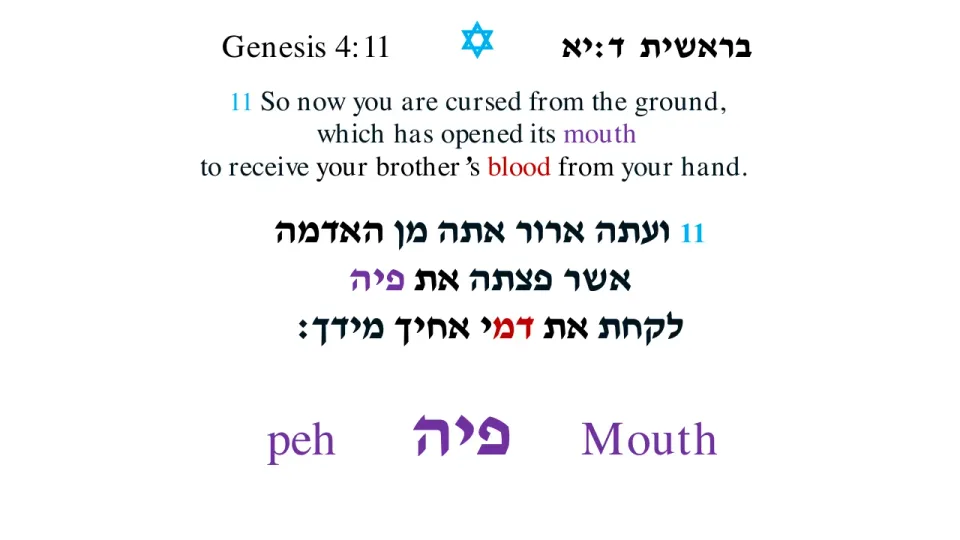 Genesis 4:11 — the ground's mouth (peh, פה)Slide 102
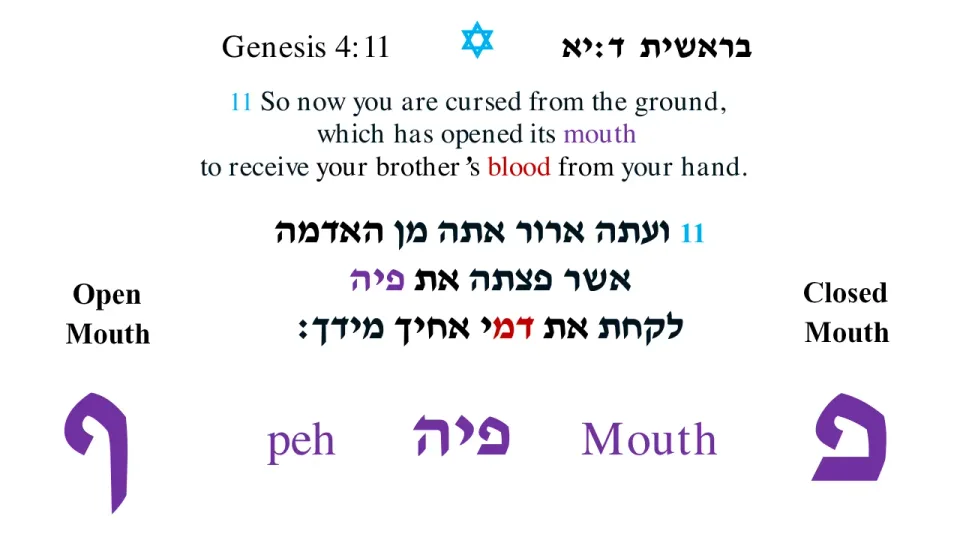 Genesis 4:11 — peh (mouth): the open-mouth ף and closed-mouth פSlide 103
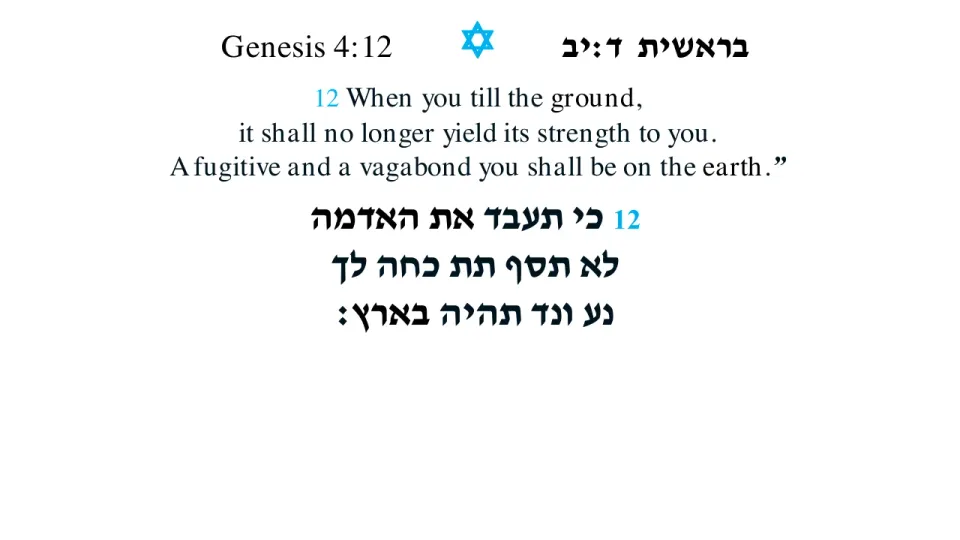 Genesis 4:12 — Cain to be a fugitive and a vagabond on the earthSlide 104
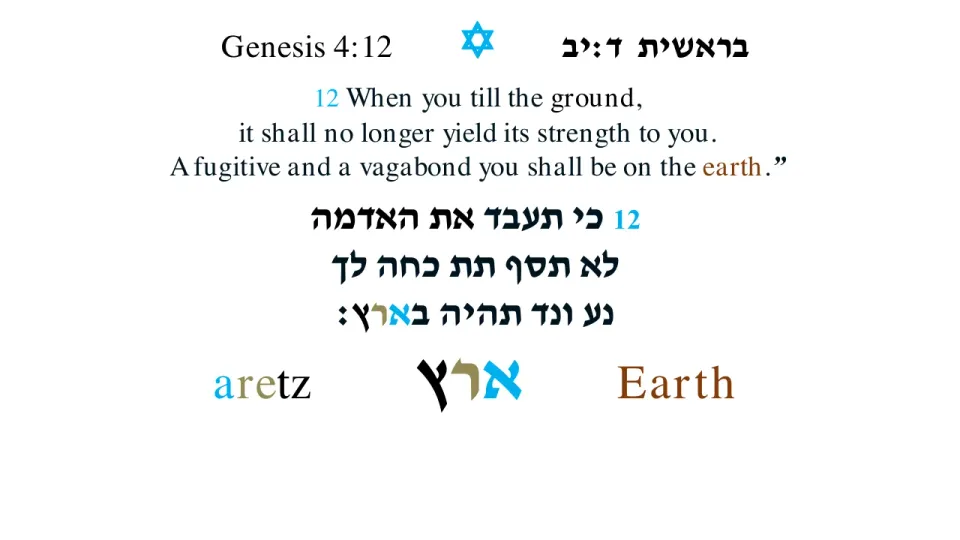 Genesis 4:12 — earth (aretz, ארץ)Slide 105
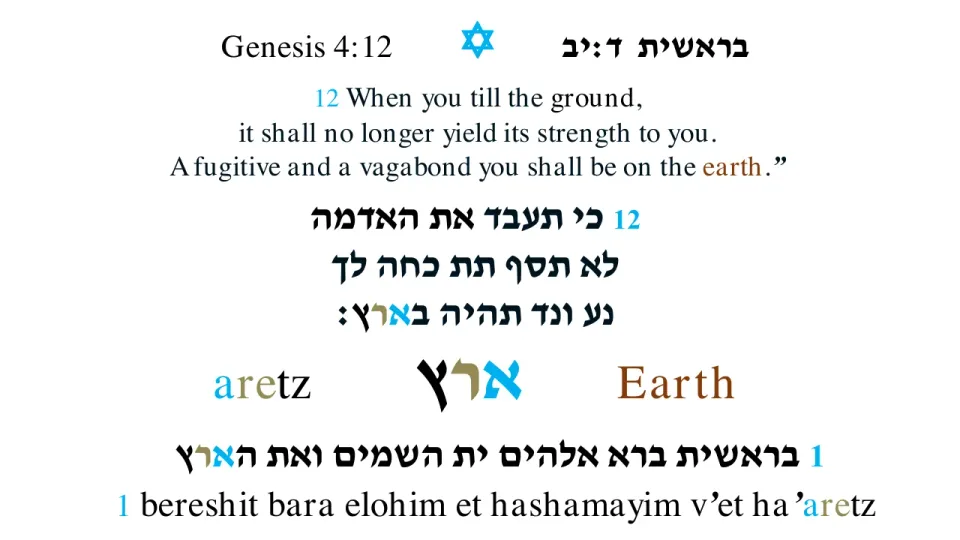 Genesis 4:12 — earth (aretz, ארץ) linked to Genesis 1:1Slide 106
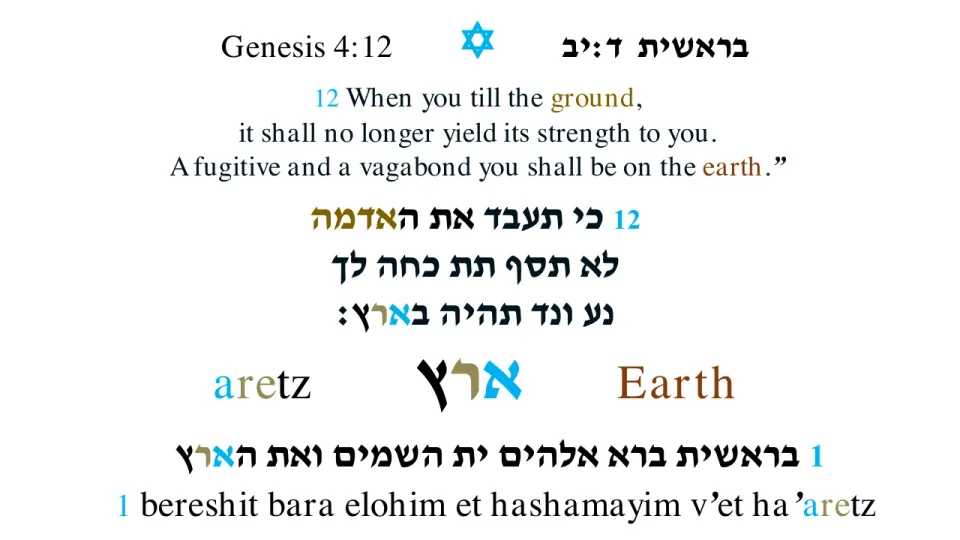 Genesis 4:12 — ground (adamah) and earth (aretz), with Genesis 1:1Slide 107
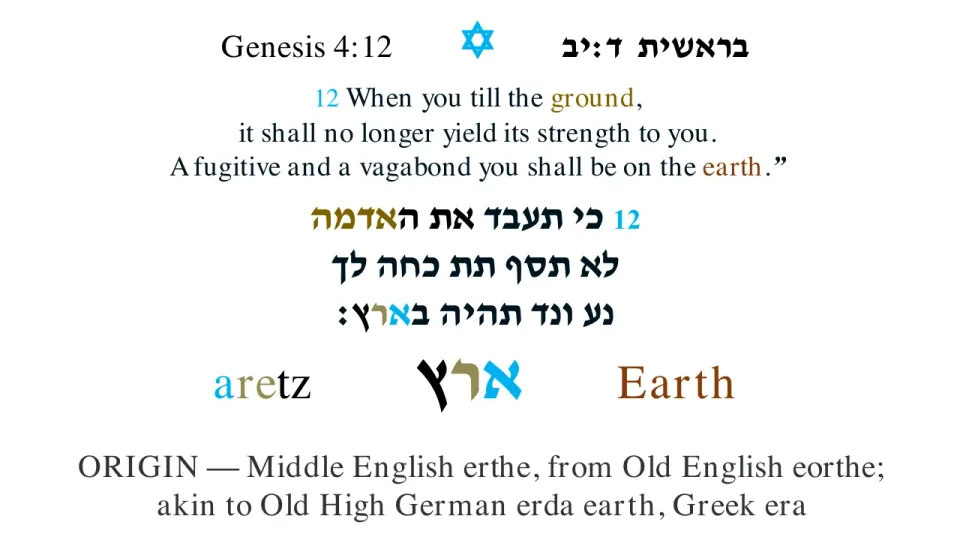 Earth (aretz, ארץ) and the origin of the English word “earth”Slide 108
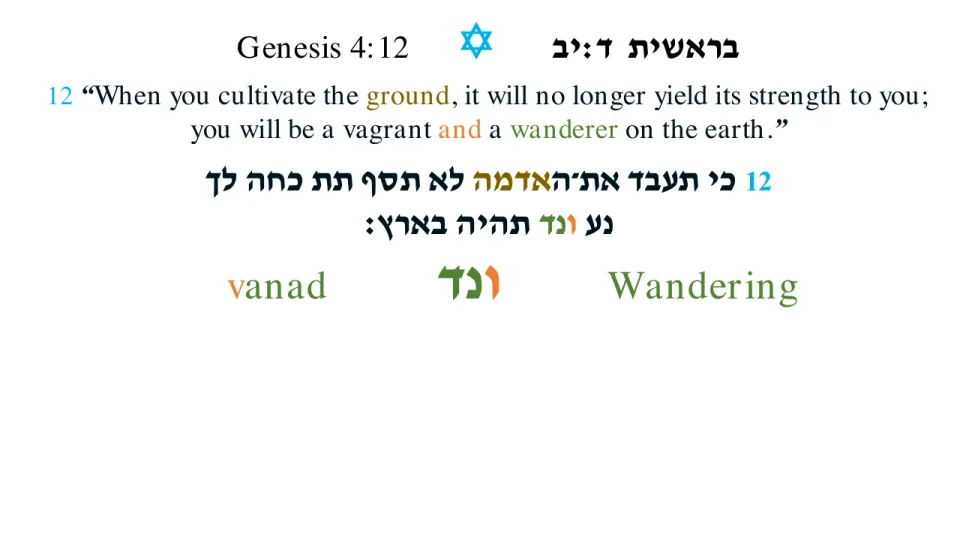 Genesis 4:12 — vagrant and wanderer (vanad, ונד)Slide 109
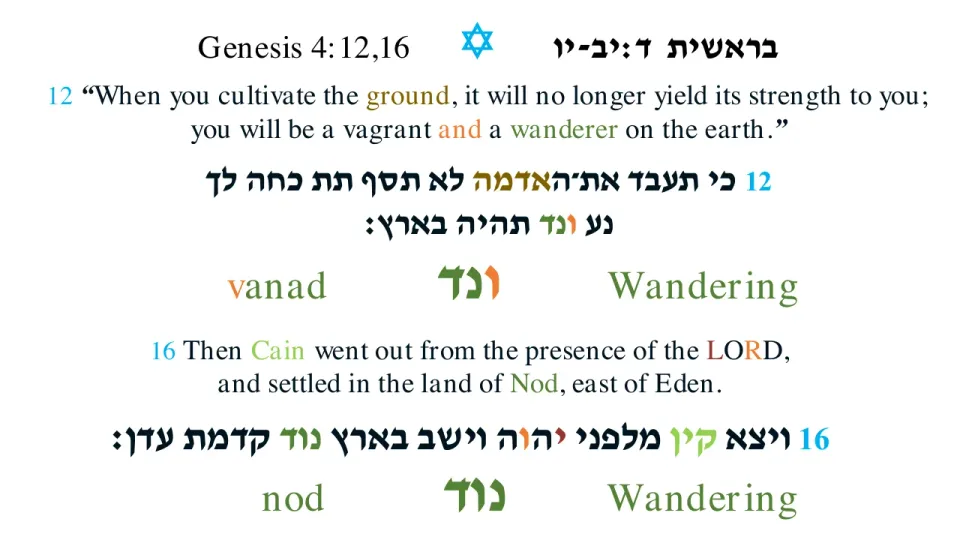 Genesis 4:12 and 4:16 — wandering: vanad (ונד) and the land of Nod (נוד)Slide 110
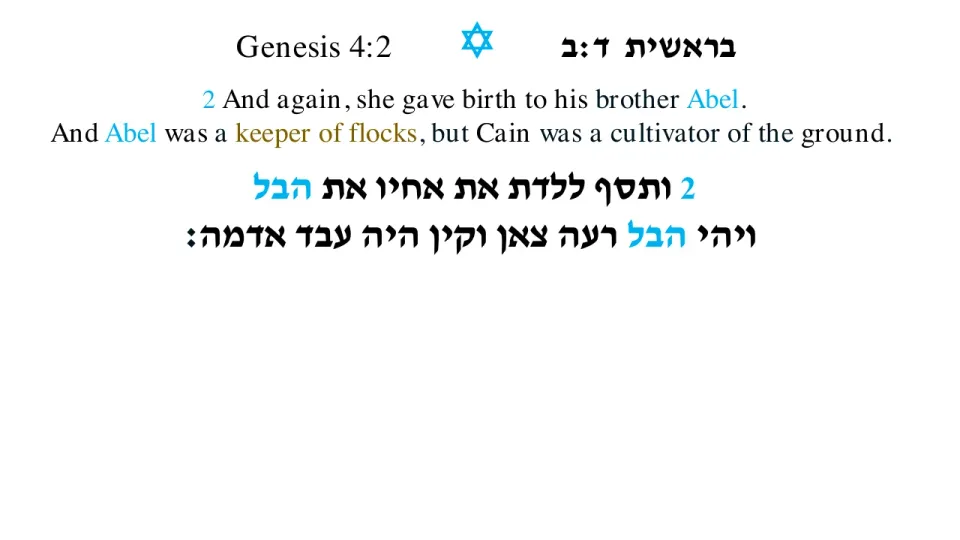 Genesis 4:2 — Abel the keeper of flocks (הבל)Slide 137
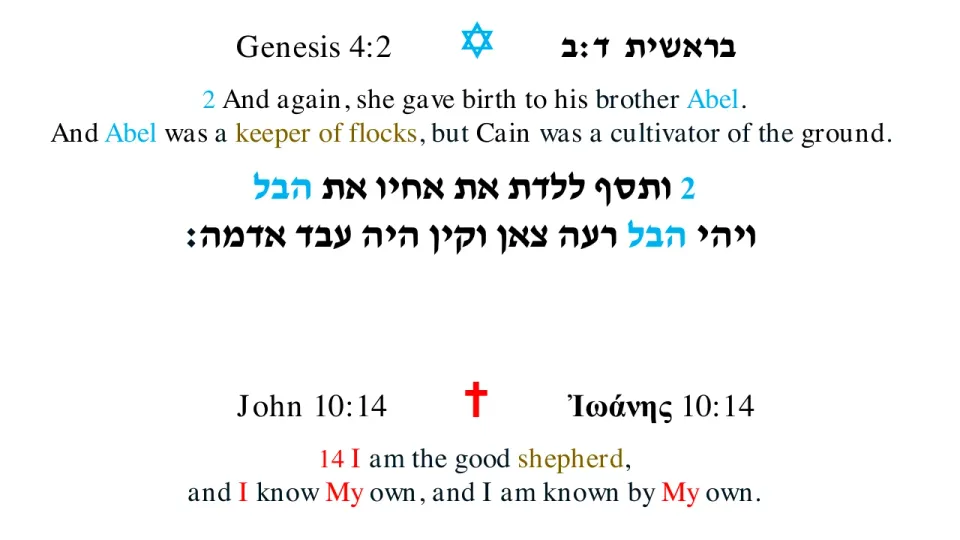 Genesis 4:2 and John 10:14 — Abel the shepherd and the good shepherdSlide 138
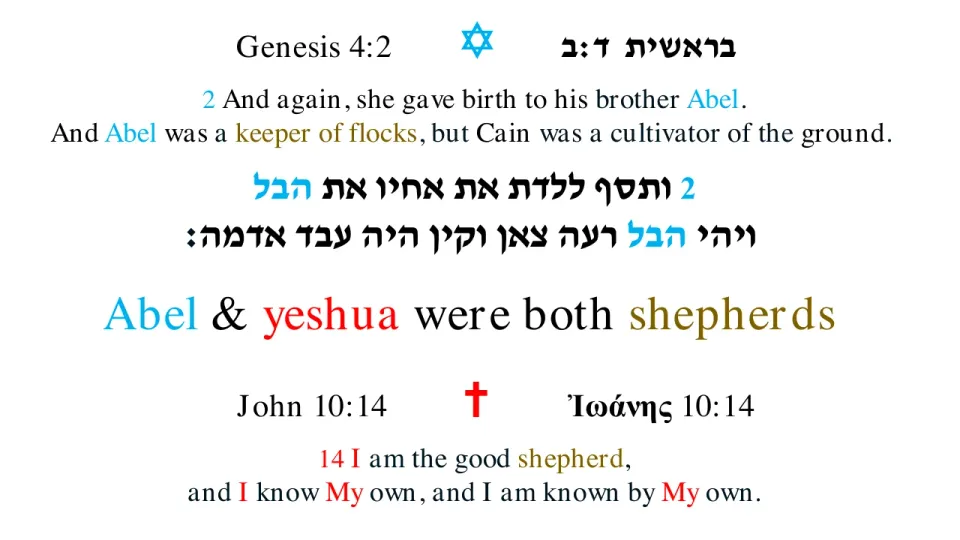 Abel and Yeshua were both shepherds (Genesis 4:2; John 10:14)Slide 139